Monetization reports and market data
Documents

Is Diablo Immortal Fun for Mortal Wallets? - The Metacast by Naavik
The gaming industry is currently navigating a critical transition as major franchises attempt to adapt their core experiences for mobile platforms and broader ecosystem expansion.
- Aggressive monetization in mobile titles like Diablo Immortal, where character upgrades can cost hundreds of thousands of dollars, risks alienating core fanbases and inviting increased global regulatory scrutiny.
- Successful mobile adaptation of major franchises requires bespoke development rather than simple ports, as evidenced by the performance of Apex Legends Mobile.
- Long-term mobile viability is increasingly dependent on sophisticated live-ops, personalized player segmentation, and strategic partnerships with experienced developers like Tencent.
Token Economy Design for Games - The Metacast by Naavik
Token design in gaming functions most effectively as a complementary tool rather than a primary driver of engagement.
- Token design should function as a complementary tool for engagement rather than a primary driver, as prioritizing financial extraction over fun undermines long-term game viability.
- Successful economic models must focus on 'value to earn' to ensure in-game achievements retain intrinsic meaning rather than becoming vehicles for speculative financial gain.
- Integrating real-money economies directly into core gameplay risks disrupting the immersive 'magic circle,' leading to unsustainable models and negative player experiences.
Battle Passes - Everything You Should Know and Then Some
Battle passes have emerged as a foundational monetization and retention strategy, currently utilized by over 60 percent of top-grossing mobile titles.
- Battle passes are now a foundational strategy used by over 60 percent of top-grossing mobile titles to shift monetization from whale-focused models to broader, subscription-like engagement.
- Industry standards for cycle lengths are trending toward one month for mobile games and three months for PC and console titles to maintain consistent player engagement.
- Developers must balance reward generosity with economic sustainability, as overly aggressive structures—such as those seen in Clash Royale—can saturate the game economy and trigger long-term revenue decline.
Innovative Monetization Features Snapshot Report June 2022
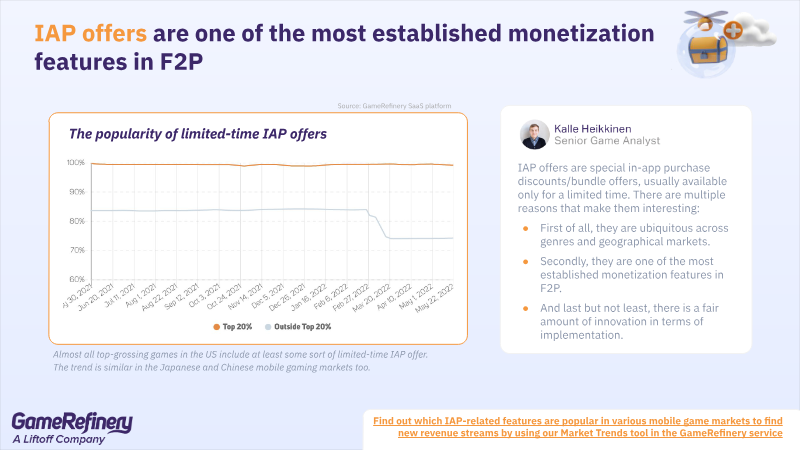
The mobile gaming landscape in mid-2022 is defined by the maturation and diversification of Battle Passes and gacha mechanics, which serve as the primary drivers for revenue in top-grossing titles.
- Gacha mechanics are the dominant revenue driver, integrated into 93% of top-grossing Japanese titles and 75% of the top 20% of US-grossing games.
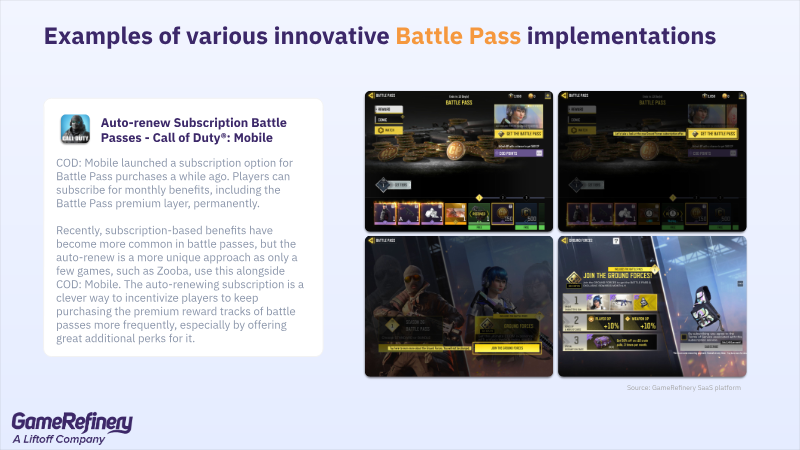
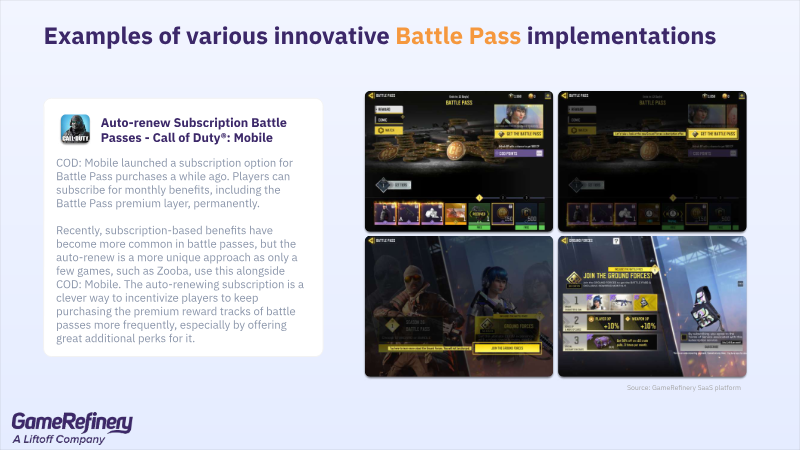
- Battle Passes have matured into primary retention tools, appearing in 60% of high-performing games and increasingly incorporating social and cooperative progression features.
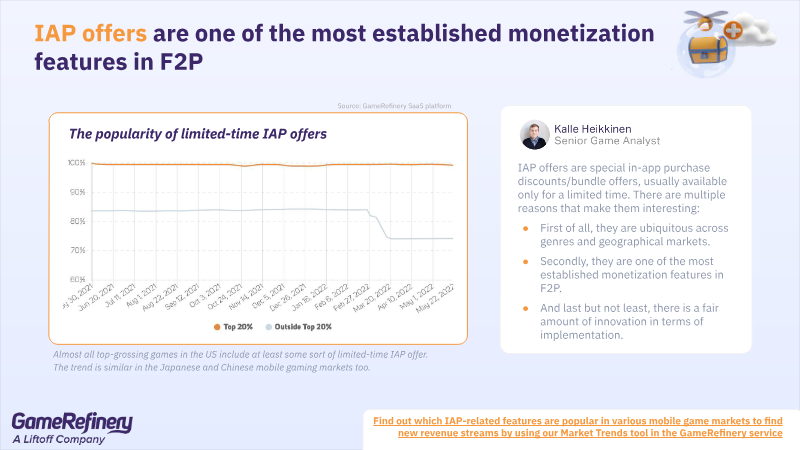
- Progressive reward systems, which grant bonuses based on cumulative spending, are utilized by 23% of top-performing US iOS games compared to only 9% of lower-performing titles.
The Highest-Grossing Mobile Games on iOS & Android: Q2 2022
The analysis set out to pinpoint the highest-grossing mobile games of the second quarter of 2022, evaluating performance across Android and iOS markets.
- Mid-core titles dominated Q2 2022 revenue, led by 'Rise of Kingdoms' which generated $179.5 million.
- King was the highest-grossing publisher during the period, earning over $264 million across four leading titles.
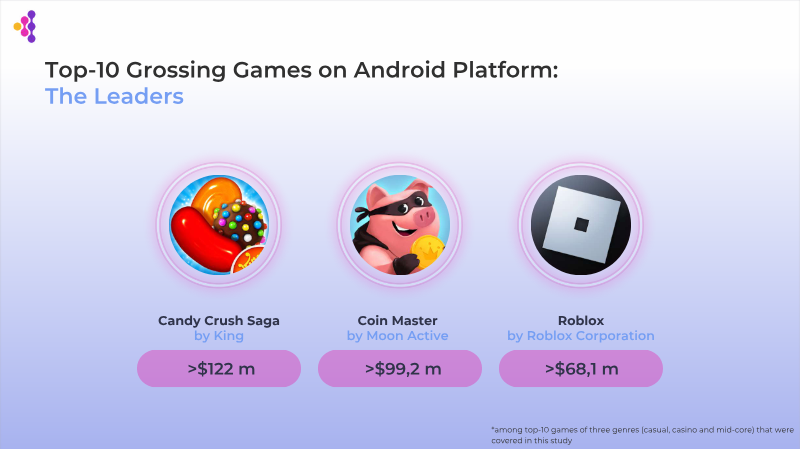
- Top-earning games outside the mid-core category included 'Candy Crush Saga' ($122 million), 'Coin Master' ($99.2 million), and 'Roblox' ($68.1 million).
Innovative Monetization Features Snapshot Report
Modern mobile game monetization is increasingly defined by the integration of sophisticated Battle Pass systems and gacha mechanics, which serve as the primary drivers for the industry's highest-grossing titles.
- Gacha mechanics are the industry standard, appearing in 93% of the top 20% grossing mobile titles, while Battle Passes are utilized by 60% of that same demographic.
- In the U.S. mobile market, 75% of top-grossing games now incorporate gacha mechanics.
- Progressive reward systems, which offer escalating gifts based on cumulative spending, are nearly three times more likely to be found in top-performing iOS games than in lower-grossing titles.

In-game Ads for Console and PC Games - Opportunity or Threat?
The gaming industry is undergoing a strategic shift toward integrating in-game advertising within console and PC titles, mirroring the successful ad-supported tiers popularized by streaming services.
- Console and PC developers are shifting toward dynamic, rewarded video ads to create a sustainable monetization alternative to aggressive microtransactions and reliance on high-spending users.
- The strategy targets the 16–34 demographic, a cohort that has largely abandoned linear television, making the massive daily-active audiences of gaming titles a primary target for advertisers.
- Unlike mobile gaming's focus on app-install metrics, console and PC advertising prioritizes high-quality, brand-led video content integrated during natural downtime like menu navigation.
Tokenomics #9 - Understanding the WAX blockchain with gaming veteran Michael Rubinelli
The WAX blockchain serves as a specialized infrastructure designed to bridge the gap between traditional gaming and decentralized technology.
- The WAX blockchain is optimized for gaming with transaction speeds of up to 8,000 per second and zero gas fees, currently supporting 13 million wallet users.
- The industry is shifting from 'play-to-earn' models, which are criticized for prioritizing unsustainable financial speculation over long-term player engagement.
- Future gaming success relies on a 'play-and-own' philosophy that integrates free-to-play design principles to prioritize entertainment value and player retention.
Top 10 Ad Networks For Hyper-Casual Mobile Games 2022
The hyper-casual mobile gaming market experienced notable shifts in advertising expenditure and network performance between the third quarter of 2021 and the first quarter of 2022.
- iOS market share for hyper-casual games rebounded by 5% between Q3 2021 and Q1 2022, indicating successful advertiser adaptation to privacy-first ecosystem constraints.
- AppLovin, Unity, ironSource, and Google remain the top-performing ad networks for the hyper-casual genre.
- TikTok has emerged as a significant competitor in the hyper-casual advertising space, showing notable growth in network rankings.
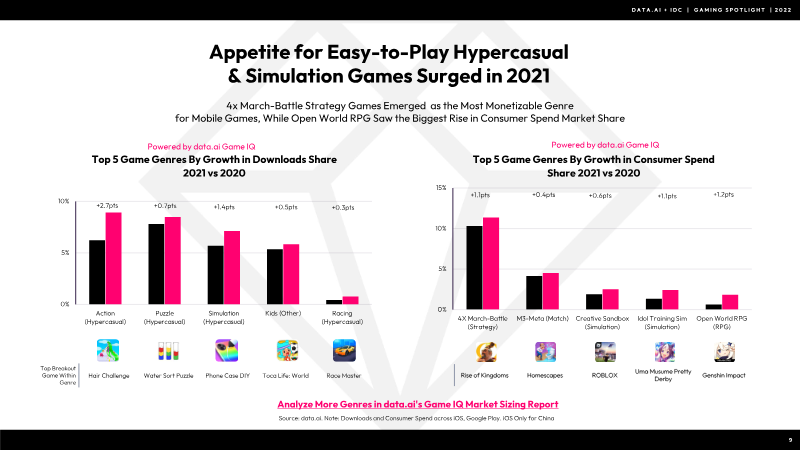
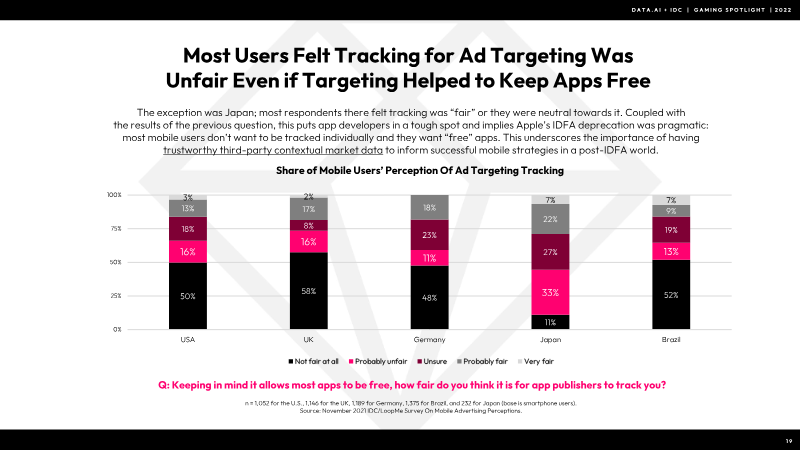

Gaming Spotlight: 2022 Review
Mobile gaming has emerged as the primary engine of the global games market, projected to reach $136 billion in 2022 and accounting for over 60% of the industry's total $222 billion valuation.
- Mobile gaming is the dominant industry force, projected to reach $136 billion in 2022 and accounting for over 60% of the total $222 billion global market valuation.
- The mobile segment is expanding 3.3 times faster than the home console market, bolstered by the sustained popularity of core titles like Genshin Impact and Roblox.
- Hybrid monetization is becoming standard, with 42% of top-grossing U.S. games now combining in-app purchases with advertising.
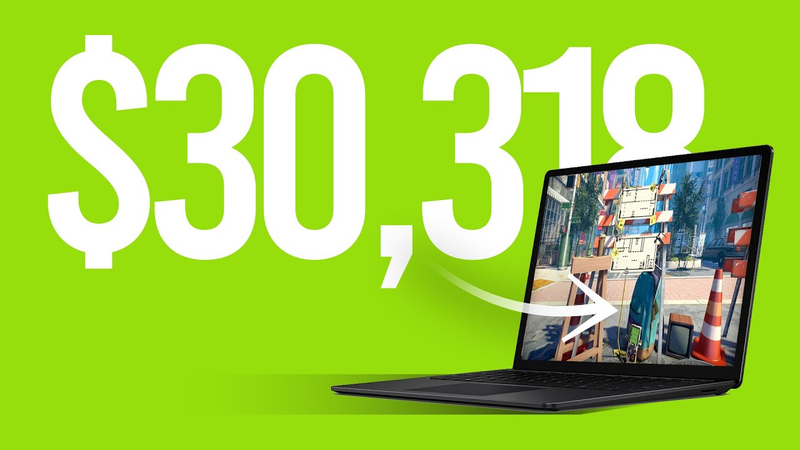
How To Raise $30,000 For Your Indie Game On Kickstarter
Successful Kickstarter campaigns for indie games require a strategic approach to audience engagement, reward management, and scope control.
- Use Kickstarter primarily to validate market interest before committing to full-scale development rather than relying on it as a sole funding source.
- Avoid promising specific platform ports or exclusivity in initial campaigns to prevent operational strain and keep options open for future partnerships with storefronts like Apple Arcade or Epic Games.
- Build a viable audience through channels like YouTube before launching a campaign to ensure a baseline of support.
Games Subscriptions: Is the "Netflix of Games" Inevitable and What Does It Mean for Developers?
The gaming industry is currently navigating a transition where subscription services function as a hybrid component of the market rather than a wholesale replacement for traditional sales models.
- The 'Netflix of games' analogy is misleading because 79% of total industry consumer spending in 2021 was driven by in-game monetization, making a wholesale shift to subscription-based revenue unlikely.
- Xbox Game Pass leads the subscription market, with its growth strongly correlated to the volume of day-one releases, including both first-party and third-party titles.
- Subscription services are not scaling their total library sizes aggressively; for example, the Xbox Game Pass Ultimate catalog remained relatively stable at approximately 500–515 titles throughout 2021.