VideoDeconstructor of Fun
Battle Passes - Everything You Should Know and Then Some
6 Jun 202285 min video
Transcript
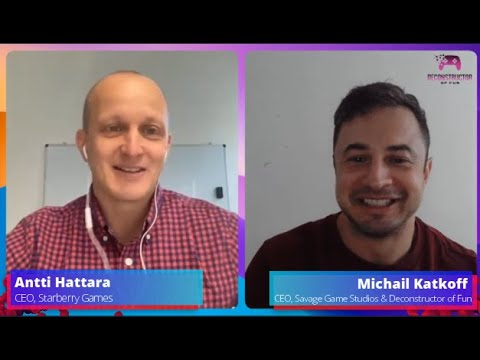
All right, it's going on. So I'll deal with that. Welcome, welcome, welcome everybody to the deconstructor of fun podcast. Returning back for the nth time and we'll have you nth time in the future is Señor Javier Barnes, veteran game designer, product manager, a man who looks like a thug but who talks like a philosopher. Javier, welcome back to the podcast. Yeah, I love like into that introduction. You know I'm actually like I do have a degree in philosophy, right? Well, I didn't know that. Yeah. The main difference is we can do a an episode about, you know, Schopenhauer and Hegel. Oh, maybe except that I can't talk any of that. Well, that's okay. So I'll I'll actually a philosopher. So without without we just need to address like people who are watching the video. What happened to your face? Have you been wrestling again? Uh so I'm actually wrestling this Saturday.
I do actually have a title shot. Um we'll see. Um Uh so that that's going to be No, but my face it's been uh you know, I I went to the uh doctor and I had like a laser surgery. So I had some spots. They threw like laser in it and now I have a bigger spots. Mhm. They they say it's going to look better actually. So so what you're trying to say is you had some plastic surgery. Yeah, of course. Like do you think this beautiful get this beautiful all natural? No. Yeah, yeah. I mean life in Barcelona is hard. You have to keep up with the Joneses. Like everybody is beautiful, the sun is shining, there's more and more studios opening up every weekend. So So uh it's not easy just drinking sangria and and and eating all that um pinchos in the in the uh in the beaches of Catalonia. But we're not here to talk about Barcelona. Actually we have a podcast coming out on that with Bandai Namco. Uh yes, I know. I know. And then we're here to talk about your
fantastic analysis on the Deconstructor of Fun blog about the best practice for battle passes. And by fantastic, I mean it's 30 pages long. You said you're going to write something, you know, short and concise and then it was 30 pages. So, of course, we have to do a podcast for those who are still reading through it. And those who want to get the insights more easily in digestible form as they're as they're, you know, doing other chores. But everybody should read it. And I've read it now two times. I think I'll read it about eight more times in during this year just because it's like so concise. There's so many edge cases, so many things that you cover. It's truly fantastic. It's sort of a a piece that you have to go back to. And I hope that this podcast is going to help people digest that and you can listen to this before reading it or you can just listen to this after reading it to kind of get the notes in. So, this is more like auxiliary podcast for the fantastic battle pass
playbook, if you will. But let's first start off with the sales pitch. Why should people listen to this podcast episode about battle passes? So, uh like the first thing it's the feature itself, battle passes. That's in pre most of the games in top grossing positions. I think the uh I checked recently and it was like more than 60% of the US top 100 grossing uh games have a battle pass. So, it's not a fringe thing. It's not something that oh, you can uh afford to ignore. It's it's a feature that it's present in in more generous in in all sorts of games. Um And I think it's a feature that it's as it explained in the article, it's going to grow in relevance in the industry as the uh industry, I think it's shifting from um or towards
um monetization methods that are more user-friendly uh and retention-friendly. Um the I think that battle passes and sim systems built on top of battle passes are going to grow in relevance. Um I think that the article is is pretty cool in the sense that uh it covers it from like if you don't know anything about battle passes, covers all the basics, but I also um interviewed uh people and like gathered a lot of feedback from from multiple um people while doing while doing the research for the for the article. Uh like actual experts, not me cuz I'm just learning, but um on on battle passes and I So, I think it has a bit of of uh things for everyone, for people trying to understand the basics of the of the battle pass, but also people that already has experience and wants to um think about what's coming next or about
the future on a in a holistic way. And just because 30 pages long it's uh scary. Um I think uh people will be glad to hear that there's like an exec summary, which kind of highlights uh the three four points uh that people needs to like a quick guide of of battle passes. Uh so, hopefully, although it's long, it's easy to digest. Yeah, I'll just mention this that yes, it's in every top grossing game pretty much pretty much in every top grossing game at the moment, but also the fact that it if you don't do battle pass properly, your game can decline. And Clash Royale is a good example. We're going to talk about that in this podcast specifically. Uh it's a great example of a fantastic game that implemented battle pass system just like it's sister game Clash of Clans, but in case of Clash Royale, the game actually declined quite significantly. And it took them a couple of years to kind of
uh go from that decline back to the growth path. So, you can do it in the wrong you you can you can do it in unsuccessful way, and that is why this podcast is also important. So, you have to do it, but you can fail doing it, and that can hurt you. But, um Javier, let's start with the basics. What are we talking about battle passes? What is a battle pass? So, a battle pass really is a is a system that um grants rewards in some kind of tier system based on on uh player engagement. So, I mean, that's a pretty big definition, but um essentially uh I think that as a monetization tool, the battle pass has covered something that like a niche or like a space that the space of the subscription models, right? Like games do not in free-to-play at least, the subscription model has not stuck stuck because they they subscription
model loses the free-to-play they it's hard to to compatibilize, and um the battle passes I feel it's it's the shape that a subscription system has taken in in mobile in in free-to-play uh to be able to to work with the audience. Mhm. Yeah, so so sort of like a short-term subscription lasting from weeks to sometimes months. Um What I find that is very interesting about the battle pass and pretty complex is that uh it's one of these features that I don't know, contrary to for example, maybe loot boxes, which can have a lot of complexity by itself, but it's primarily a monetization feature, right? Or a a timers. Yeah, primarily a monetization feature and so on. the battle pass, it's it's really complex because it's uh a retention system, it's a system that to generate engagement, a system that uh sometimes in some games like in Clash
Royale it pushes for horizontal content exploration. Uh so, monetization is just only one of the multiple metrics that this uh feature tackles from. And I think that this versatility means that despite the feature having very little a small amount of components, uh it it gives a lot of versatility to be able to adapt it to multiple type of genres and audiences. Yeah, and and it's a good point to point out that we've always had this sort of um I mean VIP systems in games where when you're playing you're just getting extra rewards by being a VIP. What makes battle pass very unique in that sense is that it's a feature that is for 100% of the audience. And and through that, I mean, whether you pay or not, you're part of the battle pass. So, so it's an integral part of your game and economy design. Um and and
probably like putting that a little bit later on into games, that's what really creates the issues because it is not um a monetization feature. Um it is more like a retention and engagement feature because it is a it's a it's a progress path for a specific season. So, or specific time frame. Um but um okay, let's let's move forward. Why are battle passes so successful? Like you've done a lot of a lot of thinking about uh the engagement retention elements, about the value they create, but can you kind of summarize it why why they are so successful? Because it's, you know, not as unique. So, I mean, I I think that the first thing is that because they foster engagement and and retention, I think that's actually one of their major uh values. Like a lot of the uh monetization features that exist, they they deal with frustration or they require some sort of frustration in order to work, right? Because most of them they are painkillers. Uh
painkillers to accelerate progression, painkillers to uh take away timers and allow more playing time. Mhm. Um uh so, there's really few uh monetization tools like this one where you're not only uh monetizing a significant amount of the of the uh payer base, but also you're providing engagement to them uh with the same with the same tool. I think that that is definitely the um greatest of of its value. I also think that um in those uh battle passes that have missions, it it's great because it can be used to foster horizontal content exploration. It can make people uh try to play and max out different characters, different game modes, and so on. Uh and uh another thing that um I think it it it's key is that as a monetization tool, uh one of the weaknesses of the free-to-play model is that uh it's very
whale-oriented. Even in games that are more like um uh oriented to audiences that do not spend as much, uh really minnows uh don't usually represent most of the most of the revenue. The the main And the main reason of that is um well, because because of the nature of those users, they are less willing to pay. But, there are one of the consequences is that there are very few monetization feature features that are able to make um a significant amount of the payer base spend. Most of it it's we uh capitalize on high spenders. And the battle pass it's absolutely contrary to that. Um what it means is that what what it does is it monetizes a little bit of money from a lot of players. Um I think this is is great and it keeps I think it's much healthier for the game in the long
in the long run because like monetizing a wider percentage of the user base in a with limited pressure. What it means is that it's more than likely that those players will will drop. And I also find that in these times where it's harder to access the really super valuable audiences like you know tier one country whales on on tier one countries and so on. The battle pass it's an alternative. It means that with the battle pass you can get value from players that are coming from other territories and from other spending profiles. And I think this is really good. You know for the model to really work and and maintain its mass adoption or even grow more in the future. It needs to grow with audiences that are
not the traditional high spenders. Yeah. So to if I try to summarize what you said it's it's you know the engagement that battle pass creates and the engagement creates by pushing you to do different activities. And then once you do those activities you earn battle pass points and the battle pass points give you rewards and that of course leads to retention over time. It's great at pushing players towards a horizontal content exploration. So, meaning that you get access to elements that you might not be playing with, whether they are I don't know, items for different characters that you're not playing with at the moment. And by that, you're improving those characters or getting skins for those characters. Now you're playing more with those characters and through that, you're engaging in more elements of the game. And as you said, they offer a very great value deal for players. And through that, they create a regular spending pattern. And this actually works only for the players, of course, that are very engaged with the game. And those are, you know, as we all know,
they are the best um clients for your game. I mean, they are engaging and and by by playing a lot, they just unlock more value and this deal is a no-brainer for them. And that also leads to the fact that it works outside tier one geo. So, the price of a battle pass is usually quite low. I mean, there are multiple, sometimes multiple tiers of of premium battle passes, but usually it is relatively low to how much value you can extract from it. So, in that sense, it it it, you know, it's a it's a good tool to to convert tier one audiences into in-app purchases. So, just summarized what what you said in a in a in a more I actually think I I actually think that's why um battle passes started to appear in or become first popular in in games that are competitive games that monetize with cosmetics and and stuff like that because like those games, they are the ones that are not very or that are not
as whale oriented or high spender oriented as as other games, right? But Mhm. Mhm. What I'm I'm quietly impressed is how the battle pass, even in games where the uh that are whale oriented and like more traditional in terms of monetization, the battle pass has been able to be very successful not maybe by becoming the main thing players buy but by becoming something that increases the baseline, right? Like everybody buys the battle pass and then everything else. Yeah. Yeah. Yeah. Yeah, correct. Correct. It's a Yeah, in that sense a fantastic and by the way implementing a battle pass after like afterwards, so not you know, I mean I don't I don't mean So what I'm trying to say, implementing a battle pass to a game that has been live for a couple of years. How does that work?
Like how how difficult is that? Um That's a good question. Um I would say um We have a lot of examples actually of games that have implemented battle passes afterwards. Clash Clash Royale, right? Like Clash of Clans Clash of Clans, Brawl Stars, even a game that I I worked at Monster Legends, they they implemented um that and I think the game was when they implemented the battle pass the game was like maybe I don't know, 6 years old. Yeah, it's 10 now. Woof. So No, 10 is Dragon City. Oh. Um which is from the same company, Social Point. And literally same looking game. After that advertising moment, um I I think the um probably the challenge is the biggest challenge in in a battle pass on a on a live game is that it's going to generate cannibalization. Like
that's going to happen. Like people is going to move spending from other purchases to the battle pass and like I don't think there's a way to avoid that. But the good thing is that the battle has not to be to avoid cannibalization but rather to make that it's the trade-off is is good, right? So, I think that one of the trickiest thing was with the with the battle pass is that yes, it will absorb spending from other places. It will move spending um and player attention, but uh the ultimate goal has to be that the the trade-off is good. And I think that the cases where the battle pass has not worked are cases where uh that the problem is not has not been that it has generated cannibalization, but rather that the trade-off of the in terms of total revenue has not been good. But I would say it's actually I don't know, maybe this is
controversial, but I think it's harder to put a battle pass on a game that it's not live. Because on that one you don't have previous data. And it's it's more I feel it's it's it's more trickier to know what was the baseline. With with a live game I feel it's the the um difficulty is lower, I think, because you can use the previous baseline to set a target and and so on. So, the sweet spot would be to put a battle pass at the end of soft launch. Well, I don't know. Uh Cuz then you would have a data on on already how the game economy works, and you've kind of gone through a couple of different GOs, and then now you can actually put in the battle pass as your as you're accelerating towards hard launch. I I I I I think it should be like by the end of the of the soft launch, but probably like doing doing it during
the soft launch, I think it's it's key. Not after the soft launch, is that what you meant? Because Yeah, yeah, yeah. Or at least what I think is that if you do it after the soft launch, you're adding something that can completely change the the thing, right? I meant like if your soft launch is like nowadays a minimum a year. So, that would come in on the last three, four months during the other soft launch as you've proven out a lot of different things in the last three like you run your first battle pass that I think that's reasonable. What I find it it's very challenging and there are a couple of approaches that because I was asking people, "Hey, how would you how would you do that?" How would you So, in the article there is a it's presented a couple of approaches that can be done for how to put a battle pass in a new game, but in my opinion, if you have a previous baseline, it's much easier and actually the approaches that are mentioned in in the article are mainly based on generating a baseline
using data from other games, using data from assumptions and so on. So, without a baseline, I feel it's very difficult to fully understand what is the cannibalization effort that the battle pass is generating. Makes sense. And you talked a lot about friction points in battle passes and and that's kind of like interesting thing to talk about because battle passes are friction less in in many sense since everybody is who everybody who's engaging in in a game is engaging with a battle pass automatically. So, what are those friction points and what are some of the ways to negate those friction points? So, I I personally don't think that that had there is good ways yet that have become standard on how to counter those frictions, but those friction points that's like the main friction point is um players that buy the the buy the pass and don't complete it don't or don't
extract a significant amount of value out of it. That is very frustrating and that actually means that the less time that it's available to complete the pass, the worse of a deal it becomes, which is very problematic especially when you thinking as a um um monetization tool because it means that when it's released it's going to make a a lot of the revenue, but then all the players that are getting into the game and that you are acquired they're coming back during the rest of the month for example, they're going to find that a product that would be key for their engagement and their monetization, but it's not a good deal anymore. They also can become very greedy especially if like they if they are long. I don't think this is a problem particularly mobile because most mobile games have pretty short battle pass timers, but on some games where content takes a lot of effort to create
and and so on and they have like six months passes, that can become very greedy cuz it means that, you know, players need to put a lot of effort to get the the final rewards and and so on. And also it has a cost, a device cost, right? Which is or device storage cost, which is that the battle pass has to pump out exclusive content and that means space that people the game demands on the on the storage and also it can be frustrating for players like wanting that one task exclusive skin that they love, but it turns out that that skin was given in the second battle pass two years ago and there's no way to to access it. I would say these are the main the main friction points. Now about solutions to that, I think that the one of the best examples on on Uh
a game trying to solve that is is Halo Infinite. Um Halo Infinite they they have this thing where um if you buy a battle well the battle passes never expire. So, you can buy them even once they they have expired. So, the only thing that it expires is the the free acquisition. Um So, so hold on. Let me let me ask a question about that. So, the battle I've never played Halo Infinite. Um By you saying the battle passes don't expire, does it mean that every season they release a new battle pass? And let's say we're in a battle pass season 20, but I can at any point buy the battle pass season 3 and play through that and then get the rewards from season 3. That's correct. Yeah. Wow. Okay, that makes sense. Yeah, I mean that sounds really user-friendly. Um so, it means that if you if you're a free user and you keep uh playing you're going to get the free rewards of of of all of them, but um
as a as a payer you can access the content of the first one and and so on. Uh the the only problem that I see with that and like I I come I raised the topic in the the constructive fun slack and like the community interacted with it and there were like all sorts of opinion. Um but just for like the audience basically like the main concern is that that will damage the um a formal effect of the pass, right? Like why Okay, if I'm not losing anything by letting it expire, why should I put the effort? Um And like that's a that's a big question. I'm I think uh the ability to like buy the battle pass um a after it has expired has has these risks. Uh it will be interesting to see what what happens with Halo Infinite. Although I
think that the the thing with Halo Infinite is that other things in the game like the slow pace of content and so on will affect the performance of game in a way that it's going to be very difficult to know if if this battle pass approach is good or not. But there is also other solutions I in my opinion that could have done been done to that without losing the an element of formal like maybe on the last days of the pass your progression gets transmitted somehow to to the next one or something like that. Like there are other solutions that could have been implemented. I I nevertheless think maybe I'm I'm wrong with this but I think that the biggest opportunity of the season pass or that the future of the season pass is going to go more on ways how the battle pass can become more prominent on the game and can generate up sales sales opportunities maybe through multiple
passes and and and so on rather than by fixing the friction points. I think that the specific the solving the friction points I think I'm maybe be be more relevant in like maybe console games and so on where the audience is much more sensitive to hardcore monetization or to these friction points. Got it. And but with Halo Infinite it's a little bit different of a benchmark because the the game is free to play, right? But it's behind Xbox subscription. Yeah, so you need to I mean you you can buy the I think it's a premium game you can buy the game, but uh if if you have the game pass, you can play it. So, I don't know. I just pay the game pass and I play it.
Yeah, yeah, exactly. Exactly. So, it's a So, it's a it's really a game that that drives um subscription for the Xbox. So, in that sense, I don't know if um how would I put it? I don't know how important is the monetization of uh of battle pass for Halo Infinite. I think engagement is everything. And um and just overall like feels like the strategy for that game has been to upsell the Xbox pass and and keep players playing. So, it might be a good example for retention. Uh but but since we don't know the numbers, it might not be the best example for monetization. That's That's kind of it it you know, it's difficult to to evaluate it against games that are really relying on on microtransactions. No, I I I agree. I think uh um that's why I said that I I feel that there are no good examples on how to solve these friction points um that have become a standard.
Um and I I I suspect that they at least I think that the main focus right now on people working on on battle passes is not to solve these friction points, but rather to uh increase fidelization of the of the uh players on the on the battle pass or making them uh buy it more regularly and increasing the um uh money that they're making with the with the battle pass. Uh because really if you if you compare it with other uh monetization systems or mon- or monetization tools, the battle pass really um although it has the it's critics, of course, uh it has way more PR way better PR than other things like loot boxes, right? Like people complains about free-to-play monetization stuff, but they complain more often about loot boxes than that they or timers than they
complain about battle passes. And I think that this is a meaningful difference. Yeah. Yeah, for sure. So, since we're we're talking about kind of like um conversion or having people to to get engaged with battle passes, uh what are the the best ways to to drive really conversion and um and upsell it? So, how how do you turn free battle pass players into paid battle pass players? I think that the the first thing is is a generosity like um the battle pass, if we compare it to an offer, it's providing a an insane deal. Like uh um in Clash of Clans fans based on the um uh GDC talk that they they did on on Clash of Clans battle pass, which is great. It's actually linked it in the article. Um Yeah. They were saying like 20 It was giving a
23 value, so like to uh 2,300% value. Like that's insane. Um I think that the nature of the battle pass allows that that that generosity because people has to put the time in order to to get those rewards. Like so, it's like saying like, "Oh, this game gives this much value because, you know, by playing you get rewards." Uh okay. Um So, I think that generosity is it's a great thing. Um and then specifically on increasing conversion, um first-time conversion is like conversion of of like free players. I think that elements that um got a certain amount of of progression, elements that um uh incent or grant additional benefits for buying it earlier. Like for example, uh Call of Duty Mobile has a um an accelerator of XP. So, it means that the sooner you buy it,
the uh more you're going to progress. So, I think that that is a good tool for making people uh um have more time pre- uh like feel the pressure of time Yeah, FOMO. and decide to to go for it. Um, I also think that when it comes to upselling, though so like conversion not thought as free players to paid players, but paid players making more uh transactions, um there are other mechanisms like um subscription systems. This is something that Fortnite has, like instead of buying manually the battle pass every single uh season, players can get subscribed and then they get some uh some hard currency and um and the battle pass automatically and they get automatically charged charged. So, you know, the I think this is great. Like having mak- making people do something in order to stop paying rather than do something in order to pay, that's great. Um, and also like uh
multi- having multiple uh passes, I think that I I strongly believe this is going to be a trend in the future. Uh games incorporating more passes and I don't mean just the kickstarter uh premium version uh of the pass, but rather um uh having battle passes that come on top of the baseline battle pass, maybe link it to events and and the stuff like that. So, ex- essentially multiplying that that model multiple times within the same game. I think that that is going to become more popular because the reality is that the the battle pass contrary to what many people uh thinks at least all the feedback that I have collected in my own previous experience points out that the main source of monetization of a battle pass it's the upfront purchase. So, things like tier skips and so on, they really don't generate
any meaningful revenue. So, and I think it's because of the nature, right? Like the the whole point of the or the whole selling point of the this is like you you buy it and then and then you have it, right? Like but making people pay so that they have to pay more things afterwards, I think it would damage the uh selling premise of the of the pass. Like for example, time skips to make time skips meaningful, then it would mean that the pass would become very grindy. And then it means like I wouldn't pay for it, right? Um So, I I think that I I I feel um upselling strategies that work are more in the direction of increasing conversion, increasing the amount of passes that people buy, and not that much on generating subsequent purchases within a single premium pass. Yeah, so so basically kick-started premium passes, so you have already made
some progress and you can now purchase a battle pass by a little bit more. Let's say the the normal version is five and this would be seven bucks, but with the seven bucks you're like halfway through already, so you get a lot of rewards up front. Uh the the the subscription system where you're automatically enrolled to the next one, the multiple battle pass system where you just make make just more of these battle passes so players who are already on one can get on the second one and so forth. Also in the article you mentioned pass gifting. I didn't know that that exists, but that makes sense with the guild-based games uh where guild leaders can give, you know, the in in various guild games that I've played, there's some high rollers who just basically just helicopter money to everybody in the guild to make them do better. So, I think past gifting is an excellent system and kind of encourages others to be engaged and and and yeah, just essentially one monetize for many. Also, in my personal opinion, I think it really matters how you present the battle pass. In a lot of games that don't get me to convert is just
doesn't look interesting. I think Call of Duty is a great example of that because it's very event based. Same thing with Fortnite is like it's it's a it's a whole season that is around it. So, it's not just like battle pass five and there's just more stuff. Like Vigor is an example of incredibly boring battle pass. It's just like not interesting cuz it's like so in the theme. But but those seasonal ones make a lot of sense and also how they present it in terms of as you're earning your battle pad pass points, what are the things that you're missing? So, a lot of games are not very good at actually presenting the the the lost elements that would be on the premium pass and through that you don't get that FOMO, you don't get that thing where you feel like you've earned it and now you want to take it. What also really, you know, affects me in terms of re-purchasing a battle pass is what is the perceived value that I get because I can be sold the initial battle pass of saying like,
"Hey, you know, you should get it because there's all kind of cool stuff." And again, I'm going to go back to let's say Call of Duty or even the Trap Light's Battle Legion. Like those were games where I were very engaged and I bought the battle pass and in the end, I didn't feel like it was worth it. Which is kind of sad, you know, it's like you're you're up sold this this whole thing where it's like it's going to be so amazing and you're like, "Well, uh, really." That I that happened to me in Clash Mini as well. I think I bought the battle pass on that one. If they had one, I I kind of don't remember. But, it's been multiple actually the the battle pass in in the in Clash Mini it's the main progression system of the game. Yeah. They They don't have a trophy road. What they have is um Yeah, it was it was that. It was that. But, um but I remember just to And maybe it was just the game that didn't didn't entice me like I would just got bored with the game, so I got bored with the battle pass as well. So, it's it's a lot about like the value received. If you feel at the end of it that this the game is
still awesome, and that the the value that you receive from battle pass is not just like, "Oh, get this because it's 4,000% is more than than with others." Like, if it really made sense, then you're going to buy it again. But, Call of Duty being an example where I got a bunch of skins, a bunch of stuff that I didn't even know where they went and what they are. And like, is this a gun for my this mode or that mode? I was like, "I don't even know what I got in the end." So, through that I'm not buying it again. Uh and and those are kind of like the the the the the the uh the mistakes. And then finally, a game that I love, and the game that will never make me monetize, is Teamfight Tactics from Riot. Um they have a battle pass. It's well presented, uh but there's absolutely nothing that I want from it. And I don't even know why should I want anything from it. So, so of course the content matters. And um and in in that game like I love the game. I just I I think the battle pass is absolutely useless. I I would rather, you know, buy directly a skin that I like than than look at this boring battle pass that gives me
um nothing interesting and nothing worthwhile. this is an issue with the um um essentially like reward systems in in cosmetics, but particularly on the on the battle passes it shows a lot, right? Like, um in order to have a a set of tiers of rewards means that a lot of the content are um sad cosmetics or like really low value cosmetics that people don't do not care that that much uh about. Yeah. Um I think in other uh in other games that uh you know have integrate uh elements related to great systems, progression, and so on. It's a different story, but on games that are very cosmetic uh driven if you need to be constantly rewarding to players, it also means that you need to create cosmetics that do not have um a lot of value. And that yeah, it's like
uh thank you for another sticker I'm not going to use. Um Yeah. But I think there's something in very interesting what you said um that I wanted to highlight, which is like that what you said on on the sense that like the value that they offer like I bought bought it and then I felt that they didn't deliver to me that much value. I think that that's a terrible experience um and it actually uh hides a learning for balancing them, which is the fact that battle contrary to many other features and other features uh I don't know, events and so on, you may want to make the very end of the event harder so that people uh has to monetize or put extra effort and and so on. But the battle passes contrary to that. The battle passes has to be achievable. Because if they are not achievable, they generate a frustrating experience and then it means that players are not going to buy it again. I think that the the power of the of the battle pass uh
that counters the fact that the price is the price is not that high is that the its power is people uh buying it over and over. So it's key that the final uh sensation that they have about what when they buy a a battle is that they trick the game, not the other way around the other way around. Uh so I feel that passes need to be achievable. I think that Brawl Stars does something very interesting, which is the fact that especially if you have a significant horizontal collection, you can complete the pass very quickly. Like in a matter of I think it's like less than a week you can complete it if if if you play enough. I think that's somewhat extreme but also very interesting on in the sense that for them it kind of seems that it's better to have a pass that is very easily achievable rather than a pass pass that requires a lot of effort.
Mhm. Mhm. Yeah, that's that's a good point. And staying on the on the topic of content, like what's really the sweet spot in the length for a battle pass? Like you've looked at many and played many of them. Is it very game dependent or or is it Like I I kind of remember that Call of Duty has decreased the length of the battle passes or just made more of them and that had a clearly positive effect on the monetization of the game because, you know, the more battle passes the better and they're more achievable since they're shorter and not this sort of a long grind. But do you have some some I think the by the way TFT has like a three-month battle pass or something like that? Yeah, so basically the the um trend that I have seen while doing the the research is that PC console like kind of are orbit around three months. Mhm. Even if those games are also in mobile, they orbit three months and most mobile games especially
mobile first games, they have like one month. I also asked asked a lot of people why this difference if there was something and there were some arguments like you know people engages in mobile games in a daily basis so they need a more constant pace of reward than on console where like the engagement can happen maybe primarily on the weekends or more sporadically especially for games that take you a lot of time to play a match but ultimately like what I felt from the conversation what I extracted was that it's more about the cost of generating the content I think that a lot of games like you mentioned it like TFT or wild rift and so on like the contents take a lot of time to generate
and because they they are heavily thematic they have custom animations it takes a lot a lot amazing concept art like that takes a lot of time it means that it's not easy to pump out one of those passes with enough content every every month I still think that shorter passes are are good are are better because like as we said one of the key things key problems of the past is that the longer they've been running the worst deal they seem right so you want to have passes more time in the sweet spot or be of being fresh so I think that I don't know if I was working wild rift I would probably try out as an experiment do some like quick month battle passes and see what happens I wonder if they have tested it but I I kind of feel that less than a month
can be I mean there's a one point where releasing too much can generate player exhaustion especially if the game is cosmetics based. uh Like there's just so much cosmetics that players can get before they they are they have enough. Um But in general, I feel that shorter battle passes I see a lot of benefits and the inconvenience seem very theoretical to me. Yeah. Yeah. Yeah. Yeah, for sure. And since we're talking about like the the length of the battle passes, like balancing is of course really important and then we talked about the value and the content. How do you you know, how do you balance between the premium battle pass and the free battle pass as well as between multiple premium ones? Like that seems very difficult and and of course cannibalization is always the risk when when you don't do the balancing correctly. Yeah, I mean, that's one of the um biggest challenges. Um
I would say if I had to approach this, but I'm sure that like there are better approaches. But if I if I had to do it, I would start checking all based on player data, no? Like what are the How many of a certain resource do players players buy per month? How many of a certain resource does a certain profile of of players consume on in a month, for example? And then adjust the values of the battle pass based based on on this. And now when it comes to the length of the is it it's a specific tier, I think that the pass has to be increment has to be incremental. It has to look like this as a trend. Um just because you want to give more rewards closer to the point where they um bought the pass or where they where they started. So that it feels awesome, right? Like they feel that they're winning uh, more uh, the and then
progressively compensate. It's more time but more value that you get. Um, Mhm. but I also don't think that it has to be like course that it's purely incremental. And a lot of games actually do that like it's just like pure incremental. I think that there there has to be fluctuations kind of if if it was a difficulty curve so that if you make people grind a lot for a very big reward, you then give, uh, a set of easier to achieve a smaller rewards to not generate exhaustion and, uh, keep the past feeling that they are getting constant rewards, uh, but sometimes from time to time it's getting a like a huge, um, a huge drop. Mhm. Mhm. And, um, and what are the sort of like the best practices? How do balance out the rewards and the tiers of the battle pass? Like when you look at the, uh, the your your earning speed, um, is it the best way that you earn at a
short interval a lot like at the beginning of the battle pass and should that go through throughout the whole battle pass? Or is it more like, uh, like is the best practice to do it more like an XP curve where each subsequental level of battle pass takes a little bit longer until in the end it just takes a lot longer. Like how important it is to push players to throughout the whole battle pass uh, versus kind of staying on that battle pass for for a longer amount of time? So I think that also depends a lot of on on the audience of the game. Mhm. Which I'm dodging a bit the bullet, I don't know, but Yeah, no, no, it's it's not it's not a one fit all for one fits all, but it's just like you you've done a lot of, uh, a lot of analysis on this. I think that what is key and and, uh, actually shows up when checking the balances is this is not on the article but it's research that I did for the, uh, before I wrote it. It's very different for example passes
on a pass on Royal match where they are giving consumables and it's like a different story takes very little effort for them to generate a battle pass compared to a battle pass in I don't know Wild Rift where each of the contents has a lot of production cost. So there is less of of it. And that also on the how willing to grind the audience is also generates because of what are the for example in Royal match there are multiple other reward systems working at one so you don't need the reward you don't the whole weight of the rewards is not in the battle pass compared to Wild Rift where a lot most of the rewards are coming from the from the battle pass so it's key that it feels more valuable. Those things can can have implications. In my opinion
like I said the the curve in total the trend has to be incremental so it has to take more time by the end because you want that the to extend the the value of the the length of the pass but with fluctuations so that you grant like a a shotgun of rewards quickly after after players have done the effort for a very big reward and ultimately in general the passes should be achievable. So if a significant amount of players especially now talking about the payer people that pays the premium pass they don't get the entirety of the of the pass in my opinion it means that there's a problem. I would rather I I think that it's a much better strategy uh to make people reach the end
if they pay, make the people reach the end relatively easily. Uh and then add uh systems how the pass uh can be granting additional rewards after it's end. Which is what I don't know, Magic the Gathering Arena does where after you have completed the Battle Pass, uh you can If you keep playing, you get like minor rewards, you get some rare cards, and so on. But, it's kind of a looping uh final tier. Um But, uh the main pass is relatively achievable at least in a high percentage if you have a average amount of engagement. Got it. Got it. Got it. Okay. Well, um let's move on and talk about pricing a little bit, like different pricing strategies for Battle Passes. And to my understanding, I don't know if I'm wrong or not, there's there's really two strategies. One is um the one to to drive engagement without cannibalization. So,
essentially, you want people to just jump in jump in and and do the sort of a broad broad monetization stroke, get a lot of a lot of players on the premium pass, and the goal of the premium pass is really for them to engage even more and play even more and and and retain. And the other strategy is to monetize through Battle Pass, so actually get significant portion of your overall revenue and monetization. Um can you talk about like am I correct with those two strategies, and can you talk a little bit more about those strategies? What I have seen when when doing the research is that um like as different genres have done their own version of the Battle Pass, that is what that has generated these um uh this distribution. Um I think that in general all the cosmetic first games where they have it the battle pass tends to be like one if not the main source of of revenue and then they try to sell with highly thematic stuff that has strong former.
I think a great example is Fortnite, right? They will give you the battle pass where you get like a lot of cool stuff but then Obi-Wan Kenobi appears and it's just and like if you don't buy it you lose it forever and that generates itself. While so in those games like I think that the pass it's the main source of monetization. I think the strategy has to change when in games that are not primarily cosmetic driven. In those games they like games like Clash of Clans, Royal Match and so on where they have their own monetization systems that work and there the battle pass it's more like a a piggy bank kind of offer. Even even though and and on that I think it's it's way more relevant to focus on cannibalization and
on or at least the trade-off that the cannibalization generates and think the battle pass more than as a subscription model more to think it as a increment to the to the to the base line. But I think What I've seen is that it's pretty much related to the genre of the of the audience and how the battle pass fits into the monetization model for that for that audience. Yeah. And um I've never seen like I don't think that in in many games like I don't know if Fortnite they add the battle pass and then suddenly that becomes the main source of now it seems like they they are still monetizing the way they used to. It's just that they have added something on top that high spenders buy, but also it helps monetizing the lower spending profiles that are also engaged in the game. Got it. And and in your opinion should the battle pass be priced in
premium currency or hard currency, however you want to put it, or should it be a direct purchase like, you know, this is 11 bucks and there's no way you can save for it. Like which one is better? So I am personally biased towards direct purchase because I'm lazy. Mhm. And doing direct purchase it's way like it solves the issue of having to think like oh, but through the pass they can get enough hard currency so they buy another pass. So then how does that work, right? So it's less work to do do it in direct purchase. But I think this this is also another point where I feel that audience is very relevant because on the games that they have have it priced on hard currency they promote that point significantly. Like I don't know, Call of Duty Mobile it it actually it says in the text with this are there are screenshots in the article that people can read can see that say like, "Hey, you will
get enough hard currency to buy the next one." Which is kind of an incentive for us, right? And I know that for example in in Fortnite as well there's like a calculation on how many free passes you can get when you buy a battle pass and and so on. So I think that in in some games like uh maybe oriented to younger audiences that can be a selling factor, no? The idea that oh, I'm not just getting I'm not just buying a pass, I'm just I'm also buying the opportunity of maybe acquiring the next one for free. Uh What I think is that ultimately that has to stop at some point, right? Like it cannot be that people pays once and then they play forever. Um so and actually this is discussed in the article like there are different strategies uh that uh people working on on those sorts of games shared uh with me plus but I think how I would face that challenge um on on how I would limit like the
amount of free passes that you can get once you buy one. Um but in general I'd say like direct purchase sounds like much more um easier to manage and it also uh decouples the that purchase from potentially other sources of rewards that could be uh in uh you know, generating hard currency or uh injecting hard currency in the game and then they spend it on the battle pass and then they get a lot more hard currency. Um so I think in my opinion direct purchase is better. Uh I think that hard currency can make sense for specific audiences. Yeah, the the the pros for hard currency is that as you're earning hard currency you're kind of collecting it and you're saving it to purchase your first battle pass and if the battle pass proves to be valuable then you'll be purchasing more of them. And it it gets you kind of closer to the point where instead of
paying 10 bucks you can actually buy the five buck bundle to get enough hard currency to purchase the battle pass and and so forth. So it's a little bit of a of a reverse auction based on your and your engagement in the game that that you'll be getting eventually that that battle pass. And then that on itself can lead to more retention as you are playing more to save up for the battle pass. And then I'll you know, if the battle pass has sometimes towards the end uh some kind of a discount then then you're more likely to convert and dump all your premium currency to that. So, yeah, yeah, definitely it would be interesting to hear if somebody has done any kind of a AB test around that. Um You can comment in the article and actually like if if I mean, um I wouldn't say I'm an I'm an expert on on battle passes. I just did a lot of research to do the article, but uh actually like my secret intention with this article is that people that um is working like frontline games like Fortnite and so on, they are able
to uh comment in the in the in the post and like give us a lesson, like that's that's a great way to learn. They will most likely comment uh privately in the Deconstructor Fun Slack channel. Uh but not not a publicly on on the on the post. That's what we normally get. As well, DM you on LinkedIn. Um cannibalization, how do you balance value versus conversion? That's uh that's you know, is there any I know that's a very broad question, but is there any any kind of um um If there is a there is a magic formula, I don't know it. And I'm very interested to Yeah. So, um what what I think is at least in in my opinion, um how I would approach is uh base that on the uh data from players, right? Like uh understanding like how much players buy regularly, um maybe do some sort of re- research before the balance on like how much
content uh damages conversion based on rewards that features give and and and so on. Um And like obviously, if if players are buying 10 of something per month and then you provide them 100 on the battle pass, that's highly risky, right? Um but I I feel that the best approach is if it's possible to AB test it, uh or you can even test it without AV testing by changing the balance between different iterations of the battle pass. And I think that's if you cannot AV test because for example the game is very competitive or or community driven like people players will spot those differences and be pissed about it. I think that tweaking the balance of of the different sequence of battle passes and see what are the fluctuations can also be
a way to learn the effects. Yeah, and um and then you one thing that you mentioned in your I actually we just talked about this but you also mentioned in your article was was to AB test like we always do with cannibalization or with anything with AB test a lot. But how can you AB test a battle pass? I mean players talk and and if one player is gets access to a AB to to a battle pass and the other doesn't, that's not very um very good. think yeah, I think that that really depends a lot on the game and some games are more AB test friendly than others. For example if your game's oriented to casual audience very likely games. Yeah, they're not going to talk between each other or they're going to spot it but they're not going to be as pissed as a competitive game where your opponent having the battle pass means that they're going to significantly advantage over you, right? Um I think that in those games there are
other strategies that can be done like I said, you know, testing it on sequences. You can also roll it out by territories or by servers and this can be um another way how you can do this without actually AB testing within a single territory. Um I don't buy it. I don't I I can buy it for like for a for a puzzle game, but pretty much any game with a community or any social game, I don't think you can AV test a battle pass. Yeah, so there was this there was this person I I that told me like one way you could do it and it's in the article I think, but I I don't like it. Is you can test what this the performance of a player that in a month or of a buy of two players of similar profiles, one that bought the pass and the other that didn't bought the pass. Um So like oh, the player that didn't bought the pass just happens to have
better better metrics, then it means that the pass is cannibalizing. And maybe if that is the case, uh maybe it can be valuable, no? If the player that for whatever reason didn't buy has much better like has seen noticeable better performance in terms of monetization, then you can say like, oh, maybe there's something weird going on. But like what I what I see there is that the uh those two groups are already biased to to start with, no? Because like it's not like oh, the purchase of the battle pass is random. No, I mean, if a player didn't purchase the battle pass is because of something. Maybe it's because the player is actually less engaged or less has less money or like there's a difference, right? It's not um In in my opinion, it's not as as good as properly AV testing. Um So, I don't know. I saw you can also compare, like I said, with the previous
baseline. Uh like if you have established a baseline before during the soft launch and then you added you add the pass, you can measure the fluctuation and I I think that could be a really good way if if AV test is out of the picture. Yeah. Yeah, that that that makes that makes that makes sense. I totally understand the the issue of AB testing. I just have the lack of being in a game that we can AB test the stuff. So Yeah, yeah, of course, of course. A game and it's not even casual or hardcore. Like if you consider Pokémon Go, that's a very casual game, but it's incredibly social game, one of the most social games out there and I can't even imagine, you know, my my 5-year-old plays it and the kids around the block play it. Like if one of them would have a battle pass or two of them and others won't, I would get a I would need to write a customer complaint. Yeah, to that to that. Yeah, I wonder if there are uh like proper like solutions to that,
like maybe putting it some better or something, like roll it out progressively. Like Like in a You could do it in a soft launch. In a soft launch where the game is open on specific markets. So you could do it, you know, it's it's not available in Canada, but it's available in New Zealand and you kind of can start comparing that. I think that's that could be the only way and it's still in soft launch, so it's not available worldwide. I think I could buy an you know, I would have the courage to do an AB test there, but when it's global, I wouldn't have the courage to to AB test a battle pass. Yeah. Like to AB test having a battle pass or not. AB testing inside the battle pass, even that is tricky depending on how how um how community driven that game is. Probably some leeway, I know, especially with with the different kind of um tasks you give and missions you give in the battle pass, but overall I am like I've I've worked in
hardcore games and like now I'm working in casual game. So uh I'm I'm really aware of well, like what what are the differences on on Yeah. on that and yeah, that's a very interesting topic by the way for maybe a future thing. yeah. Yeah, AB test like, you know, AB testing is is great, but there's always a butt. So, there and then What I would say for the audience is that if you cannot AB test, at least try to have a baseline. Even if it's from a competitor game or maybe from a previous similar game or something. Like try to have a baseline because I I don't know. I mean maybe there's a some people out there that can tell you like no, that you need you see this indicator if it stays below seven, then it means but I I um I've never able to do that. I think it it really we without a baseline it's really difficult to have a very reliable um learning on if they it's generating
conversion or not. Yeah, it's just you commit to a battle pass and you improve it season by season. That's really it. And it's a sequential approach. And talking about sequential approaches, Clash Royale did not have a battle pass and then it had a battle pass and then the battle pass started tanking the revenues for what a year or two until they finally figured out. So, you've investigated that you're a big Clash Royale player. Like what happened with that one? um Yeah, so actually that was the thing that brought me to write this article. um Mhm. Because like I was researching this for another thing and then I noticed like uh what's going on there? um And I I actually I I think uh it seems so evident that I wonder if there's something I'm not seeing like like like like I I don't But I check with other people and they also agree like this is pretty evident so that reinforced me in my belief that
um the battle pass in in Clash Royale failed at least when it comes to money to or at least they damaged the monetization. Um Mhm. So, to present a bit the case for for those that are not aware of it, as uh Supercell had released a battle pass in in in Clash of Clans that had worked very well. And then they uh launched a fairly pretty similar in terms of of balance and presentation uh um battle pass in Clash Royale. And then what I explained in the article is that that damaged the apparently damaged the um revenue per download. And actually, if you look at the total revenue of the game, there seems to be like a declining trend that starts when they launched the uh battle pass. Um So, I think the first reason was uh they probably went it the pass probably went so good in in Clash of Clans that they thought that um
it would work I I think they maybe overestimated how safe uh the battle pass was. Uh now, something that is very very interesting is to compare how both games prepared for the before the release uh of the pass. Um In and in Clash of Clans, there's like a they they they launched uh a new level for the town hall, so it's a a significant expansion of these uh spending depth uh of the game. They also launched it uh siege siege machines, magic items. So, a lot of things that reactivated the progression. Mhm. And um expanded an already uh pretty exponential economy. While in in Clash Royale, Clash Royale has a much less exponential economy, so um maximal maxing out uh a card is much easier. Maxing out big amount of cards is significantly
easier than maxing out town halls uh or the town hall. Um Um Mhm. But also they didn't they didn't expand on it. And in fact they actually decreased the base at which they released cards. I think that they in my opinion the game may have been able to observe more the battle pass if they had been keep up a high pace of release of new cards. But because they um they kind of stopped I think that on that year they only released two new cards. Uh that definitely made the the pass for for the players that already were close to the end of the game uh the pass gave them enough and I think that the key on on battle passes that are not cosmetic at least is that the pass never it has to give you a lot but it cannot give you enough. Um
I think that another of the factors that they kind of add in is not just the total depth of the economy but how alive it is. And I think this is a problem with many Supercell games where like the onboarding seems pretty fast and then eventually they become pretty grindy. Um And a battle pass can be damaging even if they have a lot of depth if the if the game itself the progression is very grindy. So you progress very slowly. Um the pass can also be problematic because it can mean like okay maybe the pass is not giving me enough to reach the end of the game so I'm not running out of content but it's giving me enough to to keep up with the pressure that the other players are generating towards me in terms of progression. So if people is not advancing more than me and then forcing me to progress at the same speed as them I can just buy the pass and they just take it easy. And I think that that
is something that was pretty genius on Clash uh of Clans. Uh so many Clash. Um Clash of Clans which was not they not only added the fourth um uh uh sorry, the 14th uh Town Hall level, but they also added the magic items which accelerated the progression in intermediate stages of it. And uh to some degree I'm I'm I'm sure they did it just because like, "Hey, we're making the end game longer." And uh you know, but we're also accelerating the rest of the the thing. But in uh in my opinion, there's also an an element of like that generated a big pressure on all the stages of the economy uh of the progression, sorry, to for for players to uh accelerate their progression, which means that the pass did not gave enough. They also needed to engage and spend in other monetization sources of the game. Yeah, and and so yes, the what you mentioned is that
No, no, no, the like a lot of sinks uh the content creation that the issue of that the content wasn't created fast enough, which has always been an issue with Supercell games. Uh they're just so good, people are so engaged, they need more content. Um and they have small teams that are unable to create as much content as needed, but they're you know, working on it. Uh and in Clash of Clans, like one of the important things in the game economies is the Clash of Clans game economy uh has bigger sinks also in the sense that if the in the PvP, once you lose, you lose. You also lose all your troops when you attack. Like there's a lot of things where you're spending constantly versus in Clash Royale, you're essentially always just going up. You don't really go back. And adding more, you know, rewards to that as well as knowing the issues of of kind of like you have your specific deck and you don't want to play with too many different things. Like you have a couple of different decks and you're good. So there's not that much horizontal exploration, so all these elements play together where the economy just became saturated
quickly and and that dropped the amount of money. definitely like the economy of Clash Royale is already less um less exponential so it made it hard to for that game to absorb the extra flow of rewards. Mhm. All right, what's the future for battle passes? What do you think? So uh I don't know. Like this is just my vision and um I've been wrong in the past. I I actually thought that loot boxes were not going to become a thing in the west back in the day so probably I'm not very reliable um but Oh. what I think is that um what I think is that battle passes are going to become more prominent. Um right now we already said uh earlier on that uh they are present in most of the top games but I think they the pace at which they are expanding within the the App Store is going to actually increase. I think this answers
to um a shift on the industry from because it's harder to access uh high spending players. um The the industry now is going to shift to models that are able to monetize broader audiences and like more uh players even if they don't belong to uh high spending profiles. Um and on top of that they are also going to double down on retention which means that this system that reinforces retention contrary to other systems that foster frustration so that they can generate monetization um it's going to work. I I wonder if if it will stick in in puzzle though because you know, there's the example of um Hay Day Pop uh where they replaced the main progression by this seasonal battle pass related progression and that that didn't stick. Um Yeah, and and another expansion that I I think we're
going to see is battle passes will begin or I think that battle passes will become the main progression system of many games. This is something that we're already seeing in Brawl Stars. Brawl Stars, they have replaced the tro- So, the trophy road is very relevant at the beginning and then progressively it loses relevance in player attention and and relevance towards the progression compared to the season pass. In Clash Mini, they directly they start with it and um I think that that we will see this happen more often because they what I called permanent progression systems, they become they are very good at the beginning because they are stable, but they become bad on the long term because they become uh they it's harder to keep them fresh. So, I think that Yeah, battle passes will become the main progression system of of many
games. Um I also think that we will see more games introduce onboarding battle passes. Right now, there are not there's not a lot of them and I think this is another weakness of the pass because the pass is um because the pass is sea- The contents are seasonal, the quests are related to uh horizontal progression game modes and so on. They are not very effective for a starter players. So, I think that having on- onboarding battle passes, it's something that can could solve that that issue, you know, like have something that it's uh it has the benefits of the of the battle pass, but it is stable. It doesn't change with every season. So, trophy road, that would be function from the elements of battle pass. So, essentially as you earn points, you would be earning points both from the trophy road as well as the seasonal battle pass. Yeah, something Yeah, something like that. Yeah. I I think this is the direction that
many Supercell games are taking, like particularly Clash Royale and Brawl Stars primarily. I'm pretty sure this is something that we're going to see um uh more and more. And I'm also a strong believer on multiple games introducing multiple passes primarily related to live ops or or time-limited events. I'm more skeptical that they introduce multiple battle passes related to specific game modes. Although there are some examples, but I feel that in the in those cases, like at least the experience that I've had is that it cannibalizes player attention from the rest of the game, and the trade-off is not that good. So, I think that uh battle there will be multiple battle passes linked to time-limited events. Not sure if they are going to be linked to different game modes. And I'm very curious about like social mechanics introduced in in battle in
battle passes. There are also some examples of battle passes that provide social benefits, but I would say this is it's a it's a niche. It's not yet like a standard feature, and I I wonder if there's there's going to be like clan-related battle passes or or passes that more actively grant benefits to your clan and stuff like that. I feel that this can be a strong uh incentive for team-based games or games with that involve cooperation to to make people spend, no? Because now it's a peer pressure. Now, everyone in this clan has to buy the the pass, otherwise uh one is a freebooter, right? So. Yeah, yeah. And and also even just seeing where everybody is on the battle pass or just informing like some of your friends have passed it or or so forth. So, you're kind of like not even having competition, but just again, just comparing your own progress to other
players' progress is always useful. So, visibility of your Yeah, I think this is actually one of the weirdness, no? Of the battle pass that it's it seems a very isolated type of of experience. Um and I think that mobile games in general, but uh and and and the trend, like the benefit that they have is that they can connect people and uh within the same within the same game. So, um I I I would be surprised if we don't see attempts or to go on that direction. Where I'm very skeptical is that uh battle passes will evolve on additional purchases inside the battle pass that they are going to become very effective. I like time maybe tier skips and stuff like that. I I think uh that goes very against the selling premise of the of the feature. And so, I think it's more it's going to
be more about how can you battle pass with your friends? How can you get more battle passes? And how can battle passes become more visible and more prominent in the game? Yes. Yeah, makes sense. Final question before I let you go. What's the number one battle pass people should try should play? Any platform, any game. What's the one? Well, it it has it has to be only one. Yes. Well, give me two. Okay. Um I I would say Fortnite. I think it's it's the one is the must play. Uh just because it's constantly evolving. They have put a lot of effort on on it and even uh so I had played a lot of Fortnite, but I've been away from quite for quite a while and I came back for the for this uh article. And I discovered they have that it a lot of new features. They also have one thing that it's really really cool and I have I haven't seen in many other games
uh which is uh exclusive playable content related to the battle pass. Like there are live ops where you only participate if you have the battle pass. Um and stuff like that. Which is awesome. It feel like it feels so good to have the battle pass and now you can uh you know collect these multiple swords and like participate in a lot of makes the game much better and it makes not having the pass much worse. Um So I would say Fortnite it's it's it's key and actually I would suggest to play Fortnite regularly because they are constantly throwing out improvements. And um in terms of another one that I think it's really good it's it's the Brawl Stars one. Uh the way they manage the battle pass to as a as a the main progression system but also how they um foster horizontal exploration on using the battle pass I think it's great. It's
it's really really cool. I really if you if you're engaged in the game uh the Brawl Stars battle pass for incentivizes you to explore every single character, every single game mode and I think that's pretty cool. Yeah, I agree with that. Um yeah, Brawl Stars battle pass is actually be the one? Which would be the one you would Well, now that you said Brawl Stars is definitely the one uh that I I really like. Um what would be the one the other one? What am I playing right now? I'm playing Marvel Snap a lot. Uh it's Oh, yeah, Marvel Snap is good. Uh but I don't like the battle pass. It's like I I honestly don't like Now that you said it battle out of all the battle passes Brawl Stars because it allowed it really pushed me to horizontally play with all the different characters because the missions were based on like you get the rewards based on playing with the different characters. So it it really enriches your game play. With most of the others, I've actually been mainly disappointed
with the battle passes. I'll I'll be like I've bought many battle passes and I just like couldn't care less. Uh in the beginning they were just bought to progress a little bit faster in the game, uh but I never repeated it because either I just got disengaged with the game or didn't feel that I got the uh enough value that I thought I would get when I was purchasing. And then the cosmetics during battle passes like I already had enough cosmetics. I'm not into it. I'm done. I'm I'm okay. I'm playing Call of Duty Mobile. I got the enough cosmetics. I'm not going to change. It's all good. I got this 1 year and a half ago, so it's already OG cosmetic, so it's fine. I'll I'll roll with it and kind of expect. So So that's that's my two cents, but you're the expert and um everybody please do check out the article. Check out the multiple times. Send it to everybody on your team so that they have a reference when you guys are building your own or improving your own battle pass. Fantastic work as always from uh Señor Javier Barnes. Uh the game designer, the product
manager, the philosopher, the wrestler, a man of many uh competences. Uh thank you. I appreciate uh your kind words and uh I I would I would say I'm not an expert. I I I just think I I like researching stuff. Um and uh like I said before, I think that if uh you go through the article and you have to like comments or you disagree with something, there's nothing I would appreciate more of than seeing a a comment like maybe explaining your experiences and I think the way I think is that this is kind of a collab collaborative work to so that we all learn more about battle passes. So uh Yeah, drop a comment in the article and and and shoot your opinion. All right, on that note, adios amigos. Wow, we rolled
Auto-generated captions from YouTube — names and numbers may be misheard.

















Comments