Mobile reports and market data
Documents

Challenge, engage, and analyse your players, says Plarium's Oren Todoros
Plarium’s mobile PR specialist, Oren Todoros, outlines five strategic trends currently shaping the mobile gaming industry, emphasizing the need for developers to actively challenge and engage their player base to maintain retention.
- Developers should experiment with genre mashups, such as combining RPG mechanics with card-collecting elements or blending hardcore and casual gameplay, to increase player engagement.
- Retention can be improved by implementing periodic, time-sensitive special events and tournaments, which prevent player churn by providing consistent challenges and rewards.
- Push notifications should be treated as a data-driven marketing channel; developers should utilize A/B testing and analytics to track open rates and click-throughs rather than relying on generic messaging.
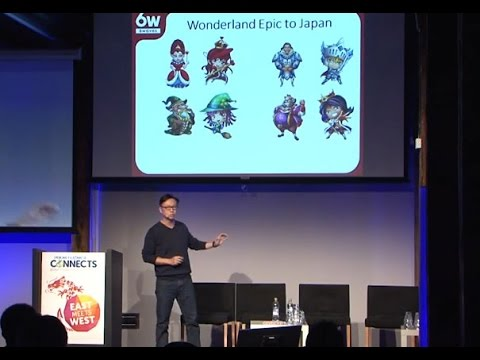
English language games ignore two-thirds of global market says 6waves
The global mobile gaming market is significantly underserved by developers who focus exclusively on English-language releases, effectively ignoring two-thirds of the potential audience.
- Releasing games only in English ignores approximately two-thirds of the global market, as 82% of current industry growth originates from Asia.
- Asia accounts for 45% of the total global games market, with seven Asian countries ranking in the top 20 for iOS and Google Play revenue.
- Localized game versions can yield significant revenue growth; for example, Supercell’s 'Boom Beach' saw a 17% increase in downloads and a 4x revenue increase after launching a Japanese version.

Chinese mobile gamers want pay-to-win says localisation expert
The Chinese mobile gaming market represents a massive, high-growth opportunity for Western developers, characterized by a unique set of consumer preferences and structural challenges.
- The Chinese mobile gaming market is a high-growth sector that reached a $3 billion valuation in 2014, representing a 175% year-over-year increase.
- Chinese gamers demonstrate a cultural preference for pay-to-win mechanics, requiring developers to ensure that financial investments yield tangible competitive advantages.
- The market is highly fragmented with approximately 200 Android distribution channels, which account for 70% of total revenue compared to 30% from iOS.

SkyMobi on why it's focusing on casual Chinese mobile gamers
The Chinese mobile gaming market is undergoing a significant shift, with growth increasingly driven by users in third-tier cities and below rather than major metropolitan hubs like Beijing or Shanghai.
- Sixty percent of China's mobile gaming population resides in third-tier cities or below, representing the primary driver of current market growth.
- SkyMobi’s Maopao app store reaches 147 million users and maintains 25 million monthly active users by securing pre-installation on 40 percent of new Android devices in China.
- Lower-tier city gamers prioritize Android devices and require lightweight game files due to hardware limitations and restricted 3G/4G network infrastructure.

DropForge Games' David Bluhm on smart branding and why mobile will always win
The mobile gaming industry represents the primary and most significant platform for modern developers, characterized by its massive global footprint and continuous growth.
- Mobile gaming is the dominant platform for modern developers, necessitating a long-term commitment to live-service operations to maintain player engagement.
- The 'DDAM' framework—Design, Device, Audience, and Monetization—is essential for success, requiring monetization to be integrated from the first day of development rather than added later.
- Independent studios must adopt the free-to-play model as the primary viable path to achieving scale and profitability within a marketplace containing over 150,000 games.

Rovio's Marja Konttinen reveals how developers can brand their way to success
Strategic brand licensing and partnerships serve as essential tools for game developers to scale their intellectual property into global brands, particularly when operating with limited marketing budgets.
- Strategic brand licensing allows developers with limited marketing budgets to scale intellectual property into global brands by leveraging partner reach and collaborative barter deals.
- Successful partnerships rely on three pillars: brand fit, partner alignment, and prioritizing the user experience by providing tangible value rather than intrusive advertising.
- Rovio has utilized brand partnerships to secure high-value placements, such as Super Bowl advertising and global retail distribution, without traditional media spending.

Finnish mobile games history: part 3
The Finnish mobile gaming industry has established itself as a global leader, characterized by a highly collaborative ecosystem that prioritizes knowledge sharing over cutthroat competition.
- The Finnish mobile gaming industry thrives on a collaborative ecosystem where developers prioritize knowledge sharing over competition, a culture necessitated by the lack of a significant domestic market.
- The sector has matured from a technical, coding-focused foundation into a sophisticated hub that integrates creative design with advanced business strategies, user acquisition, and brand development.
- Industry success is shifting away from distribution-based power toward a model driven by content quality, speed of execution, and the ability to cultivate direct relationships with fans.

Why QA is even more important for F2P games
Free-to-play games face a unique set of challenges that elevate the role of quality assurance from a standard technical necessity to a fundamental pillar of business survival.
- In free-to-play games, technical instability and poor UI design lead to high player churn because the low barrier to entry results in zero user patience for friction.
- Quality assurance is a fundamental pillar of business survival for F2P titles, as seamless mechanics and a polished early-game experience are essential for retention in a saturated market.
- Studios must blend qualitative user feedback with quantitative analytics to refine game economies and identify performance bottlenecks prior to global release.

PechaKucha meets the Mobile Games Industry
The mobile gaming industry has undergone a profound transformation, evolving from fragmented early experiments into a mature ecosystem dominated by the App Store and the free-to-play business model.
- Opt-in, reward-based advertising can generate up to 50% of a mobile game's total revenue when integrated as a non-intrusive, context-aware experience.
- Long-term player retention is best achieved by replacing simplistic tutorials with gameplay that fosters mystery and player agency, allowing users to project their own narratives onto the game.
- Sustainable financial models in the current mobile ecosystem require a strategic balance between traditional in-app purchases and diversified revenue streams like rewarded ads.

Finnish mobile games history: part 2
The Finnish mobile gaming industry underwent a transformative shift following the introduction of the iPhone and the subsequent launch of the App Store.
- The 2008 launch of the Apple App Store ended operator-controlled distribution, allowing Finnish developers to bypass restrictive barriers and access a global market directly.
- The introduction of in-app purchases in 2009 served as the critical catalyst for the industry's shift from premium, one-time-purchase models to the dominant freemium, free-to-play structure.
- Major companies like Rovio and Supercell have acted as industry anchors, attracting venture capital and providing a blueprint for success that inspires new generations of local developers.

Difficult to crack but Japan, China and Korea are vital mobile gaming markets
Japan, China, and South Korea represent the most lucrative mobile gaming markets globally, consistently ranking at the top of Google Play and iOS App Store revenue charts.
- Japan, South Korea, and China represent the most lucrative mobile gaming markets globally, with Japan ranking first in both Google Play and iOS App Store gross revenue.
- Western marketing practices are largely ineffective in China, where developers must bypass the absence of Google Play by partnering with local marketplaces like Tencent or 360 to navigate a fragmented ecosystem of hundreds of Android stores.
- Success in South Korea requires collaboration with dominant local platforms like Kakao and experienced publishers such as CJ or WeMade to manage deep localization and unique, high-incentive marketing campaigns.

Ben Cousins on what next's for gaming hardware
The evolution of computing hardware follows a predictable, logarithmic trajectory characterized by three primary trends: decreasing physical size, increasing interface simplicity, and growing user intimacy.
- Computing hardware follows a consistent trajectory toward smaller physical footprints, increased interface simplicity, and greater user intimacy.
- Future gaming platforms will likely be smaller than current smartphones, utilizing intuitive inputs like voice activation and eye-tracking to remove layers of abstraction.
- Historical precedents for wearable technology, such as spectacles and wristwatches, suggest that devices currently viewed as niche will eventually become essential, ubiquitous tools.