1 free read left. Create a free account for unlimited reading + AI research.
Create free account
Ben Cousins on what next's for gaming hardware

Key insights
6 takeaways- 01Computing hardware follows a consistent trajectory toward smaller physical footprints, increased interface simplicity, and greater user intimacy.
- 02Future gaming platforms will likely be smaller than current smartphones, utilizing intuitive inputs like voice activation and eye-tracking to remove layers of abstraction.
- 03Historical precedents for wearable technology, such as spectacles and wristwatches, suggest that devices currently viewed as niche will eventually become essential, ubiquitous tools.
- 04Incumbent gaming companies face significant survival risks during platform shifts, as evidenced by the historical difficulty of transitioning market dominance from arcades to consoles.
- 05Early movers who develop for emerging hardware before it reaches mass-market appeal gain a critical competitive advantage in capturing the next generation of players.
- 06The total addressable market for gaming is expanding toward the global population as hardware becomes more integrated into daily life.
Ask AI about this video
Transcript
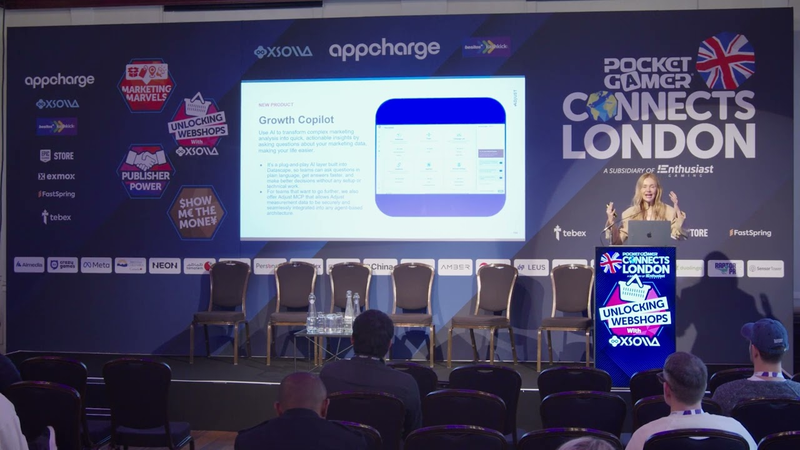
Thanks for the introduction, Oscar. Um, so I'm going to talk a lot less practically. I'm going to talk quite theoretically. Um, and do a bit of a history lesson. Actually, I'm not talking very much about games here. I'm I'm more interested in platforms and the broader long-term trends that we've seen in the industry and that we can expect to see in the future. talks about extrapolation of trends and extrapolation according to Wikipedia is a process of estimating beyond the original observation range the value of a variable on the basis of its relationship with another variable but we all know kind of what it means you look at a trend and you use the the the the solidity of that trend to define what's going to happen for periods where you don't have any data and what are trends well trends are things that aren't random um something has a trend if it isn't random so you tend to see trends in things u which aren't showing random behavior a series of data which which isn't random. So that's this is what this talk is about. It's about extrapolating trends and can we use
these sort of techniques not necessarily the hard statistical technique um but more the uh theoretical kind of approach um to guess what the future games platforms are going to look like. The problem is when you look at dedicated games platforms that there's actually not enough data. So we only have three data points in terms of game platforms when we talk about dedicated games hardware. We've got the arcade here. We've got the game the home console and we've got the portable console. So that makes uh extrapolation rather difficult. I think you that you can see trends when you imagine those three uh platforms sitting next to each other but it's difficult to be statistically significant when we look at those. So the solution then is to look at computing platforms and to uh try and extrapolate or see trends in the history of computing platforms. And what we're doing here is we're assuming that all future computing platforms will be gaming platforms because I personally believe that we're seeing the decline of dedicated games
hardware and that the uh the rise in mobile gaming is kind of proof positive that future games computing platforms will be also gaming platforms. So what trends can we see? What trends can we see in the history of computing platforms which would tell us what the next big games platform is going to be? Here are some generations of uh of games of computing hardware. This is the first generation of computing hardware. Um this is the Colossus computer built in the 1940s to crack German codes. Generation 2 was the mainframe used by big business in the 1950s beginning We had the mini computer which is one of those little known generations of computing where the mainframe was squashed down and made cheaper and smaller. We had the workstation uh a personal computer style device which was built generally for one specific professional purpose. Then of course we have the very familiar desktop
PC personified by the Apple 2. Here we have the laptop as that PC shrunk. And then recently we've had the seventh generation of computing hardware being the mobile device. And people talk about smartphones and tablets, but I think if you look at the whole gamut of mobile devices at the moment, what we're actually seeing is a continuum of touchscreen devices, all of which look the same and they start about this big and they end up about this big and you can fill almost every single point in the in that continuum. So for me the idea of smartphone and tablet is kind of um a little bit unclear. So the first trend that we see in computing hardware is that these devices are obviously getting much much smaller. But but how much smaller are they getting? Well, I looked at these photographs and did a bit of research and I was able to try and calculate the volume, the actual physical volume that these devices took up. Looking at Colossus there, um it actually extends a little back little bit back behind that image. I reckon it's about 250 x 500 by about 75 cm.
This is a main frame. My dad worked in IBM main frames for his whole uh career actually. This is a uh 1950s main frame. Looks like it's about 150 by 300 by 75 cm. This is a deck PDP1, the first mini computer and actually the first computer that was funded by venture capital about 180 by 75 by 200 cm. Uh this is a Xerox Alto, one of the first workstations. You can see the huge box that the C CPU and all of the all of the memory is sitting in about 120 by 50 by 80 cm. There's Apple 2 with a human being for reference. I I don't really recognize who that is, but some some famous guy I'm sure about if you look at the specs for the Apple 2, it's about 50 by 40 by 45 cm. the early laptops were around this size and the dimensions uh between if you and take the average dimensions between iPhone and iPad. So basically you you calculate the volume do a simple
multiplication on the volume of each of these generations of computing and you see this trend which is obviously a rather kind of logarithmic trend. So what you need to do is do a logarithmic graph and you see an extremely predictable trend here, an extremely linear trend when you map it logarithmically showing the reduce the reduction in in the average volume of of each of those generations of computing platforms. So we've got our trend for size. Uh devices are clearly getting smaller and it would be kind of a crazy uh future if these devices didn't continue to get smaller. The next trend that we're seeing then is is simplicity of input and output. The interface that these devices have. This is the interface for Colossus. Uh you would type your you write your code out on paper that would be then transcribed into a paper tape with lots of holes in it. The calculations would be run and it would be printed out on that te on that teletype there on on that typewriter. So an extremely arcane, very technical,
very difficult to use interface. uh main frames use punch cards. That guy on the right is feeding a stack of punch cards in. So the code would be written out on paper again that would be converted to punch card format. Uh the computer would run its calculations and then it would probably type them out on a teletype. Perhaps there would be a VDU uh on on a mainframe. Many computers used uh paper tapes, but they more commonly had a VDU. And that circular VDU on the right is the screen um through which the first ever video game was played. There's a game called Space Forb um created by this guy and some of his colleagues at MIT in 1962 which was played on this. So this is the first gaming device that we're looking at here. The uh workstations generally had text input. The the Alto is is famous for being the first uh graphically driven graphically uh graphic influence interfaced driven computer. But early in its days, it was dri it was written uh driven by text input and most uh most
workstations were text driven. It had a VDU but it was a black and white VDU. With the Apple uh 2, of course, we had the invention of the mouse. And now with the mouse, we we start to see an interesting pattern here with with GUIs like we had um starting with personal computers. Let's think about the abstraction of that interface. So, um, when you're using a a personal computer like this, your hand moves a mouse. That mouse then moves a cursor and that cursor interacts with on-creen elements. As we move to the laptop, and the first laptop with a trackpad was an actually an Apple device as well. From there, the mouse disappears and we have our finger controlling a pointer on screen which then interacts with the GUI. And then with mobile we have we we remove one of those steps the abstraction step between the finger and the pointer and you're directly uh touching the GUI. So there is a very clear trend uh in terms of the um removal of abstraction layers in in interaction with the GUI. So you can see
there a very a very clear um difference in the ease of use. So the first computers you had to be a scientist to operate them and modern computers can be operated by child by a child. my child learned how to unlock my iPhone when she was less than one years old. And the third trend that we're seeing if you look at this uh broad um historical view is that devices become more intimate. And what I mean here is how easy it is to get physical contact with this device and how much physical contact you can have with this device. So, Colossus was so inaccessible and so unintimate that it had a special classification system in the British intelligence um network. And this device, this computer was secret for 29 years until 1974 when the classification was list lifted. So, this is kind of a computer lacking in accessibility and intimacy because most people didn't know that it existed for 29 years.
If we move on to the mainstream, we see a barrier being reduced. We know these things exist, but they exist only in big business, in government, and in education establishments, and they're locked away in computer rooms. They're used by hundreds or thousands of people, and they have they use time sharing. This image on the right is from the University of M Michigan, I think, in the early 60s. This is a line of students with stacks of uh cards. This is computer programs and they are waiting in line to put that computer that that that program into a computer. They never see the computer or touch the computer. They give um the programs to it uh by punch cards and then they will receive a teletype back a couple of days later or maybe a few hours later telling them the results of their program. And if there's something that they needed to debug, they would have to go back and change those cards and then they get another printer in a few days. So there's a reduction there's an increase in intimacy there but not a very significant one. With the mini computer, computers moved on to office floors. And here we see
some great photos of a group of guys operating a deck PDP1 in the 60s, but they're still very much owned by big business, by government institutions and by education in institutions. The number of users drops from thousands and hundreds to to tens though. So an increasing intimacy and familiarity and physical closeness to to the devices. The workstations started to move onto people's desks. So they wouldn't they weren't very common, but people had them on their desks. They sat opposite them. They were closer to them and they were operating still fairly specialist operations but within a broader range of business types. So scientists and doctors and mathematicians and these sort of things. Single use of devices. You would have your own workstation for the first time. Look how happy those people are with their with their computers. We all know that sensation. Then of course with the PC, the vision of people like Steve Jobs, which was of course completely ridiculous um according to the to the to the incumbent businesses at the time that there would be a computer on every desk and a computer in every household. That
obviously came true and the computer came closer to us, became more intimate, became a more familiar part of our lives. Then with the sixth generation, we had a laptop in our bag and we can carry our computer with us. It's not in our house. Uh you don't have to go up to the office. you can just pop it out, put it on your lap wherever you are. And generally, I think it was quite common to have more than one computer per household as the laptop um became the uh the big platform for computing. And then of course, we've got these devices sitting in our pocket. I've got one in my pocket right now. And this uh you know, we're at the pocket gamer event today. And I think that it's quite common nowadays, of course, not only to have multiple mobile devices in the household, but for people to have multiple devices. A lot of people have a phone and a tablet. This is becoming more and more common. Children have got phones. Children have got tablets. I think we have five mobile devices in our house and there are only three people in the house. So what's the what's so what's the next big uh computing platform? If we extrapolate those those three trends,
what would be the big next big gaming platform? Well, it would be crazy. It would be a real weird event if it wasn't smaller than a smartphone. if it didn't have a simpler interface than a smartphone and if it wasn't in some way more intimate and accessible to us than a than a smartphone. Smaller than the smartphone, we've got a couple of candidates that are just beginning to to kind of bubble under the surface. We've got wearables that sit on your eyes in the form of Google's uh glass project. And this is a a a mockup of what an Apple eyewatch might look like. We're looking extremely certain that there's going to be an EyeWatch device launching in around the October time frame this year. So, here here are two potentially smaller um device types um which could be the next big computing device as big as a laptop was as big as mobile phones and tablets are simpler than the smartphone in terms of interface. There's two pretty good um possibilities out there. Okay, on the
left we've got Siri, which is getting better and better all the time, but voice activation um certainly removes any need for physical uh interaction at all, never mind your finger, your your talking and getting the device to do what you want. And on the right here, this is an eye tracker from a Swedish company called Toby, a pair of eye tracking glasses. Um, so then the idea that with a wearable of some kind or with a with a a screen or a camera of some kind that you can track your movements and use your eyes to interact with the interface again is one more step removed from using your fingers to to have to touch things. And the intimacy is obviously bringing that device out of your pocket and attaching it to your body in some way. And this is why there's so much excitement around wearables at the moment because I think a lot of people are thinking in the same way as me that the next logical step is for this computer to be part of our body in a way. Now a lot of people u will react this is a smart I put smart alec into
Google image search and it came up with this guy and I think that's a pretty good image. Very common uh response is I don't buy it. Wearables are stupid. Wearables are stupid. And you know, I think what they actually mean is I don't buy it. The current wearables on the market are stupid and I have no vision of how things could improve in the future. There's always a smart alec that can say no to anything. And if you'd have suggested uh in the early 2000s that we were going to have games on mobile phones played by 93 million people a day, they would probably have said, "I don't buy it." As well, in fact, when we think about wearable technology, people act like wearable technology is a new thing. But there are there are three kind of big wearable technologies throughout human history which have had a similar path from being kind of stupid and being used by nerdy people to being kind of cool. These are this is a guy wearing a very early pair of spectacles I think from the from the 13th century. And he looks like an idiot, right? And I'm sure walking around wherever wherever he was 12th century Milan uh people were were
ridiculing him and probably wanted to burn him as a as a warlock or something. But we've moved an awful long way now where you know a lot of women and a lot of men probably find Justin Timberlake pretty attractive in his in his glasses. Another piece of wearable technology would be the wristwatch. These have things haven't been around forever. The wristwatch was invented so that soldiers could check the time whilst they were reloading their weapons. I think during the Crimean War and men used to have pocket watches and I'm sure that people thought it was extremely strange to see a a watch attached to his arm. But obviously now we we we market these things as fashion accessories and people think that George Clooney looks kind of cool wearing his Omega watch. Another piece of wearable technology which we're completely familiar with nowadays is is the headphones. And this is an image from 1895 of one of the first headphones. That woman walking down the street in the Victorian era would probably have been ridiculed more than the Google Glass wearers of today. But obviously now we've just had a fashion headphone
brand sold to Apple for for for billions of dollars and we see celebrities endorsing headphones and the headphones being a fashion item for young people nowadays more than they were for at least my generation. And never mind that technology platforms are always ridiculed when they first come out as the yuppies and the early adopters pick them up. But then they become a ubiquitous part of uh our lives and actually my daughter um are very commonly used and accepted. So you know we might not be talking about wearable devices. I just I don't want to lock your heads into the idea that this is going to be glass or it's going to be eyewatch but we have to be ready for the idea that the next big gaming platform has to be smaller than a smartphone. It has to be simpler in its interface than a smartphone and it has to be more intimate in some way than a smartphone. Why do we care? Here's a really important thing. The reason that we're in Helsinki is because there are a few companies here
who started to make mobile phone games 10 years ago. If you look at the people behind the big successful companies in Helsinki, they were making phone games when they weren't sexy. They were making phone games when nobody took that business seriously and they had a first mover advantage. These aren't overnight successes. These companies are have either been around for 10 years or they have principles involved who've been creating games for for the mobile phone platform for a long time. So there's a real advantage to getting in there early and the first people to make uh games for uh these future platforms are probably going to end up in a good position in the future. And the other the other reason if you're not a small company, if you're an incumbent, it's really important to note that uh you're at risk uh whenever there's a potential hardware transition coming through. It's very rare for a company who's been successful in the arcade to be successful on console. And and as we you know, as we move through these different generations, those
generations of hardware manufacturers very rarely survive the transition to the next platform. So if you're not ready for the next thing that's going to happen for the next platform, if you're not thinking in that mindset, then you you open yourself up for disruption because there's another trend here which isn't one of these three trends that I talked about at the top and that's sales. So here are the seven generations. There were about 10 specialized computers in the 1940s which which were generally doing um scientific and and and and governmental tasks. The estimates are that there's been three million mainframes sold um in in uh all time and about 10 million mini computers sold. The workstation and the PC and the laptop combined are about three billion I think 3.4 billion something like that. And we're probably going to see something like five billion plus mobile devices sold uh in the lifetime of of of that product. So that makes you think okay the next platforms if we're
following this trend the human population is 8 billion people but if we think about multiple devices and if we think about reaching a much broader scope of the population from children to elderly people through through smaller more accessible cheaper uh devices then we can start to see an even bigger audience and a much bigger uh larger opportunity for us as game developers in the future. Thanks very much for your time. If you want to comment or find out more about me, uh here are my contact details. Uh thank you very much.
Summary
The evolution of computing hardware follows a predictable, logarithmic trajectory characterized by three primary trends: decreasing physical size, increasing interface simplicity, and growing user intimacy. By analyzing the history of computing platforms—from the massive Colossus computer of the 1940s to modern mobile devices—it becomes evident that hardware is consistently moving toward greater accessibility and integration into daily life. This historical progression suggests that the next dominant gaming platform will inevitably be smaller than a smartphone, utilize more intuitive interfaces, and achieve a higher level of physical intimacy with the user.
The transition from text-based inputs and punch cards to graphical user interfaces and direct touch interaction demonstrates a clear trend toward the removal of abstraction layers. Future platforms are likely to continue this shift through voice activation and eye-tracking technologies, further reducing the friction between user intent and digital execution. While current wearable technology often faces skepticism, historical precedents such as the adoption of spectacles, wristwatches, and headphones illustrate that devices initially perceived as niche or socially awkward frequently evolve into ubiquitous, fashion-forward, and essential tools.
For the gaming industry, these hardware transitions represent both a significant risk and a substantial opportunity. Incumbent companies often struggle to survive platform shifts, as evidenced by the historical difficulty of transitioning success from arcades to consoles. Conversely, early movers who begin developing for emerging platforms before they reach mass-market appeal gain a critical competitive advantage. As the total addressable market for computing devices continues to expand toward the global population, developers who embrace these trends toward smaller, more intimate hardware will be best positioned to capture the next generation of players.


















Comments