Mobile reports and market data
Documents
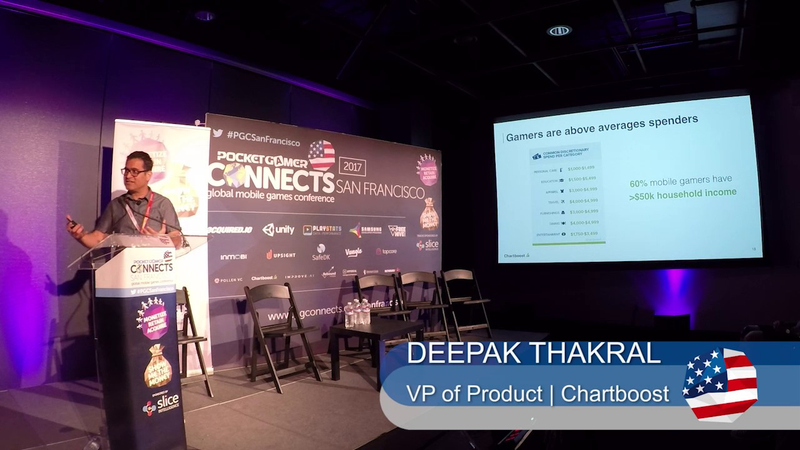
What you need to know about the future of mobile monetisation
The mobile gaming industry is currently navigating a transition from a period of rapid user acquisition to a more mature, saturated market.
- Publishers should transition from manual, waterfall-based mediation to real-time and programmatic header bidding to increase eCPMs and fill rates through competitive demand-side platform bidding.
- Vertical video ad formats should be prioritized over landscape alternatives, as they consistently deliver 10% to 20% higher conversion rates.
- Interactive playable ads are now an industry standard that effectively increase both install rates and long-term player retention by allowing users to sample mechanics before downloading.
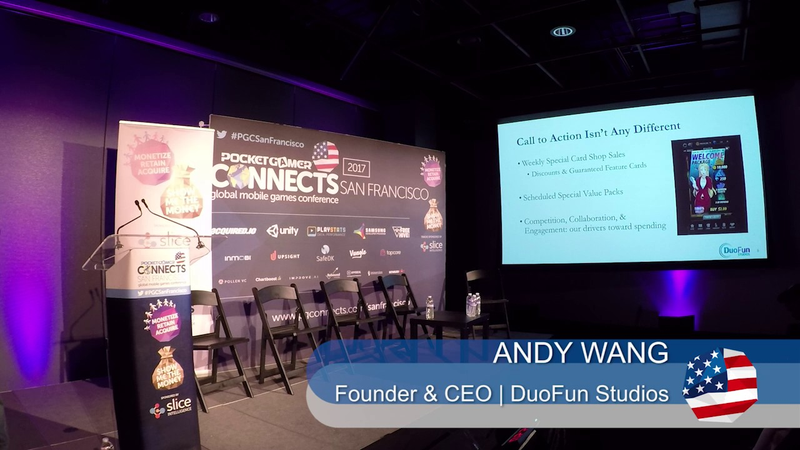
Uncovering DuoFun’s approach to mid-market IAPs
DuoFun Studios is shifting its monetization strategy away from the industry-standard reliance on high-spending "whales" toward a model centered on moderate, recurring spenders.
- DuoFun Studios is pivoting its monetization strategy away from high-spending 'whales' to target a mid-market cohort of players willing to spend between $20 and $60.
- The studio aims to mitigate high churn and 'regret spending' by replacing predatory mechanics like 'rage-pulling' with transparent value propositions for in-app purchases.
- DuoFun’s model prioritizes long-term retention and community engagement to build a sustainable revenue base that reduces reliance on aggressive, high-cost user acquisition.

How to design games for optimal IAPs
The evolution of game design in the era of free-to-play monetization requires a fundamental shift from premium, one-time-purchase models to systems built around long-term player engagement and recurring in-app purchases (IAPs).
- Monetization should be integrated into core meta-systems to drive long-term retention rather than relying on punitive friction or artificial paywalls.
- Developers should avoid the 'paradox of choice' by presenting a limited, curated selection of offers tailored to specific user behaviors rather than overwhelming players with too many options.
- Revenue optimization is best achieved through data-driven personalization, such as adjusting price points and targeting offers based on individual player spending history.

Does paid user acquisition make sense as a way to scale my game?
Paid user acquisition (UA) serves as a critical engine for scaling mobile games, yet success depends heavily on a developer’s ability to interpret metrics and maintain profitability.
- Scaling paid user acquisition requires a shift from soft-launch metrics to global performance, as install costs typically rise and lifetime value (LTV) fluctuates when targeting broader audiences.
- Developers should establish a baseline of approximately 1,000 installs to achieve the statistical confidence necessary to justify increased marketing budgets.
- Successful UA strategies prioritize a focused set of core indicators—specifically retention, average revenue per user, and behavioral milestones—rather than tracking an excessive volume of metrics.

Is this really all there is? More ways to monetise mobile games
Mobile game developers frequently struggle to achieve financial sustainability, with industry data indicating that between 40% and 60% of independent studios fail to generate enough revenue to fund their subsequent projects.
- Between 40% and 60% of independent mobile game studios fail to generate sufficient revenue to fund their subsequent projects, highlighting the limitations of traditional premium, freemium, and advertising models.
- Developers can diversify revenue and increase player retention by selling physical merchandise through e-commerce platforms that manage printing, logistics, and returns, eliminating upfront inventory costs.
- Integrating streaming platform tools allows spectators to influence live gameplay through chat commands or paid interactions, effectively converting passive viewers into a new revenue stream.

Learn the key fundamentals to social casino game design, monetisation and marketing
The social casino industry represents a significant mobile gaming sector, estimated at approximately $4.5 to $5 billion in total value.
- The social casino industry is a $4.5 to $5 billion mobile gaming market driven primarily by high-spending 'whale' players rather than mass-market user volume.
- Success in this mature sector requires prioritizing high lifetime value (LTV) and sophisticated retention strategies over broad user acquisition.
- Developers are increasingly differentiating their products by targeting underserved demographics, such as younger or male-oriented players, through quest-based systems and mission-driven progression.

Using TV to drive app downloads at scale
Television remains a powerful tool for large-scale mobile app user acquisition, yet traditional advertising models often fail to meet the needs of modern mobile publishers due to their inherent rigidity and lack of performance-based data.
- Mobile publishers should shift from traditional broad-reach TV buying to a performance-based model that prioritizes agility, real-time optimization, and clear attribution.
- Attribution for TV campaigns is most accurately measured by monitoring organic install baselines and daily uplifts rather than relying on short-term, granular click-through windows.
- Performance analysis should utilize 24-hour cycles to account for the delay between viewing a TV spot and the user completing an app download.

Unlocking capital for your studio in a mature market
The mobile gaming industry currently operates within a mature market characterized by consolidation rather than a high volume of new entrants.
- Investors are prioritizing studios with proven live operations, genre-specific expertise, and sustainable cash flow over those seeking funding for user acquisition on unproven titles.
- Studios should prioritize deep specialization in a single genre over broad diversification, as high-level proficiency is the primary driver of investor interest in a consolidated market.
- Selling legacy or underperforming titles to larger publishers allows studios to generate non-dilutive capital for new development while offloading the operational burden of older games.
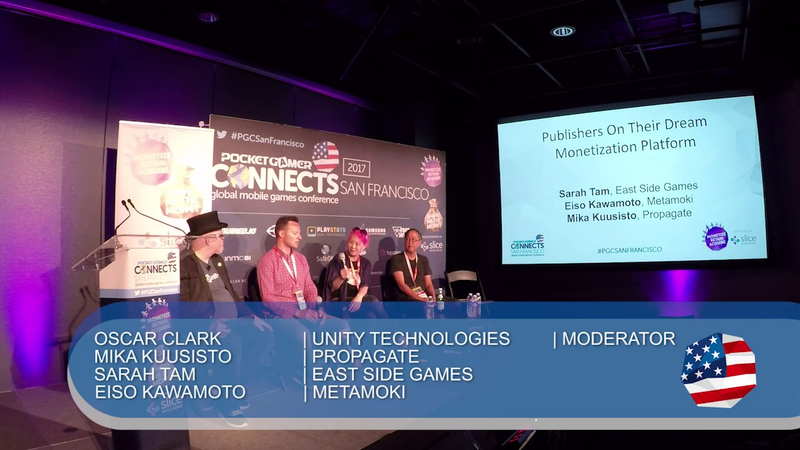
Publishers on their dream monetisation platform
Game developers and publishers currently face a fragmented monetization landscape characterized by high technical overhead and the burdensome management of multiple ad networks.
- Publishers prioritize low-friction, stable monetization SDKs over unproven yield increases to avoid technical debt and administrative overhead.
- Developers frequently encounter performance degradation in ad networks after the initial onboarding phase, necessitating scalable and reliable long-term solutions.
- The industry faces a persistent tension between the need for granular eCPM data and the requirement to maintain a high-quality, seamless player experience.
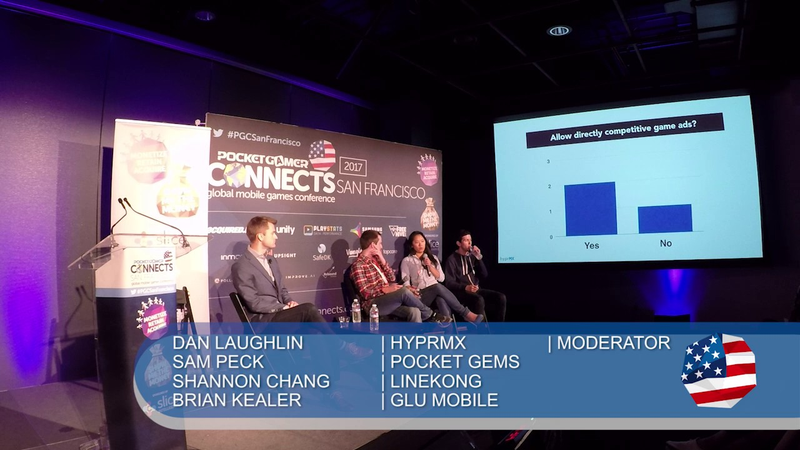
Monetisation masterminds
This discussion features monetization experts from Pocket Gems, Linekong, and Glu Mobile, focusing on the strategic integration of in-app purchases (IAP) and advertising within mobile games.
- Successful mobile monetization requires integrating five to nine ad networks to drive competition and maximize fill rates, despite the technical complexity of managing multiple SDKs.
- Rewarded video ads are now essential for all players, including those who already make in-app purchases, as they increase overall engagement and provide incremental value.
- Developers should move beyond basic payer versus non-payer segmentation by incorporating geographic and behavioral data to optimize both pricing and ad delivery.

Lean game development – MVP in eight weeks, true player-centric iterations forever
The core thesis of this approach to mobile game development is that success is best achieved through lean, iterative processes that prioritize player feedback and rapid deployment over feature-heavy, long-term production cycles.
- Prioritize day-one retention as the primary metric for early-stage success, as it serves as the most critical indicator of a game's viability.
- Develop a Minimum Viable Product (MVP) within an eight-week timeframe to validate core mechanics and minimize financial risk before committing to long-term production.
- Strip away non-essential features like 3D graphics and complex social systems in the initial release to focus exclusively on refining the core gameplay loop.
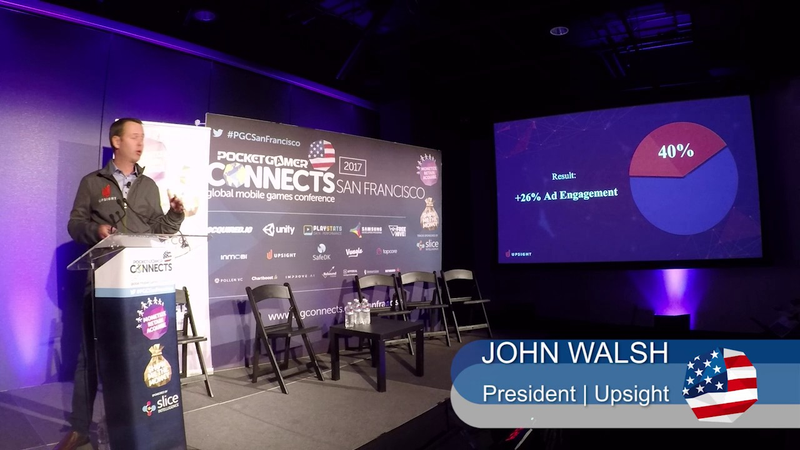
Advanced ad strategies that drive revenue and boost engagement
Mobile game developers often fail to maximize ad revenue due to overly conservative monetization strategies and a lack of granular player segmentation.
- Implementing a dynamic, behavior-based ad strategy can increase daily revenue for an app with 200,000 daily active users from $2,000 to over $7,800, yielding an incremental annual gain of more than $2 million.
- Developers should aim for at least 40% of the daily active user base to engage with rewarded video ads to maximize monetization potential.
- Ad opportunities should be integrated directly into the core game loop rather than hidden in menus, and developers should remove arbitrary restrictions like level-gating or wait times to boost engagement.