1 free read left. Create a free account for unlimited reading + AI research.
Create free account
Lean game development – MVP in eight weeks, true player-centric iterations forever
Key insights
7 takeaways- 01Develop a Minimum Viable Product (MVP) within an eight-week timeframe to validate core mechanics and minimize financial risk before committing to long-term production.
- 02Scale lean development principles across organizations of varying sizes, as the methodology has been proven effective for teams ranging from three to 25 people.
- 03Implement a weekly update cycle to serve as both a retention tool and a risk-mitigation strategy, allowing for easier testing and debugging compared to large content drops.
- 04Utilize operational pillars such as single-piece workflow and staged rollouts to maintain efficiency and test updates on small user segments before full-scale deployment.
- 05Prioritize day-one retention as the primary metric for early-stage success, as it serves as the most critical indicator of a game's viability.
- 06Combine qualitative user feedback with quantitative data to guide development decisions, which is more effective for smaller teams than relying on purely data-driven metrics.
- 07Strip away non-essential features like 3D graphics and complex social systems in the initial release to focus exclusively on refining the core gameplay loop.
Ask AI about this video
Transcript
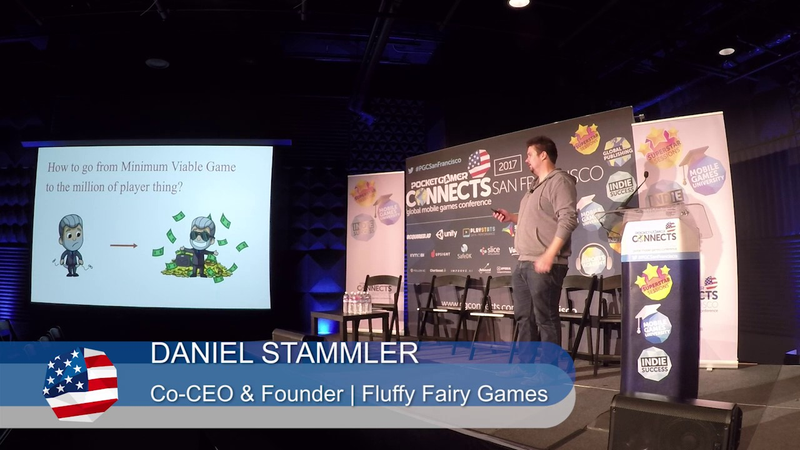
[Music] yeah okay so thank you all for being here I am Danielle and I am from severe games and I'm going to tell you a bit about how we approach mobile gaming how we release our game after eight months right weeks of development and what we're doing since then so the birth path will be a bit about like what are we doing to give you some context like a fluffy very games then how to get your game dead fat out in the market and then the most important thing is how to get from a prototype to a successful game that earns you some money so yeah I'm Daniel I'm Co CEO and co-founder of clapping fair games and we are doing idle games of classic very game so our goal is to in a weight on the idle games market and we want to become like the king of idle for mobile and we believe the way to get there is to build long term on idle games so if
you look at current ila games they're getting boring after few weeks usually we want to focus on like day 180 retention so we started the company in February 2016 so we are rather young and we grew to twenty five people now and how did we get there so we have one game alga right now it's idle miner tycoon and it's actually at seven million downloads right now and our goal is to build up a portfolio of different idle games that still have like the same audience so we can cross promote between our audience and the same time we're going to continue focusing on like the games that are out in like a games as a service aspect so our current game idle monitor-kun it's a game where you have to build up your mining Empire and become like the bridges tycoon ever and for those of you not familiar with the idle genre it's basically a genre where the game plays
itself for you you can just open it twice a day spend your money that you're earned while being offline and feel like king the most interesting thing for you would probably be that we released the first version of the game after two months of development and we still have a 50 75 % day 1 retention even though the game was super super small and super focused and like since then we're doing frequent updates with it over 50 updates since releasing the game like about a year ago so we're pretty focused on rapid iterations so how do we do it and as you can probably guess by the title of the talk we are focusing on lean game development and there's this book does anybody if you know this book yeah some hands so it's like a base of food the Lean Startup approach and the goal is in general to find out as fast as possible if your product works or if it doesn't work so if that if it doesn't
work you don't waste too much of money or energy and if it works you can continue iterating like why do we need lean in game development as you probably all already know games are usually hit driven business so the chances of failure or super high it's not unusual to have like four games out of five failing so what we thought like was like that we need to figure out as fast as possible and without spending any or too much money especially since we we didn't have any money basically if this game concept works at all or if we should just do something else and if you have those kind of thinking so how do you get like from your idea to your actual game that that makes fun because like the thing you want to know is just this games make fun for your players and I think the heart started but all of the most important are most important part is to say no to most things so for
example when we released our game we we decided against 3d because it's just too much effort we decided against social features in the first version because it wasn't necessary to figure out if the game it was only in English we had no idea our first global launch so we didn't spend any time on focusing on like how can we actually earn money but only on figuring out if the game is actually fun and also like no longer motivation motivations that we lost probably a few thousands of players because in the first version if players were engaged they finished the game basically after two or three days which is obviously bad for mobile games so those players are probably not with us anymore but on the other side we were superfast and we could figure out like is the day 1 retention good enough for us and we believe that they won retention is like the most important metric in the like in the beginning of the last time of a game to figure out if the game is actually
good or not so we we optimized everything for today 1 retention we couldn't that any Content for afterwards we we made the game we played it like thousands of times to make it as smooth as possible and we wanted to figure out if we're able to be like above 60% first a1 and actually we weight a 75% day 1 retention in our first version so we figured like it might make sense to go on with this game and also super important we have many we've met many people but only want to release perfect games that are like the they are inbred embarrassed by releasing like bad games by releasing like not complete games and I think the most important thing is to just release anything because if you're sitting home working for like a year on your game and nobody can enjoy it it's worth nothing so you need to get it out you need to get it done instead of getting it perfect so now we had our game out we had good
retention we had some organic terrific but the question was like how can we actually earn money on this game and how can we increase the game now that and we figured it might work and one of our core concepts there was to just listen to our players because we we thought that if there are decent number of players to testing some new features or some new mechanics we just believed them and we did it and by following like your players to assess you you're probably reducing your risk because it usually works if they wish for it you do it they're happy and to actually get the player feedback we answered or we're still doing this and every Google review and the important part is like to push them to send us text messages to push them to send us like their ideas their feedback and obviously there's like we have two people full-time only answering those messages and only working with it
but for us it's super important to to figure out what do players actually want and why are they playing the game why did they left the game and we believe it's perfect to spend like a decelerator on the people of working with the community just to get those inside and although people are obviously planning us text us on Facebook and email is also a super big channel for us to another important thing for us as mentioned was the rapid update cycle so we believe that if we do something it should go out as fast as possible so our players can benefit from us and that's why we're doing one update per week and there are basically two reasons for it the first reason is that people who love frequent updates so if you know that your the game you're playing is getting an update like next week you will probably continue playing it just to get a new stuff in a new update and so it's basically a retention mechanic for us and the second thing is it's also risk
reducing because even companies like supercell sometimes have like back in 2015 the super big updates for clash of clans and if you're doing like an update with like so many new features chances are pretty high that there's some really serious bug in it and by doing like those small iterations those small fast updates we basically don't change too much in one update so it's very very unlikely that we're going to have like such an issue with so many people and not being able to play how do we do one update a week so one week in Germany is five days of work so since you need to test and you need to fix the things you've found and we were only like three days of coding and now people are saying like how can you actually do something big in three days in the solution to this is like to break down things even if it sounds unintuitive so for example once we decided to add in premium
currency we just added a premium currency without any way of spending it and also without any way of getting the premium currency and in the second sprint we added like a way to spend the premium currency by offering in-app items but at this point people still couldn't even buy the premium currency so we just gave them some some parenting to play around with and only in the first print we added the possibility to diet and the reason why we did this is that it all went smoothly like we could we we didn't have any technical issues because we introduced the step by step and we could test everything isolated on the market and also if you do like lots and lots of small updates you can still achieve like super big differences the picture on the left is like our first release version and as you can see like in the last year there's so there are so many changes in the game itself but every change on its own isn't that big for the player now
one one thing I highly suggest you to do if it's somehow possible for you is to use the stage 2 a lot feature on Android so what you can basically do it you can decide on how many people of your player base should get the new update and by this way so usually we're rolling it out to 1% to figure out if there are any technical issues with the new update once we are sure that the technical stuff is ok we're going to Road up to 20% and then we're testing if there are any game mechanics issues if players are happy or unhappy with the new update and only then we're going to roll it out to 100% it usually takes like one to two weeks and you're usually rolling back like 30% of our updates because there's something wrong with them but this by using like the state's rollout year can be pretty sure that you're not up your update because there's slowly and if it's if there's a big issue in it only like 1 percent or 3 percent of your
player base will actually get it one super important aspect for us was the single piece breath flow so in the beginning with our developers doing like more than one thing at one time and starting that starting dead before finishing the whole thing and then it was basically just chaos so what we figured out is that it's super important for a developer to only have like one task at a time and to actually finish the task before starting something new and as you can probably guess like the definition for a developer when a task is finished it is usually different to the definition of a producer so it's super important to actually test the feature before the developer can start something new so though this way is like super focused on one task and then can be focused on another task and by doing this we we increase our development speed by like 10% only by focusing more and the second task the second important thing is also about focusing is always to figure out what is the critical path
what is the longest task in your current sprint that will decide the length of your sprint and by doing this you can optimize like on the critical path and reduce the sprint length and to do this we actually bug this crown so whoever is Ana critical path will get the crown on and everybody will know that this person should not be served but that you should actually help the persons become faster and for example if you if you're able to accelerate the critical path by one day you will release the new update one day earlier so it's like it makes a big difference many people are scared about releasing a lean version because they are not earning money on the game and that's usually right so we released our game of only one position of reward video ad so we didn't really earn any money on it and our approach to this is to slowly add new monetization feature so at one point we added a premium currency than a piece of premium currency special offers were only added after we had like two or
three million downloads and right now we're working on a be testing a piece so I think most developers would have chosen another approach where they would have focused more on monetization in the first place we decided against it just be fast and just to build a greater game another super important metric I've already mentioned is retention and I'd like to go a bit more into detail because we think that like yet so they're companies focusing on like they've 180 tensioned a 360 retention before actually figuring out there they want retention and we believe that if you have a bad day 1 retention and obviously their expectation of companies like machines owned that don't have this issue was they're super short or super bad they want retention but good de France victories engine but for most companies I think it's important to get the first days right and only if you got
them right to focus on more the long term stuff another aspect that's super important for us and that many people are asking us is like how do you work with data driven approaches and/or data supported approaches we believe that it's nearly impossible for a company of our size to be really data driven we tried it and we basically failed because it was so hard to interpret the data and to figure out what is actually the right thing to do after getting the data so we changed our approach to a data supported approach in which we're basically quantifying the user feedback to figure out like what are the biggest user wishes what are the most important things to focus on now and what are things that might seem important but actually are not really important for the users since we're doing one update per week automation is also really important for us because we're having like probably 50 bills a
day and basically there are two approaches to automation one Broad's would be to build your CI platform before actually starting building the game and the other approach would be to build the CI platform while building the game and we chose the later approach because we believe it's also important to have a lean approach with automation it doesn't make sense to automate everything before you actually start delivering value to your users but you need to do it step by step like first automate the most important thing is probably automated builds and only a few needed go on with mrsa one is you that we didn't whole feared is like a Minimum Viable game approach with the platform featuring so obviously Google and Apple won't feature a game if you release it after two months about AIA piece and everything so because our feature like eight months after launch and so if you have any idea of false is we're happy about it but basically the
only ways to wait until you get featured with a new update instead of getting your complete key game featured many people think that doing lean means having bugs in your game actually we believe that the total opposite is true because since we're reducing our feature set and where we only have like three or four core features in the game it's super easy to or it's a frequency but it's possible to make them back free and by doing those most printed also reduces bugs so we believe that they're focusing on our lean approach you will actually increase the code quality and their game quality now there are three misconceptions about link em development the first one is that people think that the green game isn't fun because people there are people that are think that you need social you need Facebook you need that you need that to have a fun game I think it's easy to prove that it's possible otherwise by just looking at the one retention so people kept playing
our game even though we didn't have all those things so it's probably what fun for them although there's this production value thing so we talked with lot of people from the industry in the first few months and they were all like oh you're gamers or production value it's just like just some hobby project and we believe the production value isn't important for success we related players play games for the mechanics and not for the production value and the only reason why we are focusing on production value now is to basically get better relations with Apple and Google and the first thing is that in the beginning people were like yeah you can do one update an hour per week because you're only like five people and it's all easy it's impossible in a bigger organization and we're 25 people now and we're still able to keep that up actually even increased our speed by doing stuff like focusing on critical paths and single PC workflows oh I think we figured that one out as well
thank you [Applause] [Music]
Summary
The core thesis of this approach to mobile game development is that success is best achieved through lean, iterative processes that prioritize player feedback and rapid deployment over feature-heavy, long-term production cycles. By focusing on a Minimum Viable Product (MVP) and frequent updates, developers can validate core mechanics quickly, minimize financial risk, and maintain high retention rates. This methodology emphasizes that game quality is defined by player enjoyment and mechanics rather than high production values or complex social features.
Key findings indicate that prioritizing day-one retention is the most critical metric for early-stage success. By stripping away non-essential features—such as 3D graphics or complex social systems—in the initial release, teams can focus on refining the core gameplay loop. Data-supported decision-making, where qualitative user feedback is quantified to guide development, proves more effective for smaller teams than purely data-driven approaches. Furthermore, maintaining a weekly update cycle serves as both a retention tool and a risk-mitigation strategy, as small, incremental changes are easier to test and debug than massive, infrequent content drops.
The methodology relies on several operational pillars: single-piece workflow, where developers focus on one task at a time to increase efficiency; identifying and accelerating the "critical path" of development; and utilizing staged rollouts to test updates on small segments of the user base before a full release. This approach has been successfully scaled from a three-person team to a 25-person organization, demonstrating that lean principles remain effective as companies grow. Ultimately, the strategy advocates for releasing functional, polished, and simple experiences early, allowing the player community to dictate the evolution of the game through continuous, iterative updates.

















Comments