1 free read left. Create a free account for unlimited reading + AI research.
Create free account
What you need to know about the future of mobile monetisation
Key insights
6 takeaways- 01As mobile gaming time plateaus in the U.S. due to competition from social and retail apps, publishers must focus on high-quality, interactive ad formats to maintain revenue growth in a saturated market.
- 02Rewarded video and playable ads are essential for modern monetization because they provide a value exchange that respects player choice and improves the overall user experience.
- 03Interactive playable ads are now an industry standard that effectively increase both install rates and long-term player retention by allowing users to sample mechanics before downloading.
- 04Vertical video ad formats should be prioritized over landscape alternatives, as they consistently deliver 10% to 20% higher conversion rates.
- 05The core mobile gaming demographic has shifted to a mainstream audience of women aged 35 to 44 with high discretionary income, creating a prime opportunity for integrating non-gaming brand advertising.
- 06Publishers should transition from manual, waterfall-based mediation to real-time and programmatic header bidding to increase eCPMs and fill rates through competitive demand-side platform bidding.
Ask AI about this video
Transcript
[Music] clapping folks my name is Deepa and I'm here to talk about the future trends of monetization so it'll be more broad just giving you more of a overview of what are some of the different trends we see just a quick note about myself I run product and engineering at Chad boost you might ask who's Chad boost for those of you don't know where it was largest monetization platform for gaming audiences with an SDK and over 300,000 apps we are basically in over 90% of the top grossing ios and android apps so we see somewhere between 800 million to a billion unique devices each month which allows us to collect a lot of data and you know information about what are some of the categories of games that audiences like you know your casino player are you a trivia player and we utilize that information to create rich targeting profiles that allow us to say
ok if your casino player let's show you more as related to casino games right so let's let's see what the or what are we going to talk about today so one I want to give you a little bit more information about state of the industry right what's going on here are the number of DEA is increasing decreasing about stagnant which parts of the world are we seeing more growth in second you know ad formats always evolving so going beyond just the traditional static banner ad to reward video to playable x' let us kind of take a quick peek at what we see as emerging ad formats third you might ask okay this was interesting but what's going on with the gaming user right what's happening with the audience so we go into that we will talk about brands and how they can kind of have a more of a increasing the spend into these mobile games and food we'll talk about how is the trend going towards platforms how are we automating buying and selling of these ads so before I jump in the picture of hands how many of
you work for a mobile gaming company see of you how many of you are utilizing ads in some format some way or shape to like monetize your properties okay so this will be interesting okay great so let's look at this so let's look at the overall industry right in the United States there was a huge stage of growth where the number of mobile gamers was increasing between 2011 to 2016 but what we see now is that this is mostly peaked right so according to a lot of data from emarketer and yuzu what we see that while there will still be some user growth it's largely plateaued out so what this means to a lot of gaming publishers is that you know you're not going to see that kind of huge growth that we were seeing in the past and gaming publishers have to fight extra hard to figure out ways to monetize their audiences so you might ask ok in the United States is kind of stagnant but are there other areas of the world where we are seeing huge growth and the answer is absolutely yes
so you look at markets in Asia and specifically in China what we see is that there is still a lot of tremendous growth happening here over here in China there are more users coming online with their smartphones they're buying more sophisticated smartphones and they're playing a lot more games and spending a lot more money in them almost a quarter of the money in mobile gaming so about the mobile gaming revenue is about forty six billion dollars estimated for 2017 of which roughly about eleven point to roughly about 25% is going to be happening in China so this is a big market to watch out for mobile game publishers and if you don't have a strategy yet for Chinese game monitors for our Chinese audience monetization you better start thinking of one right now right so with that you might think okay we understand that the users in the US are stagnant but what about the number of sessions what about the time spent so let's take a quick peek of that so the good news is that mobile app usage continues to grow 11% the bad news is that most of that time and the number of
boot ups that are happening are all happening in messaging and social not very surprising so our checking out your friends news feeds and when you're not doing that you're spending time watching your favorite sports activity or you are shopping right which that means is that when people are spending a lot of time playing games it started to slow down right similarly when you look at the number of the amount of time spent the amount of time spend on your phone is increasing 70% that's huge but again most of the time spent on your phone is going towards Facebook and you know instead and going to snapchat right and again shopping and sports people are spending buying on Amazon but the number of gaming the time spent in games is decreasing at a slight pace of 4% right forget it's not all that bad a large majority of time is still spent on games but again mobile game publishers have to focus and work even harder to figure out how to increase the CPM and to keep revenue growing strong so what are some of the tactics that mobile game publishers and I feel like even beyond
mobile games just mobile monetization what do you what do they need to do to keep their audiences as well as the revenues growing the number one thing and we'll talk about is ad formats and what we see is that in the world of gaming free-to-play continues to say dominate so it's not going anywhere but what's more important is that users need to feel choice they feel like they need to opt in so what we see among ad formats is the mobile app rewarded spot continues to hold very strong why is that because most of the times it's a value exchange which is very explicit I want to earn some currency I'm going to go ahead and opt-in to watch a video and then I'm going to make you know the advertiser gets a chance to show an ad that leads to some conversion it makes money for both right and what we see is that even though this spot was typically traditionally dominated by video but what we see the advent of not just video but also rewarded playable and then brand ads coming into play here so let's
see what what this means and again the other things about click to play and skippable is all emphasizing choice when you give the user a choice rather than doing an autoplay and on skippable that's irritating to them the banner pop-up is irritating to them so try to focus on ad formats that give the users choice you will actually find it's a win-win for the user for the advertiser and the publisher and we have tons of data that is actually showing us better this is true right so the other thing that we should keep in mind that is that the classic marketing funnel where you have exposure some intent some conversions is changing and especially in the mobile gaming advertising world for user acquisition is becoming even more and more sophisticated so it's going beyond just the conversion or the install event performance advertising is now becoming a lot more about ROI and retention as well as purchases how many people are making in-app purchases how many people are coming back on day seven day fourteen day 30 so what does that name that it means that interactivity has a role to play right while most
people have been passively watching video playable Zoar these interactive games give people a chance to participate and try out the game before they actually install it so what does that mean let's dig in and see what that means so the two big ad formats we continues to hold sway even in the short term one is video the other one is interactive with video it's more of a passive experience so we continue to see that 71% of players according to this data from Unity you know over 70% of players prefer to watch a video ad and more of a rewarded location so when it's an opt-in which is the reward education 54% of that preference right and so what we see is that when you are asking users to watch the video then watch it they'll learn a little bit more about the game there is sent device to them kind of you know say okay this strong interests actually like this game or like what genre or category they're showing so I'm going to go ahead and go to the app store the what's more important is that the install is not incentivized watching the ad is inside
device but the actual conversion event is organic on like it's you have to make a choice towards it but what we see even more interesting is that in video vertical is very much in right so here's the interesting data point you might ask why is vertical such a big thing what we see even in our ad network is that close to 50% of the ad impressions we see are portrayed in nature that means most of the games half the games are like vertical mode and ad in the landscape mode yet most of the traditional videos that are built by gaining and non-gaming are in landscape mode so the typical screen format that doesn't render very well it shows up at the top of the screen it's a suboptimal experience so what we are seeing is a big trend and it was pioneered by snapchat say the way you hold the phone is the way you should be watching videos so what we see is that we are building lot more vertical videos for these advertisers and we are seeing somewhere between 10 to 20 percent conversions better conversions than the traditional landscape format so this is here to stay and if you are thinking about user acquisition and you have a video ad unit make sure
it's it's vertical and landscape in nature right the other key trend we see is that in interactivity and what we see here is that you know when people have a chance to like play a game try it out see what this means they tend to have a deeper kind of engagement with the ad unit and that leads to a better conversion better quality retention as well as some purchases lifts so we looked at this and we've been at chartboost we've been making clay balls for a few months now we've launched over 100 of them and we see a lot of success across different categories so you see over here is more like a casino playable like most lots but even for match-three or trivia or puzzle game simulation games we see that there is a much higher lift in terms of installs per thousand users as well as increased CPM a number of publishers initially expressed concern hey will this take away attention from my game right will I be users continue to play the organic game what we see is that they know even when we've done a number of a/b tests we see no discernable
increase of retention or decrease in retention of the of the publishing games so what you see here is the experience right where like users can like simulate what it means to play this game they can interact with it and then they decide if they want to install it or not so we definitely see this trend continuing to hold sway so now that we've talked about ad formats right we should also talk a little bit about the gaming audience so we understand that when it's a gaming user they will tend to be having a stronger affinity for gaming ads but what does this mean for like non-gaming ads right and the first thing before we go there is we should try to understand who is the typical gaming user right what we find is that a lot of when we talk to a lot of brand marketers and agencies they'll say oh yeah we just think that the gaming typical gaming person is the nerd email 72 24 who sits in a basement playing games that's wrong that's more more likelihood of like the console market but when you look at the mobile gaming market it's very much
mainstream so we did some surveys and we did a actually Commissioner study to find out that what does the audience look like in the United States because of the huge amount of the reach that we have in the kind of users we see what we saw was very interesting that the average age is actually between 35 to 44 right and it actually skews more female than male 62% of our audiences in the u.s. playing games is female and two-thirds of them have one or more children in the household so if you think about it from a band perspective they are more likely to have affinity towards be showing brand ads to these kind of gaming audiences right what this means is that the gamer is more likely to be female 35 so think about young mom with kids they're more adjusted likely to interact the playing candy crush or bubble which on their phones right they're just as likely to interact with a movie trailer for an upcoming date night or they're just as likely to interact with the McDonald's ad to figure out the next discount coupons and I really feel that
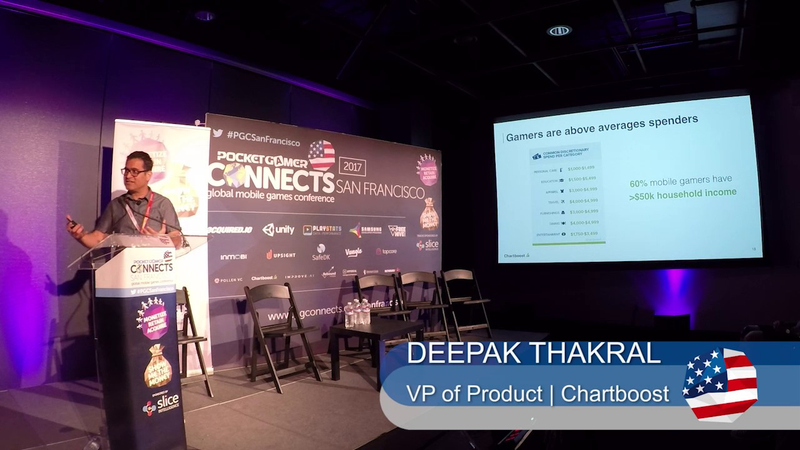
brands are really missing out on this opportunity to show up in front of mobile in up audience --is because they don't understand the nature of the gaming ecosystem right so there's more education that's required here but I definitely see a lot more advertising spent coming up through brand ads into mobile game publishers so you might ask about economics and again what we see is that close to two-thirds of these mobile gamers have more than $50,000 in annual income that means they have discretionary income right so they tend to you know buy in personal care education apparel entertainment I think you get the picture right it's a very broad set of categories in which they tend to spend in their mainstream they have discretionary income and they are buying across all these categories so that's a little bit about the gaming audience what this means in terms of gaining publishers is that we have to think beyond just games it's really a combination of games and brands that leads to higher fill rates and brands do pay much higher eCPM in
the United States we can see upwards of $20 CPM for mobile video which means it's a good game plan for publishers to say let's have a combination of both games as well as then ads that show up to my audience right so now that we understand the diversity in demand the next question you might ask is okay most of the ad networks and the SDKs we have plugged in have the ability to go reach out to gaming advertisers gaining you a how would they go and get access to brands we kind of struggle its sharpest with the same question and when we came to realize that the world of advertising has largely gone programmatic right so it's all automated buying and selling through demand-side platforms flat exchanges and this is where brands are spending their money they want to spend money on different audiences but for programmatic buying and so we definitely see that trend and so before we go there brands want to reach audience you can see like movie trailers and Pizza Hut but kind of talking about how automation of buying and selling is happening I want to take a few minutes just to
describe how these platforms are wallowing and what we see is that traditionally most of the game publishers have gone down this mediation route what that means is they set up one SDK or they might set up multiple ad network SDKs and then looking at historical eCPM will say Oh who's you know is chartboost the highest okay it's $20 CPM is great I'm going to put this number one or as unity or ad colony but it's all based on historical data whereas if you look at the programmatic world it's all based on real-time bidding which means when an user is in front of their phones send this request into a real-time bidding infrastructure basically a live auction and let multiple demand-side platforms ad networks compete to see who wants to bid on that ad request with the highest winner will right that's a more rational and a better economic marketplace but for whatever reasons gaming publishers have been largely remained with this mediation way and we think that's going to change a lot more and evolve more into this kind of a format where the
publisher this is just an anecdotal example doesn't have to be angry birds' but what we expect to see is that when users like playing games that's the publisher you know we're going to have see more of this concept or what we call as a header bidding SDK which in simple plain speak really means that rather than trying to rely on a pre mediated set of waterfall rules it opens it up to an auction and internet goes to an exchange and then the exchange is basically sending the lag requests concurrently to multiple ad networks and demand-side platforms will then determine in real time typically less than hundred milliseconds as how much do they want a bid for that ad request so it's like a US iOS user they like yeah you know what this is person is on iOS 10 living in the rest of the United States it's a high propensity to go and buy something convert into some action I'm willing to pay $20 CPM for this user so let the highest winner win and what that means with real-time bidding high a CPM the publisher wins with higher CPM tena fill rates the ad
network wins because it's a rational marketplace right as opposed to a pre mediated one and the user wins because they are seeing better targeted better quality ads alright so we definitely see a strong trend it's already happened in the desktop and mobile web world we expect to see that in a mobile gaming world also in the next two to three years and chat boost each ad was we set up our own Ad Exchange last few months we've seen a lot of good participation rates from different DSPs so we are seeing first hand the power of programmatic buying and selling in the advertising world right so just to kind of recap right what are the kind of key takeaways from here players expect high quality ads we see that in the rewarded locations we see that with these interactive ads of playable I also see a trend where beyond gaming even non gaming so basically like brands like Coke or you know Bud Light I will start to create like fun interactive games that kind of very much mimic what we are seeing with snapchat and other like Instagram and so we see that trend
happening with high quality interactive ads secondly we see that we talked about how gaming sessions are getting saturated in the u.s. that means gaming publishers have to work harder to figure out smarter monetization strategies they have to figure out better ways to do in-app purchases as well as for ads if you are doing a free-to-play how do you make hire recipients and playable as is one answer videos and other answer brands of the third answer which is how do you get more brands to participate in your inventory in front of your users third we see that the market is going to get more and more rational no more no more going to be waterfall we expect to see a lot more real-time bidding and auctions happening within the programmatic space around mobile gain ads and that's pretty much it we still have about a minute so there any questions happy to answer from you guys yes excuse me can we get a mic to you because we can't hear with otherwise so there we go someone's coming around with gone thank you
[Music] which table has the actual protein does making the board as you play last and I just have to do it out what do you think about those eyes the question is meaningful now I get you a question and I would generally I think the best part is we see that when the gameplay of the playable is as close to the actual game we see much higher you know installed rates actually even more interesting ly we see higher retention rates because those users will keep coming back to the game if it's more like a click switch away I don't know about that specific playable that you're mentioning about but what we do see is good best practices so the closer your playable is to the actual gameplay it turns out to be better what we've done is we've adopted where we have like creative producers were very much like gaming enthusiasts and they'll play the
game for a day or two understand the storyboard of the game the actual game design and then factor those key elements of the game into building that playable and we've seen much better you know we have to put more time upfront but we see better success when we do what what you're suggesting any other questions exchanging a lot of community at the community now it's great question what we see we actually used to have CP CV and we still offer today what we see most of the gaming advertisers index towards performance just say I'll pay you in a cost per install basis so we index to that majority will spend comes from that CPI this thing on the exchange it is CPM base we let the DSP take the risk but they in turn are converting it into either CPI or CPC V in the future what we are seeing is like a lot more brands are starting to participate we see target this year where we see other brands like Walmart participating and we do expect that those guys will be just
tend to be more CPM or CPC V with more focus on viewability right they want to make sure that there is mobility happening [Music]
Summary
The mobile gaming industry is currently navigating a transition from a period of rapid user acquisition to a more mature, saturated market. While user growth in the United States has largely plateaued, significant expansion continues in international markets, particularly China. As time spent on mobile devices increasingly shifts toward social media, messaging, and retail applications, gaming publishers face the challenge of maintaining revenue growth despite a slight decline in time spent within gaming apps. To remain competitive, publishers must move beyond traditional static ad formats and embrace strategies that prioritize user experience, interactivity, and programmatic efficiency.
Key findings indicate that rewarded video and playable ads are becoming industry standards, as they provide a value exchange that respects the player’s choice. Data shows that vertical video formats significantly outperform landscape alternatives, yielding 10% to 20% higher conversion rates. Furthermore, interactive playable ads—which allow users to experience game mechanics before installing—have demonstrated success in increasing both install rates and long-term retention without negatively impacting organic gameplay.
The demographic profile of the mobile gamer has also evolved, shifting toward a mainstream audience that is predominantly female, aged 35 to 44, and possesses significant discretionary income. This shift presents a substantial opportunity for publishers to integrate brand advertising alongside traditional gaming ads. By moving away from manual, waterfall-based mediation toward real-time bidding and programmatic header bidding, publishers can create a more rational marketplace. This transition allows for higher eCPMs and better fill rates by enabling multiple demand-side platforms to compete for ad inventory in milliseconds. Ultimately, the future of mobile monetization lies in the strategic combination of high-quality, interactive ad formats and the inclusion of non-gaming brand partners to maximize revenue in a competitive ecosystem.














Comments