1 free read left. Create a free account for unlimited reading + AI research.
Create free account
How to design games for optimal IAPs
Key insights
6 takeaways- 01Monetization should be integrated into core meta-systems to drive long-term retention rather than relying on punitive friction or artificial paywalls.
- 02Complex, social-heavy games demonstrate disproportionately higher performance on web platforms compared to casual mobile titles.
- 03Revenue optimization is best achieved through data-driven personalization, such as adjusting price points and targeting offers based on individual player spending history.
- 04Developers should avoid the 'paradox of choice' by presenting a limited, curated selection of offers tailored to specific user behaviors rather than overwhelming players with too many options.
- 05While regional monetization strategies like Gacha mechanics can drive growth, the high operational complexity makes them impractical for all but the most successful titles.
- 06Successful long-term engagement is driven by deep itemization and social features like guild systems rather than forced player failure.
Ask AI about this video
Transcript
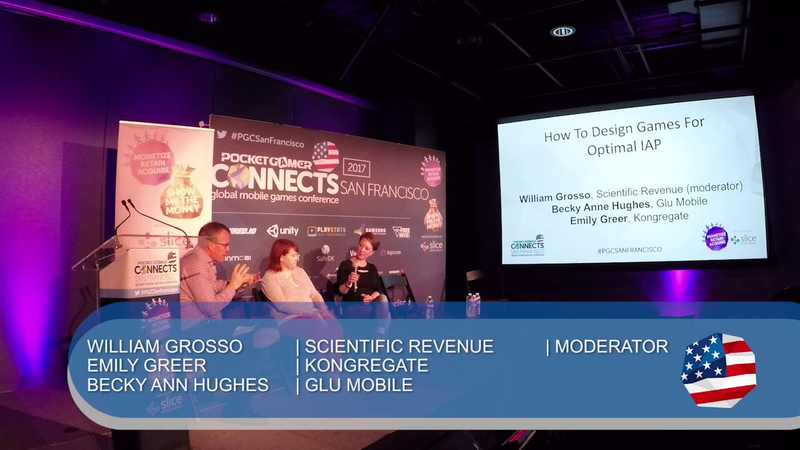
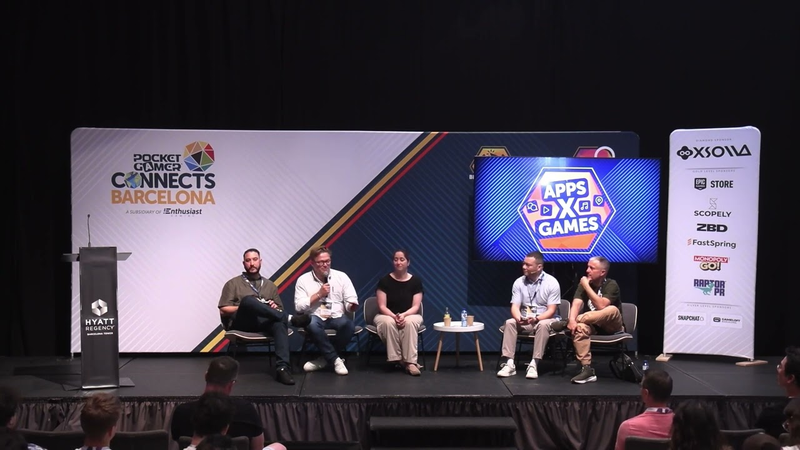
[Music] thank you for coming to the panel discussion my name is Bill I'm the CEO of scientific revenue and with me I have Emily Greer the CEO congregate and Becky Ann Hughes who's the VP NGM at glue mobile and our topic today is essentially how to design games in the presence of in-app purchases and the core idea is this when you look at our industry it's moved from premium and you spend a lot of money to get the game to downloads and in-app purchases but we're still somewhat in the early days of in-app purchases and certainly as you look at games they've evolved a lot over the past five to ten years and so the idea is to talk about that and to talk about how games are different and how they change in the presence of in-app purchases and how how to design them for this still relatively new style of
monetization so if you two could introduce yourself my career I'm co-founder and CEO of congregate which is a check it off as a browser game platform and now is also a publisher on mobile web and mostly of we play games and before starting congregate I almost like to grad school so I'm a big geek I'm Becky and cute so I am the VP GM for Glu Mobile we make - games so cooking - diner - and Gordon Ramsay - my background is actually not in games I've been in game for seven years I started my career in restaurant industry which is interesting moved over to Game seven years ago and I've seen the - franchise go from a premium product to now a fully freemium economy cool so the way to work is this I have some prepared questions and they will
you know say deep and insightful things based on their experience but if you have a question raise hand yell I can't really see anyone over there because of those lights so you know make it as interactive as many questions as you want but for a starting point so Becky back in so you've been involved for seven years with diner - from its early days as a premium product to its current incarnation Gordon Ramsay etc and what are some of the highlights of how it's changed in response to the evolution yeah it's been a really interesting experience so when I first started I was running marketing for the PC download part of the business where we were selling premium 20 older products on like big fish our own platform we were also selling try buy types of mechanics as well in those games a year later we moved to mobile and we started porting our whole games over and make using IP to do try bite-sized mechanics and then we tried to do freemium many times we
failed many times we tried on Facebook we tried mayonnaise on mobile and we finally have figured out over the last two three years so since then the studio is seeing more growth than it's ever had in its history we've seen successful movements from diner - making almost nothing - five times in the revenue on diner - that we launched a couple years ago QX for cooking national air to expand LTV for Gordon we've seen a really successful growth of integration of IP and freemium in brand that's traditionally not from you cool and now is are there any sort of general lessons you learned about how to make that transition yes the biggest thing is the team needs to understand how to run a freemium game of some importance to its that we actually broke the whole game out into its components this is really important with a traditional premium game you're not thinking with monetization in mind so with a freemium game we actually broke
the entire core mechanic took it apart put it back together again so you actually have the value that you need for people to buy IP and actually interact with virtual currency and then I think that the other the third thing is that we look at lots of different genres and we pull pieces together from really popular freemium games to add a supplement into mechanics that wasn't traditionally meant as a form and product so Emily you you've been running concrete for a long time also seeing a lot of this shift how would you react to that any does any of it resonate with you we're not generally making games we're just seeing them mostly as a product or at you know helping developers more often at later stages I haven't got a slightly different view of things we were also really really early to free-to-play when we started Connery in 2006 we thought that was going to be
the future of games and you know that was actually never right we're right we didn't actually understand what it was going to look like we were looking at conflict and second life and other things thinking oh it's going to be about a new cosmetic items and and things like that and we were we were very wrong but the thing about having an open platform is we started in 2008 we made our currency created of currency in a wallet to a land API to allow developers to charge for games and we started to see experiment and the games that worked well initially were all a mess mostly from China but some some Western and those are the games that were the most natural because they had massive gray economies um when they were subscription and with money repaid so there was just 10 up demand for people to buy start buying directly so we
learned a lot from that in terms of how I apiece would work then around the same time isn't it was all very much through this RPG and focused in terms of uh what works and then a few years later you have the social game explosion and suddenly people started figuring out how to do it more for casual and make it work on Facebook and the thing that I remember and feeling and I think created a lot of things and a lot of people about replay is that those early durations were relatively punishing I think particularly on on Facebook and Oh China on Facebook especially early the so you need to get users people designed around them being disposable so you could put in very harsh a walls and very sort of very punishing mechanics
and nor a lot of but developing feelings I think what happened gradually over the last years is that people have started valuing the players form and that sort of gentle the way that people create IDs are not immediately looking for the friction point and then figuring out how to how to charge for that they're thinking and that you talking about okay how do we create value and status pain and that's the general direction I think also the bit you said about living a lot of genres I think there has been a lot of experimentation across genres and that has tourists fed into each other attitudes a little bit more similar mechanics being picked up in a lot of different genres but there's also a lot of things that are just really huge on a lot of mechanics at a generous yet yeah like time work and idle games are not useful other places definitely not and and and what you said about looking
for the games of pent-up demand and great markets it really doesn't apply to most genres either but it's a really interesting insight so great so can you talk a little bit more about desktop versus mobile and and the comparison there yeah Kongregate revenue now is come from mobile some of the games that you might know as for venture capitalist animation we're down that he rises over content launch so we span from towards capsules to you know I think the the word core but steps towards the in the core direction and most work into a publishing platform so both on Kongregate comm mobile and now often on steam and to see some pretty interesting patterns there with certain games doing quite well on web at a games relative to their mobile terms and other games where
it really doesn't subtraction in general what we're seeing is the the more in-depth the game in terms of is it up you know you should get hobby that you're spending a lot of time on the better it doesn't 11 C so the animation for down and bit heroes have guild you know and a lot of a lot of things that you're going to want to refer to a wiki before and other types of like larger social experience experiences and those are the games that do disproportionately well on web and I we don't have as much experience on Steam but we see that whereas the games that are more casual and special ones that have more advaced monetization are significantly weaker so just to drill down a little bit more when you take a part of mechanic and then you remove the friction and you figure out where the value is being can you give it a specific example if someone out there
saying how do I I'm going to take apart my mechanic okay so let me say well is it Lisa please kind of get a story from the diner - the cooking - so when we did diner - a couple of years ago with our first real premium - game for us with a huge experiment and our cable which is the mechanic we didn't change it that much decided we added a fatal base model we actually followed more of a candy crush model where we have energy you have to fail you're trying to get the player to fail and we didn't change a mechanic much except to add goals where you have to either succeed or fail that didn't work as well for us so we ended up taking those learnings and then really taking a hard look at cooking - understanding why we failed but the big thing we realize is that fail based model is not the way to go for current free-to-play gaming you don't want to try and tune your game to make sure people are failing you want to actually make them feel good we took the core cooking - mechanic we broke down all the parts so when you look at cooking - it's
a component of anything that you would have in in a kitchen right so you got stove you've got the different mechanics also with flow you're you're tethering your your color-matching you're chaining there's like those core components you're in old cooking - also seeding the players we took each of those individual mechanics and we prototype them in different ways so I ended up putting it on putting cooking - back together in a way where all of those components but then that level has value everything you're doing the food to the appliance and everything has value and then the actual core strategies that you play in the game are all actually tied to things that you could monetize on boosts and stuff like that but you could also be very skilled at it so we took those particular things we put together the other thing we added with cooking dashes we added a lot of depths in itemization which diner - didn't have as much so we were - very careful about what we were itemizing the consumable economy and how we're putting the boots together and then from cooking to Gordon we took our learnings one step further and we
realized like ok we have a solid mechanic we took a lot of the strategic elements out of the game which actually kind of made it less fun and a little bit harder we added some of those strategic elements back into Gordon so you can swipe to collect Gordon has a special like you play he has a special frenzy mode and then we also start adding PvP and social elements that was the next step with Gordon that was the next layer value that we added and that wasn't nothing burg pretty mechanical that was basic saying a look at the systems across the entire meta of the game so that we're not only adding value on day one but we're adding value on day 365 which assumes a lot of players in the game cool cool so are there any questions so far or should we keep going ah Dean [Music] yeah I can also repeat the question
[Music] just do it not repeat Thanks okay hi there is a study about the in-game purchases that if you only put like five different license pricing models in your game I don't play a quite different amount of money and you will get an IRS and almost a commend you can be a villain I mean we actually find the more opportunity to give them suspend money the better probably different yeah
and I think not quite sure whether you're asking about different things to spend on or you're talking about different right points okay so we tend to keep you a fairly narrow range of price points um but one thing we do on web we don't have as much flexibility on mobile is that we adjust what those price points are based on your history expense so if somebody we start off just showing five dollars to a hundred dollars but if somebody spends $100 then we might drop one of the lower price points and then show a 250 or show a 500 now on mobile because it's kept at 99 that doesn't work but we found that that that works very well and it's it makes it more efficient for the player to to spend money absolutely so so we do
similar things where we track spend by player and then we will have trigger points that kind of certain points that they actually spend both of LTV and we will give them special offers for that it isn't that in our bank we definitely have 110 different offers from a member of hard currency be also self soft currency clucks get one left offer than hard currency but that's just kind of thoughts house optimized vscp gives a lot more opportunity to optimize within the bank and our sales or girl yeah the thing I would throw out there is it should be working yet area the thing I would throw out there is that for any individual player at any point in time a small number of authors is the right thing to do otherwise you run into what's often called the paradox of choice which is you know the user stops playing the game and start thinking about what they should buy and then you know they go play candy crush because it's easier so you know but over the course of the game and at various points
in the game a large number of differentiated offers based on you know the users spend history and engagement history and so on and you know triggering them based on user behavior is often very good in the games we supported scientific revenue they range from a twenty-two and eighty percent pay wall visitation rate and if only 20 percent of your players are visiting the pay wall you need to have interstitials you need to have splash screens and so on you need to have different ways delivering the offer so I'm not sure what study you're referring to either but at any given point restrict the number of choices but overall you need a lot of them we also tested starting with some of those higher price link upfront and we found of that scared players away so I'm starting with a more modest set was better it also protected us more from fraud which is more of an issue on on on browser than it is yeah and you know Emily does inside
herself but she made some amazing presentations and yeah the rule about no never show player a night a price point greater than ninety nine dollars and things like that if you go out and you google Emily Greer monetization you'll get linked to like this vast body of work all of which is pretty good so you know go get those slides any other questions from the audience I'll be back so the question is what's your global strategy for monetization so we we have a strategy we haven't executed yet but we do we do think it is actually an opportunity to moderate price point by location for short I'm not sure how deep that will go or how diverse it will be but we are looking at that a lot of our localization right now is mostly
language localization and App Store localization targeting to make sure that when they go to the App Store they download the next the next piece is actually trying to look at peyote globally we mostly focus on one sort of having consistent practice around question mark ends up in the database we've done that I think part of it for us is we still don't feel like we're doing a good enough doing as great a job as we could on the sort of mirror in local admission and that the larger localization global strategy requires those a lot on in terms of events and communities and my ap all together and we kind of want to when we get there we want to do it all together and write and we're not doing that much yet so if I understood correctly back in your you were basically talking about varying prices but not varying the game very much and Emily by talking about events
and so on you're talking about actually adapting the game a little bit more yeah so to actually very different approaches to global global market monetization sir follow up around that or do that is gorgeous yes so the question was when you go into a local market do you change the way people spend money and the example was in Japanese games there's a preference for Gacha based monetization so so we do not do that right now but it's definitely something that we're investigating and we would be learning more about the thing you need to keep in
mind is the level of complexity you're introducing relative to the size of the opportunity of running a game especially you know a very complex game is hard enough and balancing it correctly is difficult if you have a game that is at sort of a peak level of popularity in a lot of places and it makes sense to really do this in creating a localized version but the average game the median game probably even you know anything that's not in top 50 grow things than them of effort you're putting in relative to what you're getting out and it's probably you know what you're not optimizing for that country but you're optimizing for your overall efforts and probably that effort is better spent on another event or building a new game that's a good point a lot of our localization I mean we focus on making sure the game is brought up taalib globally so a lot of the arts file that we do a lot of how where we talk about it via the messaging
is trying to be as broad appeal as possible to maximize the installs that we have in the game oh and there's actually a famous case study when Caban tried to bring Marvel contest of Champions to China there are a lot of articles at the time about what they were doing and how they were doing it and they invested a lot of effort for a large sized opportunity but ultimately it didn't work the game was not well suited for the Chinese market and so that's the thing to keep in mind another thing to keep in mind is that if you do exactly what everybody expect on the one hand that may be more familiar but it's also less fresh so if you take a game that is that that might come in and feel innovative to them and make it more generic that might not be helping the game it might be it could go either way but you did something distant fruit cool so we have about two and a half minutes left [Music]
so what are your thoughts on annuities and how they tie into your in-app purchase strategy um we do them but it's very very important to balance them correctly because we have had situations where we did something that was a little too generous and we absolutely undermined the long-term spending from that and then taking away something that is generous is in a long living game is extremely difficult we managed to do it but I would say it can create a great stability in terms of revenue it can create if it's designed right it can create more incentive to spend or you know a happier player overall and either of those things is powerful but it's also pretty easy to screw up we using it as well as well the the thing we've found is that when we design them it's
more about retention and long-term engagement that it is about helping in in terms of like the subscriptions we have in the game those and those things so a lot of mechanics that you'll see are you know come back check in and collect this thing over months weeks whatever but it's definitely more about retention engagement for us and just to mention I think there will be videos available but my colleague had actually gave a talk on annuities this morning so you can either follow up with him or you know watch the video later plug for you Ted anyway so under a minute left any quick questions and if not you know thank you both so last question okay thank you very much and very important [Applause] [Music]
Summary
The evolution of game design in the era of free-to-play monetization requires a fundamental shift from premium, one-time-purchase models to systems built around long-term player engagement and recurring in-app purchases (IAPs). Industry experts emphasize that successful transition to freemium models necessitates deconstructing core game mechanics to identify where value can be created and monetized without relying on punitive friction or excessive paywalls. Rather than forcing player failure to drive spending, developers should focus on creating rewarding experiences that encourage consistent interaction and long-term retention.
Key findings indicate that while monetization strategies vary by genre, successful games often integrate social elements, guild systems, and deep itemization to sustain player interest over extended periods. Data-driven approaches, such as adjusting price points based on individual player spending history and utilizing targeted offers, are essential for optimizing revenue. However, developers are cautioned against the "paradox of choice," noting that presenting too many options simultaneously can overwhelm players and decrease conversion rates. Instead, a limited, curated selection of offers tailored to specific user behaviors is more effective.
The scope of these strategies spans mobile and browser-based platforms, with findings suggesting that more complex, social-heavy games perform disproportionately well on web platforms compared to casual mobile titles. Regarding global expansion, experts advise that while localizing monetization—such as adopting regional preferences like Gacha mechanics—is a potential growth lever, the operational complexity often outweighs the benefits for all but the most successful titles. Ultimately, the industry is moving toward a more player-centric design philosophy where monetization is integrated into the game’s meta-systems, ensuring that value is delivered consistently from the first day of play through the first year and beyond.













Comments