Mobile reports and market data
Documents
For the Win: Breaking Down the Preferences of Asia's Mobile Gamers
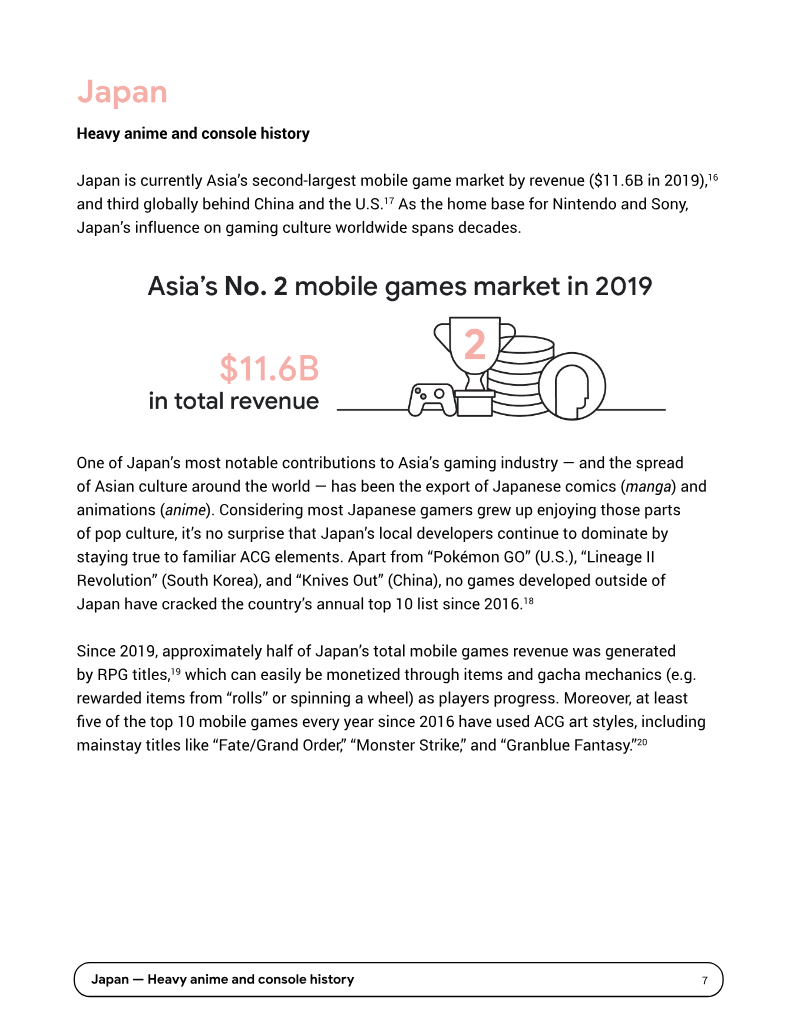
Asia's mobile gaming market, home to 1.21 billion players and more than half of the world's mobile gaming population, is not uniform, and success in one country does not guarantee success in another.
- Asia accounts for over 50% of the global mobile gaming player base and generates the majority of the industry's total mobile revenue.
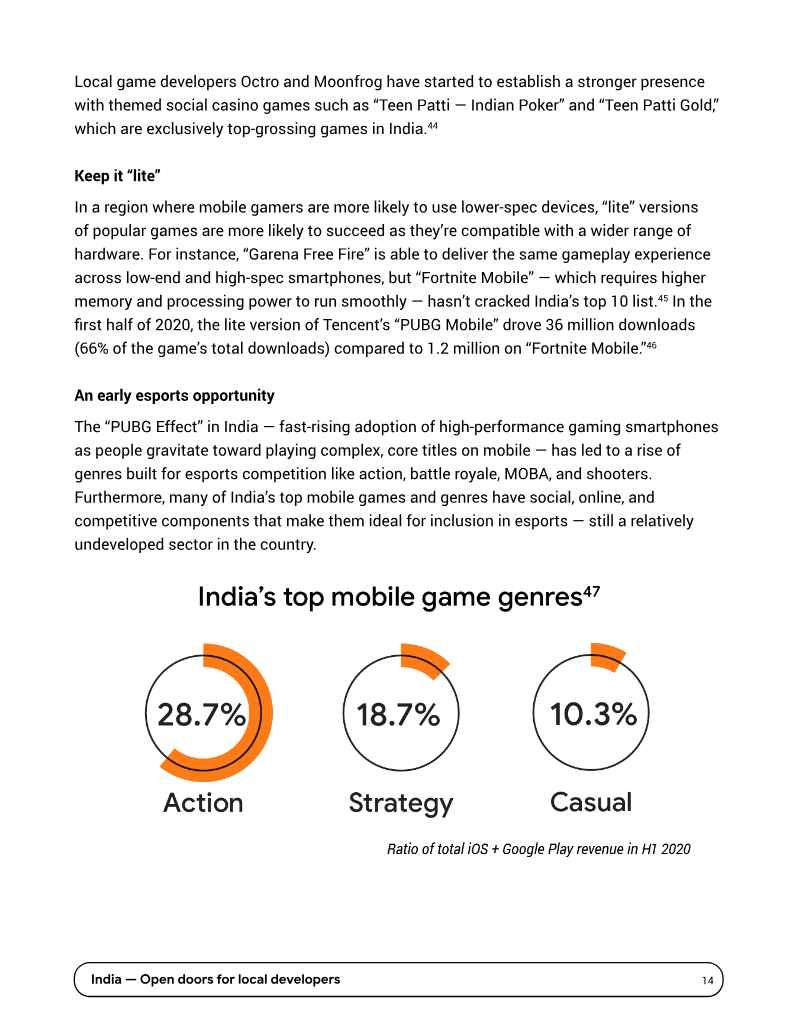
- Mobile esports and competitive, socially-driven titles are displacing traditional genres across all Asian markets, marking a major shift in consumer preference through the first half of 2020.
- China remains the largest market, where success is driven by migrating PC intellectual properties to mobile and navigating a regulatory environment that requires domestic partnerships.
From Playing to Paying: The Art of Monetizing Games in Asia
Monetization in Asia's gaming market is shifting as developers respond to rising player spending power, especially after COVID-19.
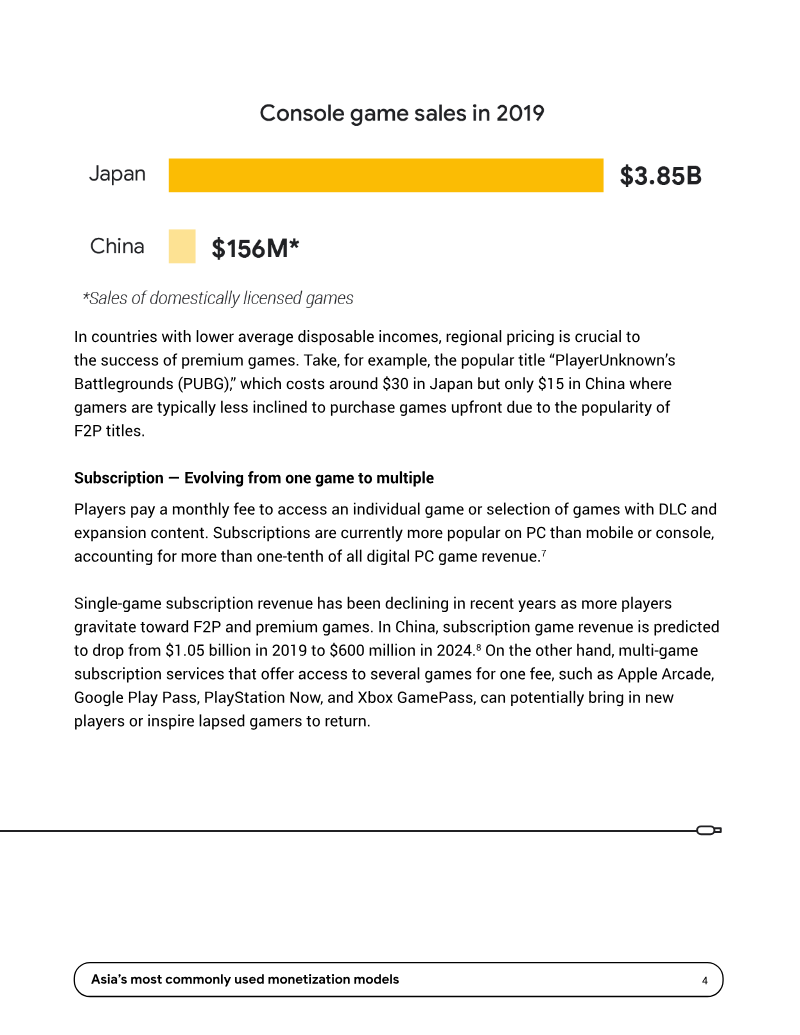
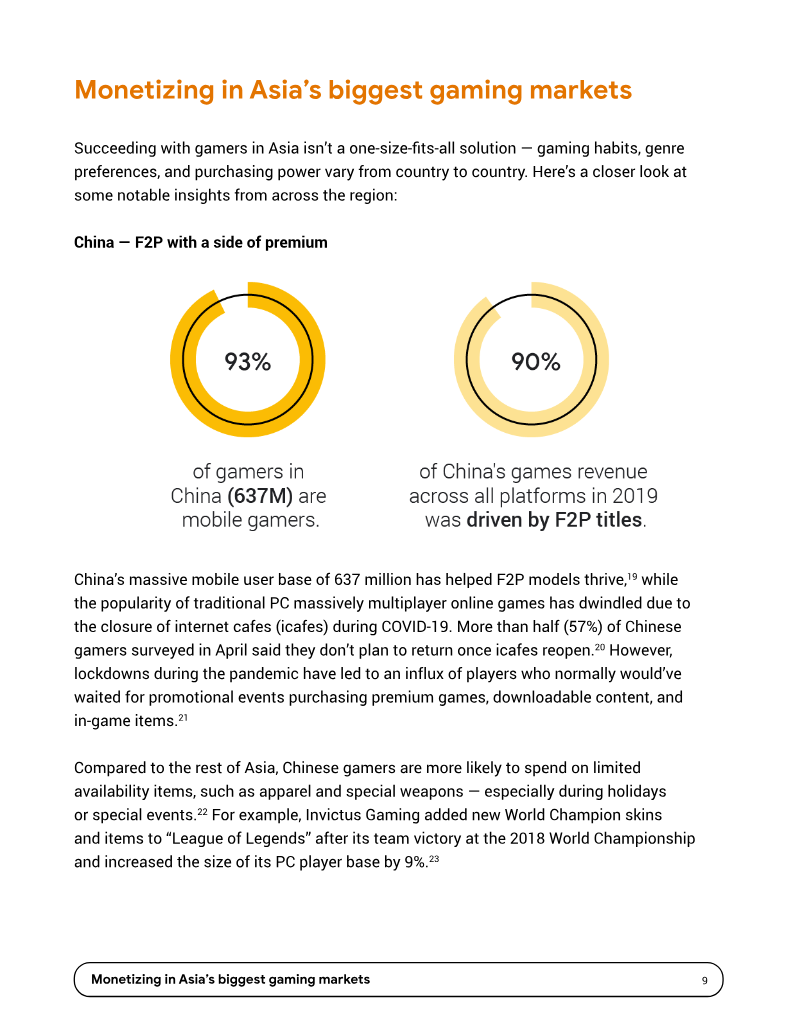
- Free-to-play (F2P) is the dominant monetization model in Asia, accounting for 98.5% of all mobile games revenue in 2019 and 100% of top-grossing titles in China.
- Japan is the most lucrative mobile market in the region, generating $12.84 in revenue per download compared to the $1.53 regional average.
- Emerging markets like India are rapidly adopting sophisticated monetization, with battle passes appearing in 50% of the country's top-grossing games by early 2020.

State of Mobile 2020
Mobile reached record scale in 2019, and App Annie's annual review argues that the platform has become central to how consumers play, shop, watch, socialize and manage money.
- Mobile gaming remains the industry anchor, generating 72% of all app store spending and outperforming the combined revenue of PC, console, and handheld platforms.
- The mobile market doubled in size since 2016, reaching 204 billion downloads and $120 billion in consumer spending in 2019.
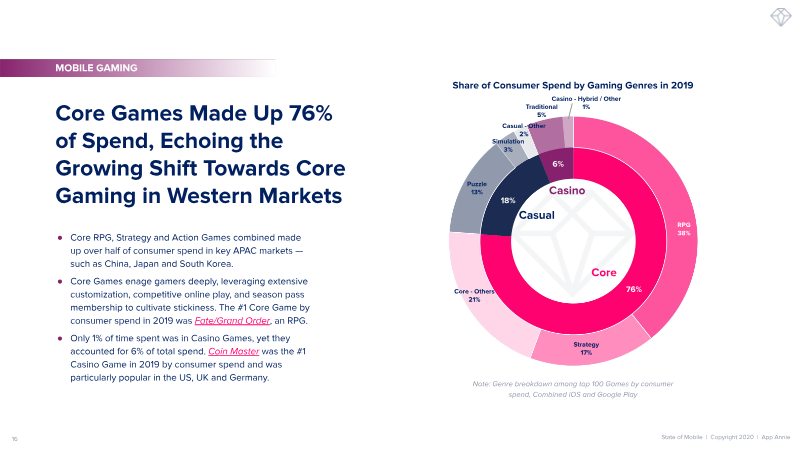
- Core gaming titles, specifically RPGs and Action games, drive 76% of total consumer spend and capture the majority of user engagement time.
Tower Defense Games: Deconstructing the Superstars (2020 Industry Snapshot)
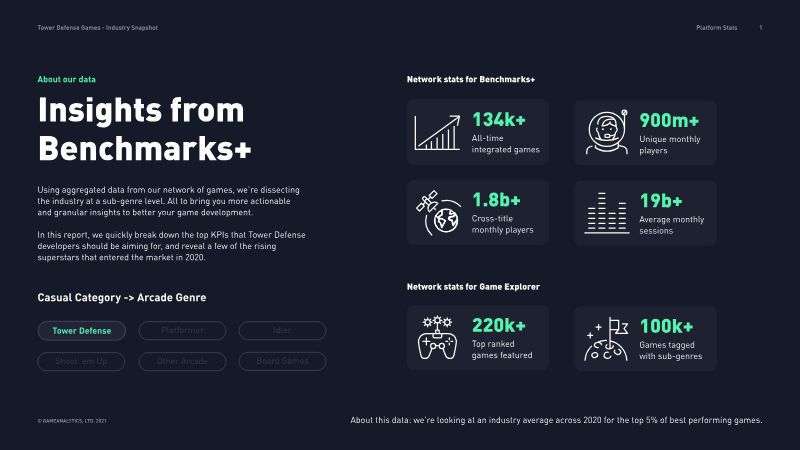
This 2020 industry snapshot uses aggregated data from a large mobile games network to profile the Tower Defense sub-genre within the Casual category's Arcade genre.
- Tower defense games demonstrate high monetization efficiency with an ARPPU of $83, an ARPDAU of $1.66, and a daily conversion rate of 3.83%.
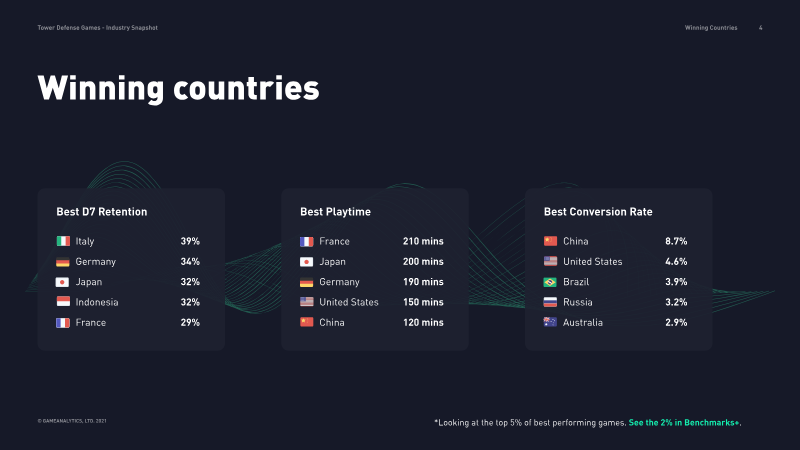
- China is the most lucrative market for the genre, achieving an 8.7% conversion rate, which is nearly double that of the United States.
- Regional engagement metrics vary significantly, with Italy leading in Day 7 retention at 39% and France recording the highest average daily playtime at 210 minutes.
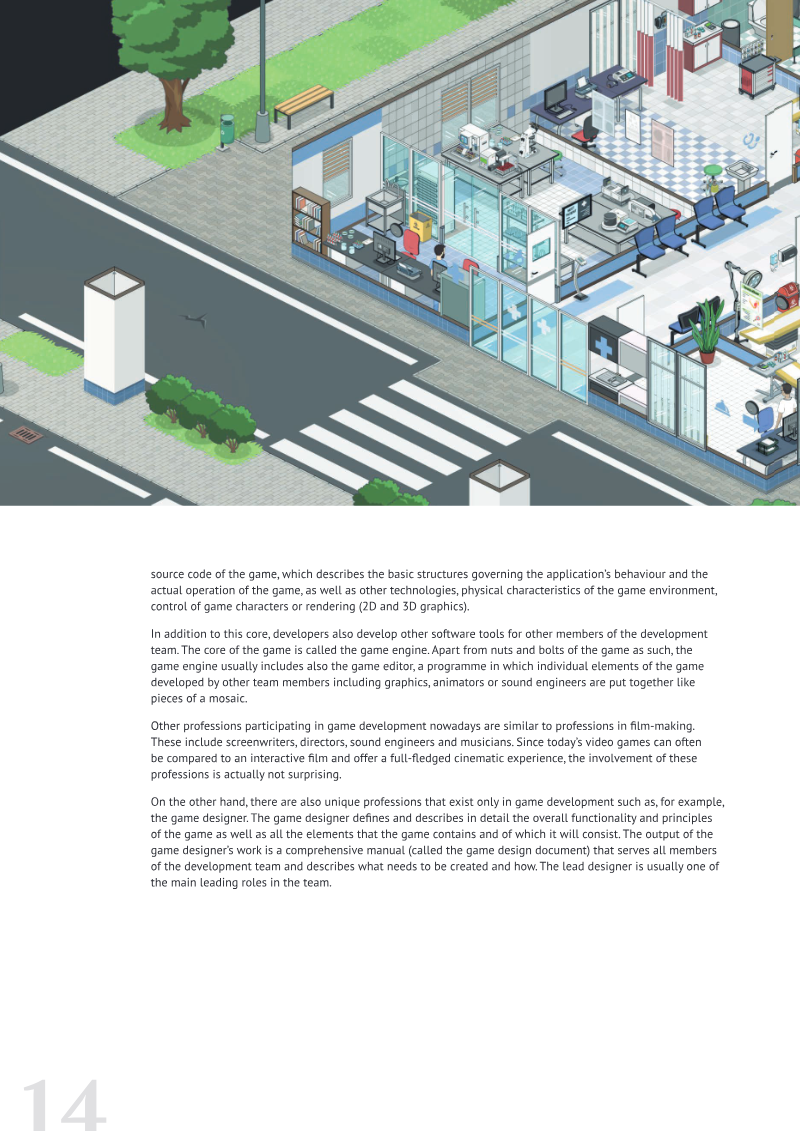
Czech Video Game PC, Console and Mobile Game Developers in Czech Republic 2020
The Czech game industry is economically significant and fast-growing, yet it receives almost no targeted state support.
- The Czech video game industry experienced rapid growth between 2017 and 2020, with annual turnover rising from CZK 2.26 billion to over CZK 5 billion, representing a 29% average annual growth rate.
- The sector is highly export-oriented, with approximately 95% of revenue generated from international markets, primarily the United States, Germany, and the United Kingdom.
- As of 2020, the industry comprised roughly 110 domestic studios employing 1,750 specialists, with revenue already tripling that of the national film industry by 2019.
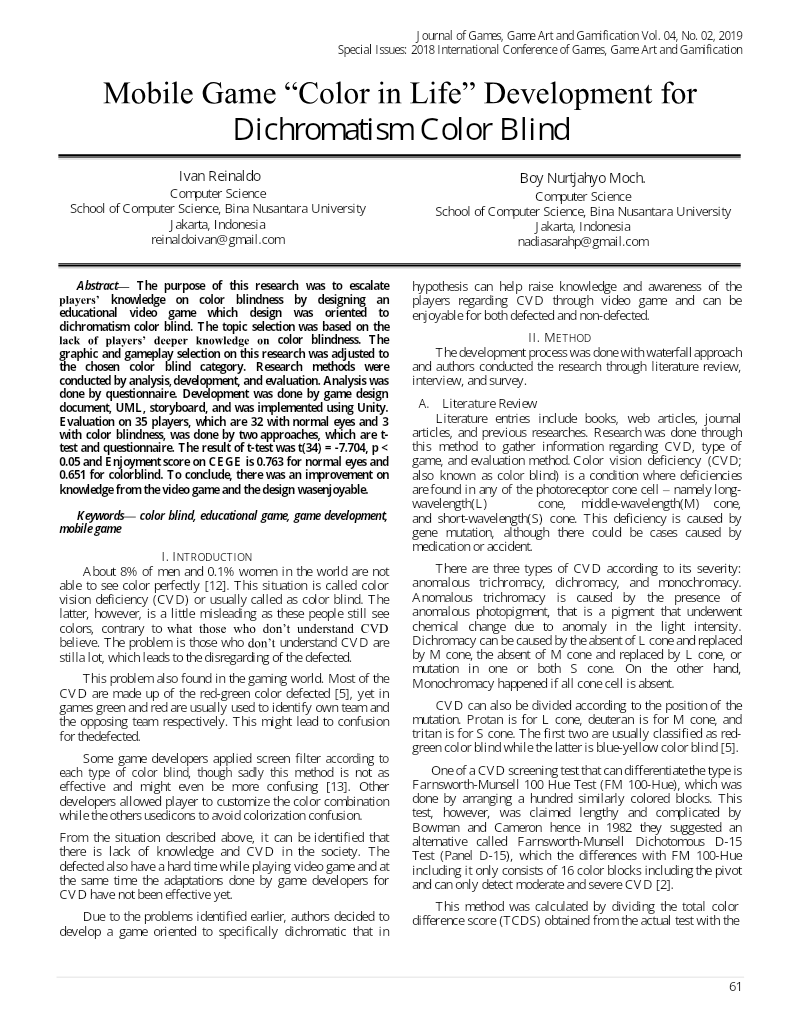
Mobile Game "Color in Life" Development for Dichromatism Color Blind: Indonesia
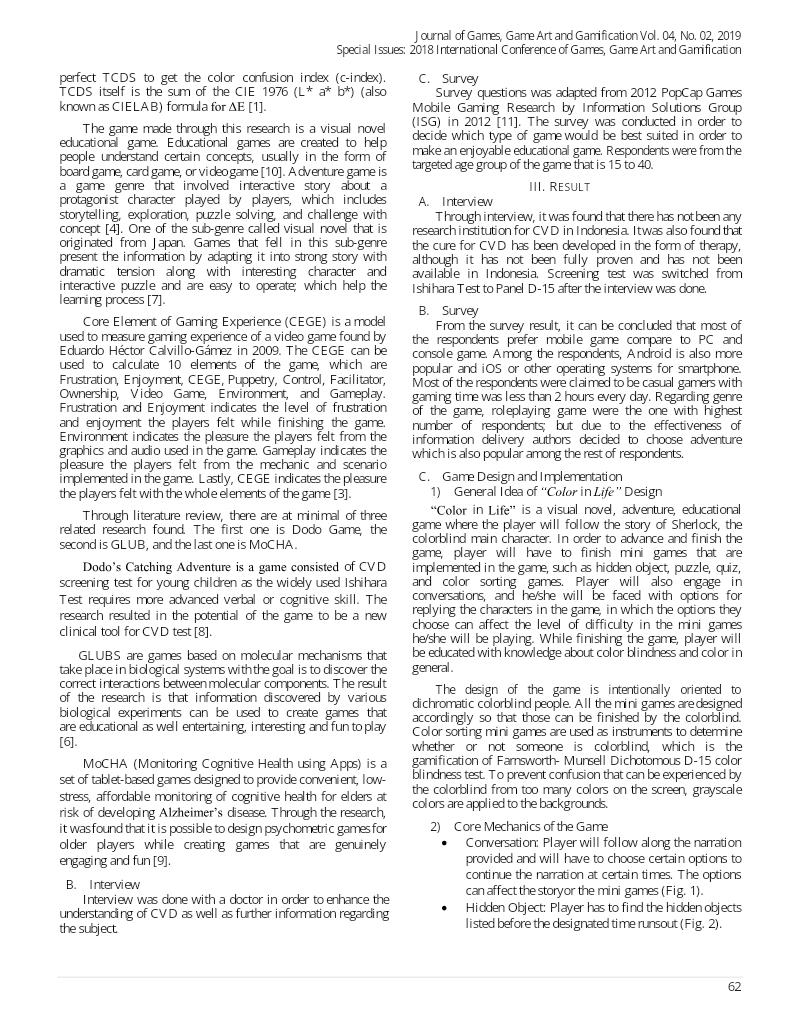
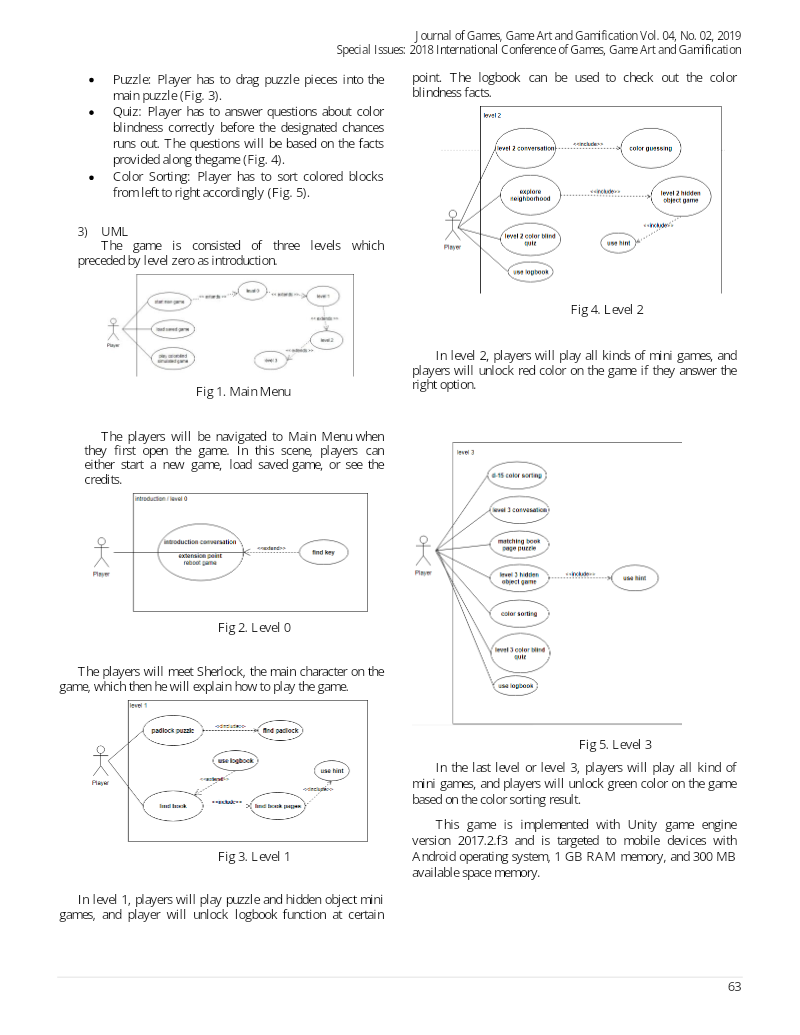
This research focuses on the development and evaluation of an educational mobile game, "Color in Life," designed to increase awareness and knowledge regarding color vision deficiency (CVD), specifically targeting dichromatism.
- The 'Color in Life' mobile game significantly improved player knowledge of color vision deficiency, confirmed by a paired samples t-test showing t(34) = -7.704 and p < 0.05.
- Visual novel and adventure genres effectively deliver educational content without compromising entertainment value, as evidenced by high scores in enjoyment and environment metrics.
- Inclusive design, such as grayscale backgrounds and mechanics based on the Farnsworth-Munsell D-15 test, allows for a unified gaming experience for both color-blind and non-color-blind users.
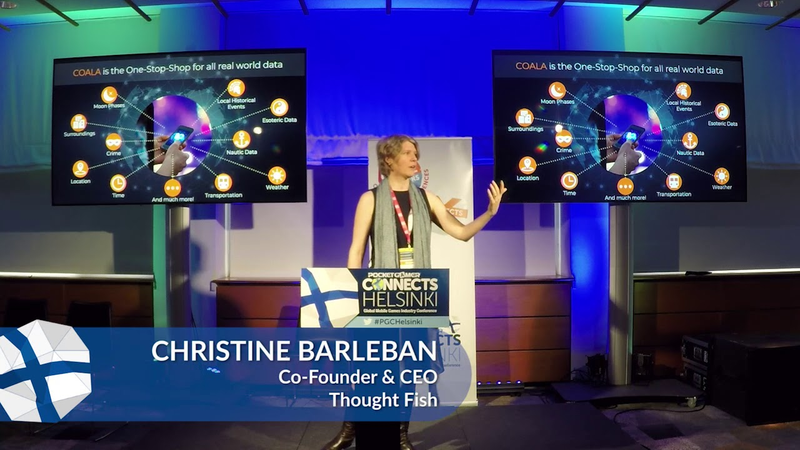
The Nuts and Bolts of Real World AR Gaming
Real-world augmented reality (AR) is emerging as a powerful genre in mobile gaming, serving as a significant driver for user retention and session frequency.
- Integrating real-world data into AR games can increase daily user sessions by 30%.
- Titles utilizing location-based features, such as The Walking Dead: Our World, have achieved day-seven retention rates 54% higher than the top 50 US game average.
- AR should be redefined as a tool for digital products to react to environmental context, such as using weather or moon phases to influence game mechanics, rather than simple camera-based overlays.

Optimizing UA Budgets by D7 ROAS | UA Coffee Talk
The primary thesis of this discussion is that Day 7 Return on Ad Spend (D7 ROAS) is an insufficient and potentially misleading key performance indicator (KPI) when used in isolation to optimize user acquisition (UA) budgets.
- Relying exclusively on Day 7 (D7) ROAS for UA budget optimization is a strategic error that ignores long-term retention and varying payback windows across different user sources.
- Automated bidding models on platforms like Facebook and Google prioritize short-term ROAS, which can mask declining revenue curves that emerge after 60 days.
- A single, consolidated D7 ROAS target across all traffic sources leads to suboptimal budget allocation because it fails to account for the distinct monetization profiles of different channels, geographies, and platforms.
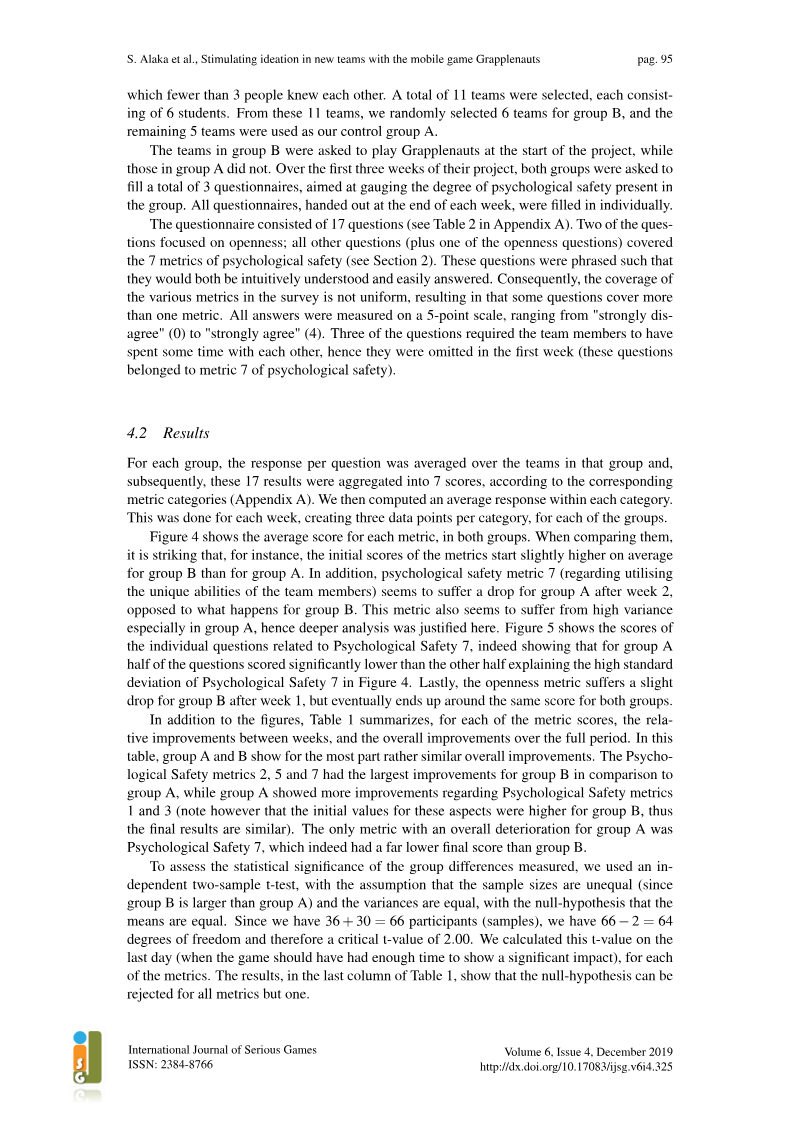
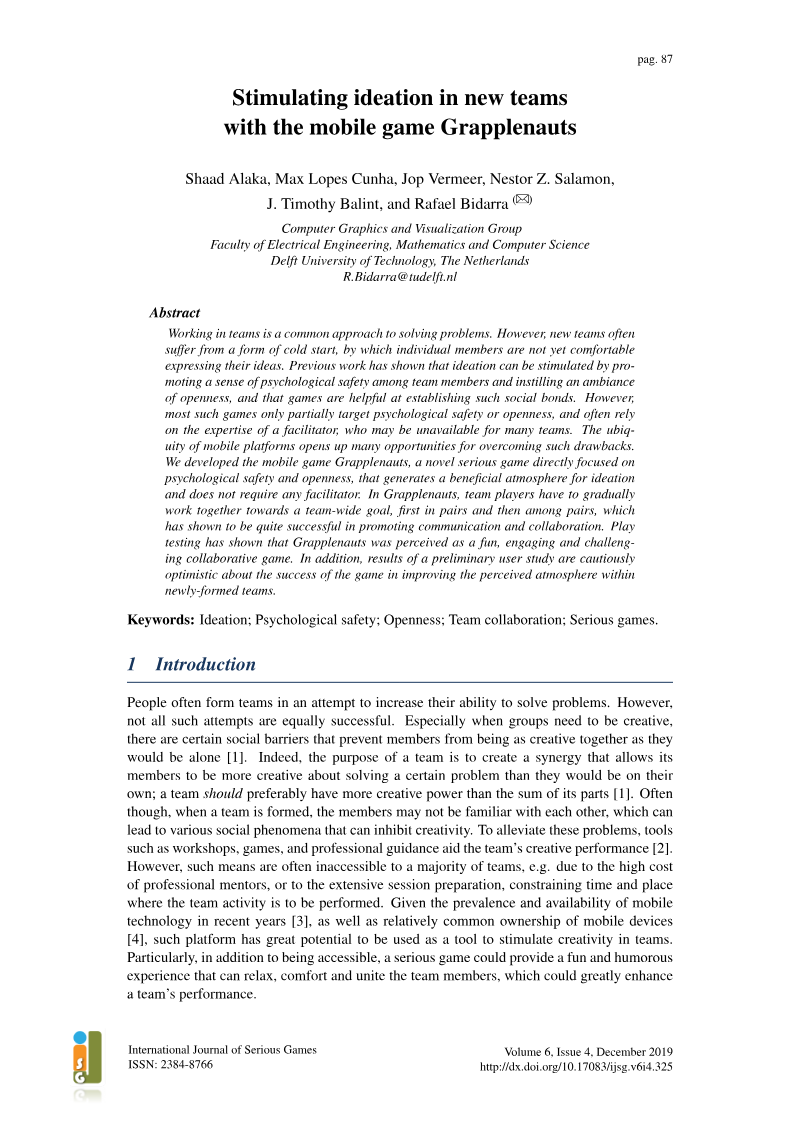
Stimulating Ideation in New Teams with the Mobile Game Grapplenauts
The mobile game Grapplenauts serves as a strategic intervention designed to overcome the cold start problem inherent in newly formed professional teams.
- Teams using the mobile game Grapplenauts during their initial two-week formation phase show statistically significant improvements in psychological safety compared to control groups.
- The game replaces traditional facilitator-led icebreakers with digital mechanics that normalize failure and require interdependent play to mitigate early-stage team dysfunctions.
- By fostering a low-pressure environment, the game effectively reduces social loafing and encourages the fluid exchange of ideas among new team members.
All Choice No Consequence: Efficiently Branching Narrative
Effective narrative design centers on the principle that a cohesive, singular story outline is superior to complex, multi-path structures that frequently lead to bloated budgets and extended development timelines.
- Prioritize a singular, cohesive narrative outline over complex multi-path structures to prevent bloated budgets and extended development timelines.
- Focus on impactful, relationship-building choices that provide agency within a consistent framework, as empirical data shows players rarely replay games solely to see different narrative paths.
- Maintain a pacing of one choice per minute, with major narrative branches occurring every 20 to 30 minutes to balance engagement with production efficiency.

Mobile Marketing: How to Optimize UA Creatives | UA Coffee Talk
Mobile user acquisition has undergone a fundamental transformation, shifting away from granular audience targeting toward a reliance on creative assets as the primary driver of competitive advantage.
- Creative assets have replaced granular audience targeting as the primary driver of competitive advantage in mobile user acquisition due to the shift toward broad-targeting machine learning algorithms.
- Marketing and creative teams must adopt a collaborative, hypothesis-driven strategy that uses competitive intelligence to identify which specific game mechanics and themes resonate with target audiences.
- Success requires balancing front-end engagement metrics, such as click-through rates and installs per mille, with back-end performance indicators like retention and return on ad spend.
How Kolibri Made Idle Miner Tycoon | New Game Development Process
Kolibri Games, a mobile developer founded by university students, achieved significant success with its flagship titles, Idle Miner Tycoon and Idle Factory Tycoon, which have collectively amassed approximately 100 million downloads.
- Kolibri Games utilizes a lean development cycle consisting of a two-month prototyping phase followed by one month of testing to validate core mechanics before a soft launch.
- The company scales projects into live-service models only after validating key performance indicators, specifically day-one, day-seven, and day-thirty retention metrics during soft launches.
- New projects are developed by small, agile teams typically composed of one product manager, one or two developers, and one artist to minimize bureaucracy and accelerate decision-making.