1 free read left. Create a free account for unlimited reading + AI research.
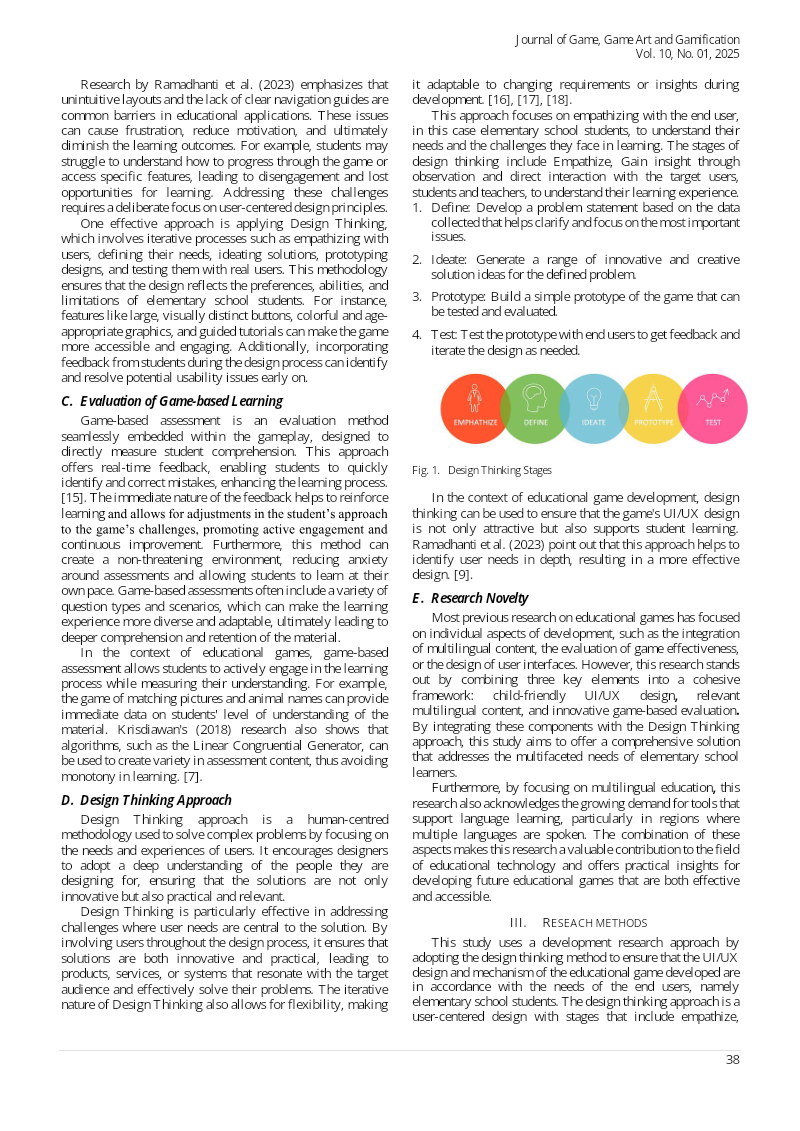
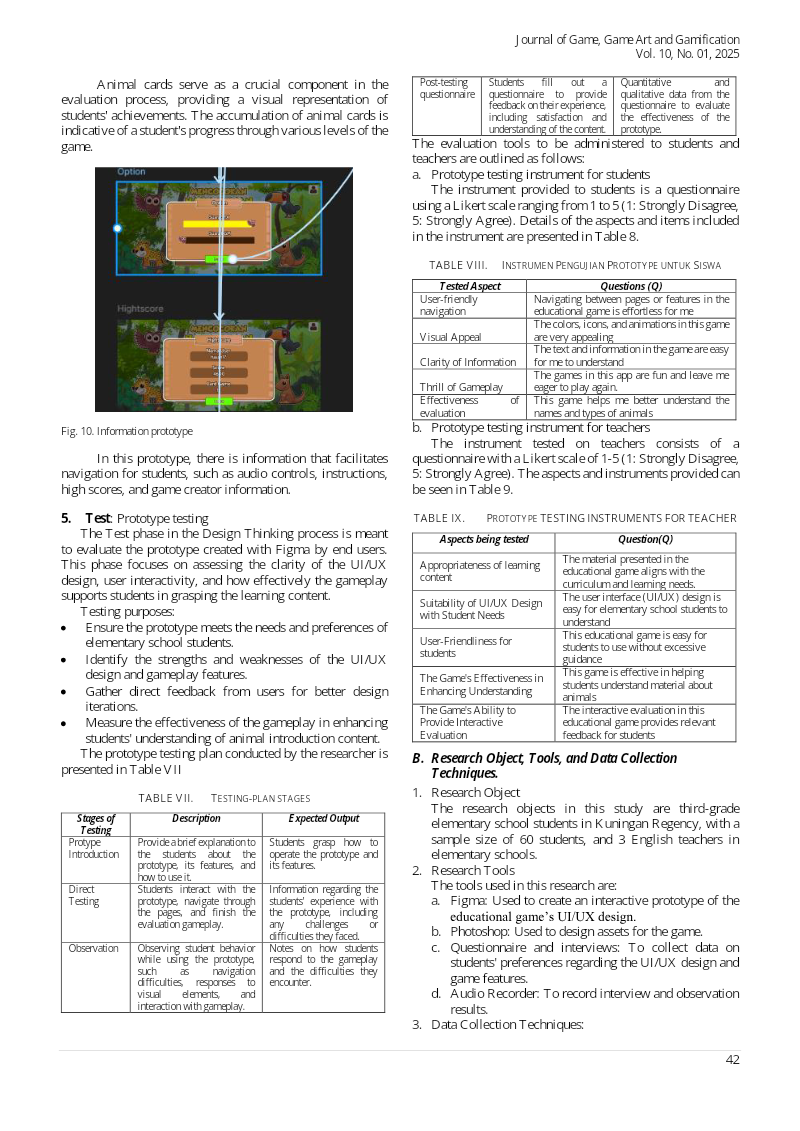
Create free accountWhitepaper Bina Nusantara University
1 free read left. Create a free account for unlimited reading + AI research.
Create free accountWhitepaperBina Nusantara University
The 'Color in Life' game uses a visual novel and adventure genre, incorporating mini-games to educate players.
Like a storybook with interactive puzzles, it teaches while entertaining.
Effective format. Visual novel and adventure genres can effectively deliver educational content without sacrificing entertainment value.
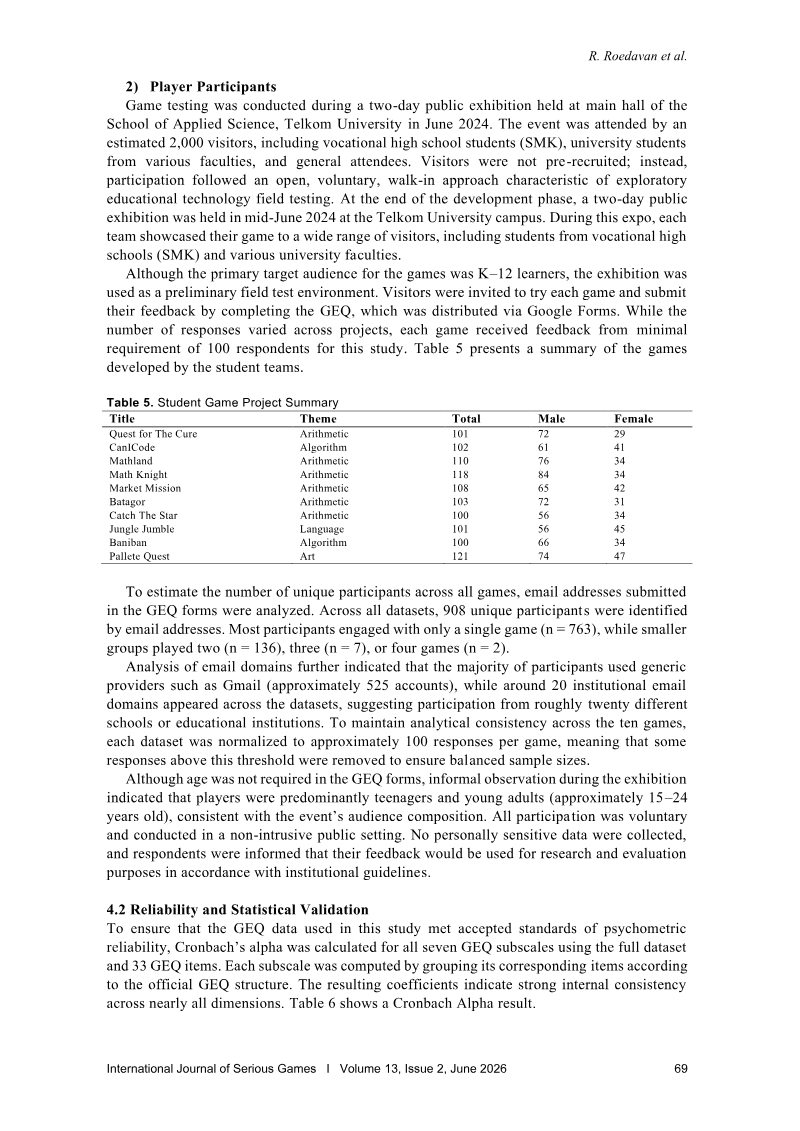
This research focuses on the development and evaluation of an educational mobile game, "Color in Life," designed to increase awareness and knowledge regarding color vision deficiency (CVD), specifically targeting dichromatism. The project addresses the common oversight in the gaming industry where color-coded mechanics often alienate players with red-green color blindness. By utilizing a visual novel and adventure genre, the game incorporates mini-games—such as color sorting based on the Farnsworth-Munsell D-15 test—to educate players while providing an accessible experience for both color-blind and non-color-blind individuals.
The development process followed a waterfall methodology, incorporating literature reviews, interviews with medical professionals, and surveys of the target demographic (ages 15–40) in Indonesia. The game was built using the Unity engine and evaluated by a sample of 35 participants, consisting of 32 individuals with normal vision and three with color blindness. Effectiveness was measured through a paired samples t-test comparing pre- and post-game knowledge, while user experience was assessed using the Core Elements of Gaming Experience (CEGE) model.
Statistical analysis revealed a significant improvement in players' knowledge of CVD, with t(34) = -7.704 and p < 0.05. Furthermore, the CEGE results confirmed that the game was enjoyable for both groups, with high scores in enjoyment and environment, and similar performance metrics across both cohorts. The findings demonstrate that visual novels are an effective medium for delivering educational content without sacrificing entertainment value. The study concludes that game developers should prioritize inclusive design, such as grayscale backgrounds and color-blind-friendly mechanics, to ensure that digital experiences remain accessible and engaging for all players, regardless of their visual capabilities.
Each row is a game or company this document names, each column a document, oldest first. A mark means that document names it. Select a row to see those documents.
Bina Nusantara University · 2026
Bina Nusantara University · 2025
Bina Nusantara University · 2024
Bina Nusantara University · 2023
Bina Nusantara University · 2023
Bina Nusantara University · 2021
Bina Nusantara University · 2021
Bina Nusantara University · 2021
Bina Nusantara University · 2021
Bina Nusantara University · 2021
Bina Nusantara University · 2021
Journal of Games, Game Art, and Gamification · 2021
Journal of Games, Game Art, and Gamification · 2025