Czech Video Game PC, Console and Mobile Game Developers in Czech Republic 2020
202045 pages~96 min full read
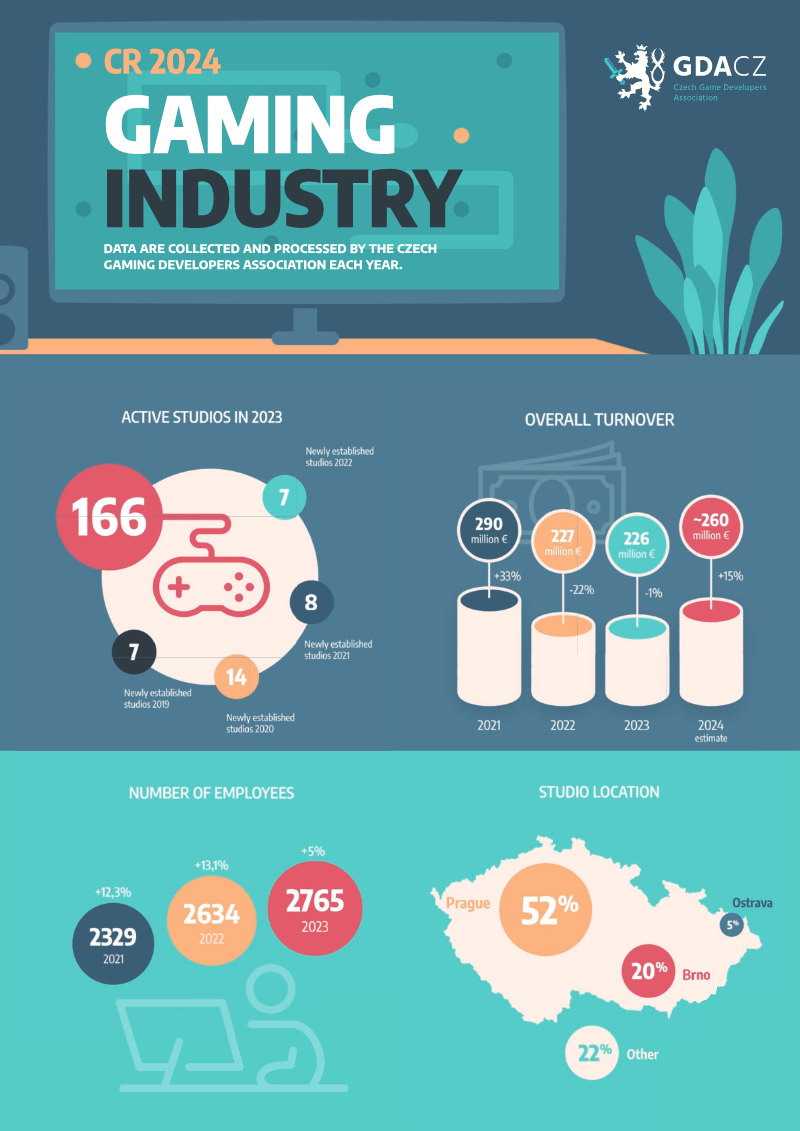
The study maps the structure and dynamics of the Czech video‑game industry as of 2020, highlighting its rapid export‑driven expansion and the strategic challenges it faces in talent development and public support. The sector comprises roughly 110 domestic development studios, of which only a small fraction are foreign branches, employing about 1,750 specialists. Turnover rose from CZK 2.26 billion in 2017 to over CZK 5 billion in 2020, equivalent to more than €190 million, reflecting an average annual growth rate of 29 % over the previous five years and an export share near 95 % to markets such as the United States, Germany and the United Kingdom. Revenue in 2019 already surpassed €169 million, outpacing the national film industry by a factor of three, and the market is projected to exceed €190 million in 2020.
The analysis of the publishing and distribution landscape shows a shift away from traditional full‑development financing toward a model where publishers act mainly as marketing and launch partners, while online platforms now dominate the transaction chain, reducing costs and marginalising physical distributors, of which only ten remain active in the country. Consumer data reveal an average gamer age of 33, a gender split of one‑third women, and annual spending of roughly CZK 4 billion, with a strong preference for story‑driven titles.
Human‑capital constraints emerge as a critical bottleneck: the industry confronts intense competition for skilled staff, a fragmented education pipeline, and limited visibility of creative industries within public policy. Unlike neighboring Poland and Germany, which allocate substantial public funds to game‑industry support, the Czech Republic offers virtually no dedicated subsidies for research, development or innovation, despite the sector’s outsized contribution to national exports. The findings suggest that sustained growth will depend on coordinated investment in education, clearer industry‑government linkages, and targeted public financing to bolster the sector’s competitive edge.

Institute for Digital Economy · 2019
Aream & Co · 2026
Nordic Game · 2026
Epyllion · 2026

Aream & Co · 2025
Newzoo · 2025
11 bit studios · 2025
Epyllion · 2025

Meridian Play · 2025
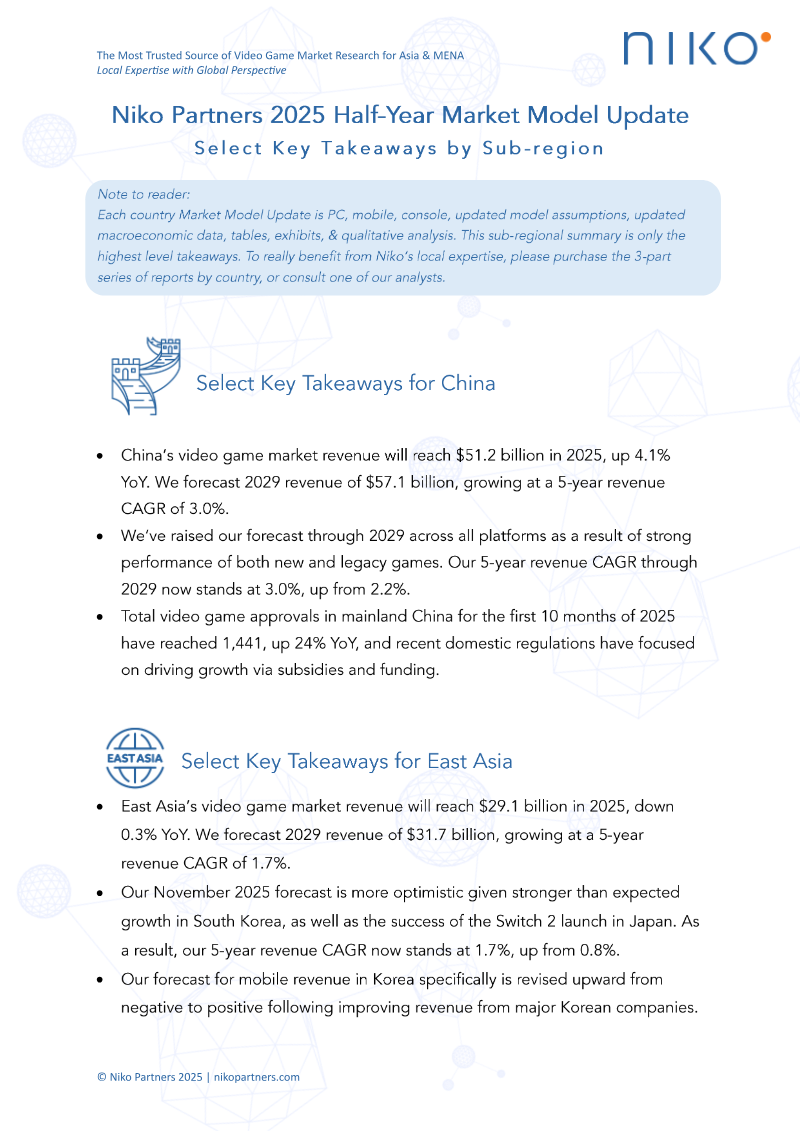
Niko Partners · 2025

Newzoo · 2025
Konvoy · 2024