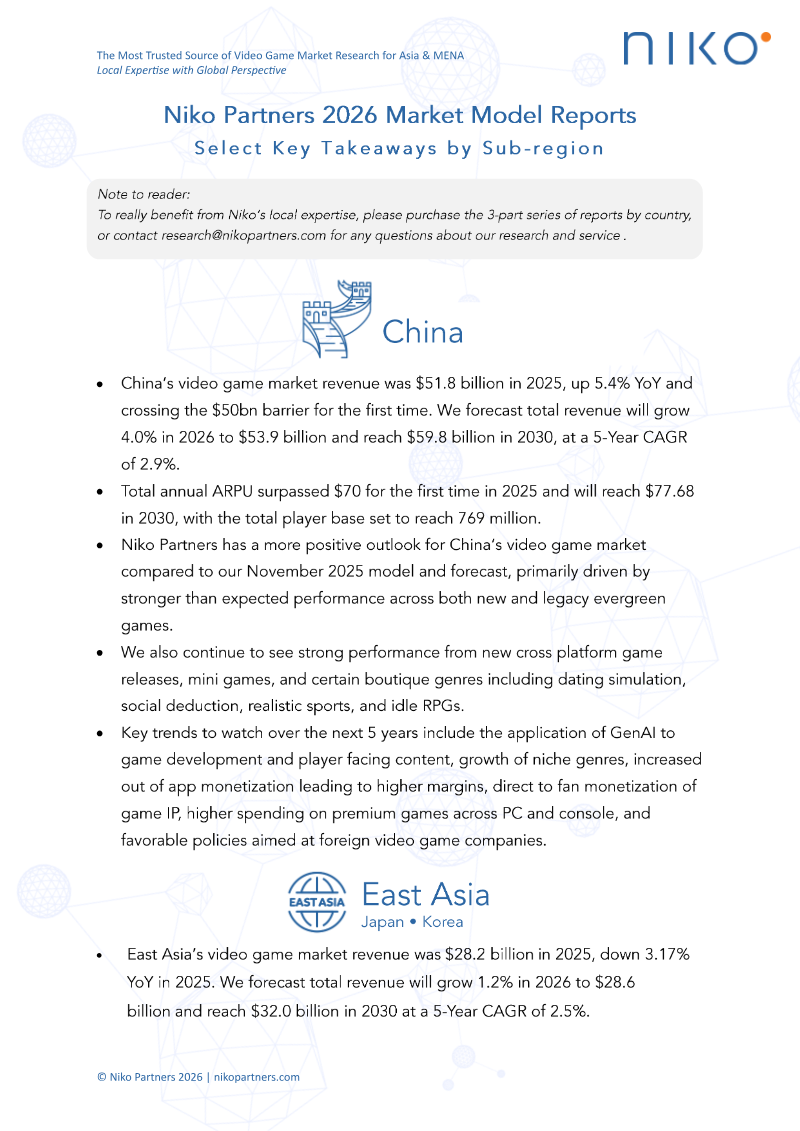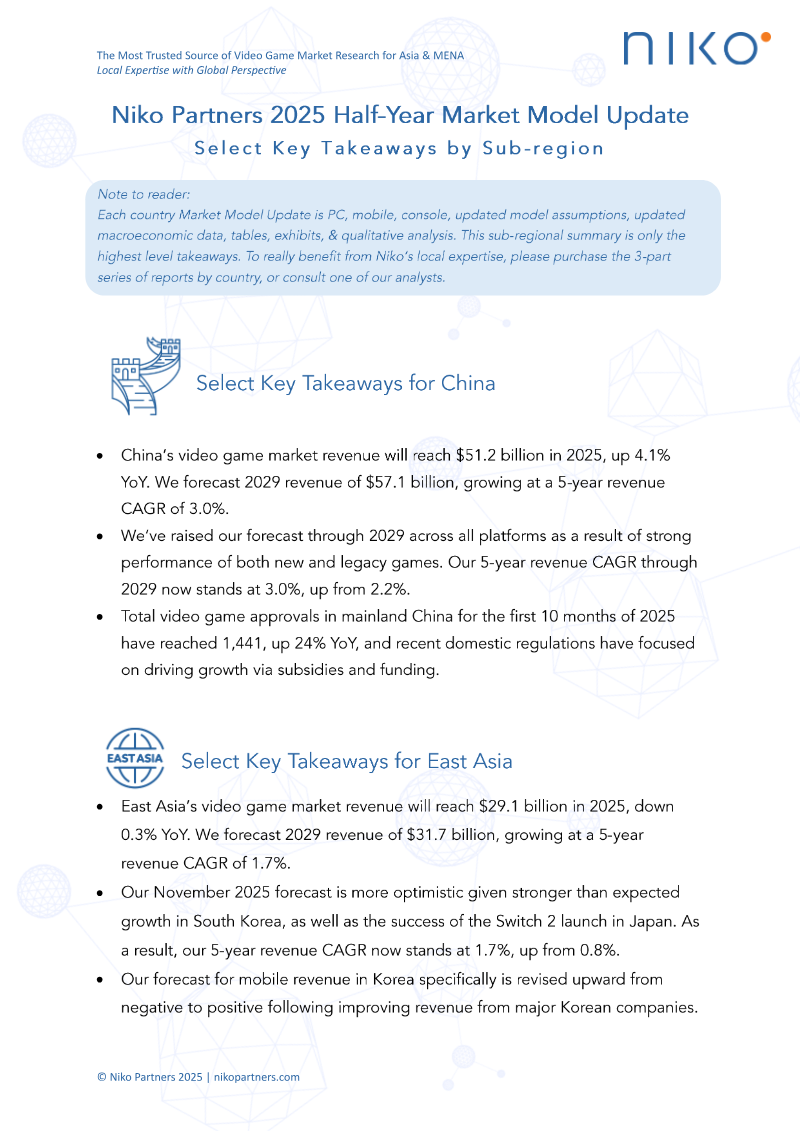
ReportNiko Partners
From Playing to Paying: The Art of Monetizing Games in Asia
202015 pages~18 min full read
Key insights
4 slides
Dominant model
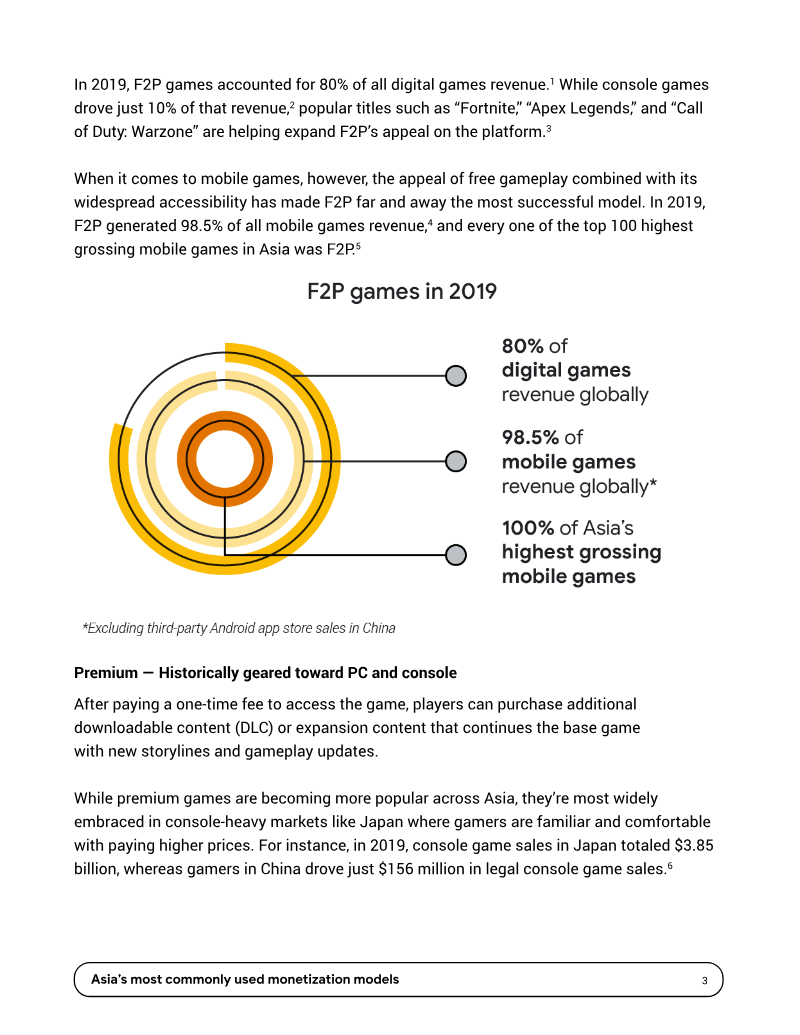
F2P generated 98.5% of all mobile games revenue in Asia in 2019.
Free-to-play is the dominant monetization model across the region. In China, 100% of top-grossing mobile titles utilized F2P.
Key number
Japan generates $12.84 in revenue per download, compared to a $1.53 regional average.
Japan is the most valuable mobile market in the region. Premium models remain a staple in this console-heavy market.
Page 10 of the reportAsia39.5
Japan11.6
China18.5
What changed
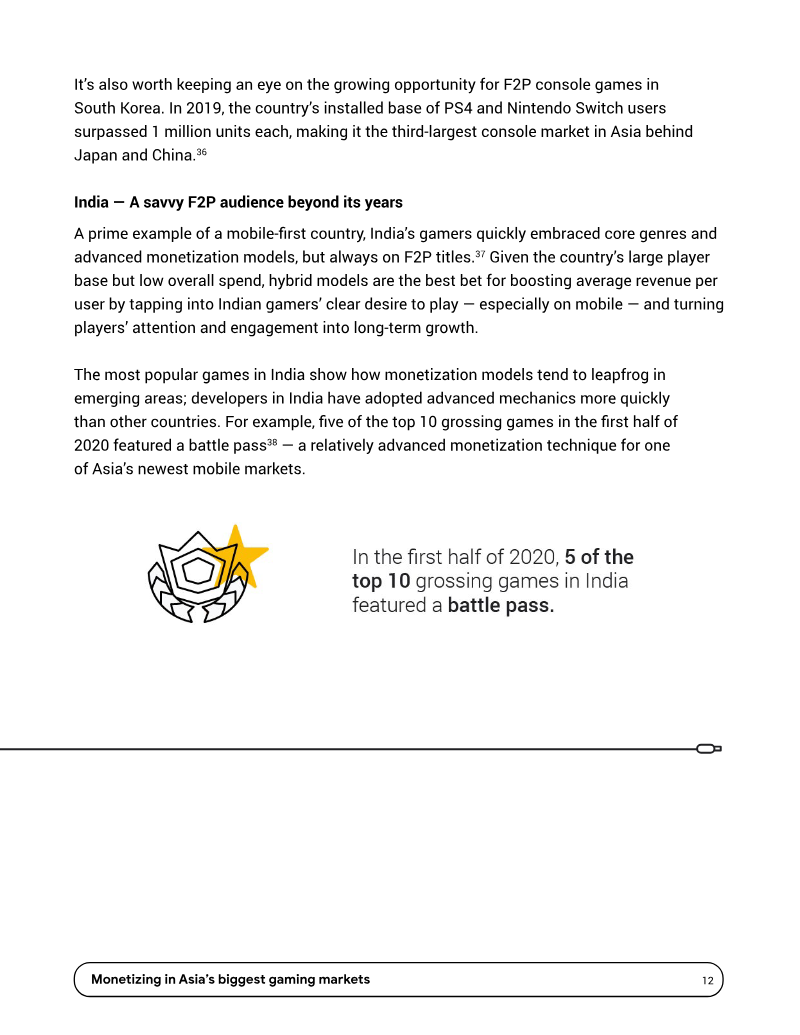
Battle passes appeared in 50% of India's top-grossing games by early 2020.
Emerging markets like India are leapfrogging traditional stages by quickly adopting sophisticated F2P mechanics.
Strategic shift
Developers are shifting toward hybrid models blending in-app purchases with rewarded ads.
Hybrid monetization helps mitigate economic risk and capture diverse player segments. Publishers must integrate mechanics into core gameplay rather than using interruptive ads.
Page 8 of the report- 01Blend IAPs and rewarded adsMitigate economic risk and capture diverse player segments.
- 02Integrate into core gameplaySustain long-term engagement without interruptive ads.
1 / 4
Ask AI about this report