Marketing reports and market data
Documents
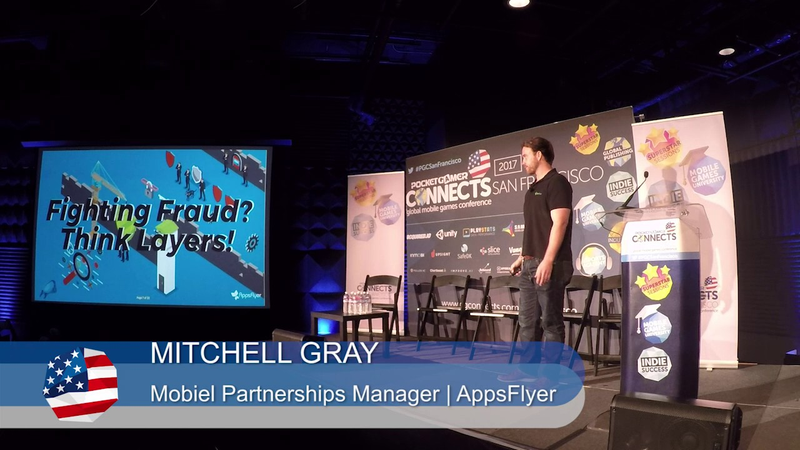
Rapid response to mobile ad fraud
Mobile advertising has surpassed web-based advertising in scale, leading to increased investment and sophistication among marketers.
- Attribution providers can mitigate fraud by leveraging massive datasets, such as those analyzing over half a trillion interactions per month, to identify and block malicious activity across entire client bases.
- Fraudsters frequently target organic installs to force marketers to pay for users who would have downloaded the application without paid intervention, creating a prisoner’s dilemma that complicates accountability among ad networks.
- Effective fraud mitigation requires a layered approach that combines real-time prevention with post-mortem detection, as simple blacklists of IP addresses or devices are easily bypassed by sophisticated actors.
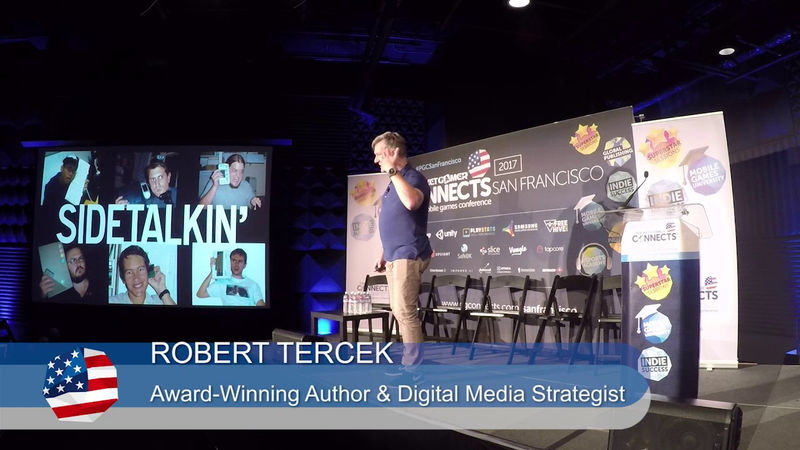
Constructing an alternate reality
The virtual reality industry is currently navigating a challenging period of market correction, often characterized as a trough of disillusionment.
- The VR industry is currently in a 'trough of disillusionment' characterized by high hardware costs, technical limitations like motion sickness, and low sales, mirroring the early developmental cycles of mobile gaming and television.
- To survive the current market correction, developers must focus on technical refinement and iterative hardware adaptation to prepare for the industry's inevitable long-term expansion.
- Financial sustainability is being sought through a pivot toward educational and marketing applications as the consumer VR market stabilizes.

Papa Jake and Free Hive Games on influencer marketing for mobile
Influencer marketing has emerged as a critical strategy for mobile game developers navigating an increasingly saturated app market.
- Influencer marketing is replacing traditional performance-based advertising on platforms like Facebook, which has become prohibitively expensive due to a saturated market with over 500 new app launches daily.
- Successful influencer partnerships require vetting creators based on content style, audience demographics, and personal gaming preferences rather than relying solely on subscriber counts.
- Providing influencers with early access to games serves as both a pre-launch marketing tool and a feedback loop to identify gameplay issues before public release.

We Failed at Publishing Competitive Games so You Don't Have to
The pursuit of a competitive gaming publishing label serves as a cautionary tale regarding the disconnect between development expertise and market realities.
- Financial success in competitive gaming requires aligning development costs with market reality, as even respectable sales of 200,000 units—such as those achieved by Divekick—can fail to recoup investments if the budget and strategy are misaligned.
- Publishers must avoid the cognitive bias of attributing past successes to internal expertise rather than the inherent appeal of the product, which often leads to the repeated failure of marketing strategies for subsequent titles like Capsule Force and Gun Sport.
- A shift in strategy is required from front-loaded content models to sustainable post-release update cycles, as the former fails to maintain the long-term engagement necessary for competitive titles.

Secret Hitler: Designing Conflict & High-Tension Moments
Secret Hitler functions as a masterclass in social deduction design, prioritizing high-tension interpersonal drama and narrative-driven gameplay over rigid mechanical balance.
- The core design philosophy of Secret Hitler focused on maintaining high-tension, personal conflict and a sense of a 'knife's edge' throughout the entire session, rather than prioritizing perfect game balance or deterministic outcomes.
- The game utilizes a 'rising action' structure where fascist policy enactment increases the intensity of suspicion and social interaction, ensuring the game remains engaging until the final moments.
- To prevent the 'snowball effect' where one team dominates, the developers implemented mechanics like term limits and presidential succession to force players to interact with new, potentially untrusted partners rather than relying on a fixed group of allies.

Get Journalists to Cover Your Game: Lessons from Online Dating, Praying and No Man's Sky
The modern gaming landscape is defined by extreme saturation, with over 4,000 titles launching annually on Steam alone.
- With over 4,000 titles launching annually on Steam, the extreme market saturation necessitates a shift from broad outreach to highly targeted, high-impact communication.
- Developers must treat pitches like dating profiles, ensuring the core value proposition is conveyed within ten seconds using concise messaging.
- High-quality GIFs demonstrating immediate, watchable fun are essential assets for capturing journalist attention in a crowded media landscape.
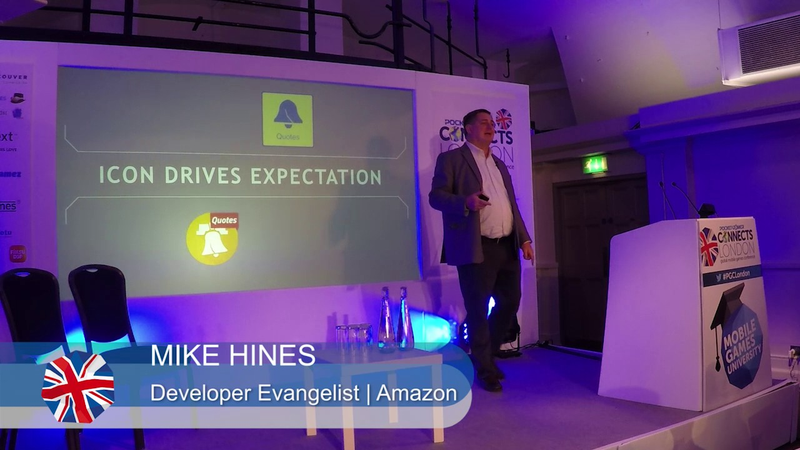
Building Appstore pages and promo videos that don't suck
Optimizing app store product pages is a critical strategy for developers, as over half of all app downloads originate from organic discovery.
- Optimizing screenshots to prioritize actual gameplay over menus or login screens can increase conversion rates by 35%.
- Promotional videos that feature clear gameplay and descriptive text provide a 19% to 35% lift in conversions, with further optimization yielding an additional 22% increase.
- Upgrading amateurish icons to professional designs results in a measurable conversion rate improvement of 8% to 17%.
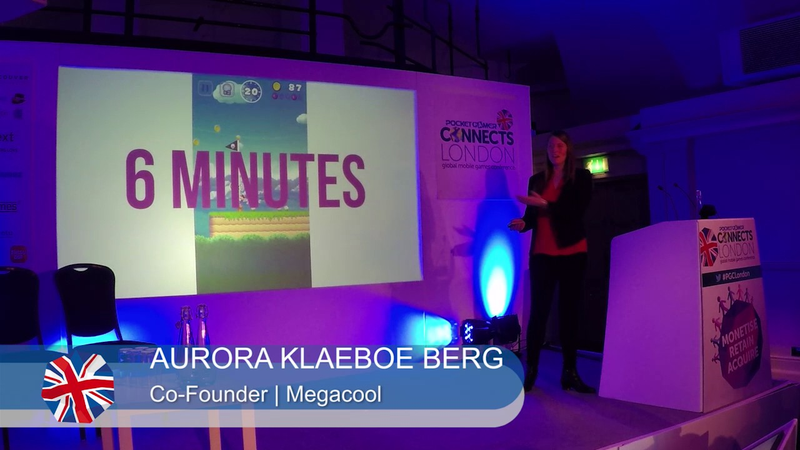
The growth techniques that all game developers should know about
Game developers often struggle to achieve a positive return on investment when the cost of user acquisition exceeds the lifetime value of a player.
- Prioritize organic growth through word-of-mouth and viral loops to mitigate the risk of user acquisition costs exceeding player lifetime value.
- Optimize onboarding by using A/B testing to evaluate tutorial necessity and applying the 'grandma test' to identify and remove interface friction points.
- Time push notification prompts to moments of high player value, such as immediately after receiving a reward, rather than requesting permission during initial setup.

How to identify, retain and engage the highest value mobile game users
This analysis explores strategies for mobile game developers and marketers to identify, retain, and engage high-value users through optimized buying models, attribution management, and fraud prevention.
- Securing 'first-view' impressions—the initial video ad a user sees daily—is the most effective strategy for driving high-value installs and maximizing return on ad spend (ROAS).
- Users who consume fewer total daily video ads demonstrate a significantly higher conversion probability and greater lifetime value compared to those who see many ads.
- Advertisers can guarantee first-view dominance by utilizing CPM-based bidding models for specific publishers, effectively bypassing the volatility of conversion-rate-based bidding.
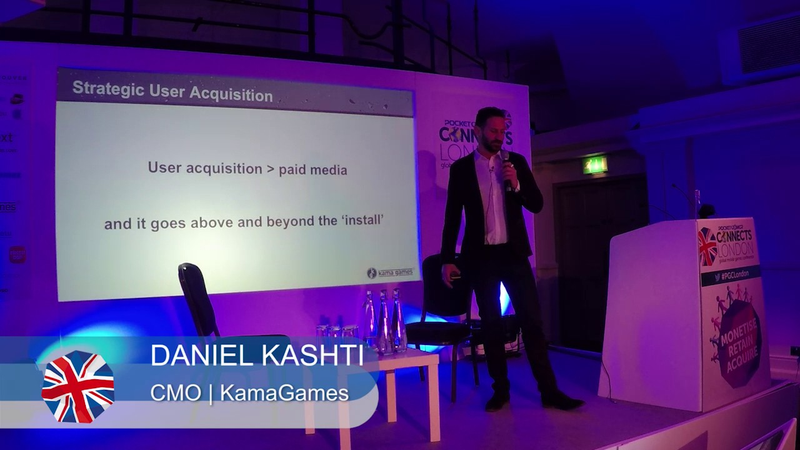
Marketing games in the social casino industry
The social casino industry, a highly competitive segment of the global mobile gaming market, is currently valued at approximately $4.4 billion.
- The social casino industry is a $4.4 billion global mobile gaming market characterized by high saturation and intense competition.
- Sustainable growth requires prioritizing retention metrics and data-driven user behavior modeling before scaling paid acquisition campaigns.
- Fraudulent traffic, including sophisticated bots and incentivized traffic, accounts for an estimated 5% to 7% of total industry traffic.
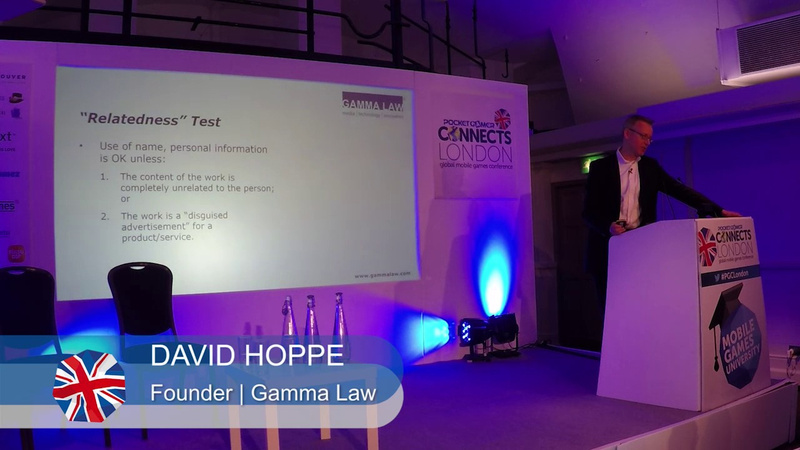
Video games and public figures: Legal update 2017
The legal landscape regarding the use of celebrity likenesses, names, and personas in video games remains highly unpredictable within the United States.
- Developers face significant financial risk for using celebrity likenesses, evidenced by a 60-million-dollar settlement paid to athletes in EA Sports litigation and a 15-million-dollar verdict against a comic book author.
- Courts lack a consistent legal framework for publicity rights, with outcomes ranging from protecting creative expression to massive judgments, such as the 403,000-dollar award against Samsung for a robot depiction of Vanna White.
- The primary risk factor for litigation is the developer's intent; if the inclusion of a persona is perceived as a strategy to leverage fame for audience attraction, courts are increasingly likely to rule against the developer.

How much is enough? Planning a marketing budget for mobile games
Effective mobile game marketing requires a strategic approach to budgeting that prioritizes cash flow management and capital efficiency.
- Developers must bridge the 'cash gap' caused by the delay between marketing expenditures and platform payout cycles by treating uncollected revenue as an accessible asset.
- Accelerating growth cycles requires reinvesting trapped revenue into user acquisition more frequently rather than waiting for standard app store and ad network payout schedules.
- Sustainable scaling is achieved by moving away from 'pay-and-wait' models toward a revenue recycling strategy that avoids equity dilution or reliance on external fundraising.