Market Forecast reports and market data
Documents
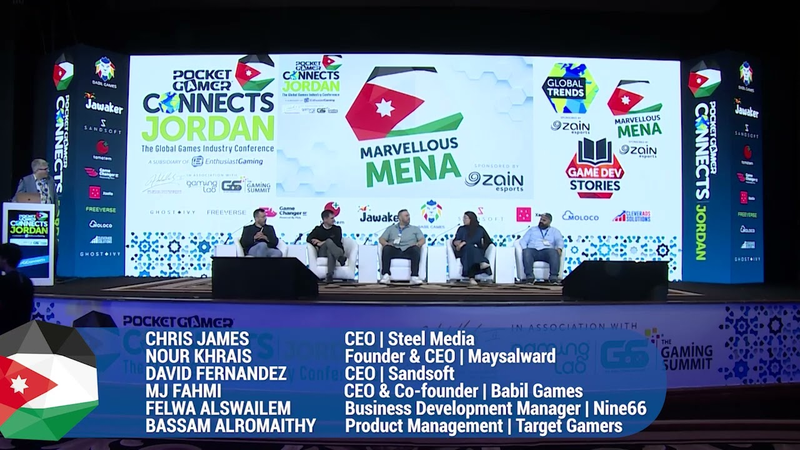
Panel: State of Play | What’s in Store for the MENA Market in the Next Five Years
The Middle East and North Africa (MENA) gaming market is currently undergoing a rapid transformation, evolving from a primarily mobile-centric consumer base into a burgeoning global hub for game development.
- The MENA gaming market is projected to experience tenfold growth over the next five years as it transitions from a consumption-based model to a global hub for game development.
- While mobile gaming remains the dominant platform, there is a rising demand for PC and console experiences, particularly within higher-income GCC countries.
- Market success requires deep cultural localization and the integration of social, community-driven features rather than simple language translation.

5 Mobile App Predictions for 2024
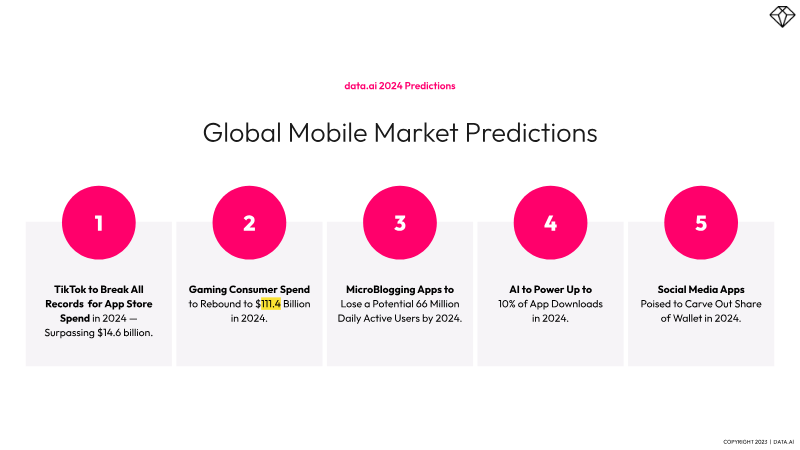
The mobile app market is poised for a transformative year in 2024, characterized by the integration of artificial intelligence, a shift in social media monetization, and a rebound in gaming expenditures.
- Mobile gaming consumer spending is projected to recover in 2024, reaching $111.4 billion, a 4% year-over-year increase led by the U.S., Japan, and South Korea.
- Generative AI integration is accelerating rapidly, with 2.3 billion app downloads expected to feature AI functionality in 2024, a 40% year-over-year increase.
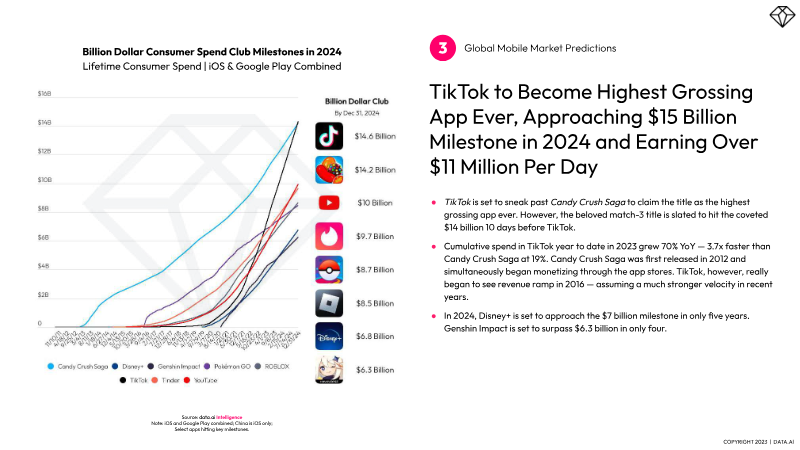
- TikTok is set to become the highest-grossing app in history, with lifetime consumer spending projected to surpass $14.6 billion.

5 Mobile App Forecasts: 2023
Global mobile market projections for 2023 indicate a complex landscape defined by shifting consumer priorities and economic pressures.
- Mobile gaming consumer spending is projected to decline to $107 billion in 2023 due to macroeconomic pressures and stricter privacy regulations like IDFA.
- Global mobile advertising spend is expected to reach $362 billion in 2023, with short-form video apps serving as the primary growth driver to offset reduced performance marketing budgets.
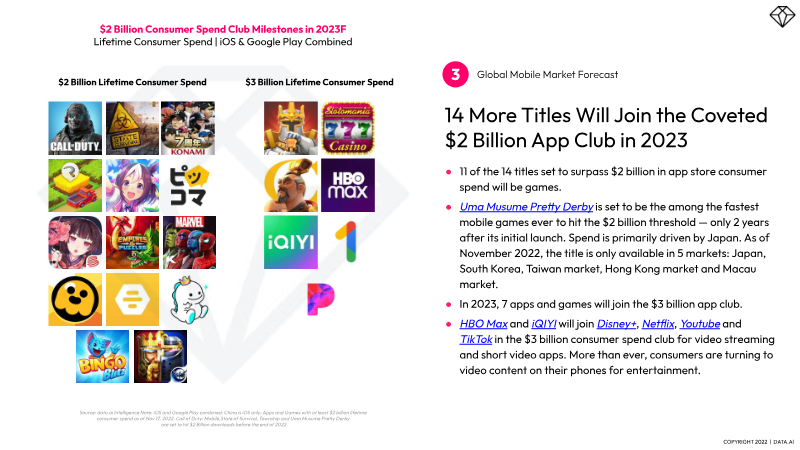
- Eleven of the fourteen new apps projected to surpass $2 billion in lifetime consumer spend during 2023 are games, demonstrating that top-tier titles remain resilient despite the broader market downturn.
PC & Console Gaming Report 2023
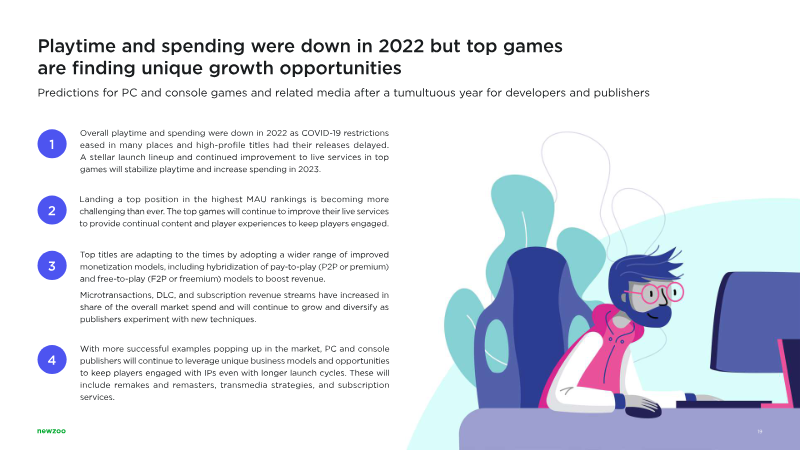
The PC and console gaming market entered a corrective phase in 2022, generating $92.3 billion in revenue despite a 2.2% year-on-year decline and a 15% drop in playtime.
- The PC and console market generated $92.3 billion in 2022, representing a 2.2% year-on-year decline that signals a stabilization toward pre-pandemic levels rather than a long-term downturn.
- Microtransactions and downloadable content now account for nearly 50% of total consumer spending, reflecting a fundamental industry shift from product-based sales to a service-oriented model.
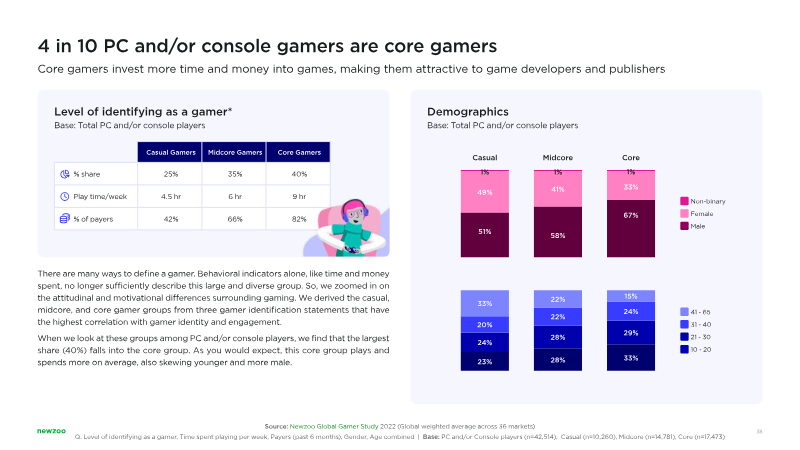
- Engagement metrics saw a significant contraction in 2022, with total playtime dropping 15% and hardcore player activity falling by 37%.

New World for Gaming Startups in 2023 | Jason Chapman, Konvoy Ventures & Josh Lu, a16z
The gaming startup landscape in 2023 is defined by a significant contraction in late-stage financing, with Series B and C deal activity plummeting by 47% and 67% respectively.
- Late-stage gaming financing has contracted significantly, with Series B deal activity dropping by 47% and Series C activity falling by 67%.
- Startup valuations have undergone a major correction of 40% to 55%, forcing founders to prioritize capital efficiency and extend financial runways into 2025.
- Investors are shifting toward a 'flight to quality' strategy, favoring teams with deep expertise and metric-driven product development over speculative ventures.

End-of-Year Learnings & 2023 Industry Predictions - The Metacast by Naavik
The global gaming industry is currently undergoing a significant structural correction, transitioning from a period of unsustainable pandemic-era expansion toward a more disciplined, efficiency-focused operational model.
- The global gaming industry is shifting from pandemic-era expansion to a disciplined operational model, prioritizing sustainable business practices and efficiency over growth-at-all-costs strategies.
- The 2023 console market is expected to rebound strongly as semiconductor supply chain constraints resolve and a dense calendar of high-profile AAA titles launches.
- The mobile gaming sector faces ongoing revenue declines and rising user acquisition costs, exacerbated by privacy-related tracking limitations that force developers to seek new audience reach strategies.
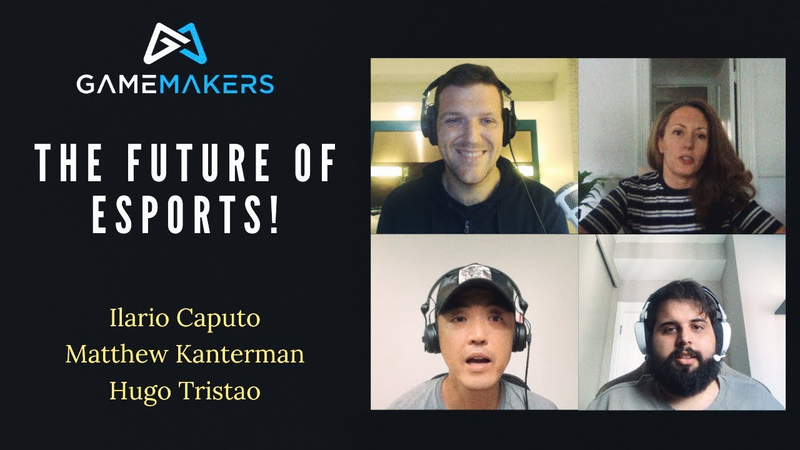
Future of eSports ft. Ilaria Caputo (EA), Hugo Tristao (Newzoo), & Matt Kanterman (Ball Metaverse)
The esports industry is undergoing a period of sustained expansion, with the global audience projected to reach 640 million viewers by 2025.
- The global esports audience is projected to reach 640 million viewers by 2025, with industry revenue expected to grow from $1.4 billion in 2022 to $1.9 billion.
- Publishers should prioritize localized strategies that account for regional hardware preferences, such as the dominance of mobile gaming in Southeast Asia versus PC-centric markets in North America.
- Esports functions as a strategic pillar for game publishers by driving long-term player engagement, user acquisition, and the development of deep-seated emotional fandom.
Global Cloud Gaming Report: 2022
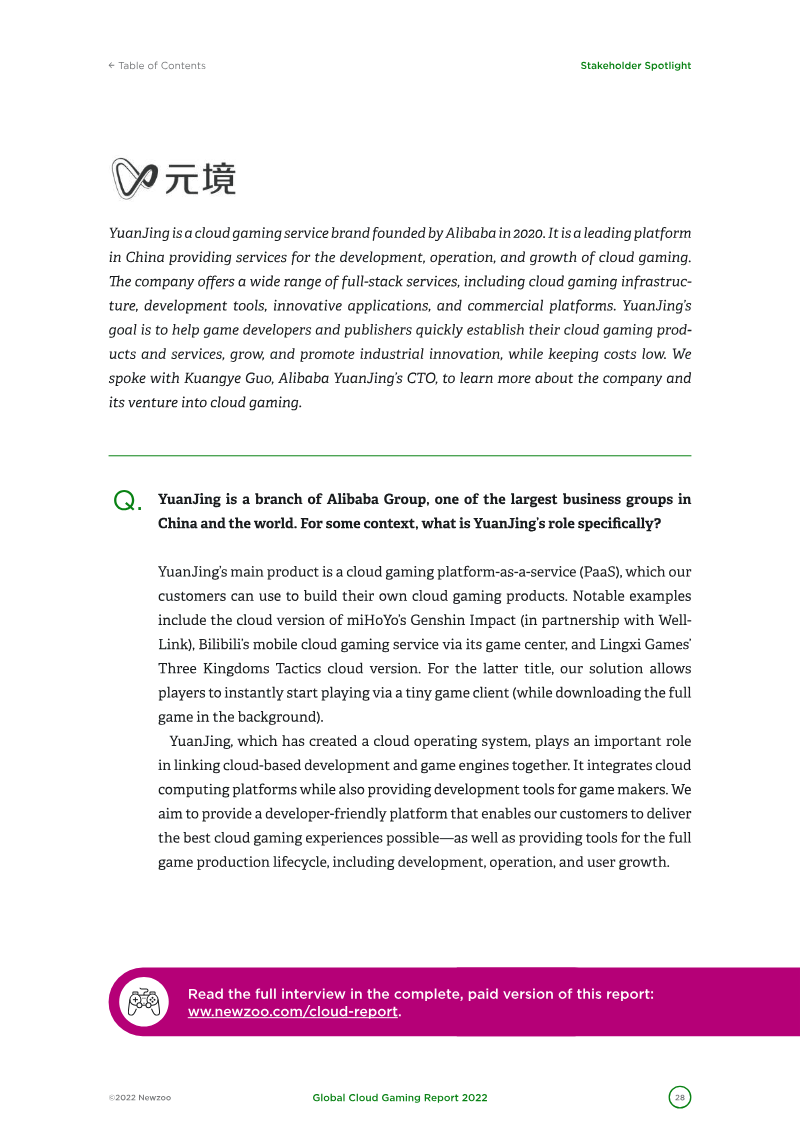
The global cloud gaming market is entering a phase of maturity, with 2022 revenues projected to reach $2.4 billion supported by a base of 31.7 million paying users.
- The global cloud gaming market is projected to grow from $2.4 billion in 2022 to $8.2 billion by 2025.
- The paying user base is expected to expand significantly from 31.7 million in 2022 to 86.9 million by 2025.
- Cloud gaming is shifting from a niche technology to a core industry pillar as major platforms like Xbox and PlayStation integrate cloud services to complement traditional hardware.
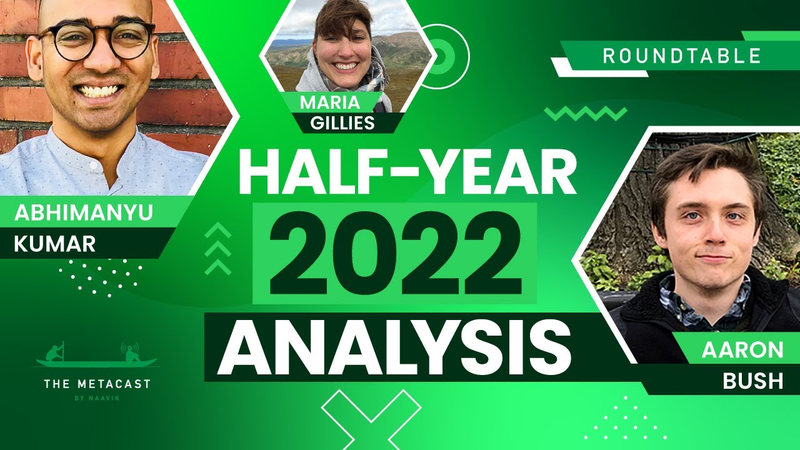
Half-Year Analysis: Games Industry Big Beats and Predictions - The Metacast by Naavik
The global games industry is undergoing a fundamental transition from a period of aggressive, debt-fueled expansion to a more disciplined era defined by operational efficiency and organic growth.
- The games industry has transitioned from a debt-fueled acquisition model to an era of operational efficiency, as rising interest rates and falling valuations have stalled serial acquirers like Embracer and Stillfront.
- Market consolidation is shifting toward cash-rich tech giants and private equity firms, which are now better positioned to acquire distressed assets following the industry's economic correction.
- Blockchain gaming is pivoting away from unsustainable play-to-earn models and speculative tokenomics toward a focus on core game design and functional utility for ownership.

Eric Kress: Dissecting The Video Game Market - The Metacast by Naavik
The video game industry is currently navigating a period of structural transition defined by a shift away from the era of aggressive consolidation and toward a focus on organic growth.
- The gaming industry is shifting from an era of aggressive M&A consolidation toward a focus on organic growth, driven by increased regulatory scrutiny that makes mega-deals like Microsoft-Activision difficult to finalize.
- Apple’s privacy policies have fundamentally dismantled traditional mobile user acquisition models, creating structural headwinds that persist beyond current macroeconomic conditions.
- Rapid, decentralized expansion strategies have proven risky, as evidenced by Embracer Group’s struggles with talent attrition and stagnant growth, and Take-Two’s acquisition of Zynga, which underestimated post-privacy market complexities.
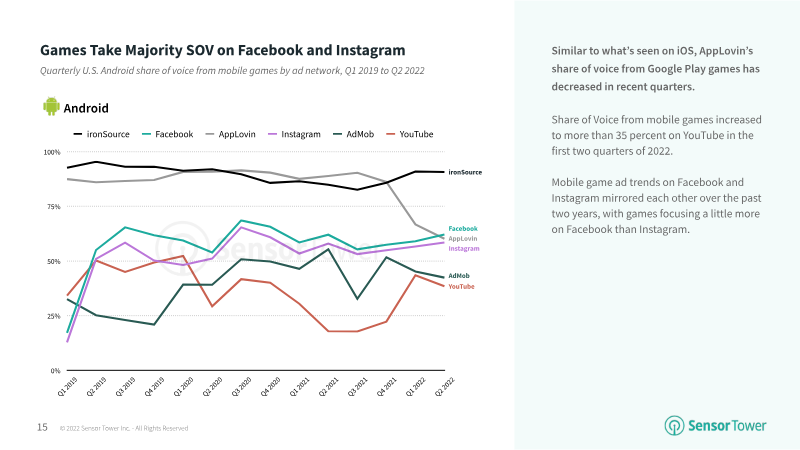


Mobile Gaming Market Outlook 2022
The global mobile gaming landscape has entered a period of stabilization following pandemic-era surges, with quarterly downloads maintaining a steady baseline of 14 billion.
- The mobile gaming market is in a stabilization phase, with quarterly downloads holding at 14 billion despite a 6% year-over-year revenue decline to $21.2 billion in early 2022.
- Casual games dominate volume at 80% of all downloads, while Mid-Core titles remain the primary revenue driver, accounting for 60% of total player spending.
- The Asia-Pacific region is a critical economic force, generating 80% of global MMORPG revenue and 62% of Card Battler revenue.
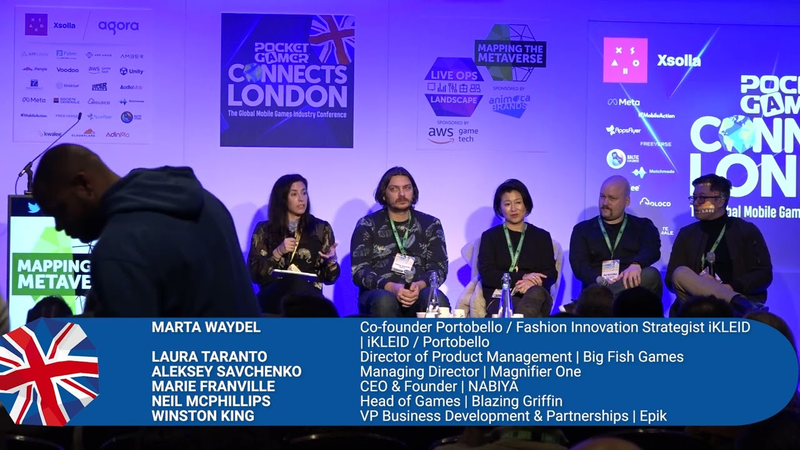
Panel: Living the Dream: How will the Metaverse Look in ten Years Time?
The metaverse is currently a nascent, multi-faceted concept rather than a singular destination, poised to evolve over the next decade into an intuitive, interconnected ecosystem.
- The metaverse is expected to evolve over the next decade from fragmented, proprietary platforms into a decentralized, interoperable ecosystem similar to the transformative impact of the smartphone.
- Market evolution is being driven by consumer demand for seamless cross-platform experiences and true digital ownership rather than top-down corporate mandates.
- Future technological development will likely shift beyond current virtual reality hardware to incorporate advanced neural interfaces for more immersive engagement.