1 free read left. Create a free account for unlimited reading + AI research.
Create free account
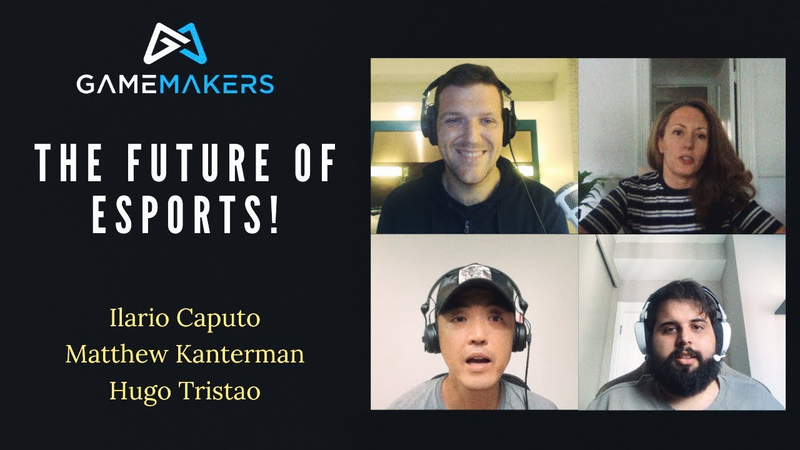
Future of eSports ft. Ilaria Caputo (EA), Hugo Tristao (Newzoo), & Matt Kanterman (Ball Metaverse)
Key insights
6 takeaways- 01The global esports audience is projected to reach 640 million viewers by 2025, with industry revenue expected to grow from $1.4 billion in 2022 to $1.9 billion.
- 02Esports functions as a strategic pillar for game publishers by driving long-term player engagement, user acquisition, and the development of deep-seated emotional fandom.
- 03Successful esports titles require high skill caps and broadcast-friendly design, with tournaments treated as premium entertainment products that leverage influencers and social media.
- 04Emerging technologies like blockchain and the metaverse should be utilized primarily to enhance fan engagement rather than as speculative economic mechanisms.
- 05Co-streaming is a critical strategy for expanding audience reach, though it necessitates careful management to maintain broadcast quality and protect sponsorship integrity.
- 06Publishers should prioritize localized strategies that account for regional hardware preferences, such as the dominance of mobile gaming in Southeast Asia versus PC-centric markets in North America.
Ask AI about this video
Transcript
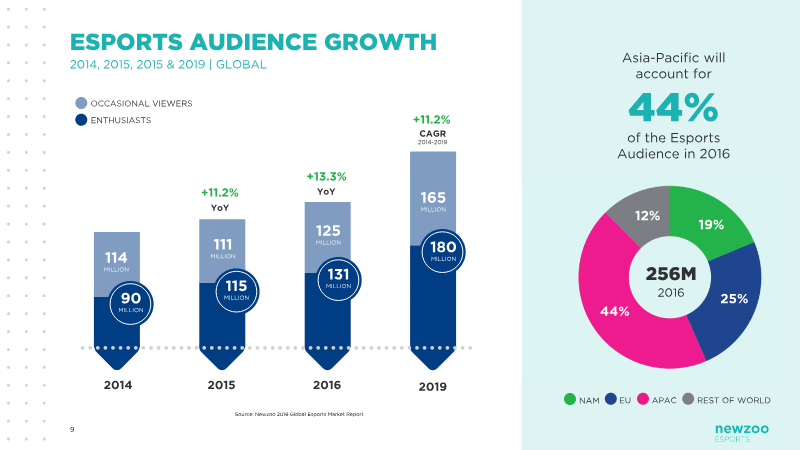
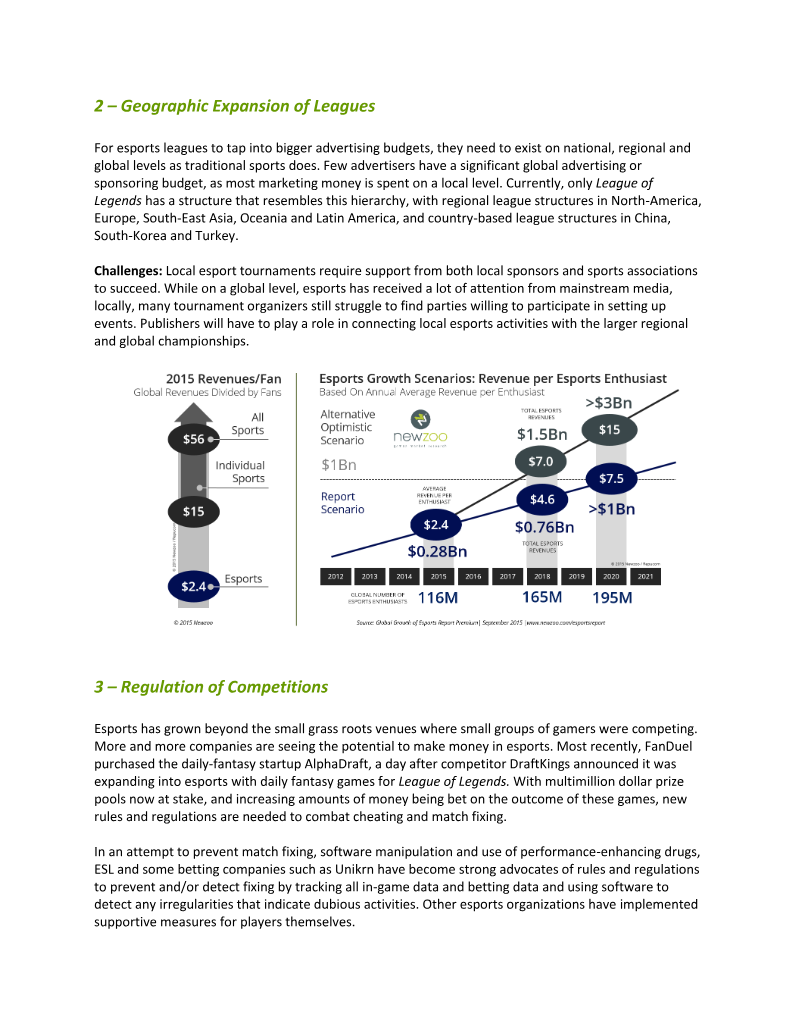
okay guys thanks for joining this podcast welcome I thought we could start by just talking about the the current market for Esports and projected growth in Hugo maybe you could kick it off because I know a couple of months ago you actually for nuzu wrote a specific report about the growth of the Esports Market yeah that's a quite interesting question and um I think esport audience is the most important asked for Esports and in our uh last reports we forecasted the esport audience will grow by 640 Million by the end of 2025 and for 2022 per year will be 502 million people and the kagger for that would be eight percent from 2020 to 2025. but also we split the Eastford audience into occasional viewers those who watch his fourth less than once a month so you can think about
those who watch uh let's say like the big International tournaments and we have Esports enthusiasts those who watch esport content uh more than once a month right but okay it's not only about the audience itself I think when you talk about Esports everyone wants to know about okay how much money how much money is in the industry and we expect by the end of 2022 is for to generate nearly 1.4 billion uh dollars and by the end of 2025 that number will be nearly 1.9 billion with a half a calorie of like 30.4 percent that's a pretty much the scope of the industry Joseph got it so okay just to be clear like the what the first number eight percent was like the user growth and then the the other numbers are more around the the revenue growth right um yeah they yeah the first time definitely it's the esport audience growth to people who watch Esports right
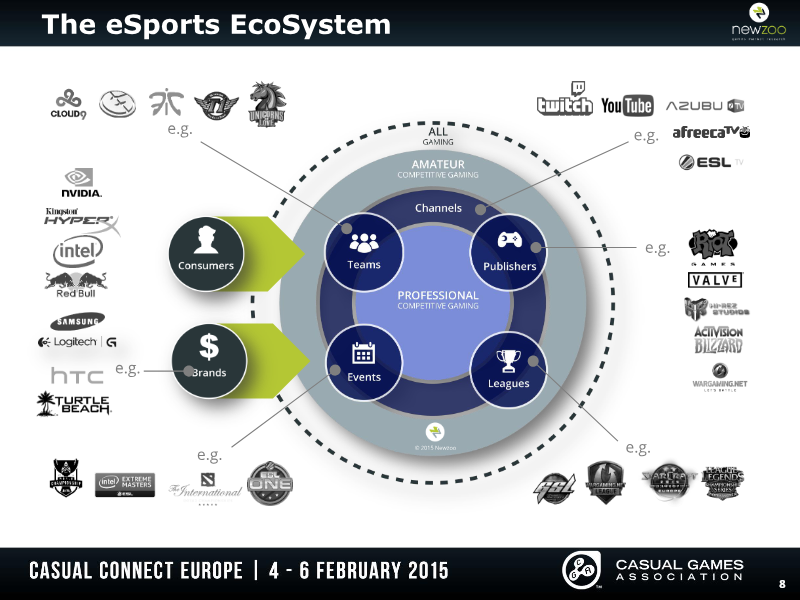
and the second one is um the revenue generated by Esports right so maybe we could actually dive into that a little bit um in terms of how the revenue is generated I know Laurier you know with your experience uh previously at EA um could you maybe speak to like how does this kind of system work like how where does the money get generated in Esports is it by the the you know there's there's teams there's you know there's the companies there's the Publishers and things of that nature um and like how does all of the the financials and the economics work sure um so I'm still at EA because you said previously yes yeah I mean when you when you previously worked on in in an Esports capacity yeah and um it's been eye-opening in many ways it's a whole world where it's a whole ecosystem I would say where um the
publisher teams professional teams amateur players who want to become professional sponsors broadcasters they all come together so obviously um the bigger is the publisher the more money can bump into it right um the idea is whether you're constructing a whole tournament and or a whole season the idea is still the same so the revenue will come from either sponsors um if you're doing a live event which we haven't done like live in person which we haven't done in two years but we're doing now but if you're doing a live event in some Arena obviously you're going to be selling tickets you're going to be selling merch you're going to be selling a lot of things so that adds to it but otherwise the money will come mostly from sponsorships and if you were um your commercial team is able to repackage that as a product that can go even on linear television
um so you can see in fact there are channels dedicated to it just to Esports but you can also see fragments of Esports tournaments on ESPN for example and that's because the the interest is so much now with making you know stars out of your professional players and a whole ecosystem around them so there's a whole economy even around them with their own social media managers the teams come with their uh their PR person so it is at that point and their own sponsors so all the money sort of comes together from this ecosystem I wouldn't I would say long story short there isn't one single source of Revenue and as we see this Market increasing as Hugo was saying we will see more and more possibility to also repackage what you have so the the revenue doesn't end there with the event but it continues and creates a whole channel that goes on
even on linear television and obviously which YouTube and channels got it online I would I would also add just you know and I was I was a client of nuzu for like five or six years of my prior job and I love I love the research and it's you know I think it's also important to remember for those that don't know that what's not counted in your Market size because you're kind of counting direct revenue is the revenue from games that wouldn't exist without Esports think of a game like League of Legends right I mean that generates what two to three billion dollars a year Revenue whatever the number is how much of that is because they have such a successful Esports you know ecosystem around it that drives interests and drives engagement and drives Revenue in the game and so you know when you start to think about kind of this second order and third order tertiary effects of Esports on the broader gaming industry the numbers also do get a lot bigger when you look at games like you know honor of kings and China or free fire the mobile game right all of these games you know their
success is partially predicated to the by the uh by the fact that they develop such a strong Esports ecosystem around them and I don't think you can just kind of you know they've they've been successful because of lots of reasons Esports is definitely one of the key reasons right and so as you mentioned League of Legends um what about for our audience what are the other games they should be aware of that have done a good job in terms of integrating Esports I'm not sure if you looked at any specific games or Matthew if you're aware of like good examples maybe both on the on on the PC cons console or mobile side uh yeah I think that's quite interesting question and uh I think we could also also complementary what Matthew said before so because the Esports is such a really good tool for Publishers to keep Community engages so when you look to okay what games are doing well in Esports it's for when we look for some for PC games which is a much more let's say older industry than uh the mobile games you pretty much will find out that
the games that have Esports are lasting much longer than the other games so you can think about like League of Legends Dota 2 Counter-Strike Rainbow Six and uh recently a rocket league so I would say those are the the major games that has some kind of like Global Esports Echo season because if we dive into like Originals that we will find out that some games are performing better or only perform in that specific region but for for a global scope I'd say that are the PC games but also when we look to specific to mobile and mobile is a trend that we start saying from 2018 we we find out that we have like Vereen of your fire we have pep Gmail buyer we have uh Arena Feller and we have mobileized the bank bank and more recently we have a League of Legends wild Rift I would say if you ask me what would be the like the most important uh the esport titles I I would be focusing
on those got it and when we think about the kinds of games that do that Esports is good for would you say there are certain characteristics or genres I I mean I assume it's games that are higher skill cap which would also not only dictate like a specific kind of gameplay but also potentially like within favor PC over mobile or things like that but would you guys agree with that or how would you characterize the kinds of games that are better adapted for Esports I think overall you know I think what we've just seen that's been so successful is games that whether it's PC console or mobile they're games that are consumable in Little Bits so if you think about like you know a sports game from EA or you know even Call of Duty or or Counter-Strike right where you have rounds where you know because it's a broadcast right you'll you're able to kind of there's a break you can the the
commentators can do analysis and then there's more action and it's kind of it has that normal flow of traditional Sports and I think those are the genres that we've seen that have done relatively well in Esports at least from the the broadcasting side of it because you know it just it it lends itself well to that nature of varying it live you know whereas something that's you know even like dodos like kinda in League of Legends like if you ever watch them like the first 20 minutes is kind of like it's all kind of boring of every round and then the action starts and so you can kind of tune in 20 minutes late and you just miss all like the leveling up and prep work and then and then people start actually doing cool stuff and so you know I think some of these other genres you know are slightly better tuned and that's why you've seen whether it's called Uh Activision with the Call of Duty League the OverWatch League Apex Legends you've seen these kind of professional organizations built around these games that are consumable in in in smaller bite sizes and then now if we were to think about a specific game and Larry I know you've got on on the ground
experience working in these type of games but when you think about okay I have a game I want to create some kind of Esports structure around it as far as like number of tournaments prize pool all that kind of stuff all of the like the specific detailed Logistics behind creating an Esports program for a game what goes through your head how do you think about that as much time as you want so well let's let's simplify by playing this it all starts with your fans and your Gamers okay your Gamers the core Gamers because that's where Esports is going to appeal to right obviously um they're gonna tell you how much engagement they want how what kind of structure the tournament is going to have to have or the tournaments if you're planning a whole season you're
gonna now if you're a publisher or any big publisher knows very well who they are where they are when they play how they how much they play so those are the typical uh monthly active users weekly but also you'll know what's their level of interest in terms of uh the the type of structure that they that you wanna that you want to create for the tournament and I'm going even deeper at this point it's like let's say okay we want to create a season then you have to walk the fine line between creating content that is Meaningful with games that are meaningful because just because they're playing it doesn't mean that people are gonna watch because once you're doing also Sports you're creating not only something for the fans but you're creating a True Entertainment product so then you're subject to all the other variables of anyone people getting bored you're competing for attention people could say well yeah okay cool but I want to watch something
else or I want to play myself I don't I have only this much tolerance for watching other people playing so then you have to really all the other the other things come into play so tournament structure uh with down to the rules for example are you doing a double elimination rule for example and that you have to consider you're doing that well then your um tournament is going to be your your gains are going to be fairly long your shows are going to be fairly long do you know if your audience can stick around for past like four hours Esports shows tend to be very long so that's why I'm saying um and then obviously try to create an engagement that goes parallel to the actual gains so um you're you're creating a show then you have to find a host um streamers are super important I remember somebody even mentioned in one of your previous podcasts old streamers you want to have influencer gaming influencers are a huge thing right now uh they are able to drive I wouldn't say more engagement than a
company like Activision or EA but almost as much so you have to really keep them into your ecosystem ecosystem and then also work into obviously the social media channels so there has to be uh something going on in the chat you have to give maybe um you want to also keep the engagement high with something that is uh like drops or some some kind of campaign on Twitch that rewards people for watching and companies are doing that too so all these pieces have to come together for a show to be really compelling and having people say okay yeah sure I'll spend four hours watching this even if I don't have you know I'm not playing and I'm not going to win anything but I'll get something out of it even if it's just watch my favorite Esports player and that's also why these people are extremely important you have to make stars out of them you have to build the show maybe sometimes around them and then in building a whole season then you have to like I was saying in the
beginning walk that fine line between pushing out a serious amount of gains that obviously keeps the engagement high but also not continuously push content out in a way that dilutes their value and because you ultimately creating a narrative that builds into whatever is the final price right even for mobile Esports and all the prices are like upwards of one million so you have to build that sort of like expectation and interest that builds into that into the narrative in a way that you don't lose audience mid-season uh for whatever reason and obviously let's not forget one thing all these four seasons whatever is the game their their point their their goal is to really help sell the game so and like we were saying Matthew was saying that before so they're built around when the game the new game is coming and around the day
physiological I would say normal uh curve that the engagement has after the game comes out and then there's obviously a little bit of a dip so the Esports Esports whatever season is has the um the the the goal of really keeping that engagement High because you're gonna do maybe you're gonna do live Services you're gonna do some some other content that you're pushing out but you want to keep that engagement consistent knowing that the new game is going to come out in a year or so maybe even two years so you your Esports season is really what is going to keep that engagement alive I thought it was going to be a long answer well I appreciate it and maybe one other follow-up there for Price pool is is price pool pretty arbitrary or is there like some kind of formula that people are using to come up with the prize pool well for uh for what I've seen from my personal experience it's kind of like there is a little wiggle room but it's
very little um it comes together as obviously what the company is willing to invest what you get from sponsors what if you're working with an external organization right so it's kind of like budget as well as uh you know kind of art like what would feel good that that kind of thing um and then maybe like a more fundamental question just kind of kind of pulling back and and um kind of making this question more relevant for some of the game studios or game companies out there so if you have a game you know when do we when should game developers think about okay I should start thinking about an esport for supporting Esports for my game like at what level of scale or revenue or things like that how do I think about when should I start developing something like this well um I think if we that's a very good question because if we look if we look
to the market we'll see examples that for example as write games that they are they doubled on these four to as soon as the game is released so for example if you look to League of Legends if you look too valran it with a wide Rift so the most recent most recent example could be for example white Rift which was like realism some of markets in late 2020 but like globally more in 2021 it's already in 2022 they have like a super Global with like original penetration for their 80s forms so they go in with like North America South Korea Japan China sausage Asia Africa Europe Latin America so it's all across the globe but also so I think there is not a specific or let's say rule I would say it's more about what hilarious said it's like if you first you have to to understand your community because esport there is not like one-on-one how to build a sports scene it's not like okay let's see what EA what right games or what activism please is doing and let's just copy and
paste and it gonna work out because well when you analyze for the landscape begin to see there is like a variety of like four months of the how Esports being run and in almost all of them we have success so uh I think in the recent years a riot games was the one who actually like changed how like the market in general I would say the broader game market look to Esports because they said okay we're going to double down we're going to invest in these words because we believe can be a very good uh user acquisition tool for us so they they become they made the franchise League the franchise League attracting Baxters and vectors attracted more players more audiences it creates a hype and awareness around the lake I after that we saw a lot of Publishers saying okay that's really good I want that for my game so instead of looking to the community they just like copy and base and then we start saying okay maybe franchise is not something that applies
for every single game but then we still have games even older the League of Legends let's say Counter-Strike that have money when you come when make a like one-on-one comparison Counter-Strike League of Legends they have a super different landscapery sports one is super like publisher Focus while Counter Strike is super open and basically relies on 30 part organizers to to operate but of course valve realized okay the Esports make it really well for me so let me support a little bit let me uh let me give some um financial support let me increase the price field because as as you said like I think the price pool the players itself even though if you're not like a DOTA player that you that you're competing for a 40 million uh dollar price poo you're most likely the price view itself doesn't pay off like it's not a lot of money if you split in six and seven that it's usually what ES4 teams does so I think the the price food for example is more too of like create
awareness and actually to engage the audience so what what yeah I would just I would just add I'm sorry I would just add that you know we've we've seen a lot of developers like valorant from Riot recently even OverWatch from blizzard right when they or even like just thinking about these games and starting to develop them Esports is part of the core development process they're thinking about how they integrate Esports from the very beginning and so I think you know jk just back the original question like I think if you're really trying to build a next big Esports game you really need to think about how it organically fits in with your game just like you know live Services you don't kind of just say we're going to figure out live Services when the game's done like it's something you think about along the way and it's part of your development process I think Esports is now in that same discussion you know when you're designing the game when you're thinking about the Cadence you're also thinking about how Esports fits in into your whole development plan and I think more and more people are starting to do that you know there's a playful Studios and
now doing that with their game Wild Card which is a blockchain web 3 game we can talk about that later but you know just just how they're thinking about the fan engagement how how the Esports is going to develop around it as part of the core development process I think that's really something that's starting to be a big sea change not just at the blizzards and the riots but now I had a lot more companies Lara would you agree with that or do you guys have I don't know if you can speak about it specific things that you look for or is it is it more about you know to Matt's Matthew's point when you're starting to build a game that kind of makes sense that you start integrating it from the get-go well my personal experience obviously company already had these fourth Seasons so when I joined so there's only this much that you can change due to contracts and agreements that are multi-year contracts whether they're on contracts with ESPN or with FIFA or whatever but obviously um I would say one thing um nothing is set in stone you're
following your fans you're following the fandom you're following your Gamers so things will change and you have to be able to capture that and be able to modify the sea even the season accordingly so if something is happening and we've seen it even with Ukraine the war in Ukraine or things that were happening in in parts of the world where they're not exactly where our fans are but they're close so in a way or another there is an impact and you have to keep all these things into consideration kovid was also obviously the other big thing you can have your star players fly and that's a big problem when you have people playing from home something I didn't mention before but there's a whole layer of technical issues that comes into place because you're capturing game Feed and you're trying to put two players playing against each other in a way that obviously you're trying to control variables that you can't control completely such as even their internet
connection maybe it's bad and what can you do so you put them to play into a studio or in some hotel room or whatever but what you're gonna have to deal with is some delays between one player and the other and you're trying to get the latency right for the for these shows so usually these things happen on a local you can facilitate you try to make it happen on a local level so that they they get attached to a server that is the same and it's close to them as opposed to have a player playing from Australia playing from the UK because that will create a whole nother layer of issues for you as the publisher broadcasting that and you don't want to deal with that so find I wouldn't say it's over but at least we're dealing with it so now you have your players flying and they're all in the same location so that eliminates at least that but
other things can come into place obviously and you have to be able to really adjust the season and the tournaments based on that based really on the response from the fans so that's why I was mentioning before social huge engagement there to be measured and keep the pulse all the time there because your fans are going to be and gamers are those kinds of people that will tell you very straightforward when things are working or not so you will hear directly from them and you'll know what directions take right and maybe actually taking a step back speaking of covid certainly many game companies were saved and saw a huge Boost from coveted game content companies now on the Esports side from a viewer perspective there may have been a boost but ellaria to your point maybe on the content player side there were certainly a number of challenges Hugo as you were looking at the market data what what were you seeing was there what was
the impact of covet to kind of like the Esports Market overall yeah okay yeah so aside of all the Techno difficulties that kovit brought to us we definitely saw a spike in the year of a year ago from 2020 to 2021 and I think the simple one of the like simple way to say that is every other entertainment in shape or form got harder to people the only kind of like uh entertainment socializing too you people had was like gaming and then watching people playing video games yeah and but what is uh what is really cool for esport is not like okay once you engage once you once you become aware of Esports you become an esport audience it's not like okay now that all the restrictions are lifted you will never ever see eastwards again I think people will now are more open to to what is for people are willing more to watch the sports even though in some of the cases those uh people who were let's say the
Enthusiast those that watch export on a more regular basis because now the Restriction lift that they will become more occasional viewers but I think uh in general I think it was a really good way to uh advertise is far to a broader audience okay yeah and I would just add you know and this is not unique to Esports you know fandom is an emotional experience right whether it's music whether it's you know movies or Esports you know once you start watching someone or a team and you start really building an emotional you know attachment as a fan to that that doesn't just go away because you know live concerts are back right you're gonna keep watching whatever you have an attachment to because you're now a fan and you have that emotional bond and I think that's something that's very underappreciated when everyone just says oh we're gonna go back to the way things were well that's not necessarily true because we've built different bonds and different attachments you know just
human nature and social sociologically and so when we look ahead you know those those Bonds are there they're not going away and maybe now oh sorry go ahead I wanted to add to just one quick thing when you have your star players in person because I worked with big games and these the professional Esports player the bigger ones they're real stars in their own way really um they have sponsors they have their own social media managers so seeing them in person all together the whole team that flies and even if it's you know post covered we're still in the gray area so maybe they're in a booth and separated from another team but they're in an arena there is light so there is the whole stage there is a hole so there are uh people you know for providing commentary all of that is finally happening in an arena and these are Big Arenas we know that Esports um Esports
events they fill big Arenas as much as any other sports event and and that really means for for a lot of people really be able to see the text of the world or all the other the other famous players it really means keeping that engagement at a much higher level than seeing the same people but spread all in their in their rooms and the host is in another location and the the the the analysts are in another location so it is really something that is building the engagement even higher and we were all like very anxiously waiting for that because we knew that our fans really wanted to go back as much as we wanted so it is something that um to Hugo's point it's not it's not at the end of the engagement it's actually gonna go only gonna go up from there if it if it lasted so much and it was so strong through covet then it can really continue just on his way up right and maybe now kind of Shifting the
conversation to be more forward focused or future focused in terms of like emerging technology so we have things like blockchain or metaverse and Matthew I think you're kind of deep on the metaverse side or any other technology how do you think these newer emerging Technologies could somehow be integrated into Esports what do you and if if they were to be integrated what kind of forms would that potentially take I mean I can kick it off you know I mentioned a game that's in development from while uh called wild card from playful Studios you know again we don't know what it's going to look like at the end because they're still making the game but they're using blockchain to kind of embed The Fan Experience and the viewership actually as the gameplay and so the CEO Paul vetner you know on our podcast since the metaverse kind of told us about you know he grew up like with Pokemon right and you see like the Pokemon cartoons and there's like everyone in the arena and then there's all the
action right and then when you play the game it doesn't look like that well what if the game actually looked like that like what if you were able to be a fan and actually interact that's part of the gameplay and so they're trying to think about how do we actually instead of just sitting on Twitch and watching it where it doesn't interact with the gameplay how can we put the fans as part of the core gameplay Loop and then reward them for doing that in this case with blockchain and so again we'll see if it's successful or not but I think that's a really cool idea to embed that Fan Experience as part of the core gameplay and so we'll see where that comes but I think what you're starting to see is people are trying to think about you know how can we take these emotional bonds that are built because of Esports and just fandom and make that more part of the core games and I think that's what's exciting whether it's in the metaverse or just using blockchain whatever technology twice it's going to be I just think how people are starting to to rethink and and think about different ways of engaging with fans that's what's exciting yeah it any other thoughts yeah um I would say for example I think
here we would be cool to like kind of separating two different boxes let's say for example if you think about new technologies in terms of like of get the game itself I think should become used for the first thing is people have to like the players and also the viewers they have they will watch again that they understand that those are the top players and they are and they are not the top payers because people want to watch those who are really good who are mechanically good to play video games not those who are really rich and buy uh the most expensive items so I think uh for new technology this this is something we we should see so we can see let's say blockchain game has become more popular as Esports but in terms of like new technologies I think it's all about how those new technology will increase The Fan Experience because when you when you look to uh to the new technology there is a lot for example VR stadiums there is also a lot of we could do for example with uh nfts
and blockchains like some kind of like subscription program some kind of like loyalty program through blockchain but like the true question is how will those those Solutions uh increase the the the immersion that the viewers and the fans have and I have just one client on them and nfds so elephant in the room right and of these are the big thing especially for games and we are all gonna have to deal with it in a way or another in some form um now obviously I want to bring the the publisher point of view as sure I'm gonna have to deal with that but I'm also gonna face a lot of criticism in any possible way when we're talking about tokens uh from you know concerned parents saying that it's like gambling or you're creating addiction or environmental concerns so it's all going to be about finding if this is the way
and it is the way um in the market um finding the right balance between really using that as an engagement tool by using it with you know a measure of um how can I say equilibrium between wanting to keep a certain level of Engagement wanting to find if you were using blockchain well you're going to have to find a partner that is uh has a reputable experience and it's also environmentally uh concerned enough to not attract more criticism so you're gonna have to deal with all these things if you have to it's not just the decision about you know okay I want a token campaign but sure let's activate it that implies also by the way a lot of specific skill sets that a company needs to have because these are all all these campaigns that I mentioned such as the twitch drops campaign those are all developer activated so you have to do really some you have to put some steps
there even in terms of content in terms of promoting it on social and you have to have the right people so that uh that really helps with the engagement and creates a whole fan experience that the the experience that we're talking about yeah I'll just I'll just add that you know I think and this was kind of Hugo was making this point right play to win has never been a successful mechanic for any game right whether that's you know a traditional multiplayer game and there was a notorious game from Electronic Arts in 2016 that that kind of got a lot of flack for this Diablo 3 way back when got a lot of flack for this and now it's play to earn games are getting for this I mean whatever the technology Choice played a play to win has really never been successful uh Gamers don't like it when they see people spending a lot of money to be the best you know they get turned off by that to Hugo's point about watching the best skill players they don't necessarily spend the most and so I think as the narrative shifts away from play to earns spending a lot of money to
get ahead and hopefully cashing out for more than you put into you know just rewarding engagement rewarding players rewarding with a sense of ownership in something and whatever that looks like is to be determined because people are still building the stuff it's still very nascent um then I think it starts to look like less like a financialization played a win mechanic and more like something that the average gamer will will adopt and that that's when it gets exciting and we're still a long ways away from from getting there but you know I think I think there's a lot of people that are that are working on how do we make this organic and not financialized and then when we get there I think that's when these Technologies you know rather than serving a niche crypto native audience they serve a broader three billion plus gamer or or in the case of Esports 600 million you know active Esports viewer audience and that's that's when I think it gets exciting okay and then if there I know we talked about a number of new technologies and things like that but any other Trends or companies that we should be
aware of that we haven't previously brought up yet Trends are there's a lot we could be talking but I think one of the things that we presently will be more popular in these Sports I think you you also talked about in previous podcasts it's like a code streaming so how can you because I like it's all about like FanDuel like is it worth like is it worth to have your official broadcast channel where you can control all the audience you can make sure the sponsorship deliverables will be uh correctly done or is it better to go diversify it's better to have like famous content creators broadcasting your content in in but like there is also a trade-off but the trade-off of that is you either get more viewership but also you start losing the full control of the picture because well what else if your tournament for example is sponsored with like a brand and then the content
creator is drinking the Z brand so how can that affect the sponsorship value for for Esports so I'll say code streaming and how that changes all the dynamic of like thinking about these Sports think about of Esports but also how people watch sports it's something which should be very uh looking at looking close and so here just so I understand what you're talking about there by code streaming so it would be the same players and tournament but like the commentators around it might might be different like it would be different creators who commentate on the activities that happen kind of similar to for Monday Night Football Manning cast or something like that where is is that is am I understanding that concept correctly yeah so yeah yeah so basically it's we have this issue uh broadcast feed with like official uh content official commentators and we have uh content
creators reacting in real time for in about that content got it one thing is Joe um and and for for you as well as uh from my Insider point of view um you do use code streamers you do use usually Gamers influencers previous Esports players that are retired um as your whole streamers as long as they're streaming live whatever viewership they have you can claim it as yours because the content is yours so if they're streaming as much as you as many people are tuning in to to listen to influencer X then these adds to your viewership so because you know Esports have their own set of viewership metrics such as AMA and that's the way success is calculated for the lack of a better word that's that's what defines success in a way it's the viewership it's the AMA sorry
it's average minute audience so that's why obviously companies like yay or Activision they have to keep consistently high and using those streamers could be a good way but also you leverage you choose very carefully those cool streamers in a way that you want to for example build diversity so why don't you use a woman right um full streamer or you you're streaming most likely you're going to be streaming in English okay so then let's say for a game that is very popular in Asia or in South America you're gonna use a cool streamer from those those areas so that will provide in a language a commentary in a language that you are not obviously you don't have maybe the bandwidth to take care of because you can't hire second host to do that but you're gonna have to go streamers basically doing it for you so all of that can come together in a very organic very thoughtful way if it's done well um also you go to your point very good
point on The Branding and the drinking the the the the bottle that is a different brand from what it's absolutely I can tell you all good Esports organization will plan that in advance nothing that you see behind any sports player is by chance trust me and because there are people like me doing their that job and and looking into that um so only certain amount certain things are allowed certain type of content there's a lot of certain types types of statements uh good companies they pay a lot of attention into that because whatever you're saying whatever your whatever message you're sending even non-verbal is something that the company needs to be absolutely aware of and it needs to be able to control it's it's all part of the the ecosystem so obviously I can see smaller companies not having the bandwidth to control all these things but the Hugo's point that
they can create a lot of like snowballing into a lot of issues with sponsors if you don't if you don't pay attention to that so and maybe brings us to an earlier question you were saying when do you have the right when is the right time to have Esports any sports uh any sports tool basically to promote your your your game and then I would say when you have people who can do this type of job so it's not really a specific moment it's when you can do it well and it might be very soon for you if that's what your focus is if your marketing company your marketing business unit in within the company is focused on that and believes in it sure then it's it might be sooner than for other companies but all these variables need you need to have skilled people to control all these things and let's not also forget the problem of the game Feed and getting the game Feed in a way that is satisfactory for uh for the show so
all these things I think these are the trends that we're really seeing your latest question and one thing that is extremely important and we we haven't touched it but it's Cloud broadcast so we are obviously broadcasting and leading into a situation that is way more complicated technically but guarantees a better experience which is cloud growth also so all the players in that in that field players in the sense of business will have to um sort of deal with it and it's in a way or another whether it's internally building an internal capability or you know using a vendor but um that's where the type of these type of broadcast is going okay so I have one last question and I that's basically more now around geography so if you think about the differences in Esports by different geographies and like maybe are there similar characteristics of geographies
or reasons why certain geographies would accept Esports more than others or how how would you think about different geographies when it comes to Esports I would I would just say for for people that haven't spent time in Asia I was fortunate to spend a few years JK I know you spent some time in China if you haven't experienced what Esports is like and as a culture in Asia you really should do you should really check it out because you know I think in the west we have the benefit of having amazing content Sports traditional sports but in parts of Asia like China and and Southeast Asia Esports is like one of the dominant if not the dominant Sports there and so the whole culture around it is just absolutely insane in some senses relative to what you experience in other parts of the world and so I I would just say to anyone that hasn't even taken a look at that to go research that more because you know I was fortunate to be
able to live in Hong Kong for three years and get to experience that and I I would just recommend you know for people that have a western point of view to really take a look there right and if you go by the data was did you see any glaring discrepancies or was it relatively that's quite definitely uh one of the trends we analyzed so kind of like the global against local Global versus local because and this definitely what Matthew said so because it's much more easy for if you are a publisher or you're a different recognizer and you're thinking about okay I went to build uh esport tournament I went to build the lake you definitely you're like your first choice would be to go for one of the most developed markets because they are more profitable right and you you either go to let's say n a or Europe or South Korea but I think one of one of the challenge it really is uh he's forced to becoming more Global well we in the recent years we had seen like organization traditional like American South koreas and even Chinese going
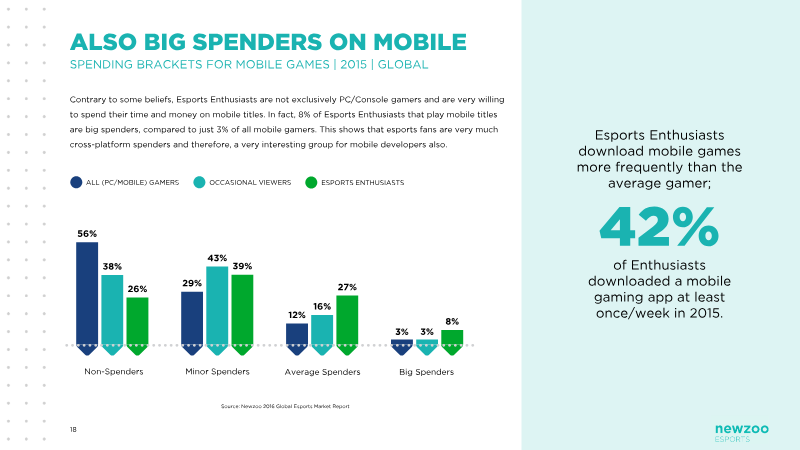
abroad so if you look for example to the Brazilian markets you have like American teams and European teams you look to uh Iraq Europe you have like multiple American teams but also Chinese teams operate in those regions so I would say one of the challenge is to really understand you cannot like duplicate your winning local strategy to other to other regions because well for example if you compare North America to Southeast Asia for example uh it's not like in Southeast Asia they are more mobile first they prefer Mobile gaming but then in North America it's more they are more into like the PC so Counter-Strike League of Legends games like that will be more popular around uh Esports fans so I I'd say the channel here is understanding that like is not necessarily your your winning strategy strategy cannot be just duplicated to other regions because uh the markets are different people play different games people play different
genres uh even uh they watch in different platforms and for example is it for example let's take China in the example if you take to any Western people and say that in China one of the things that they do in game live streaming platform is they have the bullet chat you don't have like a straightforward chat in your left bar you have the chat flying over your string and this is can you imagine create content can you imagine like I would take some Hilaria uh the thoughts here because can you imagine for a publisher to think about how to lay out how to design the broadcast template imagine like memes and words we find over your screen this is so uh so more difficult for example for people who are super user to to be more lesson Centric when they have to think okay let's go to Asia and they will find some really local problems I I'm calling problems but they're not problems because for in that specific Market that's how it how it's done so I
would say you really have to Deep dive and understand even though we really like to say Esports is global every single Market has its own wage to it okay got it thank you very much I think that was my last question so unless there are any final comments or issues I think that's it thank you so much and for our audience we will catch you next time thanks everybody bye [Music] oh foreign [Music]
Summary
The esports industry is undergoing a period of sustained expansion, with the global audience projected to reach 640 million viewers by 2025. Revenue is expected to climb from $1.4 billion in 2022 to $1.9 billion within the same timeframe, driven by a multifaceted ecosystem of sponsorships, media rights, and ticket sales. Beyond direct financial returns, esports serves as a strategic pillar for game publishers, functioning as a vital tool for long-term player engagement, user acquisition, and the cultivation of deep-seated emotional fandom.
Success in this competitive landscape requires a sophisticated approach to product design and distribution. Titles that thrive as esports typically feature high skill caps and structured, broadcast-friendly gameplay. To maintain relevance, publishers must treat tournaments as premium entertainment products, integrating influencers and social media to capture audience attention. Furthermore, the rise of co-streaming has emerged as a critical strategy for expanding reach, though it requires careful management to preserve broadcast quality and sponsorship integrity.
Global growth remains a primary objective, yet success depends on moving away from standardized, one-size-fits-all models. Regional disparities in hardware preferences—such as the dominance of mobile gaming in Southeast Asia compared to the PC-centric markets of North America—demand localized strategies. Publishers must tailor their competitive structures and broadcast designs to align with specific cultural habits and platform ecosystems. While emerging technologies like blockchain and the metaverse offer potential for increased immersion, their utility is best realized through enhanced fan engagement rather than speculative economic mechanics. Ultimately, the industry’s resilience is rooted in its ability to adapt to technical challenges and evolving viewer behaviors while maintaining authentic connections with global communities.