1 free read left. Create a free account for unlimited reading + AI research.
Create free account
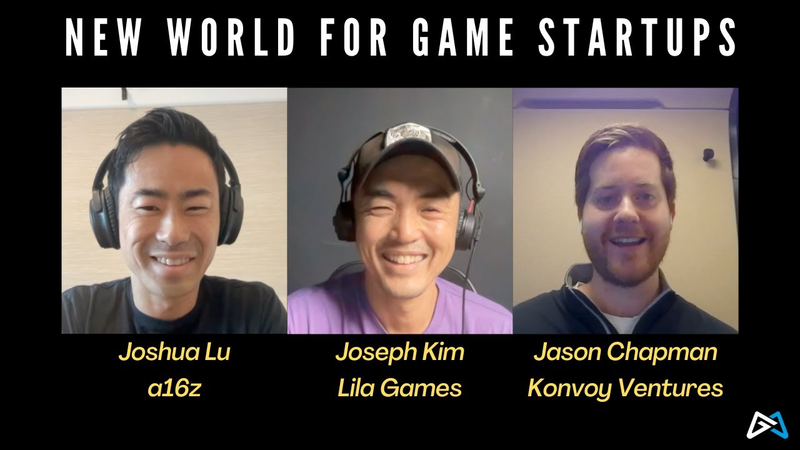
New World for Gaming Startups in 2023 | Jason Chapman, Konvoy Ventures & Josh Lu, a16z
Key insights
7 takeaways- 01Investors are shifting toward a 'flight to quality' strategy, favoring teams with deep expertise and metric-driven product development over speculative ventures.
- 02Late-stage gaming financing has contracted significantly, with Series B deal activity dropping by 47% and Series C activity falling by 67%.
- 03Startup valuations have undergone a major correction of 40% to 55%, forcing founders to prioritize capital efficiency and extend financial runways into 2025.
- 04While mobile gaming remains a focus despite post-IDFA challenges, cross-platform play is now identified as a primary growth vector for the industry.
- 05Blockchain gaming is facing increased skepticism, with investors now applying rigorous, traditional evaluation criteria to Web3 projects to avoid previous valuation inflation.
- 06New studios have a competitive window to innovate while major tech conglomerates focus on maintaining existing live titles, reinforcing gaming's long-term status as a recession-resilient sector.
- 07Generative AI is viewed as a transformative tool for reducing content production costs, though its adoption is expected to be an incremental process rather than an immediate overhaul.
Ask AI about this video
Transcript
hey everybody as we headed to the end of 2022 I can't help but feel we are living in a very Dynamic changing and really confusing time and from a gaming startup's perspective or from the perspective of those who are thinking about starting a new gaming startup I think there's really a lot to think about idfe deprecation Global recession and the macro economy the decline at least for the moment of crypto and web 3 stock markets tanking and the potential impact to VCS and funding and yet on the other side we have more opportunity than ever with globalization the growth of countries like India the growth and engagement that we're seeing in PC games hitting all-time highs on Steam for example and we've also got things like chat GPT and generative AI presenting potentially new opportunities China resumed new game licenses and we've got a lot of things happening so in the midst of what is likely to be a new environment for gaming startups in 20 me
23 I brought Jason Chapman from Convoy Ventures and Josh Lou from a16z Andresen Horowitz to help us sort through this at least for me what is a very confusing time and I thought we could start just by having you guys introduce yourselves I know I know um you guys are probably famous in your own right but for for our audience it'd be great to hear more about you maybe starting with you Jason yeah man man maybe Josh is famous I don't know if I could claim that myself but uh in my in this very specific sphere maybe a couple people know us but uh yeah Convoy we focus on uh the infrastructure platforms and Technology of games um we tend to avoid direct Studio that's um just kind of our background and what we like to focus on we typically do seed and and sometimes series a uh deals we tend to like to lead a lot so we lead
about 80 percent of the transactions we do and we invest globally except for a couple GEOS Russia and China are the two that we we do tend to avoid um but being in the space since uh 2018 and we are on fund three and having a having a blast allocating to the screen industry nice Josh amazing um I can talk a little bit of the fun I can talk a little about me um yeah a16z games fund we're new uh we just announced this year and uh you know we invest in the games industry broadly Studios and sort of everything else uh adjacent to the games industry uh we you know we really care about sort of supporting the industry going forward um uh new fund so you know we're we're still growing I think there's about 11 people sort of you know full time on the fun at the moment a little more than half of that are investors uh and uh you know I'm like one of the newest investors so I'm a baby VC in in every way uh I came up uh in the games
industry as a PM and a GM at places like played him Disney and scopely uh where I was the first employee and Zynga when we transitioned from Facebook to mobile and Blizzard Entertainment uh and then I did a stint at meta but I really missed the games industry so now I'm back this time as an investor awesome so I thought we could just kick it off by starting with the question that I think a lot of uh you know startup entrepreneurs or gaming entrepreneurs are interested in and that's like the current funding environment there's kind of the word on the street is that things might be down and so in terms of the current state of funding for for both of you what do you think generally in terms of like the the general environment and kind of valuations how have they been impacted what do you guys think Josh do you want to start this off and then I'll I'll hopefully round us out here sure sure sounds good well you know take everything I say With A Fistful of salt because I'm new and so I wasn't
here for some of the good times um I will say that you know at least for us at injuries and Horowitz we're still actively investing we continue to see really great teams come out for fundraising um you know the uh you know great Founders don't really control you know timing especially you know teams that are sort of just coming together now and so we are actually seeing some really great teams come out we're continuing to invest in the games industry you know as far as valuations go I do think you know there's a lot of uncertainty more than anything and so as investors you know one of the things that we're thinking about are you know for early stage Investments how do we work with Founders to maybe support them a little bit more early on so that they have a little bit more Runway uh through you know maybe some uncertain times ahead so sort of front loading Investments early on and you know allowing sort of Founders to just go to work and not have to worry about fundraising for a while and I
think the other thing as it relates to uncertainty is you know there are certain signals that are still really really strong even during uncertain times you know quality of teams have teams shipped games before have they uh do they have some expertise in the exact genre uh have uh founding teams work together for a long time and have seen some crap together you know these are all still really strong signals that uh you know still make for really great investments into teams yeah I think I I Echo a lot of what Josh says um to trying to add net new here um you know I can definitely attest you know a lot of groups have paused or are not allocating um thankfully no Andreessen and us are not in that camp and we are active still today um but I think you're going to see a continued pullback in 2023 um I think it's going to get a heck of a lot darker before it gets brighter um and so you know us internally we sort of have the hypothesis it's not going to start kind of Dipping out of this we're
going to call it a dark recession or a dark period for specifically the private markets and funding until probably Q2 or Q3 or 24 right and so you know what is that actionable for for startups here um you need to be thinking about that that is the fundraising environment you're raising into so that's that's one um two when it comes to uh just kind of the deal activity today right just some kind of numbers at the seed level it remains roughly unchanged year over year so we track on a quarterly basis number of gaming deals done per quarter so Q3 of 21 which is obviously the last quarter we have Q3 data for 2022. um 76 deals were done in 21 77 were done this this year so roughly unchanged at series a that's down about 15 at series B it's down about 47 and at series C it's down about 67 right and so what you're seeing is there's a massive plummeting at the late stage which isn't uncommon and then it eventually does Cascade to the earlier startups in the
ecosystem earlier uh companies raising an ecosystem we think seed and Siri they will probably the two that are most unaffected by this um over the next 18 months um but those are kind of some numbers um just of what is actually happening and it's because a lot of people especially at growth stage are are a little skittish and rightfully so right when things are uncertain investors also pull back um and unfortunately that that does impact the fundraising environment for startups right so Jason the the kind of decline in the later stages is that do you think that's directly attributable to just like the current performance of the the public markets right now or what are you attributing that to yeah um a lot of things right um so when you're when you're doing a growth stage deal right It's let's call it B and up right that's typically when you start to think about growth um b c and d rounds um you're looking at what is one what is the likelihood for
this company to continue raising money right you have to think about that as you as you allocate um and it just became a heck a lot harder for a company who's raising a b round to go raise a c round right and so a lot of groups are often choosing just not to raise right so this is a two-way street startups or looking at this being like I don't want to raise into that environment because I know I'm going to get hit on valuation a lot harder than I would have been you know 12 months ago so that's one um the other the other thing that's happening is that a lot of those growth stage groups are the ones who've been impacted the most by the What's called the chaos in the Publix right and that is then cascading to them which then eventually does Cascade to early stage just not as much and the reason is because you know we could talk about valuation decreases and we're seeing roughly at seed about a 40 pullback evaluation at series a about a 55 pullback um you know you're you don't have that much more room to compress though at seed right eventually you can't compress much more than we're already seeing
um you know you can't go back to like I'm raising that two million posts like I don't think we're ever going to go back to that environment like come you know companies do need money um and you know cost of living is what it is um so anyways that's where we sort of see seed being the most insulated series a kind of an extension of that and series B and series C really getting impacted the most which is evidenced by just the fact that there's so many less deals being done at that like there's 11 done last quarter in 2021 same corner there were 21 deals done at growth right so that's that's a huge pullback um so I said a lot there Joshua if you wanna gap of anything I missed but what do you think what do you guys think about geographical differences because it does seem like at least anecdotally I'm sitting here in Bangalore India it seems like a lot of the local VCS here are not only trying to deploy but that valuation still seem healthy relative to potentially like the global market do you guys think there might be some some
geographical differences or you know again I'm operating off of very few data points yeah yeah when you say healthy just sit before Josh starts do you mean healthy for startups so like higher valuations for startups or higher evaluations for startups okay sorry Josh go for it no I was just going to say I I think there probably is a little bit of geographical difference but I actually think it has more to do with maybe just like how much dry powder there is you know like you know one maybe not talked about thing uh is that there is actually quite a bit of dry powder in the game's investing space at the moment there have been a couple of funds that have raised recently and you know they have to deploy at some point and so uh you know despite all the uncertainty you know you're there are there are still investors out there who are looking to invest in companies and so maybe what you're seeing a little bit is a flight to Quality where maybe there
are fewer net deals getting done but higher conviction deals that are then getting getting supported with you know larger valuations is is one potential explanation I see that uh 100 right I mean looking at how much has been raised even this year alone for gaming you know funds and you know us included right in this conversation convoying and recent um you know looking at you know over a billion is coming to you know fresh dry powder for the gaming industry right and that number is increasing right and it's because it's a great industry throughout a recession too right you know there's a lot of talk a lot of people say like gaming is Recession Proof um I I don't think that is totally true I think it's recession resilient um you know if you look at it I think there's a lot of uncorrelated stats um to how gaming performs in a downturn um but we're going back to your point specific on Geo um you know just some interesting stats you know almost all the deals in the last quarter were done
in Europe Asia or North America almost nothing in South America I think one million dollars was raised in Africa last quarter and then um Australia had I think one one raise um so honestly there's been very little activity out of the core markets and so I do think it becomes harder in those let's call them Fringe or new developing markets to raise in this time to again you know as Josh said 100 flight to Quality and also the risk tolerance for a lot of funds goes down right the risk tolerance for I want to swing at a pitch in Uruguay versus in you know let's pick a market like Finland right which is a well-established games Market the tolerance is higher for that sort of risk tolerance right um I'll tell you our approach to that and I think Andresen shares this approach with us is we are risk on we think these are the times when you move and this is when you uh separate yourself from you know from safety and it's hard to do that as an investor in a downturn but that's what you have to do I think to be a top performing fund
okay and maybe like okay Josh please go ahead yeah I I think I think all that's right and then maybe just one extra thing for India specifically uh India is of course a massive opportunity and it's also as a gaming Market undergoing a whole bunch of change at the moment structural change that makes it I think pretty interesting for investors to be uh investing into into companies right now you know between sort of the explosion of mobile and access to data and some of the geopolitical stuff with China you're seeing I think quite a bit of change and change leads to opportunity got it maybe I could ask a potentially sensitive question just kind of like Rumor Mill overheard uh as a rumor from uh Venture partner at a at an adventure firm that um what may also be impacted are are the Venture firms themselves and that Capital calls may not necessarily be
honored um can you guys speak about kind of like some of these rumors floating around you know on the street yeah I can I can take this dab for for us here um you know looking at uh LP defaults which is really what that is um and a lot of people kind of look back to the last recession or even sometimes in covid um you know even though that wasn't a recession by any means um you know when times are tough what happens to your your sources of capital um there's kind of a couple things that weigh into this one is who are your LPS right um there's kind of a couple profiles of LPS there's institutions there's um large asset allocators and Funda funds you've got private money from individuals and families um you've got strategics in gaming that invest and all those are impacted differently by public turmoil but all of them are impacted nonetheless um you know a lot of people discuss this
and I'll say one LP defaults are extremely rare right like they they don't usually happen um what is more common during a time like this this is the LPS pay more attention to the speed of allocation and so in the last psych or last couple years people got away with a lot of things like we're going to allocate 40 or 50 percent and we're going to allocate our Fund in two years or under right A lot of people did this um and I'll tell you looking back historically you know you typically look at an allocation period of around four years maybe five years three would be very fast I think we're gonna Cascade back towards longer allocation periods and so less funds are going to be allocating their entire Fund in two years right I think that's one thing that's going to be impacted the more common thing that I'll tell you us at Convoy have not experienced but talking to obviously a lot of other GPS in the industry what is common is an LP group will talk to their GP and be like hey it'd be really great if this quarter you
didn't call Above This that would be really ideal that is the way that they kind of cascade and put pressure and that is also and that mainly happens at later stage right with the law large asset allocators where they're saying and that's another thing that Cascades into why people are allocating less right funds are less eager because LPS are less eager startups are less eager pretty much everyone is less eager right and that's that's kind of the situation for LPD faults people like to say this but I think the number that I've seen is you know less than one percent of LP commitments defaulted in the last recession um I don't have a source on that so you can't hold me to it but that is the number that I'm remembering right but to your point it's it's more of an like informal soft kind of slow down type of situation yeah it's kind of like hey like don't do that to me right like that's like more of the discussion you know because that would put me in a tough spot um because right now the reality is if an LPD Falls um you know it's a pretty harsh repercussion for that um you know a lot of times they actually
sacrifice their interest in the fund itself um again we have never experienced this or gone through this three funds in um but those are pretty extreme scenarios and you know most managers thankfully do not have to deal with that okay I was thinking maybe we could also talk about sort of the opportunity landscape and I think there's a lot of talk in the industry about you know is mobile dead opportunity Mobile versus maybe PC or console gaming Investments Josh um I I know you're kind of looking at a lot of different types of gaming opportunities uh did you have a specific outlook for Mobile versus PC console totally well you're going to get a biased answer because I came up uh in mobile games uh and so uh I love I love mobile um look you know it's it's been a little tough I think for mobile the last whatever year or so post idfa I think you know when I talk to lots of companies who have been in Mobile for a long time they're still figuring things
out you know one of the paths post idfa because you know privacy stuff has happened before that to impact ad and acquisition markets is companies have sort of come up with clever ways to sort of hack past it that hasn't really happened so far at least nothing clever what you're seeing a lot of you know mobile games companies do is just shift their spend from iOS to Android uh shift from you know places like Facebook to other networks and that has had an impact on sort of like an acquisition performance but I did uh see uh I think deconstructor of fun um took a sort of mobile Outlook uh thing and and uh they showed that although IAP spend was down in the first half of 2022. mobile downloads were up and uh what that says to me is that yeah some of the sort of like cyclical metrics are down IEP spent is down because of things cyclical either acquisition or targeting or macro
economy people spent pulling back on their discretionary spend but downloads are up and if you've ever run a uh a game before uh you know in live Ops you'll know that um modernization is like the easiest metric to move and the ones that are structural I.E download slash growth and retention are the ones that are really hard to move and so that actually tells me that the intrinsics of the mobile gaming landscape are actually still quite strong and so I'm still a big believer in Mobile but um you know my in my role at blizzard one of my learnings is we launched like we launched a game called Diablo immortal which was a mobile PC cross play game so when you think about cross play in the past it used to sort of be like PC console um but I'm actually really excited about cross play PC Mobile uh for a whole bunch of reasons um and so uh I'm I'm just really excited about uh companies that are playing in
that space right now so mobile is not dead it just might be be integrated into sort of a future platform agnostic um strategy okay and maybe speaking of opportunity even further we I briefly mentioned web three uh you know it's it's kind of I had a little bit of challenge recently um and so when you think about the opportunity for web 3 companies are you guys still investing in blockchain based games and crypto games uh what What's the current outlook on that side oh man oh man this is a this is a discussion for an hour in itself I think Joe um well it's you know it's saying it's been a tough time I think is a very kind way of saying it I mean you know at the peak in 2021 you know I think that you know the crypto blockchain industry was valued around 3 trillion I think it's now valued about 900 billion roughly down about 2.1 trillion I mean you know when you lose that amount of economic value it's it's it's hard not to look at
that um and kind of going back to Josh's uh great Point earlier about dry powder you know 55 billion was raised in this year and then last year alone across blockchain funds this is blockchain funds not blockchain gaming funds um and a lot of that money has found itself into gaming which has kind of inflated it into being the most expensive subcategory that exists still to this day the end those valuations are relatively still propped up because of all that dry powder that's still sitting there with those funds right so you know looking at at web3 um I'll tell you our last deal in web 3 we did was in I believe October of 2021 um and you know we we as a firm decided to not launch a product dedicated to blockchain gaming right this was a decision that we made as a firm that we were less inclined at this time and it was mainly driven by the player base size you know you know Josh is talking about about you know mobile downloads
and you know just intrinsic intrinsic metrics the intrinsic metrics in blockchain gaming is there's about 10 to maybe 20 million people that play games that are enabled by blockchain you know that's that's a pretty small number when you're looking at 3.2 billion people play video games right and so for us we saw this as the most expensive category the least number of players and so we were we weren't as excited so I know I'm sounding like a total bear I got all that out of my system now my bullish side um I think where we're at with this is the the metrics didn't match the funding interest um here but that doesn't mean that in under the hood that it's all bad um and so we look at it and we think this is really great just like VR had a lot of false starts um I think watching gaming kind of had a bit of a false start here um and so for us like we do still consider it but the bar is extremely high and it's even higher than most because I think you look at this as it's
just a small Market to service and so you have to be really special so that's that's our general take on this um yeah and Josh I'd love to hear your thoughts too yeah I I think we think about things the same way when we when we look at at least gaming Studios that are web 2 versus web3 we actually take the same exact criteria so we don't treat sort of like web3 Studios any differently uh the bar is similarly High across uh you know both web 2 and web 3 games and and the bar is already very very high for web 2 games so I'm not saying that because the bar is lower the bar is actually you know quite a bit higher and so you know we when we look at web 3 opportunities we're really looking at the exact same signals that we would look for in uh you know really strong web 2 Studios again you know strength the team strength of opportunity uh speed of execution all of the things that you would expect uh that uh and in in a really great web to
investment we look for in a web 3 investment and then you know maybe the the uh the added sort of filter that is useful is you know because so much money has poured into web 3 games and because there are so many projects there is a war for talent and so one of the best signals that we've been able to look at are hey for people that we know have shipped games before which ultimately in in any sort of like you know game company is the most important thing is like can you ship a thing that people love um we really take a close look at the founding teams and see whether or not they've been able to recruit well uh people who have shipped success possible games people who have seen some crap you know this is sort of the time in the industry where having some of those Battle Scars is really really helpful and so that's something that we've been focusing a lot for all Studios but especially for web 3. and maybe like in this current environment then if you were to give any
advice to Founders or you know or new startups trying to raise funding to your point Josh is there anything specific about this current moment in time does it really require a stronger team more than other times or any other characteristics that you guys would be looking for in order to you know get funding from from one of one of your firms things that uh I'll start one of the things that we've been looking for are uh for Founders to be really thoughtful about uh testing their ideas earlier and faster I think there was a period of time where money came very cheaply where Founders felt a lot less pressure to sort of uh put pen to paper and put a code in and uh and so we've actually been having a lot of conversations with uh you know teams that are out raising right now hey what are you trying to prove between you know this race and the
next race and what are you doing to sort of make that cycle faster what can you prove in chunks rather than as uh you know a fully fledged thing and what are the clever ways that you can prove it along the way and you know it sounds maybe cliche and obvious but uh you know scrappiness in game startups is just as important as scrappiness in you know the rest of sort of tech uh and uh you know that's not necessarily a thing that was maybe as emphasized in the last few years but um but certainly Founders uh who are already funded and are looking for funding right now uh have that on their minds yeah I think that's totally spot on you know trying to add net new um a couple of things that we do and what I you know it speaks to different investors differently right like some people resonate with other strategies versus others but in a similar vein um you know we tell our Founders hey like if we're going to commit to a round
okay so from from C to series a what exactly are the what's exactly the progress we can hold you to as your investors right and please do not show me your you know really really aspirational goals show me your realistic like hey this is we're going to be happy at the end of this right um and you know I think one of the things that Founders often get wrong with um I'm gonna say most serious investors is that they they think that the higher the number we can show in our chart of in five years we're doing 250 million in recurring Revenue you know you know Josh and I see hundreds thousands of decks a quarter right you know we see so many opportunities we know kind of what's real and what's not um and so speak speak to us in a real way and you'll get our respect I think a lot faster um and I think it'll get your investors to take you seriously um the other thing I'd tell you is um I think a lot of people use their board really poorly um during um at just period they use their board very poorly
um I have found it really helpful with Founders when they try to use us as sort of their accountability um uh hey I said I was going to do this I either got there I didn't here's why I didn't get there setting goals with timelines is very very important you know if you set a goal and there's no timeline attached to it it's just a dream like that's just it's something you hope you achieve at some point in your life um but holding yourself to that I found that that is very helpful for operators and it's very helpful for us too and it's not like I'm sitting there at the end like gosh like you missed three or five metrics it's like let's figure out why you missed those um so anyways encouragement would just be set clear metrics clear timelines communicate that well maybe pull back on the aspirational Visions a little bit when it comes to revenue Targets in particular and you your board effectively those would be kind of be my advice to kind of people in their seed series a in particular raising right now totally and ask for help proactively
like you know this these are these are challenging times and you know we as investors exist to help and that's not just in introducing you to somebody it's not just in being a sounding board I mean we really are here to help so so be proactive about it all right and I wanted to kind of ask more of a philosophical question and it has to do with like a question that I've been thinking a little bit about which is like back in the 1990s Venture capitalists used to talk about two different kinds of startups on the one side you have better faster cheaper meaning companies that do roughly the same thing but incrementally a little bit better and then kind of these Brave New World companies that are trying to do something extremely dramatically different uh kind of like a Quantum Leap in terms of capability or function or cost or whatever and when you guys think about gaming startups today um does does this kind of characterization make sense and do you see a one versus the other I'm just
trying to get your your perspective on on this kind of question whether whether it even applies to gaming man I mean my mind goes straight to Brave New World uh that's where Maya goes um especially on especially on the content and publisher side of the house I'd say um that's where my head goes um I think you know gaining you know rewind 20 years ago you know what was gaming what did gaming look like to what gaming looks like today I mean we're gaming on an astronomical uh you know astronomically new amount of devices you know from VR Mobile new types of consoles um you know I think that is evidence of where our industry sits we're not just trying to do things cheaper and cut costs I think we're trying to um entertain the world right like this is what this industry does it's the past time of you know 38 of the world's population there is no other activity other than drinking water and walking and eating probably and sleeping that 38
of the world does right and this is where I think you know when I look at what we do um you know and Josh and me and the rest of our teams we're trying to fund uh the the people that are forming new ways to entertain and connect and build community and like so that to me screams Brave New World not um faster and cheaper of course there are examples of some great service providers in our industry that do those things and that's great businesses I'm not digging on that but in aggregate I would slot Us in that um you know explore mentality uh versus the uh um engineer trying to to make things go from you know one to five to one to three yeah faster and cheaper is uh it I think the answer depends a little bit on sort of like the the underlying assumptions that you're making with with faster and cheaper right it's like you know if you look at the mobile games industry over the last whatever six seven years a lot
of that story has been faster and cheaper people trying to optimize their ltvs their their LTV to CAC uh ratios just by like five or ten percent here and there and that has built some really great businesses until some of your underlying structural assumptions change when there are you know Black Swan events in acquisition and targeting or in new platforms or whatever it is you know suddenly a lot of those um really great optimizations you know go away or the nature of those optimizations changes and you sort of have to scramble and so you know Jason's Point uh you know Brave New World is uh always the best way to sort of like build a moat and it doesn't have to be expensive right Brave New World can be in not just in uh you know having these like massive AAA budgets or you know spending a bunch of you know money or Dev time against a thing it can be an Insight on distribution right like uh you know when League of Legends came out and people remember they were competing
against uh another title uh Heroes of new Earth and uh and um Han had uh you know all a bunch of sort of like you know ex DOTA people it was a really really strong team and League of Legends uh you know just their distribution Insight was well let's make this thing free to play and people thought they were crazy but that is what ended up sort of like generating this massive generational game and uh and so this is all a very long-winded way of saying you know we agree Brave New World um but uh you know maybe one Nuance is there are lots of Scrappy ways to get the Brave New World that might look like uh you trying to make things faster cheaper it's just you know paradigm shift and how you think about it um I thought we could now start to talk a little bit about Trends macro Trends and I know Jason you had mentioned that games are kind of recession resistant um I my own perspective is
that um the way that that I look at the impact of like a recession on the gaming industry is that like well if you have a premium game that's fixed cost and you have a lot of value and that the value for that game is is really high that you know that I think that kind of explains some of the the growth in terms of the PC market PC console Market whereas IAP spend you can still play it's more kind of like a you know discretionary spend versus non-discretionary which I I think kind of explains some of the the kind of loss in IAP spending and well Behavior but if we were to think about a potentially prolonged recession and that impact on IAP spend um do you guys think does any of the the sort of macro Trend and the potential for there to be like a you know kind of like a prolonged recession does that factor into how you guys thinking about investing or how you would advise some of your companies how does this specific
um kind of like macro event factor into what how you invest or how you advise your companies I mean yeah it definitely does uh so if you're you know for us we look at you know going back to your point on like recession resilience you know when you look at uh what do people tend to spend money on when things aren't going well right a lot of Vice Industries in particular have done quite well um also a lot of entertainment just does well right just generally and it's because people inherently when things are going poorly they don't want to pull away from one of the few things that maybe is bringing them joy in a rough season right and so I think this is where I would slot gaming I wouldn't flot gaming a device but it does share characteristics to a lot of the vice Industries on how it's performed as an entertainment property so that's just largely where I would sit it when we looked at the last recession I think the closest comp we can do is you know 2008
2009 things got really rough especially well in the US but also in the world just largely um you know a lot of gaming growth remains either flat or slightly up right and so that that is very very encouraging I think that should be very very encouraging for startups today and so do I think there's a large different uh strategy I would approach um when when things are tough in the macro so our startups on like how to Market to users um yeah there's some probably tweaks but largely as a whole like our industry is going to continue growing there's going to be more people that play video games tomorrow than due today I would put my entire net worth on that statement right and you know that that's why you know Josh and I are in games that's why we've done this and dedicated so you're probably preaching a little bit to the choir um you know I'm probably preaching the choir too with you Joe launching a a startup in this environment um so you know like that's that's where I would largely lean um is this is
this is a great time to be in games right um just because almost about any time is a good time to be in games right you know we grow about almost nine percent you know calculated annual growth rate um for the last decade and we're looking forward and I think we're going to see just about the same growth rate the next decade um so anyways that's that's my starting point and Josh I know you got some great comments here too but uh that would be my general thought on this yeah I I totally agree uh you know we we are in this business because we are optimists about the game industry but we're not blind optimists the data support that uh you know people uh are Gamers everybody has a hardcore gamer in them I've basically spent my entire career starting you know in you know during the last recession introducing people to games right like you know the first games that I worked on you know things like you know Farmville and Mafia wars and words of friends turned people who never would have called themselves Gamers into like three hours every
single day spreadsheet optimizing min max hardcore Gamers and you know all of that's a long-winded way of saying you know everybody is a gamer they just haven't found the right game for them yet and that's why you're continuing to see you know games adoption and game engagement increasing over time and so even when I think you know uh the there's uncertainty in the macro environment you know to Jason's Point uh you know people full uh flee to happiness and they flee to you know people and the beautiful thing about games is it's a really great vessel for both it's a great vessel for fun engaging experiences and it's a great vessel for social interactions and you know that's maybe something that uh you know isn't talked about as much but is so key to why the gaming Market has exploded over the last decade is just really great social experiences um and uh and so and and social experiences are cheap uh they're
inexpensive and uh and the value for what you put into them as you know the end user is really really high and so you know for all those reasons and everything Jason said I think we're very optimistic about the games industry I think I think just attack also tack on there just something else that you know I get questioned a lot about is you know with games right like like oh you know Jason like you know a classic question I've gotten is like you know my kid plays too many video games like you know like how do I like prevent that and I always kind of say like look everything in Access isn't good for you including working out right um you know like that's not good for you either uh playing too many games like I'm not here sitting advocating that everyone in the planet should spend 40 hours a week in games right like that's probably not great for you um but I would much rather hear you tell me that you're spending 20 or 30 hours in gaming then you are watching 20 to 30 hours of Netflix or of Hulu or we're consuming passive content like and a lot of people forget this is that gaming is interactive content like you it's a
two-way street you impact the environment the impact the environment impacts you and you know to Josh's point it's the social experience for the vast majority of people right and that is what we lean into and that's why I think this is a great thing for people to invest into but also a great thing for people to invest their time into it's just if you're going to pick from the you know the buffet of options with your free time you know I would argue that gaming is one of the best ones you could pick and I really do stand by that but with the obviously the caveat of temperance is always is always advised with most with most activities that you and you know indulge in yeah I was just kind of thinking that one of the other advantages in terms of like the macro environment that I see and and maybe an advantage for you guys being risk on right now is that anecdotally I've been hearing from multiple people that a lot of the bigger Studios and bigger companies are starting to shift budgets away from new game development into like existing you know currently live operating profitable titles and so from a competitive
landscape perspective because of the current macro economy and where we are right now if there's less if if there's less new games being developed by the big guys and you guys are investing in some of the newer guys maybe maybe it's actually a good time to be developing new games so that when once you launch you're actually launching against you know a competitive landscape that that's not going to be as competitive in the future okay um I thought we could also just take um a moment to think about some of the opportunities and and you know try trying to be a little bit optimistic about the future and certainly if I look at my Twitter timeline or my LinkedIn you know kind of feed all this chat GPT lens uh AI generative AI all this stuff is like all over the place and so when when you guys think about some of the other opportunities from a gaming perspective and some of these technologies that could be impacting gaming what do you guys think the impact of AI generative you know uh AI chat GPT
all this stuff what are your thoughts on that in in terms of impact to gaming in the future oh man I'm gonna give this to Josh first you know I'm gonna let him try to pick this one first okay I'm giving him the hard job absolutely no no I'm I'm excited to talk about it I I like I think the rest of uh you know Tech Twitter have been captivated by GPT but this fascination with uh ai's sort of impact potential impact in the games industry has fascinated me for a lot longer than sort of you know the latest uh you know chat GPT theme having come from game development look game development's really hard and there are massive barriers to entry it's why companies have to go out and raise so much money to sort of like turn their ideas into reality and uh and the uh the arms race for scale has only gotten sort of you know higher and higher over time um you know Diablo mortal was a nine-figure budget Call of Duty mobile
same same deal and you know many of the you know very large games now are very expensive Endeavors anyway I'm really excited about AI in a whole number of ways and we're already seeing actually quite a few entrepreneurs come through with early ideas of how uh AI generative AI can impact the games industry the first and most obvious I think is just reducing the cost of content by a lot um and look you can I think there's a real conversation about you know what is creativity what is originality uh you know what is derivative blah blah blah blah but you know what you I think don't realize in game development if you haven't sort of like been in the trenches and gone through the slogs is that like a lot of game development content creation is 42 shades of blue and like you know recreating variants of the same textures over and over and over or you know doing you know you know paint overs of like
you know the same thing over and over and over and over to get it right and there is obviously amazing creativity in that but you know I I think you know The Optimist View and the view that I have and I think our firm has is that AI has the ability to take very creative people and just multiply and amplify their efforts and and their creative minds a whole bunch and so we love it and then you know just even outside of content creation there are a whole bunch of um areas that you know we're looking at at the moment everything from real-time translation to NPCs to you know new new forms of gameplay so yeah you know the uh the meme exists but we're genuinely very very excited yeah so this this is a this is a topic that um I've spent a lot of time on because uh before you know we launched the firm I actually worked in research um and Engineering um within the Artificial Intelligence Division of IBM and so I've
spent quite a bit of time under this this house and the suite you know when people say the word AI um you know it often means something different to a lot of different people but really underneath it there's just a lot of House services you know you've got you know machine learning which has applications within within AI you've got computer vision you've got natural language processing you've got a host of things that you can be talking about and so for me I typically like to break it down into you know I'm excited about some things and not others um so let me just you know kind of come out with a direct statement I think on a lot of people asking this question like uh do we think we're even gonna have game developers in five years a hundred percent we're gonna have game developers for five years um I am very bullish on uh human creativity more so than I am on a machine replacing human creativity so like that's generally where I slot most of this stuff and I think this Echoes some of Josh's points which is I would look towards AI being a great assistant
um it is a great assistant to a human to deploy and do an action faster hopefully but at the end of the day I'll tell you as somebody who's worked on under the hood for a lot of these types of services um trying to push the boundaries of this technology it often Falls Way short of what people hope it does right um and so like level set expectations I think you know investors often have shiny objects and shiny topics right if you really want to kind of get what that is go follow like 100 of the top BC firms you know Josh and I will be offended if you don't follow us um in that top hundred follow those hundred people scrape that in material and just do kind of like a word finder for keywords across and you'll sort of pick up Trends right um you know a lot of people really hopped up on web 3 in 2020 2021 a lot of that excitement is dissipated and now it seems that this is the the next thing that a lot of people are talking about um and I think the easy thing to do is either one of of one of two things one
is you just go all in on it you're like 100 like this is the future or the other thing is you say absolutely that's total nonsense and neither one of those are correct in my opinion I think you need to approach this with um with diligence and I think you need to really evaluate AI for what it is which is a great assistant um and I am excited about specifically what Josh Benson's you know NPCs I think making those experiences more interactive also I think that we are in a huge technical deficit for game developers to be able to um build as much content as we the users are demanding um it's almost unfair um and so those are the two areas I'm excited about um but I I think that I watch this with um uh how do I say this with a little bit of pause because a lot of companies are gonna get funded and then people are going to realize that they do about 10 of what they hope it does um and that that is what I experienced um you know generally in AI for quite a while and I'm excited to see what that industry
can do for gaming um but I think it's gonna be a heck of a lot slower than most people would imagine and so like what about some of those those trending keywords or other Trends or opportunities that people should be aware of like what are some of the things that you guys are seeing that could have a potentially a big impact on gaming in the future we mentioned we mentioned dry powder earlier this is this is maybe not an opportunity but more of an observation we mentioned dry powder earlier and actually the 800 pound gorilla in the room are very very large existing companies who are also pouring a lot of money in the aims industry that aren't necessarily traditional Venture investors so I you know used to work with a whole bunch of uh folks who were now over at Netflix doing a games effort um Amazon is also putting its best foot forward in their games effort Microsoft just uh you know offered a Godfather
offer from for Activision Blizzard and you're starting to see the very very large companies wake up to this realization that a content is King B to Jason's Point earlier that um the uh the capital efficiency of games content is just extraordinary especially compared to other forms of entertainment and especially movies and TV and uh that ultimately uh uh that these companies are trying to sort of like uh monopolize engagement engagement again back to our earlier conversation is the ultimate intrinsic you can do basically anything you want as a business in terms of modernization as long as you monopolize engagement and so one of the things that I'm thinking about a lot is you know what happens when the very very large players are also you know building these massive games efforts and yeah you can look back in history and say well large companies have tried and failed to do this in the past but uh you know having worked with a lot of these very very smart people who have been games native
for a long time who are doing this at large companies I I'm taking the effort seriously and it's something that uh I think is a net positive for the games industry um and it's just something that I'm thinking about a lot yeah I think another topic that a lot of people have funded recently and a lot of people are looking and talking about right now is just how gaming can impact mental health this is something that you know we are in a mental health crisis in the United States and I would probably argue globally um I have more data on the U.S but you know the numbers are pretty uh discouraging if you want to look at them on you know how many people are are suffering from from this at an exponential rate a lot of that is tied I think to technology use and so it is ironic at times we're thinking about using technology to secure us from an issue that is created by technology at the core um but I do think there's some interesting stuff games can do um you know only about seven percent of the population will will uh I use the word
discipline because I don't have this discipline but use meditation apps like calm or headspace um but you know you're you've got quite a bit of a population that that doesn't have that discipline and how do you get them to do it and a lot of people thought games is probably the best way how do you create games to hopefully get people into a similar mindset of calming the cells slowing them down and you know entering a general state of mindfulness by the way which was the word I had to look up when I sort of kept reading mindfulness what is the definition of mindfulness um but just think of it as a healthier state of being and that is an area that I've thought a lot about and I I hope games can help there and I think we can there's an interesting companies going after this problem and I think we'll see a lot more going after this problem here shortly okay so I just have one final question and that's kind of to shift the conversation more towards um strategy and operations and kind of like the original thesis driving this kind of conversation we're having right
now is just the dynamic nature of the world that we're living in so many changes I think I was just reading something about alternative app stores now right for for apple and there's just so much going on and I couldn't imagine like even when in my business right now like I have to try to understand where kind of like the US dollar to to INR conversion rates are happening because we're living in a more Global world and you know I had a friend who had to move his company out of Russia and there's like all sorts of things happening and so like if you were to think about some of like when you're thinking about gaming companies operating today and thinking about some of the most strategic or operational uh I guess bits of advice that you would uh call out that they should be thinking about what would some of those things be I would probably say uh you know if we're first again highlighting the fundraising comment like try to not have to fundraise until q1 of 2025 like if you're gonna do that
my goodness you will be in such a good spot so think through that um do not plan to start raising capital in November um because very few deals get done between Thanksgiving and Christmas especially in the west um so really plan that out if you need a raise and keep if you really need money in Q4 start raising in Q2 of 2024 so just kind of a tactful thing things will still take longer than than they did before that's one um operationally uh I mean this isn't Fun advice but I think it's necessary advice uh look through your your your staff and determine what who do you need and who do you want there um you know there's a lot of wants that you cannot have right now and that's unfortunate um so that is a that is an operator question that I've you know asked a lot of our operators is just who do we need and who do you just really want around um and you need to get your your burn to
a spot where you can survive where you're not having to raise and the peak of the the down the downward Trend which is probably in Q2 Q3 of next year right so that's that's my general advice um operationally more around Capital raising um and then uh you know I would tell you like figure out uh figure out who on your team right now um who do you need to keep happy and keep them happy right and so like a lot of questions we've gotten recently is like hey we have a certain amount of money as a pool of capital to for salaries for bonuses um you know you need to prioritize who's who's the game changer for you right that's what you need to prioritize I think the era of you know super employee friendly across the board is coming to a close right you know when things get tough things people have to make tough decisions um and that is okay like when the going gets tough the tough get going and I think that we're you know to Josh's point we're going to see a lot of diamonds kind of emerge here
um in startups so those are my general piece of advice it's more around payment of employees and bonus pools and then Capital raising awesome I think those are really great and it maybe highlights uh you know one point which is you know really great Founders and CEOs are made during hard times and the reality is actually that quite a few Founders who raised in the last cycle or created their teams in the last cycle first time Founders this is sort of the first time they're going through like the really hard macro times and so it is a massive shift in mentality to sort of Usher your teams not just structurally with raising capital and having the right cost structure and managing burn and all of things but Also spiritually right like you know being what does it mean to be a really great wartime leader what does it mean to uh keep Talent like top talent around without necessarily paying them more this is these are the times where
really really great CEOs are sort of you know made and sort of honed and so you know to the extent that uh you know you you're a founder or CEO yo you're going through this think about too you know what kind of leader you want to be and and you know make sure that you're you know consistently communicating with your your teams you know really be out there this is the time where it's actually probably more important for you to be spending more time with the team than out raising and you know you know luckily for you or unluckily you know there's you know less activity there so you know spend more times with your team and spend more times in the product and you know this is sort of where uh us as investors betting on really great Founders this is where you know that that philosophy of investing really comes back and generates great returns all right gentlemen thank you very much for your time maybe we could just actually end it with if people want do want to reach out to you can they try to reach out to you how how would they do
that Jason 100 um yes please please find me on LinkedIn or Twitter uh it is not that hard to find me um I'll leave the links in the show notes so that would be great I'm always open to chat about some crazy stuff in gaming so please do ping us um and yeah those are probably the two best avenues for us Josh yep same here LinkedIn Twitter at Josh Lew uh I'm new to Twitter so you know be gentle but I would love to have a conversation oh man Josh we gotta do some Twitter threads together then let's be fun all right thank you I appreciate it yeah thank you very much guys and for the audience catch you next time thanks everybody bye [Music] foreign
[Music]
Summary
The gaming startup landscape in 2023 is defined by a significant contraction in late-stage financing, with Series B and C deal activity plummeting by 47% and 67% respectively. While seed and Series A rounds remain more stable, valuations have undergone a substantial correction of 40% to 55%. This environment necessitates a shift toward operational discipline, where founders are encouraged to adopt wartime leadership strategies, prioritize capital efficiency, and extend their financial runways into 2025. Despite these macroeconomic headwinds, the industry maintains its status as a recession-resilient sector, supported by significant dry powder reserved for high-conviction teams that can demonstrate deep expertise and clear, metric-driven product development.
Investment strategies have shifted toward a flight to quality, favoring established markets and teams over speculative ventures. Mobile gaming continues to command attention despite post-IDFA challenges, while cross-platform play is increasingly viewed as a primary growth vector. Conversely, blockchain gaming faces heightened skepticism, with investors applying rigorous, traditional evaluation criteria to Web3 projects to avoid the pitfalls of past valuation inflation. Generative AI is recognized as a transformative tool for reducing content creation costs and addressing technical deficits, though its integration is expected to be an incremental process rather than an immediate industry overhaul.
Ultimately, the sector is moving away from incremental improvements toward the creation of new forms of social connection and interactive entertainment. As major tech conglomerates focus on maintaining existing live titles, new studios have a unique competitive window to innovate. By focusing on sustainable growth and leveraging board accountability, startups can navigate the current period of uncertainty. The long-term outlook remains optimistic, as gaming continues to solidify its position as a primary medium for global engagement and social interaction, offering resilient opportunities for those capable of navigating the current capital-constrained environment.