Market Analysis reports and market data
Documents
Thrifty Players in a Twisted Game World? A Study on Private Online Game Servers
This study by Holin Lin and Chuen-Tsai Sun, drawing on researchers at National Taiwan University and National Chiao Tung University, examines unauthorized private servers that run massively multiplayer online games using leaked, stolen, or hacked official source code.
- Unauthorized private servers run MMOs using leaked, stolen, or hacked official source code, operating in parallel to official servers with populations ranging from a few individuals to several thousand players.
- The game industry typically frames private servers as major revenue losses and works with law enforcement to shut them down, yet reliable statistics on this informal sector are scarce.
- Interviews with Taiwanese private server players and local forum posts show players use these servers as experimental labs to test character builds before applying them on official servers, and for hobbies like in-game photography that would otherwise require extensive leveling.
Understanding 21st Century's Mobile Device-Based Games Within Boundaries
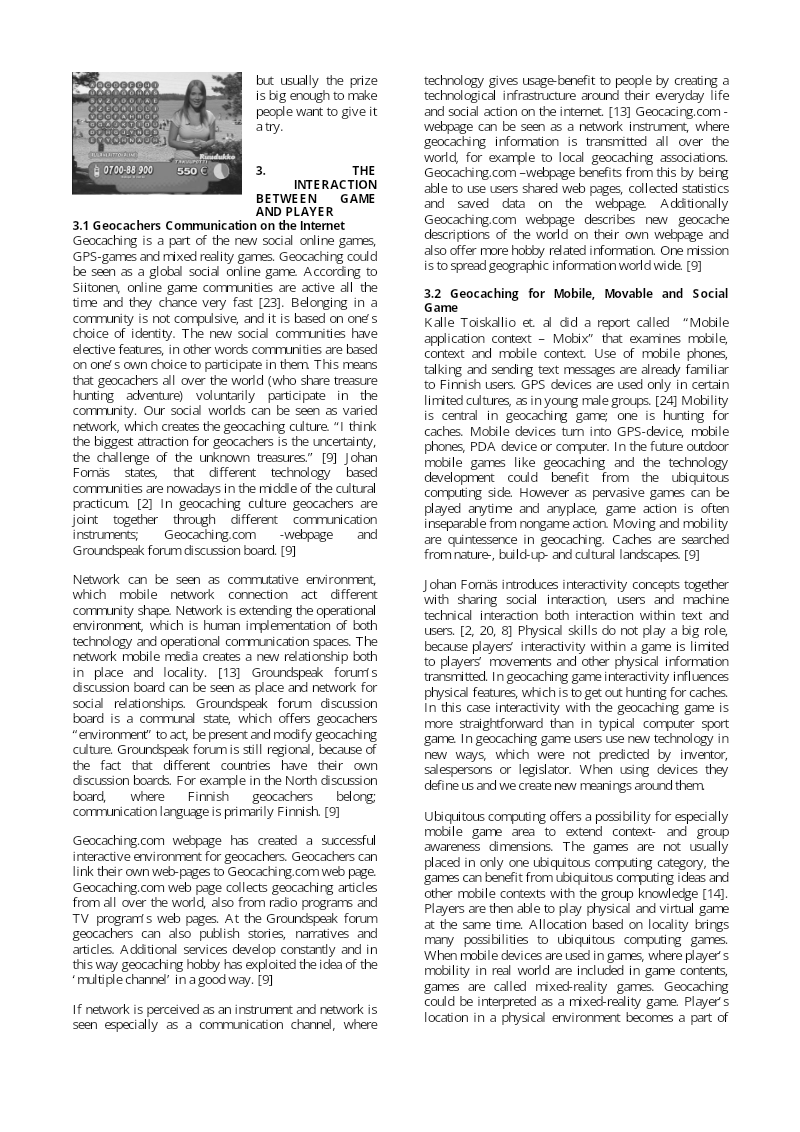
This paper examines two mobile device-based game forms from the 21st century that have achieved strong user popularity yet remain peripheral to mainstream game research: geocaching and SMS-to-TV human-hosted interactive television games.
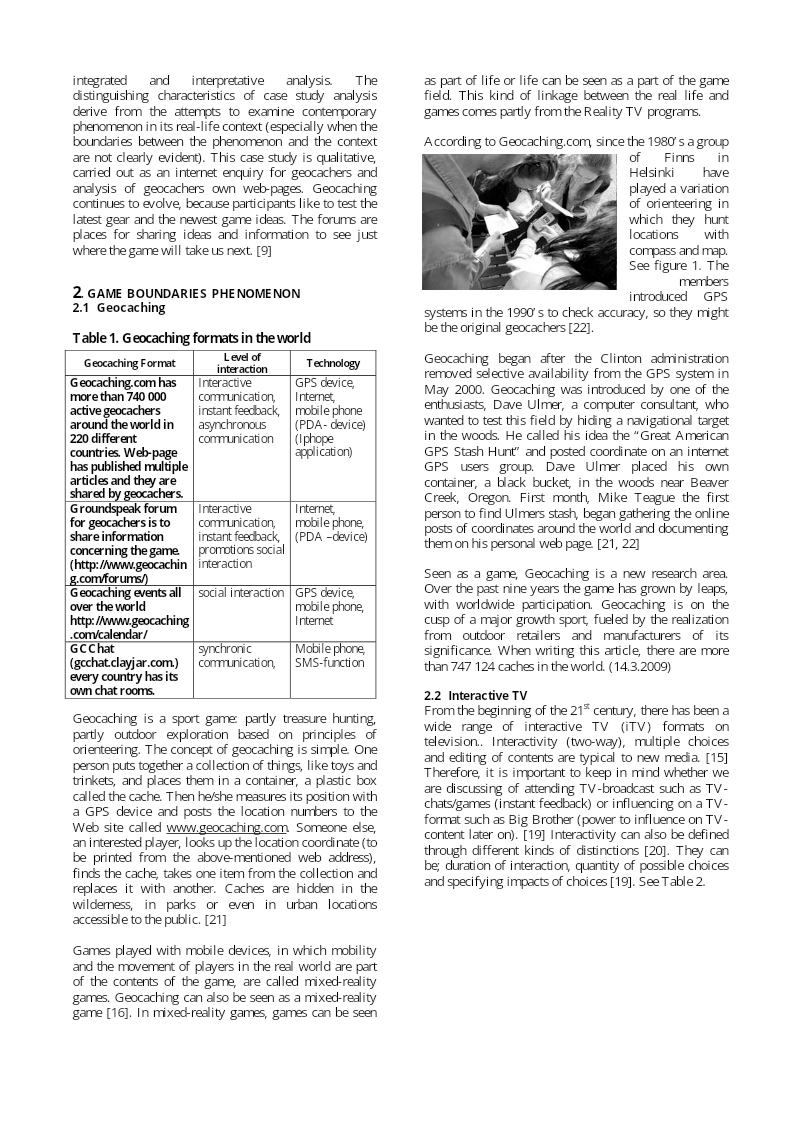
- Geocaching is treated as a global, socially organized mixed-reality game, with over 740,000 active participants and more than 747,000 caches worldwide by early 2009, supported by a central web platform and regional forums.
- The paper argues that marginal mobile game forms such as geocaching and SMS-to-TV interactive games deserve academic attention because their popularity and boundary-blurring characteristics challenge traditional game studies.
- The study uses a qualitative case-study design combining interviews with geocachers, analysis of geocaching websites and forums, and content analysis of roughly 35 hours of interactive TV broadcasts from 2004 to 2009.
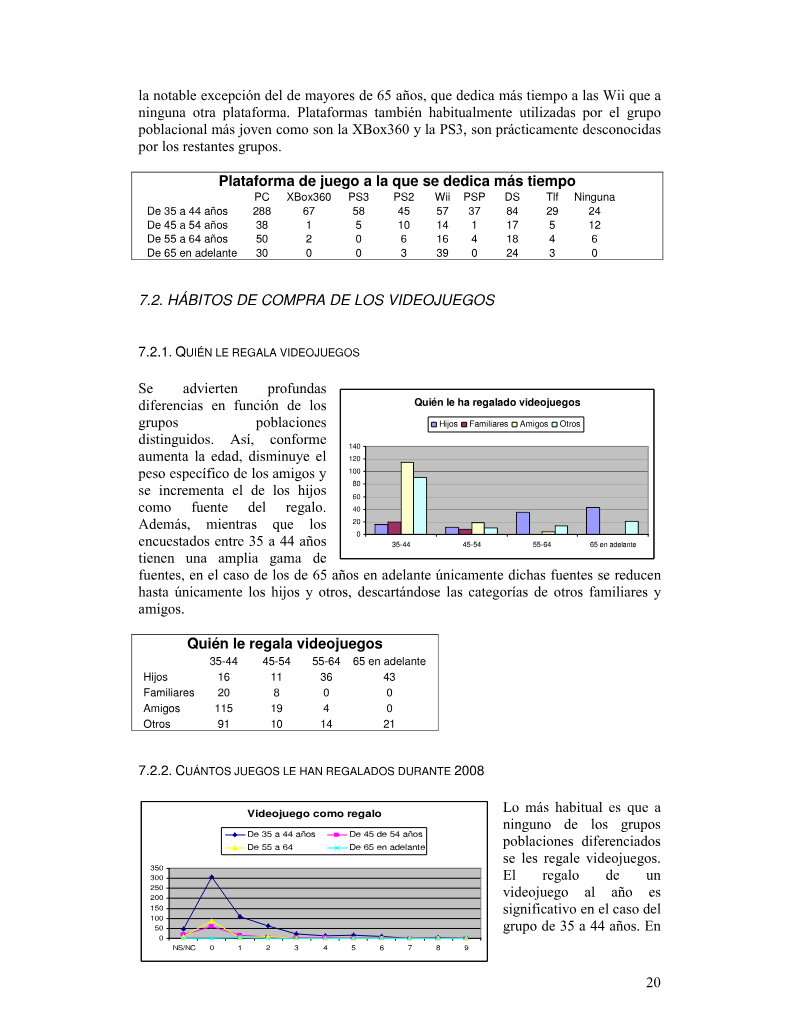

Hábitos e Iniciación a los Videojuegos en Mayores de 35 Años: Diciembre de 2008
A December 2008 Spanish survey examines the gaming habits of people over 35 and how they came to video games.
- The report, published in December 2008, focuses on video game habits and initiation among individuals over 35 years old.
- Among those aged 35-44, 43.4% play video games on weekends, 27.8% daily, and 28.8% did not specify.
- For individuals aged 65 and older, 68.4% play video games on weekends, 7.9% daily, and 23.7% did not specify.


Game Developer Index: Sweden 2008
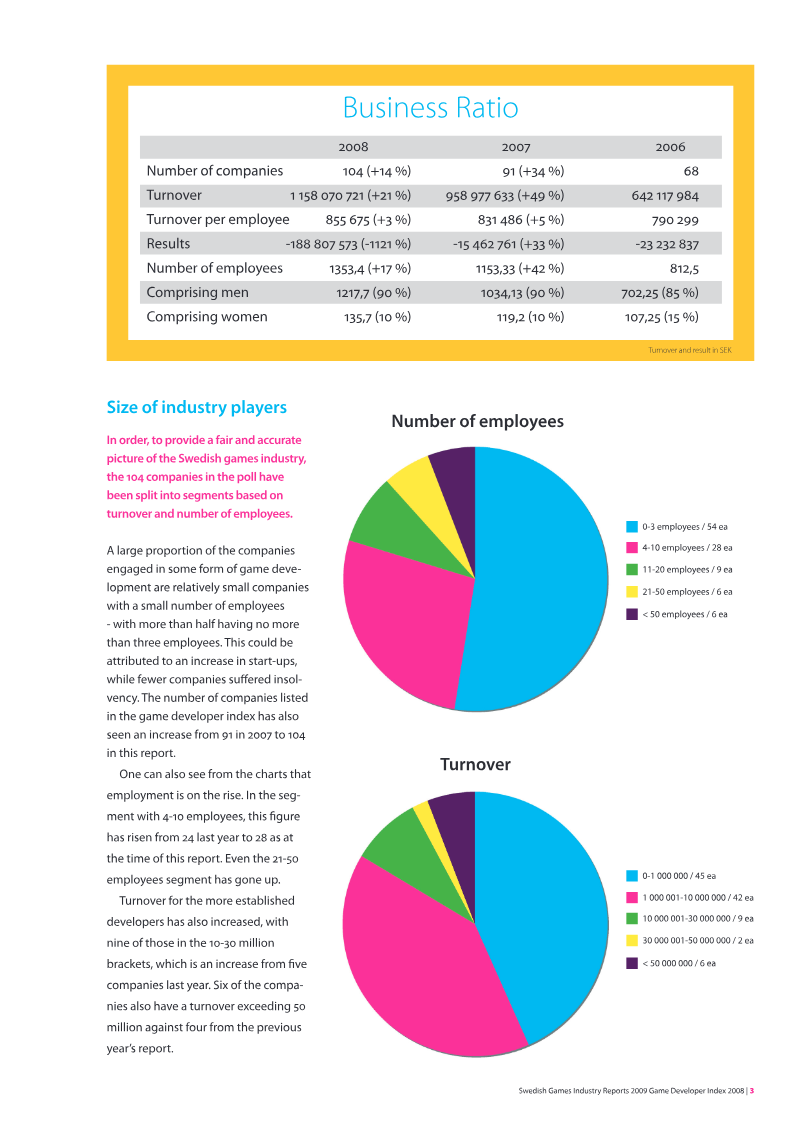
The Game Developer Index 2008 provides a comprehensive financial and operational overview of the Swedish computer game development industry.
- The Swedish game industry experienced significant growth in 2008, recording a 21 percent increase in turnover and a 17 percent rise in employment.
- Industry activity is highly polarized, with the five largest companies generating 64.2 percent of total turnover and accounting for 52.2 percent of total employment.
- Despite individual successes, the industry reported an aggregate negative financial outcome in 2008, driven by high costs for large-scale console development and the presence of many pre-revenue startups.
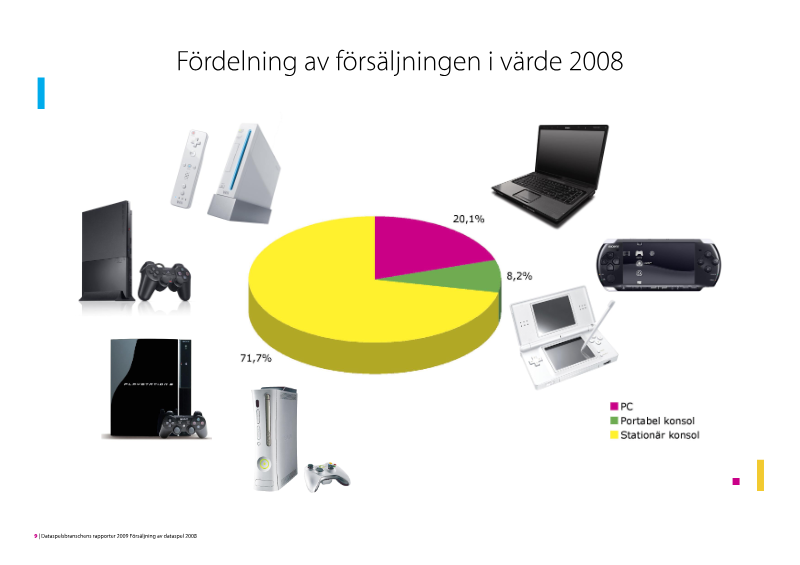

Försäljning av dataspel 2008: Dataspelsbranschens Rapporter
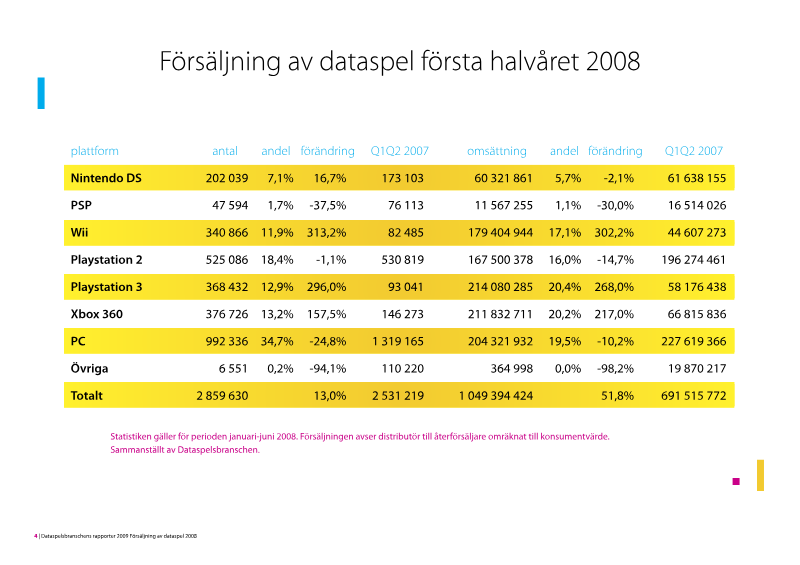
The Swedish video game market experienced a record-breaking year in 2008, with total industry turnover surpassing three billion SEK.
- The Swedish video game market reached a record turnover exceeding 3 billion SEK in 2008, marking a 26 percent increase in total sales value despite the economic recession.
- Growth was primarily driven by major console platforms, specifically the Wii, PlayStation 3, and Xbox 360, which saw significant gains in both volume and revenue.
- While total sales volume remained stable at approximately 7.68 million units, the increase in total value reflects a consumer shift toward higher-priced titles and hardware-bundled software like Wii Fit and Guitar Hero.



Spelutvecklarindex 2007: Sverige
The Swedish game development industry experienced significant growth throughout 2007, characterized by a rapid expansion in both workforce and revenue.
- The Swedish game development industry saw a 49 percent increase in total turnover to 959 million SEK and a 42 percent rise in employment to 1,153 individuals in 2007.
- Industry revenue and labor are highly concentrated, with the five largest companies accounting for over 56 percent of total turnover and nearly 45 percent of the total workforce.
- Despite significant growth, the aggregate financial result for the 91 analyzed companies remained negative, reflecting the capital-intensive nature of long development cycles.
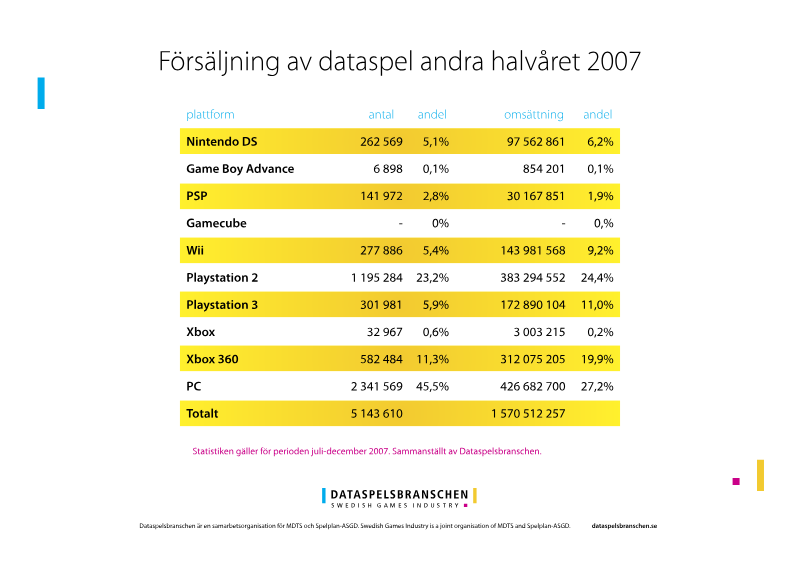
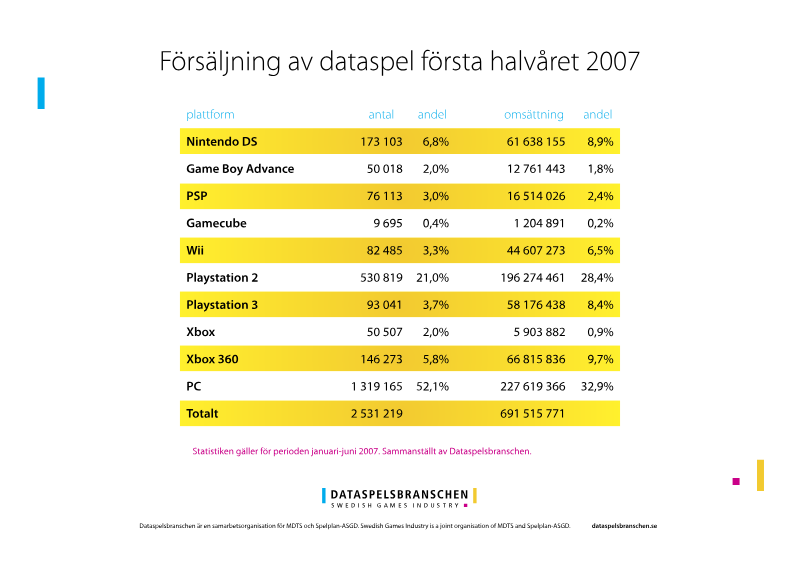
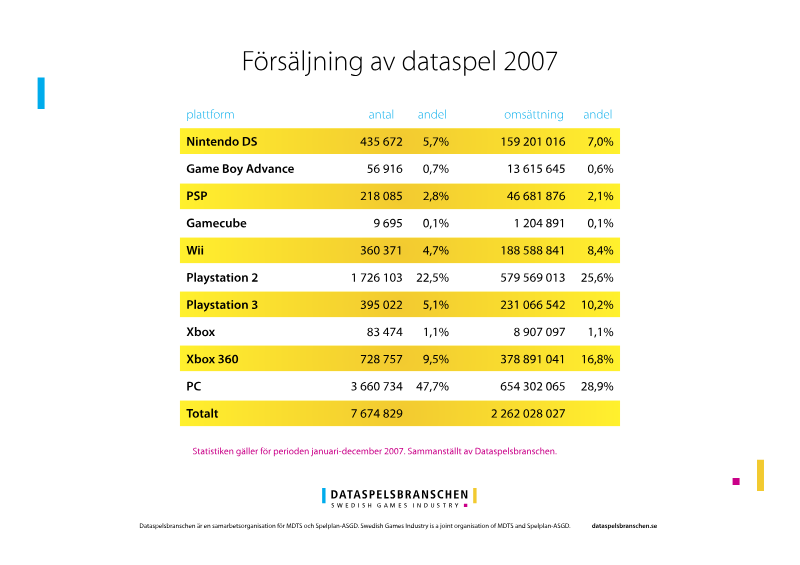
Försäljning av dataspel: Sverige 2007
The Swedish video game market experienced significant activity throughout 2007, with total sales reaching approximately 7.67 million units and generating over 2.26 billion SEK in revenue.
- The Swedish video game market reached 7.67 million units sold and 2.26 billion SEK in total revenue during 2007.
- Market activity accelerated significantly in the second half of 2007, with revenue more than doubling from 691 million SEK to 1.57 billion SEK compared to the first half.
- PC gaming led the market in volume, accounting for 47.7% of total units sold, though it represented only 28.9% of total revenue.


Pricing Models and Motivations for MMO Play
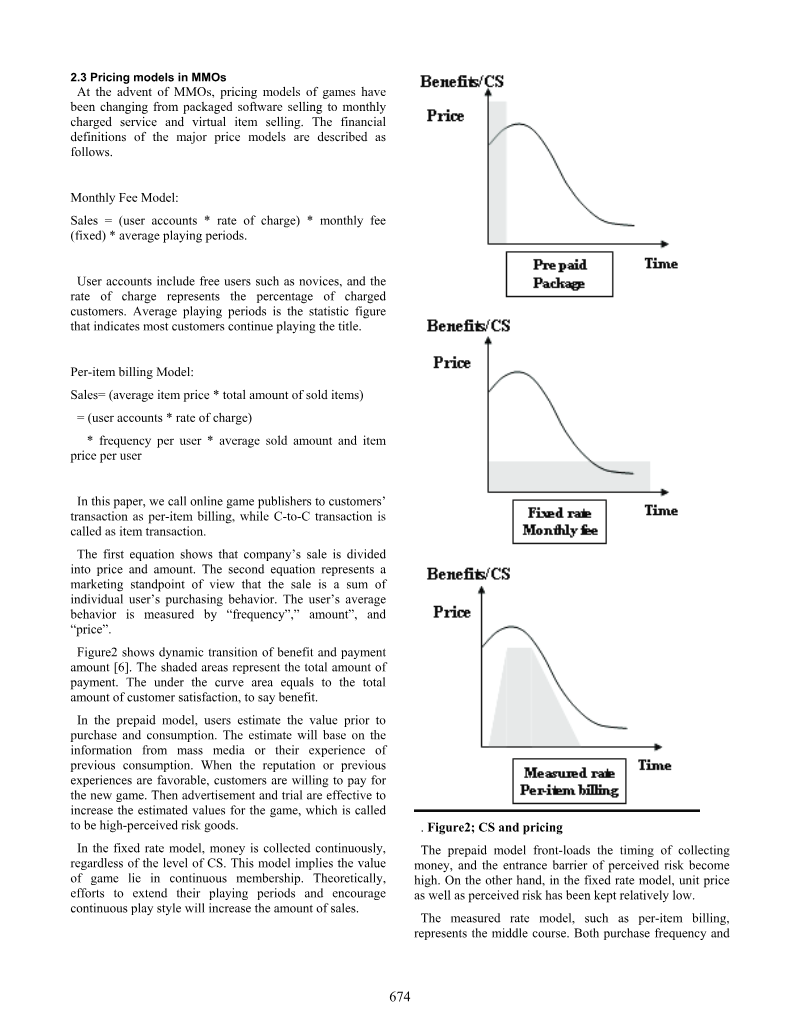
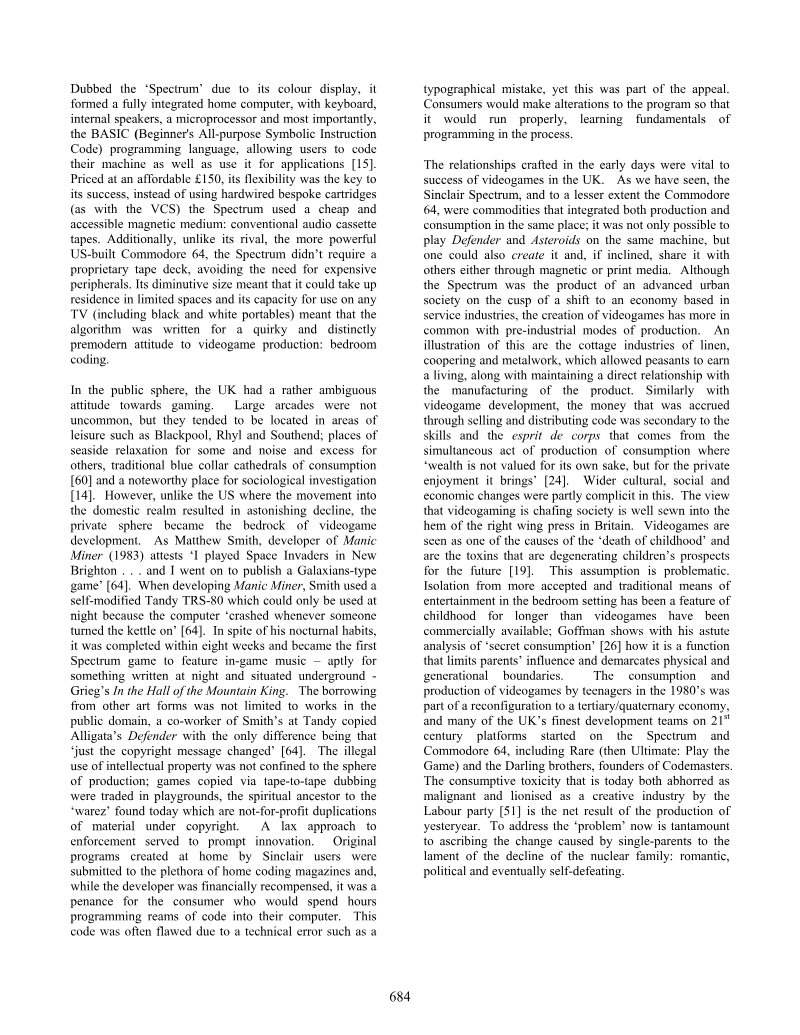
This study examines how pricing models relate to player motivations in Japanese massively multiplayer online (MMO) games, with the aim of explaining why the industry shifted from flat monthly fees toward per-item billing.
- Japanese MMO titles shifted from flat monthly fees to per-item billing: monthly fixed fees dominated at 50.8% of titles in September 2005, while per-item billing rose to 59.6% by October 2006.
- Per-item billing users had significantly shorter play periods in both surveys, with roughly 9.3 months in the first survey versus 21.9 months for other paid users.
- Per-item billing users in the second survey reported higher immersion scores, while customer satisfaction and willingness to pay showed no meaningful differences between pricing groups.
The State of the Art: Western Modes of Videogame Production
Western videogame production has long been defined by a close entanglement between the making and the playing of games, and this study argues that the boundary between producer and consumer has grown increasingly porous over the industry's history.
- The study traces the producer-consumer boundary in Western videogame production from Atari's founding in 1972 through the UK home-computer boom of the early 1980s, arguing that the line between making and playing games has grown increasingly porous.
- Atari's loosely managed, Fordist-influenced production gave way to home consoles that moved play into private space, while Spectrum-era bedroom coding and cassette copying fostered a more integrated relationship between creators and players.
- Interviews with eleven industry professionals conducted in 2006 indicate that development is increasingly governed by market research, licensing arrangements, and consumer demand rather than purely creative or technical possibility, with long working hours and globally distributed teams common.
Exporting Wars: Literature Theory and How It Explains the Video Game Industry
Dymek's paper argues that the video game industry occupies a hybrid position between information technology and cultural industries, and that existing cultural-industries theory, particularly Caves's framework, captures many of the sector's familiar dynamics.
- Dymek argues that the video game industry sits between information technology and cultural industries, and that Caves's cultural-industries framework captures familiar dynamics such as uncertain demand, the coordination of a 'motley crew' of creative and technical workers, hit-driven markets, and long development cycles, but is incomplete.
- The central gap identified is interactivity (emergence and simulation), which distinguishes games from other media; to fill it, the paper draws on ludology and Aarseth's cybertext theory, framing games as a cybernetic user-machine relationship rather than an authored text.
- The paper proposes a 'cybertext-cultural industry' perspective that joins cultural-industry production with technological development, arguing that bridging literary theory with economic analysis gives a fuller account of games than either alone.
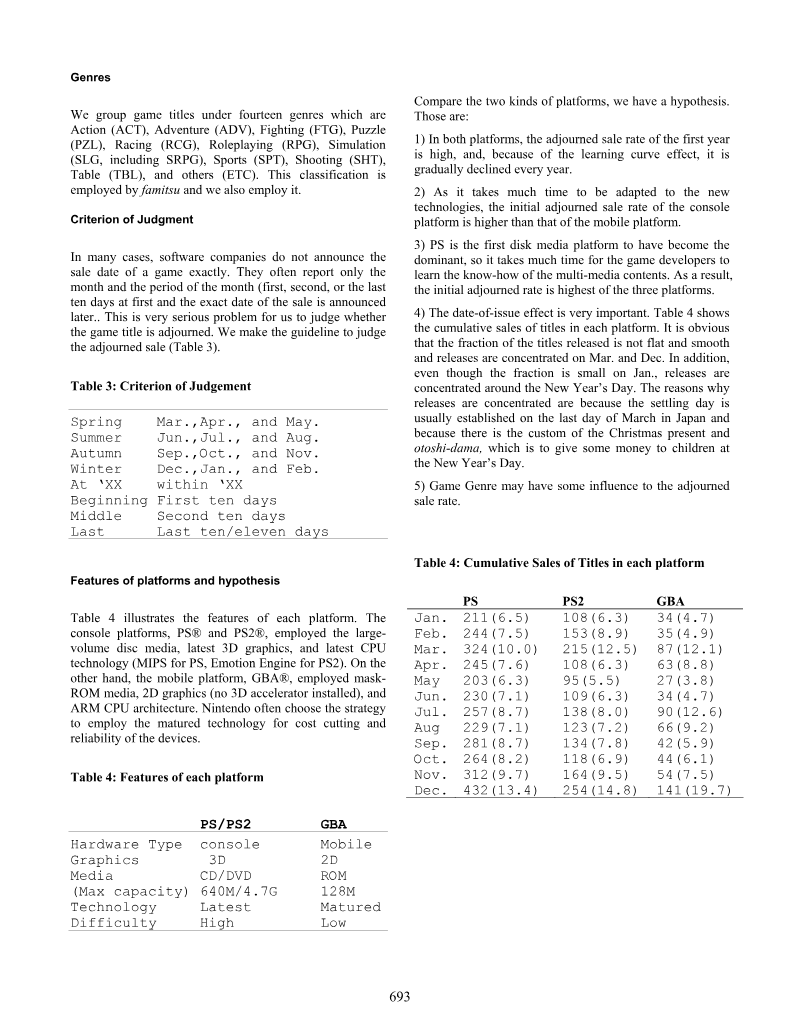
Survey of the Adjourned Sale Rate of the Japanese Home Video Game Industry
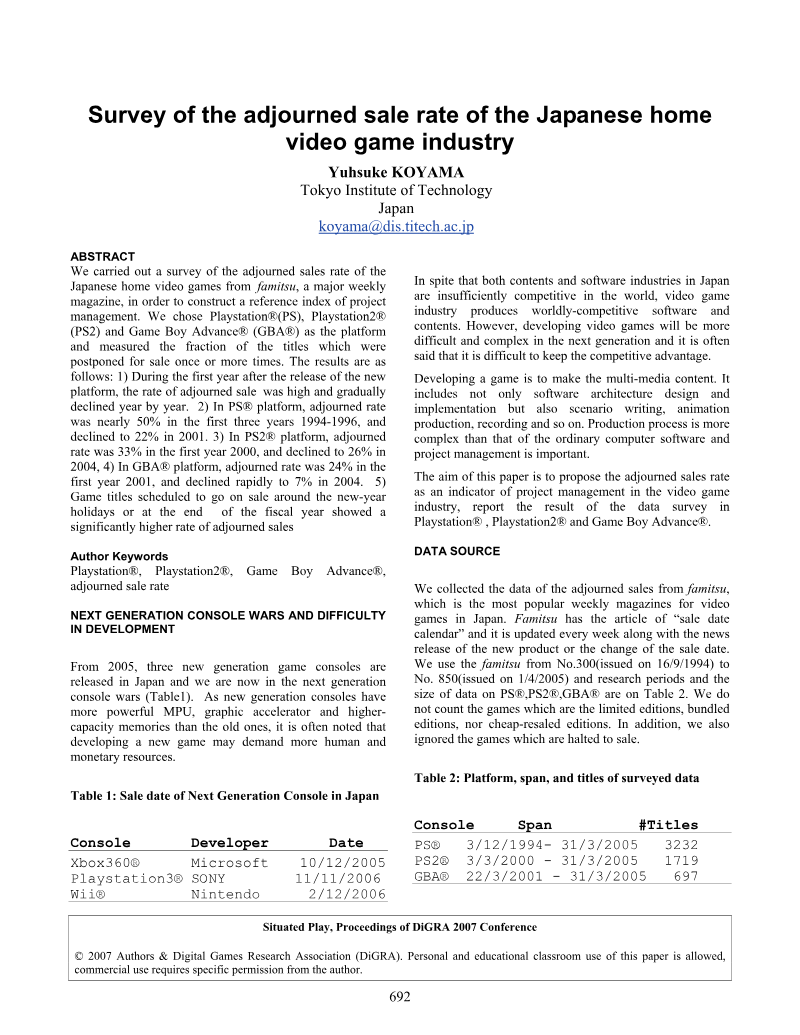
This study by Yuhsuke Koyama of the Tokyo Institute of Technology examines the adjourned sale rate of Japanese home video games, defined as the share of titles whose release was postponed at least once, with the aim of establishing it as an indicator of project management in the industry.
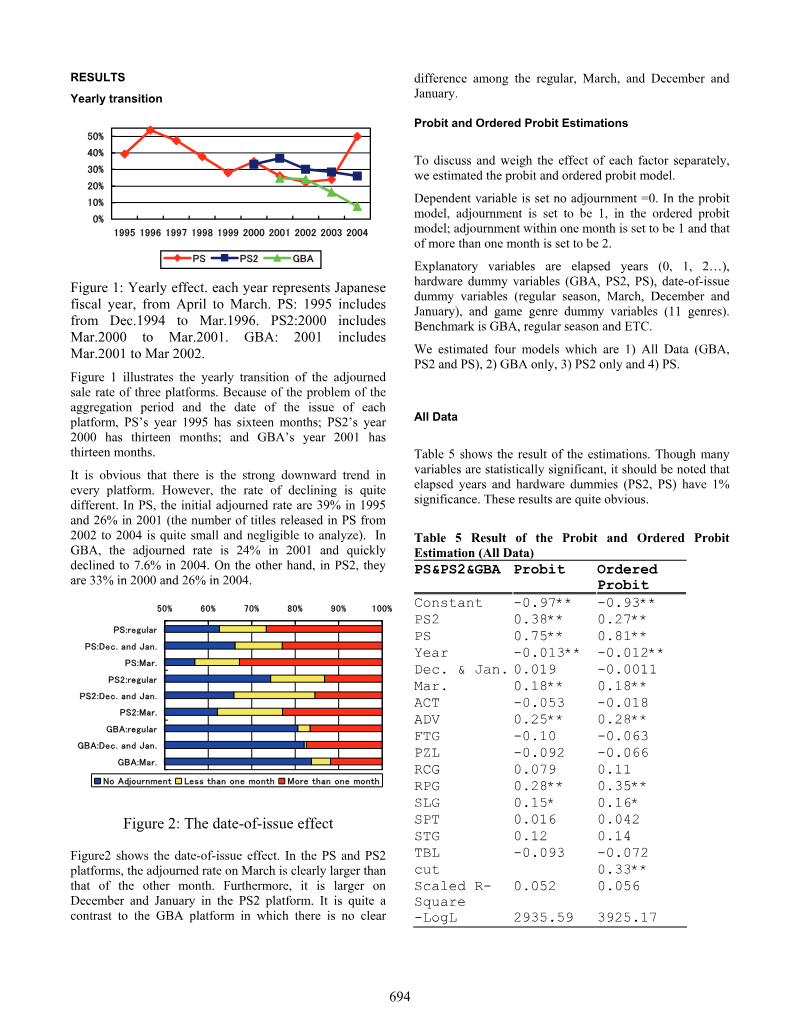
- Adjournment rates (titles whose release was postponed at least once) were highest in each platform's first year and declined steadily afterward, consistent with a learning-curve effect in project management.
- Sony's PlayStation started near 50% adjournment in its early years and fell to about 22% by 2001, while PlayStation 2 began at roughly 33% in 2000 and reached 26% by 2004.
- Nintendo's Game Boy Advance started at about 24% in 2001 and dropped sharply to around 7% by 2004, the steepest decline among the three platforms studied.
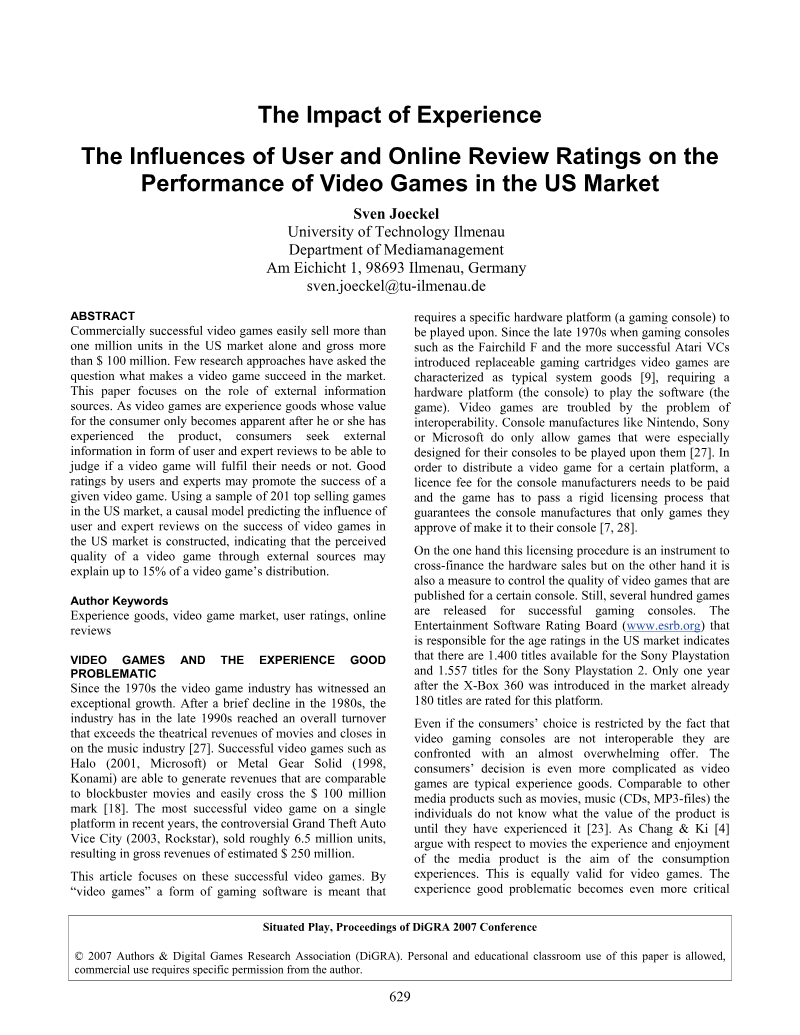
The Impact of Experience: The Influences of User and Online Review Ratings on the Performance of Video Games in the US Market
Published research on the US video game market examines whether user and online press ratings function as signals of perceived quality that shape commercial outcomes for experience goods, which buyers cannot fully evaluate before purchase.
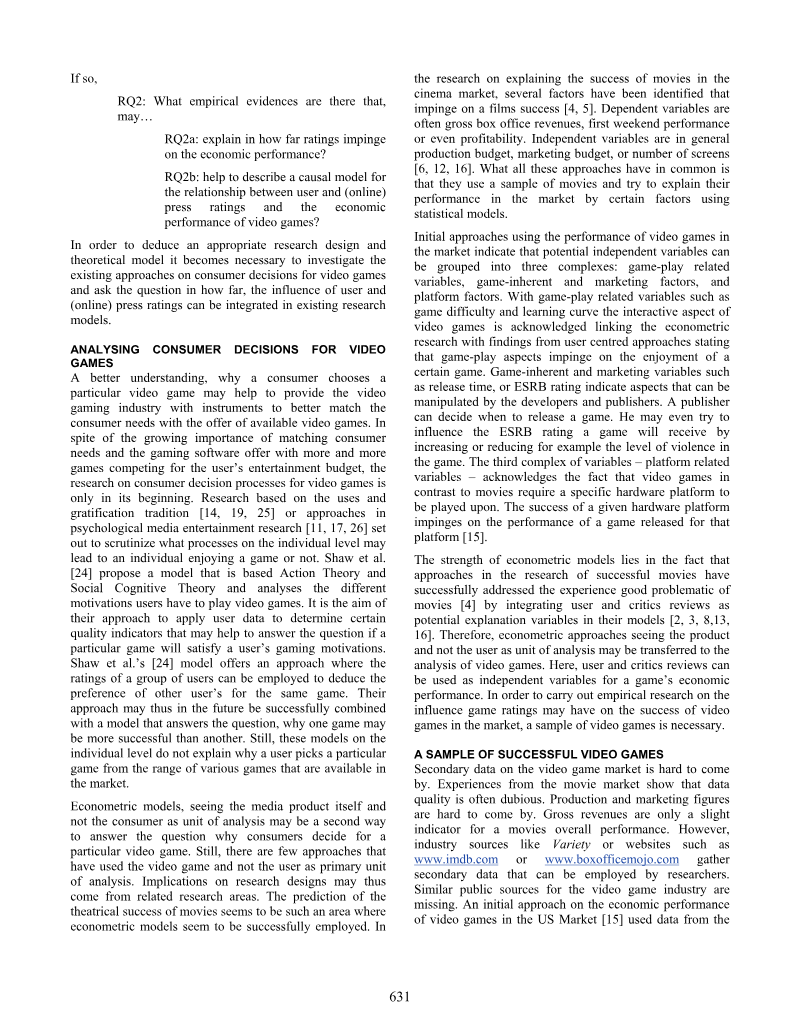
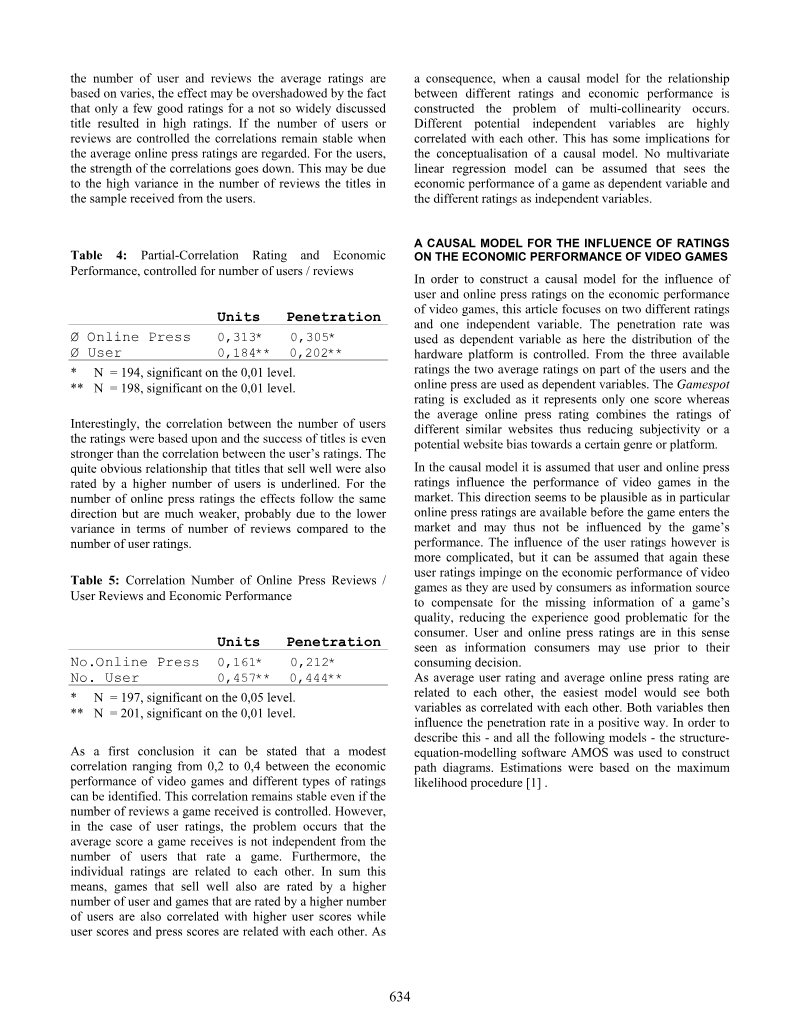
- Ratings show a moderate positive relationship with sales, with Pearson correlations of roughly 0.26 to 0.36, and user ratings and online press ratings are the strongest predictors.
- User and online press ratings both load onto a latent perceived-quality construct, which explains about 13 to 15 percent of the variance in penetration rate, with a standardized direct effect of 0.39.
- High ratings do not guarantee commercial success, as many critically acclaimed titles failed to reach one million units sold.