1 free read left. Create a free account for unlimited reading + AI research.
Create free account
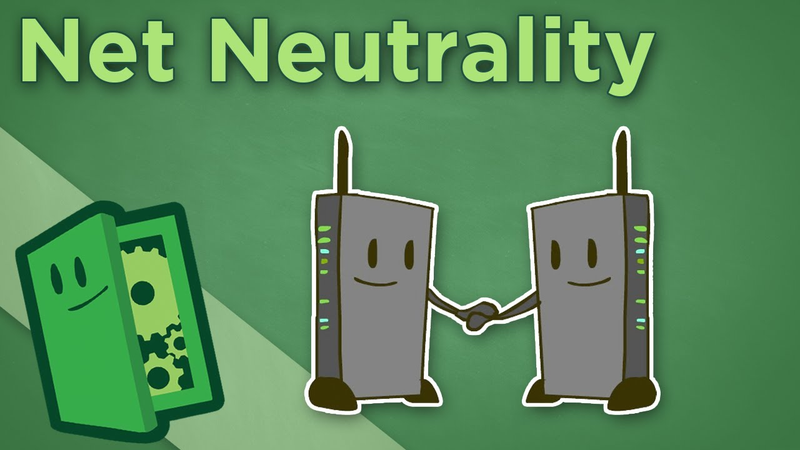
Net Neutrality - What a Closed Internet Means - Extra Credits
Key insights
6 takeaways- 01Net neutrality prevents internet service providers (ISPs) from discriminating in bandwidth allocation, ensuring that all websites and services remain equally accessible to consumers.
- 02The January 2014 DC Circuit Court ruling stripped the FCC of its authority to enforce net neutrality, creating a legal vacuum that allows ISPs to explore bandwidth discrimination technologies.
- 03The absence of net neutrality protections threatens the gaming industry by potentially allowing ISPs to throttle competitor services or charge premiums for high-speed data access.
- 04A non-neutral internet risks creating artificial barriers to entry, which stifles innovation by preventing new platforms from effectively challenging established corporate entities.
- 05The argument that market competition protects consumers is undermined by the reality that many regions lack viable ISP alternatives, preventing users from switching providers to escape unfavorable practices.
- 06International models from countries such as Chile, Japan, and the Netherlands demonstrate that net neutrality mandates can be successfully implemented without compromising essential network management like spam and security filtering.
Ask AI about this video
Transcript
[Music] Today we're going to talk about net neutrality. It's a concept that affects the game industry deeply and yet it's often reduced to a vague term thrown around by people to defend or attack a dozen different concepts. So what does net neutrality mean? In the broadest sense, it simply means internet service providers can't discriminate in how they allocate bandwidth to sites. For example, right now, how fast you can access content is limited by the location and capacity of the content provider servers because we functionally exist in a netneutral environment. But if you took away net neutrality, internet service providers could slow your service to a crawl for sites like YouTube or Netflix, sites that require vast amounts of streaming data and so in effect cost the ISP more. Now, this is often raised as a civil liberties concern. It's often brought up that in a world where we do away with net neutrality, it would be very easy to restrict access to content that the government or major corporations don't want you to have access to. And while I will fight every day to retain what liberties we still have, I'm actually not sure that's where the real threat comes here. I think it comes in a much more banal incipid form, simple greed.
In a non-netene neutral environment, it makes no sense for internet service providers not to basically charge a toll for access to content. You want to watch YouTube videos at a better speed than a 56k modem? Well, that's going to be five extra dollars a month for the special YouTube package. You want to play World of Warcraft? Well, now in addition to paying $15 to Blizzard, you also better pay an extra 10 bucks a month to Comcast to not restrict your bandwidth. And what about competition? I mean, NBC is owned by Comcast. NBC competes with services like Netflix and Amazon Instant Video. Why wouldn't they make access to those sites laggy and cumbersome while giving full blazing bandwidth to their own products? Or in terms of games, Vivventi still owns millions of dollars worth of Activision Blizzard stock and various ISPs around the world. Why wouldn't they make World of Warcraft easy to play and Guild Wars slow and laggy? But why talk about this now? Well, until recently, net neutrality in the United States was guarded by the FCC. But in January, a circuit court ruled that this was not part of the Federal Communications Commission's jurisdiction. And since we have no laws in place addressing net neutrality, this sort of opened the floodgates on the issue. For a while,
there was some question as to exactly what effect this ruling would have. But in the last few months, we've already seen companies like AT&T file patents for bandwidth discrimination technology. For a gaming world which is ever more dependent on high-speed access and unrestricted bandwidth usage, this sort of thing means higher cost for less service. If you'd like to keep getting a megabyte or more a second while downloading a Steam game, you can bet that's going to be a premium. Worse still, what's to keep companies from making deals with the ISP directly? What if Valve pays your ISP to limit your access to good old games? Sound ridiculous? Maybe so in that case, but Sony or Microsoft paying your ISP to restrict access to the others network? EA paying to slow down everyone's access to Steam in order to make Origin more appealing. All right, you get the idea. The internet as we know it was built around the idea that content would live or die based around the competition between services offered, which led to the rough and tumble, rapidly evolving web we know today. But imagine if MySpace could have paid to limit access to Facebook, or Encyclopedia Bratannica could have put in money to slow Wikipedia use to a crawl. While many opponents of net neutrality say that it goes against the free market to mandate
a netneutral environment. Truth be told, as far as I can tell, a non-netene neutral web is one that stifles competition and encourages stagnation. It entrenches existing corporations rather than forcing them to actually compete on the value of their services. Now, we at extra credits usually try to understand the argument from both sides of an issue. But no matter how much digging we've done on this one, we can't really find a compelling argument for eliminating net neutrality. The vast majority of the proponents of this idea seem to be ISPs or people working fairly directly with them. The best counterargument to a netneutral environment that I've heard is the suggestion that the free market compensates for a non-netene neutral environment by allowing you to change ISPs if the one you're with right now limits your access in ways you don't like. And a non-netene neutral environment will provide ISP savings that they can then use to provide you with better service for the content you do want. But I don't know how it is where you live, but I don't have a lot of options as far as ISPs go if I want high-speed service where I live. Shopping around for the best service isn't really possible. The only really strong argument I've heard against legislating net neutrality is that making net neutrality law might be too restrictive. There actually is stuff
that the ISPs already filter access to that's probably beneficial to all of us. Spam bots, potential threats, etc. And the argument goes that any law you put in place wouldn't be flexible enough to adjust to the everchanging environment of the internet. This is why allowing the FCC to maintain a policy of net neutrality while reviewing things on a case-by case basis seemed like an eminently workable system to me. But if we can't have that, there are countries who have mandated forms of net neutrality, such as Chile, Japan, and the Netherlands, without stopping ISPs from doing some beneficial filtering. So, if legislators would work with experts in the area, I'm sure we could find a solution. But whatever side of this issue you fall on, it's being decided now, right now here in America. This is something that will affect how we use the internet and how we game for decades to come. How we act here, what we say, and where we stand will determine whether future generations get to experience the netneutral web we've grown up with. We are very much pro- net neutrality on EC, but we believe in democracy even more. So, whatever your beliefs on how the internet should evolve, we encourage you to contact your representative about it. We've put a link down below that will easily allow you to find out who represents you in the House and the Senate if you live in
the US, so you can reach out to them. We'll see you next week. [Music] Heat. Heat. [Music]
Summary
Net neutrality serves as a critical foundation for the modern internet, ensuring that internet service providers (ISPs) cannot discriminate in how they allocate bandwidth to various websites and services. The primary thesis is that the removal of these protections would stifle competition, encourage corporate stagnation, and impose additional costs on consumers. By allowing ISPs to prioritize their own content or charge premiums for access to specific services, a non-neutral internet would fundamentally alter the digital landscape, particularly for the gaming industry, which relies heavily on high-speed, unrestricted data access.
The current regulatory landscape in the United States shifted significantly following a January 2014 DC Circuit Court ruling, which determined that the Federal Communications Commission (FCC) lacked the authority to enforce net neutrality rules. This legal vacuum has created uncertainty and prompted concerns regarding corporate behavior, such as ISPs filing patents for bandwidth discrimination technology. Potential consequences include tiered pricing models for content, the throttling of competitor services, and the creation of artificial barriers that prevent new platforms from challenging established corporations.
While some argue that a free-market approach allows consumers to switch providers if they are dissatisfied, the reality of limited ISP competition in many regions renders this argument ineffective. Although concerns exist regarding the rigidity of potential legislation—specifically regarding the necessity of filtering spam and security threats—international examples from countries like Chile, Japan, and the Netherlands demonstrate that effective net neutrality mandates can coexist with necessary network management. Ultimately, the debate centers on whether the internet should remain an open, competitive environment or transition into a system controlled by the financial interests of ISPs.






















Comments