1 free read left. Create a free account for unlimited reading + AI research.
Create free account
The challenges and potential of the expanding kids games market
Key insights
6 takeaways- 01The market is driven by high tablet penetration, evidenced by 2014 data showing one-third of UK children aged 5 to 15 owned their own tablet, with devices frequently handed down to children as young as three.
- 02Mobile gaming is a leading entertainment activity for children, trailing only television and books in popularity among younger demographics.
- 03Monetization in the kids' sector has moved away from freemium and consumable-based models toward premium, paid, and subscription-based services to address parental concerns regarding data privacy and unexpected in-app purchases.
- 04Brand identity acts as a primary discovery tool and trust signal, with major franchises like Disney and Nickelodeon and mobile-first brands like Toca Boca dominating the market.
- 05Developers seeking to leverage established intellectual property must adopt a collaborative partnership model to accommodate the strict creative oversight required by brand owners.
- 06Regulatory compliance with COPPA in the US and strict EU guidelines necessitates a fundamental shift in development, as these laws prohibit standard third-party advertising SDKs and retargeting for users under 16.
Ask AI about this video
Transcript
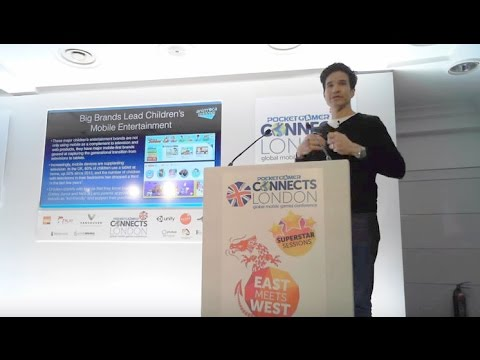
all set here so I just like to talk a little bit about children and family gaming for a few minutes and you know obviously if anybody has questions in free to put up the hand rustavi as I'm going along I wanted to give everybody a little bit of background just because you know the focus generally of events like this is often where all the big dollars are in the industry sony decor and hardcore gaming so-called for gaming but i guess i'm waving the flag for both branded and particularly in japanese gaming because i think it represents a very interesting segment of our industry that is growing very very quickly so without further ado just very quick background on us who are we where a hong kong-based developer and publisher we've been around since the beginning of mobile gaming we've focused specifically on creating games based on licensed intellectual property so we create original games based on brands and characters that we license so for
example we work with a lot of the best known characters from animation and film and TV etc and we feature those characters in our original games so I think actually in our business we have probably large portfolio of brands look at the number of brands so that's always been a big focus for us and obviously the companies and brands on focus to talk a little bit about the market size for kids there's been an interesting shift in usage of devices amongst kids so I'd like to specifically take a look at UK market in this isn't a guardian recently and if you look at kids between the ages of 5 and 15 you'll notice here that as of 2014 a third of kids between five and 15 now have their own tablet devices and for those of you with small children will be very very sensitive to this and historically those tablet devices were devices that belong to the
parents you know these are first and second generation iPads for example and then they're handed down to the kids ok have your first kid they turn two three or four and you give them your old tablet you go get a new one I and one of the things we can see is we can actually see from device activations in new games a big presence of tablet devices that are bloggers so two three four year old devices going into new titles and those we can assume very effectively our younger children so if we look at for example under fives this is again a new trend so thirty-one percent children under five own a tablet right and twenty-five percent of children under three so device usage is getting younger and younger and younger ok and we can debate all day long whether this is good or bad for kids and that's the subject of another presentation unsure but the reality is that tablets and how the usage are becoming a part of childhood
and they're becoming a part of the entertainment diet of all kids and so the question is as an English how do we address that through gaming and we can look at the various things that kids do and both with their tablets and also just in their general entertainment diet so here's a little bit of a look at a survey of ASEAN which is Southeast Asia and kids what kids are doing amongst their entertainment choices so fortunately for all of us and mobile gaming is actually number three so seventy percent of kids surveyed ranked mobile gaming you know amongst one of their key entertainment opportunities after TV and books and considering the age of our industry in the age of the book industry I think we're doing okay with only one percentage point differential so I think this is interesting this is again an opportunity to say that amongst their entertainment diet and all the activities that children are pursuing
mobile games are a huge part of it and so sorry my clicker is just catching up conceives um when we think about monetization okay the children's app store or the kids category in the app store i should say can tell us a lot because you know we as traditional adult game publishers or publishers focusing on the adult market you know we've been focused on premium for a long time now it feels like forever you know three or four years we're pretty much all the products we put out as premium because that's been the most successful way to monetize the in content but when you look at the kids category you know the kids category has has a very diverse array of different kinds of business models and there was a lot of freemium in the kids category and then that resulted in actually a lot of backlash amongst parents in particular media coverage of that backlash and it's sometimes difficult to know whether the media
coverage was bigger or the backlash was bigger but freemium is now very much out of fashion when it comes to children because parents are concerned about what it is their kids are consuming whether there are restrictions and controls on what they can consume and most importantly all of the horror stories people have heard of kids getting ahold of the parents device and the password for their itunes account and then all of a sudden they get a bill for five thousand dollars at the end of the month so what we see is basically a bifurcation in the market between freedom and free apps and paid apps so free and premium and on the free side if we look between the ages of 9 and 11 in the top grossing charts only ten percent are free apps okay or freemium apps and for five to eleven year olds about half of the top grossing have some kind of IEP all the majority of those tend to be subscription services or beta unlocked
type of services as opposed to you know consumables so consumables are definitely out of fashion when it comes to children's content when we look at the page or the premium side of the equation then the average price point where it's a higher price 299 we find only three percent of those games at any i AP available to them and at lower price points still even only sixteen seventeen percent of the games that I ap available to them so the majority of content still is either beta unlock or subscription services and if we look at the this is the top grossing charter kids category of the u.s. itunes store a few days ago and we look at what kind of business models are represented on that top grossing chart first let's look at the pay of games so these are all the paid titles and that's roughly a third of the top-grossing chart and then if we add on top of the page titles the subscription services
you get another third okay so between pain and subscription there's already the majority of the top-grossing chart and that I think is very interesting because if you compare that to the top grossing charting any other category you're just going to see freemium everywhere premium premium premium and then when you add on top these are the ones that have some IEP available in them you might one lone guy left here from Nickelodeon who is actually paid with that it is actually paid with IEP but otherwise everything basically is either premium or subscription services so moving along one thing you probably noticed in that previous slide bar brands okay and in children's gaining even more so than in adult oriented gaming brands are very important because brands speak both two kids through the characters that they know and love and enjoy playing with and identify with and
brands also speak to the parents because brands speak to the parents about a kind of quality and trust and and environment for their children that they feel comfortable so there's a lot of focus amongst large entertainment companies that pursue children's gaming as you know in addition to other content they produce to continue to reinforce and leverage that brand that they have and that trust that they have with kids so here are two obvious examples you know Disney and Viacom or Nickelodeon and these are big kids brands in all types of media platforms and so we see they're also representing very strongly amongst mobile gamers in the top grossing chart to the app store because both is new and Nickelodeon have a very strong presence amongst apps that are or both successful in terms of engagement and successful from a revenue standpoint in the kids category in gaming so moving on talking
about people who are mobile first and creating brands just on mobile but focused on children's audiences obviously within our own industry we've seen a huge success from a lot of major players with regards to content that's geared towards kids and I obviously rovio is not specifically geared towards kids but I'll point to the fact that they did two hundred million dollars for the licensing business and that's primarily plush toys and pencil cases and backpacks and things that are geared towards kids so forgetting about the rest of Angry Birds two hundred million dollars of licensing towards kids is not a bad business okay so we look that there's been tremendous success in financially speaking marketing and targeting games towards kids as long as you do it in a manner that's both attractive to kids and respective of what parents are interested in for their kids so we think about Randy and we go back to that chart of the top-grossing
kids category on iTunes let's take a look at that chart now through the lens not a business models but if brands so by looking Disney right where Disney so Disney is there with free seven titles and I on top of that Nickelodeon Viacom okay so already that's roughly half of my top grossing chart between two strong forces in children related brands and then I add on top of that other offline children book non-gaming children's brands so Barbie from the tail or hollow which is children's toys hooked on phonics etc okay so those are offline brands that are familiar with kids that have made it online and then lastly if I had on mobile first brands specifically targeting kids right so these are people who are just trying to go franchises of kid related content like toca Boca obviously which is probably one of the best known why diversities brands so
that's the majority of a top grossing chart so clearly everybody here has a very strong focus towards building that brand engagement with the children's audience and with the parents audience okay so obviously branding his key and one of the weak reasons and you know this is the presentation that given many times over the past several years with regards to gaming for adults branding is very important because clearly its user acquisition tool right people are receptive to brands they go into the app store brands result in a lot of organic installs something we've seen as well for short but you know and as I said they're a sign of trust for parents so that's important but working with brands is also very challenging and there's a lot of you know restrictions in working with brands and again when you embark on a project with a partner who has final say over all of the artwork and all of the storyboards and
everything then you have to make sure to treat it as a partnership it's not just being implemented you like so working with France has its challenges um now if we think about it as a discovery tool and we look at the app store just take for a minute a look at how brands are treated within the itunes app store you'll notice in the kids category you see brands represented in two different ways you see it on top gear which these are the brands that resonate with children so the characters elmo sesame street's Care Bears and down here you actually see brands that resonate with the parents so these are actually corporate brands which is kind of an interesting thing they're humans you know albeit lower ranking but this is where parents are clicking in because they think Cartoon Network good for my kids took a boca good for my kids right so there's something kind of appeals to both demographics because ultimately when your emergen dies in a yak story you're trying to kill both the parents and kids because you don't know like the install some parents load up
tablets and give them to the kids others respond to requests from kids who are going in searching for things in the app store on their own and if you look at Google's approach Google came out last year we designed for families and designed for families is specifically merchandise around the idea that brands attract kids and so they've made collections of apps and games feature particular brands because when kids go in there and you see this with YouTube for kids for example huge amount of algorithmic voice search for brands can speak into the tablets on YouTube and say elbow I'm going to get all the elmo videos right and so the same thing in Google's design for families so last thing this one's for you John wrote a piece last week which resonated with me because I'm in the branding business and also because we do female RPGs but this is one of the perils of working with brands we can all talk about the success stories and working with brands but I
also mentioned there are challenges so you need to think carefully about how you use the brand about how that brand engages with consumers because simply having a brand that has an existing audience and existing fan base is not a guarantee of success by any measure so this is just you know I don't know that this is necessarily a cautionary tale but it's more just an illustration that you know success is not easy regardless of what or not it's just our belief that it's actually you know working with brands it is a more sure path to success so that's something we do I'll leave you with one last slide and I'll wrap it up here this is something which is probably the most important slide of the presentation and the most boring so this is coppa and I'm sure some of you are aware of comments the children's online privacy protection act in the US and Coppa is extremely important when it comes to kids so
basically what Papa says is that you're not allowed to collect and store and keep data if you know that it comes from children and simple ain't getting on apps does not qualify as screening for children because everybody knows children lie so you have to be very careful and respectful of how you treat that data and so khabar compliancy is a very very important factor in operating within the environment of selling things to children and two parents and in fact the EU nao will have shortly even stricter guidelines so for Coppa the guidelines are for children up to the age of 13 and the EU is extending that to age 16 with a specific focus on social media so this will have a very large impact on anybody who has player basis under the age of 16 because you're going to have to think extremely importantly about the kind of data that you collect data must be expunged after 30 days are you handling any data into pairing parties so for example that
advertising SDK do you have take it out look no advertising because every advertising sdk on the market pens data over somebody else and you're not allowed to do that you can give it for yourself as the developer but you cannot to an ad network for retargeting so retargeting as a technique is off the table for example so a lot of things about how we do gaming and how we do engagement and analyzing player behavior will have to change by nature of the regulation around children's teammate specifically so thank you very much if anybody has any questions please
Summary
The children’s mobile gaming market represents a rapidly expanding segment of the industry, driven by the increasing prevalence of tablets among younger demographics. Data indicates that by 2014, one-third of children aged 5 to 15 in the UK owned their own tablet, with usage patterns showing that devices are frequently handed down from parents to children as young as three. Mobile gaming now ranks as a primary entertainment activity for children, trailing only television and books, which underscores the significant commercial potential for developers targeting this audience.
Monetization strategies in the kids' sector differ sharply from the broader gaming market. While the adult-oriented industry relies heavily on freemium models, the children’s category has shifted toward premium, paid, and subscription-based services. This transition is largely a response to parental concerns regarding data privacy and unexpected in-app purchases. Consequently, the top-grossing charts for children’s games are dominated by paid titles and subscription services, with traditional consumable-based monetization falling out of favor.
Brand identity serves as a critical pillar for success in this space, acting as both a discovery tool and a signal of trust for parents. Major entertainment franchises, such as Disney and Nickelodeon, alongside mobile-first brands like Toca Boca, maintain a dominant presence in the market. However, leveraging intellectual property requires a collaborative partnership model, as developers must navigate strict creative oversight from brand owners.
Finally, regulatory compliance remains a foundational challenge. The Children’s Online Privacy Protection Act (COPPA) in the US, and increasingly stringent guidelines in the EU, impose rigorous restrictions on data collection and storage for users under 16. These regulations effectively prohibit common industry practices such as third-party advertising SDKs and retargeting, forcing developers to fundamentally alter their approach to player engagement and data analytics.


















Comments