Live Ops reports and market data
Documents

Xbox's big reset | Week in Mobile Games podcast
Xbox is currently executing a fundamental strategic pivot, moving away from an aggressive focus on scaling the Game Pass subscription service toward a broader objective of engaging one billion players.
- Microsoft is undergoing a major restructuring involving 3,200 staff layoffs and the divestment of five studios, including management buyouts for Compulsion Games and Double Fine and the sale of Ninja Theory and Undead Labs.
- Microsoft has set an ambitious goal to engage one billion daily active users, a target that industry analysts view as highly challenging given that current console markets are largely flat and the company's total monthly active user base across its gaming division was reported at 500 million in 2024.
- Pokémon Go has generated over $9 billion in lifetime revenue across the Google Play Store and Apple App Store during its 10-year history, with player spending peaking during the pandemic.
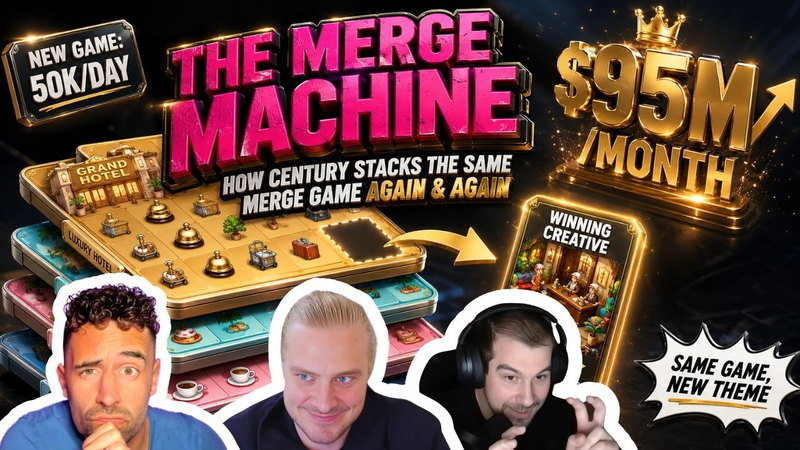
🏨 My Perfect Hotel Meets Merge: Decoding Hotel Legacy by Century Games
The merge game genre maintains a position of significant stability and profitability within the global mobile market, anchored by high-performing titles like Gossip Harbor, which currently generates approximately $95 million in monthly revenue.
- The merge game genre remains highly lucrative, evidenced by titles like Gossip Harbor generating approximately $95 million in monthly revenue.
- Developers are scaling portfolios by deploying functionally identical merge titles, allowing players to rotate between similar games to maintain engagement once energy resources are exhausted.
- Hotel Legacy by Century Games utilizes a data-driven soft-launch strategy that prioritizes rapid testing of diverse mini-game concepts and creative assets over radical structural innovation.
King and the Xbox cuts, Meta's 'TikTok for games', alot of Scopely news, game closures, MTG, more
The mobile games industry is currently navigating a period of significant structural realignment, marked by major workforce reductions at Xbox and a strategic pivot toward mobile-first engagement.
- Microsoft is cutting 3,200 jobs across its Xbox division, with 1,600 layoffs announced immediately and the remainder occurring throughout the financial year, primarily impacting PC and console operations.
- Meta has soft-launched 'Pocket,' an app that utilizes AI prompts to generate a TikTok-style feed of interactive mini-games, marking the company's latest attempt to enter the 'TikTok for games' market.
- Pokémon Go has generated approximately $6.37 billion in lifetime in-app purchase revenue over its 10-year history, with 39% of revenue originating from the U.S. and 30% from Japan.
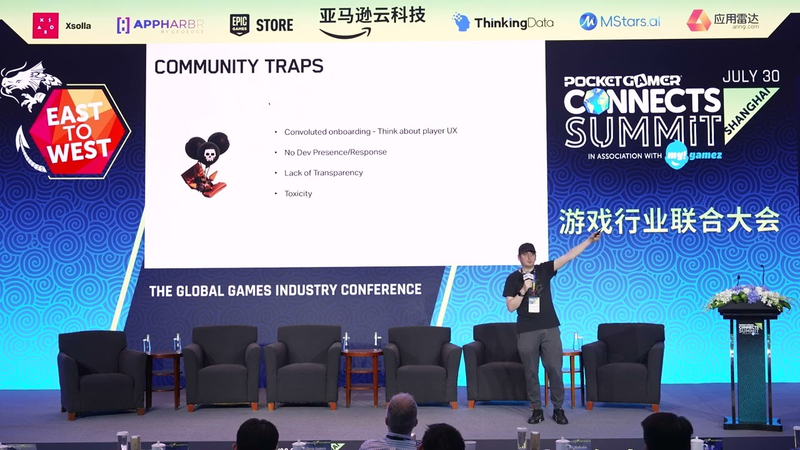
Supercell's Vladislav Perge talks Community Management In 2025
Community management in 2025 requires a shift from traditional, scripted PR approaches toward authentic, human-centric engagement.
- Effective community management in 2025 requires moving away from formal, PR-style communication like 'Dear players' in favor of authentic, human-to-human interaction.
- Community managers should prioritize identifying and nurturing passionate, grassroots content creators over those with high follower counts, as passion is a more reliable indicator of long-term community growth.
- Transparency is critical to preventing toxic speculation; if a game issue arises, developers should immediately acknowledge the problem and signal that it is being addressed, even if a final solution is not yet ready.

🎮 Live Review Tetris Block Party: Block + Coin Looter into one liveops machine
Tetris Block Party represents a strategic evolution in mobile gaming by merging traditional block-puzzle mechanics with a coin-looter meta.
- Tetris Block Party increases player agency by replacing passive slot-based mechanics with a hybrid model that combines skill-oriented block puzzles with a coin-looter meta.
- The game utilizes template-based event builders that allow monetization managers to deploy complex features like reward wheels and segmented store configurations without requiring engineering support.
- Predictive data models enable automated, proactive interventions, such as granting boosters to players at high risk of churn, which has reduced churn rates by low double-digit percentages.
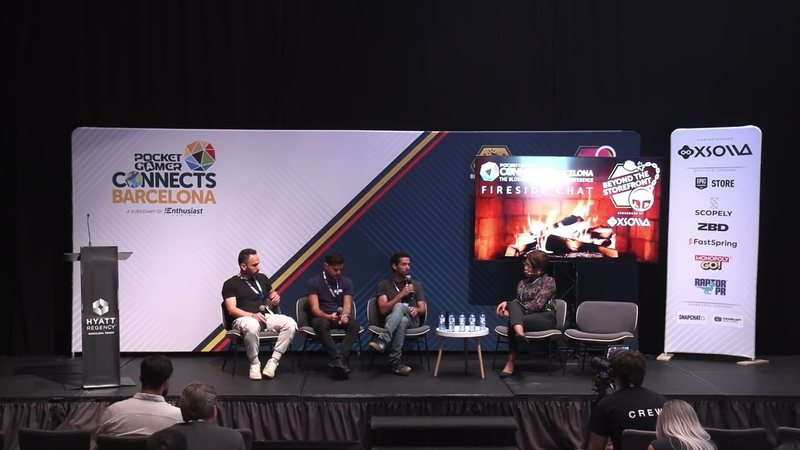
Panel: From Transactions to Relationships: How Studios Are Redefining Player Ownership.
Modern gaming studios are undergoing a fundamental strategic shift, moving away from short-term transactional metrics like install counts toward the cultivation of sustainable, long-term player relationships.
- Studios are shifting from transactional models to relationship-based engagement by integrating purpose-driven mechanics, such as environmental rewards, which have been shown to increase key performance indicators like first-time deposits and new paying users.
- Effective loyalty programs must move beyond simple 'what's in it for me' incentives—such as discounts—to avoid masking churn and instead foster genuine player investment.
- Personalization is a critical challenge for modern studios, requiring tailored pricing, game difficulty, and experiences that align with individual player profiles to maintain long-term retention.

Dynamics and Culture of Grand Games
Grand Games has emerged as a high-growth mobile gaming studio, achieving a $500 million annual run rate within two and a half years of operation.
- Grand Games achieved a $500 million annual run rate within 30 months of operation, driven by a fivefold revenue increase over the last 12 months.
- The studio utilizes a decentralized, squad-based organizational model where teams of approximately ten people maintain full autonomy over their specific casual puzzle projects.
- Management prioritizes high-level strategic alignment while minimizing administrative interference to foster individual accountability and direct product ownership.
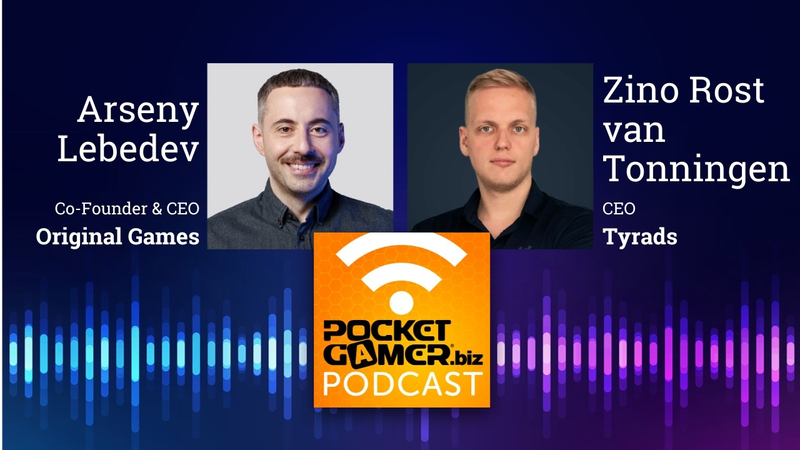
Designing for the Rewarded Pathway: Why Product Teams are Critical to Ad Strategy
The integration of rewarded advertising into mobile game design has evolved into a critical component of long-term monetization strategy.
- Monetization through rewarded advertising must be integrated as a core pillar of game design during the initial development phase rather than treated as a peripheral business function.
- Product teams should shift focus from isolated early-stage metrics like day-seven ROAS to a holistic view that prioritizes long-term user engagement, retention, and progression.
- AI-driven hyper-segmentation and automation are required to manage complex player segments at scale and dynamically adjust live ops to prevent churn.

Call of Duty Modern Warfare 4 Reveal!!
The reveal of Call of Duty: Modern Warfare 4 marks a significant strategic pivot for the franchise, focusing on technical modernization and a departure from legacy hardware.
- Call of Duty: Modern Warfare 4 will exclusively support current-generation hardware, officially ending support for PlayStation 4 and Xbox One.
- Warzone service on legacy consoles is scheduled for full termination in October to facilitate the transition to modern hardware.
- The game introduces a modular map system called 'kill blocks' that randomizes environmental layouts and removes legacy features like omni-movement to refine core mechanics.

2026 World Cup Effect on Games
The 2026 FIFA World Cup serves as a catalyst for significant shifts in the mobile football gaming landscape, highlighting a divergence between established market leaders and the governing body’s own interactive efforts.
- Konami’s eFootball has surpassed EA’s FC Mobile in cumulative revenue, reaching $1.9 billion compared to FC Mobile’s $1.6 billion.
- While eFootball leads in total revenue, FC Mobile maintains a larger daily active user (DAU) base, highlighting a divergence in monetization strategy versus user reach.
- Major football titles have abandoned traditional seasonal resets in favor of continuous progression and power inflation to reduce user churn.
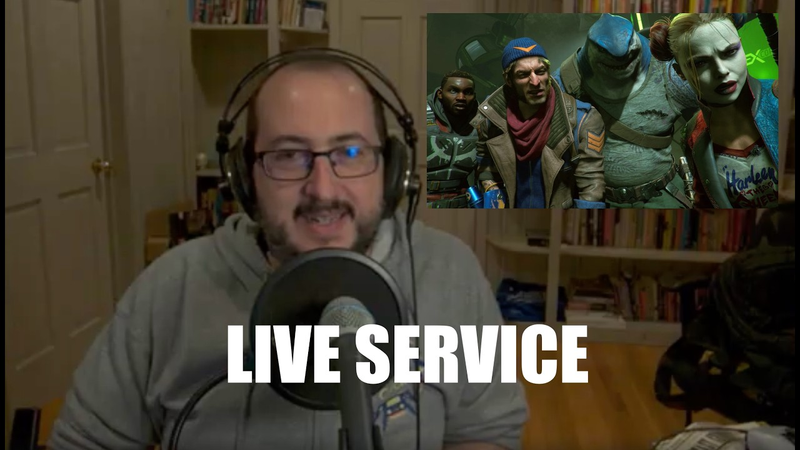
Why Everyone Wants A 'Live-Service' Game
The video game industry has increasingly pivoted toward live-service models as a strategic response to the rising costs and inherent volatility of AAA game development.
- The shift toward live-service models is primarily a strategy to mitigate the extreme financial risk of modern AAA development, where production costs have ballooned from $20–30 million to a $200–300 million floor.
- Live-service games provide recurring revenue streams that stabilize companies against the volatility of a hit-driven industry, preventing total reliance on the success of a single, infrequent release.
- The industry's pivot was heavily influenced by the massive success of Fortnite, which demonstrated the profitability of free-to-play models combined with ongoing monetization through skins, seasons, and content updates.
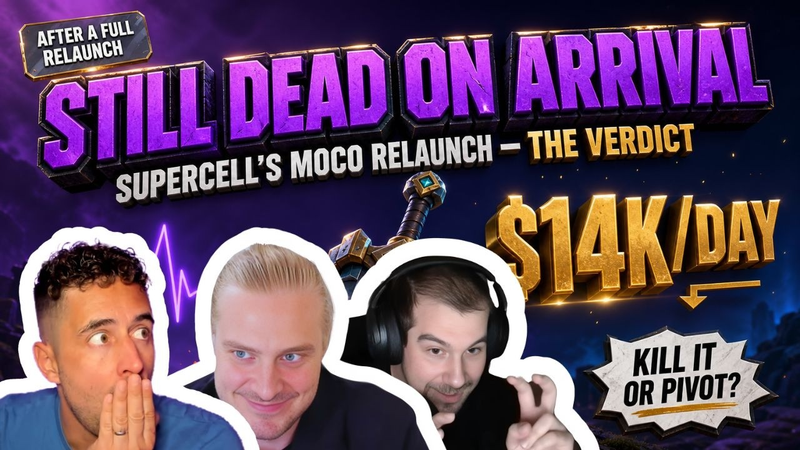
💀 Mo.co DEAD on arrival. Is it time for Supercell to kill Mo.co?
Supercell’s title Mo.co faces a critical existential crisis, as its current design fails to gain traction within the competitive RPG market.
- Supercell’s Mo.co is failing to monetize, generating only $14,000 in daily revenue despite reaching 230,000 daily active users.
- The game suffers from a fundamental design misalignment, prioritizing lightweight accessibility over the depth, build customization, and endgame progression expected by the RPG audience.
- The project is currently considered unsalvageable because the cost to bring it up to industry standards would exceed the development budget of multiple new, more viable projects.