VideoTwo & a Half Gamers
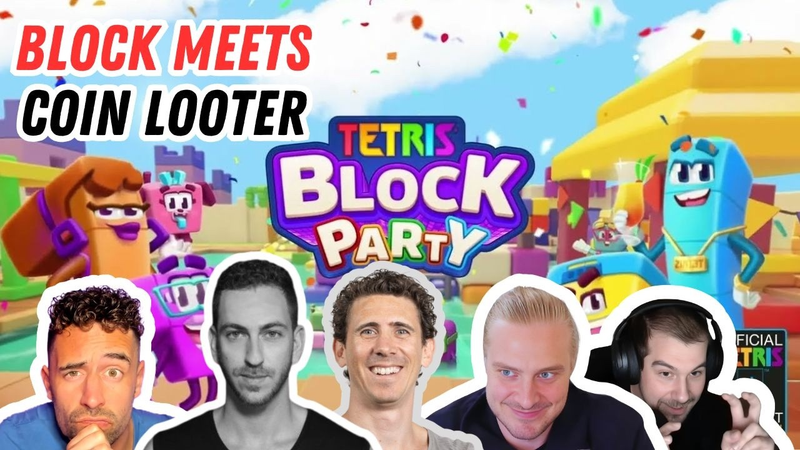
🎮 Live Review Tetris Block Party: Block + Coin Looter into one liveops machine
1 Jul 202645 min video
We build everything very flexible. A single feature, a wheel. Everybody have a wheel. A really nice feature. So you can do a booster wheel. You can change the background. You can change the resource. Easy. Everybody can do that, right? So we are also using this wheel as a mini game after purchase. You buy something, then you get to spin the wheel, get additional reward. It's 4 a.m. And we're rolling the dice. [music] My day drops. Knowledge made of golden eyes. Felix with ads making those coins rise. Check up designs. Worlds chasing the sky. We're the two and a half gamers. The midnight crew talking UA adverts and game design too. Mat Felix Shak bringing the insight. [music] We're rocking those vibes till the early daylight. Master eyes on the prize. Tracking data through the cyerspace skies. Feeling stacks colors [music] like a wizard in disguise. Jack lift us to the high. Two and a half gamers talking smack. [music] Slow hockey stick got your back. Ads are beautiful, they light the way. Click it fast, don't [music] delay. Uh-huh. Uh-huh. Uh-huh.
[music] [music] Hello everybody. Welcome to another Two and a Half Gamers episode. Today we have a live review of Dead Block Party. But before we start, my name is Matthew Lanch.
I'm Felix Broberg
and I'm
and we are your hosts and we have two special guests. Not one, two special guests. Are from Play Studios and then IAS from Kinoa. Guys, can you introduce yourself? Let's start with Az because Elas I know you for a long long say and they say H before beauty. So go for it. Hey, so hello. My name is Arez. I'm managing Tetris Block Party. Started my gaming career at Playa. I was a monetization manager in Slottomania. Then the monetization lead did a transition to be a director of
monetization in W Games, a Canadian gaming company. And then I joined a small startup led by ornitski who come up with an idea to join the coin looter together with block puzzle. With this idea we were acquired by play studios who owns the rights for Tetris mobile and this is basically how Tetris Block Party was born.
Nice. How about yourself?
I'm Malia Sandler. Um I'm the founder and CEO of Kinoa. Kinoa is a platform that helps companies turn existing users and to much higher revenue than they do today. A little bit of history about myself. I know mate from his pixel federation days. We party together in Tel Aviv exactly I want to say 9 10 years ago will be not even more 11 years ago potentially be. I founded a company called Adottomy which was a ads platform back in the day
for games and build a technology called Adquan which was optimizing mate but was using it in all of the companies that he's been before managing and optimizing Facebook campaigns and Google and Snapchat and Apple search ads and got into got into the space of live operations and monetization mostly because having so much exposure into the gaming industry for obvious reasons for me was very interesting to see how people like Arez and Ez's company makes so much more money than everybody else that was on the same verticals. So when I started going down that rabbit hole and understanding what Live Ops is back in 2018, 1920, uh I was like this this is something that needs to be known to the world, needs to be put in the hands of the world, especially how expensive it is to develop these things internally and useless uh for companies to do it themselves. So uh so let's let's let's bring it to the whole world and that's that's how Kinoa was born.
Amazing. Thank you guys for for coming.
Also uh also worked at Tetris Block Party when it was in soft launch on the UA side of things. So it's a very small world. It's a very very small world. [laughter]
Nice. So let's let's look at the game and share the screen and then we definitely go look at the numbers as well and different things.
Yep. So as usual core core game can play first. So as mentioned this is a block pretty much core similar to block blast but a little bit different because immediately as you see block blast is three pieces at the bottom then you choose one of those whereas here there's only one piece and actually what I can do is rotate it with the boosters. So that's like immediately the first thing. The other thing is that we have this, let's say, persistent board that goes around pretty much the whole thing. It's not a fail state as as you would expect with block blast or something. This pretty much is consistent. If I run out of energy, energy being pretty much these steps, it stays and I still need
to do something with it and so on so forth. So there's again, let's say adjustments to the core to it. So for instance, if this block, so let me get another block. Whatever. So this blog I couldn't put anywhere so I can actually trash it. So that's again another big kind of difference to the blog blast score gameplay. As you can see slowly that there are things happening in between that resembles something like code master and monopoly go and exactly as as as we talked there. Yeah, this is a combo of a coin looter meta plus the block core gameplay that's adjusted to it because you have all of these things uh especially stuff like the village which again is the signature kind of feature for for these games where I'm slowly building it in the meantime from time to time I get to destroy other people's villages I guess if I get enough of these uh versus blocks and then uh there's a lot of these kind of mini games like for
instance here as you see typical ones really where you have a lot of pretty much glorified progress trackers that you can get more rewards from and so on so forth some are passive some are uh active so you need to at least click there somewhere but again primarily we are again continuing this kind of block thing and yeah here was the versus mode as I said that's typical
amber question like why block uh as like the main pillar in the in this Yeah,
I think the the idea here was to take something that is more active playing. So if you look at the other ones, it's either slot or throwing a dice, which is very similar to to slot. So we wanted something that will give the player sense of control, something you actually can play and enjoy and not only be a passive watcher.
There's definitely much more control. That that's that's my other question here. when you were pretty much thinking
about that how did you implement the randomness of it because all of the coin looters they have extreme levels of randomness of like different activities events stuff like that here we see on the board there are these let's say icons being added into the blocks which I guess is one of the things but how did you approach it when you were iterating it
yeah so first of all there's few different things here versus the original games that this is a hybrid of so if you look at block puzzle games they are very level based right and we don't levels we are endless game play and the second thing is being passive versus being active. So we wanted to give the player the feeling of control but as you say right in all the other games it's completely feels completely random behind it. So what we did here is a combination core game play is in your control but for example you can collect those question marks we call it the swift surprise and once you collect four question marks and it triggers a plot actually that gives you a random reward. So we added a combination some of the
things are in your control some of the things are random to to give both of the feelings into this game. And when when did you say like it's enough random or enough agency? Like were you iterating this more or was this because like one of the things I'm I'm kind of very interested there's no auto play because usually this game has autoplay features on them. So when you when you were going through
how can you autoplay like putting autoplay on the board like
we're asking ourselves it's a discussion you are open breaking into an open door like they say it's a question we ask ourself. Does it fit the game? We know it's an amplifier, meaningful amplifier in this jer. So, we are thinking about it, but we'll see later on if we'll take it.
Okay.
Okay.
Yeah, because you you do have the animals and coins and the coin master and the dice streams and the monopoly codes and you've got the auto spin, auto throw, auto dice constantly, right? So add in another.
Yeah, I know why he's asking because he
wanted to play another game on his stupid emulator and just put this on autoplay and then just do something else. I'm I know why he's asking. I don't this time because I really like this kind of a booster setup that that you have here because it's like I think like this was the hardest part to kind of accustom to the block gameplay where you would need to create this kind of move around booster. The the block booster by the This is extremely important where especially if you run out of stuff and you somehow need to fix your board and you get plenty of these by the way. It's not your usual kind of match three booster where you have one in thousand years. This is like still like very
so it's not two games hybrid. We added a third game hybrid which is the match three. This is where the boosters are coming from. And there again to give you the sense of control. We are not looking for something that is happening to you. You can decide where to put it, when to use it. It's also a very, you know, great micro reward that we can give. We can sell it. So, it gives us a lot of
options inside the game once we introduce those. And as you can see, you now have unlimited rotate. So, it's the same booster, but you have two modes. So, it's another resource. Again, we can give away, we can sell, and people really enjoy it cuz on the dayto-day you need to save some of them. You need to be strategic when to use it, not to to finish them. But when you are on unlimited, then you feel like you got everything. And you can do it as much as you want.
You you you you find me calling in the middle of the day saying, "Zrez, I'm run out of rotates. Can you just go to your backend guy and tell him to give me 200 cuz I don't want to play without rotate."
Yeah. Yeah. Playing without rotate is quite hard. You're like literally just rushing one block after the other, especially men sport.
Yeah. The idea is to give you endless gameplay. And this is again without the booster, you can't have endless gameplay because you get stuck at some point. Yeah, I fully agree. But again, it takes I think compared to the other coin looters, it takes definitely much more skill to pretty much be able to kind of
constantly remove blocks from the board and do do stuff there because yeah, this is just not, you know, no auto, no, not not that much randomness and like much more skillful.
Okay. As a as a new game designer, do you want endless gameplay or you want multiple sessions per day?
It doesn't exclude each other. Thank you for a great answer. You helped me understand why why are we even talking about this.
Thanks for being educational.
So endless gameplay is one thing where again you eventually run out of energy but you can get energy somehow like that's okay. But what's really important is the live ops part here on the right side because you know usually we have these like offers on the one side live on the other side. Here it is a little bit different I guess because of the size of the screen and this is basically main menu. So now the offers are these six here and the liveopsies are are these six other here where again it's the typical thing where you have these
really high kind of let's say very fast events that are just kind of going around. They're counting your rewards. You don't really need to do anything with those like they will just kind of give you the rewards as you go. But the thing is that the game play can be played kind of endlessly. Let's say kind of. But again, he's a coin looter. You cannot just like forever progress. This is not something like for instance Clash Royale. Like PvP games, you need literally endless gameplay because by playing PVP games, you hone your PVP skill, but your rewards are kept. That's why Clash Royale always had a chess system. So you run out of chess, you can still play, but you don't get any rewards. But here we again playing it. It gives you progress because again if it's not noticeable but basically me putting blocks here gives me money like soft currency. This is the spin of the let's say the coin machine. So I need to get this and I need to cap this otherwise and we would be just like on village number 500 already. So that's there
educational enough for you mate. Well, I'm I'm not sure if I was asking you specifically, but maybe Eric and Ellias can give us a post also their point of view. So,
going to feed that into Cl to for the next uh for for the next game design.
Yeah.
Build it for me.
Exactly.
Yeah. So, we say a bit about the the live ops. First of all, the one thing that was impacted as you said was the UI. If you go to the coin looters, then every all the live ops are on the sides. But again, it's a passive gameplay. You don't need the screen. Here we needed to create I call this area the the time square. This is where everything is happening. All the communications, all the offers, all the live ops activities are happening there. And so this is one thing and the second thing if you go to again to a slot then the slot generates all the tokens for the live ops right and if you go to the level based or the match three the majority of the live ops
are being contributed by level completions. So when we looked at our live ops we also had to ask ourself okay what is the main contributor to the live ops and in our case is the line clear. So every line clear contributes toward the progression and you can progress in the main event in the catch bar above the board. You can progress in the VS in the the swift supplies in the question marks or in the live ops and also the live ops has a layer of feeding one another. So you have the move maker which is directly lines to rewards and then the movemaker give you another token to another live op. So it's built kind of layer over layer and this was our solution to how to make you advance in the live ops on top of the core game play. Oh, like I really really appreciate this kind of because again this this was the hardest part like changing the block core to be adjusted to coin looter meta like all these connections of like putting blocks gives you money. Having
these boosters to adjust for like endless gameplay like that's the main work that's like so hard and tricky to iterate.
You know what was the hardest challenge for us? The multiplier.
How do how do you do this? Right. In the slot you have um the multiplier. You can change it whenever you want and it's depending on the spin. The multiplier will be applied on the spin. In our case, since you are progressing toward the PVP, you are progressing toward collecting events, then if the multiplier was directly directly impacting the result, then player can play on a low multiplier, right? Increase it to be 100 and then collect the reward and then it kind of break the economy system. So what we did is we added the board multiplier on top of it. We tried so many different things. We got so many feedbacks. It's complicated. It will not work. This is the best solution that we came up with. So as you start increasing your piece multiplier, it will gradually average your board
pieces in toward the actual multiplier. So but eventually it also came up as something you are building toward another strategy layer. So this is how the multiplier was solved. But again, this is something that is completely unique to us to this combination. We haven't had a solution to take from someone else. So, we had to really think about it and find a solution that will fit this game.
No, it feels really great. I think like uh as I said, this this whole thing is just very good in my opinion because I feel like I want to play that I can play it rather than just kind of as I said, spin the machine, which isn't the feeling I guess you were going for.
No. And and and there's a there's a there's a level of of strategy as as eras mentioned it at the beginning when when I'm playing it and I'm not a game designer, right? But when I'm playing it, I'm like I'm trying to align all of the all of the different squares with the fives or with the tens or whatever the multiplier that I'm using and making sure that constantly I'm trying to break four lines together because that's what's going to give me the most amount of coins that eventually be able to
progress on the on the meta as well. So, it's not just the the the sense of the multiplier, but it's also how am I designing the strategy that I'm going to be using again as a user to to reap the most amount of rewards as I'm clearing the board. I'm interested to I'm interested to ask like here what's the main monetization mechanism here because I was the admon manager for Tetris before it was sold to play studios and you know there it's 85% interstitials which rely on showing something after you break or brick the level so this is super different right
yeah so this is an inapp purchase game this is the the main revenue source we are very heavily combined with ad monetization it's a strategy we went because we are a casual game. But the moves resource, the one that you see on the bottom, this is the these are running out. So when they're running out, you can wait and get more for free.
But if you want to play now, if you want to create more progress in the events, this is what you can buy. This is the main resource and this is the main monetization strategy of it. So the same monetization strategy of the coin looters. Basically, it's a it's a resource energy that is running out and then you can wait and get for free or you choose to purchase if you want to play immediately but is more closer to like 10 20% of the inapp versus ads blink twice if I'm correct
it's closer to 30
it's closer to 30% nice based
we we encourage it not only we encourage it in all the tests that we It's something again coming from other gaming companies. Admonetization, the first word you hear is cannibalization. This is what terrifies everyone. Okay, people will stop buying. But on every test that we did with different audiences, with different marketing sources, every time we saw that when we allow players to watch ad monetization,
they convert better later. So, it gives them something to play. It's not comparable to what you get if you make a purchase or win a big reward. So, it just giving you kind of a small addition to the session, but eventually it makes people stay longer. It makes people convert more. So, we I'm I'm happy that we proved it wrong. At least in our game, we love the combination of it.
Keep you going.
Yeah. But then the question is if you AB tested this like small offer instead of watching ads like what would be impacting more revenue baseline.
So again when we are showing ads people convert more.
Okay.
One of the things you can see paying users watching sometimes more ads than non-paying users. So yeah we have to That's amazing. That's what we need to talk about.
I mean, I I I wonder how you do all of the all of that magic that Yakob is clicking on.
Let's talk about [laughter]
Yeah. I just wanted to say that there there's always like some kind of a ad based offer here in in one of these either here or let's say this one.
Which
for this one? So there there's I always found something there I guess. Anyway, you want to go a little bit more deeper on how how's the stuff there?
Sure, let's let's do it. First of all, one interesting thing I can share, we we are building a live ops game and I'm coming I'm a monetization manager originally before managing the game. So remember in my previous work, one of the pain point was you really want to execute something. You know monetization manager always looking to maximize the capabilities both of the games and the player. You go to operation and you try to ask can I do this can I do this can I move this from here to there trying to
to create different experiences in the game and the majority of the times we came to do it then we the the answer was okay we need development you need to go and convince the product department to put it into the road map and then wait a few months and then hopefully you will get it. So, we did a lot of things. I would say really bad UI like I remember one time that I think it was back in Slottomania that we had to we wanted to do something for the player. We had to ask the players to reset the game. So, to close the app and reopen in order to activate something. Now, it sounds horrible and the product team wanted to kill us for that. But it worked. People did it. People got the treatment. People were willing to do it. So, but when I approached building a game, you give a monetization manager to build a game. I wanted it to be a playground for live ops. So whenever someone from the monetization operation have an idea they can go and execute it. So this was my dream and this this is how we started working the first thing was to teach the developers how does a live ops game
work? How are going to operate the game? So for us maybe it seemed kind of obvious but and we have a great development team super talented but the concept of having everything so dynamic was very new to them. I remember one example when we just started. We had the first inup template, a single CTA template. This is what the first one we did after integrated with Kinoa and we wanted to sell the players for FTDs. All your next jackpots in a jackpot mini game will be duplicated. Simple offer, very cheap. Just go buy it and then play. So we set it up in Kinoa. Everything looks great. Really a matter of minutes. We tried to go live in the game. I'm looking in my device and we did everything ourselves. who are a very small company. I'm looking at my devices, the popup that doesn't appear. So I go to the devs and I ask them why it doesn't appear and then they come to me and say you you didn't put a resource in the inapp and I was like I'm not selling a I'm selling a future promise and they couldn't comprehend it. They put a validation without us knowing put
a validation inside the template that if it does not contain a resource you cannot use it. So just to understand how much work we had to go together to understand how to build the game in the right way today I can say that it's the opposite they build everything so dynamic sometime I have to come and tell them okay this can be in the code okay don't worry this can be there so I think we did a good job there but it allow us a lot of flexibility and we can show some example how this flexibility is working you want to see some things
okay
of course yes
okay this is my playground each one of the monetization and live ops employees as a playground. So they can play, plan, do whatever they want. Two interesting things I want to show you. This is just a quick pick to how we build the game. We discuss a bit about the game design and the challenges, but just for you to see, every single um pixel in the game has a lot of thought behind it. What its goal, what it's supposed to do, how the
player interact with it. And this one is my favorite. We call it the control panel. And it really was designed like thinking about like like a controller, how the player will feel when using those boosters. So this was just for the design. But if we're talking about live ops, so after we built the the first template was the one CTA, the most simple inup. You can use it for live ops, you can use it for monetization. We did a single template. We call it the event builder. But again, it's a single inup template that can create almost everything. So all of these different events you can see here, you have a stamp collection, you have a a longer progression, you have different experiences, all of them single inapp template that the operator can change in Kinoa to be anything that you want. So you can have with a bar, without a bar, you can have few milestones on the same bar. You want to show the grand pies, don't show it. And
we create so many different experiences. You can create a chase on the board itself. Clear tetris lines. You can create this one is a purchase stamp. So every purchase you get a stamp and then when you collect all the six, you get extra rewards. This one is a time event of 30 minutes that you need to clear lines in 30 minutes to deliver the pizza. you are in the art museum and drawing a picture. So, so many different experiences. We have a token. You collect this token. The token can be anything that you dream of. It's just an image. You put it and you can use it everywhere. You can have it as a progression. You can sell it. You can put You have a token, you can put it everywhere. So, everything is super combined together. And again, all of these things that you see, the longer part is the part where we create the art. Okay? And even today with AI, it's even a matter of hours
already. It used to be days, it's a matter of hours. And just the operator set the parameter in the back office and it's there. So this is one thing that is super cool and just to show you how everything ties together. So here's another example. I have a question there is
go ahead
just quick question on the other side
everybody seeing the same the same parameters and the same and and and the same art and the same event or or or how does it work?
No everything is super super segmented according to players behavior and prediction. It was I was just wondering
obvious seems obvious but you know you have players that are coming and playing for two minutes a day and and using you know like 50 moves and you have players that are coming and enjoying and paying and playing 10,000 moves a day. You can't give them the same challenge. It will be boring for them. So everything must be adjusted. I I must tell you
setting a segment again a matter of seconds. What are the parameters? T drop- down menu. You set a segment and it's there. you want to do.
I'm paying very much attention because I just implemented Hina in my one my game. So I I want all of this to happen in my game. So [clears throat] I'm going to be the one uh setting up all of this. So it's super interesting.
So yeah, everything is segmented. You can create a segment. You can create a calculated segment that let's say you want a calculation of what happened in the last 3 days. The player didn't came. Maybe you want to give him a better experience cuz he he wasn't here for a long time. So any parameter that you want any calculation any query that you are writing basically can become a segment again and and be activated immediately. This is the fun part in it answers your question.
Very interesting
indeed.
Another example again I told you we build everything very flexible. A single feature a wheel. Everybody have a wheel. A really nice feature. So you can do a
booster wheel. You can change the background. You can change the resource. Easy. Everybody can do that right. So uh we are also using this wheel as a miniame after purchase. You buy something then you get to spin the wheel get additional reward. We're also using it as a booster connected to the PVP. Okay. To the core game play. You go to to the PVP. If you get a perfect haste or a perfect crash, you get to spin the wheel and multiply the coins reward. Okay. So again the same feature. We can use it in any idea that we want. It's a resource. We can sell. We can give it as a reward. we can activate it according to different actions in the game. And here here's an interesting one. We really wanted to do a coupon wheel, but we never developed the coupons in the game. Okay, so how we did it? We took the wheel again. We can trade any token we want. All of these images of just images of of coupons. They are not real product. We put them inside the wheel. The player gets to spin the wheel for free.
Spin the wheel. Win a coupon. Win an image, right? Okay. That's behind the fin. This one. Okay. Coupon wheel. Coupon activated. This is with a CTA [snorts] directly to the store.
Okay. And the store, if you can see the wait, the store is updated immediately. You see coupon relevant coupon. If I want 200, it will be 200. All the values have changed. We have badges that mark in the new values and everything and everything is happening live according to the token the player is winning in the wheel. So everything is tied together and it can be anything behind the scenes. Basically we track events if the player won image number one let's say it's worth 100%. moving into a user list. We prepare ahead all the different um configurations of the store according to your coupon and that's it. It's
happening. We don't have a coupon. We never developed a coupon, but we were able to give the player a coupon live. This one on on a single day. I think we saw close to it was close to 50% lifts in revenue because it's not only a sale. It's not only a coupon. It's something that the player feels he just won. He spin the wheel. he won the specific coupon. So, it's a great way to um motivate players to to do different things in the game.
How does this look like from the the other side of the equation actually? Because there is needs to be a flow or a decision tree or something.
Definitely. Yeah. IAS, you want to show it how it's looking behind the scene? I'm moving it to you.
I mean, it's
it's your data. Oh, it's your data only if you allow me to.
Yeah, just flow. You just show events and um and reactions. That's it. It's okay.
Let me log Let me log into your system
once.
Things just got interesting.
Yeah. Yeah. Yeah. [laughter]
I look at the the operators, they are like sers, right? They saw different element of the game together. This is what they do.
So, yes. I mean obviously everything is uploaded through through kinoa and then the entire experience is built through kinoa right like the operator just needs to think of okay this is how the behavior needs to look like I am going to build those nodes within kino and I'm going to say you know for for the paying users they're going to get 100 150 and 200 and for the non-paying users they're going to get 50 75 and 100 for example you can actually create any price price discrimination you can think of in any way.
And this is all visual coding spaghetti. Yeah.
Mhm. Exactly. They're just, you know, this is like events and reactions.
That's it. We we listen to events and we choose what the reaction will be
like like you like you draw it on paper basically like I want these segments and then you just pretty much do.
Yeah. Yeah. Yeah. Exactly. Exactly. And they can see as well you know how many people are progressing into the different places.
Much more fun than uploading Excel files.
This will happen. What happened here?
Yeah. But it's not just the behavior, right? is also all of the graphical elements and how you know the the the images themselves are being you know developed by the Tetris team uploaded through Kinoa feed fed into the game all of that is part of part of the same integration
but then you're all you both said operators how like who is this like UA or product or ad monetization team or like who is who
operators we have a dedicated operators eventually Think about it the the back
office it's kind of the last gate between the business and the player. So we have to have a specific position that is responsible for it. You don't want different people touching the same teams. It's possible but this is the way I feel safest. So you you know exactly if someone can change if anyone did anything you know exactly you have you know a single department to go and discuss and understand what is happening. Everything of the game is being controlled there. So all the configuration, the economy, the live ops, everything is there. So you have to be careful who are you um letting to to touch it. So the operators, but we have monetization managers that are planning the live ops and then operator execute it. We have the ad monetization team that is responsible to decide which ad monetization is going to be live. It's also very connected to what we have live in the calendar. So they decide which ad will go there. So different departments but all go through the operators.
No. And obviously like not all companies
have the resources to have monetization managers and ad managers and operators and
we are very small teams like this. But but but for for much smaller teams, you just have that, you know, one control panel that usually the the the the product genius which is behind the experience that they're building themselves can actually control everything, right? Without having to have these humongous teams that are used to either be a part of or manage back in his playa days. So think that the amount of people that you need in order to I mean when you Jacob when you were sharing the the the Tetris the Tetris gameplay and you saw all of the icons and all of the live ops this is what you have one operator managing it all two what's what's your head count for for all of that
two operators for everything again everything that you see in the game is eventually has some kind of operation work behind it on the economy And how quickly how quickly are you refreshing
events? Because I see here that this coupon wheel was a two-day event. So how how often is this changing?
You have events that are 10 minutes. You have event that 30 minutes. You have events that are one day and you have events that like the the album which is two months. So there's different layers of operations, different length to always keep something interesting happening. So all of these things are tied together. And and I just want to add one of the things that we think of of operator the way I was introduced to operation in previous work was very technical people. Today I don't need technical people because the back office is very simple. It's like if you know how to operate a computer, you will probably know how to operate it. So I don't need very technical people. It allows us to give more freedom to the operators to do different things.
No, I know. And also and and also all of that creates from an industry perspective, right? Like you bring juniors that learn the job that become experts that eventually go and open
their own studios.
That has been you know eventually the you know the you know
bottom line.
Yeah. because I'm thinking thinking about this like from the actual UA perspective and how like if if a UA person has the time to even play around with this and how does that kind of influence the whole flow between the the different teams but you pretty much almost
I have I I definitely have seen marketing teams managing this because it's obviously also connected to push notifications right that says well push notifications also part of marketing and if you know is about to complete the album and we haven't seen him in two days. I want to tell him that tomorrow the album is over and he's got two cards left, right? Because he want to speak exactly to, you know, the way he's engaging with with his own games. So Mark, I've seen a lot of marketing people get very involved in in the operations as well and they they like it. It's it's very
similar on the concept of how you think marketing, numbers, analytics and so on so forth.
I must say in my studio the marketing is part of the studio, okay? It's not a separate department. They sit with us. We are planning together. We're doing they are very correlated. So again we have an operator and we have marketing and they they see together together with the live ops managers to see what's in the calendar what should be go outside what push notifications. Again it's done by the operators even the push notifications because it's in the back office and we are even able for example to we know 3 seconds from the installs which specific campaigns you came from. not a source a specific campaign within a source 3 seconds it's in kino we can give different treatment and try different things okay let's say the marketing want to try a CPI campaign which is very cheap
to buy but the return supposed to be lower so we can react with giving more options to ads for this specific campaign so the operators will do it at least in my studio he's getting all fidget all my ideas because I
very good idea
pretty much because this is what I said to to Martin like guy look I want for this source to give more ads and it's like oh servers blah blah blah what whatever but I mean
no you don't need to you definitely don't need to
ah that's amazing we have integrations with with singular you know all of these guys they're sending those postbacks with the information of the campaign right so through the integration we can just and said you create a everybody that
that the campaign name contains a word rewarded platform adjo or free cash or whatever I mean users from free cash have very specific behavior in the game versus Facebook from value based campaigns right so you do want to create different economies and different treatments and how you are engaging with those users it's just fundamentally different
that was my that was my question because then you implement hinoa zero death causes as you mentioned in the in the in the papers as well and then and then what do you do because I started with a simple rating popup because obviously
the game we had problems with servers And then the rating was below three and it was like 2.7 or something and it's like okay this is terrible this is no bueno. Yeah. Okay. So so after the implementation like we did the very simple rating popup suddenly we are 4.5 in within like a week and I'm not even touching like anything in terms of the live ops yet right so the question is like if I implement like what can I do or what should I do from like the day zero pretty much but we have already like so many options.
So again we we try to build it in in a way that they will be flexible. So you are talking about ratings. Okay, let's we build a one CTA inapp or a two CTA inapp. You want to use it to to encourage players to ratings. Go ahead, open the two CTA up. One side rate my game. The other side I don't like the game takes you to write us a letter and say why I don't like the game. So you just build the infrastructure. That's why I said we we build a one CTA.
That's what he did. That's what he did.
You don't want the bad reviews. That's for sure.
No, no, no, no, no. Not anymore. So
those are the the first thing that we build and they allow us I think in a very short time to be to become lunch ready. Is it perfect when you look at all the events? I heard some laughing behind of it. Not all the UI of it is perfect. But the amount of content that we can create is unbelievable. And when the operation team has what to work with and we see the good numbers coming from monetization, we can go and spend time in building mini games and building tournaments in building friend features. So we spend the time on it instead of spending on building nine different templates that each one does different. You do it to one template.
That's I mean I had I have already so many so many ideas what I what I'm going to do. So if I'm well I'm a small developer so I already have the ideas like what else we should we should kind of encourage people to to try after after or anything else you want to want to share with our audience and areas as well before we
k is working on some interesting things very early stage I don't want to share but you know predictions and chair predictions and purchase predictions something everybody's talking about in the industry three four years. I don't know if anyone was able to to hit it. But I once AI was introduced, everybody thought, okay, this is now it's coming. So I let share if you want about specific results, but the amazing thing again, we we know to react to everything real time. So you just get an event and you can create different experiences ahead. You don't have to go look at the data this player is about to churn. Let's in two days create some kind of treatment. No, we create a treatment ahead. the event is happening and it will be impacted immediately in the same session in the same minute according to whatever event we choose. So this is what I'm excited about very early stages but I think there's something there.
It's it's it's it's specifically about that and about how you know the the decision of a user to stay or to leave
the game. I mean you guys know that costs to to acquire users it's becoming slightly more expensive than it was 5 years ago 10 years ago. If you're not working with me, then
how much were you paying in in train station? How much were you paying in train station for a user in the US?
Like a dollar or $2. There was
And that was expensive already, right?
Yeah, exactly.
So obviously making sure that everybody use every single user that you can potentially keep you keep them and having those decisions in the split of a second and connecting really the intelligence to the operational part. This is really the gap that everybody's facing. You you see all of these people, you know what? Let me let me get all of your data from your BigQuery and I'll tell you, you know, what are your users that are going to drop? Thank you very much for telling me that Yakob is not going to play Tetris block party anymore because he ran out of boosters after 10 moves, right? But if I can know that in the nine move I'm going to give him a booster five more five more boosters, right, to keep playing for free or watch
an ad, then I know that I'm going to keep them playing. So really connecting the intelligence with the operational part in in one in one place and give the operators right the monetization managers the product managers that freedom and that flexibility to to respond on real time we're we're starting to see and again I don't want to to to to bring specific metrics into this but there are already on the high single or low double digit figures of users that in percentages right and users that technically would have dropped that didn't drop uh because of this realtime responses. So exciting to see, you know, where where where where this is going to go.
Well, I'm looking forward.
I'm looking forward, guys. Like this this was really amazing.
Really good.
It was really good. Really good. So, I will put your contact details guys in the in the com well, not in the comment section, in the actual description. We
can we can see each other in the comment section. Also you guys listeners you definitely go to the comment section and let us know like what you what you think and if you have any questions and if you have yeah any questions then you can reach out to IAS or afterwards and thank you very much for coming guys. It was great
pleasure. Thank you for having us guys. It's been a pleasure.
Great game.
Thank you. Cheers. Bye-bye. Bye
bye.
Auto-generated captions from YouTube — names and numbers may be misheard.
Tetris Block Party represents a strategic evolution in mobile gaming by merging traditional block-puzzle mechanics with a coin-looter meta. By replacing passive slot-based gameplay with skill-oriented, persistent board interactions and a match-3 layer for booster generation, the game grants players greater agency. This hybrid model serves as a sophisticated live-operations machine, designed to maximize engagement and monetization through a highly flexible, modular infrastructure that functions as a dynamic playground for operators.
The core operational strategy relies on template-based event builders that empower monetization managers to deploy complex features—such as reward wheels and segmented store configurations—without requiring dedicated engineering support. These tools facilitate real-time, personalized experiences tailored to individual player behavior and acquisition sources. By integrating in-app purchases with ad monetization, the platform demonstrates that strategic ad exposure can enhance retention and conversion rates rather than cannibalizing revenue. This unified approach allows teams to treat marketing, monetization, and gameplay as a single, responsive ecosystem.
In an environment defined by rising user acquisition costs, the implementation of real-time operational intelligence is critical for long-term viability. Predictive data models enable automated, proactive interventions, such as delivering boosters to players identified as high-risk for churn. These data-driven adjustments have successfully reduced churn rates by significant margins, often reaching low double-digit percentages. Ultimately, the success of this model underscores the necessity of agile, back-office systems that allow small teams to execute rapid, data-responsive changes, resulting in measurable revenue growth and improved player sentiment across the global mobile market.

Two & a Half Gamers · 2026

Two & a Half Gamers · 2026

Two & a Half Gamers · 2026

Two & a Half Gamers · 2026

Two & a Half Gamers · 2026

Two & a Half Gamers · 2026

Two & a Half Gamers · 2026

Two & a Half Gamers · 2026

Two & a Half Gamers · 2026

Two & a Half Gamers · 2026

Two & a Half Gamers · 2026

Two & a Half Gamers · 2026

Deconstructor of Fun · 2026

Deconstructor of Fun · 2026
Two & a Half Gamers · 2026
Deconstructor of Fun · 2026
Deconstructor of Fun · 2025
Two & a Half Gamers · 2024
Deconstructor of Fun · 2024

Deconstructor of Fun · 2026
Two & a Half Gamers · 2026
Two & a Half Gamers · 2026

Two & a Half Gamers · 2026
Two & a Half Gamers · 2026
Comments