Transcript
Hello. Live service has become one of the dirtiest phrases in the video game industry. If you say it in front of a gamer, chances are they will roll their eyes, they will scoff at you, they will spit in your face, they will slap you, they will do Well, maybe maybe not go that far. But look, people hate the idea of live service games, and there's a good reason for that. Over the last decade, we have seen video game companies um force their studios into creating live service games, or at the very least pressure them into doing so. And as a result, we've seen some of uh people's favorite game studios get kind of eviscerated, or at the very least their reputations have been shattered. We've seen games like Anthem and Suicide Squad um and many more come out to negative reception and uh mediocre commercial success as a result
of the companies behind them saying, "Hey, you, single-player studio that is really good at making games in a specific genre. Why don't you now try making a multiplayer live service game?" But what exactly is a live service game, and why have they become such a popular trend? Why do companies want them so badly? Why has Sony once said Why did Sony say a few years ago they were going to make at least 12 live service games, much to fans' chagrin? I think it's really important to understand this, because rather than just getting angry online about this trend, which Don't get me wrong, it's okay to do. I think it's important to get why it's happening. So, let's go back in time a little bit. There was once an era, let's call it, I don't know, 2000 to 2010, when big game companies could find a lot of success by
releasing a string of new games every year, multiple new games every year, so-called AAA games that were considered high-end graphical fidelity for the time that maybe cost between, I don't know, let's call it 10 to 30 million dollars to produce and that were pretty reliably going to sell at least a million copies and make their companies a significant amount of money. Something changed over the course of the 2010s and into the 2020s, which is that these games started to cost a lot more. We've seen games go from 20 to 30 million dollars to make to 200 to 300 million dollars to make and that's kind of the floor for AAA games these days. You can see some of my previous videos for why games have taken so long to make and also why they cost so much to make, but that is what happened. As a result of that, it was no longer possible to just spend your way to
success. Games these days that spend upwards of 300 plus million dollars are requiring so much such a sales threshold to actually see a return on that investment that is no longer possible to just brute force your way into a hit. As a result, companies have looked around and said, "Hey, this is a volatile hit-driven industry. It's always been a volatile hit-driven industry, but in the past we could at least find some success by just consistently releasing games in these hit franchises and then making sequels out of them and and continuing to try new things and we we would would generally get results. Now, the stakes are too high, the costs are too big, the lengths of these development cycles are too long, so we can't do that anymore. Well, what can we do? How can we make sure that we stay solvent and stay afloat and continue making money whether it's whether we're privately owned and we're just making money for our investors and our owners or we're
probably owned and we are continually making a profit and seeing growth for our shareholders. That is kind of our our our reason for existence is to do that. So and and again we're not we're not talking about Indies here. That's a different world that I'll get into in a future video. We're talking about the kind of the big budget, the companies that are are trying to make the big big bucks out of video games, the Ubisofts and EAs and Activisions of the world. At the same time, we are seeing an explosion in so-called live service games. Now live service games have been a long around for a very long time. Um the idea of a live service game is essentially a game man, I should have started with this, but hey, I don't edit here. I just record raw, so I'm going to give a definition of live service right now. A live service game is a video game that is designed for recurring monetization. It is as simple as that. I've seen a lot of people get this wrong, use this as kind of a a use this in the wrong way. Use that term to describe games that are absolutely not live service games. Most notably, um
there were headlines a couple of months ago when that game from the Imagine Dragons people came out, Last Flag. There were headlines that called it a live service game. That was not a live service game. That was a game you bought once and you played multiplayer, but there was no recurring monetization in that game. A live service game is a game that has recurring monetization, period. Um it can be a single-player game. Usually it is a multiplayer game. Some del- developers have released single-player games that just will continue to get expansions and new content that is sold piecemeal. That is a live service game, but most of the time it is an online game that has some sort of monetization that is designed for recurring spend. In other words, they want players to start playing the game and keep spending money over time. One of the most popular live service games way back in the day, was EverQuest, one of the first big, or certainly the biggest MMO for its era, which came out in 1999, and required people to not only buy a box product, but also pay monthly for a subscription,
which, of course, led to a lot of recurring revenue. Then came World of Warcraft, which really exploded that formula, took EverQuest subscribers and multiplied by the them by by 10, and then by 20. Um even bigger version of a live service game that really just kind of dominated Blizzard and turned it into such a power house over there over over the the years. Um then we saw other other examples of that. Um League of Legends was another prominent live service game. Um Counter-Strike, many, many more, Dota 2. Um but really, uh it was Fortnite that really set the the dollar signs um visions of dollar signs into the heads of executives worldwide. And that's because Fortnite was one of the most popular Fortnite came out and became a cultural phenomenon. It reached millions and millions and millions of people and got them in for free. It was free-to-play. You could just jump in, download it without paying a cent, and then got them paying for skins, for costumes, for dances, for um all sorts
of stuff, uh and kept them playing through this kind of just never-ending model of adding new stuff to the game, changing the maps, adding new seasons full of content, adding new characters, and so on and so forth. Um so, every company looked over that and said, "Hey, wow, these live service games can be pretty popular and can make a bunch of money. We should get some of those." And there were a couple of reasons for that. I mean, first and foremost, it's because that's an easy way to make money, and a lot of these companies are just jumping on trends as often as possible, as we saw a few years ago during the era of NFTs, which was quickly followed by the era of metaverse, uh when pretty much every game company, whether or not they'll admit it now, was talking about how NFTs were going to be the future on their earnings calls in an in a in a [laughter] way to appease investors that thought that NFTs were going to be the future, which is just I mean, I think even at the time most people realized how silly that was. But anyway,
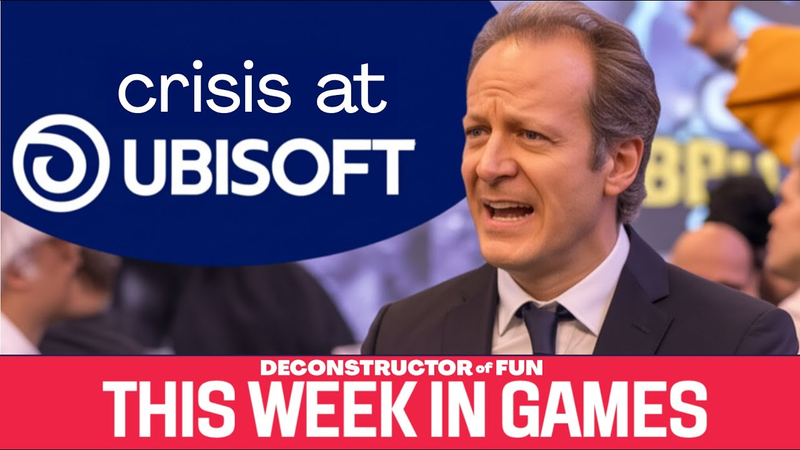
the point is that the games industry is very much a trend-chasing industry. When League of Legends came out, everyone wanted to do MOBAs. When World of Warcraft came out, everyone wanted MMOs. Ultimately, you only see a couple of winners out of these trends, but it is a trend-driven industry, and we've seen it's a very much a copycat industry. We've seen that happen over and over again. So, a lot of these executives are looking at live service games and saying, "Hey, I want in on that trend. I want in on that money." And that is kind of reason number one, of course. But, there's another reason, a more existential reason, a reason that I think follows more sound logic than just I want money that makes money. Give me one of those. And that reason is that a live service game can be the backbone of your company and allow you to keep making money in an industry that is volatile and can otherwise lead you to fall apart if you release a few bad bets, which is what happened to Ubisoft. Um Uh Ubisoft, for for people who who haven't been following, really peaked in
2017 or 2018 or so with some of their games that were really big hits like Assassin's Creed Odyssey and and The Division 2, and then shortly afterwards had a string of really big flops that led to the company really struggling in recent years. If you look at their their stock chart over the last decade or so, it kind of looks like this. Like It's like a good comparison might be if you are a basketball fan, the win probability chances of the Spurs against the Knicks for four games, which is like "Psh." Anyway, so some of these they look at live service games and they say, "Hey, that is recurring revenue. That can help us keep afloat when our games are not when our games are a lot riskier. It is It is you are mitigating risk when you have a game that continually makes money because you are not reliant on waiting 4 5 6 7 years for
a game to actually come out and then seeing if it'll hit." Because if you are a company that is just releasing games every a new game every single every 5 years and spending, I don't know, $200 million on that game, you are really hoping that it is going to sell between I don't know, 8 and 15 million company copies because you not only need to make back the money that you spent on that game, you also need to sustain your company moving forward. And that is a really difficult business to be in. That is a really tough proposition that a lot of companies have struggled with. And that is why all of the successful game publishers that we see these days have some sort of live service game as their backbone. Take-Two Interactive is one of the biggest game publishers. They have two. They have NBA 2K, which is granted, that's an annualized game franchise, so it's a little bit different than your average live service, but a large chunk of that revenue of the money they make from NBA 2K, their basketball series, comes from people spending money in the game. Those are live service games where
you can spend money to um buy buy all sorts of stuff. Um if you're in There are different modes within the game. A lot of them are just very heavy on the microtransactions and on getting people to spend money to play them and to get good within them. Um they also have GTA Online, which is one of the biggest things on the planet. Um GTA V. By the way, this is I Sometimes I like to quiz people, even people in the games industry. I'm like, "How many copies do you think GTA V has sold?" And sometimes they'll be like, "Oh, 50 million. Oh, 100 million copies. Yeah, pretty big. It's a pretty big game, right? And I'll blow their minds a little bit when I'll be like, GTA 5, Grand Theft Auto 5 has sold 230 million copies. Down the road, when we're getting closer to GTA 6, I'll be reporting a lot on Bloomberg and talking a lot about why that game is going to be such a smash hit and and why the expectations are so high for that game to the point where everybody is moving their release dates to get out of the way of it. Um and the biggest reason is that the last game has sold, once again, 230 million copies. It is the second
best-selling game of all time, second only to Minecraft, which kind of an unfair comparison because Minecraft is much less money and also is available on phones, whereas GTA is only PC and consoles. So, really, if you're looking at console games, I mean, GTA 5 is the biggest of all time. And GTA Online is recurring revenue, is a live service that continually makes money by selling players shark cards and whatever else. Um and so that uh those two games, 2K NBA 2K and GTA have really kept Take-Two going even as some of its games have either been hits or misses. It's really some games that have been misses. Um Marvel's Midnight Suns was a miss for that, which is unfortunate cuz that was a really good game. Um Civilization 7 wasn't quite the hit they wanted it to be, although I think it did okay. Borderlands 4 wasn't a big hit for them. Um Mafia: The Old Country did pretty well last year, but it wasn't Again, these are just kind of these hits or misses. You can You can withstand some misses if you have this backbone of
recurring revenue. Um other companies have it, too. I mean, uh uh Microsoft Xbox, they have plenty of problems, but they also have Minecraft, which is a very helpful um baseline as for recurring revenue. Um Sony found some success. Uh PlayStation found some success with Helldivers 2. Um uh Epic Games obviously has Fortnite, Riot Games has League of Legends, Blizzard has World of Warcraft and Overwatch. And really, Blizzard all of their games are live service games um since World of Warcraft all of their games have turned into these kind of never-ending franchise never-ending um uh games that just live on forever with recurring monetization of some sort. Um and in fact Blizzard over the years has um uh put in an early end to at least a couple of games because there was no way to have recurring monetization for them. For example, Diablo III um which that's a whole 'nother story. I wrote about that in in Play Nice, my Blizzard book, but um essentially it was going to have a second expansion that was canceled
before it even got off the ground before Reaper of Souls, the first expansion, even came out. And one of the reasons for that is because Diablo III didn't have a viable form of recurring monetization. Um they tried with the real money auction house, but that was a big failure that players hated. And so as a result, they did not have real a real form of recurring monetization, which meant that um second expansion seemed less viable to the people who ran Blizzard at the time. So live service, it can really be this kind of this infrastructure that keeps you afloat and makes you less susceptible to failure if you do release one of these big risky games and it is not a huge hit. Um and so that's why we're seeing so many of these companies just pursue that model. Again, a lot of it is just kind of simple um uh let's call it I don't know, greed is not the right word because it isn't about kind of when we use greedy to refer to companies, we're kind of taking human motivations and applying them to
machines that really do not operate like humans. When you are running EA, you are not acting out of greed. You are acting out of being part of a system where your duty is to be um to maximize shareholder value. And so therefore, you are doing what you think will make as much money as possible for shareholders, not because of you your personal greed, although you might have some of that, but that's not what motivates you. What motivates you is doing your job and trying to do that successfully. So, greed is really the wrong word. Um but it's these companies are just trying to maximize their profits and they're trying to minimize their risk. And live service games are a way to do that. Now, you might argue that these days live trying to get a live service off the ground is actually more risky than trying to release a single player product. And I think that companies are looking around and trying to find other ways to mitigate risk and maybe withdrawing a little bit from the live service world. But still, I mean live service is still the most lucrative um area you can go into. Um it's still
recurring revenue. It's still revenue that will just continue to be stable and be a backbone for your company and can help make up for some of those flops. Um But yeah, these days I mean I think a lot of companies are looking around and saying, "Hey, how can we mitigate risk by making these games take less time and cost less money to make?" Which is something that I'm certainly keeping an eye on and and asking a lot of game companies about um and trying to figure out what that future looks like because it's clear we're at a point of no return for the video game industry. Um I've talked many times in the past years and years ago about how um things did not seem viable. This did not seem like a tenable industry and I think we've kind of we've we've reached a tipping point, that's for sure. Um but if you're wondering why companies like BioWare and Rocksteady and Naughty Dog and so many more have chased this live service dragon over the years, the reason is because having a live service game can
really help make up for the volatility that has been part of the video game industry for a long time. All right, see you all next time.
Auto-generated captions from YouTube — names and numbers may be misheard.
Key insights
7 takeaways · ~3 min read- 01The shift toward live-service models is primarily a strategy to mitigate the extreme financial risk of modern AAA development, where production costs have ballooned from $20–30 million to a $200–300 million floor.
- 02Live-service games provide recurring revenue streams that stabilize companies against the volatility of a hit-driven industry, preventing total reliance on the success of a single, infrequent release.
- 03The industry's pivot was heavily influenced by the massive success of Fortnite, which demonstrated the profitability of free-to-play models combined with ongoing monetization through skins, seasons, and content updates.
- 04Grand Theft Auto V serves as a primary industry benchmark, having sold 230 million copies and demonstrating the long-term financial power of a title supported by a robust, recurring-revenue online component.
- 05Major publishers like Take-Two Interactive (NBA 2K, GTA Online), Microsoft (Minecraft), and Blizzard (World of Warcraft) rely on live-service titles as the financial backbone of their operations.
- 06The pressure to implement recurring monetization has led to negative outcomes for established studios, with projects like Anthem and Suicide Squad failing to meet commercial expectations despite corporate mandates to adopt the live-service model.
- 07The lack of a viable recurring monetization strategy led Blizzard to cancel a second expansion for Diablo III, illustrating how internal development priorities are now dictated by a game's ability to generate long-term, piecemeal revenue.
Ask AI about this video
Cite this video
Citation
Generating citation…



















Comments