VideoPocketGamer.biz
Designing for the Rewarded Pathway: Why Product Teams are Critical to Ad Strategy
30 Jun 202627 min video
Transcript
[music]
I mean, we can we can increase bids, but that's risky. [laughter] That's risky.
True.
[music]
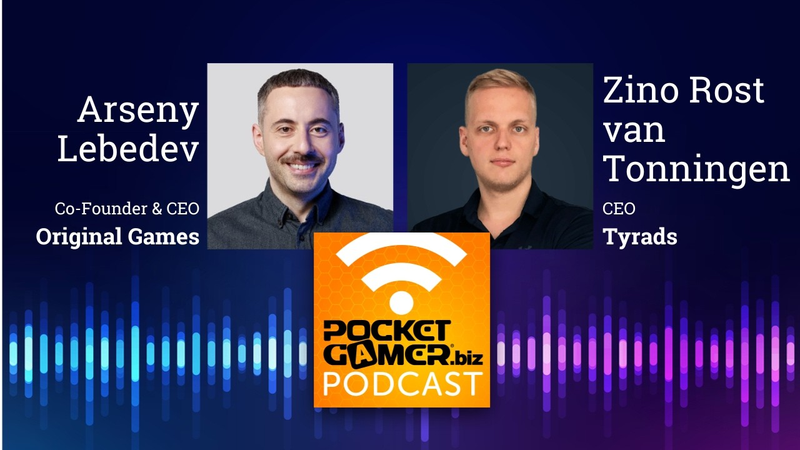
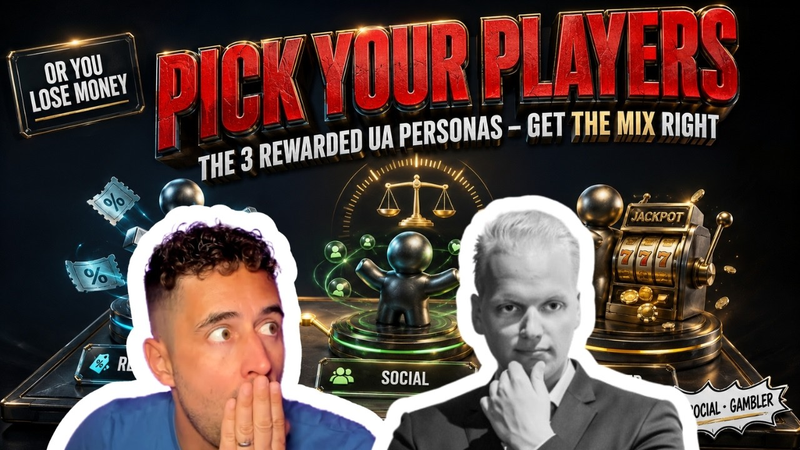
So, what does that mean for designing games? It looks like we're going to have to think more about their motivation to play than we did before, Arslaan. And you said we should email you ideas with the best games that work here, but what are you what are you thinking about yourself as a CEO of a studio when you're seeing, yes, there are personas, there are ways to match the game to the player at an entirely different level?
Yeah, a great question. If it's impossible to compete with companies that are just, you know, a thousand times richer, where they can afford to to buy users on a on a much
bigger tail than we can, or, you know, for whatever reason, are there other places to compete and, you know, as you know, was saying that even this space is getting crowded. But I think one of the key points here is
[clears throat]
these if they're if we can look at them as app stores, they're they're smaller, and perhaps there's a world where a business like Original Games can develop continuously develop games that would replace the previous games as as they become um you know, as there's fatigue. So, please don't do this, just let me try it first. Um but like I I don't know if there I don't think there will be a world where companies are making games are making, you know, quick quick return games like hyper-casual mechanics that work well on on incent incent games. Um I've never seen it work well um without like without kind of really good
deep monetization. Um but I I definitely think what teams can be doing right now is um looking at the mon- looking at monetization in that flow um and adjusting it for uh very early. And again, there you know, if there are users looking for great deals and that's just their persona hey, you 50% off, you know, it's still the same price but just add that.
So tells us there's something going on there, you know, the the differences in players that's going to affect monetization. Um I don't know, Brian. I think it's an area that uh is going to be very very important. I mean, you talk about game design, you do game design, you even I believe um you know, lecture about it or bring that to your community. I mean, this is something they're going to have to consider. This is another part of that puzzle.
We we we've heard this from so many of the guests on our show. It's like monetization has to be a part of your game design. It's not something that you
can leave up to, you know, the suits or the biz guy or you know, it's like one part of the team. If you don't know how your game's going to make money how the hell do you design it? And and that's the reality. Um but it's actually a strength because it puts that power back into the hands of the designers, the developers, the people making the actual video game rather than having a business model imposed upon you by, you know, a publisher or platform holder. So, you know I when I'm speaking to developers, especially the smaller studios, indies, um I'm like, "Guys, this is an opportunity for you. This is how you build that engagement, you build that connection with every single one of your players regardless of the persona."
How's that look for you, Arseny, because you know, rewarded can have a longer progression curve, right? Some people are going to take a longer period of time, others are going to move quickly. So, you've got this whole thing going on and that impacts design, but it also impacts the data because then the question becomes are we measuring rewarded too early or
too narrowly here, right? What what do you think about that when you look at that and you're saying, "Okay, this is this period is critical." Then there's these long-tail users and we want those, too. How does that make you think about measuring?
Yeah, so it's a huge challenge. Um and I think what what most companies are doing are again, you have an LTV model that factors all of those things because, you know, you're getting hundreds of thousands of users a day. You have to figure out a way to look at it in bulk. I think the challenge then becomes um does your partner have the tools to segment players so that they see um that that that that their pattern is going to be taken advantage of. So I I So I know the tire does. Um not everyone does and the bigger challenge again is like your UAMs need to understand this. Um most user acquisition teams, the people talking to these networks have never played the games that they're um selling, right? So you have to play
the game. Like get to the level 100 out of 400 at least. So you understand what's going on. Um and that's so difficult in remote working land because the how many how many publishers does the partner work with, right? So they're not going to play your game. They're not going to tell you what to do. Work with them and and you know, um phone calls in real life meetings, those things all have value.
Yeah, if I could give any tip in terms of any partner that is doing UA on on rewarded, right? And you're really looking at how to make it success a success is what we see often times with a lot of studios out there is that they only look at one metric and that's like the ROAS, right? And that is usually where the the danger starts and where things start breaking down is if you only look at ROAS as a key metric in the early performance because if you only look at ROAS and you don't look at something else like retention or
something else and how the users are actually progressing through those games and actually seeing if there's a drop-off that's happening at key moments and how big that drop-off is, you're you're not understanding actually how rewarded it is and you might only get you'll be getting that rewards hunter mainly. So, you want to make sure that you always look at the actual engagement of users, not just the ROAS, because if you're looking at a campaign that you're running with any partner, right, and you're seeing great ROAS, you can you know, you can incentivize a purchase to to get someone to purchase, right? It It might look great in their day one and day seven performance, but really where the results are going to be coming from is that if you're seeing good engagement in that beginning phase as well. And that's where often times uh companies really dropped the ball is that they don't really look at the engagement side on those early cohorts. And if the users are not engaging in the early cohorts, they're never going to mature well in the long cohorts. So, that's usually where I would say any partner that's going into rewarded or any partner that's going into uh trying
rewarded, right, is not only looking at ROAS as a singular metric or how your LTV prediction curve is going or anything of that range, but the engagement part is critical there and making sure that you're choosing a partner that actually understands that engagement part, understands where a drop-off is coming from, understands where their their churn is happening, and making sure that they action on that quickly because if something doesn't look good in the beginning phases with that, that's where everything will drop off and and the performance will just implode on you in the the long-term tail.
We hear this so often. Do not look at metrics in isolation. Don't focus just on day one, day seven, cuz it's you're just going to miss too much in the bigger picture is what I'm hearing here, Zena.
Yep, 100%.
What does that actually tell us because the big win that I'm always hearing about is it's that middle, you know, you want to understand people who are valuable. They're already valuable,
they're already doing it. I mean, what do teams need to understand, what metrics do they need to understand to judge rewarded performance, high-value users who are already high-value. The upside, the money, might be in identifying that middle. What do you think about that idea and how can they do that?
You know, I went to business school, they told us never be a J.C. Penney. You make the cheap store, you make the expensive store. Um, but I think I look at this as you grow, you you just just grow the the the baseline. Um, and how do you grow the baseline with with any game? Um, well, you you look you just improve the gameplay, but games usually have segmentation now. So, you have players that are paying more, uh, you have players that are dormant and stuff like that. Hey, well, those segments are going to be unique for these players. So, look at them uniquely. But, I think the other thing, the key thing here is but you can actually see what they're trying what they're trying to go for, the offers they're trying to go for. Um,
so you can you can monetize, hey, to get to level 100, level 97 is going to be really hard. Um, some stuff like that, there's a lot more those are the real levers that that you usually don't have. Um, and it is a huge challenge to get your game teams to think, you know, like like a sneaky CEO or or that kind of thing versus um, how do we make this experience later later rewarding?
And also, thinking about whether or not you want to find more high-value users or increase the value of the ones you already have. What What you think when you're faced with that choice, Arseny?
Whatever the user gives me, that's what I'm working [laughter] with. I mean, we can we can increase bids, but that's risky. That's risky.
True. [laughter] True.
Yeah, but in terms of anything, right? In terms of the the the value and the what you want to really incentivize users on, right? It's really if you can incentivize the majority of the users to get enough value. So, uh out of the out of them, so that the
the user that is already going to be a high-value user makes that value even more valuable for you, right? That's really where the the the results come from, right? So, if you can get the the users that are new or the users that are social [snorts] or like just casual users playing the games, if you can get them far enough in within those games and engage and monetize enough that that other segment can really pull up the weight and make sure that you're very profitable on that side on the longer curve, that's really where the the results will come from, right? So, that high-value user will always be there, right? It's that you you can incentivize that, but he's going to go for that deep very deep reward, and he's going to spend whatever he needs to do to get there. Um but you want to make sure that majority of the users are actually engaging with the offer wall, and that's really where that early engagement comes in, right? So, if you you might have one or two of those users, right? You have one good week, another bad week, another week is really good, and then it's a bad week. If you have those kind of swings, there's a problem in the funnel. There's a problem in how that's structured and
how that's shown to the users to engage majority of the users to actually uh be valuable for you.
Is there a danger that the industry or companies can over-optimize this and, you know, push that reward loop so hard that it can end up damaging player trust or or disincentivizing players?
We got to make sure that players don't immediately think, "Okay, I'm never going to get this. I'm never going to I'm never going to play this game for 100 hours." or whatever it is. Um definitely that's a huge problem. That's a huge problem, especially if you're if you're doing smaller games, um you know, where players see that hey, this isn't this isn't go forever.
Can you over optimize and sort of damage player trust or you know, reduce the value of that player?
Yeah, 100% you can do that, right? So, you can definitely harm the trust of a of user if you put in a reward that is too hard for them to achieve and and or it's something that is just that's going to break that trust from the beginning and that's if you do that, right? You're going to if you
break that trust, right? They're never going to come back to that game ever again, right? So, you want to put a reward that's realistic for them to achieve, right? But it's difficult for them to achieve, but still realistic, right? So, within grasp. If you make it too difficult, you know, that's where your churn is going to happen. And if you make it too difficult as a in the journey at any at any point, they might just drop off completely and just go to another game that actually is more engaging for them and that actually they are more excited with. Right? And then you can definitely also off over optimize, right? So, you know, you want to make sure that you have enough data to actually make an optimization on, right? So, if you're optimizing too early or you're optimizing too late, it's the same effect. So, if you have if you have a cohort of audiences and that doesn't have so much downloads and you're starting to optimize on that right away, right? You're dealing with variance of of your performance, right? So, if you're optimizing on on variance, you're going to get the same results as you're optimizing on something too late. And
that's where you can you have problems on both sides, right? So, let's say you're running an experiment, right? And you want to try out different funnels. You're not giving enough volumes to a particular funnel for it to really mature, right? And really see what the performance is going to be. And you might optimize on that, but later on we look at the long-term performance of that funnel and has great performance, right? So, we see that that also happens that sometimes people only look at the early KPIs. They look at the day seven, but they don't look at the day 14, right? And they don't see that from the day seven, you know, that that user's actually engaging much heavier towards that day 14 and pause the campaign. Um the amount of times I've had a campaign paused because the day seven was not good, but the day 14 was good is more times than I would like to say.
[laughter]
So, it's just like blindly looking at KPIs, blindly looking only at the early KPIs, uh and not looking at as a whole, the whole journey that's actually happening and occurring. And when you don't have that and you optimize on those things too early, that can have just the same amount of effect and disastrous results.
Sometimes a campaign works and slows down, then it speeds up again, works again later. Arseny, just how do you know, or is there even a way of knowing when a campaign is just genuinely exhausted as opposed to you have to do something and you have to adjust it?
I mean, you should always be adjusting and looking, but I I think the you would just know, and that may not be related to um some like something on your side. I I just these platforms are small and they they got to rotate out offers to get uh their other partners' eyeballs. We're at the most that we can pay for the for the users at this performance.
What is the problem there usually? Is it is it the campaign, or is it the setup?
The just the volumes in general can be an issue, and the the second one can be the the setup, right? The the understanding of the events and understanding what events are available to actually put the right engagement. I think Arseny already touched on this one as well, right? In terms of really understanding the game and do you really know what that event means, right? And
do you really understand what kind of behavior usually gets result what kind of result usually happens with that event, right? So, for example, a a a a good analysis can be that you actually understand like what's the average revenue per user when that user achieves that particular event, right? And does that actually materialize for you on your KPI goals that you're looking to achieve, right? So, if you're looking at a level 100 on day seven, right? What's the average revenue per user that you're generating on day seven? And are you paying more or less than that? If you're paying more, then you're probably not going to make it worthwhile. If you're paying less than that, then that's really profitable for you already on that specific date. So, these are things that are key to really understanding and understanding the game and understanding your own events that usually result into problems that happen with these kind of structures in this kind of stuff.
So, gentlemen, this has been fascinating. We've had some really deep dives, but it's 2026. This is a video games podcast. If we don't mention AI, we will get complaints, possibly death
threats. So, let's let's dive into it. Um but let's do it in a way which is is is practical. You know, it's moving so quickly. It's impacting so many different areas of the business side of games. Um where are we seeing AI hyper-segmentation hitting the the the rewarded side of things?
Yeah, I think it's everything in terms of the rewards structure moving forward, right? As the funnel is is everything that makes the performance, right? If you have any kind of churn on any moment, making sure that you could use AI to detect that where the users are churning and being able to target those users effectively automatically, I that's the make or break moment of any kind of result, right? Just like how live ops actually impacted uh games dramatically in their performance and keeping users engaged, that same live ops and automation around that to engage users when you're seeing that they're dropping, that's really key for anything that's going to move forward in our industry, right? You being able to use that information, being able to to
action on that effectively, that's really going to be the key differentiator in our industry for the long-term results and and where they this industry is going. So, if you're not able to use the data, not able to target the users and segment those users using AI to activate those segments automatically as well. Um you're going to miss out on a lot of capabilities that other partners that would have uh be able to do that. So, um everything is going to be related towards how you keep those users engaged in between the events and what kind of things you can do to activate that user. And there's no human that can ever in any way or possible form be able to do that manually. So, [clears throat] the only solution for that is AI. And the only solution is being able to use that in a way and activate those users segments automatically.
It's a very strong statement. I think that's one to write down, Brian. Basically, it's you want to personalize the game, you want to personalize the path, you need AI. You can't do it any other way.
No, not if you're operating at any kind of scale. Um Arsène, uh it's uh what's your take on this?
Sure, sure. I mean, I've been uh we've been transforming the business um to to take advantage of AI, obviously. Um and my my challenge is how um to to understand it. And I think that's actually the the value of AI versus machine learning or technologies that have been around for for a while is that there there is a component of the learning curve is lower to get something. So, if you're an idiot like me, you can figure out how to get something. Um if you if your job position isn't specifically segmentation, you can use these tools to at least get you a bit further. Planning reward structure and then recognizing that structure in the game and segmenting that to everybody. Yeah, that that's where it has to go. Um and the challenge for me here is like the way that we're looking at making
mobile games down the line is just absolutely totally different than it's been. Like we have agents just generating full games. Um and then the agent itself would choose the game. Like it would make the it would make all the assets and it would make the game out of those assets or it would make the live ops event out of those assets, all that kind of stuff. So, if we if you add another factor of performance, if you add another factor of demographics, all of that, that's very very transformative and that really goes against how games are usually made. Um, but I mean, incentive is is not the usual channel to get users.
I would just say the finalize on that point, right? I think if really the the industry is going to be like the the final boss, right? If we're going for it, it it's where the live ops environments of games and the live ops environments of rewarded are merged. And those are basically engaging users and connecting based on that that those
events and pushing that forward based on on the data that the game has to automatically engage users with live ops environments the former water partners, right? That's the final boss and that's going to be a really big partnership deals that you make with game studios where you build these kind of things and build this integrated within the products and that's a different type of marketing that I think we've ever seen before, right? So, that kind of integration, I think that's where that kind of stuff will lead to.
Thanks very much what a platform provider is like yourself because now it's I don't buy something, we buy into it together.
Yeah, you're you're connected, right? So, uh Yeah, so that's uh that's you're you're in it together and the the longer you user stays in your platform, the longer the user stays in our platform, right? So, it's it's a it's a partnership that really make makes things and that makes or breaks things for a long term.
Interesting. Yeah, I like that, Arseny. That type of relationship.
Just wanted to add that we we we just can't lose the soul.
Uh, these games, if they if they're made by the soulless copy machine, they're going to be crap, so you can't you got to figure out how to do all that, but not but not lose that, "Hey, this is this is a fun relationship between you and you and somebody else."
We hear that so often. You know, it's like AI's useful around the periphery. You can optimize, you can sort of find different ways of doing things, but but don't take the heart and soul out of video games, you know. It's if you are letting the machines have fun, we're doing it wrong.
Mhm. So, I'm going to close with a quick round, three questions, one sentence answers. I'll start with you, Arseny. What should studios stop doing with rewarded that they're doing right now?
They should stop relying fully on the network.
What should they start doing?
They should start bringing the product teams to to rebalance the games for incentive networks.
Mhm. So, to be more specific, that means thinking about designing these pathways we've been talking about right now.
Yeah, yeah. Um the the product team should be actively thinking about um the rewarded pathway as a separate uh game balance or maybe even feature set.
That's strong. That's strong. And in that journey that they have, the one metric, the one signal they should be watching more closely than they are currently.
Actual ROAS. Because it's easy to look at a prediction for a few months that usually is incredibly accurate when you're looking at uh year-over-year or whatever. Um you got to keep that you got to build a dashboard to look at your actual ROAS.
So, you know, coming to you, what should advertisers and publishers stop assuming?
They should stop assuming that um the the game and the events that they have are all going to be great from the from the get-go, right? And they should actually start using the the rewarded
understanding of users and implement rewards exactly for those for those type of users and the events for those type of users. So, yeah, basically we can sure that you don't just set up the same events that you use for non-incentivized partners.
Fabulous. Thank you. And what should advertisers and publishers start testing?
They should start testing with partners that they can actually test out different funnel structures with, right? And that they can actually understand what funnel structure really works for them and what funnel structure doesn't work for them. That gets them both good results in terms of raw loss, but also in terms of retention and progression of users.
Awesome. And And finally, what should advertisers and publishers be watching over the next 12 months?
What they should be watching is basically how the rewarded structures will be incorporated with live ops and those live ops setups will actually be integral part of the rewarded structure and making sure that your partner actually implements live ops and uses live ops to actually engage users over a
longer period of time. That's going to be integral in the next 12 months.
Gentlemen, this has been fascinating. It's There's so much in that for the audience to take away. I think we're going to have a lot of people going leaving the podcast and going to maybe sit with a bag of ice cubes on their head just because, you know, there's been a lot to parse here. But before we let you go, there are two questions we ask all of our guests. The first is what game you're playing right now? What's obsessing you? What's on your phone, your console that's maybe taking away from the world of rewarded? And secondly, what's your favorite game of all time? So, Arseny, let's hear from you first.
Well, Subnautica 2 is coming out tomorrow.
Yes.
That's going to I'm going to be calling in sick. [laughter] Um and then the uh the best game, you know, so thank you Krafton and Unknown Worlds um for finally releasing. Um and then I I still play Doom. My It's the old time with with the mods.
Of course. Of course. It It was like one of the The mod game is still strong and keeping going. Perfect. Great answers. Great answers. And Zeno, how about yourself?
Yeah, I would say my the game I'm playing right now and I've played for a long period of time and I would say my entire life is RuneScape. So, [snorts] I actually play RuneScape and I you know I I keep coming back to this game. I don't know why. I like these little pixels and just like hitting some wood and that's it. So, I keep going back to that. So, that's my that's my favorite game. That's my the game I'm playing right now. Yeah.
Perfect. It's like listen, there are no shameful, you know, secrets here. It's like it's a solid choice. It's a very solid choice. And
The only shameful thing is I don't have 99 wood cutting yet. So, uh
[laughter]
Yeah, well, you suck. Okay.
Yeah.
Ridiculous. And that that it's it's been absolute joy.
It's there have been so much here for the audience and I think a lot of really really good information and takeaways. So, thank you both very much indeed for for coming and joining us.
Auto-generated captions from YouTube — names and numbers may be misheard.
Key insights
Distilling the key insights…
Ask AI about this video
Cite this video
Citation
Generating citation…
















Comments