Live Ops reports and market data
Documents
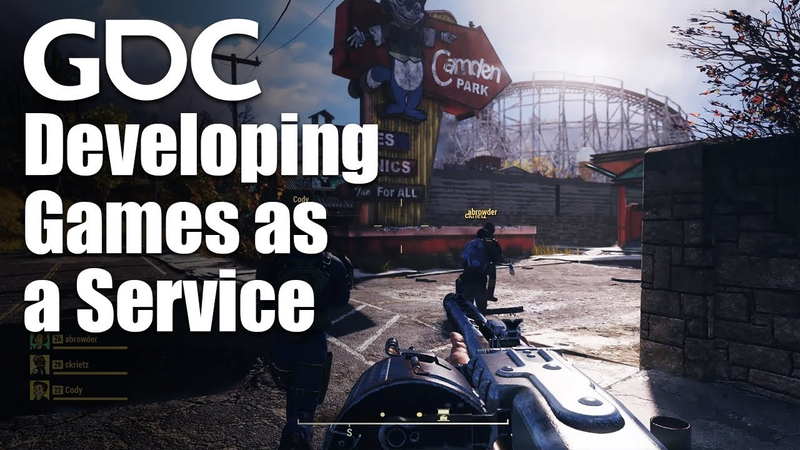
Lessons Learned in the Trenches: Developing Games as a Service
Games as a Service development demands a fundamental shift from viewing software as a finite product to treating it as a continuous, evolving utility.
- A successful Games-as-a-Service (GaaS) launch is a singular event; failing to capture the audience at 'opening night' results in a permanent loss of potential that cannot be recovered later.
- Development teams must prioritize a disciplined 'heartbeat' for content updates, utilizing a cadence of weekly bug fixes, monthly feature additions, and quarterly seasonal content drops that take no longer than 6 to 8 months to produce.
- Pre-production is critical; teams should avoid rushing foundations and instead focus on perfecting core gameplay loops before expanding into meta-systems or broad content.
Research Methods to Improve Live Game Retention, D1 to D100
Games user experience research serves as a critical bridge between raw telemetry data and actionable design improvements, specifically targeting the enhancement of player retention from the first day through the hundredth.
- Improving player retention from D1 to D100 requires a mixed-methodology approach that combines quantitative A/B testing with qualitative insights to identify the 'why' behind churn.
- Mobile titles like Design Home and Cooking Dash successfully improved retention by using granular funnel tracking to pinpoint specific usability hurdles.
- Longitudinal research tools, such as ten-day diary studies, are essential for observing player behavior over time and refining complex late-game systems.
A QA Perspective on Live Game Production
The evolution of live service game production necessitates a fundamental shift in quality assurance, moving away from reactive testing toward an integrated, proactive development lifecycle.
- To maintain stability in a live service environment, isolate development features on dedicated streams rather than bundling them, which prevents cross-contamination of bugs and simplifies the testing process.
- Leverage a closed beta group of mature, dedicated players to provide early feedback and identify issues before pushing updates to the broader open-beta player base.
- Implement automated data visualization tools to compare item attributes across development streams, allowing QA to identify red flags and data discrepancies that would be impossible to catch manually.

Panel: What Techniques Can we Apply from Hypercasual Games & Bring into Living Games?
The gaming industry is currently witnessing a strategic convergence between hypercasual titles and live service models, driven by a mutual desire to optimize player retention and monetization.
- The mobile gaming industry is converging toward a hybrid model that merges the frictionless, low-barrier entry of hypercasual design with the long-term retention and monetization structures of live service ecosystems.
- Hypercasual developers are increasingly integrating live-ops and in-app purchase (IAP) frameworks to extend the traditionally short lifespans of their titles.
- Live service developers are adopting hypercasual design principles to simplify complex social and gameplay systems, making them more intuitive for broader mobile audiences.
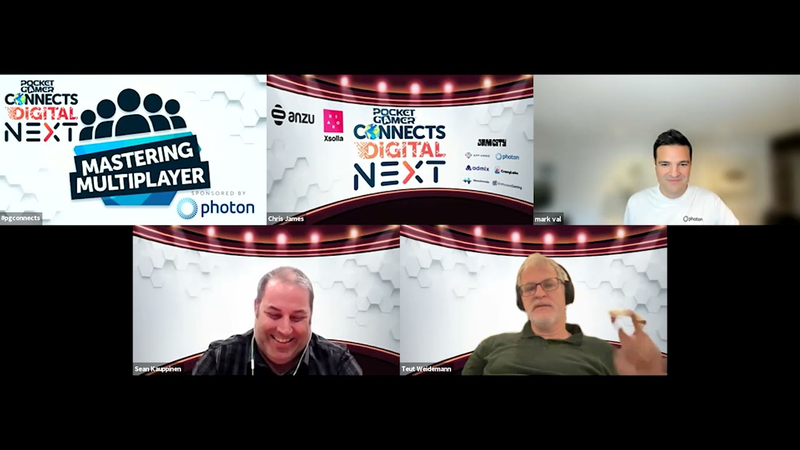
Panel: War Stories on the Business of Multiplayer Games
The evolution of multiplayer gaming reveals that while technical infrastructure has transitioned from proprietary hardware to cloud-based solutions, the foundational challenges of community management and player behavior remain constant.
- Prioritize human-centric design and transparent community communication over technological novelty, as these remain the primary drivers of long-term player retention and viability.
- Mitigate development risk by launching core systems at 20 percent polish to validate design assumptions before committing full resources to feature development.
- Integrate monetization models directly into the initial design phase rather than retrofitting them onto existing frameworks to ensure sustainable server liquidity and growth.
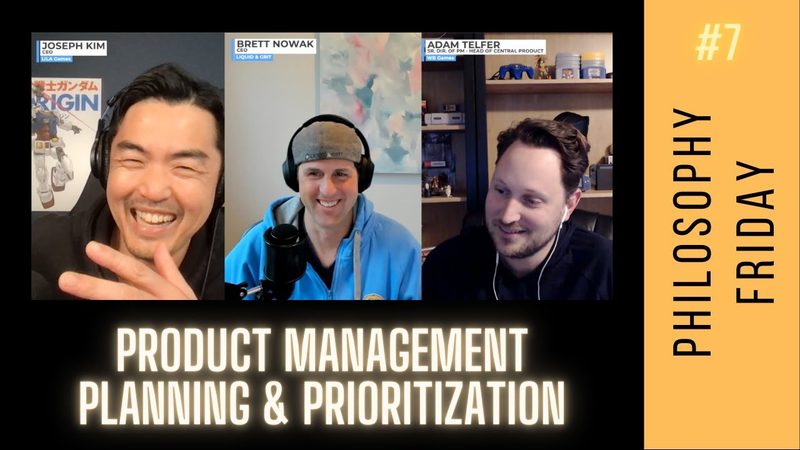
PM Planning & Prioritization in Game Development (Philosophy Friday #7)
Product management in modern game development centers on the necessity of a rigorous, thesis-driven strategy to ensure market viability and operational success.
- Product planning should begin with a clear, research-backed thesis that identifies a latent human desire, such as the need for progress or social connection, to align marketing and development teams.
- Opportunity sizing for new concepts should use top-down analysis by comparing the proposed game to market competitors using data from tools like Sensor Tower or App Annie to estimate potential organic volume and revenue.
- Sensitivity analysis using Excel data tables is an underutilized but powerful tool for product managers to resolve team debates regarding key performance assumptions and project viability.
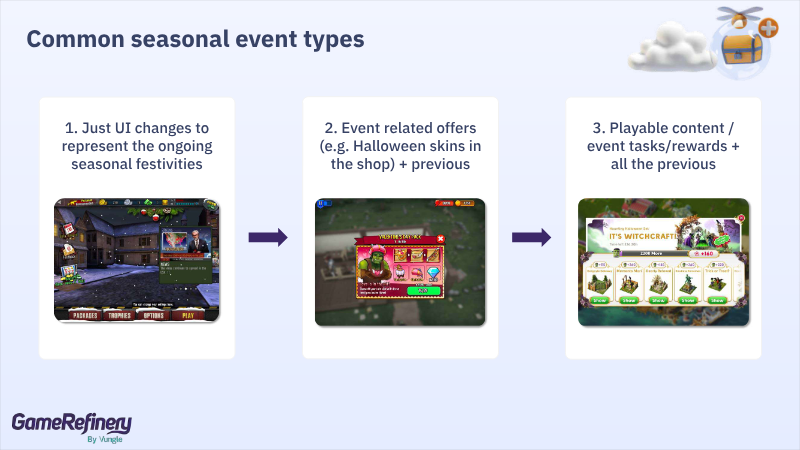
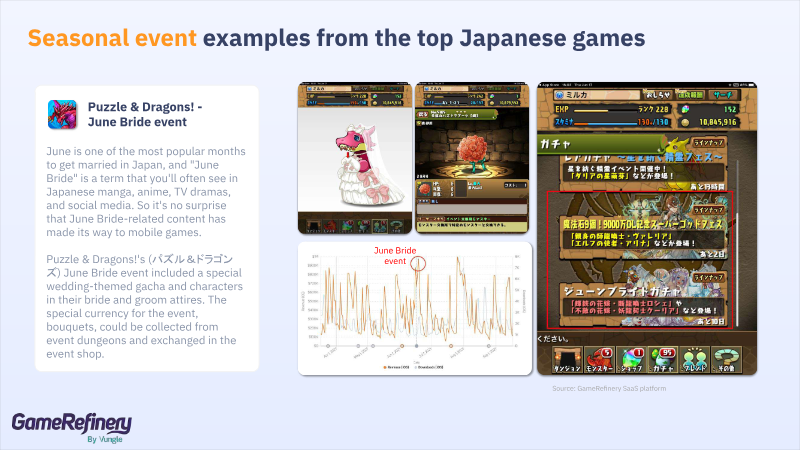

In-Game Events Snapshot: November 2021
In-game events have become a cornerstone of mobile game monetization and player retention, with 90% of the top 100 grossing mobile titles utilizing seasonal events.
- Seasonal in-game events are a standard industry practice, utilized by 90% of the top 100 grossing mobile titles to drive player retention and monetization.
- External brand collaborations are a major growth area, appearing in 42% of top US iOS games, 51% of top Chinese games, and 62% of top Japanese games.
- Strategic event implementation can drive massive revenue spikes, such as Genshin Impact’s Lantern Rite event increasing daily revenue from $200,000 to over $1.25 million.
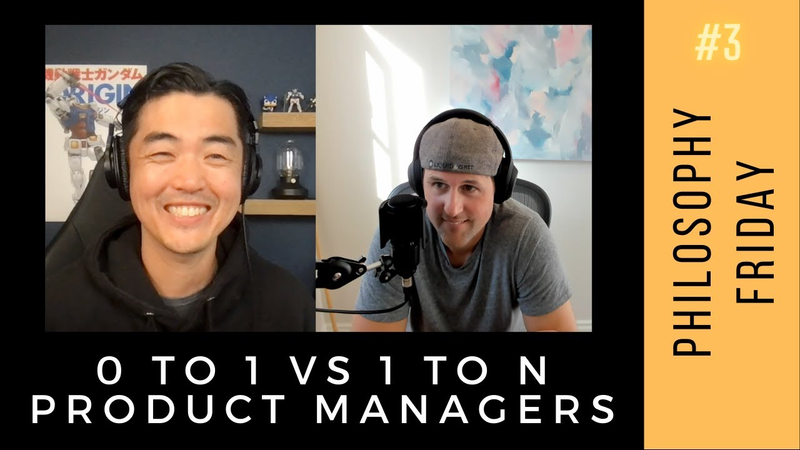
Zero to One vs. 1 to N Product Managers (Philosophy Friday #3)
The distinction between zero-to-one and one-to-n product management defines the fundamental tension between radical innovation and iterative scaling.
- Zero-to-one product management requires a hunter mindset focused on intuition and conviction to create novel offerings, while one-to-n management acts as a gatherer role focused on data-driven optimization of established products.
- Large organizations often fail at innovation by incorrectly applying one-to-n, process-heavy methodologies to zero-to-one projects, which dilutes bold ideas through committee-driven consensus.
- Successful zero-to-one initiatives demand a culture of radical honesty and blunt communication, as prioritizing social harmony over direct feedback frequently leads to mediocre outcomes.
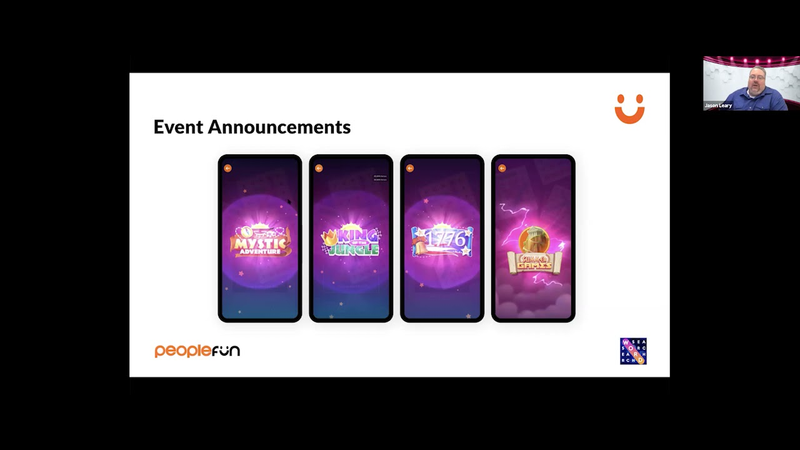
Theming for Live Ops Events: The Power of Modularity & Storytelling
Modular Live Ops frameworks serve as a critical strategy for boosting weekday engagement and long-term retention in mobile gaming.
- Implementing modular Live Ops frameworks can drive a 16–20% lift in ad ARPDAU and a 21–25% increase in daily minutes played.
- Modular systems allow small teams to launch new events within a three-to-four-week production cycle while simultaneously developing core game features.
- Operational efficiency is achieved by utilizing consistent, re-skinable components that can be adapted to any game genre.

Panel: Creative Ways to Grow: Innovating in User Acquisition & Retention
Sustainable growth in the modern gaming industry necessitates a holistic strategy that bridges the gap between marketing, product development, and community management.
- Retention is the primary driver of revenue and long-term scale, as acquiring new users is ineffective if the first-time user experience (FTUE) fails to engage players or if the game suffers from technical instability.
- Maintaining creative integrity in user acquisition (UA) is critical; using misleading ads that do not reflect actual gameplay can damage long-term app store rankings due to high visit-to-download drop-off rates.
- Influencer marketing campaigns can drive significant short-term install spikes, but they require careful tracking and coordination to avoid negative impacts on store algorithms if the traffic does not convert into sustained downloads.
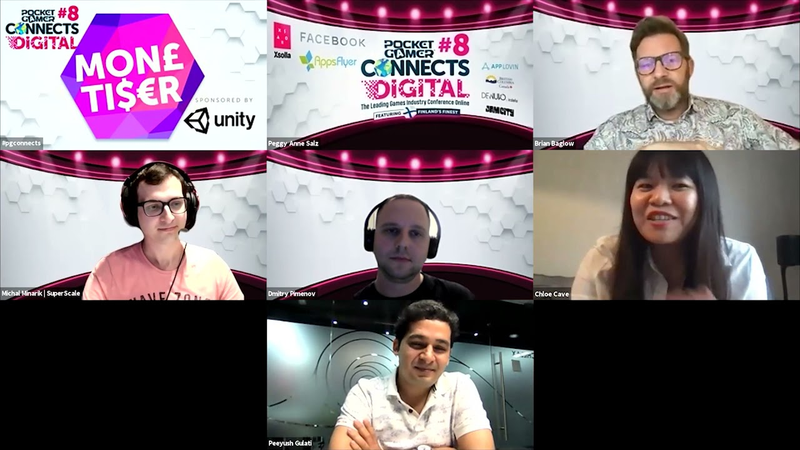
Panel: What Lessons Have we Learned from our Game Economy Mistakes?
The modern gaming industry has undergone a fundamental transition from traditional retail models toward complex, hybrid monetization strategies.
- Game monetization has shifted from purely progression-based models to include vanity-focused economies, exemplified by Fortnite's success in selling cosmetic items to a growing Gen Z audience.
- In the current freemium landscape, approximately 96% of users do not make in-app purchases, leaving the primary revenue burden on the 4% of players identified as 'whales'.
- Developers should simulate their game economies before launch, modeling player behavior across multiple segments over years of gameplay to identify potential imbalances or infinite scaling issues.
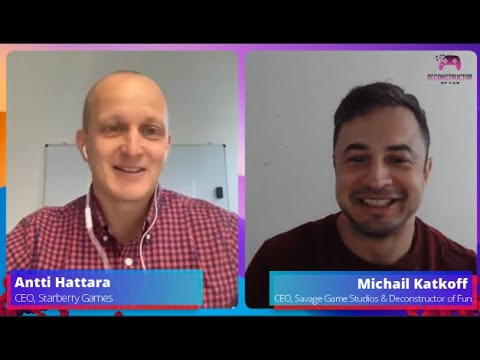
Scaling Up a Merge Game with Antti Hattara, CEO Starberry Games
The merge genre has evolved from a simple casual category into a highly competitive landscape where long-term retention is the primary determinant of success.
- Long-term retention beyond 90 days is now the primary metric for success in the highly competitive merge game market.
- Developers can differentiate their titles by pivoting from simple idle mechanics toward complex city-building simulations.
- Scaling requires a dual strategy of consistent content updates and advanced performance marketing, leveraging automated tools to overcome IDFA deprecation challenges.