Live Ops reports and market data
Documents

Tackling Cheating In Gaming
Cheating has evolved from a nuisance into a sophisticated, multi-million dollar industry that undermines player retention, brand integrity, and the viability of free-to-play business models.
- The gaming industry is shifting from reactive account bans to proactive disruption of the cheat ecosystem, which currently involves over 150 active and professionalized cheat-selling operations.
- To combat the professionalization of cheat development, publishers are adopting automated threat intelligence tools that use data crawling, API integration, and cluster analysis to identify threats before they reach players.
- Long-term stability in gaming ecosystems requires targeting the financial infrastructure of cheat providers, specifically by pressuring third-party payment processors and advertising platforms to cut ties with illicit sites.

TWIG 145: How FIFA Ultimate Team's new Preview Packs actually boosted loot box sales
The gaming industry is currently navigating a period of intense regulatory scrutiny regarding loot boxes, with legislative efforts in regions like the United Kingdom and Australia, alongside age-appropriate design codes, threatening the future of this monetization model.
- Electronic Arts reported that FIFA Ultimate Team 'Preview Packs' increased engagement and conversion rates, though analysts caution that these results may be skewed by seasonal revenue spikes.
- The gaming industry faces significant regulatory pressure in the UK and Australia regarding loot boxes, forcing developers to explore alternative monetization models to mitigate potential revenue losses.
- Developers are transitioning toward monetization strategies that emphasize skill, time, and direct cost, such as battle passes, ticket-based mission entry, and higher-priced direct asset purchases.

Panel: Tools & Techniques for Game Economy Analysis & Optimisation
Successful game economy design requires a sophisticated balance between player progression, monetization, and content depth.
- Design game economies using a sources and sinks model to manage player time as the primary resource, ensuring progression remains rewarding while avoiding difficulty spikes that cause churn.
- Prioritize median values and high-percentile player behavior in data analysis rather than relying on simple averages, which often mask the nuances of diverse player segments.
- Implement hybrid monetization strategies, such as rewarded videos, to sustain engagement for non-paying users without compromising the experience for high-spending loyalists.
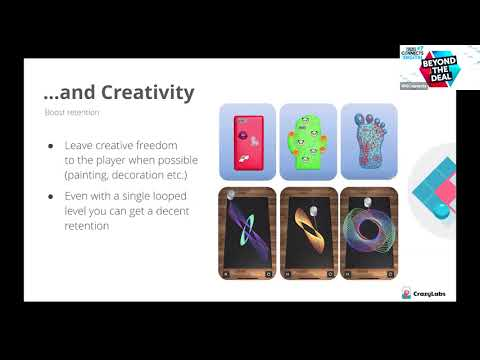
The Messy Middle - From Trend Gamification to a Profitable Hypercasual Game
The hypercasual gaming sector continues to experience significant growth, currently accounting for approximately one-third of all mobile game downloads with a 20% annual growth rate.
- The hypercasual gaming market remains a high-growth sector, expanding at nearly 20% annually and accounting for one-third of all mobile game downloads.
- Achieving profitability requires moving beyond a low-CPI prototype to optimizing engagement KPIs, which CrazyLabs defines as the 'messy middle' phase of development.
- Improving game controls to be more responsive—such as reducing physics-based friction—can significantly increase player engagement, with one case study showing a 50% increase in rounds played per day.
How to Maximise Engagement (& Fun!) Through Live Ops Strategies
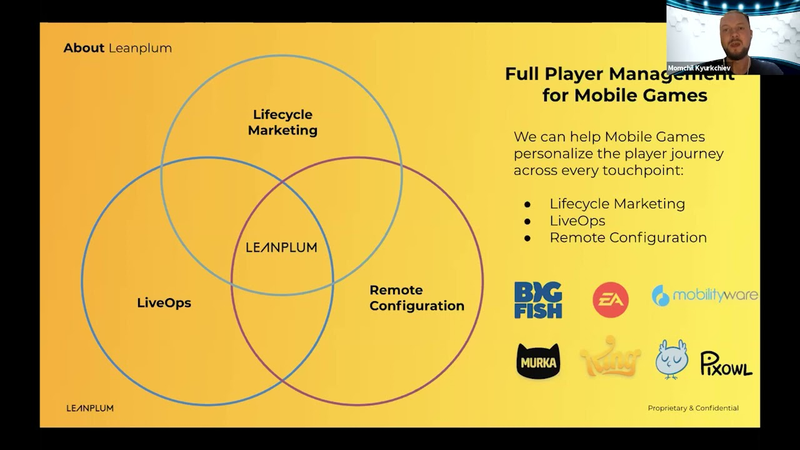
Maximizing player engagement and long-term retention in the modern gaming landscape requires a shift toward unified, personalized player journeys that integrate lifecycle marketing, live operations, and remote configuration.
- Transitioning from scheduled communications to real-time, behavior-triggered messaging can increase revenue by up to five times.
- Behavioral segmentation based on the recency and frequency of player activity consistently outperforms traditional demographic targeting and can double revenue per message.
- Studios should utilize remote configuration tools to test new events and game experiences rapidly, bypassing the need for full-scale development cycles or app store submission delays.

Tackling Audience Experiences in Games
Modern game development increasingly prioritizes the creation of watchable experiences, recognizing that the spectator’s role is as vital to a title's success as that of the active player.
- Game development must treat spectators as a primary audience, utilizing a three-phase engagement strategy focused on attracting viewers, educating them on mechanics, and fostering long-term community retention.
- Developers should implement spectator-specific user interfaces and integrate tools that allow audiences to directly influence gameplay to transform passive viewing into a participatory experience.
- Designers can heighten narrative tension and visual clarity by leveraging information asymmetry and rebalancing mechanics to sustain competitive intensity.

Defying Expectations: 7 Lessons from The Sims FreePlay
The Sims FreePlay demonstrates that long-term viability in the mobile gaming market relies on transitioning from static, premium development models to iterative, live-service frameworks.
- Long-term mobile game viability requires a transition from static, premium models to iterative, live-service frameworks centered on time-limited, quest-based engagement.
- Operational efficiency is achieved by providing designers with internal tools that enable content creation without constant engineering intervention, ensuring a consistent update cadence.
- Integrating user-generated content, such as player-designed housing, effectively removes development bottlenecks while simultaneously deepening community investment.
Match3 Genre Snapshot: US iOS (May 2021)
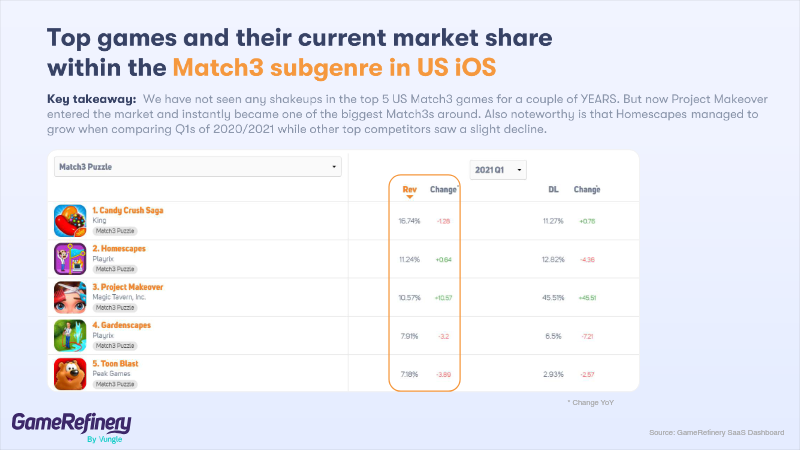
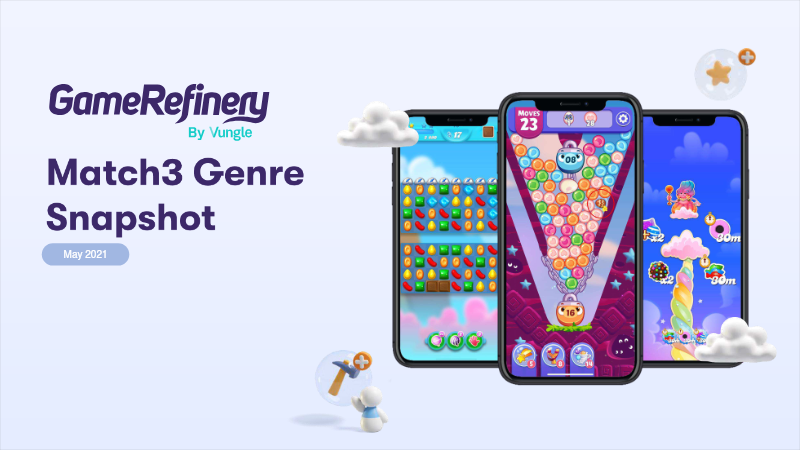
The Match3 subgenre remains the most lucrative segment within the US iOS mobile gaming market, accounting for approximately 16% of total regional revenue.
- As of May 2021, the Match3 subgenre accounts for approximately 16% of total US iOS mobile gaming revenue.
- No new Match3 titles entering the top 500 grossing rankings over the last 18 months utilize standard swapping mechanics, indicating a shift toward gameplay diversification.
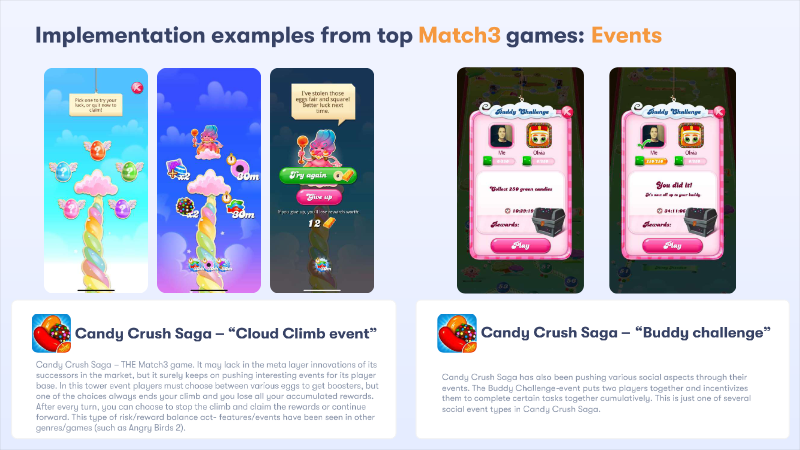
- Modern Match3 success is increasingly driven by meta-layers, specifically decoration and customization features seen in titles like Royal Match and Project Makeover.
Panel: Live Ops Strategies That are a Must for Every Game Developer
Live Ops functions as a foundational pillar of modern game development, serving as a critical mechanism for driving long-term player engagement and recurring revenue.
- Live Ops should be integrated into the development process as early as possible, rather than treated as an afterthought, to allow for iterative testing and audience discovery.
- Developers should externalize game configurations from the client code, allowing for real-time adjustments to events and tuning without requiring new client-side builds.
- One-size-fits-all strategies are ineffective; developers must tailor Live Ops to specific regional markets and player segments, as performance often varies significantly between regions like APAC and Western Europe.
Superstar Session: Know Your Players, Grow Your Game: A Guide to Live Ops in the Cloud
Live Operations (LiveOps) has emerged as a fundamental philosophy in the modern gaming industry, marking a transition from games as static products to games as evolving services.
- LiveOps transforms games from static products into evolving services, utilizing continuous updates and events to maintain long-term player engagement without requiring client downloads.
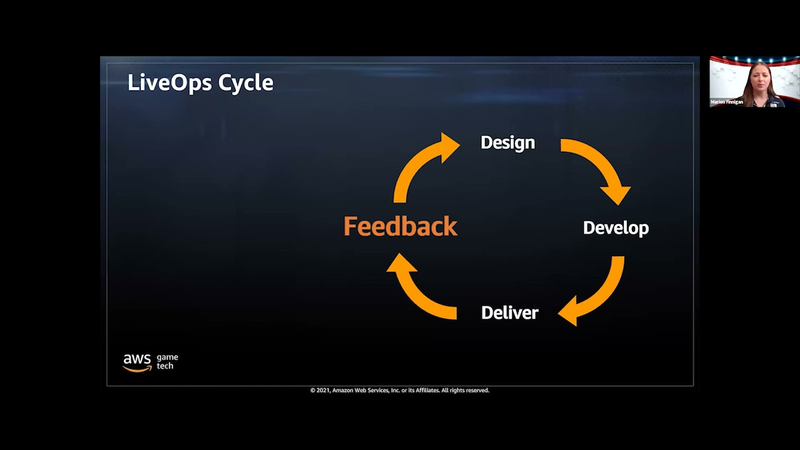
- Successful LiveOps relies on a cyclical process of design, development, delivery, and feedback, underpinned by analytics that capture telemetry to optimize gameplay, monetization, and server health.
- Cloud-based data lakes and machine learning enable developers to derive actionable insights regarding player cohorts, sentiment, and economic balance.

Panel: Hybrid Monetisation, Subscriptions, Battle-pass - What is Best for You?
Modern game monetization relies on a nuanced balance between aggressive revenue generation and the preservation of long-term player engagement.
- Monetization strategies must be tailored to specific genres and audience expectations rather than relying on a universal model, ensuring paid content enhances the core gameplay loop.
- To mitigate negative perceptions of pay-to-win mechanics, studios should prioritize time-based progression and accessible rewards to foster sustainable community growth.
- Developers are shifting away from permanent A/B testing in favor of self-contained, limited-time live events to gather actionable data while minimizing the risk of public backlash.
TWIG 130 | EA Battlefield Game, Epic vs. Apple by WSJ, Blizzard Overwatch Leadership
The gaming industry is currently undergoing a structural shift as traditional developers struggle to reconcile legacy quality-focused cultures with the relentless demands of live-service and mobile-first business models.
- The gaming industry is undergoing a structural shift as traditional developers struggle to reconcile legacy quality-focused cultures with the operational demands of live-service and mobile-first business models.
- Epic Games is pursuing a long-term legal strategy against Apple aimed at dismantling platform gatekeeping, signaling a broader industry trend where major players prioritize store ownership and platform control over individual software development.
- Blizzard is experiencing internal instability and operational friction as it attempts to transition premium intellectual properties into free-to-play formats, highlighting the difficulty of adapting traditional development workflows to iterative live operations.