1 free read left. Create a free account for unlimited reading + AI research.
Create free account
Theming for Live Ops Events: The Power of Modularity & Storytelling
Key insights
6 takeaways- 01Implementing modular Live Ops frameworks can drive a 16–20% lift in ad ARPDAU and a 21–25% increase in daily minutes played.
- 02Operational efficiency is achieved by utilizing consistent, re-skinable components that can be adapted to any game genre.
- 03Modular systems allow small teams to launch new events within a three-to-four-week production cycle while simultaneously developing core game features.
- 04Immersive storytelling should be non-intrusive, using background animations, particle effects, and optional dialogue to enhance the experience without disrupting core gameplay.
- 05Thematic goals can be reinforced by aligning specific game mechanics, such as using timers to simulate competitive races, to elicit stronger emotional responses from players.
- 06Minimal thematic interventions are sufficient to sustain long-term player interest and community engagement without requiring excessive development resources.
Ask AI about this video
Transcript
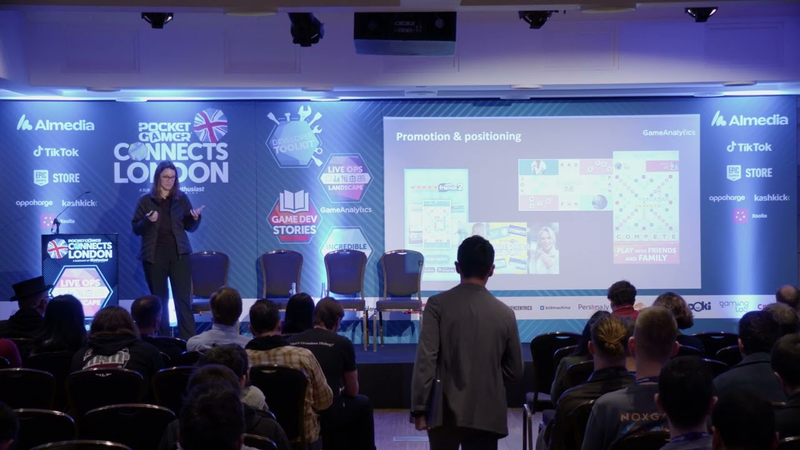
we're going to move on to our our next talk uh our next talk is um jason leary from people fun jason is going to talk to us about theming for live ops events so the power of modularity and storytelling something that's very close to my heart all of this is close to my heart i love talking about how live ops can be intuitive and exciting and tell a story and how we can put this the player's own story into the experience that you know that make the players feel like ownership of that experience and jason how you doing i'm doing good sir how are you doing not too bad at all great to see you so i'm gonna basically uh hand over to you and let you and you kick off but like i say i'm very keen on hearing what you've got to say about modularity i think it's massively important i think really feeds off what chris was just talking about as well if you think about it so yeah let us know what you think fantastic um yes
uh thank you so much for an introduction um i am jason leary i am the lead game designer and product owner for wordscape search up people and today i'm going to be talking to you about theming for live ops events and the power of modularity and storytelling so what are liveops events well there's special limited time events in which players earn vanity collectibles through a very light narrative um some past and current events that we use that we are currently running are initially we launched with mystic adventure wildlife snap world tour and king of the jungle and i'll go into a little bit more detail about these vents a little bit later but after that initial launch we then did 1776 which was a independence day an american independence day event that we did and then summer games which
was kind of themed after the greek gods of mount olympus so some of the results that we saw from this initial launch um was that we saw a 16 to 20 percent lift and add arp down um a 20 a 21 to 25 lift in minutes played per daily active user and we saw a nineteen point seven percent lift in the second week of at arp now this was the top variant of all the variants we tested um and then in that second week we also saw 20 to 60.9 lift and mission started depending upon the variant that we're looking at so what are some of the benefits and risks of liveops events well they're a great way to lift engagement and retention you can do this through collectibles which of course motivates your completionists it offers visual variety to all of your game players it introduces fun and interesting gameplay now traditionally it's been viewed as a large investment and this comes mainly
down to making multiple new events to support the collectibles but um if you do some proper planning and architecting you can actually minimize a lot of these costs through technical modularity so um when i first came on to workscape search i actually did an examination of what some of the challenges um for the game were um one was that we had just introduced tournaments which we were seeing a huge engagement on the weekends as our players really get into and enjoy the tournaments but we were seeing a bit of a lull on weekdays so what i wanted to do was boost engagement on those non-tournament days and sort of bridge the gap i also want to develop a system that would allow for parallel development of other features um this way one team could be working on um the events and then another team could actually be working on additional features to get into the game
this would help to reduce development time between releases that way we could churn through content a lot faster and get it out to the public so the solution i came up for this was to actually design a modularity system for supporting these themed live ops events um so after that i decided to lay down the goals what exactly is it that i want to accomplish from these events so i decided that our themed events should bridge player engagement between weekend tournaments it should bring purpose and fun to game mode gameplay we had recently introduced um game modes into our game but they haven't performed quite as well as what we would have liked but they did offer some variety and gameplay so i saw this as an opportunity to revisit game modes integrate it into events and then see if we could then utilize that work in the new event structure so i wanted to create a framework that could be used for easy development of
future events that way we could turn them around very quickly and i wanted to provide themed meta through background clues and environmental storytelling and last i was i wanted to aspire to tie theme into gameplay whenever possible so i started by actually doing research starting to look at some of the other games in the casual space and to see what they were doing for um liveops events and i noticed that successful as successful events typically include consistency players actually know what to expect from these events for that particular game they also organically weaved it into the core gameplay they always offered exclusive event specific rewards and content which was very very important the content changed from game to game but many games offered profile images some offered decoration spaces um but the important thing is that all
of these had special theming that was actually tied to that event so um after the research i decided that we could do two event types um i wanted to focus on rotational events which would actually bridge um the time between the holiday and seasonal events these events were designed to last about one week and then switch between them to other rotationals they're designed to run indefinitely um which means they'll keep they'll continue to run until the next seasonal event and which case will then run that seasonal event then they'll rotate back in or we start seeing an engagement dip on those events at which point we'll take out one of the rotational events and put in a new rotational event but all the rotational events um centered around collecting tokens to open reward chests now the holiday seasonal events um these events run for approximately one month a piece um these are designed to feel a lot more celebratory there's more rewards in
these events um in these events instead of collecting tokens players are earning brilliance as they do in our regular game this is our xp system um and then the brilliance actually moves them along the path and at each tier they collect rewards um because of this there's actually more generous drop rates and collectible sharding on these events because they only need to run four weeks as opposed to the rotational events which are designed to run over the series of many many many weeks so um going back to our goals for themed events again like i said we were bridging player engagement between weekend tournaments that's what we wanted to accomplish now we wanted to bring purpose and fun to game modes gameplay that's how i was going to accomplish it so let's talk a little bit about that the thing game modes does is it provides player variety to gameplay as i mentioned we actually launched with four different game modes
word hunt timed one letter and clue word hunt is where the word bank is blank um essentially players only have the number of letters in each word as a clue for them to find the other words in the puzzle the timed game mode players have between two minutes and three minutes to complete a puzzle in one letter um the word bank actually has the first letter of each word and then players are trying to solve for that word and then in clue we give them two complete words in the word bank the rest of them are just blanks but then as they find words in the puzzle that actually begins to fill in letters in the blank um so they're actually unraveling the clues and they're solving the words in the word bank as they go so um we offered collectible collectible vanities in these first events uh mostly we focused on two different types of vanities the first was a profile image
and the second was frames but everything was centered around very heavy theming for these events i wanted to make sure that they felt special and they felt fiend so going back to our goals the next one was to create a framework that could be used for easy development of future events in other words this is where technical modularity comes in now what are the benefits of modularity well for one you get consistency the audience knows what to expect all the events look very very similar with this modularity but there is also another benefit that i think was actually more beneficial is the team has a better idea and a clearer vision for what they're making because these are largely re-skins the team actually has a very clear vision of what it's going to look like this allows development to move very quickly and with just a three-person team we had one designer myself um
one engineer brandon and then one artist lou and on this team we were able to build our independence day our american independence day event in just three weeks this was 1776 and we built summer games which introduced the battle path in just four weeks so this was very very quick turnaround and very very fast development on these events but it also allowed us to do parallel development with other roadmap features because while our event strike team was working on the events the rest of the search team was able to then focus on other roadmap feature features this way we weren't putting all of our eggs into the events basket and we were able to release release much more quickly and get other features out there so for each release i build upon what came before and i generally like to allow myself one new feature to help the events stand out and feel special from everything that came before so how do we do modularity well the
first thing you want to do is outline the key components of your event in our case our key components are the event button the announcements the upsell the lobby the background the gameplay itself and audio uh never forget audio audio can actually do a whole lot for theming your events and that is a big one that a lot of people overlook but after that what you want to do is break down each components into its customizable pieces this way you identify exactly what it is about each component that you're going to be re-skinning for the event so let's take a look at our event buttons across all of our events um the first two over here are the two events that we started with um this one's mystic avenger this is king of the jungle this is 1776 and this one's summer games as you can see they all have the same components um the first the first three events all use the
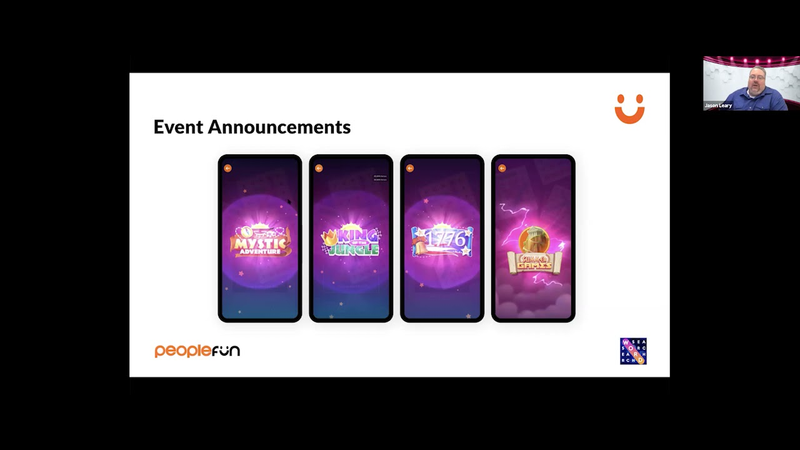
treasure chest as the event icon um and then summer game still has an event icon but it's using mount olympus as i started to lean a little more heavy into theming um all of these also have um a timer an event timer which is counting down to the end of the of the event and then each has a new stamp on here just to indicate that it's a new event that's just started um something else that's unique to this is we added an animation to all of these buttons um to grab the player's attention and tempt them to actually click on these events so the treasure chest would actually shake from time to time um with an audio cl with an audio cue and mount olympus would actually get struck by zeus's lightning just to draw the player's attention to it um this is an example of our event announcements once again as you can see they're all extremely similar the event announcement is a short little animation that plays to announce the arrival of the event they all incorporate the banner for the event and as we started going more into
theming with summer games we introduced clouds and lightning strikes um to make it just a little more in theme with the event once again the event upsells um this is the opportunity to tip the player to click into the game itself each of them has the let's go button they all have the event timer showing how much time is left and they all have the event icon um in this case mount olympus and the four gods for summer games and then the event chests for the three events that came before and then you have the banners for each of the four events so while they look different they all are made up of the exact same components um these are the event lobbies where the most of the gameplay actually happens for the actual events um this is where we tally up the tokens um to open up the event chests for the first three events and then summer games this is example of the battle path where as you earn brilliance it pushes you along the path
up to each tier where you earn your rewards but again even though they look visually different they all consist of the exact same components and the same for the event backgrounds these are the backgrounds that actually play behind the board um and each of the event backgrounds have some animations associated with it once again to go into the theming and to make it feel special um for our first two events here they actually had leaves that were falling from the top mystic adventure actually had these beautiful falling green leaves and our safari events actually had um kind of autumn orange and brown leaves that would fall from the top the 1776 event actually had the revolutionary flag that was waving in the background of the event to make it feel alive and on our summer games event um the flames that you see here are actually particle effects
so going back to our goals for these events i want to provide a themed meta through background clues and environmental storytelling so let's talk a little bit about that i laid down some tenants for storytelling in our casual game i wanted to make sure that we didn't get in the way of the current gameplay experience i want to make sure that players who already enjoy the game as it is are able to interact with the event without getting bogged down with stuff that they really didn't want um so i did not want to slow down game play at all um i wanted to ensure that it was easily ignored by players who were not interested um this this actually went into them opting into story um which the players could actually tap on each of the gods and goddesses and bring up some in-character dialogue that was often funny um but players would opt into that by tapping on the gods to actually see them speak and all of this was about bringing fun and interesting depth to players who are interested in it
so i looked at disney theme parks i consider them the gold standard for non-intrusive themed storytelling a lot of people don't know this but disney actually tells stories in their theme parks not just the rides um it's very non-intrusive it can be easily missed by guests who pay attention who don't it can be easily missed by guests who don't pay attention to it it can also make guests feel like they're in on a secret all of this revolves around environmental storytelling it's extreme attention to detail so let me give you an example of this um they disney has something called the society of explorers and adventurers and what this is is it's a fictional society of inventors grave robbers and adventurers that disney uses to tie together various stories throughout the parks some of the attractions that they tie into are mystic manor um in hong kong disneyland um the manor is actually owned by a sea org member and he brings back the treasures he finds on his adventures and
actually stores them in the manor big thunder mountain is actually owned by a seat member uh the tower terror this is the one at tokyo disney sea um not the ones um stateside that are themed with twilight zone um but the tower itself actually has a connection to sea uh the jungle cruise rides um in various parks um actually tie in to see pretty heavily um and the new jungle cruise movie interesting enough actually has a lot of really cute references to see which i found um very funny um and then jacques lindsay's hanger bar which they introduced when disney got the rights to indiana jones um this members of the sea actually put up the money for the hanger bar and so there's various images of them with jock hanging up in the bar which is cool and kind of adds to the story and the depth but that's sort of what i'm talking about when i say environmental storytelling so um i've included a link here um where
you can actually visit that actually has a really cool write-up on the society of explorers and venture adventures or so what have we learned from the masters at disney imagineering well we want them we want to ease them into it and you want to do do this by using the tools that are available to you um for example for a mystic adventure we have the adventure sticker set so players collect tokens and follow clues at each location they find enough clues at a location that they earn the sticker for that location finding all the stickers then unlocks the mysterious secrets of easter island so take advantage of the little details in your game tell stories with your backgrounds and lobby images the opportunities are there you just need to take advantage of them this is an example of some of the theming work in progress that we did this one is the safari background you can see the initial sketch that we have over here on the left then we have the more complete sketch in
the middle and then what it looks like in gang this is the theming work that we did for 1776. on the left as you can see we were heavily influenced especially at first with bioshock infinite um so our chest took a heavy influence from that the initial banner did um and then this is what it actually looks like in game then on the right you see the initial sketch we did for the gameplay background and then all the way on the right you see that we actually have the waving flag in the background to give it a little more life and pizzazz in game and um this is for summer games this is the very first image i ever saw of aphrodite over here on the left um which i think was a very beautiful rough sketch artist did and it looks almost identical to what we wound up going with once we got it in game and then we have the background for summer games sorry and um as you can see we replaced the
painted flames with particle effects just to give it a little more life and motion as the flames burn so going back to our goals the last the last goal i had was to aspire to tie theme into gameplay whenever possible so this is all about using gameplay to elicit an emotional response that ties into the theme um for example the king of the jungle event uh the story is that it's a race against time to determine the king of the jungle so what i did was i made this a timed event that way players were actually racing against a timer to get that emotional response as they were playing the event for mystic adventure it's all about unraveling the mystery visiting locations collecting artifacts uncovering the ancient treasures so for this i used our clue game mode so as players are working to solve the mystery they're actually unraveling the clues of the um of the word bank and finding more and more of the words
summer games was all about overcoming the challenges and receiving the blessing of the gods so for this one i actually used one letter and clue game modes to make it a little bit more challenging and our halloween event is our next important step along this path um i don't have anything to share with you about that today but i really hope everyone starts playing this event next month and can see what we have up our sleep it's really exciting i think it'll be a lot of fun so how do you apply these ideas to your games well first you want to identify your challenges you want to establish your goals now both of these the challenges and goals are going to be unique to each individual player in each individual game so you really want to look at your game and say what are your challenges and what are your goals for your game you want to research to what other games in your space are doing make sure that you build for technical modularity
this is to keep things moving very quickly and take advantage of the details for your storytelling and last but not least tie theme into gameplay whenever possible and that is it um i believe we have a little bit of time for some q a we certainly do thank you very much that was great i know i i having a game in the background that is kind of word search related that was particularly interesting to me um but uh we'll see what happens to that game it's an interesting problem we have with that one because it's it is a narrative that then leads to word finding so it's fantastic it's a yeah we'll see if it works out it's it's um it's coming some tv problems at the moment but it's always always good to work on these things anyway some questions that come up so um obviously when you're dealing with word-based games um what happens with all the languages and the geos how do you deal with that do
you do is it english only or are you dealing with other languages our game is actually english only right now we do not localize for other for other languages we are having um we are having potential discussions about that but right now we do not have any localization no that's awesome and i'm just interested because i think the interesting consequences about other games where you've got to think about localization and other other consequences around that but i think i really like the model that you had of thinking a bit like the way disney um embeds story to be discovered or where the events tell a story by the consequences if that makes sense absolutely and i love that because once again it doesn't get in the way of the actual gameplay experience for players who are not interested in that they're able to ignore it but for the players who do really enjoy that they can actually dig into it as deep as they would like um which i think that's incredibly beneficial and i just i love that kind of storytelling i think it's incredibly
clever and charming and it's all about world building right and building an experience for the player and it's it's context kind of uh maintaining as well i mean i i shouldn't work so i try to break games down into the kind of mechanic their context with a sense of purpose the progression and the economy and all that kind of stuff but then the method again being the stuff that's not the game and to me this fits into that sort of meta game element which is you know the it's the kind of the cultural zeitgeist moment bit the the bit that we're talking to each other about but even when we're not playing the game or did you see that thing happen or did you notice that that's this kind of cultural zeitgeist i think it's really core about making really beautiful meta game elements absolutely yeah and when it's humming when it's really really working then it all just gels together and it's like actually lightning in a bottle it's okay yeah exactly and it's really good to get right but when you do and it's that sadly it's like when you watch a tv show that's got a joke that you only get because you're paying
attention yeah it becomes funnier for you than it would be for other people sitting in the room um it's that callback kind of mindset i think it's really interesting um another sort of thought that came up here is um um do you think that it's a good idea to combine multiple game mechanics in a single app so you've got different modes of play but i think i'm right saying it's mostly the word search grid it doesn't fundamentally change the way the gameplay is presented it's more about how you do objectives the challenge that you're facing is that fair that's absolutely correct yeah yeah the the mechanics of the gameplay itself stay the exact same you have the um you have the game board itself and you're actually finding the words on the game board itself so the mechanics of the game itself they do not change but what we do is we provide some flavor to it and just a little twist of the gameplay um a large part of that is playing with um how much information we give the player through the word bank
um that's where that's where a lot of that variety comes from and that's just to mix it up a little bit and one thing that i didn't mention in this presentation but i should probably mention now is that these events are also on the sideline of our game so we still have the main line where players can play vanilla wordscape search um and then it's optional to actually dip into the events and then play these themed game modes and i did that very intentionally because i didn't want to ostracize our player base that did not enjoy these game modes it's interesting i mean the question as you said that came up popped up immediately which is why do you limit the metagame only to events and why not add it into the core game uh do you have any kind of i mean you kind of started to answer it but it'd be interesting a little bit more detail on it yeah yeah the major the major reason for that right now is not wanting to um we're not wanting to mess with the game it comes from that that core tenant of first do no harm right first maintain the game that people love
um because timed game modes we actually found when we started a b testing the different game modes is they actually tested differently which indicates the game modes are actually are actually having an impact on the performance of the game itself so because of this we had to be very careful about which ones we were using and we had two game game modes that actually performed beneath vanilla and we had two game modes that performed better than vanilla and so a large part of that is mitigating that risk where i don't want to alienate and ostracize the players that come for word search and that's what they want to do but we have a large a large amount of people who actually comment a lot about wanting variety in their games and that's really what i see the events being able to do is offer that variety to the players through these other game modes um but i didn't want to take away what was already working for the players that love that
love vanilla wordscape search in it and i think the bottom line for me and all that kind of stuff is um you've got to find the right balance for the game and word search is a very particular audience right it's not the easiest audience to monetize i would argue but it's quite an easier slightly easier it's a target potentially so i imagine you've got an interesting challenge to try and offset like kind of monetization versus cost of install but it's a little way off from being right just yet absolutely that that is definitely a challenge for us but yeah um but i think we've i think we've got it in a really really great place right now um we are mostly ad monetized um but we are actually i one of my goals is to actually focus a little bit more and bringing some more variety into it as well yeah yeah i mean i think that hybrid monetization is always a very difficult challenge and i i'm a big fan of finding
that that mechanism and what's interesting with building a story based game is looking for models where you can you can create stories that are interesting enough because the very challenge of that kind of approach and i think your your your breakthrough is really good which is make them small make them in you know unobtrusive and that can be applied to any number of liveops experiences absolutely i think that's what's really powerful about what you've been talking about it doesn't matter if it's a word search game actually what matters is keep it simple keep it subtle make it entertaining right and if you do get that kind of um subtle and intriguing hook um it really kind of you know creates a a deeply engaged community absolutely that's perfect brilliant stuff fantastic talking to you and thank you very much for sharing your insights thank you i really appreciate it you have a great day
Summary
Modular Live Ops frameworks serve as a critical strategy for boosting weekday engagement and long-term retention in mobile gaming. By implementing a system of consistent, re-skinable components, developers can streamline production cycles, allowing small teams to launch new events within three to four weeks. This operational efficiency enables the simultaneous development of core game features while driving measurable performance gains, such as a 16–20% lift in ad ARPDAU and a 21–25% increase in daily minutes played.
The core of this approach lies in the integration of immersive, non-intrusive environmental storytelling that respects the integrity of the original gameplay. Drawing inspiration from subtle narrative techniques, developers can enhance player experience through background animations, particle effects, and optional character dialogue. These elements provide depth for engaged users without alienating those who prefer a standard experience. By aligning specific game modes with thematic goals—such as utilizing timers to simulate competitive races—developers can elicit emotional responses that deepen the connection between the player and the game world.
Ultimately, successful live operations depend on the ability to adapt simple, intriguing narrative hooks to any genre. This modular methodology proves that even minimal thematic interventions are sufficient to foster community engagement and create a compelling, entertaining environment. By prioritizing scalability and subtle narrative integration, studios can maintain a consistent cadence of fresh content that sustains player interest over the long term without requiring excessive development resources.