Live Ops reports and market data
Documents

Take-Two’s Financials Are In — Is the House of Grand Theft Auto Wobbling?
Take-Two Interactive’s recent financial performance reveals a company in transition, balancing a massive legacy console business with a struggling mobile strategy.
- Take-Two Interactive has recorded a cumulative $6.21 billion impairment charge against its Zynga acquisition, consisting of a $3.7 billion write-down this year following a $2.5 billion charge last year.
- While mobile games now account for 52% of Take-Two’s $5.6 billion total net revenue, the company projects flat growth for the mobile segment in the upcoming fiscal year.
- Take-Two’s 33% increase in market capitalization since the Zynga acquisition is driven primarily by investor anticipation for Grand Theft Auto VI rather than operational success from the Zynga integration.

How I Went From a 3D Artist to GM of a Billion-Dollar Game - Justin MacFarlane
Professional advancement in the gaming industry is best achieved by prioritizing cross-functional mastery and the proactive identification of organizational needs over rigid adherence to specific job titles.
- Operational excellence in live service games requires integrating data-informed decision-making with rapid, iterative development cycles to respond to real-time player engagement metrics.
- Physical proximity of product, analytics, and development teams is a critical strategy for maintaining the high-speed collaboration necessary to manage complex, billion-dollar live service ecosystems.
- Career advancement in the gaming industry is best achieved by prioritizing cross-functional mastery and internal mobility over rigid adherence to specific job titles.

The Hard Conversation The Games Industry Keeps Avoiding—And Why People Are Talking Now
The gaming industry faces an urgent imperative to address systemic issues regarding toxic advertising, player safety, and ethical monetization.
- The gaming industry faces significant reputational and regulatory risk due to the proliferation of misogynistic and domestic abuse imagery in mobile game advertisements, often propagated by automated AI-driven networks.
- A fragmented ecosystem involving developers, publishers, and third-party ad networks currently lacks the unified oversight necessary to prevent the dissemination of harmful advertising content.
- Current regulatory frameworks, such as age-appropriate design codes, are criticized for placing disproportionate compliance burdens on small developers while failing to mitigate risks from user-generated content and external platforms.

Cross-Border Publishing: Lessons From Netease’s Once Human
The global expansion of Chinese game development is exemplified by the strategic launch of the survival title Once Human.
- NetEase achieved a peak of over 200,000 concurrent users for 'Once Human' by prioritizing a PC-first launch before expanding into a cross-platform mobile version.
- The studio opted for global self-publishing to maintain direct control over player relationships, brand messaging, and the ability to iterate rapidly based on community feedback.
- Monetization for the Western market was intentionally restrained, focusing on cosmetic items and engagement-driven systems rather than the more aggressive models often seen in mobile-first markets.
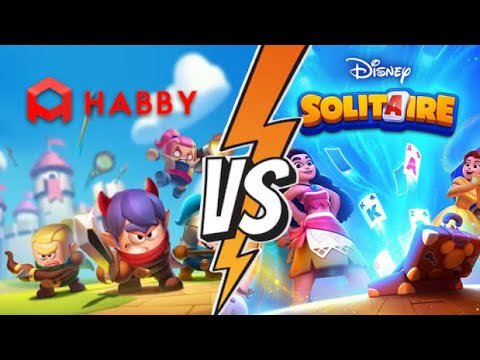
Habby's Wittle Defender vs Disney Solitaire: One of them is a Future Hit!
The mobile gaming landscape is currently defined by two distinct strategies: the aggressive application of legacy intellectual property (IP) to saturated genres and the iterative refinement of hybrid-casual mechanics.
- Habby is scaling revenue by applying a standardized meta-layer—featuring roguelike abilities, stat-based power scores, and squad RPG elements—across diverse core gameplay loops.
- The soft-launch title 'Wittle Defender' utilizes idle tower defense mechanics to target 'dead time' consumption, intentionally reducing the high-cognitive-load requirements of active-input mobile games.
- Major publishers are leveraging legacy IP like Disney and Candy Crush to secure a cost-per-install (CPI) advantage in the saturated solitaire market, currently dominated by titles like Grand Harvest.
The State of Publishing and Live Ops
The video game industry has undergone a fundamental transformation over the past two decades, shifting from the production of static, boxed products to the maintenance of persistent, social virtual worlds.
- Effective live operations require high-level flexibility, such as the ability to deploy events via web-based tools rather than relying on pre-baked code updates that require months of lead time.
- The industry has shifted from the short-term mobile strategy of aggressively monetizing high-spenders and churning the rest, toward a model focused on long-term player retention and sustainable community relationships.
- Publishing is primarily a function of capital allocation, where publishers act as financiers for developers who cannot self-fund, necessitating a strategic alignment between the developer's growth goals and the publisher's investment thesis.
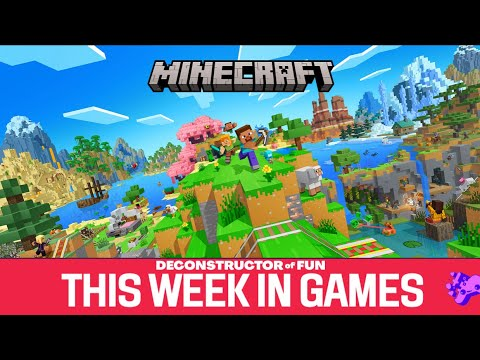
Still Crushing It: Why Minecraft Refuses to Die
Minecraft remains a dominant global force in the gaming industry, having surpassed 550 million users.
- Minecraft has reached a global user base of over 550 million, maintaining long-term relevance by functioning as a cross-generational cultural phenomenon rather than a traditional gaming product.
- The franchise prioritizes long-term brand equity over aggressive in-game monetization, relying instead on a robust physical retail ecosystem including toys and apparel to capture market value.
- Analysts are divided on whether the brand should synchronize in-game content launches with major media events like film releases to drive immediate digital revenue.

TWIG #327 The East-West LiveOps Clash and the New Era of Extraction Shooters
The global gaming industry currently navigates a complex landscape defined by shifting monetization strategies, evolving platform dynamics, and a challenging mergers and acquisitions environment.
- Western developers are increasingly abandoning pure cosmetic-based monetization models because they fail to generate sufficient revenue per daily active user without massive player bases.
- To ensure long-term sustainability, studios are under pressure to shift toward more aggressive monetization strategies, including pay-to-progress systems, or significantly improve production efficiency.
- The extraction shooter genre is approaching an 'extraction ceiling,' necessitating a shift in focus from high-stakes gameplay mechanics to more robust meta-progression systems to maintain player engagement.
What If Game Production Looked More Like A Film Set?
The gaming industry is undergoing a fundamental structural transformation, moving away from monolithic, overfunded studio models toward a flexible, just-in-time production framework inspired by Hollywood film sets.
- Game studios should transition to a 'creative as a service' model, utilizing external talent for specific project phases to reduce idle time and overhead costs, similar to the flexible staffing structure of film sets.
- The industry is shifting away from high-volume, low-quality asset production toward a 'less is better' approach, prioritizing high-quality CGI and playable content to maintain engagement in a post-IDFA market.
- Indie studios can improve discoverability and monetization by leveraging niche, non-traditional IP rather than competing for the same handful of mainstream licenses used by large free-to-play titles.
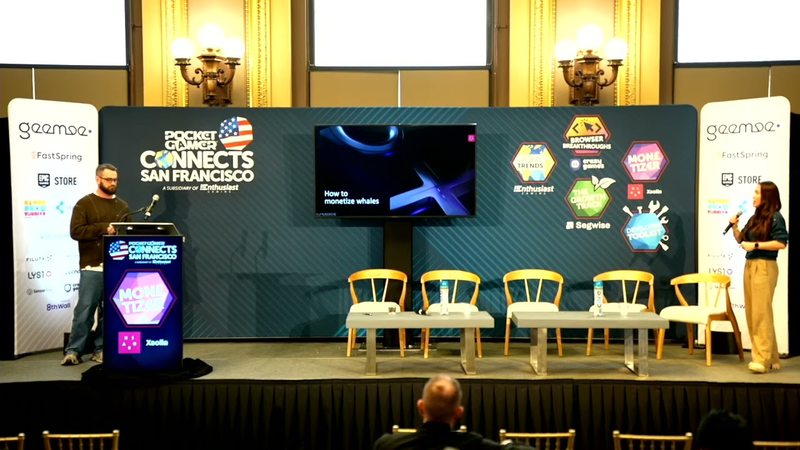
Session: Winning With Whales: How To Get, Retain & Monetize Them.
The primary objective of this analysis is to outline effective strategies for attracting, retaining, and monetizing high-value players, commonly referred to as whales, within the mobile gaming industry through the use of dedicated web shops.
- Whales represent a significant revenue driver for web shops, with an average spend of $847 per user and an average of 17 repeat purchases per month.
- Web shops should prioritize high-value, exclusive content that is difficult to obtain in-game, as whales consistently prefer added value over simple discounts.
- Direct communication channels—such as dedicated community managers and closed Discord channels—are essential for fostering the exclusivity and premium treatment that whales expect.

How six million Call of Duty players sent Helldivers 2 into a tailspin
The rapid trajectory of Helldivers 2 serves as a case study in the volatility of modern live-service gaming, illustrating the challenges of scaling a surprise hit while maintaining creative integrity.
- Helldivers 2 successfully recovered from a 19 percent user sentiment rating at launch to a 94 percent positive rating by addressing technical instability and management friction.
- The studio avoided aggressive internal hiring in favor of strategic co-development partnerships to maintain core company culture and ensure sustainable growth.
- Long-term player engagement is driven by the integration of dynamic Game Master features and community-driven role-playing elements.
The Renaissance Is Back — Here's What Game Devs Have to Say About It
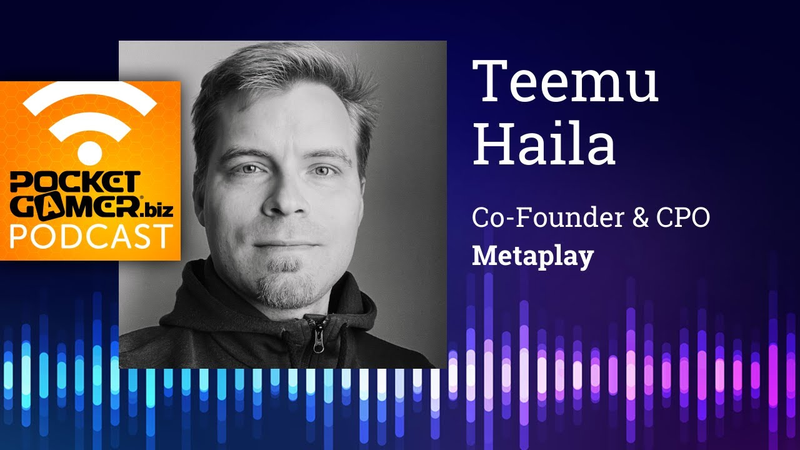
The mobile gaming industry is transitioning from a period of stagnation into a creative renaissance characterized by a shift toward experimentation, niche audience targeting, and technological innovation.
- The mobile games industry is shifting from a period of 'doom and gloom' toward a creative renaissance characterized by increased experimentation and innovation among developers.
- Metaplay surveyed 150 Unity developers and C-level executives, finding that new technologies and tools are enabling game concepts that were previously unfeasible or lacked an accessible audience.
- Developers are increasingly prioritizing niche audiences over mainstream popularity, utilizing cross-platform gameplay to aggregate smaller, dedicated player bases into viable, large-scale communities.