VideoPocketGamer.biz
The Hard Conversation The Games Industry Keeps Avoiding—And Why People Are Talking Now
7 May 202548 min video
Transcript
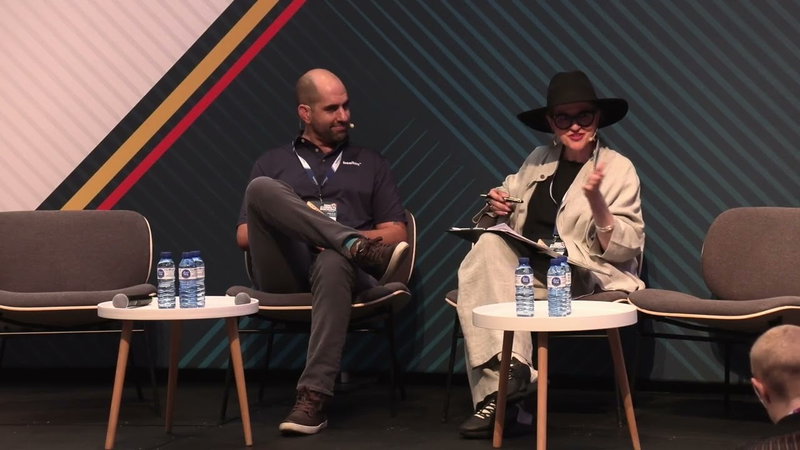
[Music] Hello world. Welcome back to the PG podcast, the Pocket Gamer Podcast, with your hosts, me, Brian Baglo, and our ever so jet-lagged, fabulous co-host, Miss Peggy Ansalts. Hello, Peggy. I said, "Hello, Peggy. It's lovely to see." I I hear you. Yeah. No, I am jet-lagged. This is true. I literally literally just got back from at Promotion Summit London. I was in your backyard in the way, but I couldn't stop. I had to go in and rush back. But I am set and and and going to sit through this podcast. I'm going to make it. There's no problems there. We finally did it, Brian, because I was thinking the whole time since Pocket Gamer Connect London, when I ran into Oscar again, I said, Oscar, you know, I see you everywhere. I know you, but I don't know you. I don't know your backstory. Know you wear an amazing hat
and you're known for it and that you've been doing master classes and that you're like a Jedi in your own right, but uh couldn't get you together. And I thought, let's do it. Let's have Mr. Brian Baglo, Mr. Oscar Clark, and we will have a PG pocket gamer OG episode. You know, original gangsters. You guys have been around the block and back and it's great to have you. Go by the gray and Oh, yes. And a bit Not Santa cosplay, my friend. Indeed. So, we have you, Oscar. We have you finally. So, um I mean, obviously, I should uh probably highlight that Brian and I have known each other probably for 22 or 3 years or something ridiculous. Wow. So, it's actually longer. It's 25 this year. Is it seriously 25? Oh my god. Seriously, because I I joined Digital Bridges in 1999 and it was 2000. I think it was the first time we actually ran into each other. You had not long started at three, I think.
Yeah, I think I think it was this trans. It may even cuz I was at British Telecom running I think of Wire Play back in 98. That was I think we might have met then, which might mean it's 27 well 26 years. It's a long I mean, let's face it, people would get out of um prison for for less. Um but um yeah, you know, sorry to make you endure my company for so long, but no, jokes aside, um so my where I come from, so I've been doing online gaming forever. Uh back in 98, I was running the online gaming service Wire Play for BT that got sold off and uh was one of the biggest.com busts ever. Um, but that's another subject we won't go into. Uh, at least I get to say I wore the t-shirt saying I told you so. Um, but that's another subject. Um, I worked at Real Networks for a little while, but more importantly, I then ran the mobile games platform at three, which meant I designed, built, and operated the way
the platform uh delivered Java mobile games long before there was an iPhone. Boy, I wonder in the audience you're saying Java, Oscar? Yeah, Java. What's that? What's that old beast? I was like, wow. So, folks, if you're not if you're not aware, this was when mobile games were sold alongside ringtones through full page adverts in the national press. Oh, yeah. Correct. Tiny tiny thumbnails of games and ringtones that you could buy and I didn't do God. Yes. Yeah. It was terrible. It was really bad. That's probably where I got my hatred for sub. Well, not I don't hate subscription. I just hate badly designed customer experiences. Anyway, back to the point. So, obviously this is the sort of early years aware where Brian and I did more stuff together because I was the So, three was the most revenue per user in the world at the time for mobile Java games. I know this only because we were
actually sharing data back in the day and um someone accidentally sent me um T-Mobile's um data so I could work it out. Um but yeah, not long story short, but the point being is that we were doing some really interesting stuff learning what people would do on a mobile phone with devices that were really just not capable of doing it properly. Mhm. Along comes um well I I leave um three and I join a little company called Nvidia. Somebody may have heard of them. Um but they I was working on the mobile Tegra chip. This is the chip that basically became the foundation of the switch later. Um, I worked at PlayStation for a while, uh, on a thing called PlayStation Home, which no one cared about until Mark Zuckerberg decided he was going to make Horizon. Then everybody told me how amazing PlayStation Home was. Um, why didn't they tell me when we were making the darn thing? You can imagine the experience of like having this kind of exposure to building the first communities on online gaming, understanding the problems of managing
and dealing with toxicity and making sure that people were safe, but also creating great player experiences and then being able to be part of virtual world design uh in the space that hadn't even had anyone do it. In fact, what was interesting about PlayStation Home, it was the first ever free-to-play console, you know, serious pre freeto play console experience. Um, particularly from a platform. Uh, so I left there. I worked for a company called Amplifier who got bought by Unity. You may have heard of Unity Ads. Uh, that was Amplifier. Um, so we got bought by Unity. I was the original evangelist for that. So that's why so many people know that the hat and don't know what the heck I do because I stand on stage. I've been hosting Pocket Gamer for over 10 years. Um and uh I'm a I think technically a contributing editor or something like that. I think it g me a fancy title. Um but I also uh did a few other things like I wrote this thing. Uh
so uh games as a service uh I literally wrote the book on the subject and I'm currently writing a book on game economy design again for focal press. Oh well I think it's routidge is the uh parent company there. I probably end up going out as CRC Press. Uh and I do a bunch of things. Uh I'm a podcaster in my own right. I uh yeah there's so many so many things. And the last thing I I'll chuck in is that I'm currently working on a um live ops strategy platform to help teams basically not kill themselves making regular, repeatable, consistent, cost-effective and revenue generating updates and breathe. That's a lot. I didn't know. I knew you on stage. Yeah. Um obviously seen you in the master classes. Have seen you around Pocket Gamer obviously, but I didn't know all the other cool stuff and the books. So, uh, yes. Impressive. So, that's Well, I don't know about that, but I I I spend
too much of my time thinking about what makes games work. I should spend more time making better games. I don't know. I would if I would agree with that. Also, we we we speak to a lot of people who are like, if you just make it good enough, they will come. Um, and then they don't. So, but anyway, so if you're listening folks and you've been to Pocket Gamer, you've read Pocket Gamer, you've been anything to do with Pocket Gamer or the Wider Steel Media, Oscar is there. This is the last dark, damp corner of the empire that he's yet to infiltrate. And today is the day. So, we're delighted we have now been Oscared. Yes, we have you on. I did a gold statue for you. Yeah, you made it all around in this corner. Exactly. 100% complete, all achievements unlocked. So, um, but Oscar, it's it's fantastic to have you here and you've had such a a really long and interesting variety of roles um, in the past and it
you've really kind of reflected and been there as mobile has progressed from the very very very early days all the way through to 2025 when all of a sudden it's not just mainstream but ubiquitous, you know, in every region, every territory around the world. So I guess with that amount of experience and expertise under your belt, we should probably just ask what do you want to talk about? Well, there's so many things to talk about and as you know, there's very few topics in the in the in the area whether it's PC, mobile, console that I don't have an opinion on. Whether it's a relevant one, there's a different subject. But no, no, this is interesting. Exact. That's very kind. Um but there's a particular couple of things that I think are interesting going on right now all around the whole area of safety and particularly in the context of what's going on in you know Peggy's neck of the woods you know um there's um a change in attitudes that
are happening and I don't think necessarily good ones. Um now what was interesting to me was I think it was announced um today or yesterday about the um uh the CAP. So this is the um uh I forgot what CAP stands for but it's one of the groups that are focused on advertising standards and advertising behavior. stimulated from a an article by Sky News which the title is incre in incredibly disturbing the misogynistic tropes being used in mobile games. Now as somebody who is obviously left of the of the center there um and have very particular views about advertising for me this is like profoundly disappointing. Um and for those of you who don't know essentially there has been an increase not just uh generally but of adverts which are increasingly showing um negative stereotypes
particularly negative stereotypes of women and particularly negative stereotypes of women in particular featuring what can arguably called domestic abuse and more. I just want to say one thing right there, Oscar, because you might not have seen it, but independent of this, this is very exciting for me because I saw the same article and then wrote an article in Pocket Gamer. I've seen that go through the roof in social, by the way. Yeah. Because people are saying I was I was applauded by uh women in games and others saying, you know, this is great. Um, keep reporting on it, keep telling us about it. and uh and also we'll be working on an initiative called play safe which is not about lobbying and legislation and all of that that will that will happen. This is more about self-regulation. I think to your point that you're going to get to Oscar, you know, yeah, wouldn't it be great if we could do this through self-regulation? I think that that's something that's going to be a concern and a focus and maybe
even a mission of of app developers to do something about this in the games and in the ads. We're talking about in the ads here, not just the games, but in the ads because they're part of the gaming experience before someone else tells them to. And this has already started. That's what you're getting to. Now, interestingly, um, this ties in so neatly. This this almost sounds like it's been scripted, but I absolutely assure you listeners this is not the case. Tuesday morning I was at the Ofcom headquarters here in Edinburgh in Scotland. Um, they were pulling together a wide range of people from industry, academia, tech. I was the games guy in the room discussing all of the new guidance that they're producing around online harm. And I had some really fantastically deep conversations about games because they don't get to talk to the sector all that very often. And one of the issues was attribution of responsibility because it's not necessarily the game as in the developer
or the publisher who are the problem. When it comes to adverts, it's the third party ad provider. if it's people discussing or watching on say Twitch or Discord, you know, where does the responsibility lie? Where do we do where do we, you know, police this and who has that that role? So, it was a totally totally fascinating morning. So, I'm I'm I'm in I'm in 100% with this and um I I uh saw your piece, Peggy, and I thought it was fantastic. It's a it's a topic that I think we need to cover an awful lot more on the site, maybe even on the show. Absolutely. Absolutely. And to your point, you know, it's amazing that you think about it, Brian. You were a seat at that table. You know, games were not a seat at that table before. That tells you that, you know, games are where we are. It is our place and that place has to be a safe place. So, yes, the initiative I'll be writing and doing more in it. Play safe. Um, also encouraged and supported by App Harbor.
They've been on the show with us as well, Brian. um talking about it has to be in the control of the publisher. The publisher has a role to play but also responsibility. But the good news is that it's not out of their hands. You know, if you just give it off to a a tool or um you know, an organization and say, you know, just just just block them, you know, you can't do that. You need help to do that. Yeah. And if you fail, I think there's a platform aspect to it as well. Yes, but who is the platform? Is it the the the Apple the Android kind of stores or like you said earlier, Peggy, is it the ad providers? You know, who has responsibility uh for the consumer experience? And I think there's a lot of people washing their hands of responsibility in this and it's going to come back. It's going to come back to bite us. That's why it's good to be focused on this early. And
you were you were also um you know there's there's there's more of that coming. You can see that developers are going to have a lot more responsibility. The question is of course there's a good and bad side to that. There's definitely something here about controlling the ads that are misogynistic and really just quite disturbing. I'm sure you've seen some of them. I mean putting women on fire and and and beating pregnant women. I mean it's just it's just where does this come from? How do these ads get in our games? It must be very very disturbing. I mean, Brian, you say sometimes your seven-year-old is uh playing and you're just you're just cringing. Oh, absolutely. He's he's eight and if he listens to this and I don't correct you, I I will be in trouble. Um but yeah, you know, Jamie Jamie has an iPad. We sit I know what's on there. I you know I'm not saying I conduct audits but I make sure I know what he's downloading and he has permissions and and everything but the adverts are entirely out with the
control and and it can goes from things like a a whole IO game which features weapons you know ammunition and all grenades and the like um all the way through to the misogynistic stuff that we've been discussing you know it's even some of the bigger games and when it comes to that Peggy you and I have spoken to people on the the advertising side who are um really promoting and championing the use of AI and so it can create uh a huge range of creatives and a very broad you know spectrum of creatives and put them out and see what works. So you know maybe one of the issues here is that we're actually automating it out and nobody has that oversight. That's interesting thought. No. And and like we know with the whole algorithm thing, the the force of of profit overwhelming every other factor has had a very clear uh downward spiral cause with no one having any consequences to that. Um the thing that strikes me as
just so dumb about it though, just just dumb is when you know that the majority of revenue in mobile is coming from a female audience. Yeah. Mhm. Indeed. Why would you do this? Why? So, I just I just find that dumb. Yeah. Yeah. No, no. I I'm with you on that one. In fact, we had in the in the article that I wrote, I was talking to um Jack Dunn who's over at Play Test Cloud. So, he's seeing a lot of tests and interacting and saying, you know, what do you think about the user experience, the player experience, and also the ads? and um and he found out and I put this in the article because I wanted to have balance, you know, and he was uh pointing out that there are a lot of same sex advertisements as well that make the male players very uncomfortable. So, it's like players everywhere on the planet are disturbed and concerned about the advertising they're seeing. Of course, now bad ads,
you know, this whole sort of bad thing that extends to um, you know, the uncclickables, the unstoppables, the scam, the spam, all of that. You know, there's something here and if we don't speak out openly about it and be aware of it, you know, something's going to happen. Someone's going to put a law through that's going to just kill it. And it goes kind of it goes kind of both ways on it as well, doesn't it? Because you've got the uh you got the fact I mean, by the way, I there's one aspect I should chuck in. Um, I think there's an element of the daily hate. So, um, the proprietor of the Daily Mail referred to itself as the Daily Hate back in the day because the more angry you make people, the more they engage, which is obviously a weird human thing. So, I suspect there's a bit of that going on, but that doesn't excuse this. The thing in my mind though is the consequences of the of the bad actors is that other people then have to go even further the other way compromising what they have to do and actually potentially I think putting
ourselves at risk and we've kind of seen that already where so these kind of regulations we're seeing coming up with the online safety bill uh and we actually saw something interesting in the information commission offic's age appropriate design code where you could not assume you most people don't still don't know this but you can't assume that someone's over 18 uh you have to have evidence of that but um when uh Yuki were asked what you know when you pulled together their their code of conduct they said it was the developer's responsibility to know the age of that person now I get why but think about this you're asking every small developer to take every person, every player's data, some evidence of their proof. Are you kidding me? That's just a recipe for fishing disasters or uh identity
theft, you know, because if you put more of this sensitive information in more places, it's less safe. I don't understand why we're not saying that there are people already in place who have this kind of information, typically a platform. Why are we not making them responsible? I I think we know the answer, but anyway, I'm just throwing it out there. I think we're currently making ourselves less less safe. every online attempt at safety like the cookies, like the online safety bill, like this age appropriate design. To me, I feel like the layers are making it more and more cumbersome for smaller parties to be able to handle that information safely. So, I I would tend to agree and and while we've been talking about advertising, one of the issues that came up at the the Offcom meeting I was at was the attribution
problem, you know. So, if you're not necessarily playing a game, but you're watching somebody else play the game on Twitch or you're talking about the game on Discord or YouTube or wherever it happens to be, where does the responsibility lie in that instance? Is it still with the developer? So it's it's a tremendously complex set of problems and as we all know you know the the issues around safety versus so-called free speech in the tech world are you know many and various but the the the reality out there is that that at age five six every single child who has access to a device is a gamer. Um, and we're not currently taking that seriously enough. And I'm with you. I think the age appropriate design code, some of the recommendations that are in there pushes responsibility onto the small teams. But, you know, let's be honest, there's an ecosystem out there where third parties may well be able to
step in, whether it's the engines, whether it's the service providers like Zola who say we will provide the verified, you know, security that you need in order to offer these services. So I I I don't disagree with you, but I think that the sector will kind of find a way, but my issue is that far too few developers and even the smaller sort of indie publishers are not yet taking this seriously. And as you say, you cannot just assume a player is over the age of 18. In fact, the very opposite. For the avoidance of doubt, I don't disagree with any of the things they want to do. What I'm concerned about is how it gets implemented. And there are tools and platforms out there like user centrics um providing mechanism to be able to do that. But what they've ended up doing is creating barriers to entry for smaller teams in practice. Because if you think about the proportion of income that you're going to have to put aside for
this kind of security, if you're a small player, if you're a twoman band making a small game, an indie game, you can't you don't have any bandwidth. True. You're you're barely likely to make enough money to eat, you know, unless you're very very lucky and you make Batra. Um but my my point is more that I think we we need as an industry we need to be grown up about it and say okay we have vulnerable people out there. Mhm. We have to design the game so that we can you know deal with vulnerable people. But at the same time I think we we are we should be making challenging interesting mature and non-mature games for various audiences because the audiences for games is everybody. I agree with you there and I was just thinking um at the same time you know
the ad is part of that experience. So what's happening is people are making maybe they're making the games they're designing the games properly but now we're thinking about the ad content and so we're in a different realm and um just to get back to your other point about the platforms it reminds me of the discussion and this is ongoing I mean I'm moderating sessions and you have publishers saying well CMP we have to we have to you know gather consent and still not even you know hoarding data like it was 2015 really thinking like this is not happening. this is really and truly changing and there's a lot that the publisher has to be responsible for or control or we're expecting them to do that you know even if they're not doing it and then there's going to be this question of well we expect you to do it what are you doing and again it comes back to you know for me it comes down to the IDFA that choice
that Apple made about how they would implement that wasn't a in my opinion a privacy choice. It was a choice of how they would control the data. You know, when you have your apps and they're your your uh experience will be improved if you accept this versus somebody else's app and they get they are trying to take your data. I mean, I'm I'm paraphrasing and it's not quite as bad as that, but for to simplify the conversation, you know, they basically made it scary to agree if it wasn't an Apple app. They made it comfortable to agree if it was an Apple app. That to me is not appropriate and sensible. That is, you know, I think, you know, market manipulation to an extent. That's an opinion. I don't, you know, I'm not a lawyer, but, you know, for, you know, I don't want to get sued for it, but my view is that that's a problem. But I don't think it helps Apple. I think in in in the long run, in the short term, absolutely. Of course, it has. But in the long run, I think all
it does is it damages consumer confidence. And we also now have alternatives. I mean, now we have many many alternatives that have been accelerated. We wouldn't have had before. I mean, web shops, you mentioned Exola before, and I'm just thinking about DMA and alternative app stores and, you know, that's one one way around it, but at the end of the day, it's it's coming down to and and that was uh interesting in your point as well, Brian. I wonder how they they settled that one. You know, what do you do when when games are what they are? They're an experience. So, the influencers are taking them on Twitch and elsewhere. And you know to what extent where does the responsibility of the publisher end is also a very interesting question that we won't settle here but I would like to understand a little bit more Brian what they were discussing and how far how far they got in uh in who's who's really responsible um for the gaming experience. So this was one of those questions that that came up um quite I
actually asked you know games in particular it's not that you are on platform X say Facebook or blue sky um and you know you you experience some online abuse it's um it's far more nuanced than that when it comes to video games. So again, to come back to my son, um he watches an awful lot of videos on YouTube that are made with Roblox. And being absolutely honest, I am far harder on the videos made with Roblox than I am on Roblox itself because they've they're they're making changes. It's getting better. I now feel that I have some modicum of um you know, insight into what he's doing on there. But the videos tend to be, you know, um, user generated content that in some cases is much like the adverts. I have not seen one in recent weeks where there's been a single, you know, um,
good female role model. Every mother is an absolute nightmare. Every sister is an idiot. Every female character and all of them tend to be horrible. And I have a serious problem with that because at AJ it's sending out an awful lot of wrong messages. So I'm having problems um with that aspect and at the offcom meeting I use that as an example and there are no answers out there at the moment. You know this guidance is still in development. So, this is one of the one of the areas where they're going to have to be an awful lot more um proactive about how they police these uh these different spaces because it doesn't matter whether you're, you know, all locked down and safe and within Roblox itself or Fortnite. If you're watching Twitch, if you're on a Discord or you're just in the comments on YouTube, all of those safety provisions
go out the window. Um, so I don't think there's uh we're even part of the way towards an answer to this yet. I mean, that whole UGC area is such a pool of complexity. Uh, I mean, I still remember uh even on play PlayStation Home with the um Little Big Planet Space, Alex, the CTO at Media Molecule, was the first person to do TTP. I won't explain what TTP is. For those who know, they know. Uh, and he did it deliberately because he wanted to demonstrate that it was feasible. Um, and the the irony of that is that that is kind of human. I mean, don't get me wrong, I'm not saying it's a good experience, but that's the context whenever you're dealing with UGC is that humans will be humans and that's not always pretty and it's not always appropriate. And as we're we're seeing this rise of this appalling kind of manosphere mindset, which I honestly I
thought we'd got rid of that in the 80s, you know, um honest, it's just drives me nuts that there's even the possibility that people think like this, but that's going, you know, that's the the backdrop. And how do we stop that when you've got kids who are exposed to that in their daily lives? of course they're going to end up creating and replicating that because it's their normal which is a horrifying thought. Well, now I feel all the more inspired that I'm going to be working in in knowledge sharing and because you don't want to come down and say, you know, this is the way it is. But you want to open up the aperture of like what is this discussion about? What is the role of the publisher? What resources are available? What experiences have we had? You know, we need a space to talk about that and do that. So, um, all the more inspired. I made the right decision here. Um, and you'll be hearing more about Play Safe as well. And, uh, so we've gone off in that direction. And I don't want to stop us, but I do want to use some of the
time of our first and maybe not the last podcast, Brian. Who knows? It's fun here with Oscar, uh, OG that he is. Um, and you too, Brian, as well, obviously. Um, to chat about maybe another topic top of mind with you, Oscar. Oh. Um, yeah. So, I kind of blurred my topics there. Um, and maybe one that's worth thinking about is about the whole consumer protection side. So, I don't know if you're aware, the uh European um the EU group um I forgot the name of the the functional group now, but there was a a consumer protection regulation update uh that came out um I think it was a couple of weeks ago. Um which actually, interestingly, I think fairly mirrors um the uh the UK's advertising standards approach. it's been there for quite a while now, a couple of years now. Um, the one thing I thought was really interesting which kind of fits into this
theme of today was that they specifically call out the the need to pay attention to vulnerable players. I think that's a really good language. I mean, I would I mean, that was basically the theme of my 2015 GDC talk. But the point is that I think we have a responsibility as designers to consider who our audience is. And when we're thinking about monetization design, part of avoiding these so-called dark patterns, uh, so these kind of manipulative methods, I have a whole chapter talking about why I don't think dark patterns are absolute. They're there are various ways of making monetization work. Some of them can be misused. When you misuse them, that's when they become dark patterns. But I think there's something particular about vulnerable people. And I think it's really interesting the EU calling that out as a partic particular term uh because I think that's something we all should be paying attention to. And and again this is this is one of the areas
where far too many developers far too many studios just throw up their hands and go what option do we have? Everyone else is doing it. So if we don't do it we're we're never going to make money. Um and you know freeto play is not a single cut and paste template that you have to implement with the with all of the exploit toggle buttons switched on or maxed out, you can implement it in a way which is far fairer, you know, and Peggy and I have spoken to so many people um across the the last two years of the podcast where they're saying, you know, the p the power goes back into the hands of the designer. It's up to you. If you do not want to exploit your audience, you do not have to, you know, and the the whole hybrid monetization, the whole freeto play has become so much more sophisticated. And again, I'm going to use the word nuanced, but it's not a single, you know, a a carved in stone model that you
have to implement. Um, just because if you don't, the market will reject you. Um, so I'm quite glad it's back in the hands of the developers, but I think far too few studios are looking into how their game monetizes. You know, I I don't do nearly as many talks as you, but I do quite a lot and I I talk at quite a number of the colleges and universities across Scotland, north of England. And one of the first questions I ask all the the the students is, okay, you've got two programmers, an artist, and a producer or an animator. Whose job is it to decide how your game makes money? And they all look at each other. And if they've got a producer, they end up looking at the producer going, "Well, it must be him. He's management." And it's like, whereas some of the mobile teams that I I I was recently doing some masterclass training for a very big mobile uh team that I can't tell you, they have 22 monetization designers on the team. Wow. Mhm. Okay.
22. And so the you know there are there's such a range of different teams with different skill sets and different kind of understanding what they're doing. And I think in particular there's two things I think is really interesting. And the reason why we've got things like the Belgian government banning loot crates I think is a fundamental misunderstanding personally of both the developer in implementing but also legislation understanding what we're trying to do which is about what is it we're selling and why and if we're not careful we can look I don't think we are but I think we can look like a gambling product particularly if you can essentially resell a random item. That that's a really poor choice and very dangerous to do, I would argue. But equally, there's no there's something really joyful about being able to open something which has a
random element to it. And so I think there's a there's a difficulty about trying to create great experiences while still being authentic and focused being focused on player value. And I think without a a an honest conversation about what design is, it's really difficult for people to really know where, you know, where along the side of good versus negative, you know, light patterns versus dark patterns you're you're going to land. Does that make sense? Yeah. Yeah. It's the it's the carrot and stick approach. You know, it's if you have the cash, if you have the financial resources, here's the thing. If you don't, it shouldn't be, well, you just can't or we're going to take it away from you. It's, you know, it's the uh grind to earn is something that that we know can work for people who are time rich, but you know, not necessarily cash rich, but you have to
think about that so far in advance. You know, these are not just bolt on. Exactly. And that's what I'm writing about a lot at the moment. So, I'm thinking about, you know, things like reciprocation, you know, uh I don't know how many of you um have seen those adverts like over 50s insurance and you get a pen and the reason they give you a pen is because that's reciprocation and they you're oh, I'm getting something for free. Oh, I better then sign up for this extraordinary expensive contract. That's the negative side of reciprocation. That being said, there is a positive side. you know, it's perfectly okay for me to give you a trial of something to you, you know, to get to know how to use that in a game, but when does that draw the line from being a um a a way of explaining the game to being a free sample to get you hooked? And that's that's the kind of challenge I think that again back to we
need a grown-up conversation about what games are and who our audiences are and how we satisfy them. Well, that's what we're starting here. I mean, I I love the idea that you bring it back to that because it is about first of all acknowledging that there's an issue or a question or something to discuss in the first place. I mean, we're further than we were before. You've been there, done that for so long. both you Brian and Oscar, you know, this was never a topic before. I haven't been around in Pocket Gamer as long as you two have. I think I started in 2016 or 17, so it's not that long ago, but um or was it something like Yeah, it was something like that. So, we first met at the Mobile Entertainment Forum in Islington, which would have been 2004. Yeah. Yeah. Okay. That's that's that's the real deal. I was saying like the PG side of my life, but no. Oh, of course. 2004. Yes. So, I I I do belong to the OG's actually then.
What do you guys, you know, it wasn't a topic. It wasn't a topic and now it is. We have evolved that I always have to see the positive. It's in my DNA. We have issues. Um, but we have the willingness. Um, and the, you know, maybe it's not even willing to, maybe because we're just being pushed. You know, if we don't take control, if publishers don't take control and recognize this, we're going to get the same thing we did. And you know this, Brian, because we go back then that far. Look what happened to things like um, permission based advertising, right? SMS, the marketers killed it. You know, there was textbased advertising until they spammed the hell out of us and then there's none of it, right? Um, something will come and stop it. So, we need to do something before someone from outside who doesn't understand games at one of those meetings you go to, Brian, has a brilliant idea of doing something completely unrealistic. Yeah. And this is where I have to give credit to Michael at the ICO because they could have very easily
gone down that path. But Michael was did a really amazing job working with Yuki and working with other organizations, Tiger and various others, talking to developers and they stepped back from going as far as they could have done had they not gone in with their eyes open. I would say one of the positives is we are now having these conversations but it tends to be so dominated by tech, by the big social media giants, by the you know the the the west coast US companies. Games are very rarely included in those conversations or represented. Um, and I think the UK is actually doing relatively well in terms of reaching out to the to the games ecosystem. Yeah. And making sure they they they at least have a place there. I don't think we're representing ourselves particularly well necessarily, but um at least we're now talking to the ICO, you know, the the um the Ofcom team, etc., etc.,
because we do have a number of unique challenges. We do have this whole attribution problem. We've got players from age five and six that you don't necessarily have in social media. So, there's a whole range of topics that that games are facing that are only going to become more increased as more and more games have online aspects. And so, we need to be way more proactive as a sector. You know, let's not forget we're where Gamergate started. And that didn't go away. it just kind of gently died. So, I think this is an issue that if we don't seize, it's just going to come back and bite us. And I just chuck this at you that I think that, you know, we're we are not always our our our best helpers. So, you know, you we're saying this is wasn't a topic 10 years ago. Well, my talk at GDC on the subject was 10 years ago. Always a year, Oscar. No, no, I don't mean it that way. But it was the worst rated talk I've ever had. But I had more fives than I've ever had and more ones
than I ever had because people in the room who felt that I was too, you know, that I should have told uh said that free to play was evil. Well, I didn't say that. People who thought I should say free to play is pure as a driven snow. Well, I didn't say that either. And so, you know, we need to be more honest with ourselves about what's going on and look at the fact that we're creating content that's consumed by mass audiences. M you know if you think about the uh play for the planet when that was set up the GBC before uh co I was lucky enough to be invited to the dinner that kicked it off there was something like 25 28 people in the room between the 14 or so companies in the room maybe slightly less I can't remember but they represented 250 million daily active users now think about that we have this incredibly influential ial platform that we cannot you know let's take the Spider-Man reference you know with great
power comes great responsibility yes well this is going full circle that we say we need to have a conversation we need to be proactive I think this is a great start I don't know maybe we we do more of this I have to let's wait and see what happens what the reaction to it is I mean the reaction to my article was overwhelmingly positive and inspiring ing and that might be the same here on this podcast as well. Now, we do have to wrap it up because I actually have to be off. But, um, dying to know what your favorite game of all time is, the one you're playing right now, Oscar, because we ask it every time. I'll let you ask it formally, Brian, but got to have that before we go. Oh, no. I I I think you've I think you've you've done it. This is We're flipping. It's the whole Everything's topsy survey today, so you go right ahead. H having played more games than humanly possible probably. I mean um tens of thousands of games in my
time because I've had to review so many uh it's incredibly difficult and it changes regularly. I I usually default to saying Skyrim is my favorite game of all time. In mobile my current favorite game of all time is Polytopia. Um which is I I I I whenever I get to have them on a panel I I try not to fanboy out. Um, but at the end of the day, I have to admit that my my favorite game is probably still the first game that I remember playing when I was age 10, and that is the classic Dungeons and Dragons. And I am an active uh DM. And I even run an actual play where I do not D and D, but I I run an actual play of a dilemma based game uh called Anything Could Happen Show where we put players through very rapid fire uh dilemas. They've got 20 minutes to solve an unsolvable problem. Um, so yes, that's kind of what I enjoy. Wow. Beautiful. So many sides to Brian. Uh, to
say to Brian. So Oscar's here, too. Oh my goodness. I'm looking at you and seeing him. I will start again. So yes, indeed. So many sides to you, Oscar. Um, thanks for sharing some of them. It's like every time we dig in, you know, we'll find a little bit more. And we actually haven't done you, Brian, if I think about it. So, maybe we switch it and we have Oscars as the co-host, and we have you in the chair. What do you think about that? Yeah, I like that. Oh, you know, I'm up for any of that. A chance to talk about myself. Yes. Oh, bring it on. We're going to do it. Oscar, are you in on it? I'm up for that. Let's do it. Let's do it. I schedule it cuz I'm like going to be the the elf. Eventually, we have to do it back to you, Peggy. Oh, yeah. Yeah. Then we then have to do it back to you. Poor Dr. Lectctor. Yeah. Yeah. It's It's We're going to love this idea. It play It pays sometimes to come back completely unscripted and out of your
mind and jet lag. Maybe this was the best one of all. Who knows? It's a experiment. I'm open to it. It has been a huge pleasure. Oscar Clark, we finally know who you are. Brian, you're up next. We'll find out who you are and maybe a bit of surprises. I'm an open book, Peggy. You know that. Yes. But I I would be I would be only too happy. There's a there's a whole bunch of stuff we kind of touch on now and again, but um you know, I'm currently writing a national strategy for video games. So, there you go. Game on. Game on, guys. Okay. Oh, yeah. I I have some thoughts. I have to run. It was amazing as I would expect with the two of you as guests. So, until next time, Brian, you are on and it's been a pleasure. Oscar, thank you very much. Been a pleasure. Thank you. Thank you for having me. We'll speak again. This show is all about how to do your job better, how to make an amazing game, how to market it, and you have a say. So, if you have a story or know someone we need to shine a light on, then we
would love to hear from you. We want to hear from you. We want to reflect the reality of the mobile games market in all its wonderful complexity and stranges. So if you have any suggestions for us, if you have any feedback for us, you can always get in touch. You can email us at podcastpocketgamer.biz. You can find us on Twitter @pgbiz. And you can reach out to us through the pocket gamer.biz website. If you're interested in listening to all of our podcasts, you can find them at pocketgamer.biz/mpodcast. And we would love to hear your thoughts on future shows. And we've got you covered on all the major platforms. So, subscribe to the audio podcast as Brian said, look for us on YouTube. If you want to read it, hey, you can do that, too, because we have a companion post for you as well on the pocketgamer.biz website. Tune in again for the next edition of the pocketgamer.biz podcast and we look forward to speaking to you in the near future. Until then, I'm Brian Baglo. I'm
Peggy Ansalt. And that's a wrap until next week.
Auto-generated captions from YouTube — names and numbers may be misheard.
Key insights
Distilling the key insights…
Ask AI about this video
Cite this video
Citation
Generating citation…




















Comments