Transcript
[Music] Welcome to the Navit Gaming Podcast, where it is our mission to explore the business and future of video games. We bring together the industry's brightest builders, investors, and thinkers to keep a pulse on current events, dissect emerging trends and games, share lessons learned, and have a great time. This podcast is also part of Navik's growing ecosystem which ranges from free and premium research to consulting and advisory services. For more information, visit [Music] www.navic.co. This episode is brought to you by Tik Tok's live ops program, which is designed to help mobile game publishers keep players engaged in returning for more. In 2024 alone, Tik Tok found 9x growth of live ops campaigns on its platform, driving dynamic in-game events, seasonal updates, and post-launch content. By
leveraging Tik Tok's innovative platform, publishers are able to enhance player retention, improve engagement, and ultimately boost in-game success. Learn how Tik Tok can help your game thrive by visiting Tik Tok's link in the show notes. It's just one click away. It's a super compelling program, so definitely take the time to check it out. This episode is brought to you by Heroic Labs, which powers some of the world's biggest games with its Heroic game stack. Its composable products are Nakama, the open- source back-end game server. Hero, the game development framework for all your live service game features, including the complexity of managing offline mode. Satori, the worldclass live ops product for maximizing monetization and retention. And lastly, the heroic cloud to provide massive scalability. After nearly 10 years of operation, thousands of studios trust Heroic Labs to help them focus on
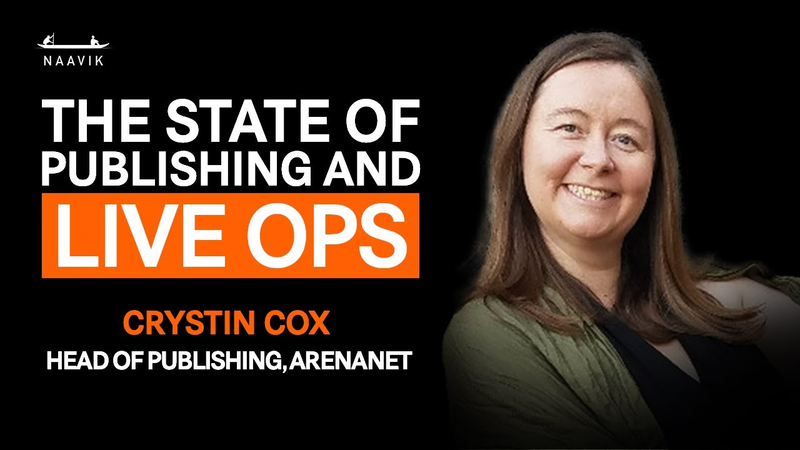
their games and not worry about game tech or scaling for success. To learn more and reach out, make sure to visit heroiclabs.com or check out the link in the show notes. Now, let's jump into the episode. Welcome to the Noviet Gaming Podcast. I'm your host, David Taylor, and today we're going to take a dive into the evolution of the games industry through the lens of publishing and live ops. My guest today has led teams overseeing some of the biggest commercial successes from MMO RPG genre and has leveraged those experiences to support dozens more through publishing roles for Xbox Game Studios Publishing and Arenaet. I'm delighted to welcome a 20-year veteran of the video game industry and a close mentor of mine, Kristen Cox. Kristen, welcome to the podcast. Oh, thank you very much. Uh, to kick us off, could you just give us sort of a quick intro on your background and how you got to where you are today as head of publishing at Arenaet? Yeah, absolutely. So, I think like a lot of people in my generation, my first gig in the video industry was
as a tester. Um, I was actually I went to school for theatrical, scenic, and lighting design with the idea that I would work in film and television. And I got out into the industry. I did start working in film and television. But as anyone who's worked in that space knows, the beginning of your career is a bit of a grind. So, I was doing really like low-end work like indie movies and like bad cable TV shows. And I wasn't loving it. Um, and I needed a job between two seasons of a bad cable TV show. And I had a lot of friends who I'd gone to school with who were like, "You are the person in our group who loves video games more than anyone else. Why don't you go make video games?" And the industry in in Los Angeles at the time, the video industry was really booming. But I had come from that generation that was under the impression that programmer was the only role in video games. And so it hadn't really occurred to me. Um, and I I did I found there was sort of a big
call for testers at THQ, which is where I had my first my first job. And this was in the day where it would be just like hundreds and hundreds of testers in a building just sort of throwing, you know, hours at testing games blackbox style. But I loved it. I had been very frustrated in film and television. It felt a little stagnant. There was a lot of hierarchy. It didn't feel very like flexible or creative at the time. Reality TV was just starting to take over. And the video industry, even from the position of, you know, like a contract QA person felt really new and fresh, like there was a lot of innovation, there were a lot of possibilities, and I loved the people. Um, and so I didn't go back to doing film and television. I stayed in games, you know, did some did some testing and then was really lucky to get a job um as a production coordinator because I had
this deep arts background. I went to work for sort of an insourcing studio um for NCOFT at the time that was doing art insourcing for everything that NCOFT was doing. And the head of that studio had also come from film and television and had an arts background and thought that I would do well coming in to help with production coordination. So that's where I got my my first like um like in studio position. Uh from there I had this you know design training. That's what my degree was in. And so I made a transition over the next couple of years into doing uh a sort of like hybrid of production and design. Um, I pretty much immediately, as I said, like my first real gig at a studio was for NCOFT, which made MMOs. And I ended up staying in the MMO space for a really long time. You know, from NCOFT, I went to Disney and worked with the team uh at Disney uh Walt Disney Internet Group that did like
Toontown Online and the Pirates of the Caribbean Online. And then from there um I transitioned to work at Nexon. And I had really wanted to work at Nexon. Like I was very excited about what Nexon was doing when I was at Disney. I was doing a lot of competitive analysis um looking at other MMOs that were aimed at a younger audience. And there's very little of that that gets made in the West. Like Western game developers even today don't really get super excited about making games for younger audiences. You see, mostly want to focus on teens and then adults. So there was a lot more um content aimed at a younger audience coming out of Asia. And so I had been playing a lot of Nexon's games and was really excited about a lot of the stuff that they were doing and their sort of approach to MMOs or like we called them virtual worlds a lot more back then in the early 2000s. So I made the jump over to Nexon and there I learned just a ton. Um, I was working um
at the like sort of Nexon North American office in Los Angeles and we were handling uh publishing and development and sort of managing live services and live game direction for all of these Nexon games, many of which had originally been developed out of Korea, but were now being operated for the rest of the world. And while I was at Nexon, I ended up uh eventually leading the global Maple Story team, which uh which operated Maple Story for basically everywhere in the world that didn't have another um another version of Maple Story running. Uh so we did everything except for Korea, Japan, Southeast Asia. Um so our our focus was largely North America, but we did service the rest of the world. I did that for a number of years. It was incredibly um educational. I got exposure to just like a lot of live ops games that Nexon was operating.
I got to do a lot of uh free-to-play work, a lot of work on monetization and a lot of work with deep data and data analysis. But um I was mostly working with a team in Korea. I was spending a lot of time in Seoul. I was spending a lot of time not operating in my native language which was um very expansive and I I don't regret it at all is I think a wonderful experience but eventually I kind of wanted to return to working with a North American team and get a little bit closer back to development. So I left Nexon and went to Arenaet. Um and I was at Arenaet for uh um almost seven years. Uh I came in to help them launch Guild Wars 2. Um, and there at Arenaet, I I got a lot deeper into working in design. I was a lead designer and a game director there. I focused on in-game economy, monetization, um, rewards, systems. Eventually did a
lot of design, leadership, and game direction. Um, and then after my time there had come to an end, I went I was I kind of wanted to go back to publishing because I missed having the larger purview and getting to see lots of different games and lots of different experiences. I love Guild Wars so much. Um, and loved working on Guild Wars 2, but I I did spend, you know, almost seven years working on one game. Uh, and so I went over to Xbox Game Studios um to work on the publishing side there with like the goal to see a little bit uh broader set of games in development. And I got that. It was really wonderful. I get to work on, you know, over a dozen titles while I was there with a whole bunch of different developers. And there I focused a lot on strategy and also on trying to help development teams understand how to move from making sort of consumed boxed products into making live ops games because so many of the teams we were working with at Xbox were
very traditional AAA developers um who were now sort of grappling with the reality of the industry where players expect you to take care of the game after it launches almost no matter what kind of game you're making. And so I spent a lot of time with teams there helping them understand like what makes live ops work and like how to approach making games in a way players to engage with for many years or like over a long period of time. Um and I was there um up until pretty recently. I I left Xbox Game Studios um in October of last year um to rejoin Arenaet. So I actually am back at Arenaet now. Um I talked a little bit before about how much I love Guild Wars. was still so important to me like creatively and such an important part of my career and I love that community so much. The opportunity came up to go back to Arenaet and head up their publishing division. Um I took it and I I rejoined uh Arenaet at the beginning of this year. Awesome. And and for the folks
listening, uh I was on Kristen's team at at Xbox and yes, we miss her dearly. Uh we talk about it every week that we miss Kristen. So um but happy that you found something that uh is bringing you uh uh equal if not more joy uh today. Um so yeah I would love to sort of like look at the live ops bit of your career and then we can talk about publishing later. Um but I'd love to sort of just track the evolution of li of live ops in the gaming industry over the last you know 10 plus years. you've been sort of playing an important role. How has that evolved? Maybe through the lens of Maple Story, which was obviously a massive success on according to Wikipedia, it it has generated $1.8 billion. So, you know, that's a that is a um a whopping success. Would love to hear sort of what were the what was it like back then? What was what was new? What was sort of the the innovation that allowed for
Maple Story to be successful? So much of it really comes down to and this is I think the story of live ops is the uh rising ubiquity of like always connected to the internet um home setups. Um there had been a little bit more of it in Korea a little earlier. Um both in the home, but also because culturally there was so much more um there was so much more of a tradition of playing online games in a communal uh space in a in a PC cafe. um that like access to that like really like high-speed broadband internet connection was pretty accessible to people even if they didn't have it in their home a little bit earlier like in the late 90s and like really early 2000s in Korea. And so some of this innovation did come a little bit faster out of um out of like Korea and Japan. But we follow a similar trajectory in the west where as people got more and more access to
high-speed internet and were connected more and more they were just getting interested and starting to explore all of these opportunities uh that are created by that in the gaming space and this idea of having always connected virtual worlds or MMOs that are you know they're continuing to progress and have things happen in them whether whether you're connected to them or not, they're sort of a separate space that's always on and always running. And as a player, you just, you know, join into that world whenever you have time, but it continues to live and grow and change even when you're not there. was something that had been really interesting to game players basically forever since the sort of modern era of role- playinging games with like tabletop RPGs like Dungeons and Dragons or like war game or miniature games was this idea that there's a big world and you're stepping into it to play but it might like have a life of its own even when you're not
there. Some of the first um computer games are MUDs, right? Like multi-user dungeons that are textbased MMOs that were getting developed as soon as the internet was up and running. So, people have been really interested in this for a long time. Um there I think that there's um a sort of natural um human uh gameplay and desire for this kind of experience. as I said, a world that kind of persists when you're not there and you step into it and play a role. Um, and you know, it continues to go when you're not there and you can meet friends there, like make friends there. But in the early 2000s, we started to see graphics also come up and that created another layer for players to interact uh in a much more social way. Um, text is great. Uh there's still MUDs that are running today that do really well, people are very passionate about. But when we added in the layer of visualization starting in like the late 90s and into the early 2000s, then we really started to have people engage
with MMOs and virtual worlds in a way that was like very social. It was about having a presence there, like a virtual presence that maybe represents you, maybe it doesn't, but it's a virtual presence that you can embody and then go out and like engage in games. And that is something that has been a strong motivator for players from the beginning. And I think what we've really seen over the last 20 years is the rest of video games um in the rest of the video game space has sort of caught up technologically um to being able to deliver some of that in almost every gaming experience that you have. um and has just adopted those things because they're so motivating to players and they're so engaging for players that now what we see is almost every AAA game that you would play has some level of that that they're trying to um put inside of their game. Not literally everyone. There are other genres that aren't interested in this kind of thing, but for people who are aiming for
mainstream success or like really broad appeal, they are thinking about this kind of desire and this level of motivation that exists. When players can engage with something where they're like, "Wow, I'm like really embodying this character and I'm really experiencing a world that feels more real. It feels more persistent. It feels like something where what I do matters a little bit more." Um, and so so much of the video game industry has just been this trajectory over the last 20 years of more and more of the sort of broad appeal AAA space adopting more and more of those capabilities as technology has just allowed it to happen, you know, with just ubiquitous broadband accessibility in the west now and also like cloud and streaming and all of these things that allow for more and more of that to happen. Um, you know, if you're making a video game, you can do this at this point. And if you can do it, you probably are at least
considering doing it. Yeah, makes sense. So, what I'm curious about is because, you know, technology was sort of unlocking this uh new capability, this new style of of engagement and play. I'm curious if you know when you were there doing the live ops and the monetization, were there sort of things that you guys were testing out that were sort of setting the stage for what live ops and monetization would be for the next 10 to 15 years? I would say yes and no. One of the interesting things about working so early in virtual worlds and MMOs on the PC side and working with a team um in South Korea which had been sort of pioneering a lot of this uh a lot of this stuff. There were things happening in the west, but um especially like freeto play and that kind of monetization was really being pioneered out of the east was that we were looking at a lot of player history and data back
in the early 2000s and we were experimenting and trying a lot of things with like how does engagement work? What are we trying to drive? How do we do monetization? And I think I was a bit lucky in a lot of ways to work with a team at Nexon that was very long tail focused, like extremely longtail focused. There was this idea that if you wanted to do microtransactions, the trade-off that you were making was that instead of getting a lot of money up front and then, you know, hopefully you satisfy and live up to the expectations for the player, um, we're going to invite the player in for free and they're going to try it and then they're going to decide if they want to pay us. But they functionally can only pay us little bits at a time. So if you don't have repeat purchasing, you don't have a business. Like if players, you know, pay you once and then they don't ever pay you again, you're not doing well. As opposed to traditional, you know, boxed product where actually if they pay you
once, even if they're incredibly unhappy with the game, it doesn't really matter to you from a business perspective. Obviously, from a creative perspective, it does. But from a business perspective, you're like, well, I got the money, like, you know, who cares? Um, what happens next? But Nexon was very focused on the long tale. Like there was a lot of thinking and a lot of the data and research that we did was always based on like how do we keep players happy for a really long time and we very quickly learned that um you really had to watch out and try to avoid like binge spending like this was not a good thing for longtail relationships. Um and we were also dealing with a younger population so we were always a little nervous about any kind of like massive spending because probably their parents were going to be like wait what are you doing now? I I I they would call us and be like, "No, no, no, no. I don't want you got to re you got to refund all of this." Um, and so we were playing around really early with a lot of like, "Okay, how do we make this feel like there's worthwhile things to buy, but we don't want you to buy a lot of stuff all
at once, and we don't want you to get into kind of a re like a binge spending um cycle because we had all the data. We're like, if people start spending like massive amounts of money really quickly, they'll be gone really quick quickly. they almost never stick around. Um, so is the insight that it is is the is the insight there that it's like if they spend a lot it's probably means that their parents are going to like shut them down and not let them play the game anymore or is there some other like what's the like insight around why someone would binge spend and that would cause them to churn. Oh, usually binge spending is a behavior that uh leads to regret. um like you you might be in a mode where you're spending a lot but then when you finish and you look back at it and do like a value like calculation a lot of times you be like oo I shouldn't have done that and it creates like a negative association with the game and then you're like maybe I should stop doing this altogether like this isn't really like uh something I want to continue uh doing or if you were someone un you know who was a minor yes
your parents might step in and be like you can't be doing this you can't spend all this money we're going to you know, get this re refunded or whatever. But we also saw this with adults a lot like and I still I see it quite a bit now even like you got to be really careful if you start to see like binge spending because it usually means that they're about to flare out of the game like there's they're unlikely to stick around for a really really long time. Um and so we were just thinking a lot about Lawn Tale. We were thinking a lot about like how to keep players engaged for a long time. We were thinking a lot uh too about you know um operating for a younger audience that they would age out of the game and you know I thought really interesting research was being done around then really interesting stuff. I was also getting a lot of insight into different motivations in different regions uh because culturally you know Korea is not the same as the United States and we had like different things that uh people cared about or um
people felt was fair um in the way that monetization was done. So that was really helpful because I had a really global purview uh because we had players all over the world. Um I think that was really helpful. So we were doing a lot of this thinking and I feel like we were really starting to figure out how to create longtail relationships with players in the west. Uh which was different than the way that we operated the same games in like Korea. Um, and we were really starting to think about like how to put a lot of our own internal um, sort of um, policies in place to keep things all running smoothly over the long long term. We also grappled with the stuff that most, you know, game studios do like we like, you know, we would get pressured to like hit your quarterly goals and, you know, you maybe want to make bad tradeoffs to do that, but I think we were really grappling with that in a pretty healthy way. And then um do you have an example of like
um like a design choice that would lead to a more healthy type of spend with the longtail versus the binge spending? Yeah. One of the things that was a big goal, a big rule for us that I carried through even after I left Nexon was like never ask an angry player for money. Um like you never want to associate anger with spending money. uh because you can get really short term like heightened, you know, emotions that can lead to short-term spending, but you're creating a negative long-term um association with the player and you're upsetting them. Like there's a lot to be said too about like just because a player paid you doesn't mean they were happy to pay you. Um and you really to be thinking about that in the long term. Um so yeah, never ask an angry player for money. Like if something really frustrating just happened to the player, they just lost or like they just had a bad experience, don't then be like, "Oh, do you want to solve this with money?" Um, it's it's an easy out in the moment, but it's a long it's a it's a recipe for long-term churn um from that player because you you've maybe like activated also some like
sense of unfairness, right? Like something bad just happened. Like you see this in research all the time where like when people lose a game, a competitive game, um if you tell them that they were playing against a machine instead of a human, even if they were playing against a human, they will um assume that the machine cheated. And even sometimes that the human cheated. Um people are just we're just wired that way. Like we don't like to believe that we lost because of our, you know, failings. Like we want to, you know, find some external reason for it. And so you activate this sense of unfairness a lot of times if you if you're very much in danger of activating that if you ask players for money when they're mad. Um which just isn't great. Um the other thing that can be really rough and we we were very cautious about this when I was at Nexon. We were like never ever ever should we let you like open a random box and then like immediately push you right back into another one. do not create slot machine like experiences was like a
huge thing for us. We're like do not do that. Like do not create a situation where if you're rolling a random chance we're like oh roll another one, roll another one, roll another one. um because you're really in danger of creating a spiral like you you are generating um and we looked a lot at the gaming space and we're like okay don't do stuff that they do like don't look at stuff in the gambling space because you are literally going to start activating all of these sort of hardwired human tendencies to like go down these spirals and that could be really bad. Um, and we just also didn't want the perception, especially because we were making games aimed at younger audiences, that we were like trying to get them into gambling or something, right? So, we a lot of these hard rules um that I think were really helpful. Everything you're describing kind of sounds like mobile games today. So I'm I'm curious like are there is there are those mobile games just being short-term
minded or is it just a different audience different play style that demand that has like different demands on on the So I mean this is this is my opinion right looking at this stuff as a designer and and a live operations um you know uh someone who's done a lot of live operations and production like I'm not an expert in mobile monetization but yes my perception is that largely most mobile games are very short-sighted like and they don't think about having a a three four year long relationship with their players. I would also say they're mostly optimized around appealing only to people who want to spend really massive amounts of money and not appealing to people who want to spend small amounts of money. This has been a a trend and a something that the mobile industry has had to grapple with in the last 10 years is they were so anxious to optimize and like you know AB test their way into like really going after the high spenders. That's inherently a really small percentage of your potential player base no matter what you do,
right? There's only so many people that are going to be happy or willing or able to spend massive amounts of money on your game. So many mobile games, we're kind of coming out of this a little bit. We're in a different era now. A lot of things have changed in mobile in the last three or four years, but there was this era where they were just really, really focused on short-term gate. I mean, you would like launch a mobile game, optimize your way into identifying only your highest spenders, churn everyone else out, who cares about them, you know, just milk it really hard and move on after after a year, right? like this is like very much the attitude for not everyone. There's like some great mobile games that think about the longtail. There's some great mobile games um that appeal to high spenders. there was a a sort of conventional wisdom that built up and this is actually why I say like oh the work we were doing back when I was working on like Maple Story or like you know there were there was stuff happening with like Gaia online or Haba Hotel Club Penguin um even Ultima online
and stuff like that. I was like, "Oh, was that setting the standard?" Sort of in many ways, no. Like was very fascinating. Like we were doing all of these things. We were having a lot of success um in the west as well. Like people were constantly surprised by this. The industry just wasn't really ready to accept it. We would be like, "Oh, we're we're killing it." Like we're making tons of money off Western uh players. We have a we had tons of Western players. But then um the sort of social games happened like social like Facebook games happened and mobile games happened and that uh sort of um part of the industry in the west came up almost entirely removed from traditional MMOs even traditional freeto-play MMOs and honestly for me felt really bizarre like it was like watching a group of people operate in a similar space and make just wildly different decisions then we had been making and that we felt were best practices that we were like these are
really like sort of counter to a lot of the things that we think are best practices based on years of experience and we had had a lot of success but like they really diverged those two lines of design and ways of thinking about live operations really really diverged western mobile and um Facebook gaming which didn't last for very long but those but this very connected to what like western live ops mobile games are all about really went their own way like and and sort of forged their own path very much sort of through first principles of trying to figure out like how they wanted to um approach doing these things. I think it's understandable um when mobile and social gaming first started um they were really mostly very short session games and I think that they legitimately were not thinking about keeping people engaged for you know 3 years four years you know um to up to 10 years I don't think that was on their mind at all so they had
very different incentives and very different things that they were trying to accomplish with their games and so we really diverged and it's only I think fairly recently that a lot of it is coming that together and people who are working primarily in like mobile are starting to go like oh like maybe there's some stuff that has been going on in like PC or like longer session uh traditionally longer session game games like PC or console games in live ops like could have some bearing on what we're doing in mobile as more and more of these experiences like become just device agnostic. Got it. I feel like there's a million more questions I could ask about this, but we we're two questions in, so we got to keep I know. Oh my gosh. I uh I wanted to actually ask about um you know how live ops has changed over the last 10 years like how how is what you were doing at Maple Story and then at Guild Wars I like could you take us
through that quick that evolution of like what is live ops today and what has changed versus you know the first 10 years that you were there's a million things I'm going to just focus on two that I think are like big themes. Um, and one is pretty quick. It is obvious. Technology-wise, it's totally different. I mean, like, you know, when I started, we thought a lot about buying our own proprietary server hardware and how we were going to install it and how we were going to maintain it in like physical locations that we had to rent and we had to have people like go out and like maintain it and look at it and it was very different from a technology perspective. Um, and that is just all totally different now. like you know basically like cloud computing has changed uh live ops so dramatically um in many ways just for the better. Um but it it really has just changed so significantly like I was talking with one of my colleagues recently like remembering us having to like deploy this army of people to go out and set up
all the server um the server farms all over the world to support Guild Wars I's launch, right? And obviously we would never do that now. We would we're on AWS. Like let's just say like you know you just push some buttons and set some settings. So that's one big one. The other one that I will say is something that I think about quite a lot. When I was first starting in MMOs, there was a lot of emphasis on creating sort of um smallcale but like deeply engaging and emergent content with players. Um, we had all of these tools in like Maple Story and also like to online and and private Caribbean online where a person could go into the game and like execute a command and like just kick off an event or you know talk with the players who happen to be there be like let's do this thing right now. Let's like let's have an event right now. Um, and like doing that kind of dynamic content was really really popular and just considered table stakes. Like of course
if you have an MMO, you've got to be able to do those things with players. Um and then we went through this period where more um like AAA developers started uh playing in the live op space and we lost a lot of that. We got sort of obsessed with this idea of everything being sort of automated or um everything being baked in. We lost a lot of flexibility I think uh for a long time in the live ops space and I am always like surprised even today when people go to make live ops you mean by automated um like everything is done like in pre-baked code like so if I want an event to happen someone had to decide months ago that event was going to happen at this time to this time and a designer like designed it a programmer programmed it um to happen and then it gets like baked into a client update um versus Maple Story we just had a a web tool that we logged into and like punched some numbers into and it's like bam, an event is happening right now um inside of the game. Um and I think in
this pursuit for things being more complicated but also for um things to feel more um like uh AAA uh we sort of lost a lot of that flexibility. Um and I think we're just starting to rediscover it, but it is something I think about a lot. Like every time I talk to a team that's making a live ops game, I'm like, "What is your plan to support like dynamic content?" Because content is the thing that players are going to want. I think we went through this period where there was this idea. I used to hear people say, "Our game's not a content treadmill." And I think this was us sort of chasing the end of the rainbow a little bit as developers. It's like, yes, it is. Like from your players perspective, content is king. And like players want content. You can try to come up with a lot of like really clever systems and things to avoid delivering content, but generally players want content. You kind of have to grapple with that. Um, and it's it's hard. Like
it's legitimately hard. But I think we lost some of the earlier tools that we had back at the beginning of uh the sort of, you know, online virtual world period. um because we don't think about that almost seems like too simple or it seems like um it won't really be that interesting so why do it but I actually think we we are starting to rediscover a little bit. I see something like Hell Divers 2 does a lot of this and I'm like, "Wow, yeah, that's really great." Like we they're they're kind of getting back to those roots, things that did work. Um, we kind of lost a little bit as we got more sophisticated and and complicated and more AAA. Yeah, makes sense. Yeah, I I remember playing Fallout 76 and I thought that what they sort of have these programmatic uh events that happen and people will just sort of gravitate towards them and it's a way of bringing people together uh in like a you know an open world style game where you might not see as many people because the the
environment so large so big. Yeah, it's so spread out that game. Um cool. So, uh, the other thing I wanted to ask was, and this could be a good transition to the publishing side, but, um, when you were at Xbox Game Studios publishing, you got to see a lot of different games. I'm curious about any of the sort of common live ops pitfalls that, uh, that, you know, people should just watch out for or, you know, generally, um, things that they should avoid or they should make sure that they do when launching a live ops game. I think this one's really hard for traditionally AAA teams that uh fundamentally like and I don't think I don't know if people in tech really understand this that well, but um most AAA teams are pretty like hardcore waterfall in their production methodology. Like they they really do go like first you plan, then you build, then you're done. Like it's it is very waterfall. It's because there's a ton of dependencies. They're very complicated, large teams that have a lot of
dependencies going on and people working at different rates. And so they still do a lot of waterfall. Um that's that's pretty rigid. And because of that, if you're coming from that background, it's so difficult. And one of the biggest live ops pitfalls is you have to be able to ship really frequently and easily. You have to you just have to you have to be able to get a game client out and update out like very quickly and very dynamically. And you have to accept that sometimes, a lot of times, it won't be perfect and then you're going to roll forward and it's okay. I mean, if you're looking for perfection, you can't go fast. And that doesn't mean we shouldn't care about delivering high quality players. We absolutely should really care about that. But when it comes to really doing a good live ops game, you've got to be able to just throw stuff out and iterate. And you've got to be able to do it really quickly. And it's very hard. It's very very hard for teams that are used to working in a pretty rigid waterfall way to accept
that what you really need to do is be able to ship really frequently. Um, which flows onto another thing, a big pitfall. You can't be frightened of your players. Like, you've got to be willing to go out and make mistakes, own up to them, apologize, be real. But you've you can't just be so scared to do anything because you're so worried players might have some players might have some negative reaction. You you've got to roll with that. Once you're making a live ops game, you're in conversation with your players all the time there. It isn't like we built this perfect beautiful gem and then we send it out to the world and people review it and there it is. That's what it is. This is the opinion about the game. It's a constantly evolving dialogue and you can't be a frightened to have that dialogue with your players or you just won't be able to do the things that you need to do in order to find your voice, find your audience and then go grow and build that audience with your community with you unless you're like you've got
enough of a sort of thick skin to accept that you're going to be wrong sometimes and it's going to be okay. That's really interesting. I've so I've spoken to some game designers who are like you know I mean all game designers listen to their their uh fans their players but some don't do what their what their players say and others you know do and I'm curious in your experience what do you think is sort of the right approach like is it to have a vision and stick with it independent of what the players are saying or asking for or is there some or is it really like being in tune with your players, listening to what they want, and then delivering on those features. So, I I think both are valid. Like, I I I think that there's lots of experiences, entertainment experiences that we h we want and I want them too, where what I really want is I I want to see the creator's point of view. Like, I'm here to see their vision. Like, I I want to
experience that. And there are other entertainment experiences where I want to be catered to and I I want the things that I want to happen. I think they're both valid. If you're making a live ops game, fundamentally as a designer, I think your job is to know better what your players want than they do. Like you do need you should listen to them. I think mostly live ops games are about satisfying your players and delivering them and catering to them more than they are about you know you know sort of my vision like the my point of view and you you came to hear it. Um, and and that tracks a lot of live ops games are made are not very aoured. Like they're they have a lot of voices and a lot of creators in them. But as a designer, it's your job to know. I mean, fundamentally, this is the job. Otherwise, we would just survey players and say, "What do you want?" Then we just build whatever it is they said they wanted. Um, but that's not the you could try it. It's not great. Um, because people are terrible at knowing what they want. And your job is to to actually know what they want. So, you listen to a
lot of feedback. You you do a ton of feedback. You look at data, you listen to people talking, you you hear you get survey results, and then your job is to take that emotional response the players have and actually know this is the thing that that is really going to satisfy them, not the thing they asked for, which probably won't um because unsurprisingly um game design is a skill and like you know like anyone is like I mean you could take me to you know design a car and they'd be like what do you want and I could tell I'm probably wrong. Like I don't know anything about designing cars, right? Uh I haven't spent years learning how to design cars. What would be better is to be like, well, what do you want out of a car? Like what, you know, what frustrates you about your current car? And then an actual car designer would be like, oh, these are the things that will that will give her what she's looking for. And that's the same with game design. Like you've got to listen to your players, but you need to know better than them um what they want. That's what they want from you, too. They want to get taken care of. They want to be catered to. But
that also means they don't want to do the work. Like they don't want to be the ones that have to design the game for the most part. So, um, again, I think like games and entertainment experiences are abound that like I want the creators point of view. Like that's what I'm coming for, right? I I'm not going to go play like a Kajjima game because I'm like I want Kajjima to do what I want. Uh, I want to know what Kjima wants to do. Like I'm curious like what is he thinking? like what what is his what does he come up with? But if I go to play an MMO, I want you to create a like a a world that's going to cater to me and like, you know, leave me satisfied and and give me the things that I want. I think both are valid, but if you want to make a successful live ops game, you probably want to get a little bit closer um to the side of wanting to cater to your players. Awesome. Well, this is a good time to switch over to the publishing side of things. Um I was hoping you could give us just a quick um uh perspective on the state of publishing today and how it has evolved
from you know when you were at Nexon to to today. I know a lot has changed from physical to digital. Um what are some of the what are some of the things that have you know changed the role of the publisher and then what does a publisher do today? How can they really add value? I think for the last 10 years there's been an ongoing sort of existential crisis in publishing really like trying to look at and say like what is it that you do as a publisher like what is it that you provide as a publisher because a lot of game teams can self-publish uh like the tools exist to go do that yourself like uh distribution can be totally digital that's a totally valid way to go you don't have to do any physical if you don't want to I don't think physical is dead But you don't have to do that. Um, you could do totally digital. You can engage vendors to help you with marketing. You can engage experts to help you with community. You can engage all kinds of uh of people to help you with those things if you don't have the staff for it. So, you can do it yourself. And so,
publishing has I think for the last 10 years been really as we've moved away from being primarily a distribution um partner to ask like, well, what is it that we do, right? Like what what do we do um in publishing? And I think um it has changed a lot. I I think there was a lot of value 15 years ago um even 10 years ago in getting a publisher that would like help you do distribution because it's hard um and it was much harder um the further back we go um who would handle you knowert and they would handle um you know any kind of like platform setup. They would maybe even handle services like um like quality control or localization because it wasn't feasible for a developer to have those services in house and there weren't a lot of options to go out and buy that those services peace meal but over time that's become less and less right because more people have come up to offer those services peace meal and there it is easier and easier to do your
own distribution and so today when I look at publishing I think that there's a couple of things uh that It does. Um, functionally, if we're being honest with ourselves, a lot of what publishing is is funding. Um, it's f because most game developers can't afford to self-und their games, and they have to find someone to be a financeier uh for their games. And so, a lot of publishers end up having to spend a lot of their time and energy being a financeier um and being looking at things like investments uh because they're ultimately mostly a funding partner. Um, and they're asking like strategic questions like where should we put our money uh in order to make good strategic funding investments and the developers are like well we're dependent on you to get our funding. Um there are other funding options but it's it's one of the funding paths that developers can go down and that's a big part of it. I honestly think um some publishers are really clear-headed about this. Um, I think we run into a little
bit of trouble when publishers are mostly a funding uh apparatus and an investment uh financing apparatus, but they they for whatever reason would like to believe that they're that that's not their primary function. So they want to like split end up splitting a lot of their effort between doing strategy um and helping their development partners who they have funded do good strategy um and then all this other stuff that maybe that they're but they're like their focus is really split um so they're not really a services publisher but they kind of are a services publisher because that's the other big thing that a publisher can do is provide services. You can go piece meal all those services together but a really good publisher can provide those services very seamlessly. um they have, you know, they have more people, they have more expertise, they're doing it all the time. They can be really great at that. If you find a good partner there that's going to do that for you, that can be a great opportunity for a developer to be like, "This is a a team that's really good at all this stuff. We don't have to worry
about it at all. They're going to coordinate it all together and do it. They're going to be a servicesbased publisher." Um, but I think sometimes it's very hard to do both really well. I would say it's not impossible, but it's very hard. Um, and I sometimes publishers even get uh to a point where they're like, I'm not really sure which one I'm trying to do best. Uh, and that can be really uh challenging and can be extra challenging as a developer if you went to a publisher looking for a strategic investor, but then they want to spend a lot of time doing services or you went to a publisher looking for services, but then they want to spend all their time like doing strategic investment work with you. Uh, and it can be hard to even know when you are talking to a prospective publisher what they're actually going to end up wanting to do with you. Yeah. Do you think that so are is the takeaway here then that a publisher should sort of just focus on one uh and and just go all in on being either funding or services or I think
like most things um that's not bad advice. If if you're if you're like a publisher and you're like I'm not sure what we're doing. And I would say get clarity like what is your purpose? Like why like why are you doing these? And then go do that really well before you start trying to do a bunch of other stuff. Um you know sometimes you don't have that luxury right as a publisher. You you kind of have to be a one-stop shop and do it all. And then I would say there's still benefit though to stopping and like really asking yourself like are we delivering on both of these fronts? How are we how are we staffed and how are we what's our focus percentage to make sure like if we are going to do strategy are we actually doing it well if we're going to do services are we doing that really well um and get like realistic with yourself about that because they're two big jobs like they're actually two pretty big jobs that might require wildly different expertise to do well um regardless of whether you want to just focus on one or the other or you need to split your time but you need to just get a good um a good good clarity on it. Just get more I
mean my biggest advice would be just get really honest with your uh development partners about what you are and are going to provide and like where how you see your focus um when you talk with them like what you think your your benefit that you're going to provide to the developer is so that you can enter into a relationship in a positive way. Got it. I want to flip it uh on from the developers perspective like if you're a developer and you're thinking about the different ways in which you can fund raise today. Is there sort of a type of funding that makes the most sense or is it just get whatever funding you can? What's your what's your perspective on this? I mean, in the current climate, some I'm not I don't want to sugar coat it for people. Like, a lot of times it will be get the funding that you can because we're in a we're in a rough funding environment, but if you have the luxury of choosing, I it really depends on what your go goals are. Like one of the things I always talked with prospective developers about um you know, when I was looking at
opportunities and like who we might partner with was to really ask them like what are your goals for your company, right? Is it is it just make this current game you're making successful? That's fine. Like you don't have to have more goals than that. But really think about it like what are you trying to do with your company? If your goal is um way beyond the just this one game, right? And you have like specific aspirations for like your company's growth and what you're trying to do. um you you might have more success with VC uh funding because VCs are looking to invest for an exit generally it's not every VC whatever right I'm talking generalizations but and they they mostly invest in people like they're a little less interested in investing in specific content and honestly if you look at the the history of the last 10 years when they have invested in specific content maybe they haven't had an amazing track record so I understand where they're coming from, but they often are
investing in people or companies because they're looking at eventually making an exit and that usually means a sale or an IPO or something like that. And that's much more company focused than it is individual game focused. Um maybe your company is like, "Oh, we're going to be our game is going to be so huge that it's worth an entire company's worth of um you know, of evaluation." Maybe that's really hard to produce. But think about what you want as an organization when you're thinking about where to go get your funding and recognize like the different funding um avenues are they're going to have their own goals um and like like VC is going to be looking for an exit and so you have to be think like are we actually going to do something that's going to align us with them like are we going to be all be wanting the same things together um like if you were you know building a small indie studio and you want to make you know a lot of um small games um but you don't want the studio to grow and you never want to have an IPO Oh, like and you you were absolutely dedicated to retaining like sole ownership. Like VC would be hard.
That's an extreme example, but VC would be tough. So actually sitting down and asking yourself like what do I want for my studio? Whereas like a publishing relationship is you a funded publishing relationship is usually about a single game. Um and that has its flip sides too. Your publisher probably isn't going to be super invested in your company, right? and like they're they're they're not really tied to you in that way. Like they're really just focused on the game you're making together and the content that you're producing together for this project that you've signed on for. So that creates a whole different situation um and a different set of incentives for you to navigate and different things for you to care about versus what the publisher or your funding partner either way might care about. Uh bootstrapping is also an option. I I think because VC money was so much more available um in the recent past, we've lost like uh the realization for a lot of developers that like bootstrapping is an option and hard
to do, but angel investment. You could get an angel, you could try to get an angel um to come in and do a private investment in your company to get you going. Those are those are real options though. like you um we we got a little bit um I think um distracted by BC money for a while where there's this attitude like studios get started by getting a giant you know influx of cash and then you immediately grow to like a large number of people and start like you know doing all these things but actually for most of the industry's history and for a lot of developers today still that's not the way it happens. It actually happens through bootstrapping. you're really small, you do a little bit of work, you build the demo, you do some work for hire as a as a team. There's a lot of ways that that happens that that is um very different from what we saw during the era where it was like, oh, everything is coming through VC. And you know, as someone who's spoken to a lot of game teams, I'm curious what and and this is probably good time to share that
also. The opinions shared on this podcast are mine and Kristen's, not representative of our respective employers, Xbox and Arenaet. Um, but I'm curious, you know, what are you looking at when you're assessing whether a game is a good fit for publishing? Yeah, and it's not a big part of my role anymore because Arenaet's publishing org isn't we're an internal publisher entirely focused on our own work um which is a whole different part type of publishing but um evaluating games for publishing from a strategic point of view I would say for me it really comes down to like this is going to sound very simplistic um but uh do I really think that this team can make the game is a huge one. Like, do they have the ability? Do they have the knowledge? And are they able to work together in a way that seems like they will likely actually create this game that they say that they want to make? And then so, so
when you're so sorry to interrupt, but when you're assessing that, like what are the things that you're looking at? Um, I'm usually asking teams like uh have they worked together before? Have they had shipping experience before? That's a clear one. And like if you've had shipping experience before, that's a good indicator obviously. But beyond that, if you're just trying to sus it out from a team that's forming up the beginning, I really like to talk to people about what their decision- making processes are like. Like how do they actually come to decisions as a team? Um, you know, who makes calls? Do they all agree on that? Like does every when I talk to them, do they actually have an agreement on who makes those calls? Um, and is there some alignment with them on like what they're trying to accomplish? if I can talk to the key members of the team and ask like what are you trying to do here? Like what's the goal? Um and I get like at least like semi similar answers to each other that there's some alignment there. That can really be a good indicator that like this team can actually do it. Um and then I also like to talk to them a lot about like what is
their understanding of the space that they want to get into, right? If they're like looking to be in a specific genre, if they're looking to be on a specific platform, like if the pitch is about these things, cool. Like how well do they know that space? How well do they know the players in that space? Do they understand what the competition looks like? Do they really know how things work in that space? Uh, and then have any of them worked in that space before? And like what has their experience been like working in that space is also really really helpful. Um, and then you know just talking generally too about like what their expectations are for the entire development process. Like what do they how do they think it'll go? Where do they think they'll have problem? I love asking like what do you think the biggest pitfall you're going to run into to you know what is the thing that's going to make you delay the game a lot? Like what is what do you think it is that's going to happen there? just give you a sense too for like how realistic the team is and how clear-headed they are about the kind of things they might run into and uh where problems really come from in game development.
Are and are most of these examples folks coming to you before they've actually built any of the game or are they coming to you and showing you sort of what some demo of what they've built? I they really either way for me um building a demo can be indicative of of some of these things. So you might be able to get some answers for this by looking at what they've accomplished and talking to them about like okay well how has it been so far? But building a demo and building a whole game is really different. Uh and so you know it only helps so much. A lot of times demos are really about um better communicating your concept and not so much proving what you can actually do. In fact, like I think we the publishing world puts too much stock in demos. It gets really like um really like stareyed about teams. They're like, "We built this demo in a month." And they're like, "Oh, they're going to move so fast because they built this demo in a month." And it's like, "Yeah, you I I'm a little more cautious about that just knowing what it is to
pull to put demos like that together and like how well that actually relates to full development." Got it. Awesome. Um, for for the last bit, I would love to zoom way out and just sort of take a look at the the um game market today. Um, you know, you've been here for you've been in the in the industry for almost 20 years. So, I would love to just hear your perspective about where we are. You know, there was um, you know, significant layoffs. I think 25,000 jobs were lost in the last two years. Yeah. Um 90% over 90% of play time is spent in uh you know six I think it's like you know older games. I can't remember the specific almost like six years old. Yeah. I think that was I think that's the stat people are throwing around. Yeah. So these black hole games that are sucking up all the play time. I uh you know there's the growth of of Roblox and all this as one of those black hole games. I'm curious like how do you see the state of the
market? Where are we in the in the grand scheme of things? That's a big question. Um, we we just went through this period where there were money was free and then money was suddenly not free and that's really put shaken things up quite a bit and we've had a lot of loss like a lot of job losses and a lot of um studio closures. um we're in an uncomfortable place as far as that's concerned because like um you know demand for games is not lower um but we are actually going to struggle to produce especially in the AAA space for the next several years because we lost a lot of um content just you know there are people who've been working on games for four or five years those games will never come out now that is a thing that happens all the time but it happened in a really concentrated way over the last two or three years that's going to be tough for us to deal with you you know, the if I wanted to put an optimistic face on it, I'd be like, "Hey, indie games will have an opportunity to step into that empty space." Um, but I want to spend more
time talking about this sort of this idea about black hole games. I hate phrasing it like that. I I think the thing that always um strikes me about this conversation is um all of those games that people are like they're black hole games. like you know you have to deal with the fact that people are already you know engaged and and um invested in them is like almost none of them launched as humongous hits. Um they all had a road oftentimes a very long road to become the game they are today. Um like Roblox included um even things like Fortnite were like out of nowhere. Yeah. But the game had been out actually for a while um and struggling and almost failing before it became Fortnite. Um, and to me, this is the thing I often like push people on, especially if they want to make live ops games and they go like, how can we make a live ops game when the market is so saturated? Um, those games all had a long road uh to get to be really huge.
And the truth about like the live ops market is that players are more inclined to go play something that's established, consistent, great value. you but you can't get to be established consistent and have great value until you spend the years working on it. So, I think the big mistake that we've made, and it's not surprising, we did it as an there was a period where we did the same thing in the early 2000s when it was like, you know, I I hate like this isn't like any shadyism. It's amazing. I don't blame them for this, but WoW was so successful that it created this boom where people spent massive amounts of money trying to make uh WoW like games and then most of them didn't make it. And I feel like we're similarly going through a thing with live ops games where people look at something that's very successful that's six or seven years old and they're like, I want that, but I don't want to wait six or seven years. I want to pump hundreds of millions of dollars into it and have the success immediately. That I think is incredibly unrealistic. Those games took
a long time to get where they are. You should expect your live ops game will also take similar amounts of time um to get where it needs to be. Um, and also those games are great and I love Along Tales. I mean, I like literally earlier this week, Guild Wars celebrated its 20th anniversary. We did a big update. We still run Guild Wars is still up and running. You can play it right now. It's really fun. There's a bunch of players in it right now. We did a big update to it. I'm I'm not saying like, oh, games can't have really, really long tales. They can, but eventually players will want to cycle into something new. So like you might be looking at everything right now that's six to seven years old. They're at their height. They're like the best they're ever going to be right now because they put the work in and they've built up this amazing value and this really solid experience. But there has to be another generation that comes up behind them because they won't be there forever. even a game I worked on, Maple Story, you know, it was so good for so long and
there's so much to be proud of there, but like it couldn't last forever. It couldn't stay on top forever. Um, the other thing to know is that when we look at actual like player like play pattern research, um, yes, a ton of play time goes into these top games, but players are always looking for the next thing. you you you do have opportunities like players absolutely are constantly trying other things and you're right it's hard to get them to jump ship but my advice would be don't try to get them to jump ship in the way that they go like I'm never going to play Warframe again because your game has blown my mind and like I can never go back. That's not the way it's probably going to happen for you. Um and it's similar for for stuff like Roblox and like a lot of people want to come out and make other UGC platforms. You just got to remember the journey Roblox had to go on to get where it is today. You don't It's very difficult. Maybe impossible. Maybe someone way smarter than me will figure it out. To just go in and create a
dominant competitor to an established game like that. You have to go through your own journey to build up your own community and your own audience and find your way to that success. Do you think that these I don't know if it's AAA or or whatever, but do you think that these games that want to be the next Black Hole game, do you think that when they don't do it out of the gate that they're pulling the plug too early um because it's a longer journey or are they just super rare and then it also on top of that takes six years to to get to that sort of scale? I think like yes and no. But I think the the the strategic mistake happened earlier. Um like yeah, they probably are pulling the plug too early, but the reason they're doing that is from a business perspective, they've sunk so much money in that if they that they it feels like an insurmountable hill to um overcome. Um and so I think the strategic mistake is like a little bit earlier and that I'm again like get out of the waterfall
mentality. Just get in there with players and start iterating. Don't do it perfect. um do it interesting um in a way that's going to get you that engagement to start and then start building forward. So I I mean I don't actually think like in some ways they're very rare and if your your measure of success is I'm only happy if the game is the one of the top three games in the whole world that mathematically it will always be very very difficult for you to get there. But I have seen a lot a lot of live ops games that are wellmade, take a a disciplined approach to iteration and development and and cost management on the development side that make a good business. I So I know that you've you know you you've advised a lot of indie developers over the years. I'm curious what your perspective is on UGC platforms and their ability to sort of enable there to be more indie game developers in the world. Are you are you bullish on the games industry and and just all of the creative energy that's
enabled by those platforms? Is this a new thing? Is this is has it always been the case that you've always had these small amateur developers, they just just have used different platforms or are we in a new sort of uh a new um you know decade of of tons of of game developers you know being in the world. I think all a lot of more what's changed I mean every generation is a little different and technology has moved forward but more of what's changed is distribution is really easy um you know my generation of game developers the previous generation of game developers many of them started in flash many of them started in modding communities many of them started in muds just doing textbased stuff because it was really easy distribution has gotten a lot easier so there's a greater opportunity if you make things for more people to see them. Um, but that is I think the bigger change I think. Um, I'm excited by stuff by Rob like like Roblox because
like like there is there is another generation of game developers coming up and this is where they're learning like this is where they're figuring it out. Um, and I think it's a really cool tool to figure that stuff out. And Roblox al also in in and of itself offers a sort of kind of neat YouTube experience of like trying a lot of like little things out and they're really fast and they're experimental and they're interesting and there's like a social component to it that I think is really neat um and super fun and I think you um I think a lot of game developers especially AAA developers really ignore like what younger people are doing like sort of consistently right like we saw this with freetoplay MMOs when I is coming up. A lot of AAA was like, "Ah, that doesn't matter. Who cares what's going on over there?" And it's like, "Well, this is what like Runescape and Maple Story and like Hoba Hotel. This is what like the next generation of gamers is growing up with." Like, this is shaping them. And I think Roblox is that now. And so, I think it's important and people should care about it. And and I think it is
allowing people to mess around with game development. I will say that I'm a little less like I think when you look at stuff like YouTube um or just the internet in general um I think it's wonderful that more people make games. I think there I I would like everyone to make games. Like we shouldn't have some sort of weird monopoly on creativity. Like people should make games. It's fun. It's cool. We all made games when we were we were little and on the playground and making up rules and imaginary worlds. And it's it's awesome that people get to do it. getting to do it professionally is different. Like doing stuff for fun and doing stuff for a profession is wildly different. Um I think games that that you just create out of joy and and love and and pure creativity like can be are often more like art. Um and doing it for a living is entertainment, which is very different, right? In entertainment, we don't just get to do things because we like them. We have to entertain people. Um that's a skill. It's a skill that you
have to work at. um and you have to build um the industry is always changing. Will the skills specifically coming from Roblox translate from like a development and implementation standpoint into like the u more the more professional or more polished games of tomorrow? In ways they will in ways I think we don't even understand now. They probably will. Um, but I think there will always be demand in games, at least in our lifetime, that are at a variety of sort of uh um visual quality and like fidelity quality level. Um, and so if people making games on Roblox today are like, I really want to someday make a really like great feeling like action game. I they're they're gonna have to go get those skills in other places. Like I don't think Roblox can deliver that, right? Roblox that's not what Roblox does. It doesn't make amazing controller feel games. Um and that's a skill they'd
have to go pick up somewhere else. But I think Roblox is also helping us understand that the appetite for seeing people just make weird experimental little things that aren't about the way a controller feels in your hand, but are about, you know, different kinds of design is high. Like people want to see that stuff and it's really cool. um we still see the same kind of rule on Roblox that you see in in most like amateur um creative spaces, which is that a huge percentage of it is not that great. You know, like a huge percentage is very good. Um again, I don't I think people should still make it even if it's not great, but um but a huge percentage of it isn't that great. Um there are millions of YouTube videos that have three views out there, right? Um, but that doesn't mean we we spend a lot of time going like maybe YouTube shouldn't exist. And I feel the same way about Roblox. Like, yeah, people should make games that only four people play and maybe the next one they make will 15 people will play or or maybe they'll be
like, I don't want to do this anymore. I don't care. And I think both are fine. Yeah. And I also think there's a question around what is a a great game. You know, it could be subject subjective. There's plenty of Roblox games that have, you know, 100,000 CCU in them and I I go in to them and I'm like, I do not understand why this has 100,000 CCU in it. Right. Yeah. There's Right. Also, there's taste and there's generational like preferences. Um, that's a good point, right? Uh that is important as a developer anytime when you play lots of other games to like part of your job as a developer is sort of remove your personal taste a little bit and try to see things a little more objectively so that you don't end up in a echo chamber. You know, it will also be really interesting to see how uh players who grew up on Roblox and you know, playing these sort of um you know, contained uh versions of of many of the play patterns we see out in the world or entirely new
play patterns. Um you know, how their tastes shape, you know, what AAA and double A game development and it will change in the future. the same way like I you know people back in the early 2000s were like eh you could just ignore all this you know Facebook gaming you could just ignore all of this freetoplay stuff and it's like well but no it has like massively shaped the way that we think about games and all at all tiers in all areas. Amazing. Well, thanks so much Kristen for coming on the podcast. Absolutely. I enjoy every hour I get to spend with you. I always learn so much. So, really appreciate you coming on and I hope everybody else enjoyed it as well. Yeah. Thanks everyone. [Music] If you enjoyed today's episode, whether on YouTube or your favorite podcast app, make sure to like, subscribe, comment, or give a fivestar review. And if you want to reach out or provide feedback, shoot us a note at
[email protected] or find us on Twitter and LinkedIn. Plus, if you want to learn more about what Navic has to offer, make sure to check out our website, www.navic.co. There you can sign up for the number one games industry newsletter, Navic Digest, or contact us to learn about our wide-ranging consulting and advisory services. Again, that is www.navic.co. Thanks for listening, and we'll catch you in the next episode.
Auto-generated captions from YouTube — names and numbers may be misheard.





















Comments