Live Ops reports and market data
Documents

Growing in a Mature Market with Josh Wilson, CEO of SciPlay
The mobile gaming industry currently faces a period of stagnation, necessitating a strategic shift from aggressive user acquisition toward operational efficiency and long-term retention.
- Developers should establish proprietary web shops to bypass platform fees, increase profit margins, and regain control over customer relationships in a mature market.
- The period between late November and mid-February, known as Q5, is a critical window for growth due to higher consumer leisure time and lower user acquisition costs.
- Sustainable profitability requires shifting from aggressive, high-churn monetization to building interconnected game networks that prioritize long-term player retention and cross-pollination.
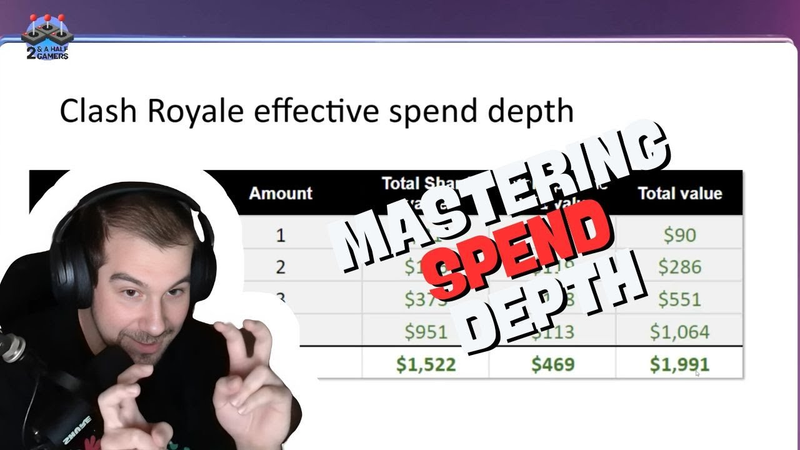
Mastering Effective Spend Depth in Gaming by Jakub Remiar
Effective spend depth is a critical metric for game designers and developers to understand, as it represents the specific resources required for a player to access and complete end-game content.
- Spend depth is the total monetary value required to acquire every upgradeable asset in a game, while effective spend depth represents the specific resources needed to access and complete end-game content.
- To calculate spend depth, anchor the game's economy to real-world currency by analyzing the cost of hard currency bundles and the total shard or resource requirements to max out all items.
- Effective spend depth is often lower than total spend depth because players typically focus on optimizing a specific loadout, such as the eight cards used in a Clash Royale deck, rather than maxing every available asset.

Tools and Tactics That Help Small Game Studios Nail Big Results
Small game studios can achieve significant results by integrating monetization mechanics directly into core gameplay and leveraging artificial intelligence to overcome resource constraints.
- Small studios should prioritize integrating monetization directly into core game mechanics rather than attempting to back-engineer revenue models after development.
- Testing should focus on early-stage metrics like CPI and retention before introducing monetization, allowing studios to pivot based on player engagement with specific items or features.
- Live ops, such as limited-time events with unique progression paths, provide a scalable way to introduce new content and revenue opportunities without overwhelming small teams.

Com2Us’s Evolution: Gaming Innovation and Global Expansion
Com2Us has established itself as a global mobile gaming powerhouse by successfully transitioning from a feature-phone distributor to a leader in live-service, free-to-play models.
- Com2Us has achieved over $3 billion in lifetime revenue from its flagship mobile IP, Summoners War, which served as a primary catalyst for the company's global expansion.
- The company successfully navigated two major industry shifts: the transition from premium mobile game sales to the free-to-play model, and the move from standalone titles to live operations.
- Com2Us maintains a 'one-build' global distribution strategy to ensure consistency across international markets, while utilizing regional branch offices to provide localized content and support.

GTA VI Online is the Next Big Metaverse Platform
The Epic Games Store (EGS) continues to function primarily as a proprietary launcher for Fortnite rather than a direct competitor to Steam.
- Take-Two Interactive management is tempering investor expectations regarding a UGC-driven metaverse model for GTA VI, framing it as a potential long-term evolution rather than an immediate feature.
- Rockstar Games has reportedly engaged with prominent Roblox and Fortnite creators to explore custom virtual experiences, though significant technical and operational hurdles remain for such a transition.
- The Epic Games Store generated approximately $1.1 billion in 2024, but this revenue is driven almost exclusively by first-party engagement rather than third-party sales.

The Smart Way to Extend Your Game's Lifecycle
The game industry is currently undergoing a strategic shift toward cross-platform development and direct-to-consumer monetization models to combat rising production costs and shrinking budgets.
- Developers can significantly increase profit margins by utilizing alternative web shops like Xsolla, which charge 5-6% in fees compared to the 30% commission standard on major mobile, Steam, and console platforms.
- Successful free-to-play monetization requires integrating revenue models—such as in-app purchases, subscriptions, or ads—into the core game design early to avoid player friction and ensure the economy feels natural.
- Extending a game's lifecycle can be achieved by porting titles to new platforms, transitioning premium games to free-to-play models, or adding multiplayer functionality to legacy titles to drive new sales.

Supercell's Record Year: Crushing It, But At What Cost?
Supercell experienced a record-breaking fiscal year in 2024, reporting €2.8 billion in revenue, a 77% year-over-year increase. EBITDA also saw significant growth, rising 78% to €876 million.
- Supercell achieved a record-breaking 2024 fiscal year with €2.8 billion in revenue and €876 million in EBITDA, representing year-over-year growth of 77% and 78% respectively.
- The company’s financial resurgence was driven by a strategic pivot from organic user acquisition toward increased marketing expenditures and expanded live operations.
- Brawl Stars served as a primary revenue engine through aggressive updates, though the title is now showing signs of revenue deceleration that may create difficult year-over-year comparisons.

TWIG #318 Supercell’s Records, Unity’s Chaos & AppLovin’s Fire Sale
The global gaming industry is currently navigating a period of profound structural adjustment, characterized by market saturation, declining revenue per user, and a strategic pivot away from high-risk, mega-budget projects.
- AppLovin has exited game development by divesting its studio portfolio for $900 million, a sharp decline from its previous $2.4 billion valuation, to focus exclusively on high-margin, AI-driven ad-tech.
- Supercell generated a record €2.8 billion in revenue, driven by aggressive live-ops and marketing for titles like Brawl Stars, though the strategy faces concerns regarding rising user acquisition costs and long-term sustainability.
- The gaming industry is shifting away from high-risk, mega-budget projects toward sustainable, cash-flow-focused models as founders increasingly prioritize long-term ownership over acquisition-led growth.
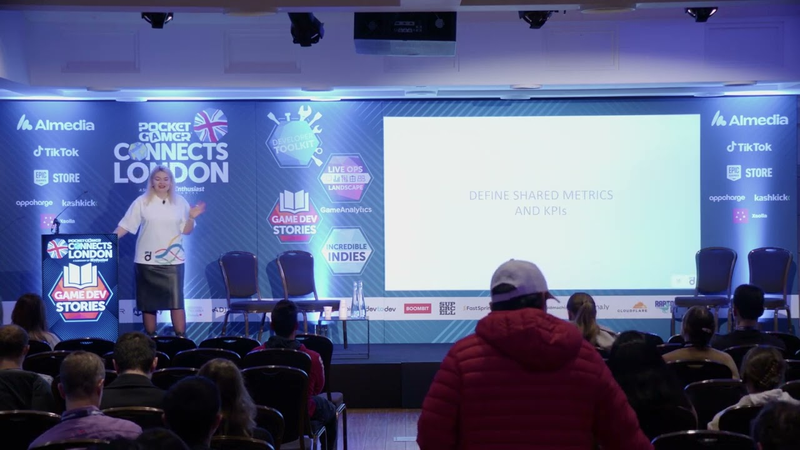
Session: Breaking Silos – Data Democracy To Maximise Teams Effort - Alla Tytarenko, devtodev.
Data silos represent a significant operational challenge in the gaming industry, often resulting in inconsistent metrics, duplicated efforts, and delayed decision-making.
- Data silos in gaming organizations cause operational inefficiencies by creating inconsistent metrics, duplicated efforts, and delayed decision-making.
- Establishing a single source of truth requires defining shared KPIs and documenting them in a centralized, accessible location to ensure all departments use identical metrics for performance indicators like retention and lifetime value.
- Organizations should conduct a comprehensive inventory of their existing tool stack to identify and eliminate redundancies, overlaps, and technical inefficiencies.
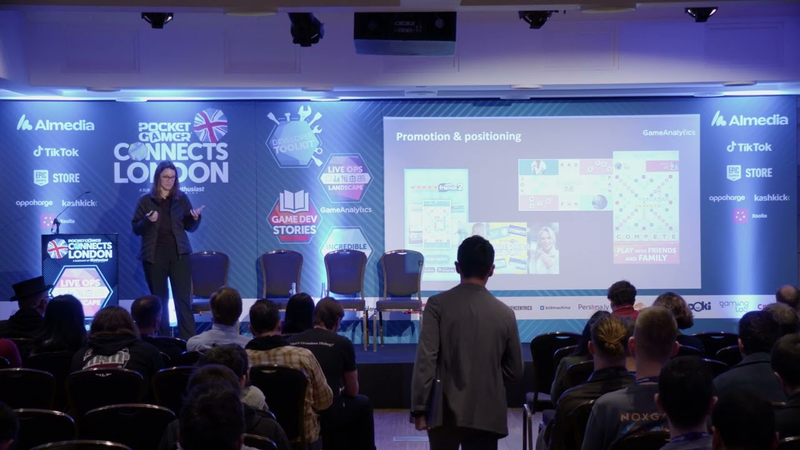
Session: Accelerating Decision Making From Ideation To Live Ops – A Data-Driven Approach With Game..
The primary objective of this analysis is to demonstrate how a data-driven framework can accelerate decision-making throughout the game development lifecycle, from initial ideation to long-term live operations.
- Data-driven market validation during the ideation phase helps identify underserved niches by analyzing competitor revenue, download volume, and advertising spend before writing code.
- High-performing titles like 'Words With Friends' and 'Scrabble Go' demonstrate that even in saturated markets, high advertising volume relative to download rates may indicate a reliance on retargeting, suggesting potential opportunities for new entrants.
- Iterative game design requires balancing acquisition, engagement, and monetization metrics while avoiding analysis paralysis; significant A/B tests should be approached with caution due to their potential to fundamentally alter game performance.
Session: Hay Day – 12 Years Of Growth & Scaling For Longevity - Maya Hofree, Supercell.
Hay Day, a mobile farming simulation game, has maintained a stable and growing player base for over 12 years by adhering to its original design philosophy while scaling its internal operations.
- Supercell maintains Hay Day's longevity by adhering to its original 2012 core pillars: defining the farming genre, leveraging tablet-specific touch mechanics, and avoiding overly complex systems.
- The Hay Day development team has scaled to 50 people by splitting into three autonomous 'sub-cells,' each empowered to make independent decisions within their specific domains to maintain agility.
- Supercell’s organizational model relies on small, independent teams that prioritize long-term player experience over short-term revenue scaling, aiming for games that are played for years and remembered forever.
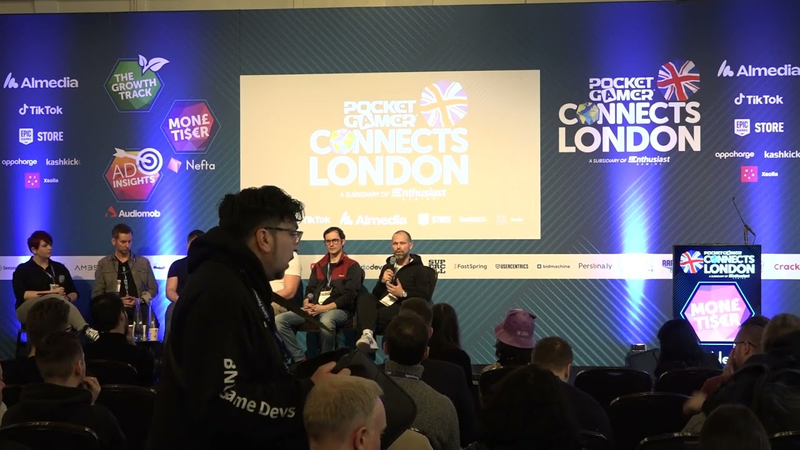
Curated Panel: Leveraging Player & AI-Powered Business Insights – Unlocking Value For Hybrid.......
Hybrid monetization strategies are increasingly centered on the integration of non-intrusive, native advertising formats that preserve player engagement while driving revenue.
- Hybrid monetization—combining in-app purchases (IAP) and advertising—is increasingly essential for developers to maximize revenue, as simply adding more ad placements often degrades player retention rather than increasing income.
- NOXGAMES successfully utilized AdInMo’s in-game advertising platform to cross-promote their high-value titles within their casual sports games, effectively leveraging shared themes to drive installs for harder-to-market games.
- Strategic ad placement requires rigorous A/B testing on new installs to ensure that monetization efforts do not negatively impact player retention or user experience.