VideoThe Game Business
How six million Call of Duty players sent Helldivers 2 into a tailspin
1 Apr 202539 min video
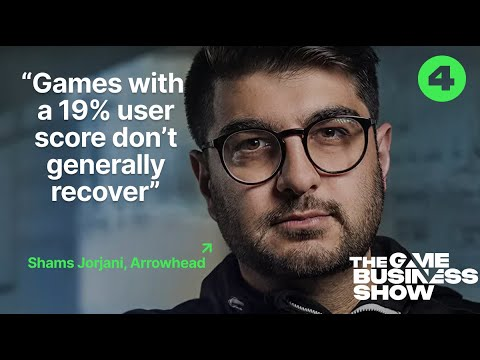
We're running a live service game. People can't be off for the next 3 months, but that's what happens in Sweden because we take our summer vacations very seriously. We did not make Hell Divers for 6 million Call of Duty players. But we do now have 6 million Call of Duty players who've bought our [Music] game. Hello and welcome to the game business show with me, Christopher Ding. Today we are speaking with the newish CEO of Arrowhead, Shams Georgiani, 12 months on from the surprise success of Hell Divers 2. If you're new to the Game Business Show, we are a brand new media brand all about the business of video games. We have our show, which you're either watching or listening to right now, our newsletter, we have a website, and we're even doing live events, including one in LA in June. We usually put out our show every Tuesday and Thursday, but we often drop bonus episodes. If you don't want to miss a beat and want to keep up to date with all the big breaking stories, head to the business.com and stick in your email in there. That way you won't miss anything. But that's enough of that. Shams, welcome to the show. Thank you
for having me. I'm honored to be here. Well, we spoke last year when you took this job of being the CEO of Arrowhead. How is the uh how is I mean it's not quite is it quite a year? No, it's nine months. Um but in a year in Arrowhead is seven normal years. So, uh, it's been quite a while, it feels like, especially in the first year of Hell Divers. It's been one heck of a roller coaster, uh, on a year, but I mean, that's why I took the job because I wanted a a fun adventure and oh boy, has it been an adventure? Well, it certainly started very strongly. Johan, who's I think stepping away now um for a little bit, taking a bit of a sbatical. Have you been able to successfully keep him away from the running of the studio? Uh, yes. I mean Yan and I and have known each other for 16 years and he wouldn't have asked me to join unless he felt I hope so he could trust me. So I think we naturally fell into a rhythm of being able to support each other. He's we talk often in uh role playing terms. We're
both multiclass and he's a the game designer first and the business person second class and I'm the reverse. So we kind of find a natural kind of uh rhythm in that and and drift of each other. U but it's been great. Do you feel like then you've lost your uh important partner in crime? Yeah. The Chewbacca to my Han Solo as I referred to him. You would hate that. Uh no, but it's so one of the reasons he took the job obviously was like he's been doing this for 16 years nonstop. Really never been on a vacation either because he's always been doing what he's loved and as a CEO generally for a startup you do not get to take time off. So it was after the launch was absolutely amazing. It took everyone by surprise and then we had a number of months of scrambling and then it's been this roller coaster. You know, Sony does something and then we kind of recover and then we shoot ourselves in the foot and then uh we do something to come back and they shoot us in the foot again and then up and down
and up and down and then finally I think during the when we came to Christmas it became clear that the man needed to take a proper vacation and and time to play some other games. So that's really what he's doing. Taking a bit of time off. We're going for uh beers in a couple of days, but it sounds like he's recovering. This is the thing. It was a shock success. Yeah. You've had to go on this learning journey, right? And you've got we've got a publisher in Sony that you know isn't a live service expert either or at least these sort of games. And it sounds like it's been a baptism. It that's exactly what it's been. It's it's been I think it took us all by surprise and then I think Sony knew and we knew that we were not fully a full-fledged live service studio because we absolutely were not. It took 8 years to make this game. Arrowhead was always used to doing postlaunch support with with DLC and stuff and quite a lot of it but it's a different thing to be a live server. So there was a man scramble to
kind of keep up with the intense success and you know the saving grace was that this was a troubled development cycle. It took 8 years to make and it shouldn't take 8 years to make a game but during those eight years a lot of stuff was made and put to the side and we put them in what we call the seller. So after the mad release of Hell Divers we were like oh we need to release stuff because the players are screaming for stuff. So all the stuff that we planned we had to kind of get out faster and then we kept reaching into the seller pulled something out and we're like okay what if we just uh you know fix this up and that's you we just kept jamming out stuff and that was the the saving grace that allowed us to keep the momentum going those first few months and we had we peaked at around 750,000 players and then over time it went down and then the honeymoon kind of ended and we started running out of stuff to do and the the we also ran out of stamina. So when I was asked to step in in May of last
year, they gave me the keys to the to the to the car and they told me we're going off on summer vacation because we haven't been taking a lot of vacation over the last few summers and I was like we're running a live service game. People can't be off for the next 3 months, but that's what happens in Sweden because we take our summer vacations very seriously. So it was it was rocky there. And then um we kind of came back, but then we had you know the the the Sony account linking kind of adventure and it turns out that you when you made a game that trains the community to gather around communal goals, they were very good at showing what their pleasure and displeasure. So we went we went down to like 30 in user score and usually that's the death nail for a game, right? But we came back from that and then we fumbled with balancing and the focus for the game and that sent us all the way down to 19% I think was the lowest. Oh wow. And like games that get 19% user score do not generally recover. And maybe the lowest point
during my tenure so far there's going to be many more I think was during the summer when everyone was away our user score was down to 19. And I had to get on a call with Herman Host and explain to the the the CEO of Sony why things were in the state they were and what we were doing to kind of recover. And I have to say the awkward, you know, truth that there is nothing we can do in the immediate short term to resolve this. But in the long term, we have plans that will get us back on track. And we issued a 60-day plan that put us back on the track. And we did an update and an update and an update. And I was very much inspired by uh No Man's Sky uh and the team over there uh that had a similar kind of uh journey, very hyped, then bombed and then they put their head to the grindstone and just updated the game. And since I want to say since September, we've been on a very good trajectory, but it's been we've been just penduluming between it's so over and we're so back and it's
become a meme within the community. But uh we we've so we went from 19 to 94 positive on Steam. Oh wow. Like the MCU with uh but in like one one title. Exactly. And this is this is you know it's exactly 12 months since launch. But uh all of these things I described to you happened during the last nine months. It's it's been a real real uh roller coaster and it's we're still coming to grips with the phenomenon that this is like you know Arrowhead and myself have been involved with releasing successful games but it's always hard to gauge how how much of a phenomenon it becomes and how many how much of a it wins hearts and minds right and it touches people in a lot of different ways and that's that's why we love it. What reassured me got data partners like Ampair and stuff that share with us a little bit of information. And what reassured me is that winning over lots of players at the beginning, you know, we've seen games do that a lot, but the challenge is obviously particularly in the live service space is that people have probably got a game that they would they left in order to play your game and
then they just end up going back to that game eventually. That's where they've spent their time. It's where they spent their money. It's where their friends are, which I guess probably happened to you as well. But then I looked at the numbers in December and I'm like, oh, you've got those people now that are coming back to your game. You are now one of those titles. Absolutely. And we know that the players on Steam at least, we know that they try new things, but they generally then go back to their old titles. And most of the games they play are, you know, up to seveny old games, new games that have a very hard time. But I think that's through the hard work of the developers, uh, we've managed to kind of cement ourselves as one of the go-to co-op social games that people play. People have drifted off from PvP games and are playing PvE Hell Divers. Uh now it's uh but it's but it's been a real um journey in that sense and I I really it's it's the core gameplay loop plus the the game master feature that really pulls it off I think. Uh and I we you're right on the numbers is that we managed to for the for the December
release that was tying with the TGAs and winning a couple of awards. We we reactivated and got 250,000 players back into the game. So that was the peak again in December. Is that concurrent? Concurrent. Yeah. Wow. Um well how is she you talked about okay you weren't a live service studio ourhead wasn't a live service studio and now sort of is has there been much change then behind the scenes some change and I think this has been the real challenge right because one of the things that was really important to us here in the studio was to have manageable growth and what happens with a lot of companies when they hit and you have the financial means you start hiring And I think it's it's that classic Jeff Goldbang quote from Jurassic Park. We were so preoccupied with if if we could, we didn't uh talk about if we should. Um and you know, from my history having been at companies that have grown very rapidly and worked with a lot of companies that have grown
rapidly, I know what happens when there is uncontrolled very rapid growth and it can lead to disastrous effects. And I was very conscious about not growing too fast within our walls and doing this in a sustainable way. Uh so that required a bit of hard calls on our part. Uh, and we said it we're it's going to take a bunch of months for us to figure out some of these things to do live service our way because we can't take the playbook from Apex or Dota or Dark Tide and say it's going to work for us because it's every game is different and and we wanted to do it in a way where we stayed true to the tenants of the company which is a game for everyone is a game for no one. That's how we make games. We wanted to do it in a way that was respectful of our developers work life balance and also I wanted to do it in a way that lived up to one of the mandates I have as a CEO as as I was brought in. One of the mandates is run a
profitable games company but it also is to be a force of good in the industry. And what I want us to do is to be kind of a role model for how to do sustainable growth because what we're seeing in the industry today is that the industry is not in a good place. And a lot of companies are shedding a lot of jobs and it's not the people on the top are losing their jobs. Uh it's a lot of people who have mortgages and families who've moved half across the the world to take jobs and then because of bad growth decisions made as a part of business leaders uh because they've been unable to read the market or what's happening and taking stupid risks has led to a lot of other people losing their jobs. So I want us to be on a path of sustainable growth and that's why we're not hiring like crazy. We're growing a lot some through our code development partners, but that's been incredibly important to me and that's what we want to be able to show to the industry how this could be done. Um to
to be frank, codev seems to be a direction lots of people are going in when they need to scale up fast. Yeah. The approach you've made. Yeah. Um and there are multiple different reasons for it. First off, we are a studio that is uh based here in Stockholm. We have a strong belief that studios can be remote but we have chosen not to focus heavily on remote and we would like to be kind of uh local. So we want our core teams to come into the office and and and be available. Uh we have a lot of people who do work remote and they can stay remote for a very long time. So there are limitations in how much we can grow in Stockholm. There's I just can't get people to move to Stockholm. That's just the reality of it. The second thing is that we don't want to grow too much here because there's uh there's just our culture transfer rate as as we call it is is what it is and we can't and don't want to become a giant company of 200 250 people where people don't know each other's names. But at the same time we wanted to you know meet the business realities of the game and there are code
development studios out there who have the skill set the mindset and uh you know interest in collaborating with us. You know a year ago we were not working with uh many code development studios but now we're working with a handful and deepening those relationships. Some of them are embedded here in Stockholm. Uh others are nearby in in in the UK and please. Oh okay. Has anything surprised you since taking the role? I don't know. I don't the game journey seems to have surprised you, but like anything else that's since taking on the well a couple of things like it's again the whole phenomenon thing this like games can become popular but I wouldn't say it's a religious experience but for some this the game has been truly truly unique and and and I think sometimes we as developers can become myopic because we've been living with hell divers for quite a long time and we've been thinking about the game master future but when we actually put it in the hands of the players truly magic starts to happen and it becomes a phenomenon in its own sense. An hour and a half ago, a planet in the
game was blown up. It permanently was removed from the game and people cannot go to that planet, Angel's Venture. This planet was the first planet that was opened up for battle when the game was launched and now it doesn't exist as a result of a number of different events that were in the hands of the players. Had they made different choices, it would have been maybe no planet would have, you know, been exploding. So this this is this has been the like I did not anticipate how much people would lean into the role playing aspect of this and there have been a couple of stories throughout the the the the year that have been truly moving. Um you know we we issue challenges to the players and take this planet and you'll get this reward live service staff, right? So the reward is you get these anti-tank mines and then the players tried to take the planet and they failed. And then 3 weeks later we were like here's another planet. You take that planet, you take the arms factories, you get the anti-tank weapons and again they
failed. Then again we issued the same challenge and we said you can get the the arms you can get the mines if you take this planet or you save this other planet that has sick kids in a hospital but you can't save both. So it's up to you the community. which one do you want to save? And the community overwhelmingly chose to go and get the uh sick kids, digital fictitious kids in this fascist, you know, super Earth society, but everyone role played the fantasy and we made the donation to save the children. And again, with this planet thing, our concurrent player count jumped by 30,000 players who just logged in to see what what the hell was going to happen with this planet as a blue. It's like if you want to talk about new stuff in terms of like surprising I did not think that we would see this level of engagement or retention if you want to call these kind of business but but truly people are passionate about what's happening in the game thanks to this game master features. So that's that's been one of
the big uh surprising things. I think the other big surprising thing and this is maybe going to, you know, paint me in bad colors is is I came into this thinking that the relationship with PlayStation would be quite different. Now I have 12 years working at Paradox as a publisher. I assumed Sony having paid a lot of money for this project would exert a whole lot more control and and and run the show more or less because what do these wild kids here in Sweden know? But I've been very pleasantly surprised to see how creator friendly PlayStation has been as a studio. Truly, truly impressive. And it's, you know, there have been fumbles, of course, any company does. and you know, but they've been an amazing uh partner throughout and I think that they're uh they have a bit too much uh flag from from the community at times, but they've been truly like Hell Darvis
would not exist if if PlayStation was not so focused on creating cool stuff for players like and I'm not smoke you blowing smoke up their ass like they've been a genuinely good partner in this. Uh so that that that's the second big surprising thing I would say. Huh. Going back to your thing about the game master thing, we talked earlier about live service online games and people leaving and and getting how to keep those people. Is it the games master element? Is it those story moments that's enabling you to keep players coming back? I I'll say it's a huge driver. Like obviously we try to put stuff out as as fast as possible and as often as possible, but again there's a limitation in how much stuff we can put out and we had a faster pace in the beginning and that led to quality problems. we slowed down as we bring in one more code development. We'll probably get to leaprogging so we can increase more. But I was talking to the uh uh Genchin Impact team, they have 1500 developers working on stuff and releasing stuff regularly, it's still not enough for the
players. So despite us dropping really cool updates and new factions and new weapons and all this stuff, it we just can't keep up and nobody can keep up with the content. The other thing that keeps people going has been the role playing factor and and the game master feature and all the memes. And if you go onto our Discord and talk in in in in universe voice, people just play along uh with the joke and satire of the IP and and that's that's the lovely part of it. I went to Comic- Con in London in in May last year and I saw loads of people dressed up for characters in the game and that game been out a few months and to suddenly see that immediately appear in a pop culture event, it's no it's it's mindboggling. And you know, we live in strange times. It's 2025. Fascism is on the rise. I don't know if that's playing in to the the the uplift effect for the game or maybe it's exactly what people need to be able to deal with the dark
times surroundings. I was on a call with another games publisher. I was talking about the two of the big game hits of last year, mentioning your one but also mentioning Space Marine 2. Yeah. And he goes, "What is it with Space Fascism in 2024 as the world is more polarized than it's ever been. And when you get games that paint things in uh black and white, it kind of rhymes with that because reality is not black and white despite people wanting to reduce it to that. But it's it's simple. It's a escapism, I think, on some level. Um talked about so many of the challenges that you've overcome and you seem to be in a good spot now, but what would you say are the biggest ones? What has been the thing that's been like, okay, was it that summer? Yeah, the summer when I was there, the captain of a ship, the ship was tied to the dock. All the crew was on shore leave and Sony were knocking on our door asking, "What the hell are you doing?" That wasn't great. But I would say like the real challenges has been for us to maintain our integrity. The slogan for
the studio is that a game for everyone is a game for no one. So, we did not set out to design Hell Divers for a wide audience. We made it for a niche audience. And our belief is that if you make an uncompromising game experience for a very specific audience, you have the ability to resonate far outside of it. And we've seen this happen many times in video games and even outside the games from software games. Buck the trend. They were very brutally hard where every other game was about handholding. And that's, you know, an entire genre and a lot of success has been born out of that. Uh, Escape from Tarov is the same thing. It it it bucks a lot of the PvP trends. And if I told my wife 10 years ago that we'll be watching seven seasons of Game of Thrones about some dudes with swords running around and dragons, she was like, she would not be on board for that. But somehow she was on board for Game of Thrones and then we're watching the next show. And HBO is very good at this, creating these uncompromising alter visions, letting them come to life. So, we did not make Hell Divers
for 6 million Call of Duty players. We absolutely didn't. But we do now have 6 million Call of Duty players who've bought our game. Wow. And they are interested in different things compared to say the audience that comes from Escape from Tarles or Arma which were some of the more you know influential games in in that kind of game. So the summer of pain or whatever we want to call it was painful in part because it was hard for us to reconcile how to stay true to the studio fundamentals while dealing with the business realities of having so many different voices screaming at us and and you kind of I'll do a big GDC talk about this at some point but to kind of boil it down any modern game understands that their audience consists of many different segments and And it's very hard to give everyone everything they want at the same time. Destiny has PvP content. It has PvE content. It has story content.
It has uh big raids. These are for different audiences, right? And Hell Divers kind of puts everyone into the same funnel. And now we're getting to the point to kind of uh figure those things out. But the thing that had us kind of, you know, lost was that we kind of got away from the core fantasy of the box. It literally says on the box, you know, kill monsters with overpowered weapons. And in our kind of strive to find balance, I think we uh we ended up balancing the game in a in a way where the core fantasy kind of died and that's we got the backlash. So I think the real big challenge for us, yes, has it been hard to figure out how to work with a number of code development studios, how to get stuff out every six weeks or whatever it is at a at a good quality and pace. We're still learning how to actively talk to the community and we don't do this enough. But truly, it's been game direction for a game that's been in development before it reaches the audience is one thing. It's another thing once it's out. And I think maybe
part of that is that Yoan, you know, passed on the the the torch to other folks. Uh and his voice was needed, but he was not able to bring his voice to bear because he was also running a company. So, a lot of these things have fallen into place. And I wouldn't say that we're out of the woods yet, but we're in a much better spot. And what we talk about always is that we want to be kind of a flagship studio. And we want to always be able to look back at ourselves 18 months ago, 6 months ago, and say, "Oh, man, I'm so embarrassed about how how uh we knew nothing back then. Oh, sweet summer child." And now we're maturing and learning more. So that onwards and upwards growth journey is very been important to us. It's interesting. One of my favorite live service games in recent history is Sea of Thieves. And um and Sea of Thieves is a g is a pirate game, right? And I like a bunch of people on Sea of Thieves hate the piracy part of the game. I I like hanging out with my friends on a ship, going on adventures, and it's fun. And then somebody comes along, sinks my
ship, and steals all my treasure. And I'm furious. I hate the game. I'm angry with the game. And um and and I think Rare had that issue. Oh, hang on. All these people people don't like that. So let's tone that down or let's tweak it like this. And then I think over time they've come to realize no I'm afraid that's what the game is. The game is a game about pirates and that's going to happen. This is where product you know development comes in and the tricky parts of it and you know if you you know you and I both being business and industry nerds to me the most interesting kind of case of this is was when Nintendo launched the Wii because they were on equal footing with all the the the other big platforms as a hardcore gaming platform but they very much clearly decided to you know what we're going to try a different strategy and we're going to go for a much wider kind of audience and thereby forsake some of that hardcore audience. But that gamble very much paid off. They positioned themselves completely differently and outsold both of the other platforms put together. But the pain of that was that they had a lot of hardcore players who were looking to
their platform for hardcore games and they were not quite getting them. So in Nintendo's case, I think that that they pivoted away from a strategy. For us, it was about finding like who is the game for? We're not We don't want the game just for the Arma and Tarco players, but we also don't want it only for the PVP COD players either. So, who is this for really? I guess that's what that's the journey you're on. Yeah. What's really fascinating about it, I found, is there's a Hell Divers movie. Yes. Right. How has that been how's that gone down in the with the team? I should say that this is not like we are a game studio. We're lucky to work with a company that also has a very strong film division and my sense is that when they want something done and and see that there's something to capitalize on, they've been pretty good at moving on it. Sony has a bunch of really great people that we talk to on the regular. We talk about the IP. We talk about the game, where it's headed, we talk about our capabilities, and they're running the
movie. We're super excited to see what comes of that. It's Hollywood, so so who knows? But we are so excited to see if we can take some of the things that the community have made like the the children's hospital thing, the planet got blown up. If these things can be referenced in the movie, that's that's made by the players. That would be so so cool. We would love to see all those cosplaying people have, you know, background extra parts in the movie. But I tell people, please do not email me about getting parts in the movie. I have zero say in that. But we are super excited to see that come to life on some level. We saw Hell Divers being featured in in the Secret Level uh episode. Uh which was super cool and it's we're kind of reeling understanding how big of an IP this is because like and and this is one of the big challenges for the studio like we are the same people we were 12 months and a week ago, right? But we're also not the same because suddenly now
we're playing in a different league. We're playing like division three and now we're in Champions League, right? And it takes time for us to kind of figure that out that we're being held up to a different standard and scrutinized against a different standard. So while a lot of studios will look at us or people will look at us and say like they're biggest fully established studio, but we're like yeah but we were quite you know indie and learning the ropes just 12 months ago. We don't naturally kind of we need to rise to the occasion and and fully realize that. So but there's a bit of a lagging effect to that as we kind of catch up. If you could pick three lessons that you think the industry should know from from what you've learned over the last well nine months I guess what would what what would your three be? Well that's a good question. I think I think it's really important I take this with me from from the paradox days as well but I think it's incredibly true uh still for our game. You have to eat your own dog food. We talk to the community all the time. We read what they post. We play the game and uh we we
stay in touch with them. They pay our salaries. They have created this this success and we need to listen to them and we succeed the most when we give players what they want. But I will balance this out with we have a lot of different voices and our job is to be it's kind of a doctor patient relationship. If if the patient comes in and says I have a pain in my foot can you please amputate it? Our job is not to amputate the foot, but to figure out what will fix the problem. And we as medical experts hopefully be able to, you know, suggest other solutions that will have the problems fixed and we have a lot of people screaming for amputations and we don't want to amputate folks. So that's I think one of the big things and I see this fumbling happening in the industry quite often and this is comes back to I think PlayStation strength as a partner like sometimes there are directives strategic from big companies that come and say you have to do this because X Y and Zed um
and the directives that we are being given are the same desires that we have that we see mirrored in the wants of our customers and players and that we would like to see ourselves. Like I'm I'm big on just being truthful and authentic about the stuff because if you just if you give them what they want and they'll tell you what you think, you can have a healthy relationship. But if you're trying to put lipstick on a pig and sell it like something else, that's when you run into trouble. So I think that those are one of the learnings. I think a second one is that we shouldn't take yourself too seriously. like this is a fun game. And one of the the reasons we get away with this still fumbling and and screwing up from time to time is that we show people that we're still human. We go to work every day like everyone else. Our job happens to meet make a game. Sometimes we have good days and sometimes we have bad days. And uh if people understand that there are humans on the other side with families
and uh jobs there's a little bit more understanding and I think that we've built goodwill and trust that even if we'll fumble from time to time we'll still do right by them and come back and do uh do the right stuff. So so maintaining and building that relationship and I think the third learning maybe this is more and we touched upon this. I think that it it comes back to sustainable growth. I wish that our industry hadn't shed almost was it 20 30 40 50,000 jobs the past 2 years. And the reason for that is that a lot of people in the top were making very unound business decisions and there's very little accountability on their part. who on these among these executives is stepping down from the positions because they took these shitty decisions or slashing their salaries. That's not generally happening. What's happening is that regular folks, regular developers are
are paying the cost of that. And I think that that's a terrible way to to manage and run our uh our industry. And uh just because you can hire or grow the triple in size in six months doesn't mean you should or that it's the best thing for the studio's long-term uh health and uh you know also business health I would say. Yeah I would say that. So it's just because you can grow doesn't mean you should grow. It's you know try and keep the humanity and the connection with the players so they see the human side of you as a studio. And then I guess there's the working with the community to work out what it is they actually want from their game. Yeah. And I'm not saying don't grow, grow, but do it in a way where you don't have to then let go of onethird of the company because you made stupid decisions. Like try to be sustainable in that. So I'm not going to go out and hire 100 people. I would like to hire 100 people and help people in the industry, but like my first priority is just to make sure that people have jobs for many years. You've got to think about your team as much as um as much as
the people bringing it. Um, well, we're sort of I'm wary of the time, but I mean, you are a podcast and industry podcaster yourself and there's a lot of negativity around the games industry at this point in time. How do you feel about the industry overall outside of the uh mistakes it's made in recent history? You can be a little bit cynical where we are, but I think that there's light still. What was it? What was the John McCain quotes in in 2008 before the US economy crashed? The fundamentals of our economy is strong. I mean, I I'll I'll use the same quote. I think I think the fundamentals of the games industry are strong in the sense that I don't see people playing less. That's not happening. It's not like people are shifting away from their gaming habits into consuming other forms of media. I mean, gaming is strong in its itself. Um, so and there there is a whole generation of Roblox, Fortnite,
Minecraft players constantly growing up, becoming a little bit older, having more disposable income, and gaming is fully ingrained in how they play games. I have an 11-year-old daughter. You talk to her classmates, it doesn't matter what gender we're talking about, everyone plays game on some level. This is fundamentally different compared to 10, 15, 20 years ago when you and I grew up. Yeah, we were a we were a minority back. Yeah, there used to be a time it was just kids and people who identified as gamers. You didn't have it. It's not ubiquitous. It's it's truly ubiquitous and not everyone would describe themselves as gamers, but they end up playing a lot of games and it's a social space and all of that and all of this these things are pervasive and going to be driving games are not going anywhere and we're stronger than ever. What is happening, however, is that there are number of dinosaurs in the industry and big entities that are looking at their playbooks and realizing they're out of
position. When you have an industry that is changing this fast, having games that take four to six years to make is just strategically poor. My fundamental belief and you know my good friend Maria Cornelius who's our chief product officer says this all the time. The best way to become an expert at something is to make many repeated bets over and over. Do the same thing over and over and you will achieve mastery. But if your bet cycle is six and seven years, it's really really really hard to hit the landing. I think that Concord was probably a good call when it was signed initially eight years ago. Overwatch was maybe in a in a in a vulnerable state and it looked good at the time and then over time you do this kind of salami negotiation with yourself and then four years in you're like well it's uncost fallacy you have to keep going and it's terrible for the industry when these bets don't pay off and and and I think the trick for some of the big companies is that you can't ask a 300 person team to divide themselves into 30 10man teams and have them put
out games because it's a different skill set. Yeah. And uh what we're noticing now and it was very you know poignant in the sense that Hell Divers and PAL World came out roughly at the same time and both became super big smash hits. I think they've sold many more copies than we have. But relatively speaking, they were much smaller projects and games than any of their peers. So if I'm if I'm managing a giant ass portfolio, I should be asking myself, why am I spending all the money on 300 person studios when there are teams of 15 to 70 people doing more successful things? I did this analysis for a company the day and the bestselling video games in Europe. So the top five new games released last year, right? So it's Call of Duty and FIFA at the top, right? That's where they always sit. No. Then it's you. It's Hell Divers, the third bestselling new release last year. And then it's Space Marine 2. Yeah. Then it was I mean Power World was probably in
there. The Power World date data was not quite there. Black Myth is probably in there globally, but then and then it's And then it's um Dragon Ball and and so and just but when where's Dragon Age number 68, Star Wars Outlaws 47, Final Fantasy 7 Rebirth just out just just inside the top 50. And these are games with big teams, big budgets, big brands. And I think the big difference between and you know I'm the chairman of the board at Hooded Horse as well and many years of Paradox and follow a lot of different publishers closely. The the challenge is that the everyone needs new playbooks almost everyone and there are some exceptions to the rule and I I wouldn't say that you know our like I wouldn't go as far as say that we're a black swan event uh but clearly some things worked out and there are larans that can pull Balders's Gate 3 off. I don't think others can go and then say, you know what, if if Larian can do it, then so can we. It doesn't work that way. Um, but the trick is now is that the bottom has fallen out of the industry, at least on the PC side and
maybe on the console side as well, where you could expect to sell 300K of a game 3 years ago. That's 30K now or maybe 3K. There is no lower end. And that is that is super scary when you have a cost base like Ubisoft or some of the bigger players. And I think that if you're 2K, you're kind of safe because you have GTA that is basically an industry in itself. Uh but everyone else, unless you have a very focused business like Paradox does and some of the other companies, you're in a very tight spot. And uh it's going to be really interesting to see. Now the waters are receding now and we're going to be seeing who's who's bathing naked uh the next few years. I'm conscious of the time, so I'm going to have to stop there. But thank you so much for your time, Jams. It's been a pleasure to have you on. Thank you so much. Enjoyed this greatly and um good luck with the journey that you've got ahead. Thank you. Our video game subscription service is a
good or bad thing? Bad. Which Star Wars trilogy was the best, original, prequel, or sequel? Oh, come on. It's It's the original, of course. Will game streaming ever become a mainstream proposition? Yes. What's the first thing you do when you get into work in the morning? Uh, check Discord and Reddit. Will Nintendo Switch 2 out sell Nintendo Switch One? Yes. If you could be CEO of any other games company, which one would it be? No company. That's a dodge. Uh, best album of all time. Oh, wow. Uh, Californication. Oh, that's a bad answer. What one thing should games companies think about but probably aren't? What the players
Auto-generated captions from YouTube — names and numbers may be misheard.
The rapid trajectory of Helldivers 2 serves as a case study in the volatility of modern live-service gaming, illustrating the challenges of scaling a surprise hit while maintaining creative integrity. Following a chaotic launch that saw user sentiment plummet to 19 percent due to technical instability and management friction, the studio successfully pivoted to a recovery strategy that restored positive reviews to 94 percent. By eschewing aggressive internal hiring in favor of strategic co-development partnerships, the studio has prioritized sustainable growth and the preservation of its core culture, aiming to cement the title as a long-term, social-focused PvE experience.
Central to this success is the integration of dynamic Game Master features and community-driven role-playing, which have proven essential for sustaining player engagement. Navigating the tension between a massive, diverse player base and the game’s original, uncompromising vision remains a primary challenge. The studio posits that developers must act as medical experts, diagnosing the root causes of player dissatisfaction rather than reflexively implementing every community request. This approach allows the team to maintain the game’s identity while fostering a productive, creator-friendly relationship with publishing partners like PlayStation.
The broader gaming industry is currently undergoing a necessary correction, as the limitations of bloated development models and unsustainable growth cycles become increasingly apparent. Smaller, agile teams are demonstrating greater efficacy than massive, high-budget projects, highlighting a shift toward more disciplined, player-focused strategies. Despite recent market instability, the fundamental demand for gaming remains robust, anchored by a demographic that views interactive entertainment as a primary social medium. This transition signals a move away from the industry’s previous reliance on unchecked expansion toward a model defined by accountability and long-term sustainability.

The Game Business · 2026

The Game Business · 2026

The Game Business · 2026

The Game Business · 2026

The Game Business · 2026

The Game Business · 2026

The Game Business · 2026

The Game Business · 2026

The Game Business · 2026

The Game Business · 2026

The Game Business · 2026

The Game Business · 2026

Deconstructor of Fun · 2026

The Game Business · 2026

The Game Business · 2026

Deconstructor of Fun · 2026
Deconstructor of Fun · 2026
Starbreeze Entertainment · 2026
The Game Business · 2026
Paradox Interactive · 2026
Deconstructor of Fun · 2025
Newzoo · 2025
Deconstructor of Fun · 2025
Deconstructor of Fun · 2025
Comments