VideoDeconstructor of Fun
Habby's Wittle Defender vs Disney Solitaire: One of them is a Future Hit!
26 Apr 202514 min video
Transcript
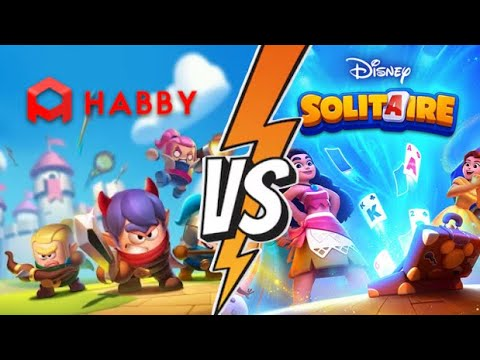
[Music] All right. So, I wanted to talk a little bit about solitaire. I know we did it in twe 315 with Laura, but what's happened recently is Super Play is announcing Disney Solitaire. And so, I just wanted to point out all the irony going on in this subg genre. So, Mishka is actually playing the video showing Disney Solitaire. So for this category, just really quick, you know, it's one of those I I think Crest would call it a mice nuts category. Top seven, top revenue subgenre in casual puzzle in the US according to our friends at sensor tower. Actually technically solitire runs in a card category. It's, you know, pretty big. So this is also a genre that is highly IAA inapp ad driven and also has a lot of RMG real money gaming components and competitors which I touched on last time as well. Why am I mentioning it this time is it's the
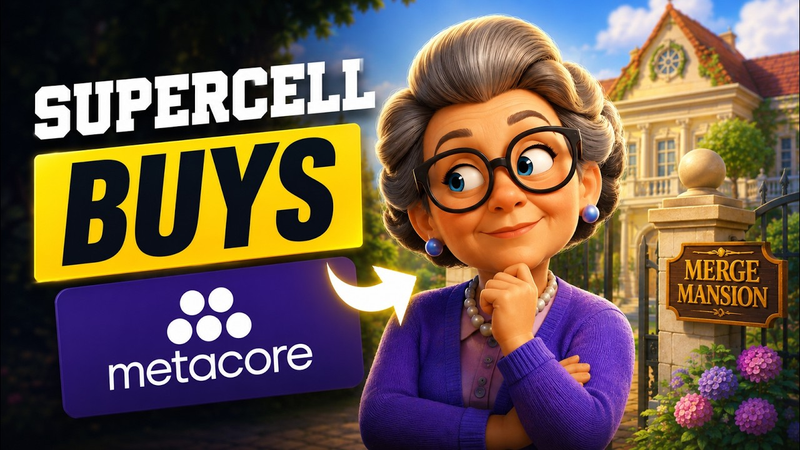
irony of what's going on. So number one it's really weird that Disney solitaire is coming from a Playa owned studio and the leading solitire game is Grand Harvest which is operated by Playa. So that's kind of an irony. The genre is super crowded. Candy Crush Solitaire launched in February, which is why we covered the first time. And so there's another King that's in market that's called Pyramid Solitaire Saga. And King talked a lot about using those learnings to help with Candy Crush Solitaire. So okay, two companies again with, you know, Solitaire games. And then you're starting to see brand extensions. And so this is where a little bit of my advice comes from. So Metacor, who we talked about earlier, they're Merge Mansion, and they're crushing it with Merge Mansion. So they have a soft launch game in Solitaire called Grandma Solitaire. If you remember, Merge Mansion is the videos with Did Grandma Do It like all of those like UA ads with the grandma looking like she killed somebody. So I, you know, I looked at Sensor Tower and,
you know, tier one ranked by revenue and it's such a smaller category, but if you're a brand and you're a game and you want to expand into multiple genres, my one piece of advice is make sure you use the name of your game like Grandma Solitaire is not going to get you any SEO love, unless on purpose you're not trying to and you want to change that later. That becomes a little bit of a nightmare. But you know, Candy Crush Solitaire, Disney Sol, use the name of your game and your SEO, please just, you know, do that. Take note. So anyway, that's my quick kind of review. Disney Solidar, Candy Car Solidar. Everyone's entering this category. You know, just you wait, it's going to blow up. No, it's not. Go ahead, Mishka. Yeah, I I'm really confused. It feels to me like one of those like, you know, execs making decisions of what type of games to launch and they're looking into back into rear view mirror of the revenues and saying like, "Okay, this is nice. Like, let's come into this category. Seems like the top games don't have an IP, so let's make the same game with an
IP and they slap a Disney or Candy Crush on top of it." And honestly, I don't know if we've ever seen this type of a strategy work out in gaming. like it's hard to to define an example where you were able to come in and put in one of those legacy IPs on top of a game and find meaningful traction. I remember in RTS or those tower defense games like whoever tried to challenge Clash of Clans or Clash Royale, those were kind of categories that I was looking at. All these games came in from Titanfall to Dungeon Keeper to Command and Conquer just ate [ __ ] and died. And I feel like this is the future of these games. No, I think this is a little different especially with the genre and the IP. You know, we talk about the CPI boost for brand. I mean, you already see Disney Solitire getting traction and they're in soft launch. Candy Crush quickly grew and I think is the number three game in the category just launching in February. So, in this type of genre, brands do matter and they're just, you know, copy and pasting gameplay basically from the winners, which to Crest's point is how you
succeed in today's market. Go find what works. Copy it. Put a brand on it. Get a CPI boost. And there you go. Winning formula number 67. So I just believe everybody. This is how you win in today's world. I don't feel like it's how you win. I don't feel like it's how you ever won. But on mobile, look at Monopoly Go, dude. What the [ __ ] They just copied Coin Master [ __ ] bam, dude. Threw a [ __ ] Monopoly thing on there. Eric, that is that is so painful to hear. You seen the Star Wars integration with Monopoly Go? It had like the cutest video of all time as a Star Wars fan. I was like, "Oh my god, this I might actually play again." Okay, not really, but Mhm. Okay. This podcast is brought to you by Appsflyer. In today's digital world, understanding your app's journey from discovery to download is more than just insightful. It's essential. Enter Appslier, the leader in mobile attribution and marketing analytics that allows you to measure the full potential
of your marketing efforts, making every ad dollar work smarter. With Apps Flyier, that's your new reality. Dive deep into datadriven insights that reveal exactly where your users come from and how they'll interact with your app. Appsier, where your app's potential meets performance. Attention app and game developers. Are you ready to unlock the secrets behind the world's top performing apps and games? With Sensor Tower, you get the ultimate competitive edge. Whether it's breaking into new markets, fine-tuning your UA strategies, or boosting monetization, dive into data like never before. Track global trends across app stores, analyze market leading inapp purchase and inapp ad strategies, and benchmark your performance with realtime insight. The best part, Sensor Tower doesn't just deliver data. It helps you turn it into action with intuitive tools and expert analysis. It's everything you
need to make smarter, faster decisions. Thousands of app and game studios, from indie creators to global giants, trust Sensor Tower to help them win. So why not you? Start your free trial today at sensortowwer.com. That is sensorcow.com. All right, let's whittle away the rest of the podcast with your game intro whiddling. That was Okay. Yeah. Let's build fire. Well, let's cook. Let's go. That's a much better one. Okay, so new game, new game in soft launch from Habby. I have a particular interest in this one. I think it's combining a lot of really interesting things and I think it's a great chance to check back in on Habby which I would argue may be having its
wonder kid in years. Heavy vero, Archer 2 are starting to hit kind of their equilibrium, their long run download steady state and it's looking pretty good when you start to include ads and also China and Android. I mean, you could be looking at 200 million a pop in terms of these games. And so, you try to frame it from Haby's perspective, you know, okay, let's say that these are each doing 200 million. you're looking at maybe 400 a year from these and maybe a 100 from the back catalog which by the way it you know when you subtract Cavi Bear Go and Archer 2 out of the portfolio. It actually doesn't look the greatest. Like it's great that they popped off but you know still it it didn't look the greatest before that. And so okay, where do you want to be if you're happy? So let's say they're doing around 500 million. That puts them right at the 21st spot in terms of the publisher rankings in gross revenue for a year. Garina was at 520 last year. Lilith was at 528. Peak was at 565. So you got this
big clustering kind of around 500 600 million. I think this is the chance for them to step up and take that to the next level and start to move up these charts and at least get into the top 20 which I think would be a huge success from a studio. If you remember, one of the first Deconstructor Fun articles that I think really popped off with the founder of Navic as well who wrote it talking about Archerro and the revolution that happened after that game was launched. It wasn't just the hybrid casual model that it invented, but remember they also used like default Unity assets to ship the title. There was all these really cool lore. And so they've gone from that to having a bunch of new games in their portfolio. And they've done it by leveraging the same meta assets. And so they'll take the same card progression, they'll take the same stat system, whatever it may be, and they'll work them into all their different titles that they're testing out. And sometimes it doesn't work out. Like we saw SS Snaker, if you remember, that was another a shot that they took on goal. I think Whittle Defender holds a lot of promise, right? It's got that
heavy core. It's got the rogike abilities. It's got Evo Fusion. It's got the stat system. It's got linear power score progression. It also tweaks in a lot of squad RPG elements. It's got the happy meta. What is the core gameplay? I would put it very close to the what I would call the idol tower defense genre. So, we've seen other tower defense genre iterations where you're placing characters on a map. And so, you have a strategic advantage to placing them in a certain place and you're face waves of enemies that go through a certain pathing. So, you know, they might go diagonal, they might go this way, they might go that way. So, there's a lot of strategy that comes from map placement. This simplifies this massively. You were looking at a screenshot of the core gameplay where you have five characters that sit in the middle. They have enemies that are closing in on them like you sometimes have at the end of Survivor.io, but this time you don't have any autonomy about how the units move. And the units will try to defend the circle. They all have different abilities just like you would have in a squad RPG. And once you've defeated enough enemies, you level up and that's when you get to choose your rogike abilities which are attached to the
characters as well. So you're getting a lot of really I'd say lowhanging fruit when it comes to the meta collection elements and I think they also have a great template. So there's another game that's called the tower which has actually been scaling for quite some time. I think for the last 3 or 4 years this game has been scaling which is very simple. I would say another iteration of this but much more simplified in terms of graphics. It looks like Geometry Wars if you're familiar that title from back in the day on Xbox. And so this to me is a high-res version of this with the heavy meta attached. I think there's a potential for a winning formula here and I'm really excited to see how this game develops. And I would say that just the last thing in terms of gameplay is it's great to see someone continue to focus on passive input as the core gameplay. So remember, you don't need to move your character around when you're playing a level. It almost autoresolves and you can use the auto timer to increase the rate at which the enemies move so you can clear more of them faster. So the thing that's really nice is that we've kind of moved away from these designs. We're moving a lot more towards active
inputs. Like people get Supercells titles, virtual joysticks are everywhere. We're assuming that people are in the home having these long sessions and it's great to see games that still you can play with, you know, very little cognitive input when you go through the core gameplay like trying to fill that dead time I think is the thesis we had for a while on mobile. Which countries is this soft launch now? This is in Vietnam, Thailand, Canada, Singapore, and Australia. Interesting country selection. There's some other things they do to the meta here, like we're looking at revive ally here. So if you remember when you're playing Archer, one of the syncs they have is that you die and you have a chance to revive this. You have, you know, a squad of five. So each time they die, it's another revive opportunity, which means another RV opportunity, too. the whole uh addition of of ads like this hybrid casual model. I'm interested in this because like these games focus on long-term retention but nevertheless showing ads after certain date after you've shown you know 25 30 100 ads to a player like they're not of great value. So how does this game monetize like on
the long term? They really need to switch from ads to inapp purchases. I don't disagree that I mean there's also a correlation right? And I mean if you can get IP up then your eCPMs are going to go up. But I mean to your point Mishka right there's diminishing returns where you get zero marginal revenue. Yeah. From an ad. Yeah. Happy has a lot of external studios. So often times when they publish a game you can see the name of the studio as well as happy like with the snake and I don't remember if Survivor IO was done by external by a third party studio. Feels like everybody's following Aby's footsteps. Even like the woodoo and the the qualies and the Rolex of the world just trying to catch up with like thousands of prototypes a year. Well, what I'd love to see more of is what is like the casual version of Habby. Like it's pretty clear what the casual meta template is. Like everyone's just taking the royal match meta, which is, you know, it's a formula that's been refined over, you know, almost a decade, right? Getting people to the continue screen, getting them to buy extra moves, and then optimizing difficulty and like putting pressure on loss aversion with like lava quest or episode race, whatever it may be. It's not just match,
right? It's a bunch of different meta you can put on top of that. But I I've yet to see one publisher go as wide on the core gameplay as Happy has while holding that meta template constant. Like I don't know if I see a casual version of Happy. If anyone thinks of Studio, drop in the Slack. [Music]
Auto-generated captions from YouTube — names and numbers may be misheard.




















Comments