Live Ops reports and market data
Documents
This AI Bot Runs Events, Roasts Players And Delivers 2x Community Engagement
The gaming industry is undergoing a fundamental shift toward an AI-native production model, where generative tools automate nearly all art creation and streamline complex coding and administrative workflows.
- The implementation of an AI agent named Amy resulted in a 2x increase in community engagement, with event-driven participation spikes reaching 5x to 10x higher than previous baselines.
- GOAT Gaming utilizes AI to industrialize production, reducing the time required to create a 3D character from scratch from 3–4 weeks to a single day, including animations.
- The studio uses AI-driven internal automation for administrative tasks, such as finance teams using image-based tools to reconcile receipts and update databases automatically.
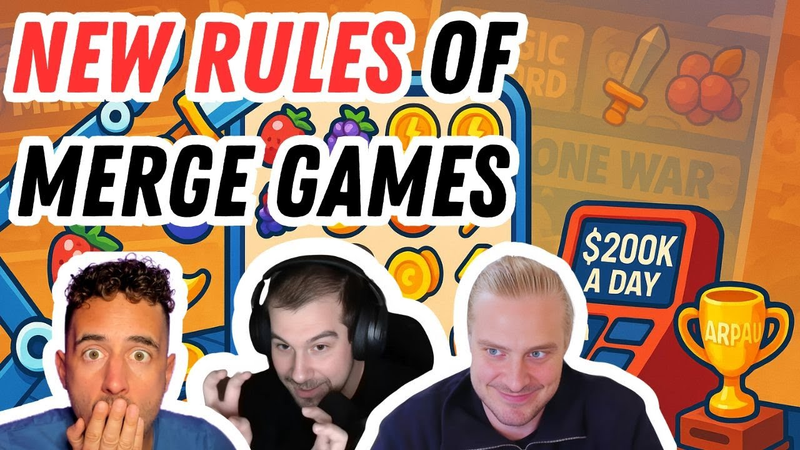
The Real Story Behind Tasty Travels’ Meteoric Rise: Merge, Monetize, Repeat!
The merge game category is currently defined by intense competition and rapid evolution, with established titles like Travel Town and Seaside Escape facing pressure from aggressive newcomers such as Tasty Travels and Merge Cooking.
- Century Games' new title, Tasty Travels, is rapidly scaling toward $200,000 in daily revenue and currently boasts double the ARPDAU of competitor Travel Town.
- The merge game category is experiencing significant growth, with Gossip Harbor generating approximately $1.6 million per day and Travel Town and Seaside Escape each earning roughly $600,000 daily.
- Century Games utilizes an aggressive UA strategy characterized by high-velocity creative iteration, including AI-generated content, fake gameplay hooks, and concepts directly adapted from competitors like Gossip Harbor.

Top Differences Between Mobile and AAA Live Service Games (Scott Hartsman Interview)
The gaming industry is effectively bifurcated into two distinct sectors: the core PC and console market and the mobile and casual live service market.
- The gaming industry is effectively split into two distinct sectors: core PC/console games and mobile/casual live service games, each requiring fundamentally different business models.
- Mobile and casual live service games operate as a math-driven business focused on minimizing user acquisition costs while maximizing the lifetime value of each player.
- Top-performing mobile titles often utilize 'gacha' or pulse mechanics, requiring players to spend currency for random chances at items or heroes, which must then be collected in multiples to reach full power.

Keeping Live Games Good | Design Club
Maintaining a healthy, engaging live game environment requires a delicate balance between direct intervention and ecosystem management.
- Maintaining a healthy live game requires balancing direct interventions with ecosystem management to prevent dominant strategies from stifling player creativity and rendering content obsolete.
- Digital platforms should prioritize granular, surgical adjustments like stat tweaks or hitbox modifications over the blunt bans and restrictions typically required by static, physical tabletop games.
- Designers can shift the meta-game indirectly by altering environmental factors like terrain or introducing new items, which preserves the mechanical investment players have already made in their characters.

Leading new frontiers in mobile @ Develop Brighton 2025
Modern mobile game development has transitioned into a mature, highly competitive landscape where success depends on balancing rigorous data-driven iteration with strategic creative experimentation.
- Mobile game development requires prioritizing core loops and early validation, with teams like Supercell London utilizing ICE (Impact, Confidence, Effort) scoring to manage production processes.
- Live operations for legacy titles, such as the four-year-old 'Love & Pies', require constant iteration and rebuilding of game economies to meet evolving market expectations for features like generator boosts.
- The mobile audience has matured significantly, shifting from casual players of Windows 95-era games to a more sophisticated demographic that expects higher polish and mobile-native experiences.

Uma Musume Pretty Derby: All YOU need to Know! Full Breakdown
Uma Musume Pretty Derby stands as a premier example of a high-revenue mobile RPG that blends roguelite mechanics with idol-building and sports simulation.
- Uma Musume Pretty Derby has generated over $2 billion in lifetime revenue from approximately 16 million downloads, maintaining consistent monthly earnings of $10 to $30 million in the Japanese market.
- The game’s core monetization is driven by a sophisticated support card system, which players use to optimize character builds for competitive PvP and event-based challenges.
- The gameplay features a complex, multi-layered training loop that integrates roguelite mechanics, idol-building, and stats management based on real-world Japanese horse racing history.

Discord: New Platform Opportunities for Game Studios | BITKRAFT Summit 2024
Discord has transitioned from a niche voice communication tool into a comprehensive ecosystem for game development, distribution, and monetization.
- Discord has evolved into a major game development and distribution ecosystem, leveraging a base of 200 million monthly active users to shorten the distance between production and player consumption.
- The 'Activities' ecosystem enables developers to deploy stateful, interactive games directly within private, small-group servers, fostering a social-first gameplay loop that improves retention.
- Studios are increasingly using the platform to involve communities in the earliest prototyping phases, creating robust feedback loops and driving organic peer-to-peer sharing.

Raid Rush Review: If you miss Battle.net tower defense, Raid Rush is your new addiction.
Raid Rush occupies a distinct position within the mobile tower defense genre by successfully blending traditional strategic mechanics with modern roguelike deck-building elements.
- Raid Rush generates approximately $24,000 to $28,000 in daily revenue, with ad-based monetization accounting for roughly 30% of total earnings.
- The game differentiates itself from standard roguelike tower defense titles by allowing players to build their own road paths, adding significant strategic depth that mitigates the staleness common in the genre.
- The US market accounts for 50% of the game's total revenue, with a notable secondary performance in Korea, proving that hardcore tower defense remains a viable niche for stable, loyal player bases.
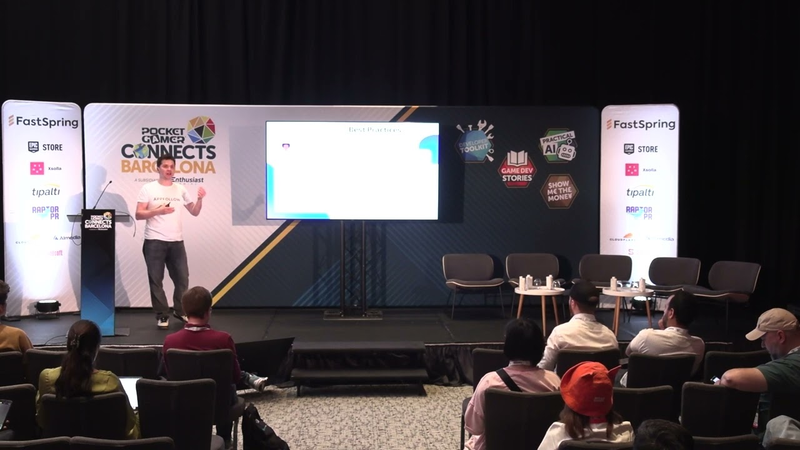
Session: AI Powered Community Relations In App Management - Anatoly Sharifulin, AppFollow.
Artificial intelligence and automation are transforming community relations and reputation management within the mobile gaming industry.
- Gaming companies currently maintain an average review reply rate of only 20%, despite the fact that responding to reviews can increase average ratings by 20% to 30% when users update their original feedback.
- A hybrid support model is the industry best practice, where AI handles high-volume, routine inquiries while human agents manage complex cases, featured reviews, and instances where ratings are trending downward.
- Automated anomaly detection allows developers to identify sudden shifts in player sentiment—such as a 20% spike in dissatisfaction following a pricing or monetization change—within one week, rather than waiting for quarterly reports.

TWIG #336 Candy Crush Veterans Return as Marathon Runs Out of Steam
The global gaming industry is currently navigating a period of significant structural correction characterized by stagnant revenue growth, the collapse of over-leveraged studios, and a shift in consumer attention toward non-gaming entertainment.
- The mobile gaming sector has plateaued with a 4% year-over-year revenue increase, shifting the competitive focus from innovation to sophisticated monetization strategies.
- The traditional AAA development model is under severe pressure, as high-budget, single-title projects frequently fail to achieve market fit, leading to widespread studio closures and restructuring.
- Industry success is increasingly driven by a publishing-led model that mitigates risk through multiple product bets rather than the high-risk, single-title focus of the previous decade.
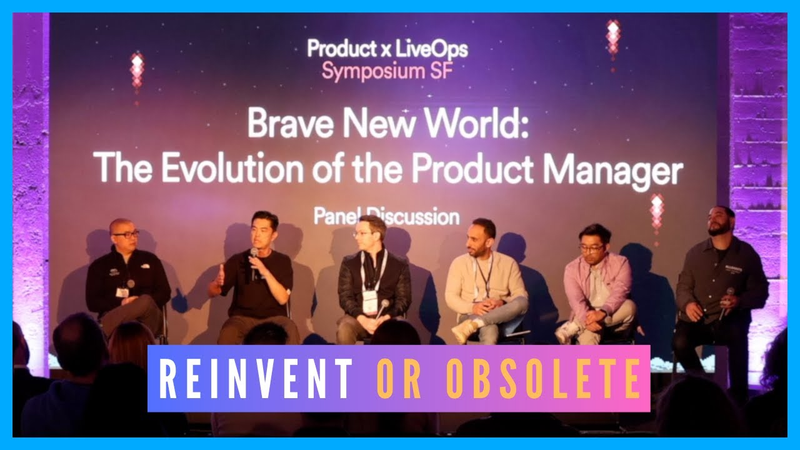
Evolution of the Gaming Product Manager in 2025 + AI
The gaming industry is currently undergoing a structural transformation driven by an increasingly competitive attention economy and the necessity for high-frequency content updates.
- Product velocity is the new North Star metric for gaming product managers, as the industry shifts toward rapid, data-driven iteration to compete in a crowded attention economy.
- AI investment should be evaluated using Gartner’s '3 Returns' framework: Return on Employee (efficiency gains), Return on Investment (KPI and bottom-line impact), and Return on Future (creating new business models and capabilities).
- The role of the Product Manager is evolving into an 'agentic' function, where the primary responsibility is orchestrating and deploying AI agents to automate tasks and optimize live service operations.

Darth Vader Goes AI in Fortnite + Google’s Veo 3 Changes Everything
The current landscape of the gaming and media industries is undergoing a significant transformation driven by rapid advancements in generative artificial intelligence.
- Generative AI models like Google’s Veo and conversational agents in games such as Fortnite are automating creative pipelines, potentially lowering the barrier to entry for high-quality asset production.
- The industry is experiencing a shift toward agentic AI models that promise to optimize marketing and creative production, threatening to make legacy mass-media approaches obsolete.
- There is a growing industry divide regarding the efficacy of high-budget TV campaigns for mobile games, with critics arguing they fail to deliver clear ROI compared to data-driven user acquisition strategies.