India reports and market data
Documents
The Pregame | India F2P (Before the Conference Talk)
The Indian gaming landscape is currently undergoing a significant evolution, transitioning from a focus on low-risk, iterative projects toward the development of more ambitious, high-quality titles.
- The Indian gaming sector is shifting from low-risk, iterative projects toward high-quality, ambitious titles, leveraging a talent pool characterized by startup-driven agility and high enthusiasm.
- Global market success is increasingly driven by superior execution and emotional connection rather than rigid adherence to data-driven metrics or traditional genre saturation.
- Player preference is moving toward open-world social experiences that prioritize agency and role-playing over established formats like match-three or shooters.
India: Mobile Market Spotlight: A Booming Mobile Economy
India has solidified its position as a global mobile powerhouse, currently ranking second worldwide in total app downloads.
- India is a global mobile-first leader, ranking second in total app downloads with 24 billion installs in 2020, a 28% year-over-year increase.
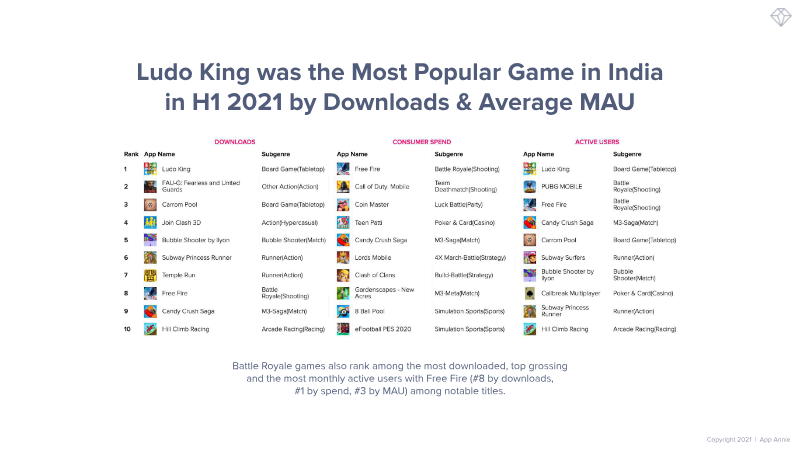
- India became the world's largest market for game downloads in the first half of 2021, accounting for nearly 20% of global installs.
- Daily mobile usage per user surged from 3.3 hours in 2019 to 4.8 hours by Q3 2021, fueled by pandemic-driven engagement.
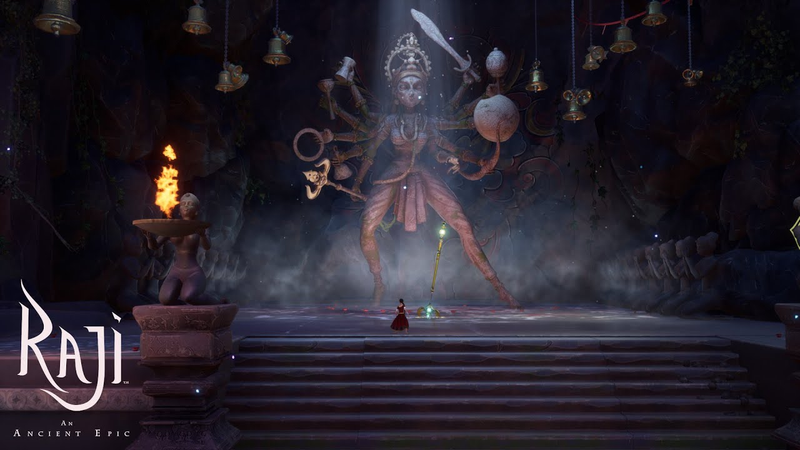
Developing Raji: An Ancient Epic & Crossing the Finish Line | Game Dev Unchained Episode 233
The development of Raji: An Ancient Epic serves as a case study for the burgeoning Indian game industry, highlighting the successful effort to integrate rich cultural narratives into the global gaming market.
- The development of Raji: An Ancient Epic demonstrates the viability of integrating underrepresented cultural narratives, such as Hindu and Balinese mythology, into the global gaming market.
- The project serves as a case study for the maturation of the Indian game industry, driven by increased accessibility to development tools and the rise of local studios.
- The COVID-19 pandemic forced a transition to remote workflows, proving that distributed teams can maintain development momentum without traditional in-office collaboration.

We're in India
The primary objective of this international collaboration is to evaluate the viability of a long-term business partnership through intensive, hands-on cooperation.
- A six-week intensive residency in Pune, India, was utilized as a vetting mechanism to evaluate the viability of a long-term business partnership through hands-on collaboration.
- The team is testing organizational alignment and team dynamics by developing a mobile game prototype as a practical vehicle for assessing professional values and working styles.
- The core business thesis asserts that successful game studios are built on rigorous due diligence and a mutual commitment to both personal and organizational growth.
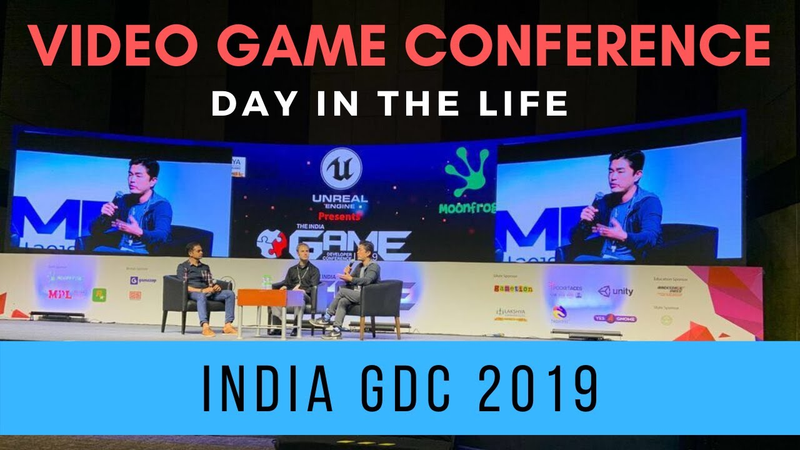
India GDC 2019 | Day in the Life at a Games Conference
India GDC 2019, held in Hyderabad, served as a central hub for over 3,000 video game industry professionals and 200 speakers to discuss the evolving landscape of the Indian gaming market.
- India GDC 2019 in Hyderabad hosted over 3,000 industry professionals and 200 speakers, signaling the country's transition from a support-focused hub to a center for original product development and mid-core gaming.
- Global studios including GSN Games, Imangi, and Miniclip are actively leveraging India’s large player base and technical talent pool to drive their regional and international strategies.
- Modern mobile game publishing success in the region is increasingly reliant on data-driven decision-making, specifically through the use of soft launches and rigorous analysis of retention, engagement, and conversion metrics.
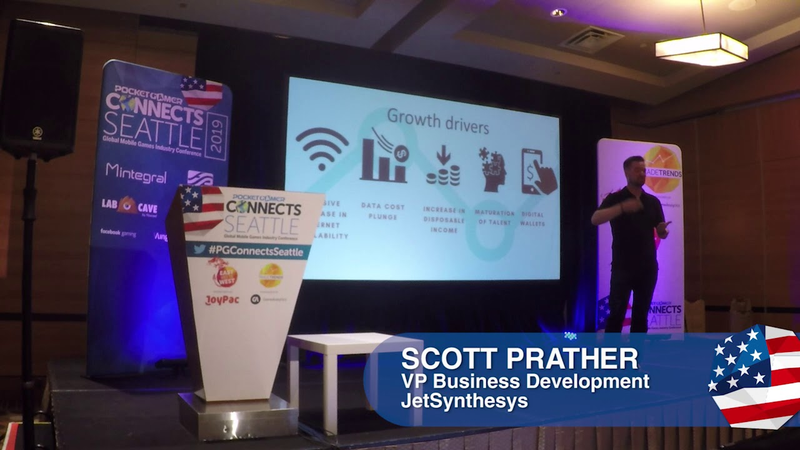
Growth of India as a destination for games
India represents a rapidly expanding frontier for the global mobile gaming industry, characterized by massive population scale, high mobile penetration, and a demographic shift toward a younger, digitally connected consumer base.
- India’s mobile gaming market is experiencing 75% year-over-year spending growth, driven by a mobile-first ecosystem where mobile platforms generate 89% of all regional gaming revenue.
- User acquisition costs in India are exceptionally low at approximately 16 cents per user, compared to over two dollars in the United States.
- The country’s digital infrastructure is supported by 387 million smart device users—a figure projected to exceed 550 million—and a widespread adoption of digital wallets following the 2014 demonetization event.
Raji developer interview at GDC 2019
Raji: An Ancient Epic is a fantasy action-adventure game centered on a young protagonist navigating a world rooted in ancient Indian mythology.
- Raji: An Ancient Epic is an action-adventure title set in a world based on ancient Indian mythology, featuring a narrative focused on a protagonist rescuing her kidnapped brother.
- The game utilizes a unique visual health-tracking system that displays enemy vitality through dynamic markers at their feet to provide immediate combat feedback.
- Super.com is publishing the title, leveraging its team of former and active indie developers to support studios within the emerging Indian game development market.
The emerging markets power panel
The emerging markets panel at Pocket Gamer Connects London 2019 explored the growth, challenges, and strategic opportunities within the mobile gaming sectors of India, the Middle East, and Turkey.
- India has surpassed China in monthly mobile game download volume and data consumption, establishing itself as the world’s fastest-growing smartphone market.
- Turkey is a strategic hub for hyper-casual game testing due to its combination of low cost-per-install (CPI) rates and high user engagement with in-game advertisements.
- Monetization in India is evolving as digital payment solutions and debit card integration begin to overcome the historical barrier of low credit card penetration.
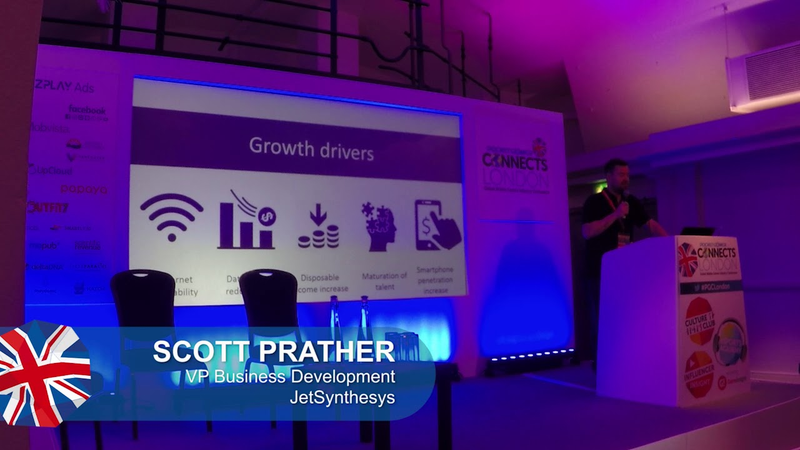
Mobile eports in India
The Indian mobile gaming market represents a significant, high-growth opportunity for developers, characterized by a massive, young population and a rapid transition to smartphone-based internet access.
- The Indian mobile gaming market is driven by a young demographic, with half of the 1.3 billion population under the age of 25.
- Smartphone penetration is rapidly expanding, with device counts projected to reach 530 million by the end of 2018 and internet availability expected to rise to 53 percent by 2021.
- Monetization in India relies heavily on freemium models, as top-tier freemium games generate 22 times the revenue of premium titles, necessitating microtransactions as low as 10 cents.
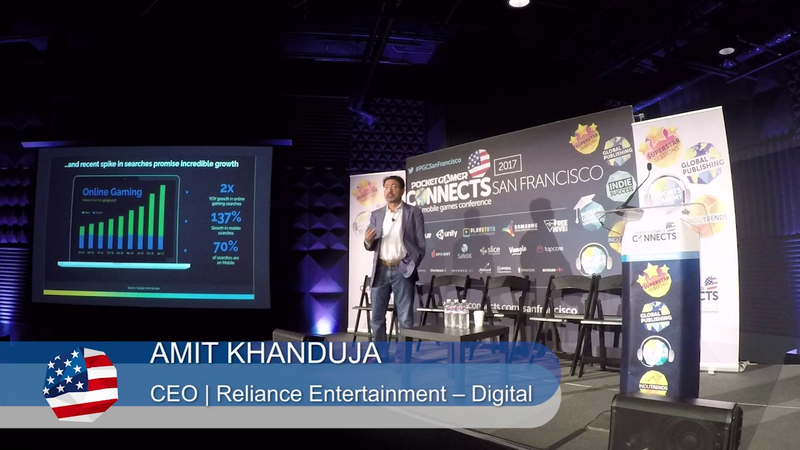
An overview of India's mobile games industry
The Indian mobile gaming market is currently experiencing rapid, large-scale expansion, characterized by a shift from a nascent industry to a projected multi-billion-dollar ecosystem.
- The Indian mobile gaming market is scaling rapidly toward a projected 1 billion users, supported by the addition of approximately 30 million new smartphone users per month.
- Engagement levels are exceptionally high, with Indian gamers spending two to five times more time in-game compared to users in the United States.
- Monetization is driven by real-money skill-based games and micro-transactions as low as five to twenty cents, necessitating deep integration with local prepaid carrier billing systems.
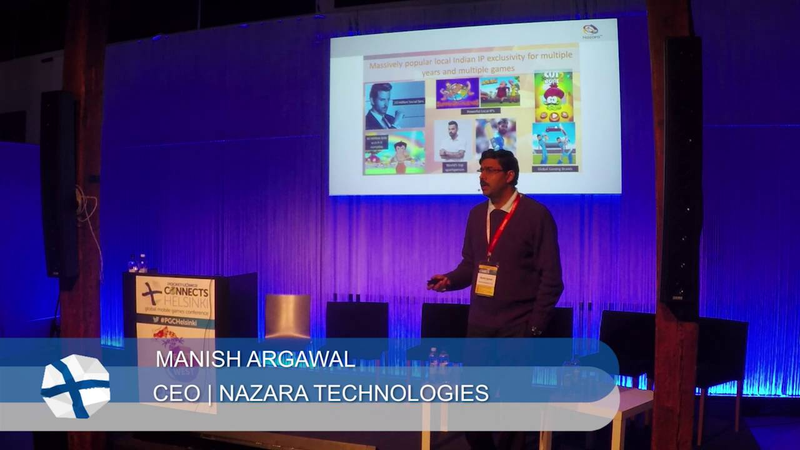
An overview of the India games market in 2016
The Indian mobile gaming market in 2016 represents a high-growth, long-term opportunity for global developers, though it remains distinct from the more mature Chinese market.
- The Indian mobile gaming market is a long-term play with a five-to-seven-year horizon for maturity, currently serving 100 million mobile gamers out of 300 million total internet users.
- Monetization is constrained by low credit card penetration and in-app purchase conversion rates typically below 0.5%, necessitating a reliance on carrier billing, reward-based video ads, and brand integrations.
- Technical optimization is critical for market entry, requiring game file sizes to be kept under 15–20 MB to accommodate users with limited storage and data connectivity.
Mike Bithell on indie design - PG Connects Bangalore 2015
The definition of independent game development has shifted from a focus on production scale to a philosophy centered on creative autonomy and the willingness to take calculated risks.
- Indie development is defined by creative autonomy and calculated risk-taking, requiring a balance between a singular personal vision and rigorous, iterative playtesting.
- Small teams must adopt a jack-of-all-trades mindset to prioritize core mechanics and emotional resonance early, maintaining the agility that larger corporate studios often lack.
- Marketing and design must be integrated from the project's inception, utilizing channels like YouTube to capture authentic player reactions for actionable feedback.