Global reports and market data
Documents

Games as Technological Entry Point: A Case Study of Uzbekistan
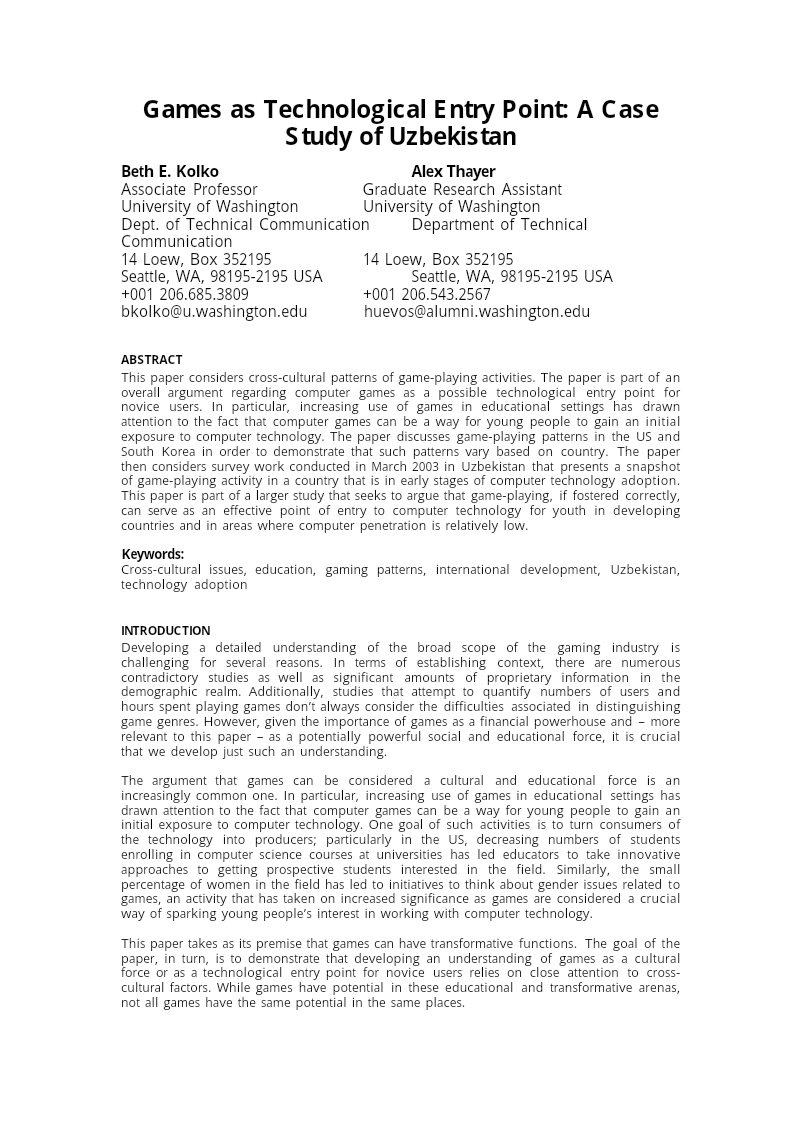
Kolko and Thayer's study examines whether computer games can serve as an entry point to technology for novice users, and argues that their effectiveness depends heavily on cultural and infrastructural context.
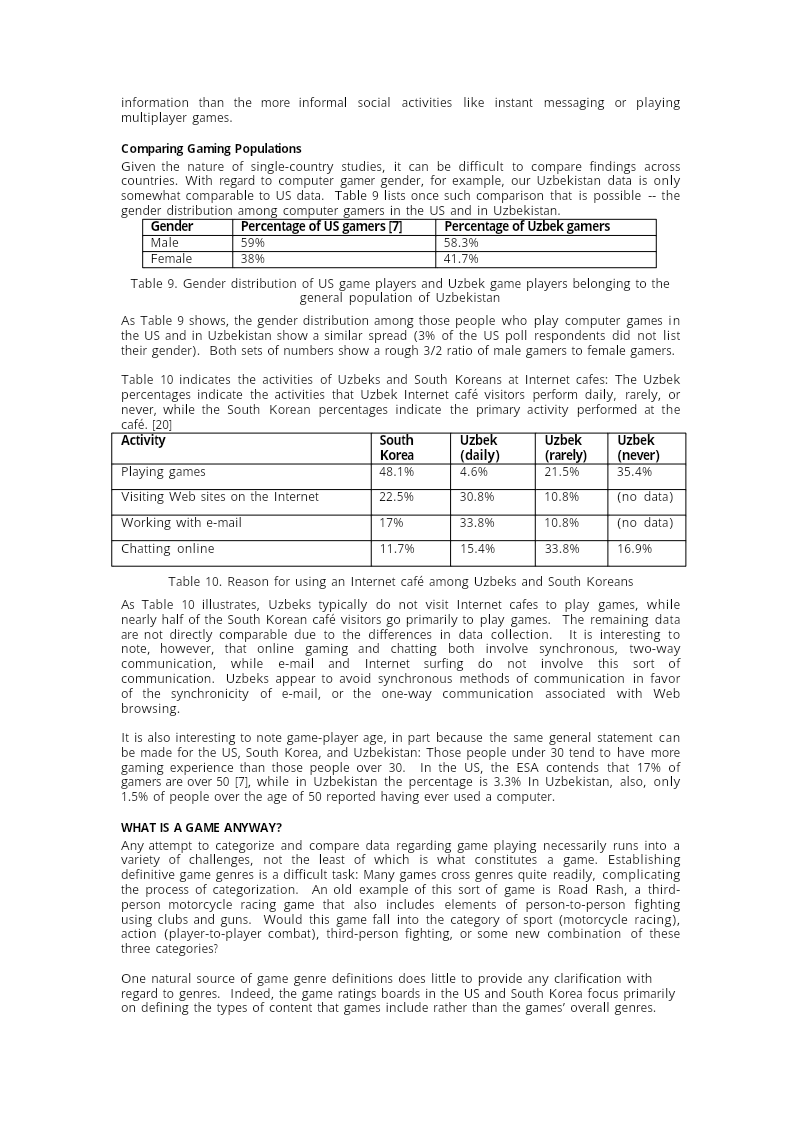
- The study argues that games can work as an entry point to technology for novices, but their effectiveness depends heavily on cultural and infrastructural context, comparing the United States, South Korea, and Uzbekistan.
- South Korea offers the benchmark: over 90 percent of respondents in a 2003 survey had played games, and the shift to online PC gaming driven by broadband expansion generated roughly $2.8 billion in revenue in 2002.
- In Uzbekistan, a March 2003 survey of 317 respondents found only 32.5 percent had used a computer, and about 59 percent of those users had played games, usually simple Windows or web titles.


Apocalypse the Spielberg Way: Representations of Death and Ethics in Saving Private Ryan, Band of Brothers and the Videogame Medal of Honor: Frontline
Kingsepp's paper compares how death and ethics are represented in Steven Spielberg's Saving Private Ryan and Band of Brothers and in the 2002 video game Medal of Honor: Frontline.
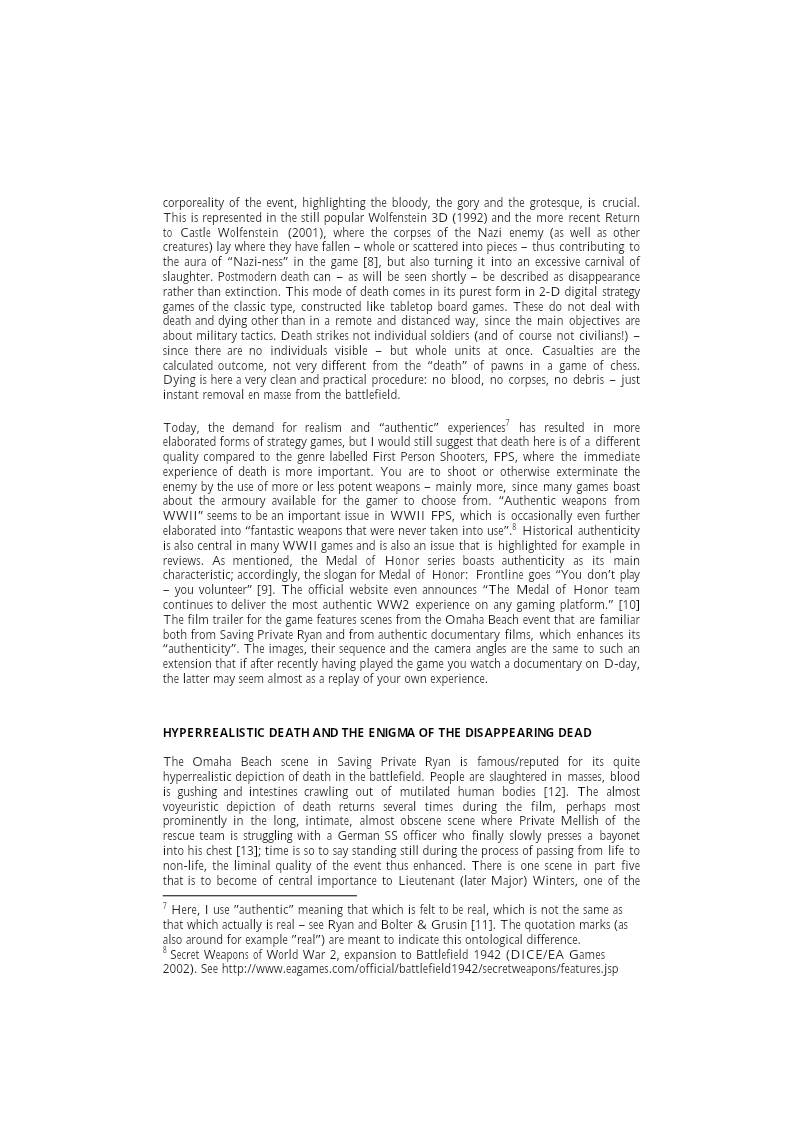
- The paper argues that Spielberg's Saving Private Ryan and Band of Brothers depict death in hyperrealistic, emotionally intimate ways that invite viewers to reflect on mortality and moral ambiguity, whereas Medal of Honor: Frontline (2002) adopts a postmodern model in which enemy corpses vanish.
- The game's vanishing corpses are read as a symbolic ritual of conquering death, casting enemies as an abundant, disease-like threat to be continually exterminated in pursuit of heroic reward.
- The author suggests the disappearing corpses may partly stem from technical constraints such as limited memory ('byte economy'), noting that the earlier game Return to Castle Wolfenstein shows corpses can be preserved.
The Diverse Worlds of Computer Games: A Content Analysis of Spaces, Populations, Styles and Narratives
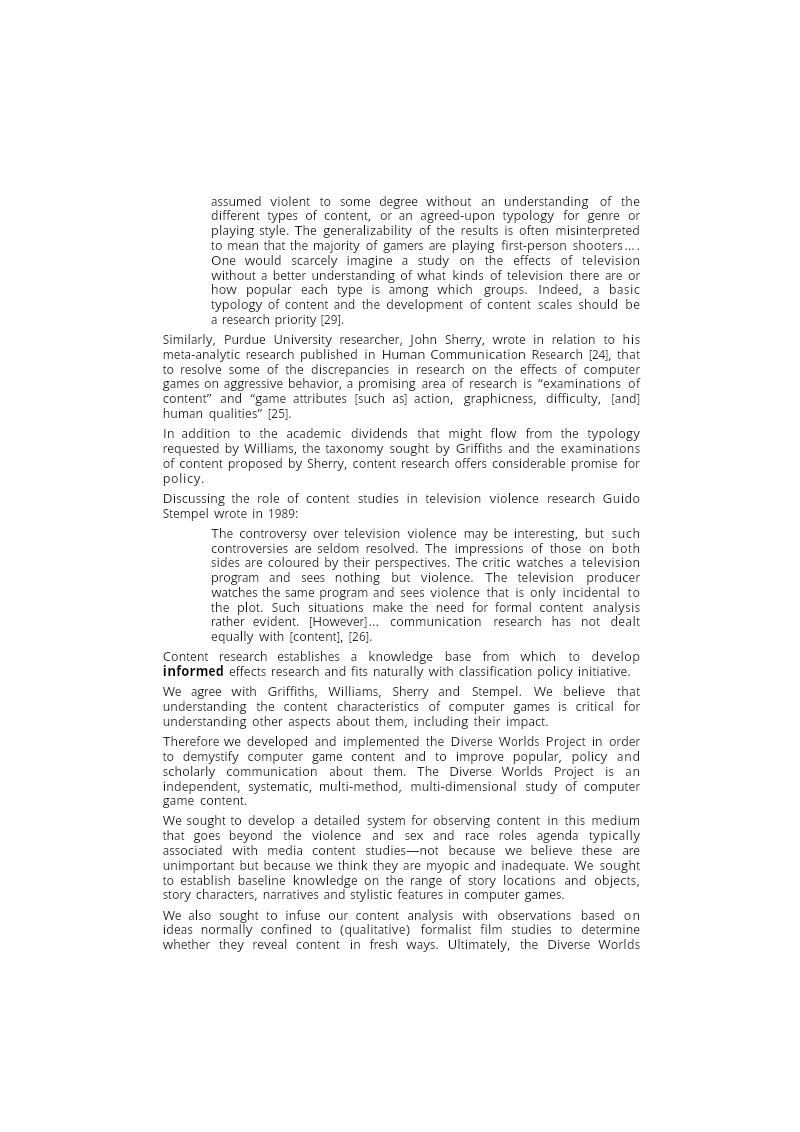
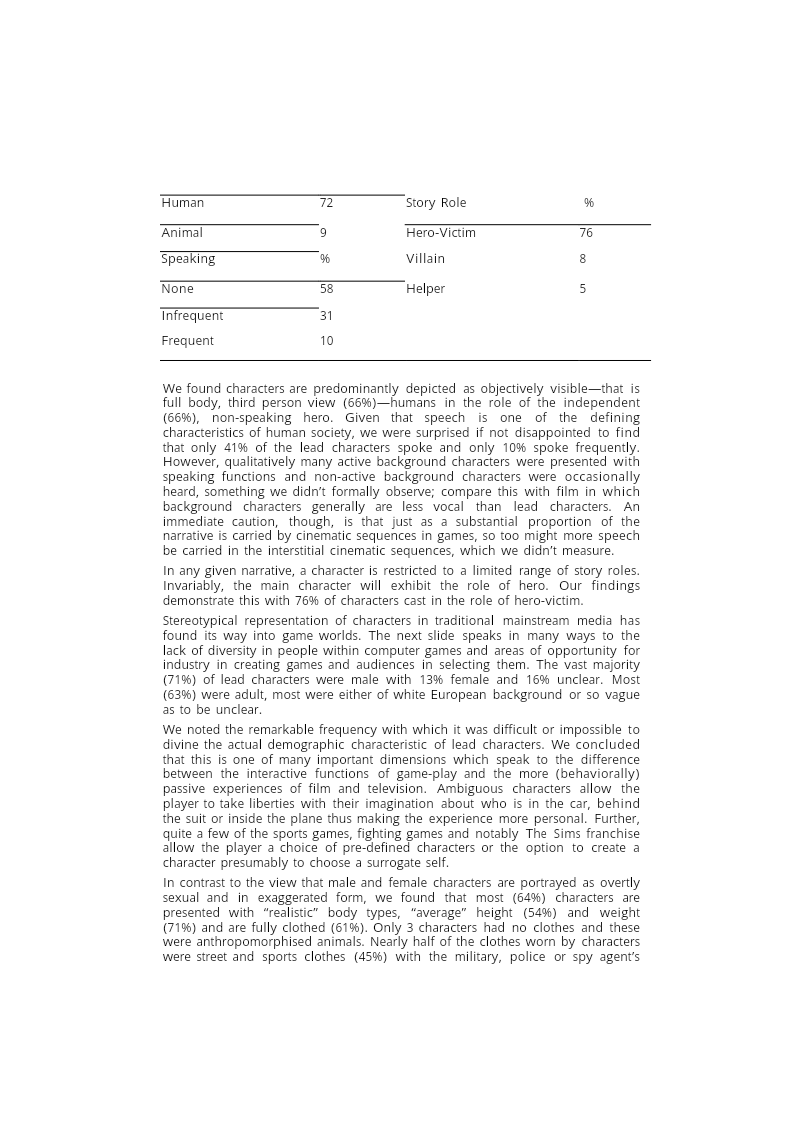
This content analysis of 130 top-selling computer and video games from 2002, drawn from five platforms, was conducted as part of the Diverse Worlds Project to examine the actual content of games rather than relying on public assumptions about them.
- The study analysed 130 top-selling computer and video games from 2002 across five platforms, examining the box, manual, opening cinematic, and first ten minutes of gameplay for each title.
- Its central conclusion is that claims that games are uniformly violent and formulaic are not supported by the evidence, given the wide range of settings and character behaviours observed.
- Most games (64%) were set in the present day and only 8% took place in space, while roughly three-quarters featured exterior settings.
Describing Games: An Interaction-Centric Structural Framework
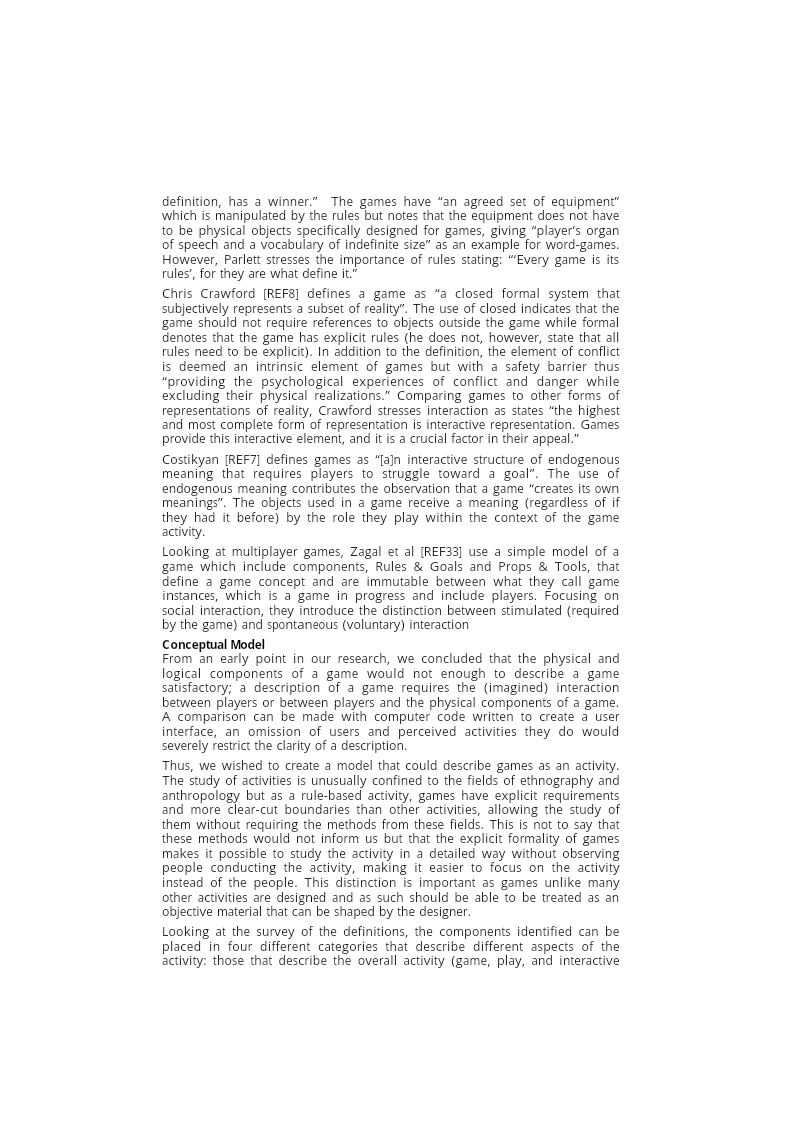
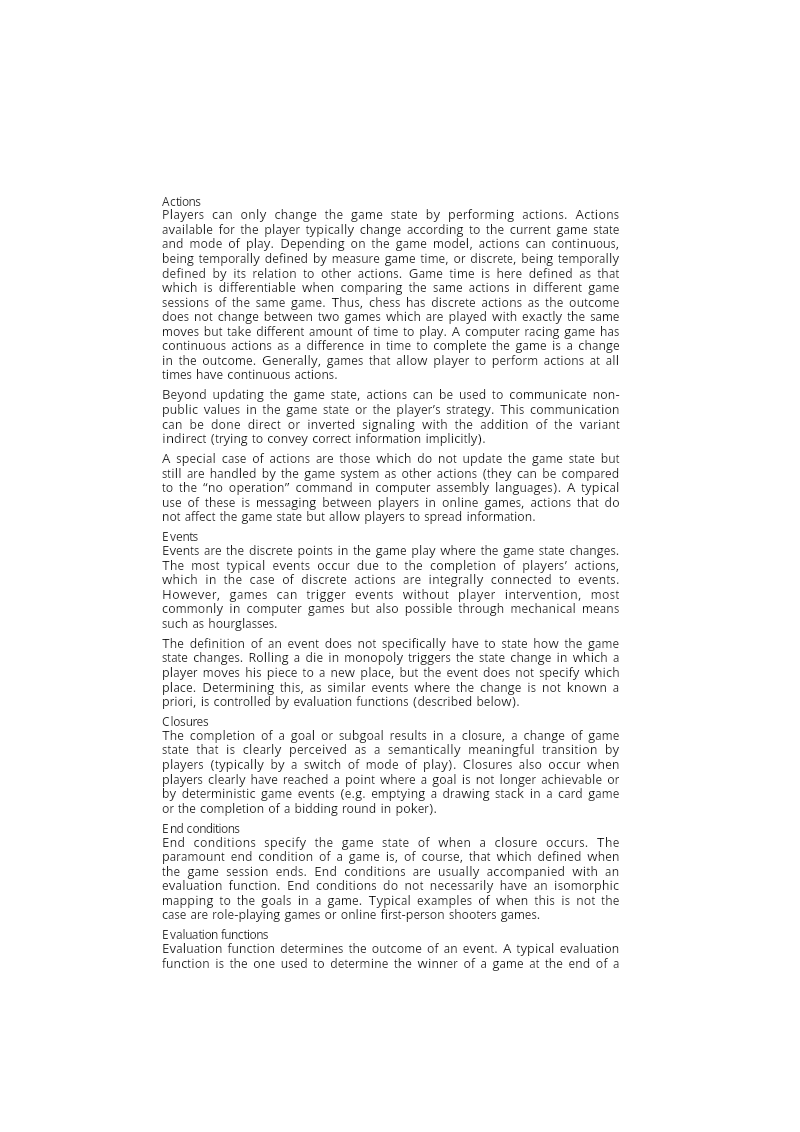
Björk and Holopainen's "Describing Games: An Interaction-Centric Structural Framework" proposes a vocabulary for describing games that serves as a bridge between abstract game theory and the practical needs of game designers.
- The framework's core contribution is a shared terminology for describing game structure and player interaction, rather than empirical findings.
- Björk and Holopainen argue that existing models from game theory and play theory are either too abstract to guide design or too narrow to apply broadly, and position their interaction-centric structure as a complement to game design patterns.
- The framework organizes game components into four categories: holistic, bounding, temporal, and objective, with each core concept situated in one of them.
Participatory Design and Opposing Interests in Development of Educational Computer Games
This study examines a participatory design process in which a class of 11- and 12-year-old Danish children was invited to help design a mathematics-education computer game, with the aim of producing a game engaging enough that children would voluntarily play it outside school.
- The study examined a participatory design process in which 11- and 12-year-old Danish children helped design a math-education computer game meant to be engaging enough that they would voluntarily play it outside school.
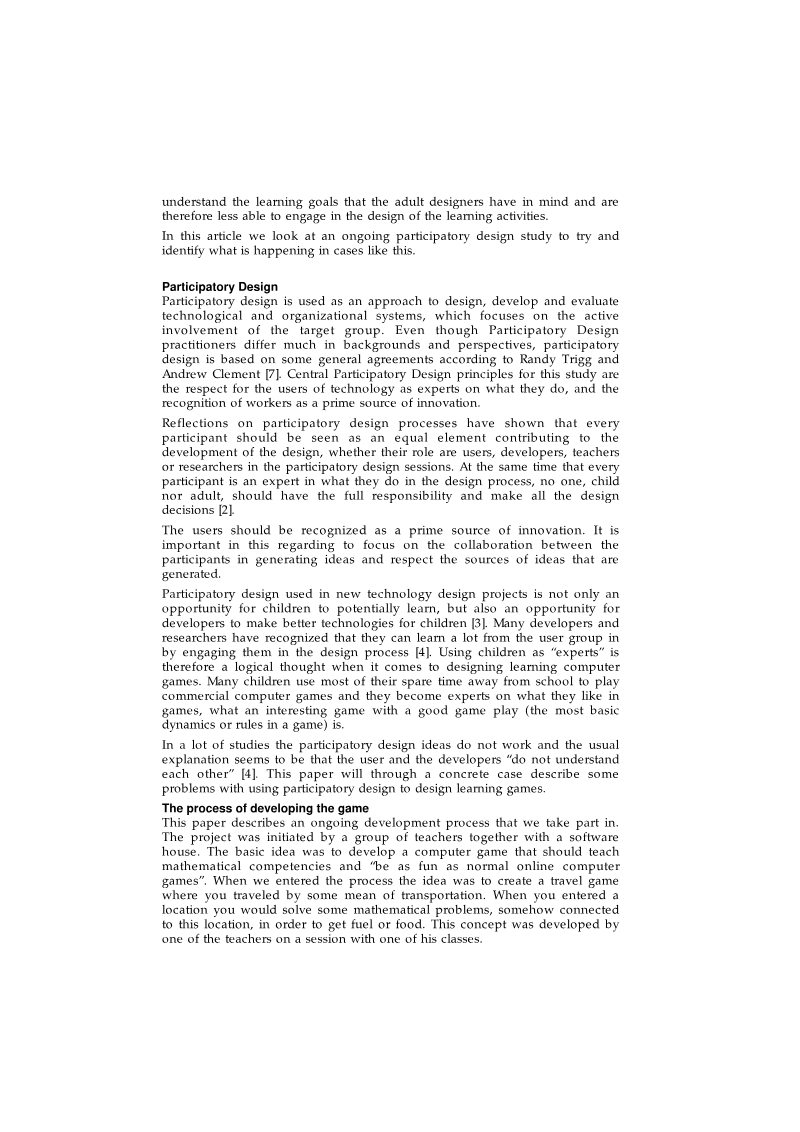
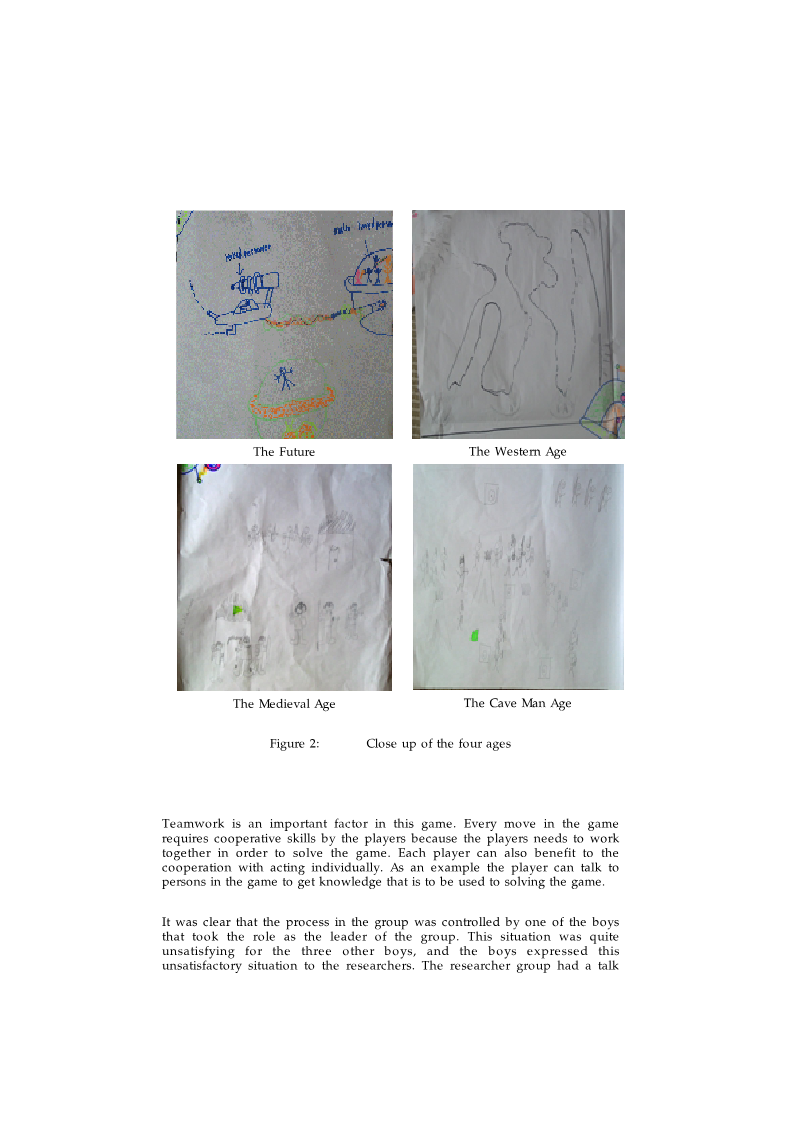
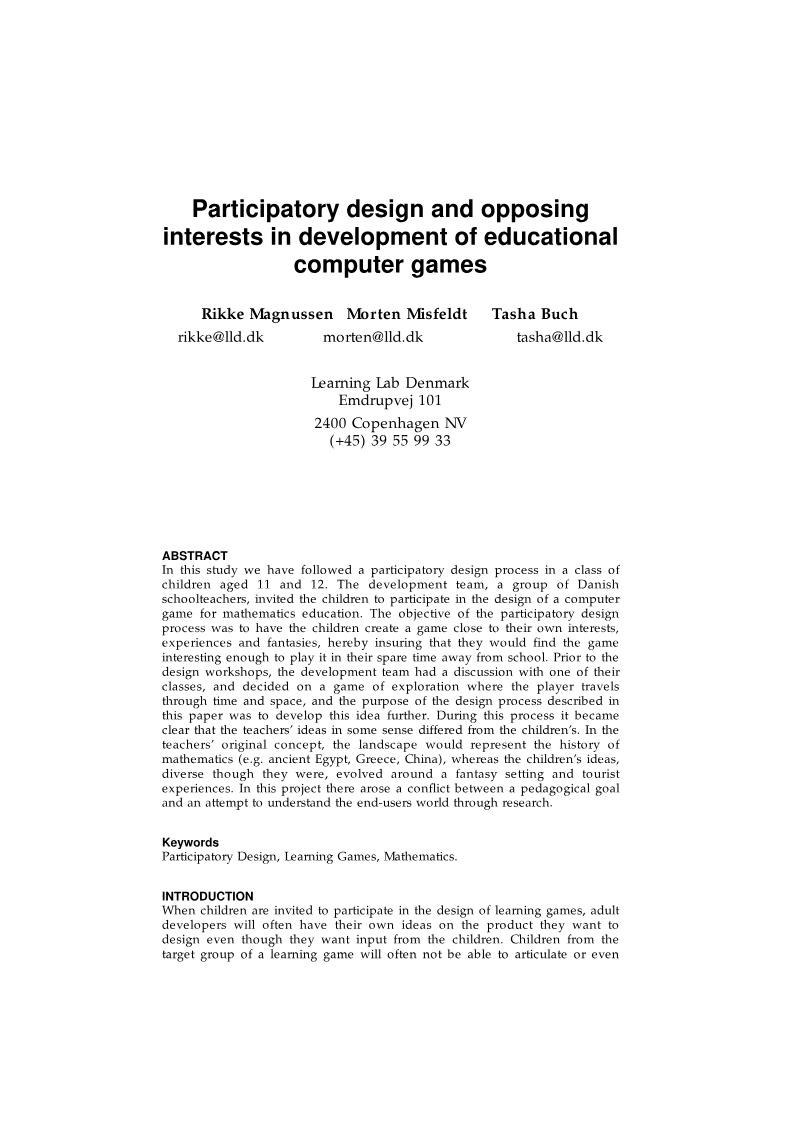
- The children's ideas had little practical effect on the final design, mainly because the developers adopted their own time-travel concept early, where it was perceived as strong and hard to modify.
- A key organizational failure was that the developers did not attend the workshops, so insights from the children reached them only secondhand through researchers as general guidelines that were hard to integrate.


Supporting Communities in Massively Multiplayer Online Role-Playing Games by Game Design
Koivisto's study examines how game design shapes the strength of community in massively multiplayer online role-playing games, arguing that design choices in communication systems, character and world design, personalization, housing, team formation, and onboarding meaningfully influence whether players form lasting social…
- Customizable player housing and guild halls, which let players leave lasting traces in the game world, were found to be particularly effective at building interdependence and community.
- Communities tend to flourish when games offer broad communication options, persistent asynchronous messaging, and room for player expressiveness, while restrictive tools like Toontown's SpeedChat make enduring friendships harder to form.
- Non-zero-sum experience sharing in Anarchy Online strongly encourages group formation, whereas higher-stakes environments in Anarchy Online and Ultima Online lead players to team mostly with friends.
Parental Mediation of Children's Video Game Playing: A Similar Construct as Television Mediation
A 2002 Dutch study of 536 parent-child pairs, with children aged 8 to 18, examines how parents mediate their children's video game play and whether this mediation mirrors the established framework used for television.
- Parental mediation of children's video games mirrors the established television mediation framework, comprising three factors: restrictive mediation, evaluative mediation, and conscious co-playing.
- Parent and child reports of mediation strategies agreed strongly, with correlations between 0.69 and 0.79, based on a 2002 Dutch study of 536 parent-child pairs with children aged 8 to 18.
- Restrictive mediation was the most common strategy for both parents and children, while conscious co-playing was the least frequent, diverging from earlier television research.
Breaking the Flow: Intervention in Computer Game Play Through Physical and On-Screen Interaction
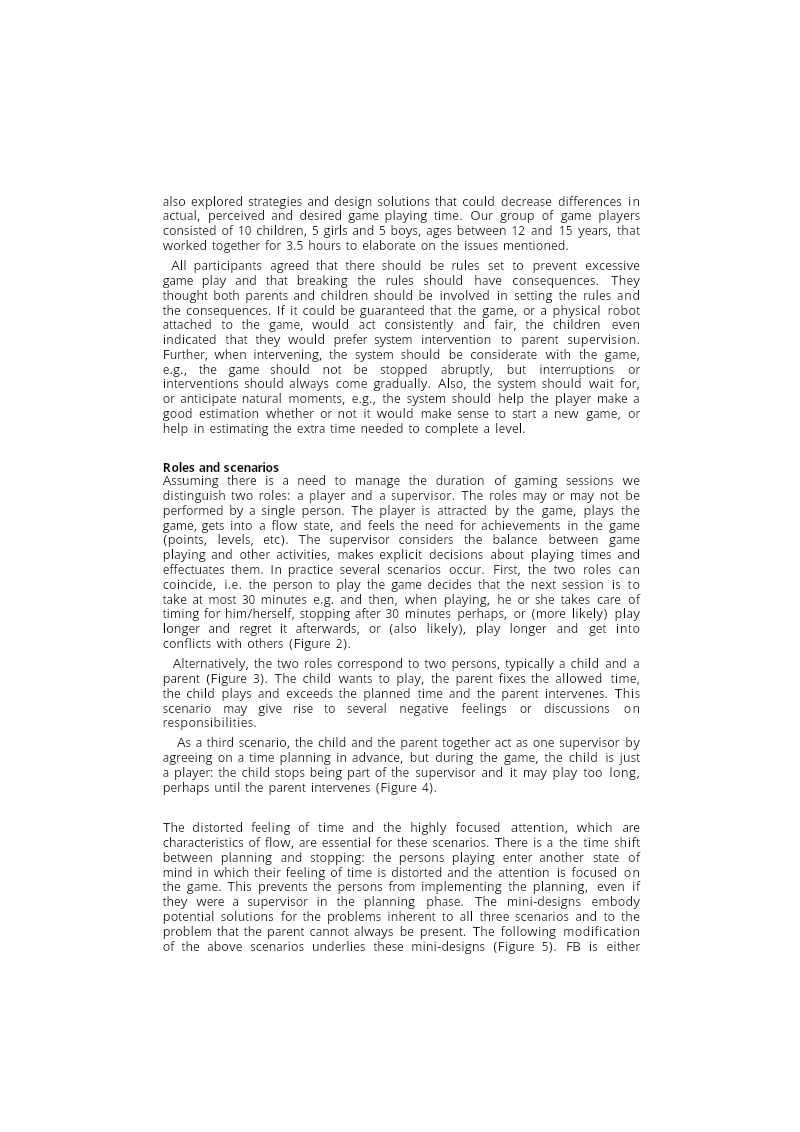
This study investigates whether interventions can interrupt the immersive "flow" state that draws children aged 10 to 15 into excessive computer game play.
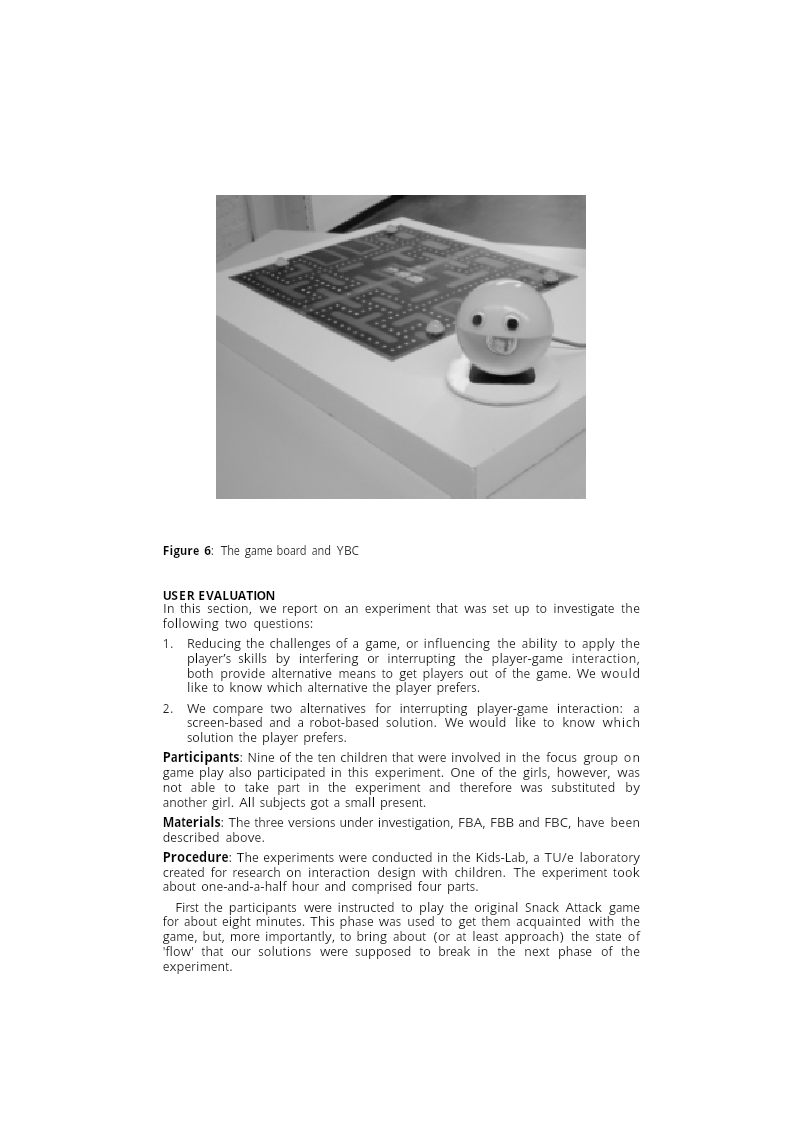
- The study tested a four-stage intervention model (normative, informative, interactive, disruptive) in three prototype forms within a Pac-Man-style game, aiming to break the immersive flow state that draws children aged 10 to 15 into excessive play.
- In a 10-participant experiment in the Snack Attack game, participants agreed significantly on rankings of both effectiveness (Kendall's W = 0.57) and enjoyment (Kendall's W = 0.73).
- The physical robot agent, which required players to leave the keyboard, was ranked the most effective and most fun intervention, with qualitative feedback praising its attention-grabbing quality.
"You Shoot Like a Girl!": The Female Protagonist in Action-Adventure Video Games
This study examines how female protagonists are constructed in action-adventure video games, using a content analysis of three 2002 titles: Metroid Prime, Resident Evil, and Eternal Darkness.
- The study is a content analysis of three 2002 action-adventure games (Metroid Prime, Resident Evil, and Eternal Darkness) and argues that their female protagonists nominally challenge gender norms while their heroism is repeatedly qualified.
- Jill Valentine (Resident Evil) is cast as a victim, damsel, and target of abuse, while Alex (Eternal Darkness) remains largely passive until the final battle, undercutting their agency.
- Samus Aran (Metroid) is the most gender-neutral and emotionally unmarked of the three, largely avoiding the victimization and beauty conventions shaping Jill and Alex, partly because her armored suit sidesteps Western beauty ideals.
Conditions of Engagement in Game Simulation: Contexts of Gender, Culture and Age
Game design has long relied on the intuitions of "hardcore" players, who make up roughly 10 percent of the audience, a pattern that risks leaving casual players underserved.
- Game design has long relied on the intuitions of 'hardcore' players, who make up roughly 10 percent of the audience, risking neglect of the casual majority.
- The authors argue casual players can be reached through systematic psychological research rather than derivative design, and that an optimal level of resemblance to reality, rather than maximal realism, may better serve broad appeal.
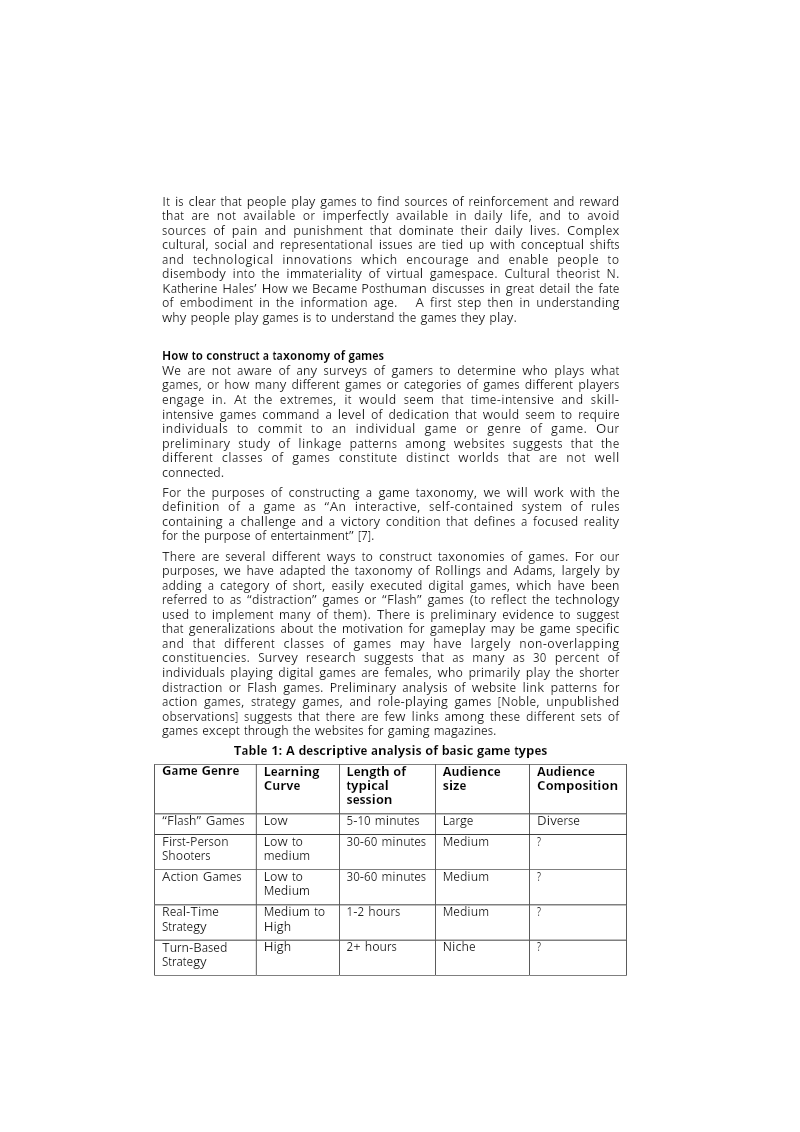
- Survey evidence suggests around 30 percent of digital game players are female, concentrated in short Flash games, though the authors acknowledge much of their game taxonomy rests on incomplete demographic data.
How Videogames Express Ideas
Matthew Weise's essay "How Videogames Express Ideas" argues that videogames are a legitimate medium of expression deserving constitutional protection, and it takes as its starting point the 2002 U.S.
- The essay takes as its starting point the 2002 U.S. District Court ruling in the Limbaugh case, which held that videogames are not protected speech under the First Amendment, and argues that this ruling rested on two misconceptions: that rule-based gameplay cannot carry expressive meaning, and that non-playable narrative sequences are arbitrary additions.
- Weise rejects both premises by drawing an analogy to improvisational theater, arguing that rule-governed systems can communicate ideas when layered with symbolism.
- The analysis is organized around three expressive strategies: non-playable sequences, rule-based systems, and the interaction between them, with the combination considered most powerful because mechanics can reinforce narrative meaning in ways non-interactive media cannot.

Project Massive 1.0: Organizational Commitment, Sociability and Extraversion in Massively Multiplayer Online Games
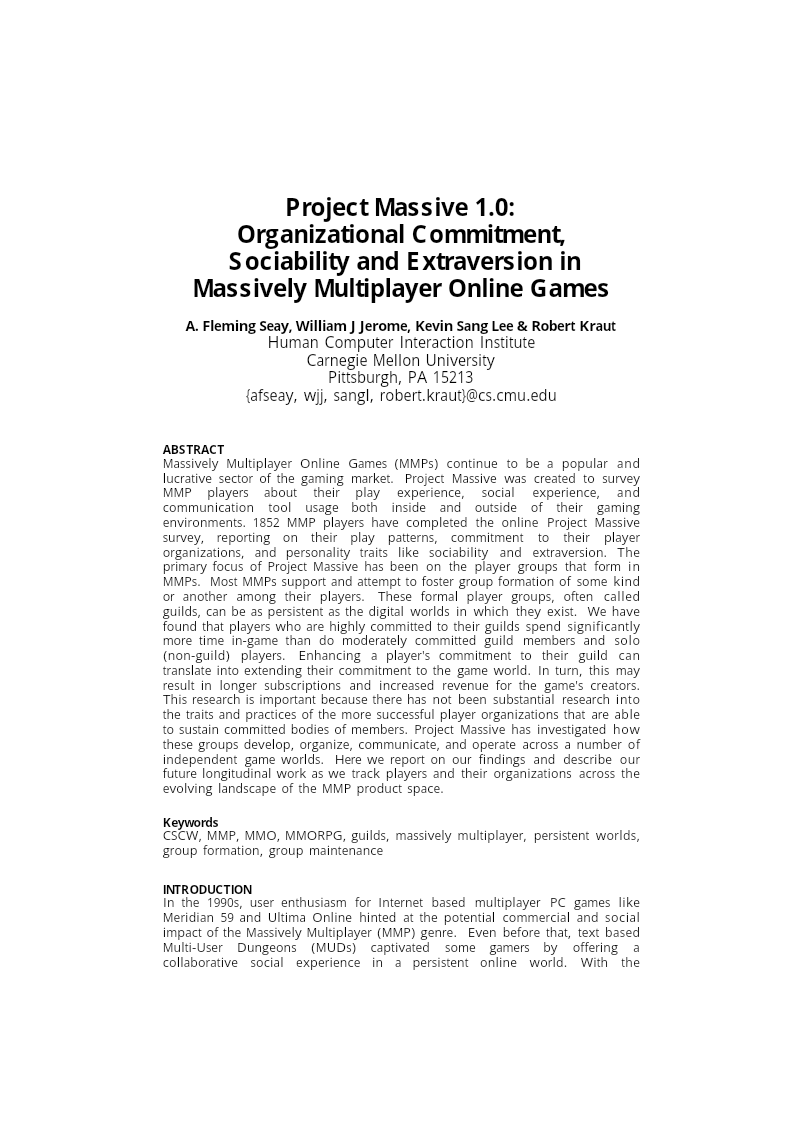
Project Massive 1.0 is a Carnegie Mellon study examining how commitment to a guild relates to play time and sociability among massively multiplayer online game players.
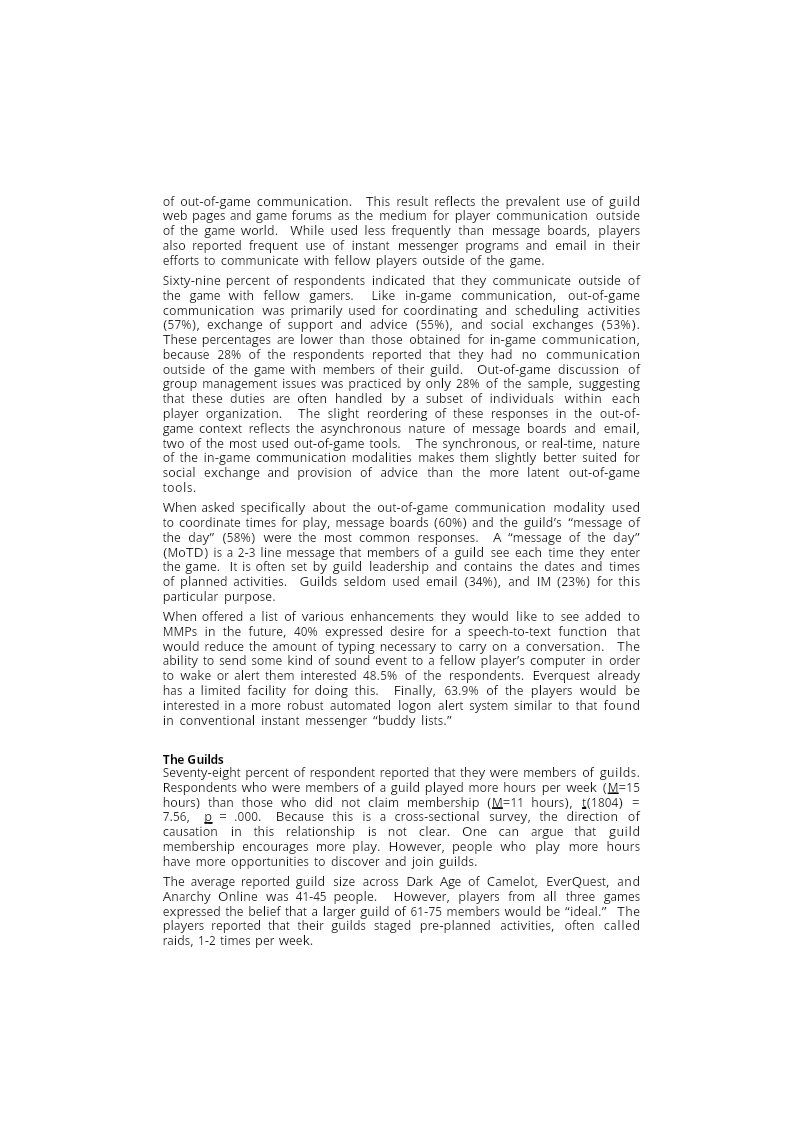
- Guild commitment is closely tied to engagement: highly committed members (mean Organizational Commitment Questionnaire score of 5.3 out of 7) played 18 to 24 hours per week, versus 10 to 12 hours for uncommitted players.
- Committed members were also more likely to use email and message boards and to plan guild activities in advance, though the cross-sectional design means the direction of causality cannot be established.
- The authors argue that cultivating guild commitment could deepen players' attachment to a game and thereby support longer subscriptions and greater developer revenue.