1 free read left. Create a free account for unlimited reading + AI research.
Create free accountWhitepaper DiGRA
1 free read left. Create a free account for unlimited reading + AI research.
Create free accountWhitepaperDiGRA
Children in a focus group preferred consistent, gradual system-driven intervention over parental supervision.
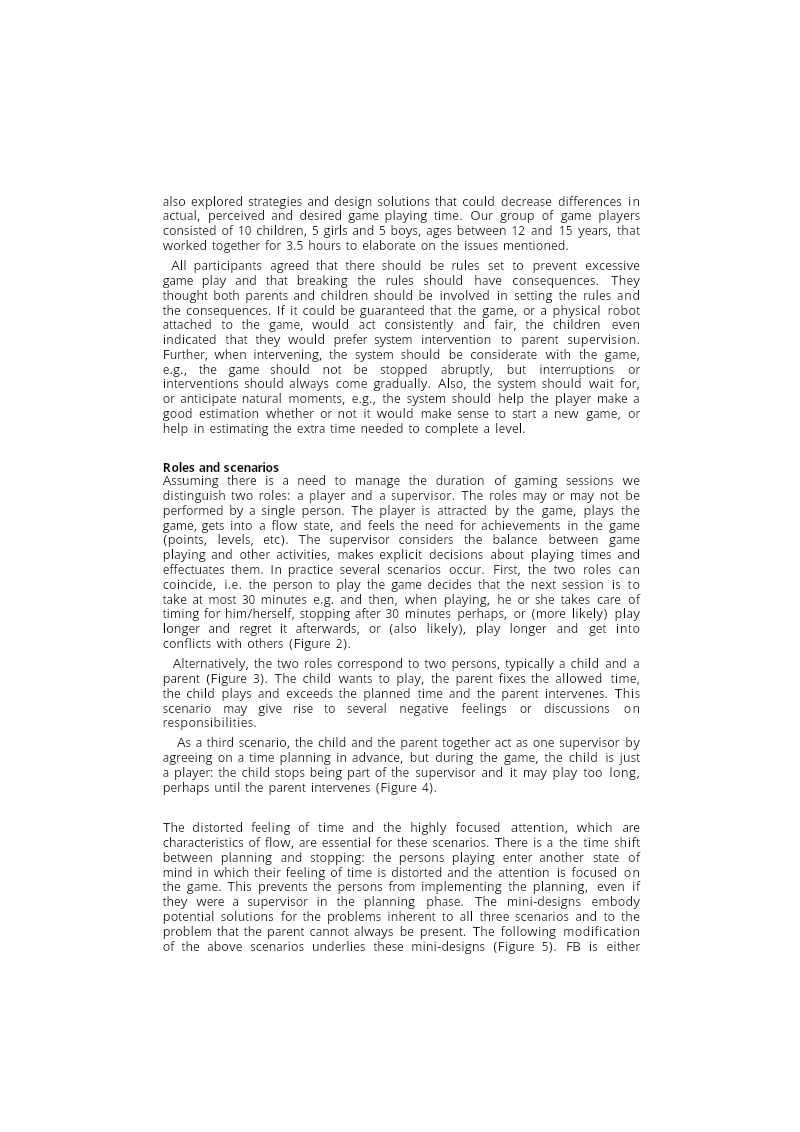
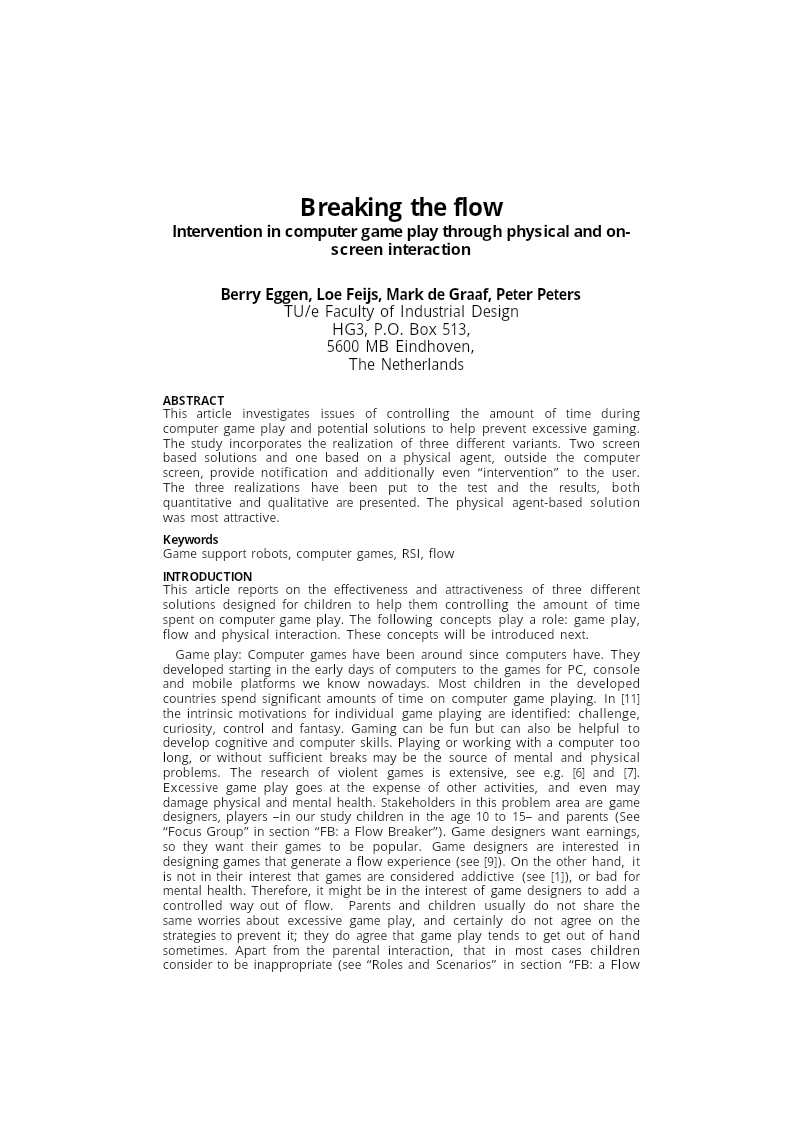
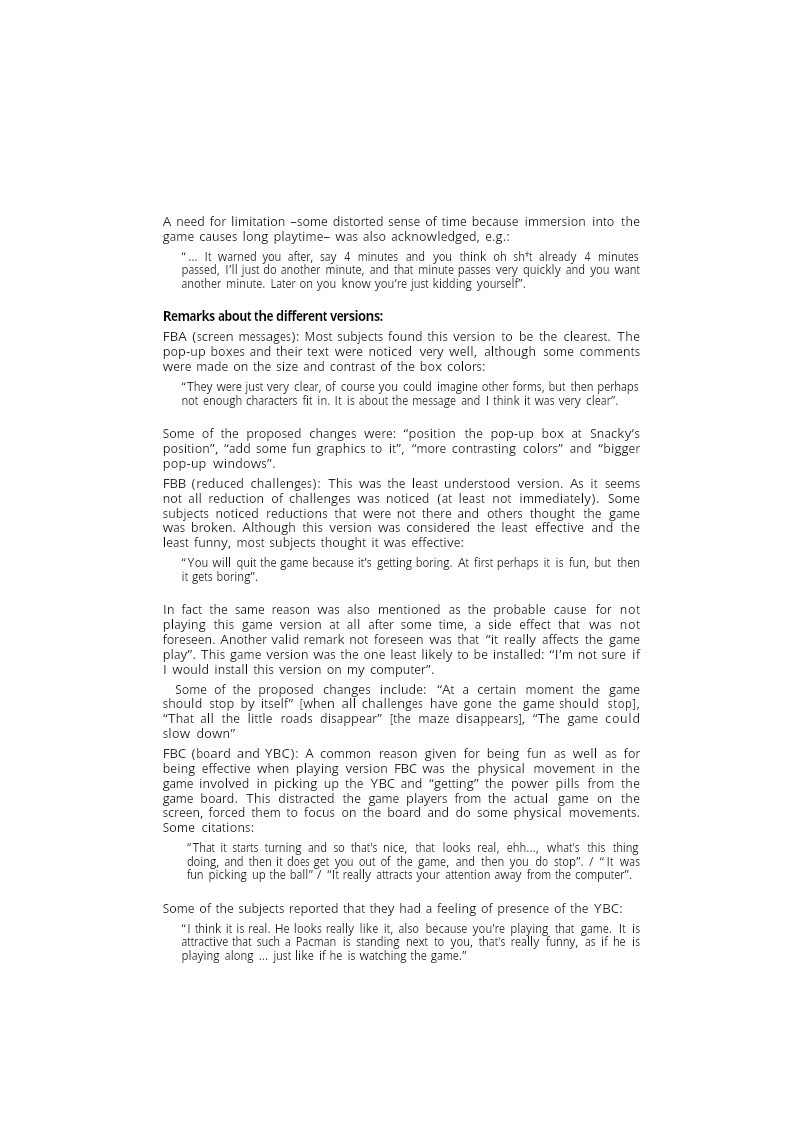
This study investigates whether interventions can interrupt the immersive "flow" state that draws children aged 10 to 15 into excessive computer game play. Motivated by a focus group in which children preferred consistent, gradual system-driven intervention over parental supervision, the authors designed a four-stage intervention model (normative, informative, interactive, and disruptive) and implemented it in three prototype forms within a Pac-Man-style game: on-screen pop-up warnings, in-game difficulty reduction, and a physical robot agent that required players to leave the keyboard. The work draws on flow theory, embodied interaction, and research on intrinsic motivation and game immersion.
The central empirical finding comes from a 10-participant experiment in the Snack Attack game. Rankings of both effectiveness and enjoyment showed significant agreement among participants (Kendall's W of 0.57 and 0.73, respectively). The physical robot was ranked most effective and most fun, while the challenge-reduction approach was rated least liked and least clearly understood. Qualitative feedback praised the clarity of on-screen messages and the attention-grabbing quality of the physical agent, suggesting that embodied, off-screen interruption is especially powerful at breaking absorption.
The study's scope is narrow and exploratory: it involves a small sample, a single game prototype, and a short evaluation focused on perception rather than long-term behavioral outcomes such as actual reductions in playing time. The authors conclude that the challenge-reduction method requires redesign to align with the achievement systems commonly built into games, and they position the physical agent as a promising direction for future intervention design.
Each row is a game or company this document names, each column a document, oldest first. A mark means that document names it. Select a row to see those documents.

DiGRA · 2026

DiGRA · 2026



DiGRA · 2026



DiGRA · 2026



DiGRA · 2026



DiGRA · 2026



DiGRA · 2026



DiGRA · 2026

DiGRA · 2026



DiGRA · 2026



DiGRA · 2026

DiGRA · 2026