1 free read left. Create a free account for unlimited reading + AI research.
Create free accountReport DiGRA
1 free read left. Create a free account for unlimited reading + AI research.
Create free accountReportDiGRA
The research combined more than 1,000 hours of participant observation, 15 EverQuest guild interviews and an online survey.
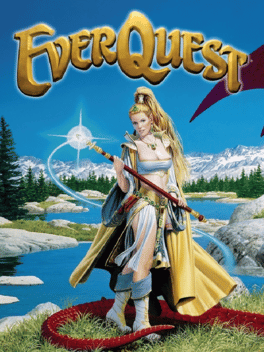
Project Massive 1.0 is a Carnegie Mellon study examining how commitment to a guild relates to play time and sociability among massively multiplayer online game players. Drawing on more than 1,000 hours of participant observation, 15 interviews with EverQuest guild members, and an online survey of 1,836 respondents (predominantly male, with a mean age of 27), the research argues that cultivating guild commitment could deepen players' attachment to a game and, by extension, support longer subscriptions and greater developer revenue. The sample is weighted toward EverQuest players, with Dark Age of Camelot and Anarchy Online also represented.
The central findings concern the link between commitment and engagement. Players averaged roughly 15 to 21 hours of play per week, and 78 percent belonged to guilds. Highly committed members, with a mean Organizational Commitment Questionnaire score of 5.3 out of 7, played substantially more hours (18 to 24 weekly) than uncommitted players (10 to 12), and they were more likely to use email and message boards and to plan guild activities in advance. Because the data are cross-sectional, the authors caution that the direction of causality cannot be established. Solo players also reported lower real-life group-activity scores than grouped players, suggesting that offline sociability parallels in-game behavior.
The study further examines whether guilds persist or migrate when players move between titles. Only 18 percent of respondents said their guild planned to form a chapter in an upcoming game, while 47 percent expected to relocate individually, and 81 percent reported that migration was rarely or never discussed. Most players intended to keep their accounts indefinitely, and 70 percent expected to continue playing their current game at least one to two times weekly. Taken together, these results suggest that guilds are understood as anchored to their current game world, a conclusion the authors plan to test through future longitudinal research.
Each row is a game or company this document names, each column a document, oldest first. A mark means that document names it. Select a row to see those documents.
DiGRA · 2016
DiGRA · 2016
DiGRA · 2016
DiGRA · 2016
DiGRA · 2016
DiGRA · 2016
DiGRA · 2016
DiGRA · 2016
DiGRA · 2016
DiGRA · 2015
DiGRA · 2015
DiGRA · 2015
DiGRA · 2014