1 free read left. Create a free account for unlimited reading + AI research.
Create free accountWhitepaper DiGRA
1 free read left. Create a free account for unlimited reading + AI research.
Create free accountWhitepaperDiGRA
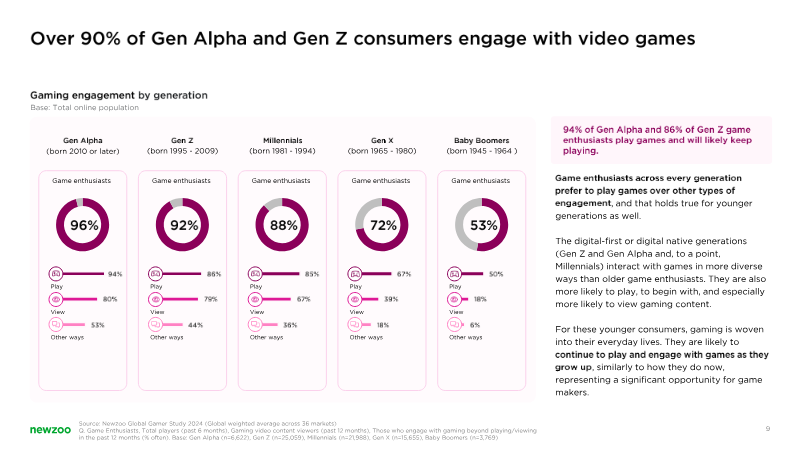
In a 2003 Korean survey, over 90 percent of respondents had played games, with most play at home.
Kolko and Thayer's study examines whether computer games can serve as an entry point to technology for novice users, and argues that their effectiveness depends heavily on cultural and infrastructural context. The analysis contrasts three markets: the United States, South Korea, and Uzbekistan. It draws on industry statistics and original survey data, while acknowledging that much available industry data comes from trade groups with vested interests and should be interpreted cautiously.
The comparison with South Korea provides the clearest benchmark. A 2003 Korean survey found that over 90 percent of respondents had played games, with a strong youth skew and most play occurring at home. South Korea's shift from arcade and console play to online PC gaming, driven by broadband expansion, generated roughly $2.8 billion in revenue in 2002. By contrast, a March 2003 Uzbek survey of 317 respondents found that only 32.5 percent had used a computer, and about 59 percent of those users had played games, usually simple Windows or web titles. Uzbek Internet café visitors rarely went there to play games, with only 4.6 percent visiting daily, compared with nearly half of South Korean café visitors. Among Uzbek gamers, the gender balance was closer to the US pattern, where the Entertainment Software Association reports roughly a 60/40 male-female split.
Genre preferences reveal a further divide. South Koreans favor role-playing and strategy games over first-person shooters, with online play preferred by 47.9 percent of respondents. Only 1.25 percent of Uzbek citizens have played an MMOG or MMORPG, compared with roughly 10.4 percent of South Koreans who play StarCraft alone. The authors attribute this gap chiefly to weak broadband, the absence of online payment systems, and widespread counterfeit games, with language barriers also limiting engagement, since only 5.4 percent of Uzbeks claim excellent English. Overall, the study concludes that Uzbekistan's gaming patterns trail more developed markets, and recommends ongoing tracking to guide future decisions about introducing games as a technological on-ramp.
Anzu · 2026