1 free read left. Create a free account for unlimited reading + AI research.
Create free accountReport DiGRA
1 free read left. Create a free account for unlimited reading + AI research.
Create free accountReportDiGRA
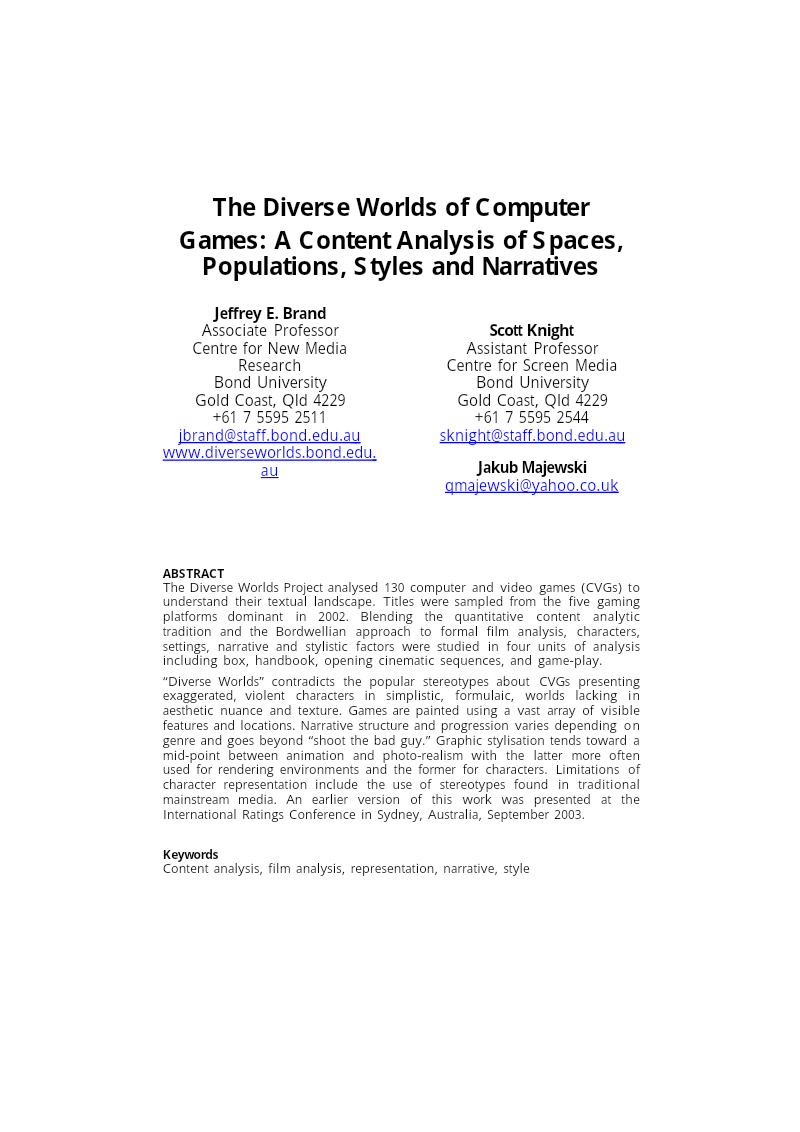
Researchers examined each title's box, manual, opening cinematic and first ten minutes of gameplay. The work was part of the Diverse Worlds Project.
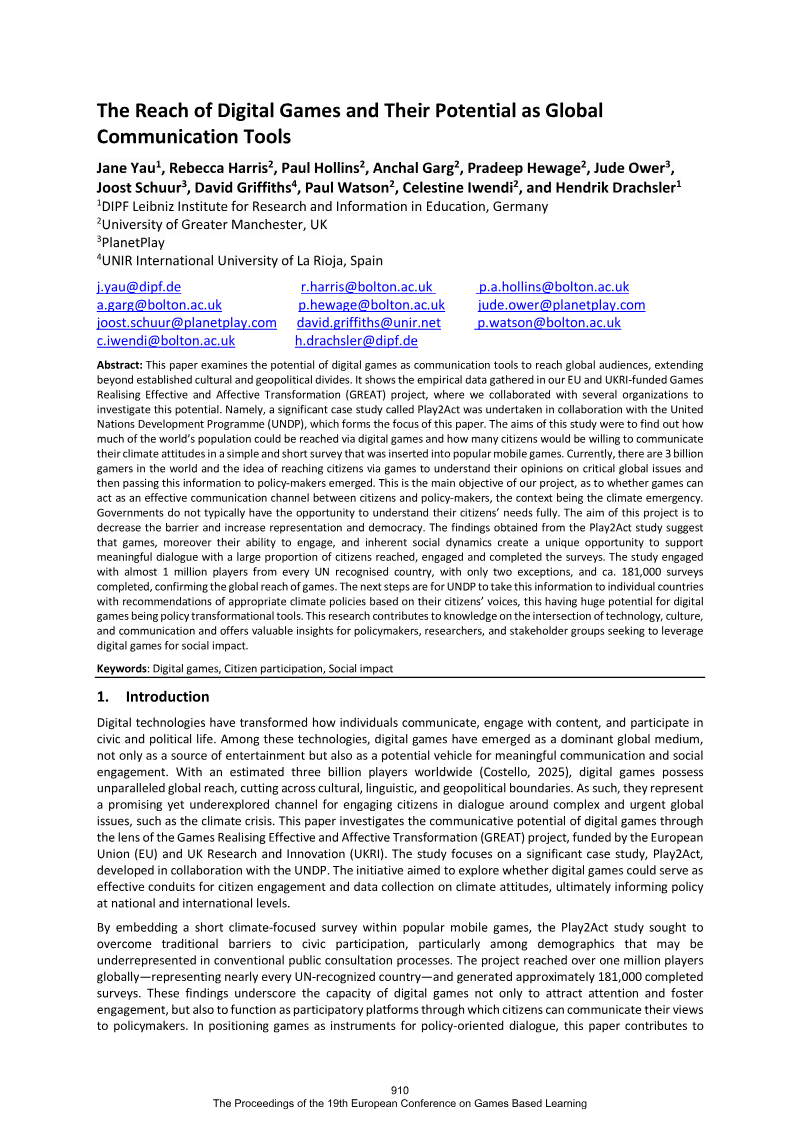
This content analysis of 130 top-selling computer and video games from 2002, drawn from five platforms, was conducted as part of the Diverse Worlds Project to examine the actual content of games rather than relying on public assumptions about them. The authors examined four units of analysis for each title: the box, the manual, the opening cinematic, and the first ten minutes of gameplay. Their central argument is that claims portraying games as uniformly violent and formulaic are not supported by the evidence, given the wide range of settings and varied character behaviors they observed. The project was motivated by a recognized gap in the literature, as no prior published study had documented the broader content of games, and by a desire to move beyond polarized debates over whether games are uniformly harmful or beneficial.
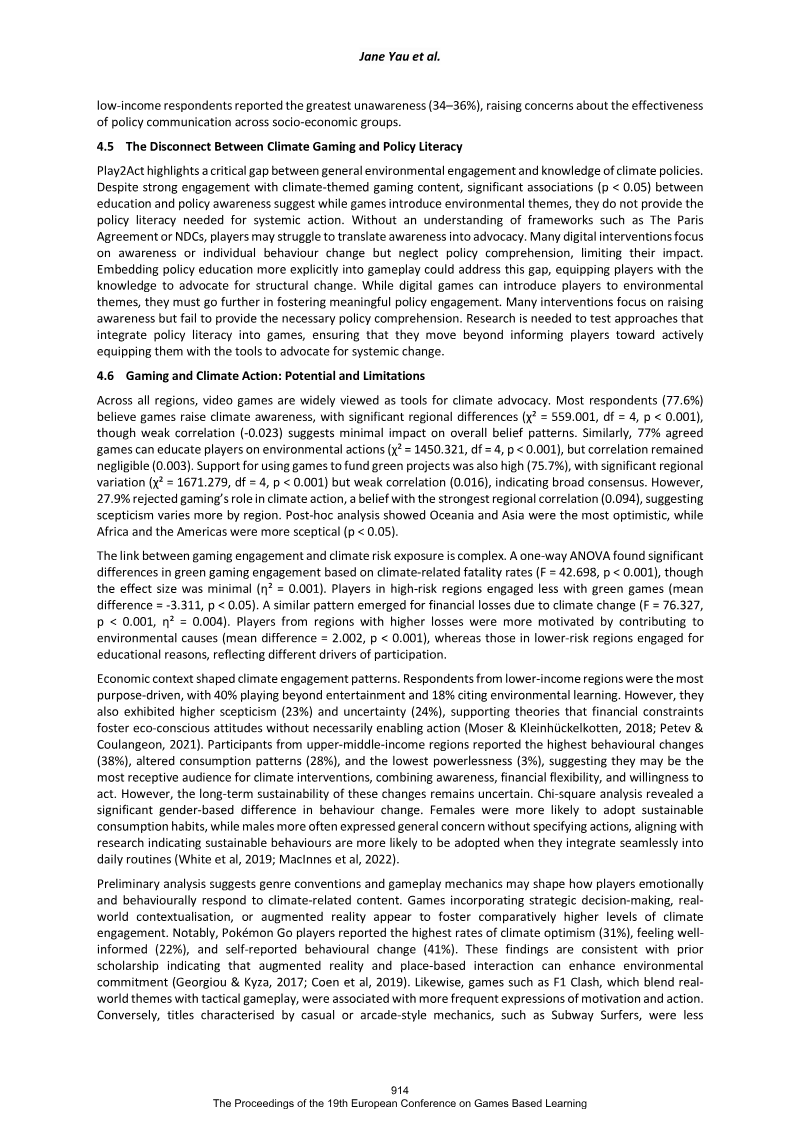
The findings reveal substantial diversity in game worlds and narratives. Roughly three-quarters of titles featured exterior settings, and most (64%) were set in the present day, while only 8% took place in space. Stereotypes appeared mainly in character representation: characters skewed male (71%) and adult (63%), with a majority of white European or ambiguous backgrounds, and about 10% depicted unrealistic or hypersexualized bodies. Graphics combined photorealistic environments with animated characters. Narrative structure varied considerably by genre, with 42% of games offering players little control over story progression, concentrated in platformers, first-person shooters, and action titles, while 44% granted substantial narrative control, concentrated in strategy, adventure, and sports and racing games.
Recurring narrative themes included good versus evil (28%), winning battles (20%), point accumulation (23%), and races (11%), whereas flashbacks, repeats, and flash-forwards were rare. Drawing on Huizinga's argument that play underpins culture, the authors conclude that games function as culture-makers and merit serious scholarly attention as cultural artifacts. The study thus offers an empirical baseline for assessing claims about game content, though its focus on a single year and on top-selling titles defines the scope of its conclusions.

DiGRA · 2026

DiGRA · 2026



DiGRA · 2026



DiGRA · 2026



DiGRA · 2026



DiGRA · 2026



DiGRA · 2026



DiGRA · 2026

DiGRA · 2026



DiGRA · 2026



DiGRA · 2026

DiGRA · 2026
DiGRA · 2026
DiGRA · 2026

The Game Business · 2026