1 free read left. Create a free account for unlimited reading + AI research.
Create free accountWhitepaper DiGRA
1 free read left. Create a free account for unlimited reading + AI research.
Create free accountWhitepaperDiGRA
The authors argue casual players can be reached through systematic psychological research rather than derivative design. They also suggest an optimal level of resemblance to reality may better serve broad appeal than maximal realism.
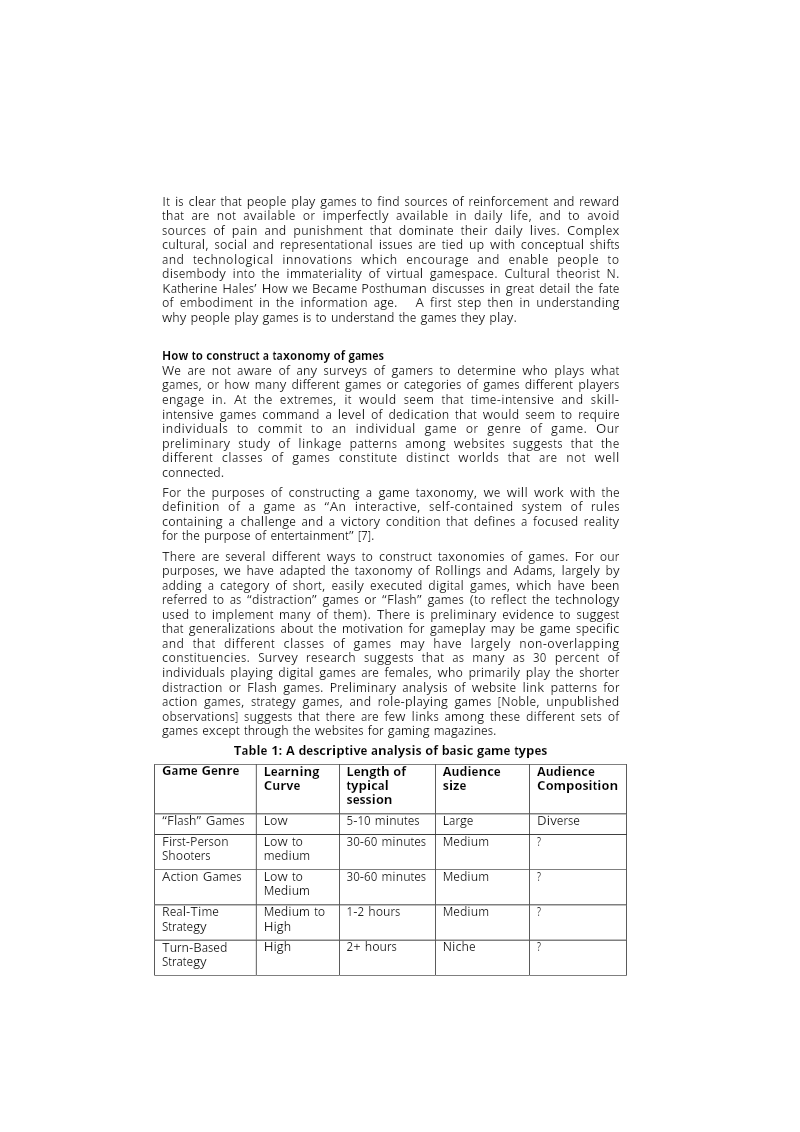
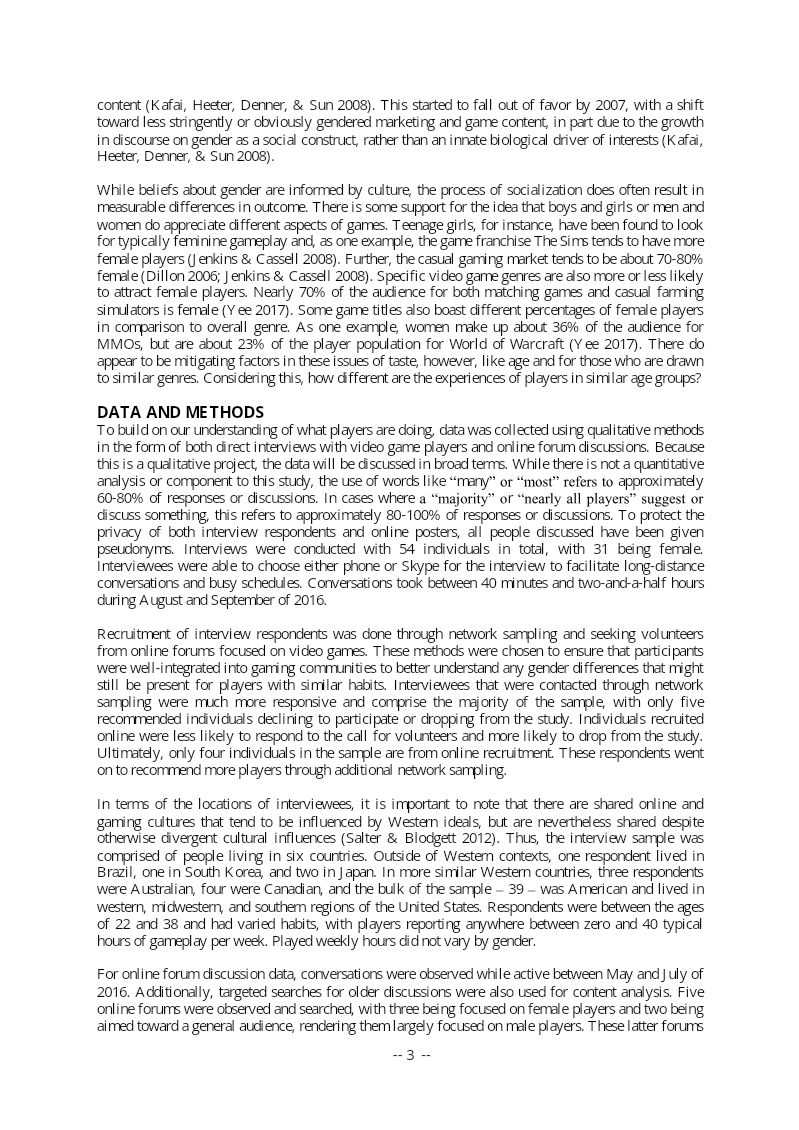
Game design has long relied on the intuitions of "hardcore" players, who make up roughly 10 percent of the audience, a pattern that risks leaving casual players underserved. Drawing parallels to Norman's early and late adopters of technology, this work argues that the mainstream casual audience, long neglected by costly console publishing, can be reached through systematic psychological research rather than derivative design. Its central thesis is that an optimal level of resemblance to reality, rather than maximal realism, may better serve broad appeal, and that simpler, quicker-to-learn games are a plausible route to wider engagement. Survey evidence suggesting that around 30 percent of digital game players are female, concentrated in short Flash games, supports this view, though the authors acknowledge that much of their proposed game taxonomy rests on incomplete demographic data.
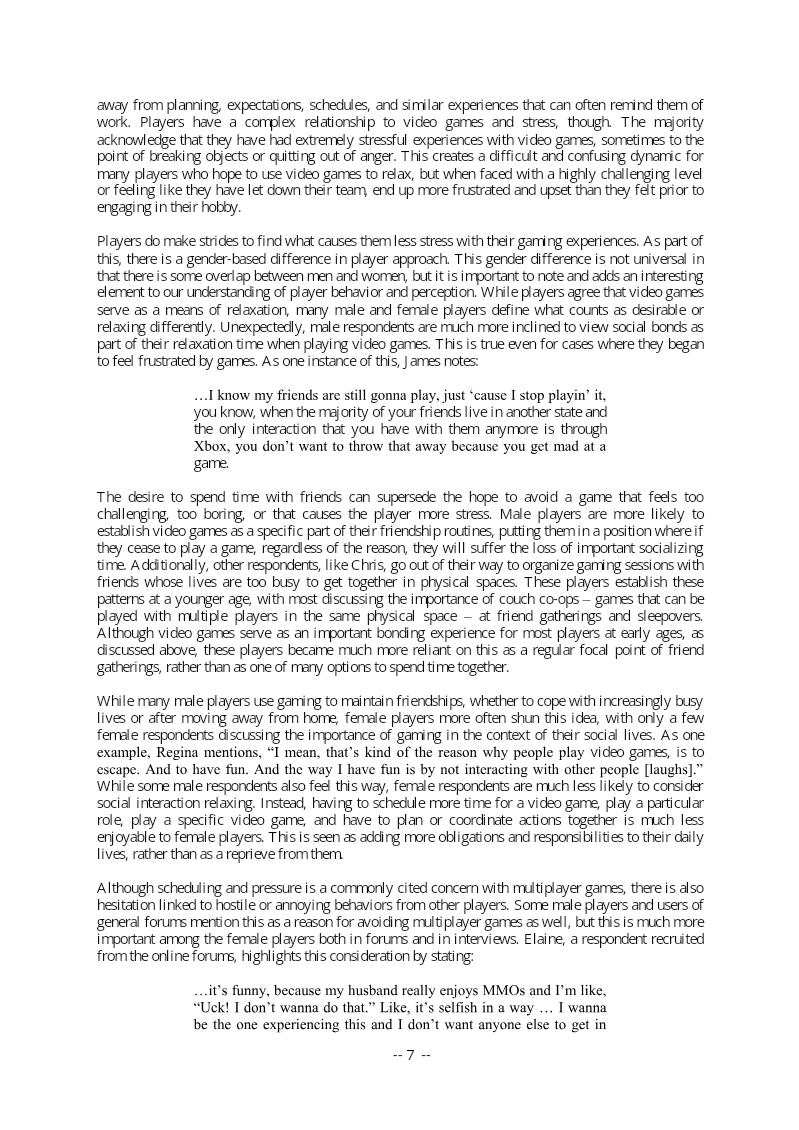
The analysis grounds player engagement in Maslow's hierarchy of needs, with safety emerging as a significant motivator, particularly in online environments such as Toontown Online where protecting children is a design obligation. It contends that because virtual symbols lack the emotional associations of real life, conditioned emotional responses form less readily in digital settings, although high-frequency reinforcement can partly offset this. Cognitively mediated motives such as mastery and competition are presented as central drivers of play. On gender, the work reviews evidence that women tend to excel at social and affective perception while men favor rough-and-tumble and linear competition, and it cites studies suggesting these differences are largely stylistic and shaped by early socialization.
The study's scope encompasses digital game players across casual and enthusiast segments, with attention to gender, culture, and age as conditions shaping engagement. Its findings on children's confrontational play, where boys tend toward physical threats and alliance-building and girls toward social exclusion, are linked directly to design strategy. The authors conclude that applying these psychological distinctions could enable new game types, including first-person actor games, immersive reality games, and abstract play, expanding the medium beyond its established hardcore core.



DiGRA · 2023

DiGRA · 2023



DiGRA · 2023

DiGRA · 2023



DiGRA · 2023



DiGRA · 2023



DiGRA · 2023



DiGRA · 2023



DiGRA · 2023



DiGRA · 2023



DiGRA · 2023

DiGRA · 2023

GameMakers · 2021