1 free read left. Create a free account for unlimited reading + AI research.
Create free accountWhitepaper DiGRA
1 free read left. Create a free account for unlimited reading + AI research.
Create free accountWhitepaperDiGRA
The study responds to a notably thin literature on parental mediation of video games.
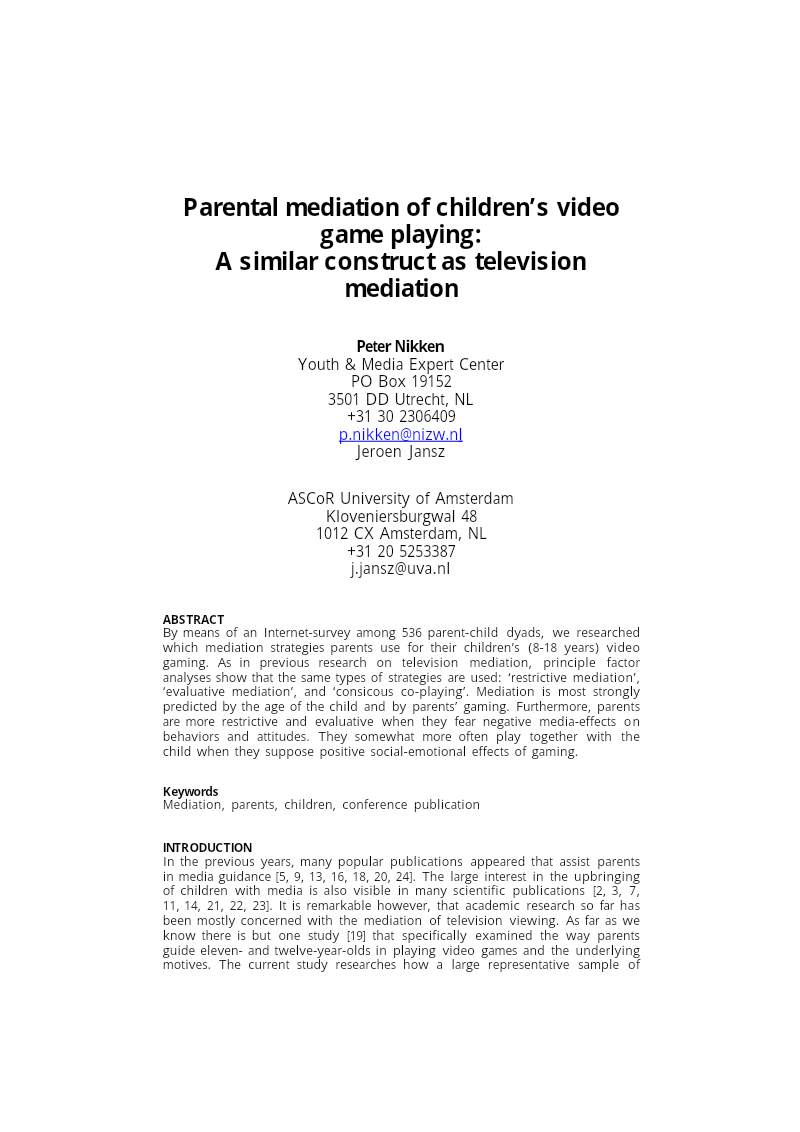
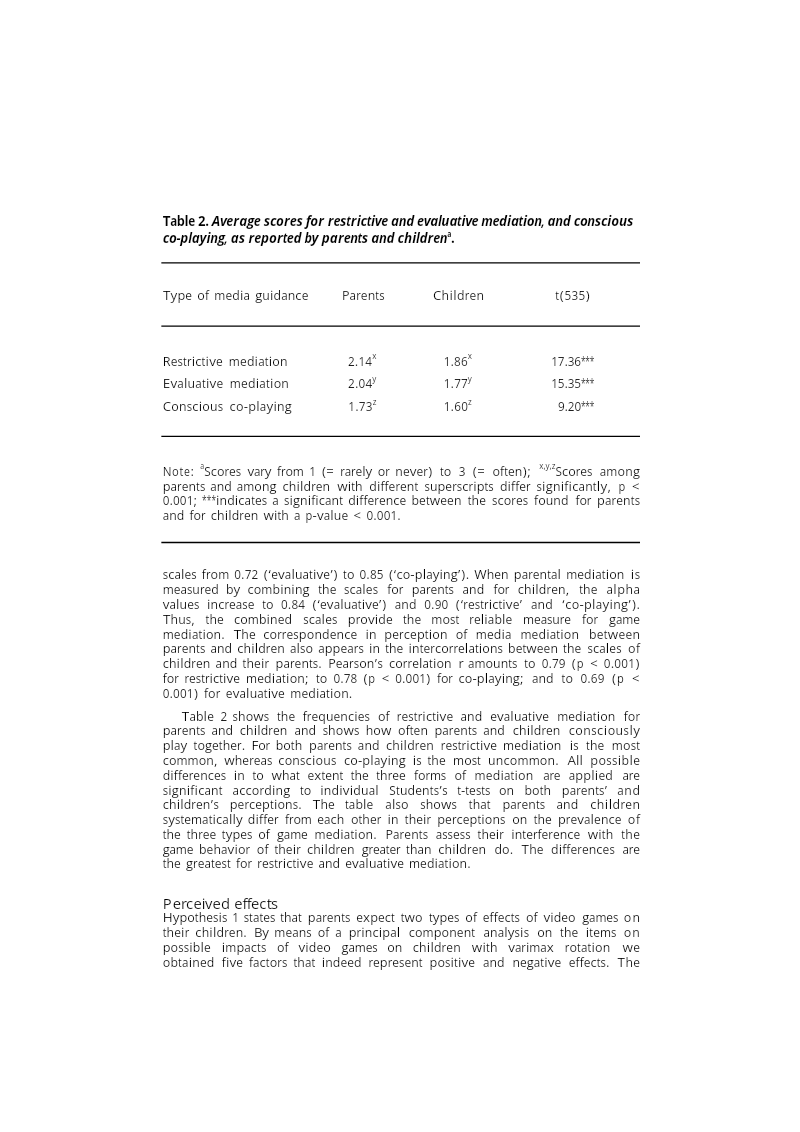
A 2002 Dutch study of 536 parent-child pairs, with children aged 8 to 18, examines how parents mediate their children's video game play and whether this mediation mirrors the established framework used for television. The research responds to a notably thin literature on game mediation, arguing that a television-based construct can be carried over to interactive media. Its central claim is that parental mediation of video games does indeed resemble the television construct, comprising three factors: restrictive mediation, evaluative mediation, and conscious co-playing.
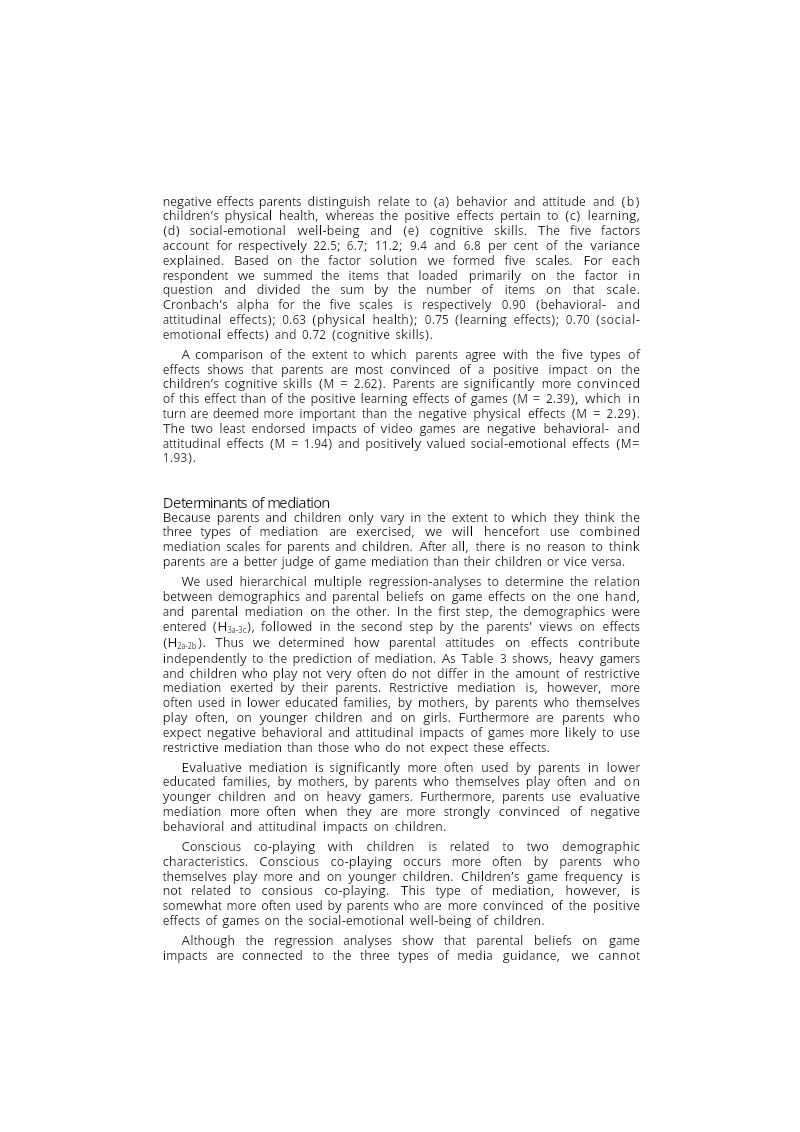
The findings show strong agreement between parents' and children's reports of these strategies, with correlations ranging from 0.69 to 0.79. Restrictive mediation emerged as the most common approach for both groups, while conscious co-playing was the least frequent, a divergence from earlier television research. Parents' beliefs about the positive and negative effects of games, together with demographic factors such as parent gender, parental gaming frequency, and child age, were modestly associated with mediation practices, though these variables added only 1 to 3 percent of explained variance beyond demographics alone.
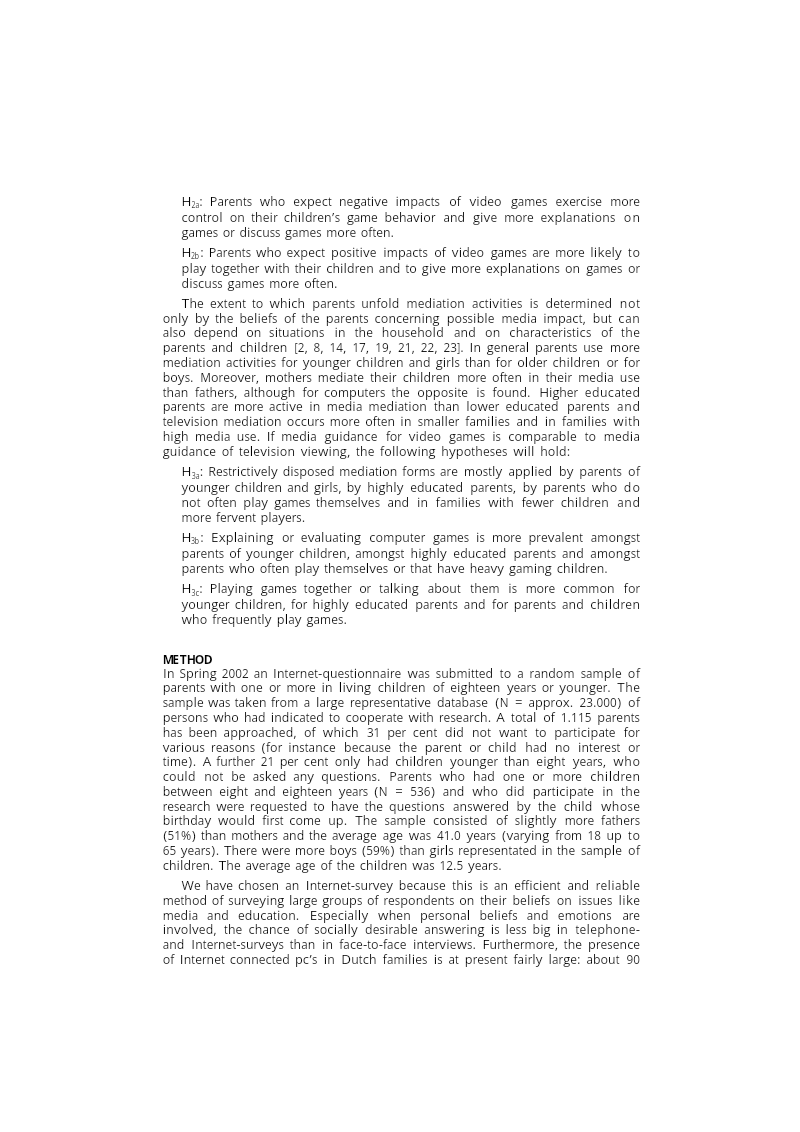
A notable conclusion concerns parental education. Lower-educated parents imposed restrictions and discussed game content more often than higher-educated parents, although they co-played at comparable rates. This pattern contrasts with the television literature and is not readily explained by social desirability bias. The authors instead propose that gaming is more prevalent among children in lower-educated households, which in turn prompts greater parental intervention. The study's sampling relied on a random draw from a Dutch research volunteer database, which limits its geographic scope to the Netherlands and its temporal scope to the early 2000s.

DiGRA · 2026

DiGRA · 2026



DiGRA · 2026



DiGRA · 2026



DiGRA · 2026



DiGRA · 2026



DiGRA · 2026



DiGRA · 2026

DiGRA · 2026



DiGRA · 2026



DiGRA · 2026

DiGRA · 2026
DiGRA · 2026