Global reports and market data
Documents

Schematically Disruptive Game Design
Peter Howell's DiGRA 2011 paper introduces "Schematically Disruptive Game Design," a framework for games that intentionally defy players' learned gameplay expectations instead of conforming to them.
- Howell's DiGRA 2011 paper proposes 'Schematically Disruptive Game Design,' a framework for games that deliberately defy players' learned gameplay expectations rather than conforming to them.
- The central open question is whether deliberately disorienting designs can remain commercially viable and engaging, positioned against industry trends toward hand-holding and accessibility, with Prince of Persia's guidance systems cited as criticized design.
- The paper argues schematically disruptive design should sustain constant cognitive effort rather than aim for pure flow, while warning that disruption must be carefully calibrated since players abandon games that become either frustrating or boring.
Exploring Anonymity in Cooperative Board Games
Linderoth's study explores whether anonymous actions can serve as a game mechanic in cooperative board games, with the aim of informing inclusive educational design.
- Many games marketed as cooperative blend in competitive or suspicion-based dynamics, and cooperative one-sided team games such as Pandemic suffer from "gameplay directing," where a single player effectively dictates decisions for the group.
- Tragedy-of-the-commons and traitor mechanics mitigate gameplay directing but do so only by sacrificing genuine cooperation, which motivated the study's goal of a purely cooperative game with anonymous player actions.
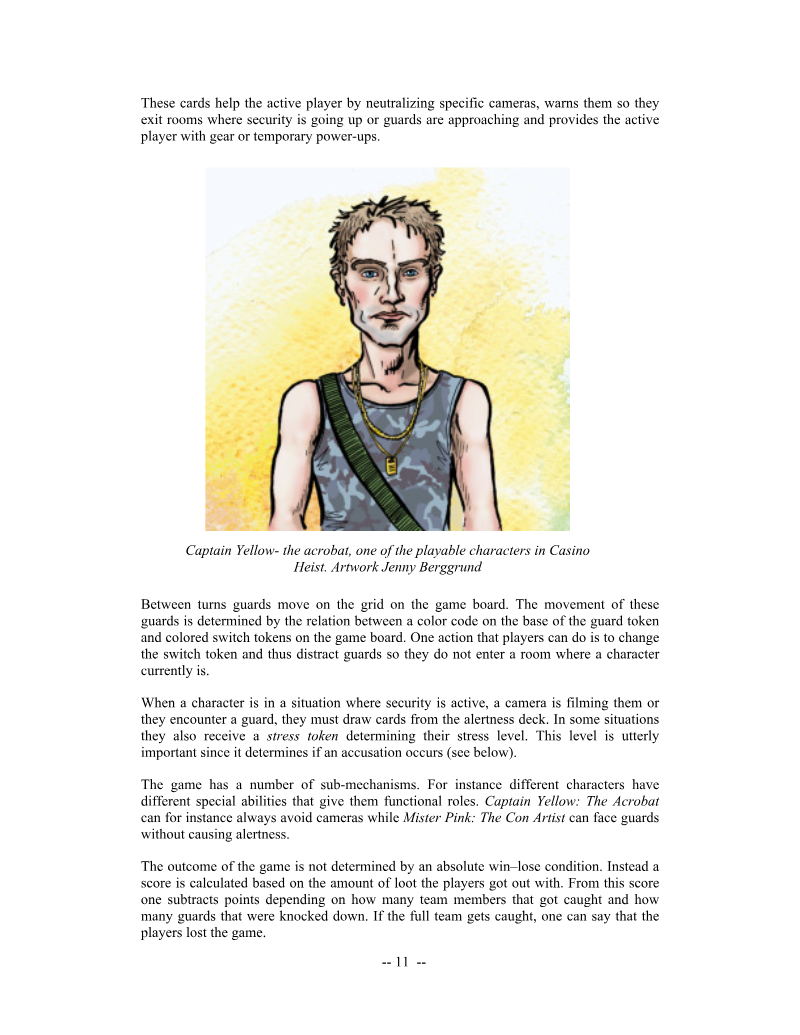
- The researchers prototyped "Casino Heist," a heist-themed cooperative game inspired by Battlestar Galactica's facedown card-play rule, in which players hold secret characters and concealed actions so the group knows what was done but not by whom.


How to Say Things with Actions I: A Theory of Discourse for Video Games
Rao's paper, "How to Say Things with Actions I: A Theory of Discourse for Video Games," argues that video games can be understood as discourse in the linguistic sense: structured flows of actions and events capable of conveying complex, argument-based meaning comparable to verbal communication.
- Rao's paper argues video games can be analyzed as discourse in the linguistic sense, conveying argument-based meaning comparable to verbal communication, and aims to build a procedural rhetoric framework that sits outside the ludology–narratology debate.
- The paper draws on argumentation theory, informal logic, and speech act theory, and adopts a rhetoric-derived definition of discourse (following Kinneavy's four aims: to inform, to be beautiful, to persuade, and to express) rather than the broader social-practice definition associated with Gee and Foucault.
- Its central finding is that games can currently produce only non-propositional, single-setting arguments (enthymemes), and they underuse the medium's capacity for temporal articulation of argument.
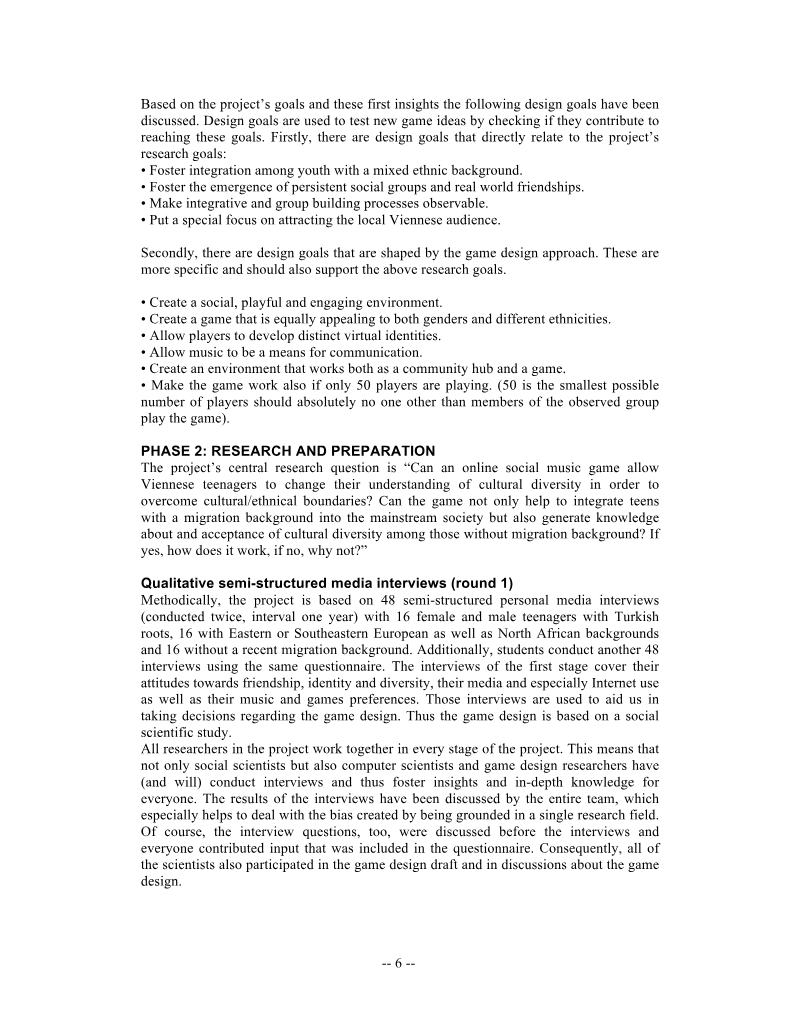
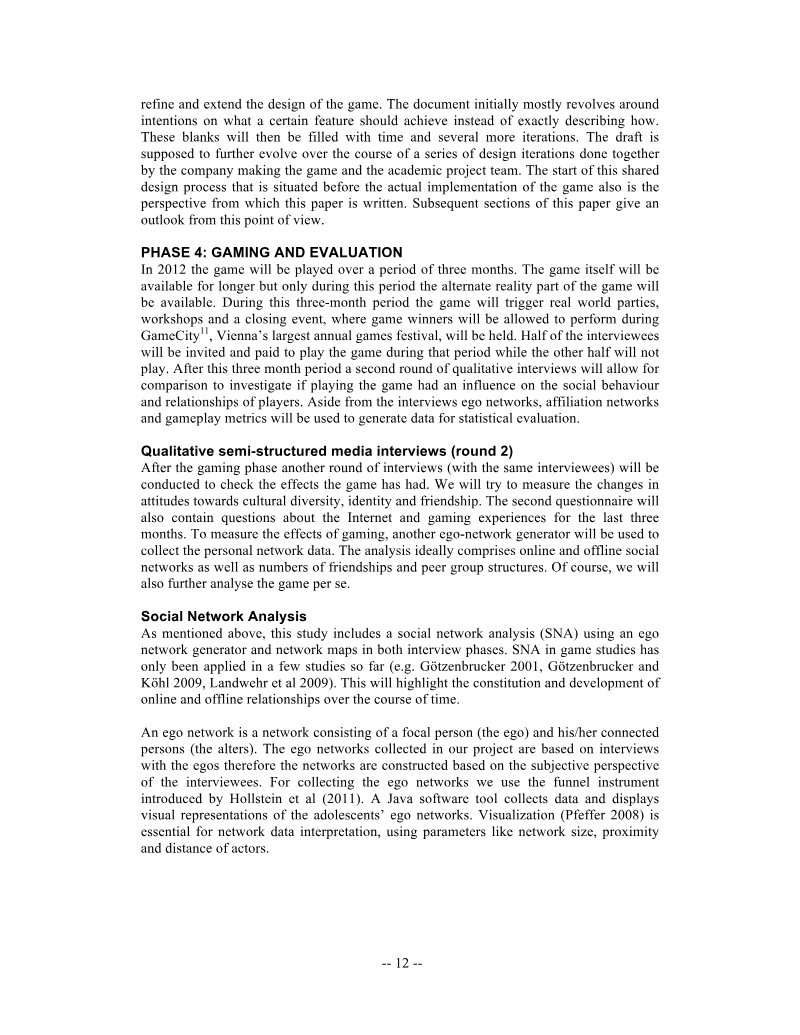
Serious Beats: Transdisciplinary Research Methodologies for Designing and Evaluating a Socially Integrative Serious Music-Based Online Game
Serious Beats is a transdisciplinary project from Vienna University of Technology and the University of Vienna that aims to design a music-based online social game fostering intercultural friendships among Viennese teenagers aged 14 to 17, many of whom have Turkish or Balkan migration backgrounds.
- Serious Beats is a transdisciplinary project from Vienna University of Technology and the University of Vienna to design a music-based online social game that fosters intercultural friendships among Viennese teenagers aged 14 to 17, many with Turkish or Balkan migration backgrounds.
- The design foundation rests on 48 semi-structured interviews, which found a strong preference for rap and hip hop, heavy reliance on YouTube as the primary music source, and hybrid migrant and Austrian identities, with many reporting intergroup tensions over jobs and housing.
- Early music-game prototypes were judged to carry a high risk of losing both male and female audiences, prompting a shift toward a social music service built on Facebook and YouTube and integrated with real-world events in youth centers and vocational schools.
MUsE: A Framework for Reception-Based Gaming Research
The paper introduces MUsE (Motivation-Usage-(self)Evaluation), a holistic research framework for reception-based game studies that models a complete cycle of game use.
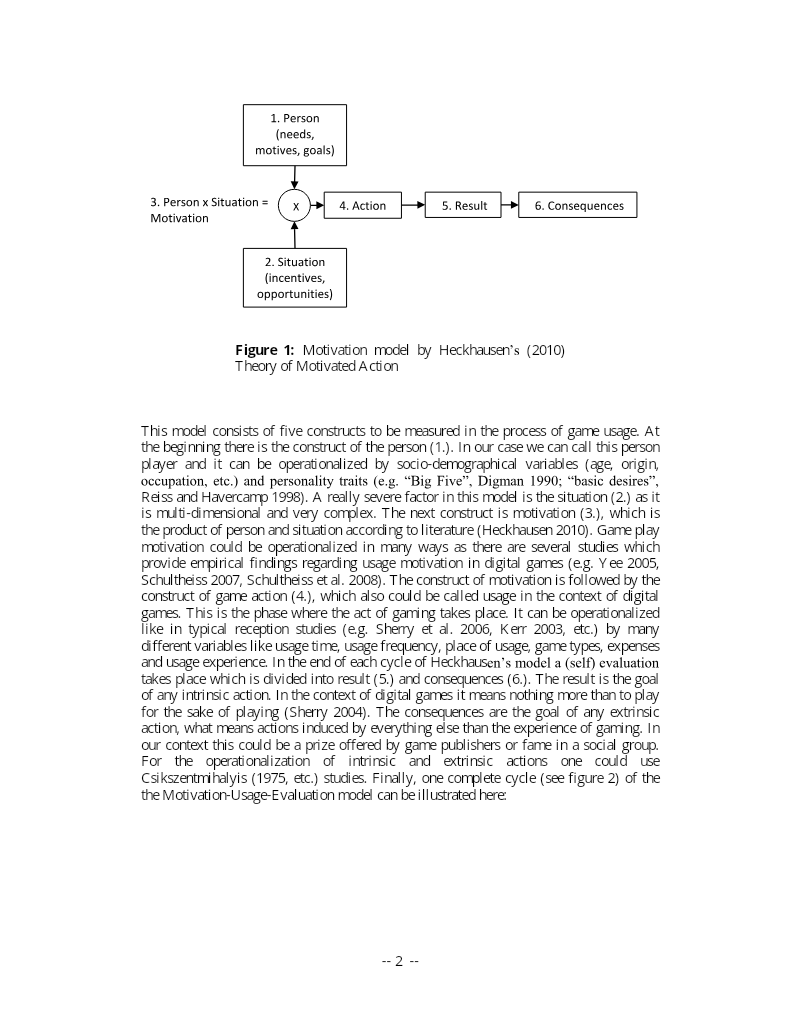
- The MUsE framework models a full cycle of game use (player, situation, motivation, usage, self-evaluation) and is built on Heckhausen's Theory of Motivated Action, with its strongest fit in quantitative survey research.
- Evaluations, especially extrinsic consequences, feed back into motivation in later play cycles, a finding the author flags as relevant to developers seeking sustained engagement and spending.
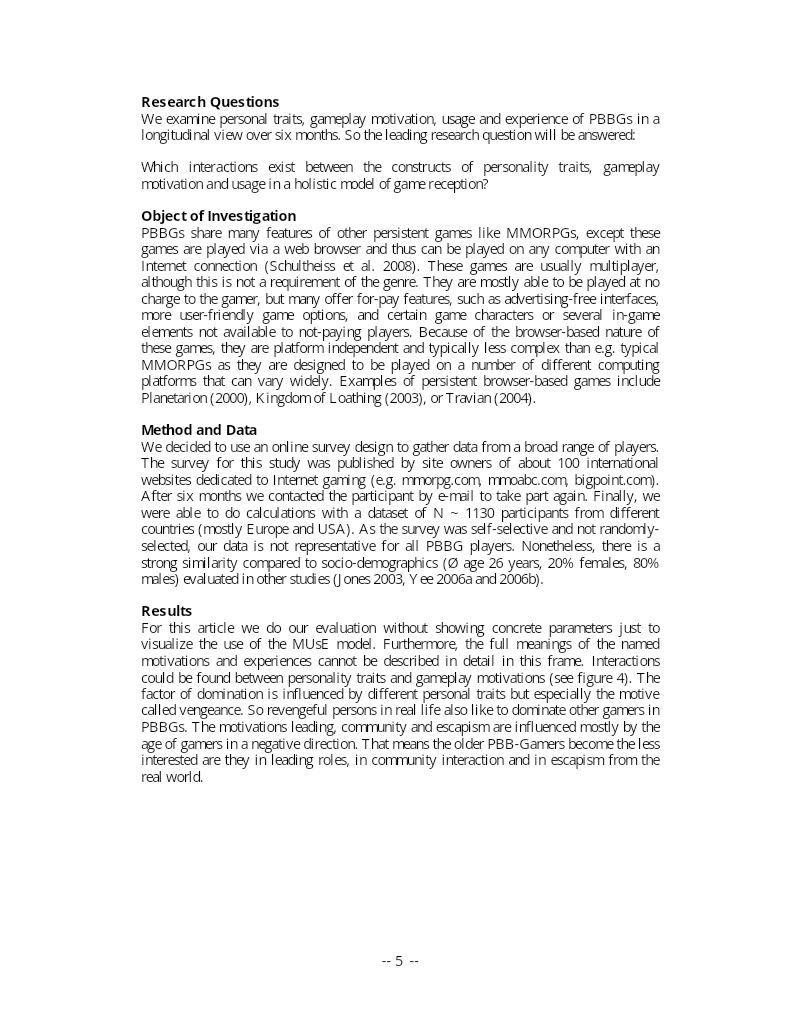
- The prototype study of persistent browser-based games drew about 1,130 participants via an online survey on roughly 100 gaming websites, with follow-up six months later, mostly from Europe and the USA.
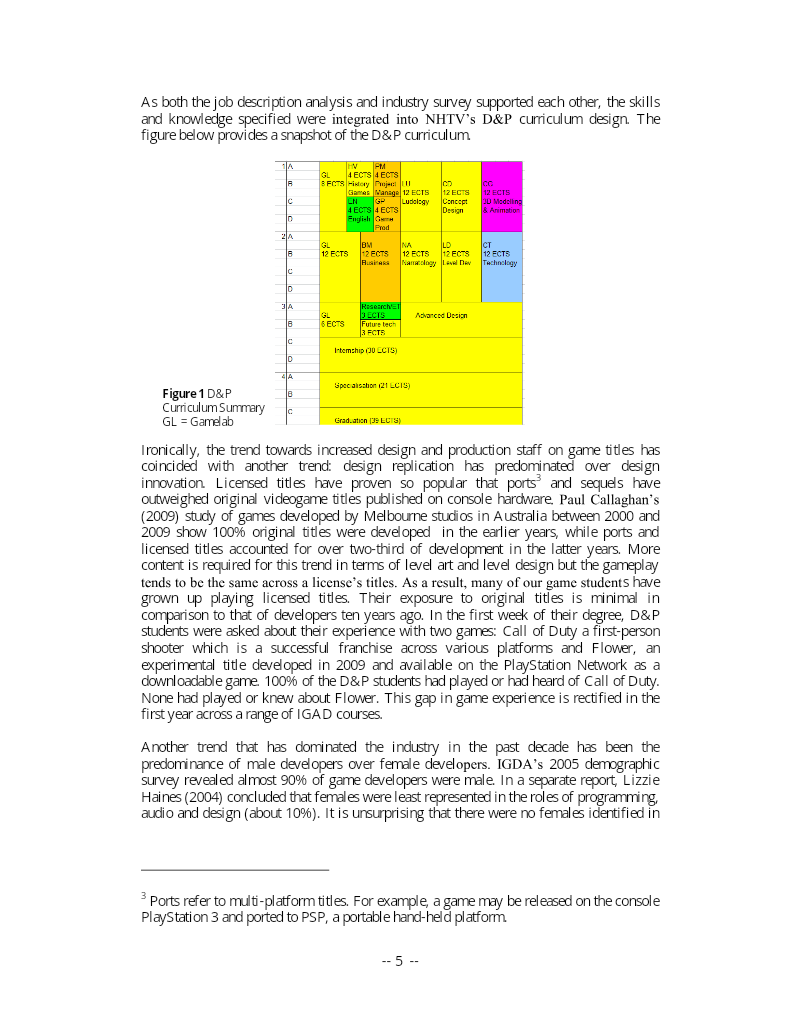


Designing the Designer
"Designing the Designer" examines whether the personality profiles and player preferences of game design and production students and professionals reveal meaningful patterns about who becomes a designer and how those tendencies shape the games they make.
- Design and production roles fell from 28.3% of game job postings in 2008 to 24.9% in 2009, while design and producer staff on top-selling titles grew from 11.1% for Donkey Kong Country (1994) to 38.9% for Modern Warfare 2 (2009).
- Compared with a random sample of more than 6,000 MBTI respondents, IGAD students (135 studied between 2008 and 2011) were strongly overrepresented in INTJ, ENTJ, ENFJ, and ISTJ types, with a pronounced Judging bias.
- No statistically significant link was found between personality type and design coursework performance, so the hypothesis that INTJs make better designers was not supported, though small samples limit firm conclusions.



Grow-A-Game: A Tool for Values Conscious Design and Analysis of Digital Games
The Grow-A-Game paper presents a card-based tool developed by the Values at Play project to help designers and analysts consider the moral, social, and political values embedded in digital games.
- The Grow-A-Game paper presents a card-based tool from the Values at Play project that helps designers and analysts examine the moral, social, and political values embedded in digital games, using four card categories: values, verbs, games, and issues.
- Its central thesis is that games communicate values through both narrative and mechanics, and that deliberately attending to those values during design and analysis yields more coherent and impactful work.
- Case studies showed that participants using the value cards (such as compassion, generosity, humility, and empathy) produced games in which narrative and mechanics expressed values more consistently, though the evidence is qualitative and anecdotal rather than statistically measured.
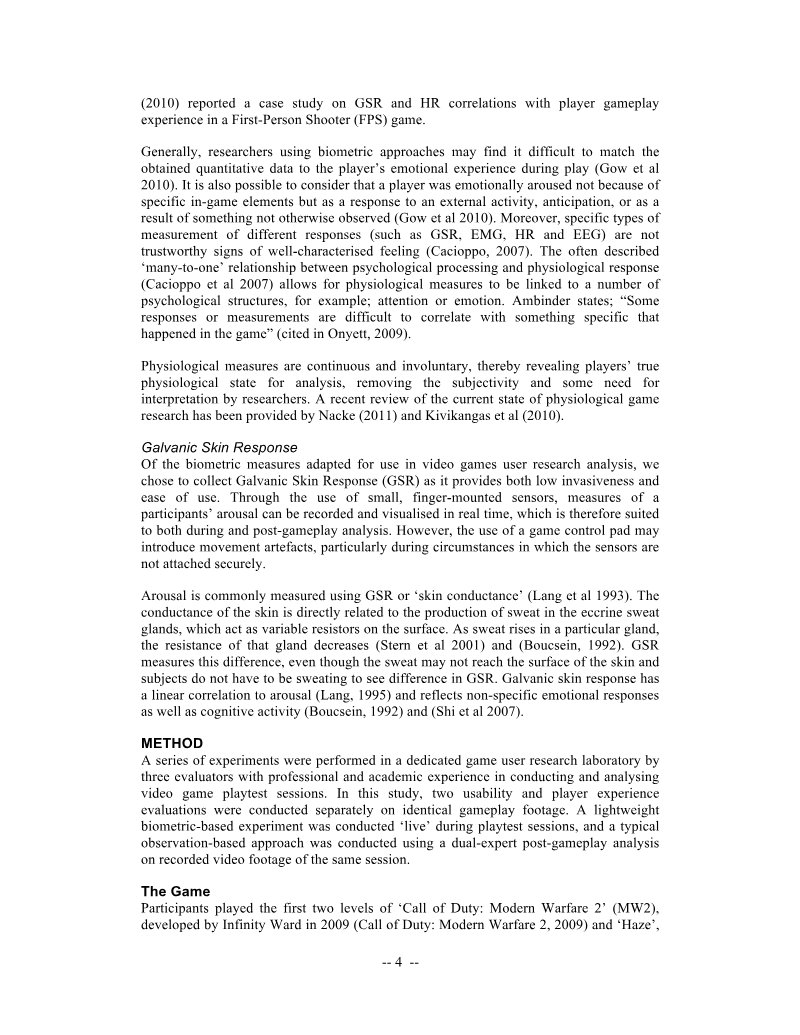

Understanding the Contribution of Biometrics to Games User Research
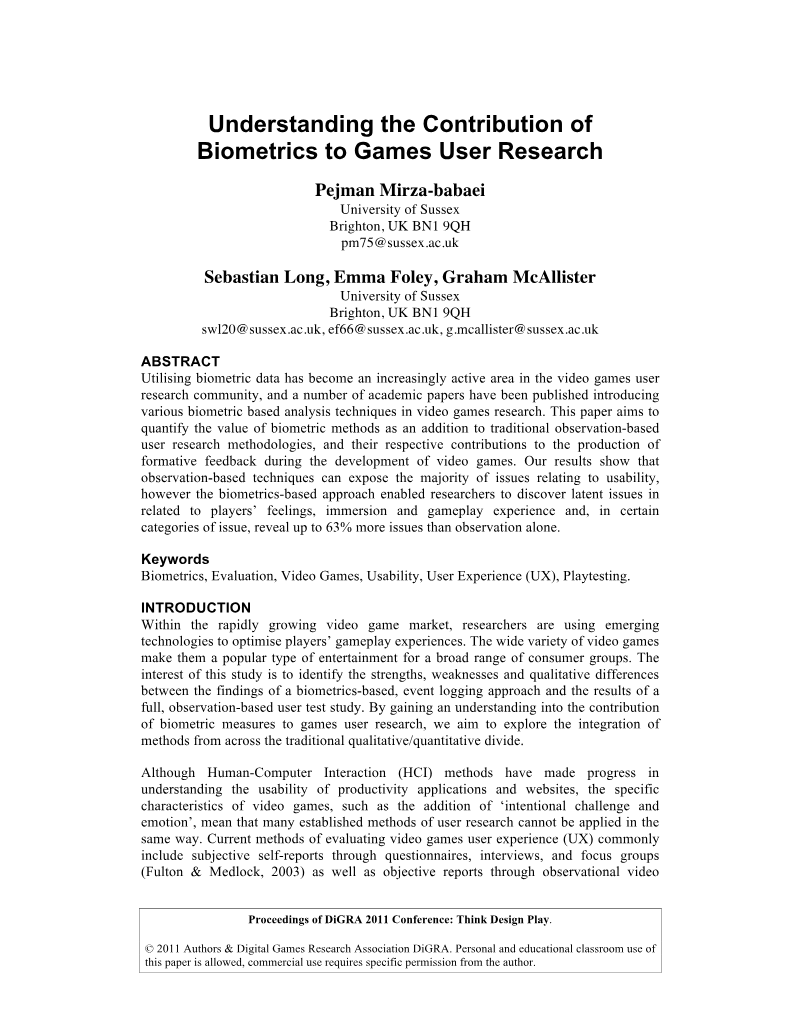
This study, by Mirza-babaei, Long, Foley, and McAllister of the University of Sussex and presented at DiGRA 2011, examines whether biometric measurement can strengthen user research for video games.
- Biometric methods (GSR combined with live event logging) surfaced issues that conventional observation missed, particularly around emotion, immersion, and gameplay experience, in a study of six casual gamers playing Call of Duty: Modern Warfare 2 and Haze.
- Of 89 identified issues, 29 were detected by both approaches, 34 only by observation, and 26 only by biometrics.
- Observation was substantially more effective for usability problems, a difference supported by a significant chi-square result (X²(8, N=89) = 26.7, p < .01).
Subversive Game Design for Recursive Learning
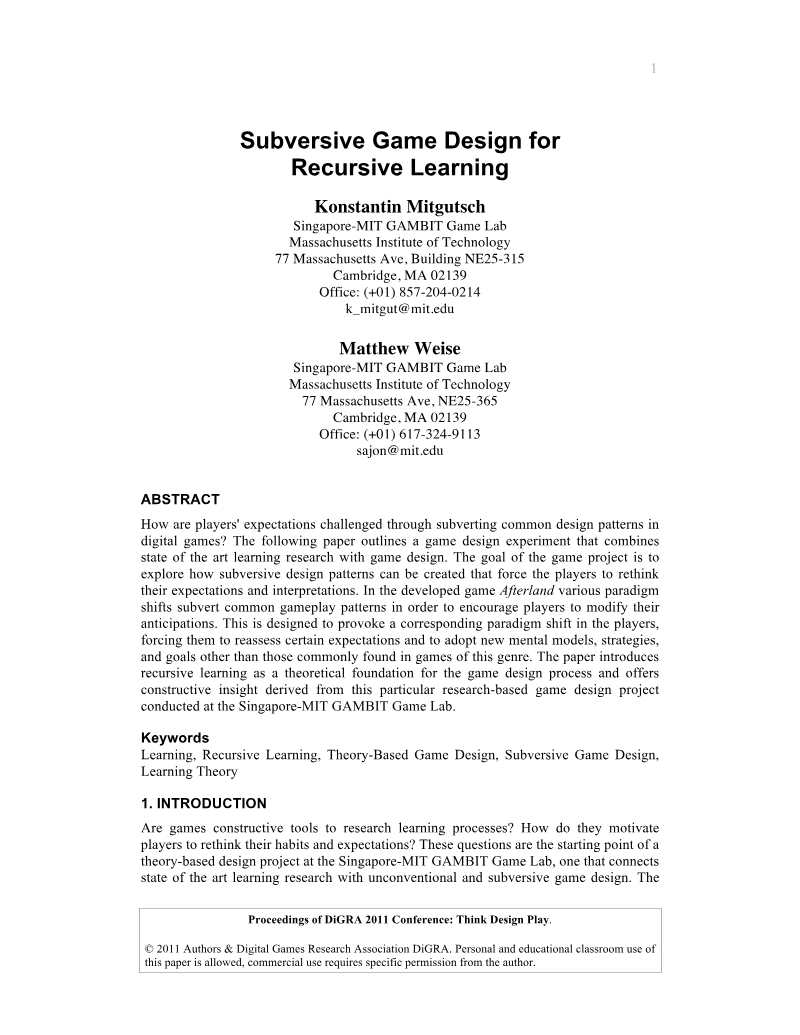
Mitgutsch and Weise's DiGRA 2011 paper argues that video games can serve as low-risk settings for "recursive learning," a form of transformational learning in which players' mistaken expectations are challenged through failure and then readjusted.
- Video games can serve as low-risk settings for "recursive learning," in which players' mistaken expectations are challenged through failure and then readjusted, and the authors argue deliberately subverting familiar design patterns can provoke this reassessment.
- Subversions must feel unexpected yet logical rather than broken; the authors' central design principle is that surprise works for learning only when the unconventional pattern remains coherent within the game's rules.
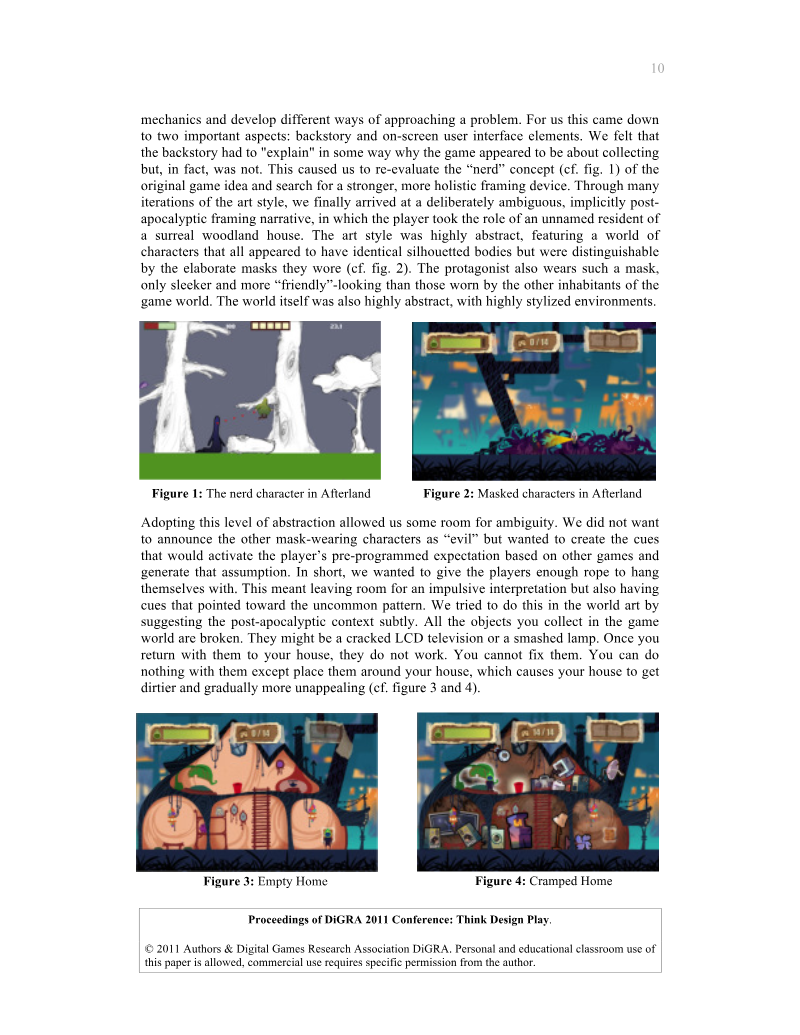
- The prototype Afterland, developed at the Singapore-MIT GAMBIT Game Lab, pairs a deceptive collecting-and-avoidance framing with an ambiguous anxiety meter and a world-based feedback system that gradually reveals the unconventional pattern.


"He Could Be a Bunny Rabbit for All I Care": Exploring Identification in Digital Games
Shaw's study examines whether players of digital games identify with on-screen characters, challenging the widely held assumption that identity-matching between player and character drives identification.
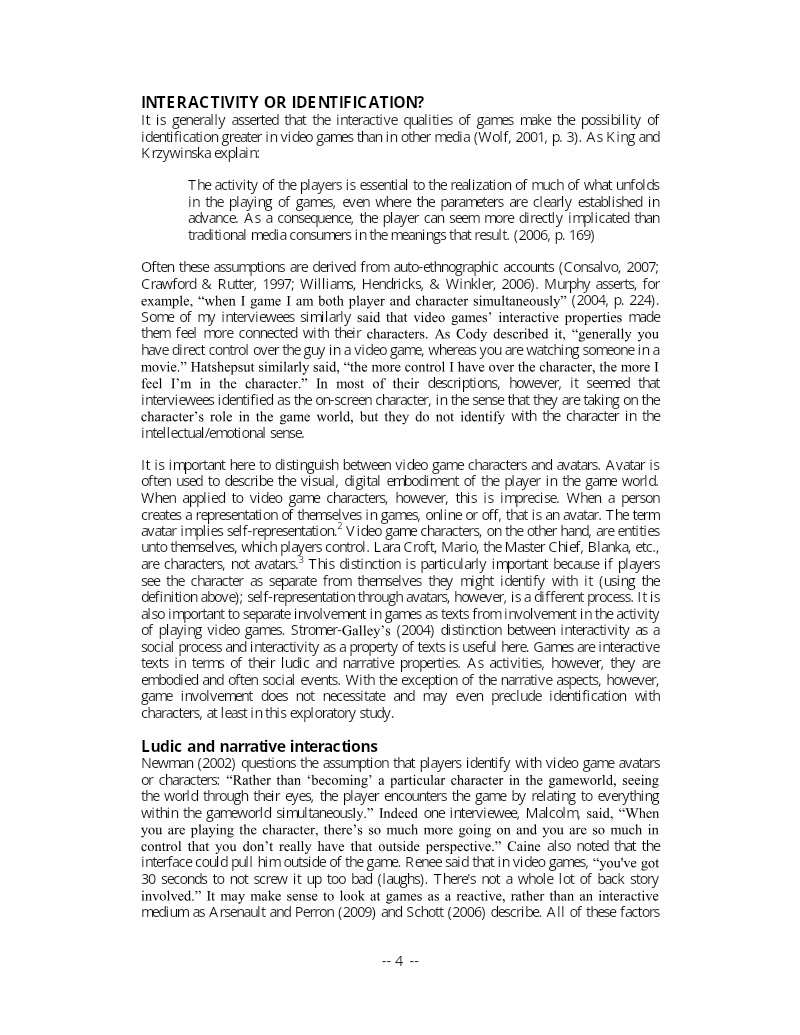
- Challenging the common assumption, the study finds that player-character identity-matching does not reliably drive identification: interviews with 27 players from marginalized groups (plus their partners) showed identification was inconsistent and often absent, with interviewees split roughly evenly on whether they connected with their characters.
- Interactivity tends to make players self-reflexive, directing attention toward their own actions, bodies, and social contexts rather than the perspective of the character they control.
- Identification depends on narrative depth, a game's ludic and interactive properties, game type, and the social or physical context of play; abstract avatars and weak narratives limit it, while strong storytelling can draw players into even non-humanoid characters.


Understanding Player Experience Using Sequential Analysis
This paper argues that player experience cannot be fully understood through static measures such as surveys and focus groups, because the order in which players' emotional and behavioural states unfold carries meaningful information beyond their overall totals.
- Static measures like surveys and focus groups miss information carried by the order in which players' emotional and behavioural states unfold; sequential analysis captures that additional signal.
- The authors built a behavioural coding scheme covering frustration, boredom, curiosity, engagement, and engrossment, which showed inter-observer agreement with Cohen's Kappa between .74 and .91, indicating it can be applied reliably by different observers.
- In a repeated-measures study of ten participants playing two early iPhone games, the higher-rated title (6.6) produced significantly more engagement in both frequency and cumulative duration, while the lower-rated title (4.1) elicited more frustration and curiosity and more frustration-to-curiosity transitions.

Do Players Prefer Integrated User Interfaces? A Qualitative Study of Game UI Design Issues
A qualitative study of Assassin's Creed, conducted around 2011, examines whether integrated game interfaces make players more involved than traditional heads-up displays.
- Removing superimposed interface elements does not by itself increase player involvement, since involvement is a multidimensional experience that varies across individuals.
- Players generally accept overlay UI elements when they deliver clear, relevant, gameplay-useful information, though many still find integrated designs more elegant.
- Interface preferences reflect underlying player orientations (imaginative, challenge-based, and sensory immersion players) rather than dictating how people engage with a game.