1 free read left. Create a free account for unlimited reading + AI research.
Create free accountWhitepaper DiGRA
1 free read left. Create a free account for unlimited reading + AI research.
Create free accountWhitepaperDiGRA
Distilling the key insights…
Peter Howell's DiGRA 2011 paper introduces "Schematically Disruptive Game Design," a framework for games that intentionally defy players' learned gameplay expectations instead of conforming to them. The central question is whether such deliberately disorienting designs can remain commercially viable and engaging. The paper positions itself against current industry trends toward hand-holding and accessibility, using the guidance systems of Prince of Persia as an example of criticized design, and argues that disruption and player-centric engagement can coexist. Horror is proposed as a suitable genre for this inquiry because of its long-established conventions and its recent shift toward action-oriented design. The work is presented primarily as a theoretical framework and proposed research direction rather than as empirically demonstrated findings.
The paper's conceptual core holds that schematically disruptive design should sustain constant cognitive effort rather than aim for pure flow. Disruption must be carefully calibrated, since players abandon games that become either frustrating or boring. To anchor disruptive mechanics, the author proposes a familiar challenge-reward feedback loop, with Super Meat Boy, Super Mario Bros. 3, and Amnesia: The Dark Descent cited as illustrative support. These examples are offered as evidence of the principle's plausibility rather than as systematic tests of it.
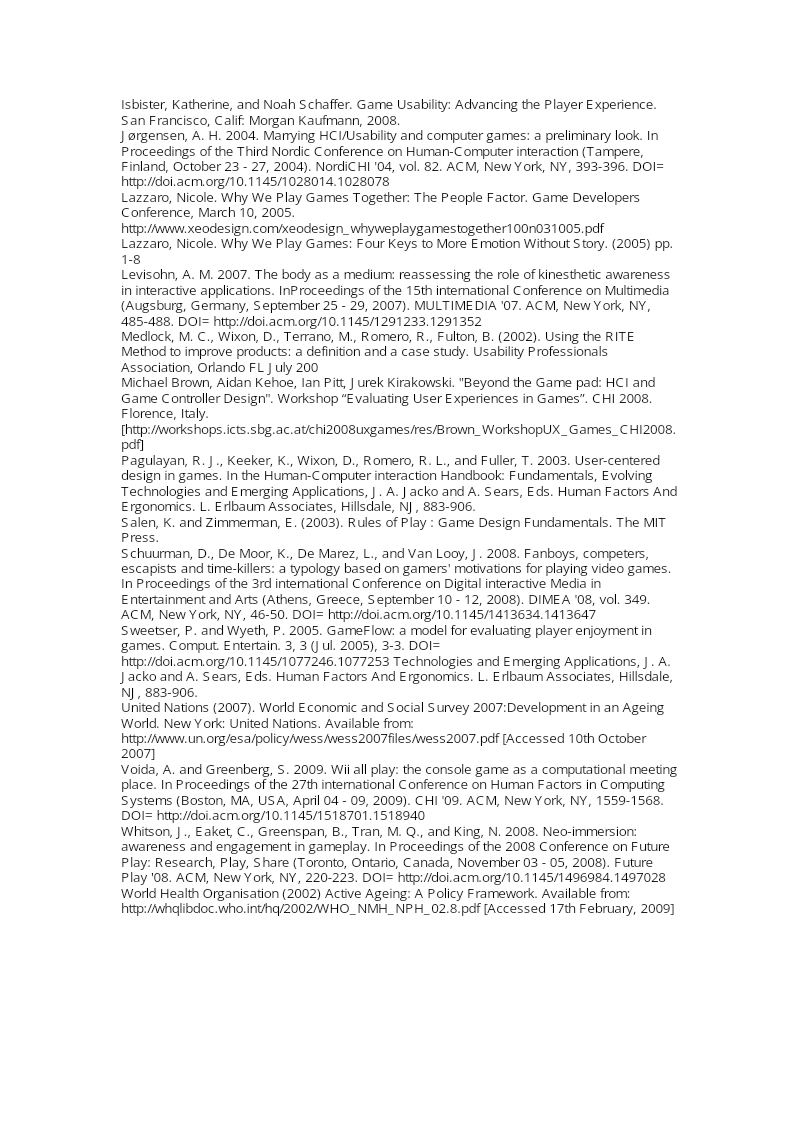
The author concludes that a development-led research approach is needed to bridge the gap between game theory and commercial practice. Purely subjective analysis and idealized theoretical proposals are judged to have limited real-world applicability, so the paper advocates building and studying a horror game in production. The scope is therefore largely prospective, centered on the design principles and methodology that future empirical work would need to test. The accompanying bibliography draws on scholarship in immersion, engagement, flow, schema theory, and horror game design, situating the framework within existing research on player cognition and genre convention.
DiGRA · 2016



DiGRA · 2016
DiGRA · 2005