1 free read left. Create a free account for unlimited reading + AI research.
Create free account
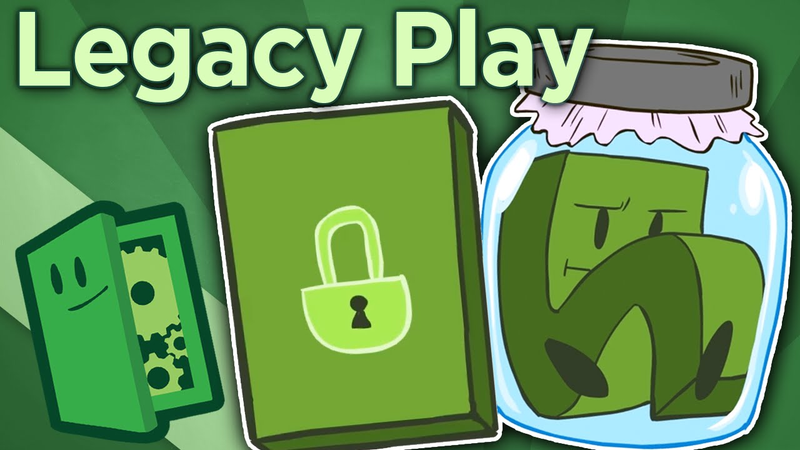
Legacy Play - Thoughts on the Vanilla WoW Server - Extra Credits
Key insights
5 takeaways- 01The conflict between developer control and historical preservation arises because live-service updates effectively overwrite original versions of games, rendering them inaccessible to consumers.
- 02Integrating legacy options into business models allows developers to satisfy consumer demand for historical content while maintaining legal control over their intellectual property.
- 03Developers prioritize a single, current build to streamline customer support, ensure security, and maintain a unified community, while avoiding the technical burden of managing fragmented codebases.
- 04High engagement on unofficial legacy servers indicates a significant, untapped market demand for official, developer-sanctioned classic experiences.
- 05Companies can monetize nostalgia without compromising core infrastructure by adopting models like EverQuest’s progression servers or Magic Online’s legacy-set tournaments.
Ask AI about this video
Transcript
Recent events have raised an interesting question. Do we have the right to play an ever-changing game the way it was when we bought it? Not long ago, Blizzard shut down a fan server, which was emulating the original version of World of Warcraft as it existed back in 2006. Now, Blizzard was totally in their rights to do this, and they've got plenty of legit reasons for doing so. First and foremost, they have to protect their IP. If they just allowed a large fan pirate server to continue running, it would be a lot harder for them to take legal action to shut down real pirates if they ever needed to. And you also have to consider that this server supposedly had 150,000 active players, which is a lot of potential lost revenue and subscription fees. And running a server like that was almost certainly a violation of the Warcraft EULA in a dozen different ways. But, the situation is a little more complicated than just that, because the server was running a vanilla version of WoW, a version without any of the expansions or the patches that Blizzard has added over the years. A version that
has essentially been lost to time that can't be legally played anywhere anymore, which brings up a sticky question. Do you have the right to play a game the way you want to play it? Or heck, maybe even do you have the right to play the game you actually bought? In a world where games can stick around for years and be patched and altered countless times, accreting new mechanics, tweaking old systems, adding UI, and even changing the world or the maps that you play on, this question of what right the consumer has to play the version of the game they want to, rather than the latest one dictated by the developer, is an important one to ask. Because we've all had that game that we felt was better before some patch or some expansion changed things around. Or we've all had a game where we wish we could show our friends how it was back in the day, back when we were obsessed with it. And the sad thing is, a lot of the time we can't play that game anymore. It's basically impossible to recapture those old experiences in the realm of multiplayer games, and as consoles embrace auto patching more and more, it's becoming more difficult to preserve even single-player game
experiences. And if it's a game you paid for, there's a pretty good argument to be made for at least being able to keep playing the vanilla version. After all, that's the version you actually bought. There aren't a lot of places in the world where you face this kind of dilemma, this possibility of something you purchased spontaneously changing into something you might not want. I mean, imagine if you went outside one day and your car was patched to be a totally different color. Or imagine if you woke up one day to find that George Lucas had somehow patched even our old Star Wars VHS tapes into special editions where Greedo shoots first. I mean, sure, we may only be able to legally buy special editions if we want Star Wars on DVD now, but that's fundamentally different than having all of our original copies retroactively altered. At least with the DVD, we have a choice to not buy it if we're happy with the version we already have. But in games, if the developer decides that Greedo shoots first, well, Greedo shoots first for everybody, like it or not. Even though that fundamentally alters the product you originally decided to spend your money on. But, looking at the developer side of things, there's a lot of really, really good and valid reasons
for devs to want to keep everybody on the same patch. First of all, it doesn't fragment your community. If everybody's on the same patch, everybody's able to play together, and everybody on your boards is talking about the same game. It also means that community management and customer service are way easier to handle. You don't have to deal with people coming to you complaining about bugs or exploits that you actually patched out 4 years ago. It means you don't have to support an increasing number of branching versions of the game, or maintain a bunch of different servers for all the different patches. You don't have to worry about people expecting you to keep working on old versions, patching out all the bugs and exploits while somehow leaving everything else exactly the same. Creating and maintaining all of those branches would be a nightmare scenario for any dev. That's a lot of money and man-hours that could be going to a lot of other important things. Beyond that, keeping everybody on the same patch helps to keep new players from getting confused as to what the real version of the game is and you don't run into the situation of somebody contacting you because they jumped in to play with their friends, didn't realize that they
were playing a different version, and can't figure out why they can't play together. If you're selling micro-transaction goods, it means that you don't have to worry about keeping those goods compatible for every version or balancing them for every single patch you've ever done. And if you've ever had any sort of security risk, keeping everybody on one version means that as soon as you patch the current version all of your players are protected. And there's a lot of monetary incentives to push players toward your newest expansions and your newest content. I mean, you're investing a lot of money into developing that stuff and you want your entire player base to be able to see it and hopefully invest more time or money into your game because of it. You don't want only whatever fraction of them is playing the latest build to see what you've created. Leveraging that new content is how you afford to keep paying your team to create this stuff. So, there's a whole pile of reasons why it's easier on devs not to have to support us playing any version of their games we want. In fact, I'm going to go against my consumer advocate tendencies here and say that if I had to pick between a world where devs have to support every version of the game they release or the scenario where devs always get to drag
all of us into the latest build, I would unequivocally choose the latter. I think it's actually better for everybody overall, but there may be a middle ground here, at least for the larger games like World of Warcraft. I mean, this WoW server had 800,000 people signed up and 150,000 people who played actively. If those numbers are correct, that clearly shows a lot of interest in this version of the game and given the fact that this server was pretty obscure and somewhat difficult to get set up on, at least more difficult than downloading an installer from the company site and pressing play, I would wager that the players Blizzard would lose if they made an official version with a subscription fee would be offset by all the people who loved vanilla WoW, but have since moved on to other things and who may have never even heard of this obscure server, which might make it viable for Blizzard to embrace it. I mean, 150,000 users isn't World of Warcraft in its heyday money, but it's nothing to sneeze at. Certainly enough to make it worth keeping a few devs on staff maintaining and supporting the build. And some companies already tried this. Sony and
Daybreak ran progression servers for EverQuest, where they would lock off the expansion content until certain in-game criteria were met. Now, these weren't true vanilla servers, and thank god for that. We would lose James for weeks if that happened. But, they were trying to answer the same fundamental player desire. And they seemed successful enough that Daybreak keeps those servers going. Wizards of the Coast has done the same sort of thing with Magic Online, periodically setting up tournaments where you can play draft or sealed with long retired sets. Now, this sort of thing is easier for some games than others, definitely. But, if this is given a little consideration early on, especially if the game is well constructed, there might be a middle ground that profits the developer and lets players play. If not exactly the way they want to, then at least somewhere closer to the game they fondly remember, the game they purchased in the first place. See you next week. So, hey, do you like game? Would you like game better if game was mug? Well, guess what, person with weirdly specific taste? Today is your day, because game mugs. This little friend would like to join you for tea, or coffee, or I don't
know, what what do you drink from a mug? It'll join you for that. And it's not just mugs. Games are taking over the Extra Credits store. There's plushies, there's shirts, and to celebrate, we have put together a special because games bundle. Get all three game items together, and we will discount them all by 10%. Be the envy of all your friends who really really like the color green.
Summary
The tension between developer control over live-service software and consumer desires for historical preservation is a central conflict in the modern gaming industry. This issue gained prominence following Blizzard’s legal action against a private server hosting a "vanilla" version of World of Warcraft. While developers maintain the legal right to protect intellectual property and prevent revenue loss, the incident highlights a growing concern regarding the inability of players to access original versions of games they purchased, as constant updates and patches effectively overwrite the initial product.
Developers face significant operational challenges in supporting legacy versions, including the need to maintain unified communities, streamline customer support, ensure security across all builds, and avoid the technical burden of managing multiple, fragmented codebases. Forcing all players onto a single, current version ensures that developers can effectively monetize new content and maintain a cohesive user experience. Consequently, the industry generally prioritizes the current build over the preservation of historical iterations.
However, a potential middle ground exists for large-scale titles. High engagement levels on unofficial legacy servers suggest a viable market for official, developer-sanctioned classic experiences. Examples from other franchises, such as progression servers in EverQuest or legacy-set tournaments in Magic Online, demonstrate that companies can successfully monetize nostalgia without compromising their core infrastructure. By integrating these options into their business models, developers can satisfy player demand for historical content while maintaining control over their intellectual property, offering a sustainable compromise that benefits both the creator and the consumer.