1 free read left. Create a free account for unlimited reading + AI research.
Create free account
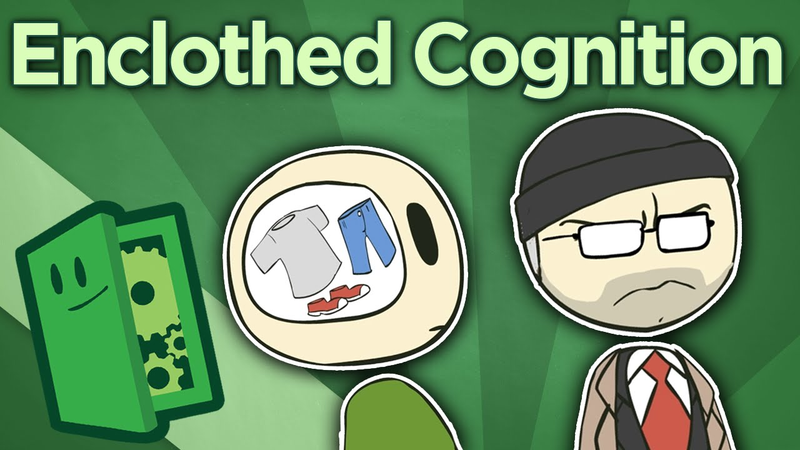
Enclothed Cognition - Do Character Outfits Affect Our Play? - Extra Credits
Key insights
6 takeaways- 01The concept of 'enclothed cognition' suggests that players subconsciously adopt playstyles associated with visual tropes, such as utilizing a methodical approach when wearing a ghillie suit or a defensive stance when equipped with heavy armor.
- 02Game designers can leverage the symbolic meaning of clothing to subtly influence player mindsets and strategic approaches, enhancing both immersion and role-playing depth.
- 03Character attire functions as a psychological cue that influences player behavior and tactical decision-making, often overriding a character's underlying mechanical statistics.
- 04Cosmetic customization serves as a powerful design tool to guide player behavior and deepen emotional connection, even when changes are purely aesthetic and provide no functional gameplay advantage.
- 05The effectiveness of character design is contingent upon the player's cultural associations and narrative context, as the psychological impact of an outfit depends on the player's interpretation of its symbolic meaning.
- 06While empirical data within the gaming industry remains limited, utilizing cosmetic customization as a psychological lever offers a significant opportunity for developers to shape the interactive experience.
Ask AI about this video
Transcript
a few weeks ago James was reading an article on a psychological study concerning the concept of enclosed cognition basically the idea that we think differently based on the clothes we wear and it sparked all sorts of interesting thoughts on how we might apply this to games so today we are going to talk about why what our characters wear might affect how we [Music] play all right so enclothed cognition what is it specifically what was the study James saw well it was a psychological study where they took people and tested them on how well they were able to focus under differing conditions but interestingly the variable they were studying was what happens if you hand people a lab coat and then make them solve problems and they found that wearing a lab coat actually increased people's ability to focus although it also decreased their lateral problem solving skills which is rooted in yet another fascinating study which we should talk about later sometime being curious about these results the researchers started to dig in and test another element of the human psyche how we understand the clothing we
wear when people would enter the lab the researchers would tell them that the lab had recently been under construction and that they should wear a coat to protect their clothes they split the people into two groups and handed them each the same type of coat but then they told one group that this coat was a doctor's coat and they told the other group that it was a painter's coat and they found that only the group which received the quote doctor's coat actually had the increased Focus decreased lateral thinking result now I don't know how much I buy into this study's conclusions not because the researchers didn't do a good job or because their work was flawed but simply because the topic hasn't been studied broadly enough yet still I found it fascinating to think about in terms of games I mean we project onto our in-game avatars so what impact does our Avatar's attire have on us and how we play the more I thought about this the more I realized that I think it at least has some impact on me if I've got a group of playable characters and one of them looks like a sniper like say they're wearing a ghillie suit or something that just feels sniper is I'm more likely to play like a sniper when I use that character even if they're mechanically
identical to all the other characters and if I'm playing a character with a big heavy suit of armor I'm more likely to play them like a tank or even to use them as the tank for my party even if that other character I have in the party who wears the long flowing robes has the exact same stats and is just as viable to be the tanking character I'll still probably choose the armored looking guy every time it just feels right in fact as I kept thinking about this I was hit by another Revelation when I play XCOM 2 class specialization wasn't the only variable that defined how I play my characters at the beginning of my playthrough I got this sniper character who just totally looked like a sniper you know those tropy professional assassin characters you see on TV the ones who are like clean cut to the point of sociopathy probably wearing slightly nerdy glasses and due to all sorts of weird biases I don't want to Sidetrack into right now are often European well this was that guy and over the course of the game I realized I actually played him differently than any of my other snipers I played him more methodically with more attention to detail I even ended up not giving him any of the
pistol skills which is not how I usually build my sniper characters all because of the way he looked and what's even crazier is that eventually when he proved himself to be one of my most awesome soldiers I literally had him put on Shades and it totally changed the way I played him and I didn't even realize I'd been doing that until I read this article as game designers we've long known about the indicative value of how we dress characters we use character clothing as part of the UI to indicate to players that this character is a sniper or this character is a tank but rarely heard discussion on whether this might psychologically affect how a player actually plays the character in a way that goes beyond simply understanding the character's intended strategic role this is potentially important if we're looking to increase immersion because when players take on the role of their characters or play them as more than simply game pieces they end up more immersed in the experience it also might give us a subtle psychological lever to help players get into the mindset we want them in or to play the game in ways that might be more engaging to them it also means that cosmetic character changes may be about more than simply expression
that's still probably the most important aspect of aesthetic choices in games but it'd be fascinating to see a study on whether players play differently after they make certain purely cosmetic changes to their characters lastly it means that we need to be aware of how our players interpret how their characters are clothed as the second study showed context matters if people think they're wearing the coat of a wall painter it affects them differently than if they think they're wearing the coat of a doctor what might that mean in the Fantastical realm games often inhabit suddenly it might make quite a difference if the player contextualizes their characters get up as an imperial Guardsman from 40K rather than the outfit of a marine from Aliens so if you've got the budget and the resources it might be worth asking play testers about how they understand what their character was wearing so when designing characters and outfits it may be worth thinking about how you want your player to play and keeping this idea of enclosed cognition in mind or it might not there is really no data about this for games yet it's a fascinating idea to explore though now because I'm curious feel free to tell us below if you feel
like you've ever had this experience yourself thanks for watching we'll see you all next week [Music]
Summary
The concept of enclothed cognition suggests that the clothing an individual wears influences their psychological state and behavioral patterns. While originally studied in clinical settings—where participants wearing lab coats labeled as doctors' attire exhibited higher focus than those told they were wearing painters' coats—this phenomenon has significant implications for interactive media. In gaming, character attire functions as more than a visual aesthetic or a UI element; it serves as a psychological cue that shapes how players perceive and interact with their avatars, often overriding mechanical similarities between characters.
Players frequently adopt specific playstyles based on the visual tropes associated with an avatar’s outfit. For instance, a character clad in a ghillie suit may prompt a player to adopt a methodical, long-range sniper approach, while heavy armor encourages a tank-like, defensive playstyle, regardless of whether the underlying character statistics support these roles. This influence extends to character customization, where purely cosmetic changes—such as adding sunglasses to a soldier—can fundamentally alter a player’s tactical decision-making and emotional connection to the character.
For game designers, these findings suggest that character design is a powerful tool for guiding player behavior and deepening immersion. By leveraging the symbolic meaning of clothing, developers can subtly encourage specific mindsets or strategic approaches. However, the effectiveness of these designs relies heavily on player context and interpretation. Because the psychological impact of an outfit is tied to the player's understanding of its role, designers must consider how cultural associations and narrative context influence the player's perception. While empirical data within the gaming industry remains limited, the potential for using cosmetic customization as a psychological lever offers a compelling avenue for enhancing player engagement and role-playing depth.

























Comments