Global reports and market data
Documents

GDC Founder Chris Crawford's Dragon Speech
The evolution of interactive entertainment hinges on the transition from simple mechanical play to a sophisticated medium capable of conveying the full spectrum of human emotion.
- The game industry’s focus on commercial viability and incremental complexity is stifling the medium's maturation into a serious art form.
- Interactive entertainment should shift from simple mechanical play toward the development of complex artificial personalities and emotional systems that simulate the human condition.
- Prioritizing the preferences of a vocal, expert demographic has narrowed the scope of game design, leading to a reliance on repetitive mechanics over broader human experiences.
Don't Change a Thing! The Challenges of Evolving Solitaire
Managing a massive digital product suite like Solitaire requires a delicate balance between driving revenue growth and maintaining the loyalty of a deeply entrenched user base.
- Managing a product with over 200 million downloads requires prioritizing iterative refinement over radical overhauls to avoid alienating a habitual user base.
- A dual-layered feedback approach combining quantitative performance metrics with qualitative, free-form user commentary provides the most actionable insights for feature adjustments.
- Targeted updates to progression systems and visual design have demonstrated the ability to boost positive player sentiment by ten percentage points within a two-week timeframe.

Throwing Out the Dopamine Shots: Reward Psychology Without the Neurotrash
The game industry must pivot away from the pervasive reliance on oversimplified neuroscience, particularly the misuse of dopamine as a catch-all explanation for player motivation.
- Designers should replace oversimplified neuro-metaphors like 'dopamine' with proven behavioral psychology frameworks, specifically operant conditioning and structured feedback loops.
- Engagement is best sustained by balancing reward schedules, utilizing a mix of fixed and variable intervals to maintain player interest over time.
- Developers must prioritize player agency and the 'illusion of control' to prevent users from feeling manipulated, which is essential for long-term retention.
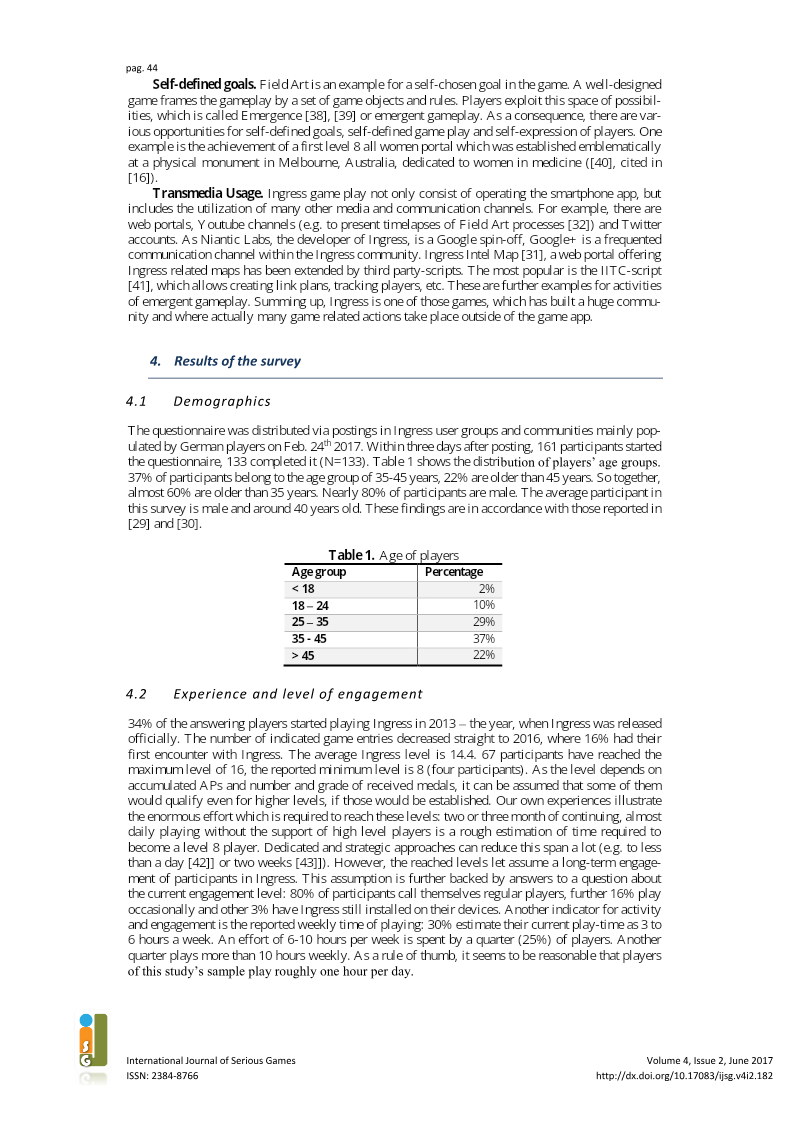
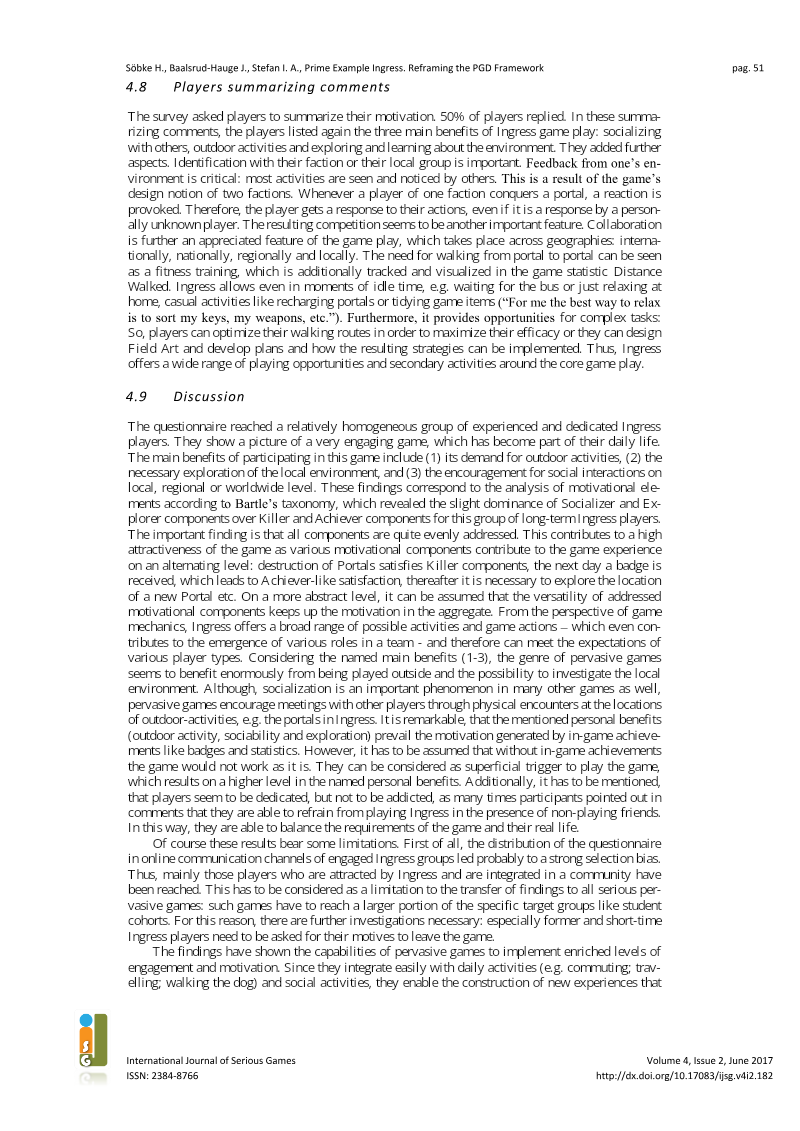
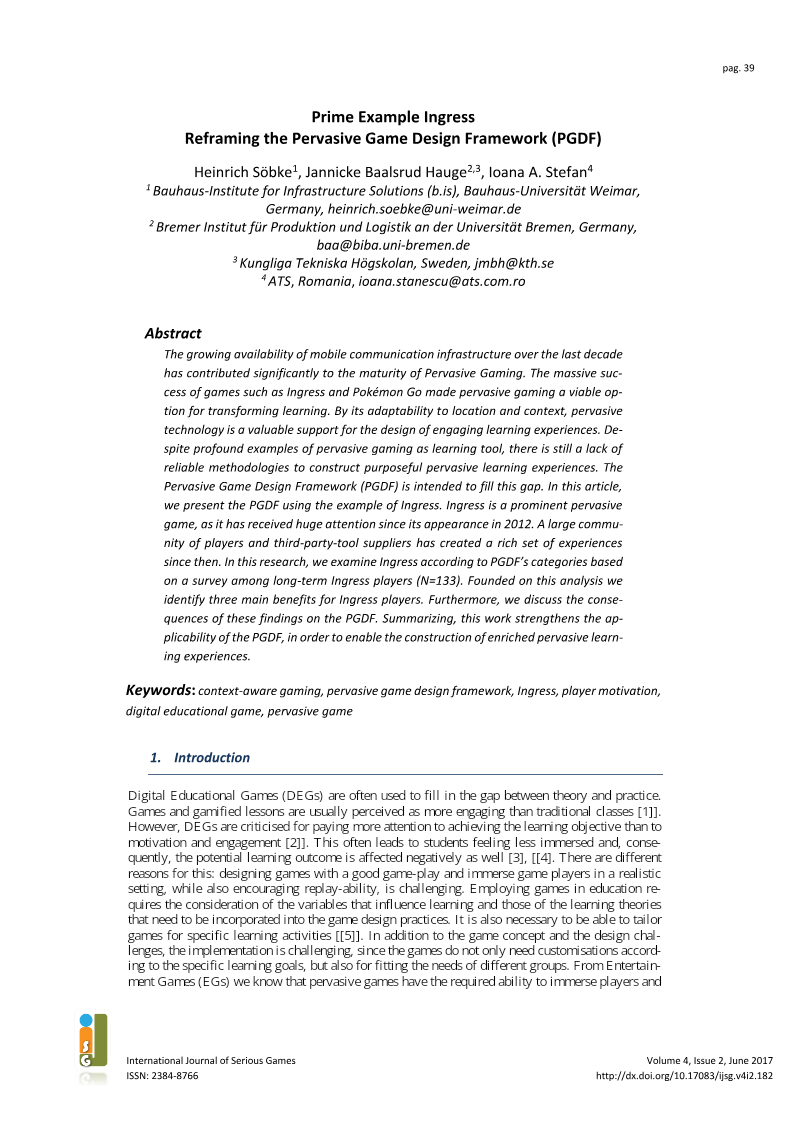
Prime Example Ingress: Reframing the Pervasive Game Design Framework (PGDF)
The Pervasive Game Design Framework (PGDF) serves as a critical mechanism for enhancing the efficacy of immersive educational games by leveraging design principles derived from real-world, location-based gaming.
- The Pervasive Game Design Framework (PGDF) was developed to provide a methodology for creating immersive educational games and gamified learning paths, using Ingress as a primary case study.
- A survey of 133 long-term Ingress players revealed that the primary motivation for ending a game session is the requirement of real-life activities (mean score 4.0), followed by the completion of in-game goals (mean score 3.7).
- Ingress players are highly motivated by social interaction, community identification, and the opportunity to meet diverse people, with socializing and new acquaintances ranking among the top cited benefits.
A Hybrid-Streaming Method for Cloud Gaming: To Improve the Graphics Quality
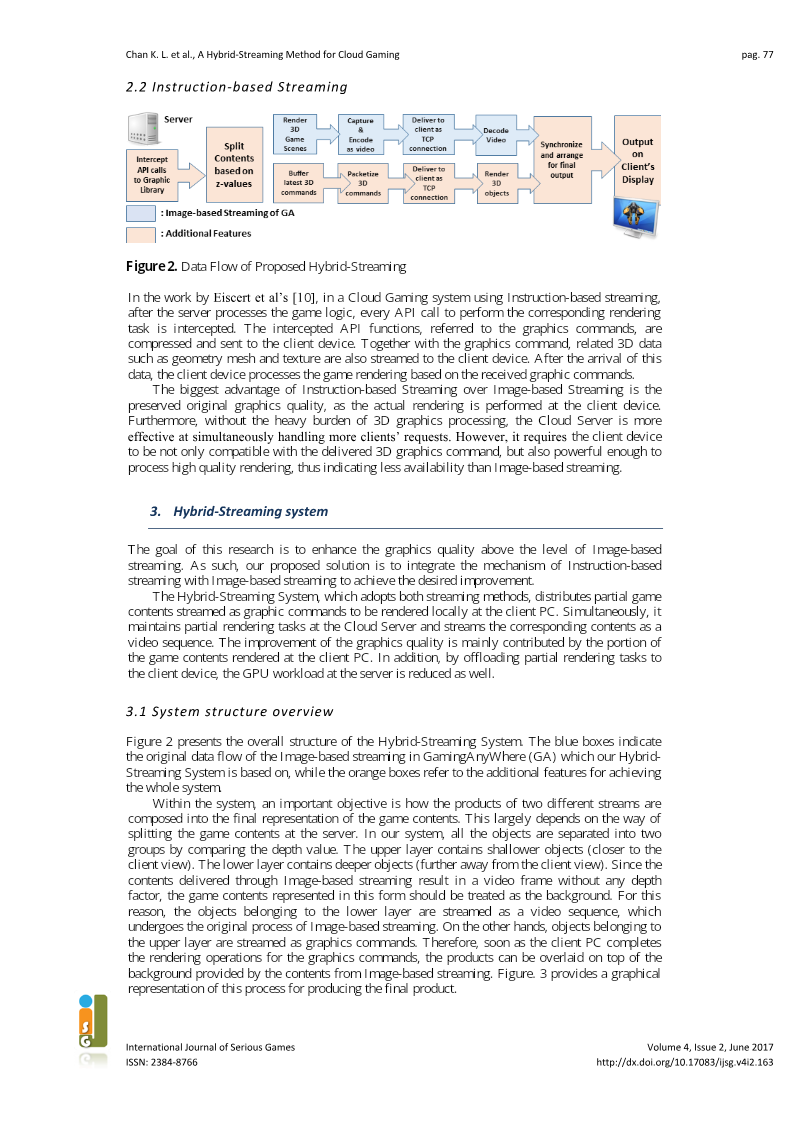
The hybrid-streaming method represents a significant advancement in cloud gaming architecture by integrating image-based and instruction-based streaming to elevate visual fidelity.
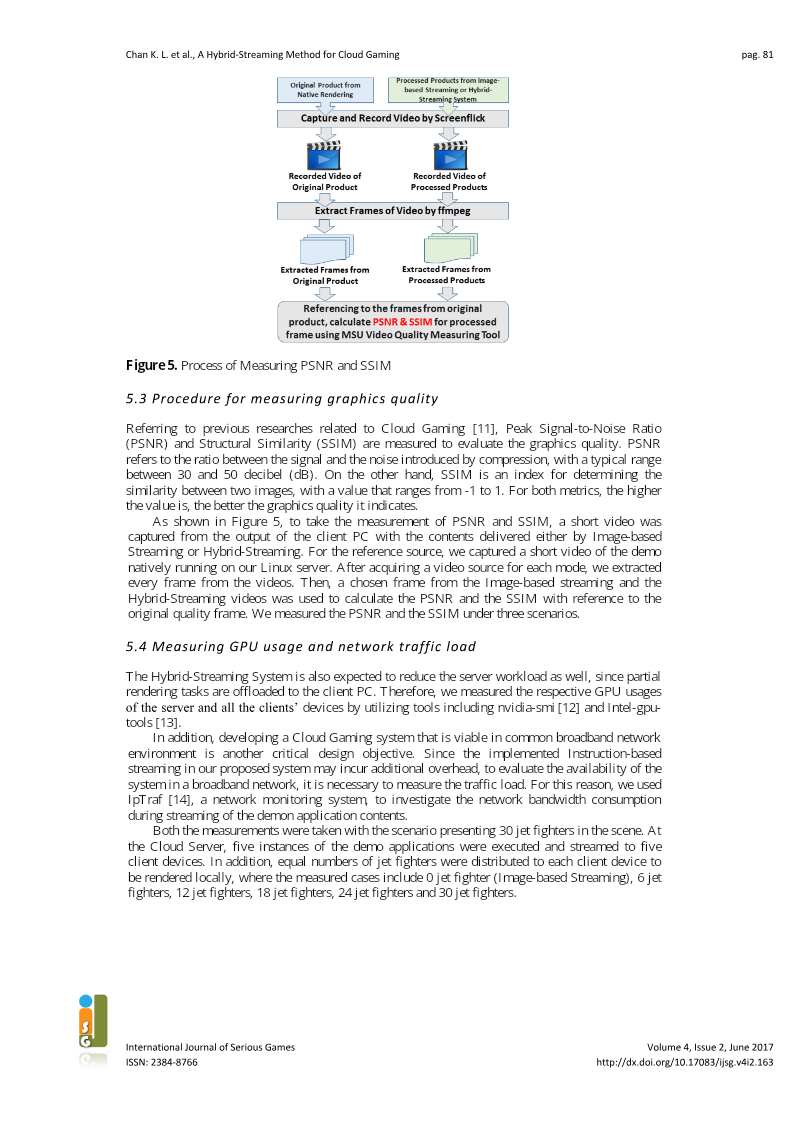
- The proposed Hybrid-Streaming System improves cloud gaming graphics quality by distributing rendering tasks between the cloud server and the client device, combining traditional image-based streaming with instruction-based streaming.
- Offloading rendering tasks to the client device reduces the GPU workload on the cloud server, allowing the server to handle more concurrent client requests efficiently.
- The system uses a lightweight code-based approach to stream OpenGL instructions, minimizing network overhead by pre-caching object vertices and textures on the client side.
Procedural Attack! Procedural Generation for Populated Virtual Cities: A Survey
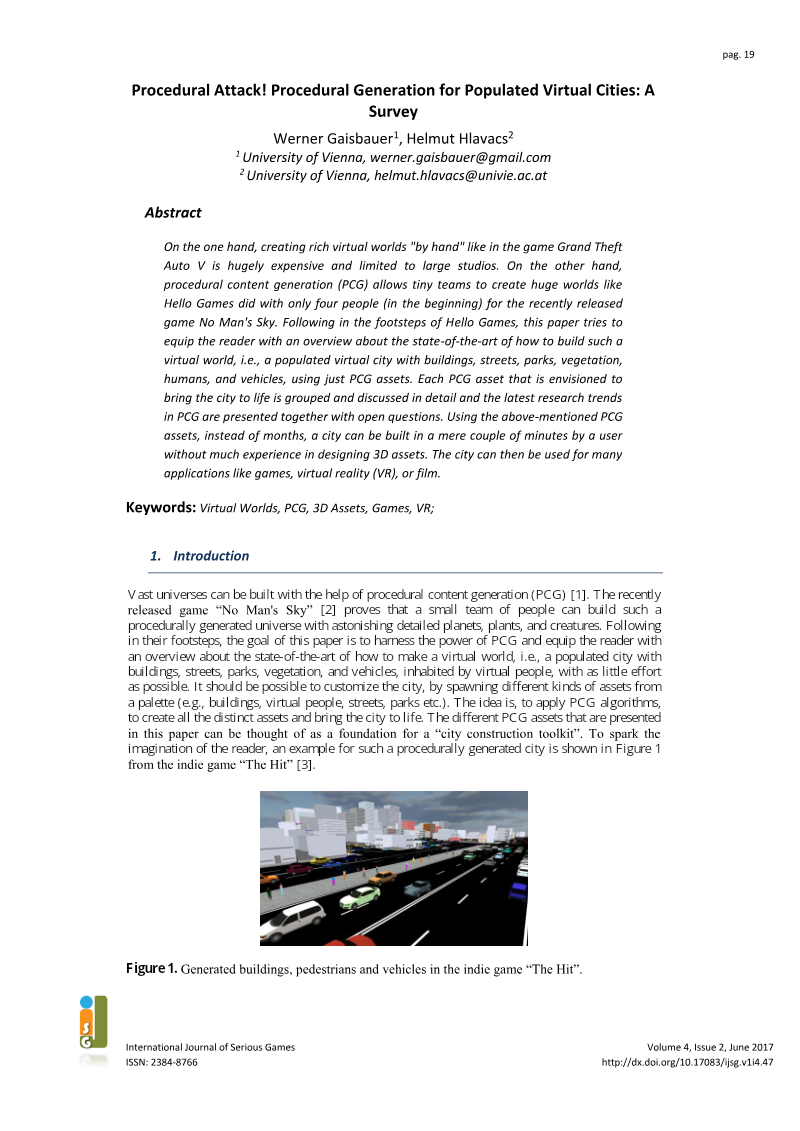
Procedural content generation serves as a critical framework for the rapid development of complex, populated virtual cities, aiming to reduce production timelines from months to minutes.
- Procedural Content Generation (PCG) enables small teams to build vast virtual worlds in minutes rather than months, significantly reducing the high costs associated with manual asset creation seen in large-scale productions like Grand Theft Auto V.
- Core procedural techniques for city infrastructure include shape grammars (e.g., CGA shape), L-systems, and markup languages, which allow for the automated generation of complex street maps and thousands of buildings at the push of a button.
- The 'WaveFunctionCollapse' algorithm is a key trend for city generation because it supports constraints, allowing it to be combined with manual design to create mixed-initiative tools that assist users in shaping environments.
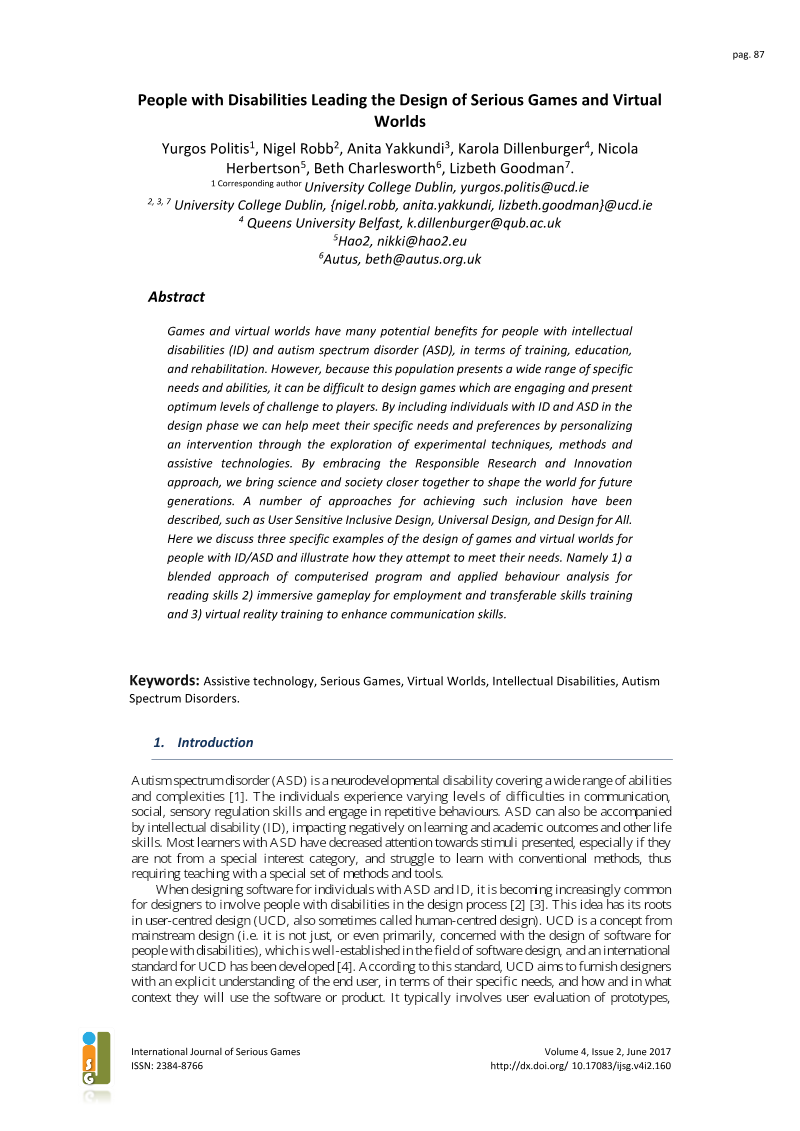
People with Disabilities Leading the Design of Serious Games and Virtual Worlds
Serious games and virtual worlds serve as transformative tools for individuals with intellectual disabilities and autism spectrum disorder when developed through inclusive, user-centered frameworks.
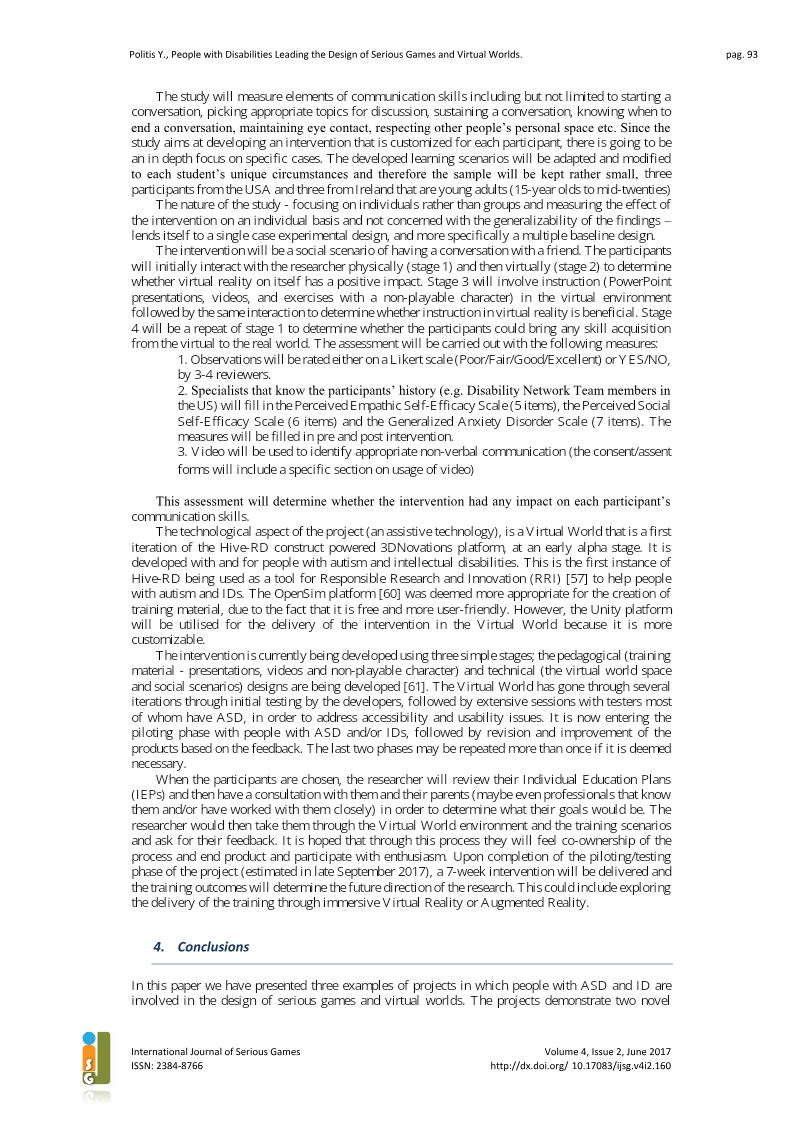
- Involving individuals with intellectual disabilities (ID) and autism spectrum disorder (ASD) in the design phase of serious games and virtual worlds is essential for creating personalized, engaging interventions that address their specific needs.
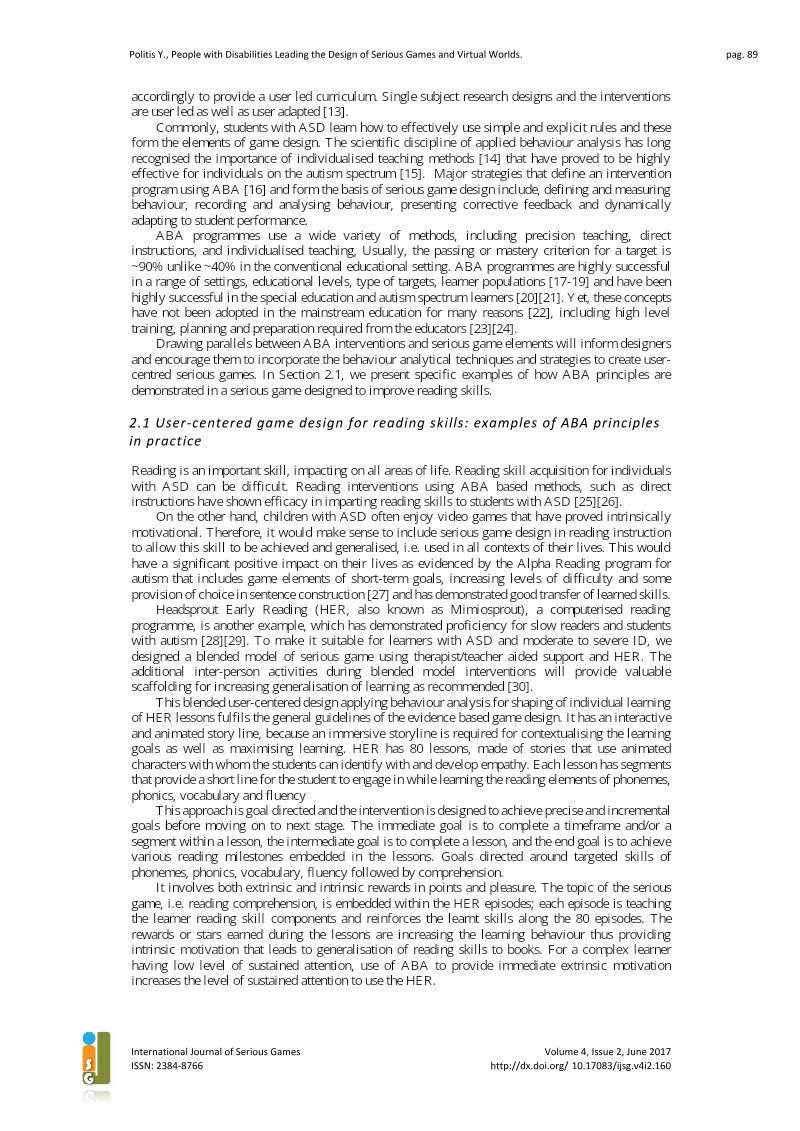
- The HER reading program utilizes Applied Behaviour Analysis (ABA) to provide 80 lessons that adaptively progress in difficulty, using extrinsic rewards like stars to build intrinsic motivation and sustained attention.
- Participatory design (PD) practices aim to treat users with disabilities as equal partners, fostering mutual learning and empowerment rather than focusing solely on software usability.

Smash Sisters: Fostering Camaraderie from the Ground Up
Smash Sisters functions as a grassroots initiative within the Super Smash Bros. community, specifically designed to increase female participation and retention through team-based crew battles.
- Smash Sisters increases female participation and retention in the Super Smash Bros. community by replacing high-stakes individual brackets with team-based crew battles.
- The initiative utilizes a decentralized, feedback-driven model that empowers local leaders to manage events while maintaining consistent branding and safety standards.
- By prioritizing social integration over competitive prize pools, the program lowers barriers to entry and serves as a welcoming supplement to the broader co-ed tournament scene.
Papers, Please as Critical Making: A Review
Papers, Please serves as a primary case study for the concept of critical making within the digital humanities.
- Lucas Pope’s 2013 game Papers, Please serves as a primary example of 'critical making' within the digital humanities, using game design to force players to confront the bureaucratic and moral realities of a totalitarian state.
- The game functions as an 'anti-fun' intervention that prioritizes political and social reflection over traditional entertainment, requiring players to balance the survival of their in-game family against the ethical implications of enforcing oppressive border policies.
- By simulating the repetitive, high-pressure environment of an immigration checkpoint, the game creates an affective experience that highlights the tension between state-mandated security measures and individual human rights.
Pokémon is Evolving!: An investigation into the development of the Pokémon community
The Pokémon franchise sustains its enduring market dominance by balancing a consistent core gameplay loop with strategic multi-media integration.
- Pokémon’s market dominance relies on a symbiotic relationship between developer-led initiatives and a self-sustaining fan community that creates its own engagement platforms.
- The franchise successfully bridges traditional gaming and experimental titles by leveraging a broad multi-media ecosystem, with the anime acting as a critical driver for overcoming skepticism toward new gameplay directions.
- Pokémon GO serves as a definitive case study for evolving the brand’s core identity to capture new audiences while maintaining the loyalty of the established player base.
Playing Producer: An alternative perspective on video games as film
This analysis proposes a new framework for understanding the relationship between video games and cinema by shifting the focus from narrative and formal characteristics to the role of the player as a producer.
- The player-as-producer framework resolves the narrative paradox by shifting focus from fixed storytelling to the player's role in creative processes like casting, cinematography, and script management.
- Players exercise agency within a predetermined narrative by utilizing game mechanics for non-narrative tasks such as character customization, relationship management, and tactical combat choreography.
- The 2009 role-playing game Dragon Age: Origins serves as a primary case study demonstrating how players act as directors by manipulating camera perspectives and stylistic elements.
Peggle Blast: Big Concepts, Small Project
The development of Peggle Blast for mobile platforms necessitated a radical departure from traditional audio production methods due to a stringent 5MB memory constraint, a stark reduction from the 783MB utilized in previous console iterations.
- The development of Peggle Blast reduced audio memory usage from 783MB in console versions to a 5MB limit for mobile, necessitating a shift from pre-recorded wave files to a MIDI-based architecture.
- By utilizing procedural audio synthesis and real-time digital signal processing, the team generated dynamic soundscapes while avoiding the high CPU overhead associated with compressed formats like MP3 or Ogg.
- The team implemented a multi-tiered quality manager that dynamically adjusted voice limits and sample complexity to ensure consistent performance across diverse mobile hardware.