1 free read left. Create a free account for unlimited reading + AI research.
Create free account
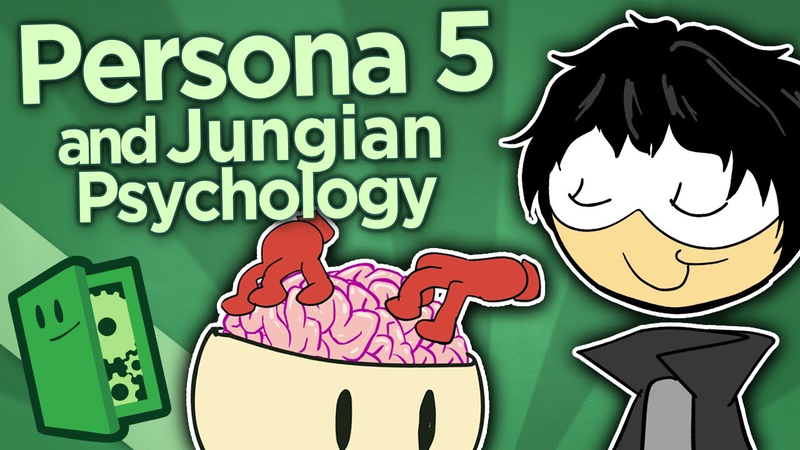
Persona 5 and Jungian Psychology - Masks, Major Arcana, and Meaning - Extra Credits
Key insights
6 takeaways- 01Persona 5 utilizes Carl Jung’s analytical psychology as a structural framework for its narrative, character development, and symbolic world-building.
- 02The game mechanics operationalize the 'persona' as a social mask and the 'shadow' as repressed psychological elements that must be integrated to prevent collapse.
- 03The narrative encourages player reflection on the dangers of over-identifying with social masks and the necessity of confronting one's dark side to achieve self-awareness.
- 04The collective unconscious is represented through the spatial metaphor of a subterranean subway system, demonstrating how abstract psychological frameworks can be translated into game environments.
- 05Major Arcana Tarot cards are used to map universal archetypes onto social links, reinforcing the concept that personality is built upon shared, primordial structures.
- 06The protagonist is defined by the 'trickster' archetype, which forces players to navigate the moral complexities of rebellion and the ethics of influencing others' minds.
Ask AI about this video
Transcript
Persona 5 is a game that wears the influence of Carl Jung on its sleeve. I mean, heck, even the term persona was coined by Carl Jung. So, today, to help you enjoy the game's subtleties even more, we're going to give you a super 101-level crash course on some of the Jungian terminology Persona 5 uses. Okay, so before we begin with a rapid-fire glossary, we should probably talk about what Jungian psychology is. Basically, it's the first major branch of psychology to break off from Freud. It focuses a great deal on how our unconscious mind tries to communicate with us through symbols and deep-rooted metaphors. And whether or not you buy into its psychotherapeutic value, I find it a very useful tool for analyzing literature, film, and games, or for drawing inspiration from when looking to make games more symbolic. Clearly, somebody on the Persona team feels the same way. So, let's talk terms. Persona. Personas are the masks we wear. It's the
way we cover up our pure raw self in order to better fit into whatever part of our society we're participating in at the time, whether it be our friend group or a professional environment. It's a natural evolutionary mechanism to help us function better in groups, but it carries with it the danger of getting lost in the mask, in forgetting that we are not that persona. The word persona literally comes from the Latin word for mask, so it's a little bit odd that in Persona 5, the characters rip off their masks to summon their personas, but I'm willing to chalk that up to series legacy, by which I mean the fact that personas have always been defined as the monsters you summon in these games, and it would kind of go against the be true to yourself theme of the game if you went around summoning personas by putting more masks on. Shadow. The shadow is the part of the psyche that contains everything which a person has repressed about themselves. Thoughts and feelings that they might have difficulty acknowledging. If a person allows their shadow material to remain in the unconscious, not dealt with, they run
the risk of becoming overwhelmed by their dark side. Persona 5 pretty much nails this one. Anima and animus. You remember that moment in Persona 5 where they vaguely mentioned that everybody has a dualistic masculine and feminine aspect to their nature? That is a reference to the Youngian concept of anima and animus. Basically, the short of it is that in Youngian psychology, everybody carries within them anima or certain traits which are more typically dominant in women, and animus, other aspects which are more typically dominant in men. Becoming more in tune with the less dominant aspect of your nature can guide you to better understand yourself. But, if you fight against it or repress it rather than letting it make you stronger, you're basically coming into conflict with yourself, which can really mess you up. Collective unconscious. The collective unconscious is the sum total of symbols and archetypes that we as human beings all share. It's the place that the unconscious pulls symbols from to communicate with the conscious mind.
If you've ever read Joseph Campbell's Hero with a Thousand Faces, it's basically arguing for the existence of the collective unconscious. Persona 5 places this in the subway system with layers going down and down and down, which is just spot-on as the collective unconscious is basically the deepest and most buried part of our psyche. Granted, the collective unconscious is also supposed to contain our most root symbols. It's supposed to be immutable. It's supposed to be the bedrock of the human psyche. So, it's a little bit odd that the game has us meeting people and looting our way through it. But, to be fair, I'm sure that if we could explore the collective unconscious, a cat bus would probably be the only way to do it. Archetype. We often use this word in common parlance, but archetypes in Youngian psychology are, in the loosest sense, the substructures of our personalities. They're are group of primordial skeletons of the human mind that Jung postulated we all sort of inherit evolutionarily. And as our psyche grows and changes, we build who
we are around different archetypes. Take for example, the archetype of the wise old man, the mentor and the teacher. Jung says that this is an archetype that is universal, one that many of our psyches may build around. But while this general construct of the wise old man serves as a foundation, how we build on that archetype may manifest differently, leaving us with everything from Odin to Gandalf to Obi-Wan. And because of this universality and this structural nature, these archetypes have become our stock characters, traceable from modern fiction back to the earliest myths. Which brings us back to Persona 5, because guess what we run smack into as we start to trace back the archetypical symbols and characters that our psyche builds itself around, Tarot. Ignore all of the mystical aspects of Tarot for a moment and just look at the Major Arcana. The Fool, the Magician, the High Priestess, the Empress, the Emperor, the Hierophant, the Lovers, the Chariot, Strength, the Hermit, Wheel of Fortune,
Justice, the Hanged Man, Death, Temperance, the Devil, the Tower, the Star, the Moon, the Sun, Judgment, and the World. I would hardly be the first person to argue that these are all archetypical symbols for us. The broad universality of these symbols may be why Tarot is still with us, because it's rooted in such archetypical elements, anybody can easily find something in any deal of the cards that feels true. But what makes this so fascinating in Persona 5 is that each social link you can make is represented by one of the Major Arcana. And all of the Personas you can collect in the game also have a Major Arcana associated with them. And if you talk to somebody while equipping a Persona that matches their Major Arcana, your relationship will grow faster. So basically, if you adopt the same persona as somebody and reflect back to them who they are, they will like you more. Tragic, but also sort of exactly how personas are supposed to work. Okay, now before we go, let me
leave you with just one more. A well-known example of an archetype and one of the first that Young ever defined, the trickster. From Loki to, well, Loki, examples of tricksters can be found all over literature. They are, in some ways, a primal force. They are often social outcasts. They rebel against authority for both good and ill. Sometimes their actions force necessary change and overthrow structures that have grown too rigid or too self-assured, but at other times their rebellion and their jealousy of those who seem to fit in an ordered society ends up tearing apart a system of order that really was making the world a better place. The main character in Persona 5 is referred to as trickster, and the game becomes much more interesting when you look at him in this role. While you are obviously doing good, overthrowing figures who have abused their authority, you constantly have to question the brashness and the presumption of the fact that you've decided that you literally have the right to mess with people's heads. Even as you're making the world a better
place, you become aware of how little your character actually knows about the Velvet Room and the app on their phone before they just rush in and decide to take on the world. Each time you enter a new dungeon, you've got to ask yourself, "What if I'm wrong this time? What if I've been duped?" It puts a lot more emphasis on all of Igor's comments about your character needing to find redemption. And we will leave you with that. I hope this barrage of Jungian terms gives you something to think about, improves your play-through, or at the very least, allows you to enjoy the little nods to Jungian psyche in Persona 5. See you next week. Oh. Oh.
Summary
Persona 5 serves as a practical application of Carl Jung’s analytical psychology, utilizing his foundational theories to build the game’s narrative structure, character development, and symbolic language. The game functions as a case study in how psychological concepts—specifically the persona, the shadow, the anima/animus, the collective unconscious, and archetypes—can be integrated into interactive media to deepen thematic resonance and player engagement.
The game’s core mechanics directly mirror Jungian principles. The "persona" represents the social mask individuals adopt to navigate society, while the "shadow" embodies repressed aspects of the psyche that must be integrated to avoid psychological collapse. By incorporating the Major Arcana of the Tarot, the game maps these universal archetypes onto social links and character growth, reinforcing the idea that human personality is built upon primordial, shared structures. The protagonist’s role as a "trickster" archetype further complicates the narrative, forcing players to grapple with the moral ambiguity of rebelling against authority and the potential consequences of imposing one's will upon the minds of others.
By framing the collective unconscious as a vast, subterranean subway system, the game provides a spatial metaphor for the deepest layers of the human psyche. This approach demonstrates how developers can use psychological frameworks to create meaningful, symbolic gameplay experiences. Ultimately, the integration of these concepts encourages players to reflect on the nature of identity, the danger of losing oneself in a mask, and the necessity of confronting one's own dark side to achieve true self-awareness.














Comments