The State & Future of Board Game Design
19 Jun 201773 min video
Transcript
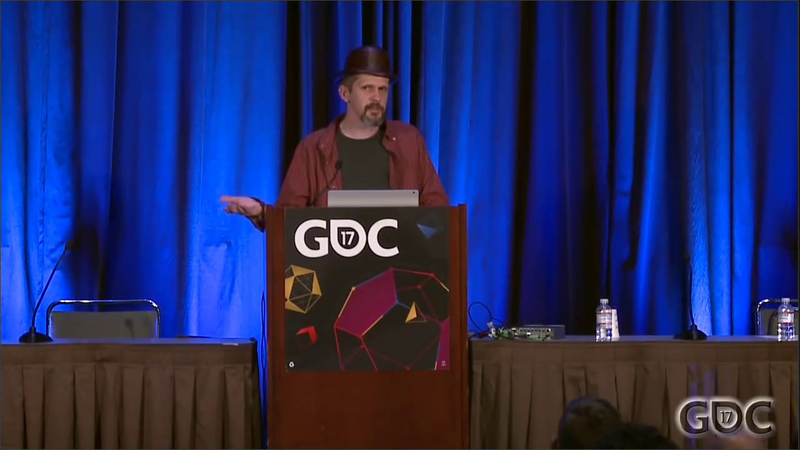
to the state and future of board game design where I have with me when you're ready. Welcome. Thank you. My name's Paul Dean. I'm one of the founders of Shut Up and Sit Down. Uh we have a huge games area. Thank you. On the third floor in the corner of this hall. So, if you would like to come and play games or look at games or watch other people playing games or just sit at a table. I need to sandwich was a lot people are doing at the moment. Please come by cuz we're there like all week and it's quite a lot of fun and there's a lot of different interesting people. I have very limited game design experience. I have been one of the team who helped create the latest version of the paranoia RPG which is coming out soon I think. I hope cuz we finished it. With me are people who are going to be better introducing themselves than I will. So, I'm going to start on my left side with this fellow. Who are you, sir? And what have you recently done? See if this is a microphone. Oh, microphone is on. Uh hi. Hi, I'm uh Jeff
Engelstein and um I guess my most recent games that came out were the uh the Dragon and Flagon uh board game and the Fog of War. Um I've got um two new games that are going to be coming out in the spring. Um Pit Crew and the expanse based on the sci-fi show. I'm also um on the Thank you. I'm I'm also on the uh Dice Tower podcast. I do the game tech segment there as well as the Ludology podcast which is a uh hour-long podcast about uh game design and various game-related topics. Okay. Okay. Succinct. All right. Succinct was the keyword. I've been telling trying to keep these people succinct. We'll see how that goes. On my right, immediately next to me I have a Canadian. Would you introduce yourself, sir? I I'm a Canadian and I'm sorry. My name is Eric Lang. I've uh I'm a
board game designer, a tabletop designer. I've been uh doing this for uh a long time. Uh I've been done I've designed a lot of board games for Fantasy Flight, uh Cool Mini or Not, uh some work for Wizards of the Coast. Uh I've done some uh digital work on uh Duelyst, the uh online trading card game which we're doing a talk for on Friday. I've never been on Jeff Engelstein's Ludology podcast. So, that clearly I'm the lesser of the guests. a It's a definite snub. Uh and uh a bunch of other games that uh I'm forgetting here in this moment, but But you did Blood Rage. I did Blood Rage. There we go. And furthest on my right I have the foremost expert on Eric's uh portfolio as Eric isn't. You are, sir? Uh my name is Rob Daviau. I've been doing professional board game design since 1998, uh 18 years, 14 of which was at Hasbro. So, I worked on a lot of classic games, Clue and Monopoly and Risk.
I've been doing about 4 years on my own where you probably, if you know me, know me from asking you to rip up cards uh with legacy games. So, SeaFall, Pandemic Legacy, uh Risk Legacy, um I also am part of a new company called Restoration Games where we take old games that are out of print and restore them and bring them back and I get the cool title of Chief Restoration Officer. Uh so, I I spend a lot of time actually also thinking about the business end of things like graphics and pallets and shipping and warehousing. And you also designed Blood Rage. And I also designed Blood Rage. You will notice on each side of you there are microphones. If you would like to queue up and ask questions, we will be taking questions from the audience. Do not be scared. This is probably the nicest panel that we have at GDC and the most approachable people. So, if you want to begin queuing up at any time, feel free. Until then, I want to open I mean, I assume that we all know the board games have really taken off. I
assume that we all know it's become recently North America like a billion-dollar industry. So, it's a thing now. Otherwise, none of you would be here and interested in this. So, I'm going to assume that you know that a lot of the design practices are similar, a lot of the foundations are similar. Why, Jeff, is it a particularly good or interesting time to be a games designer right now for board games? Um well, I think that there's uh there's a lot of really interesting going things going on. One is just based on the expansion of the market itself. Um there's uh probably about, you know, 10, 15, 20% year-over-year growth in the number of games coming out. I think last year there were over 3,000 new board games added to the BoardGameGeek database, um which is a lot of games. And so, but it's it seems like the audience is growing at least for now. And so, we're getting a lot of you can do a lot of interesting things and you'll still be able to find some type of audience for your game. Uh I've also been really excited about a lot of the new um
techniques that are perhaps taken from video games or or certainly from movies and stories are bringing more narrative into games. And, you know, with games like Pandemic Legacy that Rob did and and others that um there's a lot more um very interesting type of of work being done um that we haven't seen before, whether it's episodic games like Time Stories or the legacy games where things are going in different directions and and um there's there's just a lot of creativity. So, I've been very gratified to see that and that it's gotten some consumer acceptance. It's not just little art projects, but it's things that you can put out there and will actually sell. Jeff, is that true? By the way, because you're on different sides, you're now opponents. Yes. Uh so, I will disagree with the honorable representative from New Jersey. Yes, the pie is growing, but I feel like the number of games and the number of publishers and number of designers are growing faster. And we are at a point where it's it's getting hard to get attention. Right? It used to be if you had a name
as a designer, that might be enough. Or if you had a brand, that was enough. Or if you had great art. Like now it feels like you need to have all of those three and get lucky and get the good reviews. And if those all come together, you'll get 3 to 5 months in the sun to try to make some money on it. And then the next big shiny thing comes around. And if you don't get all of those, you might get 3 to 5 weeks before the next shiny thing comes around. So, it's good right now. I can make a living. I made a living off it last year. And I'll make it this year. But 2 years from now, I'm you know, you I don't know how long it will necessarily last. Wow. But you're looking at me like I was like was uh coming from a chap Coming from a chap who's established and has quite cool portfolio. I Eric, do you agree? I mean, you've made a lot of different games. So, this is the Oh, you can agree or Well, I mean, surely you are constantly getting work. You seem to be releasing games all the time. Are you not okay? I come a Professor Gloom. Uh I guess I somewhat appear with uh agree with Professor Gloom. Um
Uh to a degree. I mean, it it has never been a better time to be a academically speaking, it's never been a better time to be a game designer. I mean, the foundation of uh the the the craft of game design is at a level that it's never been at before. I would say the average the average uh middle in franchised game player now understands game design probably to a level that top-level game designers in the '70s and '80s didn't understand at all. Um there's a wealth of uh great material online from uh estab- established game companies, Wizards of the Coast, even Fantasy Flight uh that's uh increasing our body of knowledge to a greater degree. Um because of that, of course, it is also increasing competition because uh within every gamer there is a budding game designer. We're all creative people. We all like to express ourselves. Um and like writing, game design appears to be very easy on the surface. So, um there are
many, many more people who want to become game designers than there are slots for professional game designers to earn a living. But uh I embrace that. I think it's to me it keeps me on my toes. Rob and I actually discussed that a couple weeks ago, right? Uh we don't we don't really feel like we're at the at the head of a at the head of a curve. We actually feel like we're at the top of a cliff waiting to be like at any time waiting to be like pushed off by the like smarter guys that that we're going to come smarter guys or girls that are going to come in here and uh I just kick our asses. Wow. You told us to oppose him. But is this not Is this not sort of partly how it should work? Like the best people should be noticed and That's energizing. Yeah. Is the barriers to entry particularly like you can paper prototype a board game uh in your house with paper clips and cardboard and things like that. And you don't need to learn Unity. You don't need to learn GameMaker. Surely having the barrier of entry low is a positive thing and it gets it fills the world
with juicy ideas. No? Yes? Absolutely. Yeah. But I think that Yeah, I it's it's certainly, if you look at the industry as a as a whole, I think it's it's very healthy and exciting. And you look at the it's great time to be a board game player. Yeah. But yeah, I mean, in terms of a designer, there's yeah, that's it's very, very difficult to get noticed. And and I will certainly agree with that. And that's why I'm one of the things I've seen is it seems like licensed games tend to get pushed to the front of the line. You know, there's so many games that are coming out that it it almost seems like a lot of these licenses or or the bigger names, you know, so you'll see like just to take a random example, you'll see like Pandemic has, you know, 87 different variations because it's got that brand name. It's got that recognition. So, you see what you're seeing in the movies where it's just another X-Men movie or another Avengers movie or whatever, you're kind of seeing that in the game world as as well as a way to get attention and to to get noticed. Is that a way to get good regular work or a way to more reliably make money?
Is it even a good idea to perhaps create a game that you can sort of paste a theme on to later? What is the designer of yet another pandemic? So, I'm not the pandemic. He's out there. Yeah, no, I think it's actually this is a business. We're talking about the business of making games. It's different than the passion for making games. Like when you said that the inside every gamer is a game designer or something I talk about is A lot of people can make games and have a game and play with their friends and that might be enough or they might want to get one game published but never leave their day job and that's enough. What we're talking about if we're talking about the business of games and Eric and I do it full-time and Jeff does it part-time is um what do you need to do to make a living at it and then you start putting all these business parameters around like what's the brand recognition and what's the art and what's the release date and do I make it language independent and what's the audience and all these sort of unsexy things when you talk about game design cuz because of about game publishing then in the business of it
rather than the joy of of just making a game. I heard right there's this thing called Kickstarter and if I put my game on it, people would just see that my game is really good and they'll pledge a lot of money and I won't even need a publisher and then some people somewhere will print it and send it out and they'll make a lot of money cuz I've seen people make insert adjective here sums of money on there. Is that a solution? Is that a symptom of the situation that we're in? I am fascinated by this. I'd like to know more about it. Tell me more. Because if I maybe this is my interpretation, feels to me like Kickstarter is filling a hole or sort of like it's a panacea to some degree. I don't know if it's filling a hole. So, it's filling it's filling a hole on the supply side of the market for sure, right? Because it does bypass the bypass of the critical processes of publishers, right? So, there is
the bar to the bar of entry for producing a board game is of course much lower than a digital game, right? Especially on first blush, but the it has increased the number of games that are coming out, of course. So, the the supply side is much much higher than the demand side at this particular point. It is creating a lot of a lot of I guess we would we call it painful successes, right? Where people who succeed especially modestly on Kickstarter then suddenly have to become a publisher, de facto publisher and be there it turns them into a full-time fulfillment house, which is a extremely difficult logistics logistical business and most people don't want to do that. None I think all of us included. I've done it. I don't want to do it. No, I did it for 2 years. Yeah, no, I the act of making a designing a game is is like hard work but fun like writing a book or
making a song or any creative endeavor and then the act of turning that into production files is like a different sort of fun project. And I think most people or many people who use Kickstarters and I think a lot of people don't feel this way anymore and there's ways to like third parties that can help you. The act of moving pallets of cardboard on boats, the fun tends to drop off for most people at that point and it becomes incredibly medieval. Like where you're talking about like dock workers and cargo and lading and getting it onto trains and trucks and breaking things down and it is not exceedingly difficult. It is very very easy to do if you are willing to lose money doing it. Wow. Like cuz every step of the way you're like, oh, we kind of we should have done that. Oh, this should have cost less. Oh, this should have been in a smaller box. Oh, we didn't take into account this customs fee or we put the wrong age grade on the box and now we can't sell it here. And so like there's these We didn't meet minimum standards in Brazil. Whoops. So, there's dozens of little mistakes
you can make as a publisher that will either prevent your game from being sold or you'll spend too much time or you'll lose money or not make the profits you had projected because it it kept taking pennies and pennies out of your game. So, that's the the hazard to Kickstarter is not everyone looks at what happens when you get the money and again a lot of these stories were from three, four, five years ago when it was a little more wild west, I think. There are many people who who know that now and do their homework. Surely now we have hundreds of Kickstarter people who all talk to each other and say do it this way and I did this and it went wrong and all the problems are solved. I wish. But I mean it's I think it's instructive also that's I'm probably not super qualified to talk on this cuz I've been predicting the demise of Kickstarter publicly for like six or seven years now or probably since it first started. So, I don't have a great track record, but I mean you do see, you know, you're still have your big mega successes like Kingdom Death, which was what $12 million or something insane like that
and and Scythe and things, but the bigger guys that used to be doing it like Cool Mini has publicly said that they're going to start backing away from the Kickstarter model and go with a more traditional publisher route. Queen was doing more Kickstarters and they're backing away. You know, Stronghold tried it and they're not planning on doing another one. So, I think even Stone Stonemaier Games I believe is also they've said that they're not going to be doing as much on Kickstarter who did Scythe. So, I think that you're starting to see people go back to a more traditional publishing model except for, you know, the very small guys or the the new people that are trying to break into the market. I do want to ask you guys sort of a couple We're talking about the state and future of design design related questions as well otherwise I think we'll fall down a business hole, but we have a gent who has a question. Yeah, so I um automobile and appliance manufacturers learned last century that making something that you're going to own for the rest of your life is not a good business model and we need you to buy a
new one every 5 years or so. And I feel like the legacy style games are these consumable board games where you play through it and I don't just keep I don't have my shelf of games that I've had for 20 years that I play through it, you know, 12 times and I'm done. I'm wondering is that is that a space do you think the whole industry is going to move towards to keep people desiring and purchasing new content? Oh, yeah. I can start there. I'll finish it. Yeah, I I think the industry I think I think a second I think game players right now are already way too eager to play everything that comes out or turn through or their pile or play something one and be done. And then the cult of the new exists when you got 3,000 things to choose from it's easy just be like, oh, maybe this is better, right? You're chasing the high of like the perfect game. Um I'm giving a whole talk tomorrow morning at 9:30 about legacy games so I'm not going to derail this to to do that, but one thing that legacy tried to do, which
is often seen as doing the opposite where you talk about like a consumable or disposable game is I wanted to give you a reason to play it 15 times. I didn't want to restrict you to play it 15 times. I wanted you to be like that was fun and if I play it a second time it'll be different and the third time it'll be different and and so that was actually a way to try to get you to go back to a game rather than play it once and put it on the shelf and do the next one. So, I don't think anyone's trying to do anything consciously. I don't want to say that Time Stories is sort of disposable. Not disposable, usable. It's like it's a coloring book, you know. It's sort of Just before you answer, Jeff, I want a quick sort of poll of the room. How many people here have in terms of like buying games that you might not get around to playing? Who has a game that they bought that they haven't yet played that in the house? Oh my god. What a surprise, Jeff. Um yeah, I I I think that there's definitely a a trend towards that and as as I as I I said in my little opening statement, I
think that one of the really You know, it's you can build narrative arcs into games and you know, a lot of games have that and successful games do that very well, but it's hard to build a real true story with turning points and stuff like that in a in a generative procedural way where it just kind of arises naturally out of what's going on. So, by having games like Time Stories or or things like that, it it gives the designer space to to go into that and I'm curious to see, you know, how it how it plays out because yeah, I you know, if it's it's easy to plug in, you know, modular content if you're a digital platform once you somebody buys it, the distribution is a lot cheaper with a with a board game you're invested in something. But um I I think that, you know, maybe with marrying apps with board games to push through different different types of content, you know, I've always wanted to do a game like, you know, a Tales of the Arabian Nights which comes with that giant thick book of adventures and
basically like a choose your own adventure paragraph thing, you know, I'd love to just see all that in an app and then I can just, you know, as a publisher, I can just push new content out through the app to get people to pull it off the shelf again and say, hey, there's all kinds of new adventures in there. Go in and do it and you have the framework and you can do it. I think that's very interesting. You know, but I and I know I'll leave this to Eric to to to rebut, which I know he will. We were talking about it earlier, but you know, I kind of liken this with with games to to movies and there are some movies, you know, I I I really, you know, I thought Schindler's List was extremely well done, but I'm not going to go see it like Airplane, which I watched, you know, 75 times. I'm not going back to see Schindler's. So, I think there's different experiences where you can have something that's, you know, kind of one and done and then there's other things that you will keep going back to and experience in a different way. Go on, shoot him down. Well, uh so uh we'll we'll shoot you down afterwards. But uh
as a uh direct answer to Aaron's question that uh I do believe that we are uh we are going to head into a slightly more I guess disposable we'll call it uh experience for board games and I think it's going to happen more organically than by design and that's mostly because of the state of the market. Uh What we're talking about before, the market is the supply is over uh is overstepping the is outpacing the demand by a huge amount. We're coming out with more board games arithmetically more board games every year than the year before and the the growth is like 15 to 20% per year which is a great growth curve by the way, but it's supplies outstripping that. So, the um we talk a lot um among game designers, we talk about the experience curve of a game. What what it is um the life's lifespan of a game in everybody's collection from the time they buy it to the time they stop playing it. And for most people, the uh the the fun to work ratio is at its uh at its highest in the favor of fun during the early discovery part of curve
of the game. So, the first two or three games that you play when you're just discovering what the different strategies are, regardless of whether it's a legacy game or a regular game, we discovering the new strategies, what the the cause and effect of all the cool mechanics in the game, those are by far the highest where you increase in skill and you increase in understanding the most uh between sessions. And that curve almost always flattens, especially with more modern slightly more procedural games, that flattens very very quickly. Four four or five games in, you kind of get it and then you become incrementally better and better over over time. That's much less sexy than moving on to the next game and getting that high of the really awesome part of the discovery curve. Legacy games are great at that because they're all discovery all the time. And even in we're noticing um by trends even some other games that aren't fully legacy games like uh Mechs vs. Minions, games like the Harry Potter deck building game, uh Freedom Fries's FF game. I don't know what Fabled Fruit. Fabled Fruit, thank you. Um where they build discovery elements into the game
even though uh it looks like by artifice, but it's in there. It's a they're just deck building games that you discover new part you unwrap new parts of the content later on. You don't change anything, you just unwrap it. Um because that's a lot more fun um uh and it also eases the learning curve. So, I believe that we are headed in that direction. Um the more successful games will have a slightly more uh will be focused more on first play experience, first play, second play, third game play, uh which disposable games can do much better than uh other games which have to uh have to sandpaper off a lot of the uh a lot of the edge and a lot of the discovery in favor of replayability. So, yeah, I do think so. I think maybe by this time in 5 years, I would predict that maybe close to 75% of the market will be discoverable games. Wow, we've had got a question patiently waiting on the side for a while now. Uh yeah, so as I I was as I was waiting, I came up with other stuff to say, but um so I wanted to go back to the the
discussion about Kickstarter versus publishers. So, I've got a background in digital games. I've been um currently working on some edible games which are table top games where you actually eat the game, so it's very much consumable. You're awesome. Um but so I'm looking for like the the next step. I'm planning to uh make a cookbook and like you're talking about like I don't necessarily have that many people who know me in the board game world, right? So, do I try to approach a publisher or do I go to Kickstarter? Like how like as somebody who doesn't necessarily have a big name behind them, where do you recommend uh people start? I can talk to that at least to start out which is to me um the question you should ask is not about necessarily the name, but how much work you want to do once you're done with the creation of this cookbook and the game. If you want that to be the first 10% of your experience and then you're doing marketing and PR and booths and and logistics and sales tax
and you really like that like you like owning a small business. Um I I it's not as exciting to me, but there are people like really enjoy the logistics of it, then that's the first question you should ask. And if you say yes, then you can ask, "Well, can I succeed at a Kickstarter?" I think too many people are interested in knowing whether they would succeed or not or whether it's fun without thinking of how much work they want to do. If you want to write the cookbook and come up with edible games and then be done and move to the next creative endeavor, then you want to find a publisher. And that's the big decision is how much do you want to do after creation versus the creation itself. Um and I'd actually like to add um as a um you also probably want to ask yourself if you want to be uh What what is your like what is your victory condition? Is your victory condition that you get this cool cookbook into the world or is your victory condition that you uh become a game designer? That you are you you have many more ideas that you want to publish that you think are viable to publish. They're two different tracks. They're two very different tracks. Um one of which if if you want to do this for a
living, if you want to make more more games than uh than this, then you especially nowadays in age where there are so many designers out there that are looking to make a name for themselves, um you will actually will probably have to focus a little bit more on some of the uh uh on the externalities, right? For uh Jamey Stegmaier is actually a great example of this. I don't know if he's here. I don't think so. He could run this panel. Yeah. Um he uh You're doing a great job, Paul. I can I can mute this microphone and say things that people won't know, only you'll hear. Um what So, build your uh part of that it all boils down to building yourself into a brand. Become um be like be awesome and be awesome in public. That's what I mean, that's a career in one sentence. But um write you know, start a blog, uh share your thoughts on game design, share in both in the public sphere and in the industry sphere uh and build
yourself up as a name and a brand and make sure that every focus everything you have on your reputation. Every game you put out there is a extension of your reputation and always make sure you're putting out the best game at any given time which means of course uh we'll talk about later throwing out 90% of your stuff. I want to briefly ask Jeff then, is this why you don't do this full-time because that would be too much? Yeah, I you know, I um my my real business that I actually make money on which we can talk about the monetary aspects of it too, but you know, I I have a company that does product manufacturing and and importing and distribution and stuff like that. That's what that's what I do. So, I do that all the time. So, for me when I designed a game, it would have been very easy to roll that into that and you know, just find the right factories to do it and I could handle the importing and stuff like that, but I knew I did not want to do that. The fun part for me personally was the designing part and and that creative aspect of the engineering of the game and I didn't
want to get involved in all of that back end stuff that that Rob was talking about cuz I know what's involved in that. I didn't want to have to go to all the trade show all the conventions and be the guy sitting behind the table in the booth and you know, pushing their product. And some people are great at that. Colby Dauch, you know, started really small uh with Summoner Wars just you know, I remember him sitting at a little you know, two by six table and just pitching it and you know, turned it into a tremendous company, but um I knew that that's not what I wanted. So, you got to decide what what you want to do. I will say I like the eating games eating idea is fantastic. I there's a game um called Attack Vector Tactical which is insanely complicated, but the tutorial for it is you put M&M's all over the board and you fly your spaceship around and you have to try to shoot the M&M's and you get to eat them as the reward and that always goes over really really well when I'm teaching that game. That gets people right through the tutorial. Another question, sir. Uh you three are exceedingly good at your jobs uh and and uh not just once, but over and over and over again. And I'm I would love to try
to figure out why that is. And my way into that perhaps is is I'd love to know when you go to work uh as game designer, what is your day? What do you do? Succinctly. So boring. Uh Uh I'm always at work. When people say, "Do you get to work from home?" and I say, "I have to sleep at the office." Right? So, I will talk and I've always got something in the back of my head or like even walking around here, there's is constantly churning. A lot of my day is getting to the end of it and not getting done 90% of what I thought I was going to get done because it's hard to be like perfectly in the creative zone and not get distracted and not be like, "Well, I'm going to start this. Oh, I I got stuck. Well, I'm going to start something else." and I get stuck and just keep going around like in a circle, but mostly it's just um making something bad and then having the level of comfort that it's going to get better. And I think that um it really comes down
to stubbornness on my part. Right? The stubbornness like, "No, not good enough. Not good enough. I'll take the time. I'll stay up late. I'll drive an hour and play test it one more time." um because fear of not paying your bills is a very strong motivating factor. um But I mean, it's spreadsheets, it's graphics, it's cutting cards, it's play testing, it's Skype calls with another designer. When you get to the business aspect of it, then it's contracts, then it's talking to publishers, then it's running to the bank and and doing things like that. But if we're talking just pure design, for me it's sketching, but I can't sketch, so it's typing and spreadsheets and moving to like the right problem to try to the right software to solve the problem you have at the time. Like when you numbers aren't very creative, but they help in one way and then you can draw pictures or get into Illustrator and just make something look pretty when the numbers don't work. That's just me and I'm trying to keep it succinct. I'm so I'm sorry. I was not trying to be too snarky.
No, that's fine. But A day is a long time. Or is it a part-time day for you, Jeff? Um Can you compartmentalize it like Yeah, I can. Although I do a shocking amount of game design during meetings during the day of my real job. Wow. But I mean for me though the key is that I've got to have at least like three, four, or five different game design projects going on at the same time because I always run into roadblocks and the way my brain works is I need to be able to take one thing and just set it aside and let it lie fallow for a day or two or three and have something else to pick up and work on and then by the time I run into a roadblock on that, something in the back of my brain has said, "Oh, do this and do that." So that's if I was just focusing on one game the whole time, I think it would be very challenging for me. I need that downtime. Uh well, I mean Rob got Rob and Jeff got the procedural parts down very well. So I guess the only thing I can add is that um to do this for a for a living, uh I actually I've come to realization a couple of years ago um that uh game design at
least for me is uh of course it's a career, of course it's a job, it's a vocation, but it's a discipline and it's a point of view. Uh so the the discipline is about um structuring the way you think and the way uh that you act to view everything through the lens of play uh and there's always that's that running monologue at the back of your head in every activity that you do. So everything I don't really play games specifically for inspiration to play other games, I play them for fun uh to make games. I make play them for fun. Um I go I go on a walk to get inspired for games. I go travel and talk to smart people like Paul for to uh get inspired for games. See, I can compliment you, too. Um But the um and the discipline about it is that um that I have a I maintain a critical faculty for every creative endeavor that I both take part in uh as a as a consumer and as a creator. And it's just uh I spend a lot of time researching. I do panels like this. I
just got a cool idea for a game talking to Rob a little bit earlier. Um you're not getting co-credit for it. I yeah, I kept Keep that to yourself. But everything that they told you is true. But you have to um you have to filter everything that you uh you have everything you think about and basically has to use up the almost the totality of your bandwidth if you want to be doing this full-time. You can't really be thinking about anything else and you can't compartmentalize it uh as a part of what you who you are. So one thing You have to stand. Stand and wait. Um you can uh is if you're thinking of making games or doing any creative endeavor, everyone there's no right way to do it, but everyone has your you have your own unique way that you can probably get unstuck and when you figure out what that is, go do it. Like some people draw and some people write. And so I have discovered two things. If I need to solve a deeper problem, I need to drive where I can't check my phone or do anything and I need to have classical music on cuz I'll sing along with regular music and silence is
deafening. But classical music fills it, so driving on the highway for like an hour is a great way to solve like a deeper problem. When I've got a more like top-level problem that I want to solve, the best way for me to do it is to try to explain my problem to someone else because in the act of explaining it, I don't want to look dumb and my brain just fills in some placeholder answer to make It's like when you're trying to explain a dream and in order to make sense, you sort of change the details to make it into a real story. I do that when I pitch a game and then I'm like, "Eh, no, never mind. I don't need any feedback. My brain just worked." But I can't do that. I almost got a dog just so I could do that, but that seemed like a strange reason to get a pet. You know what though? That works for me. I do find talking through problems, verbalizing them somehow does something in your brain. It fires a different part of your brain. So just talking Sorry, just real quick. Just talking about being a full-time game designer or whatever. I mean just in terms of the economics of it, just so you guys know, you know, you if a game sells for 50 bucks, the publishers if assuming you're not a publisher yourself, but if the game sells for 50 bucks, the publisher at retail the publisher selling it for $20.
You usually get like 5%, 6%. Okay? So you get a buck a game. Most hobby game print runs are like 5 to 10,000 copies. So you're making 5,000 to $10,000 for the game. So if you spend a solid year designing a game, you know, you can do the math. That's not necessarily viable. So you've got to be working on multiple projects and over time building things up and have a back catalog and things that will start to give you royalties accruing. Hi. Um I wanted to ask about the thought process both from a business and from a design point of view when it comes to uh iterating and expanding on a game that has already released and um the decisions that go into the original design. Do you have an idea that you think, "Okay, maybe that would be really good and we put that to the side as a potential expansion down the road or
uh and make sure that the original game has some good hooks that that'll plug into. Uh does it have to do more along the lines of like, "Oh, we sold more than we thought we would. Maybe now is a really good time to sit down and think about uh a way to make it so more players can play it at the same time um or talk to some people about maybe re-theming it or something along the lines." When do you feel uh it's worked best for you uh to consider adding more components or keep, you know, pushing a project that has succeeded? Yes. Uh so if I can reframe your question, uh you're asking about the um how do we decide whether a game is expand uh whether it is expandable? Do we think about it at the beginning or is that something that generally comes later on in the product? Um I think I think for all three of us,
it's um it is really both. So we of course everybody wants to design uh internally. We all want to design the next great lifestyle game. We want to design the next Ticket to Ride, the next Monopoly, the the something that can be expanded infinitely in infinite ways and make infinite moneys. But the um But uh some some games just naturally lend themselves toward a more closed a more close complete format. Um if you're in my opinion, if the more honest you are with the design, the more you just leave it out there with your playtesters, it will the it organically leads itself to one or the other. You can engineer a game a a close game to become an expandable game by putting more hooks in, by putting a little bit more complexity in uh or you can decide or the publisher can decide for you, "We are designing a lifestyle game." Uh my background is in trading card games and living card games. Uh so
I naturally think in terms of expandability and most of the games I work on are designed to be theoretically infinitely expandable. Uh so I design usually the way I do it is design a hook a good core game with a really really really solid foundation and uh theoretical theoretically infinite expandable um uh expandable hooks that I can't necessarily as one designer that I can't possibly see all ends for. Uh so that it is not necessarily solvable if it's not solvable by me and my design team, then it is not uh it will be not solved in 5 minutes by the rest of the internet and the real world. Um I think about it a I don't design quite the same way Eric does even though he just said it. No, you do. Um I I feel like if a if you're spending a lot of time trying to design hooks for expansions or building your expansions and rolling out the first six, you know, SKUs for this product line, you're going
to be very disappointed when 99% of the time that it doesn't come to pass. I feel like when you design a game you most designers put too much in and have to take it out. So you probably have a pile of ideas that would are already the start of an expansion and if not, um if some if it like sort of takes off and suddenly the publisher say, "I think we got a hit. We're going back for our third printing and maybe we should do an expansion." You probably can find some way to get to it pretty quickly. Um some games won't and some games I've seen that really strained to do it where they've had a success and then the expansion you're like, "You didn't you didn't need that." But if there's a faction, there can be more factions. If, you know, if there's not a two-player game, there can be a two-player game. Um so it's there. I don't spend a lot of time planning for them because I you just don't know what's going to succeed. You know, I say that and there's season one on the front of a game that we did. But So So, Jeff, I mean you have done the Space Cadets games. Yes. Were Is that what happened that you had certain ideas that didn't quite fit in one of the
games, so they ended up in another? Um No, I actually um for the for when we decided to do the expansions for both Space Cadets and Dice Duel, we really started from scratch. Okay. The stuff that wasn't good enough to make the cut the first time just wasn't good enough. We didn't want to try to rehabilitate it and bring it back. So yeah, we we started from scratch and and designed some new systems and things like The only thing we did save was the name for the expansion for Space Cadets: Dice Duel, the alternative name was Die Fighter. Um and I love that name so much, but the publisher said I have to do it. So when we did an expansion, I said we have to call it Die Fighter. That's So Please don't clap FOR PUNS. A QUESTION. Uh yes. Earlier Aaron Forsythe was asking about the future potentially disposable games. You also mentioned Kingdom Death which is a successful but niche game and I'm wondering if you if you could comment on the potential future of niche games themselves as an
as an alternative to disposable games. Games that have very small but rapid audiences or games that are perhaps so expensive that people are sort of coerced into playing them otherwise they didn't justify the purchase. So close. I like this question cuz I've never been asked it and don't have an immediate answer. I mean if you talk about niche meaning a very small audience the question I go back to is say like well why did the publisher make it cuz if the answer is they just wanted it out there and they didn't care about money then they're just going to make the game that they want to play and hopefully there'll be a few hundred people who find it. Um I used to make a joke about like the marketability and viability of games and say like don't design a game that takes all day and 17 people to play cuz it'll never catch on and then Megaciv came out and I was like oh or it will. Um I don't know I there's with the growth that we're talking about in the supply growth and the double digit year-over-year growth there's going to be games for everyone coming out and it really comes down to why the publisher wants to do it. Is it just is it to get a wide audience? Is it to get a specific
audience? Is it to take a game that they played at home for five years and they really love it and they just want a few people to play it so they can sort of pay the bills to go to conventions. Um I don't have a clear answer because I think that there's just so many different reasons that you would do it but maybe one of these two people or three people will have a better one. Well I mean I think that of course there will always be niche games right but it's as Rob said it's whether it's intended to be a niche game is is a factor and I mean board games are physical games so they're always going to be subject to as an economics the tyranny of objects. They're always going to um they're going to be they're hard manufacturing costs and economy of scale which you lose once your audience is once you're printing for a small audience. Um the manufacturing is getting cheaper and it's getting more automated but it's also the marketplace is also becoming a little bit more and more dominated by big publishers with or or conglomerate
of publishers with more economies of scale. So as long as there is room in the market for uh less career oriented or less Starting. Wow. Um Been doing that in this room all day. I got used to it. Or publishers that are a little bit less uh uh profit motive That's really distracting. Um the there I I will happen but again it depends on there are a lot of externalities that matter here right? The a lot of our industry is driven by uh by network externalities. So what we gamers meet in game conventions and they meet at game stores game cafes. The more viable the more they remain viable the more localized small cottage industries will be able to continue making small games but they're going to be subject to to those local economies. Jeff what do you think? Do you agree? Um
yeah well when I was talking about where the game industry was at a year ago or a year and a half ago I said very strongly that it's definitely a push towards faster shorter simpler games. You know Love Letter had just come out and was super popular and it just seemed like nobody before it was like you know when I was growing up people used to play three four hour games and then it was like two hour games was normal 90 minutes now it's like if it's over 60 minutes nobody wants to look at it but at the same time like you said you've got those seems like there's a little pushback now and you've got these big heavy games that are coming out that are finding a market and are and are in there. So I'm interested to see kind of if it's just you know going to be pulling on both ends or or where that's going to end up. But I would love to see I mean I think in some sense that because of the physicality of board games that there's opportunities that are missed. I you know I would love to be able to do a series of really quick one-off type designs to explore different issues and things like that
which I think the video game world does fantastically to you know have more like art projects in a way than games. I'd love to be able to do a quick game about like you know being a refugee and experiencing life as a refugee and the choices that you make and things like that. That's not necessarily going to be commercially viable so you either have to make it where it's you know print and play or somebody can just blow it out themselves and and just just do it or you know charge $100 and have it be like an art project kind of a thing where it's just a very limited audience. There used to be with James Ernest had his company Cheapass Games um which I don't know if that model could I guess there are some people like Buttonshy they're trying to do these things but they had a subscription service. I used to send them a check for $50 and then you know every three or four five weeks a game would show up in my mailbox in an envelope and you had to supply your own pawns and money and whatever and cut the cards out but they were some fantastic ideas that went through there and I'd love to see that kind of a model come through as well to allow some of this more niche stuff to to find a home.
Hoyles' Book of Games with a 3D printer. Yeah well. Sir. So like a lot of people in this room I'm guessing I was I had a job that I hated and I was in a lot of meetings that went very long and I had paper in front of me and I decided to try to design a simple game and I sort of got to a point where I was obsessed with it probably to an unhealthy degree and I was forcing my friends to play test it and it was like actually straining a lot of my friendships and so it was it was really strange and then so I kind of like let it drop due to social pressure mostly and I was like kind of I kind of hit a roadblock like you were describing. And then now like a couple weeks ago I noticed that there was like a game that's coming out soon that has a lot of it's not the same but it has a lot of similar ideas that than the game that I was sort of working on half-heartedly. And so I guess I have two questions which is one how do you deal with like people telling you that you probably shouldn't spend so much time on this crazy dream project and also the social
pressure of like the only people that I have to play with the only people I know who play board games are also like the friends who I play video games with and they're sick of play testing this crappy game. And two how do you feel how do you deal with like I mean you guys probably you know you guys live live and breathe board games so you have ideas all the time. So what's it like to like have that one idea tingling in the back of your head you focus on something else and then six months later something very similar comes out and you go oh I almost had it. You know what I mean? Is that particularly that latter one is that a thing any of all of you have had I want to ask? Absolutely. Well I mean to speak to number one them. Follow your passion. Wow. Uh number two yeah number two we we we've talked about this a lot actually. Um Uh do you want to tell the ins- my insane story? Uh but you have so many actually don't know which one you mean.
The the the throw away the the throwing away of every Oh you did yeah you did do that didn't you? Um Eric like last year was putting up on Twitter that he had thrown away all of his prototypes like physically digitally gone not set them aside and I was like he must be speaking metaphorically and then we were working on a project and we took a Christmas break and we came back and we had spent eight months on it and hours and hours of meetings and I had flown to Toronto we had played it and I was like I'm not feeling it. He's like me neither and he was just done and we threw it away and started on something new and it was actually one of the best decisions we ever made because we would have labored and labored to have a game that was like a B minus and we just both could see it. I'm not sure that I would have had the bravery to like throw it away quite like that or literally throw things away like you do. Sometimes it's good to put games on a shelf and and come back to them cuz you have fresh perspective. Sometimes it's
good to realize that this was a good idea but it's not a good game at least not now maybe not ever and the hard part as a game designer is figuring out when you're stuck versus when it's a bad idea because you're going to get to that point where you're stuck and you're like I'll just start the next thing cuz it's shiny and it's easy and it doesn't have any problems yet and you can keep doing that and you will learn things but you'll never learn to get past that first obstacle that you reach. Um I've had games I've designed I've played games I get mad cuz I didn't design them cuz it was so obvious in retrospect and you don't see all the work that went into it. I've seen games where I had like half an idea and then two years later someone came again like yeah that was my idea but they they did the work they did the sweat to do it and they had it come out. There are a lot of games that are like a lot of other games and um you know you can still keep working on a game if it's similar to another game. Just make it your own. It'll be different. Agreed. Yeah I I wouldn't worry about that. It's the the reality is there's so many games there's very very very few new ideas.
The chances are almost you know it's almost a certainty that the game that you've come out with that somebody has done something similar at some point or you're in you know you're combining and mixing and matching ideas from other places. So you know I I would just proceed with it and you know like like Rob said if there's you know just if you can put your own twist on it come out with it and it still it still will be fine. In terms of play testing I feel your pain on that. That's that's always an issue with a game group of you know you have your friends over. I know Eric has a dedicated play test game group. In my situation I play kind of a long game and I just had kids. Which ultimately worked out really well, but now they're now they're out of the house. So that's that that that a narrow window when it worked. I was going to say Jeff you said you often have three or four different things going around in your head at the moment. How long do they sort of live for before they get thrown away metaphorically or literally? It's it's variable. I mean some I'll
work on you know some I'll work on for a couple months and it'll be obvious that it goes nowhere. The fog of war the first concepts of it were literally 12 years before publication 14 years before publication and I worked on it before it was finally ready to go. And that would that one but that was a really new idea. I mean that was something that I was trying to do that had never been done or that never seen any games have been done. So it just took a lot of time to wrap my head around it. Hi, I know a big part of the game design process is like iterative design and play testing. So I was just wondering as more play testing tools come out like on Steam or through other sources. How is play testing evolved and where do you see that going? I'm super excited to try like Tabletopia and some of these other tools for play testing especially later round play later stage play testing where you want outside groups to do it because that's that's always a challenge to actually print up sets and get them to testers and and actually hardest of all is when
you send stuff out is to get them to actually get back to you. You'll go on Twitter and say like hey I've got this game to test can you guys look at it and you get a thousand responses and you send them out and maybe two people get back to you. So yeah I I I think it's it's going to be great to be able to actually get groups in there and watch them play and to be able to interact with people while they're playing the prototype. Surely what were you just saying you had sort of the same play test groups that you tend to play with? Yeah there's I was just sort of lost in thought a little bit while Jeff was talking in the in a good way cuz it struck an idea that there probably could be a whole panel about the different stages of of play testing groups and and play test needs. But the real short version is that it starts out usually I'm playing the game against myself and then every step I'm weaning it away both from me as a player to me being there at all to like eventually strangers at the end. So getting a core play test group at the beginning who knows game design and is fine playing something broken and you changing it in the middle and you know playing the same thing five weeks in a row with slight changes is kind of vital. You don't want to do that
digitally or send it out that point. But to Jeff's point at the end you want to just have a group play it that you don't know at all and you're not there and you can't even with your body language be like you where they know they did something wrong and then see how that is. So there's like probably three or four different play testing stages that I'm just thinking about now but it's kind of interesting to Yeah totally could be its own panel. I mean answer your question like where do we see play testing going? So one of the big advantages that digital the digital medium has over the over tabletop of course right is real time analytics and and perfect analytics. And it's I mean working on Duelist for is a joy right cuz we can we can spread our testing over thousands and thousands of players and analyze the data in seconds in real time and synthesize that like so quickly that's it's hard to do in play testing. I actually do I've spent a lot of time and many years cultivating a group of about like 100 150 play testers that we have locally and my wife
runs that full time. So we do cycle through play testers a lot. That's a it's a big I would say it's about a quarter of our day. Like that's that's our job. But one of the things I with things like Tabletopia and hopefully maybe a little bit more advancement in VR and stuff like that is we actually might be able to get as close as we can to transforming blind testing what we used to do with what play sending games out to groups to play blind but not being able to observe their body language and so we be might be able to capture that a little bit better in real time and start to be able to run like full analytics on that for tabletop games. I could I see that being a reality in like three to four years and I think that'll be that will change so much about the way in my opinion that games are designed that you'll I think you'll right now the minimum bar for the minimum bar for a tabletop game is that it's not broken.
Right which I think the very soon the minimum that won't be a thought anymore. The minimum bar for a game is that it's that it's it plays well it's fun it matches its play time exactly it is fun for all play counts it has multiple roads to victory. That'll be the same minimum bar as not broken as today because of that. The question here we've got about five or six minutes left. We can run over a little bit because I think we're the last session. After this question I'm going to just jump in possibly with one of my own as well that I really want to get out. Thank you. Can you speak about these future of CCG and TCGs not magic and also maybe some some of the economy but not not just the economy of it but the future of it. I hear you're talking about board games but CCG That's a valid question. I mean surely they are perennially popular in one form or another. Sure.
So I mean CCGs are I I mean there's still so not I mean you can't talk about CCGs without talking about magic unfortunately. I'll keep it relatively short. I mean magic is it was the first it is still considered by many to be the best. They have the um and I'm not just sucking up to the Wizards guys in here but it's they they do a phenomenal job on it and they continually set the bar for design development. But games there has been a huge renaissance in the development of CCGs with notably Hearthstone and many games that followed since. I work on a game in that space. There is always they fill a they they fill a clearly defined and demonstrable need for a perpetually discoverable game that you don't have to throw away pack after pack on that has this really cool institutional memory that which is in everybody's collection. I I don't think that's fundamentally going to change but they are
they're also the single type of game that is the most subject to this buzzword called network externality right where the value of the game is equal to the number of players playing it. So it's going to sadly speaking it's not a it's not a wide open market. It's not something that where like a whole bunch of indie games can survive. It's going to be in any medium where every advance that is made there is going to be one winner very very clear winner that takes the lion's share of the market which will be magic in the in the real world in the tabletop world Hearthstone in the digital space and whatever the the new innovation is new medium is in the next space. Like Star Wars Destiny just came out from Fantasy Flight. I'm sure a lot of you guys have played it. It's it's cards and dice. Um like Dice Masters but the that that is any other game that follows that that that follows them is going to fall subject to the same thing. So I think
there will always be something in that space there will always be cheaper and cheaper to obtain for the for the player because especially as we expand into the parts of the world with a slight with a shrinking middle class or just a or just a purging middle class. So I think fundamentally the games won't change but maybe the packaging and business model will a little bit. What do you think makes a good CCG? I'm sorry? What do you think makes a good CCG or what is the That's a good one. What makes a good What makes a good CCG? Richard Garfield. I think we'll Sorry guys. Sorry I It's It's a long It's a long answer. It's a whole panel of itself. panel and I'd love to talk to you about it afterward. I think we'll have time to get to the rest of you folks who have come up. Thank you all for coming up and asking questions. I want to throw something at all of you because I am worried that if
I don't ask it nobody else will. So we're saying that it's relatively easy to paper prototype at home. It's relatively easy for maybe all of us here to try and make a board game and design a board game and be in a one-time board game designer or occasionally a board game designer or a successful board game designer if our work is good enough if our ideas are smart enough. So why are we just four guys stood up here and why am I only meeting guy game designers pretty much all the time wherever I go? I don't know. I would like I You know I think it's a problem. I think that it's something that hopefully will you know I I think part of it was just that I think that the current group of game designers kind of came out of you know game design in the 80s and the 90s when it was more you know D&D and Cosmic Encounter stuff like that that didn't attract women as much at that time. So I think there's just sort of that that class that that kind of grew up. I'm hoping that it changes.
You know my daughter Sydney co-designed a bunch of games with me and you know it was you know I I I think that I was very proud of that and you know she's done a great job with that and brought a whole different perspective on a lot of stuff. So I'm hoping that it's it's going to just be something that will take time to do it. I don't feel like there's necessarily a a bias against you know women coming in pitching a game that that that would be turned away versus other ones. I'm just hoping that it's just you know because of the nature of the early 70s and 80s gaming and that culture that is kind of a hangover in essence from that. Do we agree? So, uh I guess this is the part where I get in trouble. So, um I mean, I do believe we are absolutely institutionally biased and sexist. That it's not it's not purposeful, but it it um game something that we need to get better at and uh a lot of us speak pretty uh loudly about it. We do we're not particularly welcoming to um women and
minorities in gaming because we uh it's not something that comes up in conversation often enough. Um we we screw up I screw up still all the time. Right. Um we we we make games where, you know, we we still casually put uh cheesecake one-sided cheesecake into the game art. Um we're still a little bit too objectifying for uh toward women as we are toward men. Uh it's part of this in my opinion we don't have enough women in game design. And we uh it's not that it's like it's can't possibly be because women aren't interested in game design. I mean, if you look at the the marketing data for mobile games, over half of those is women. So, we're all creative people. We almost like we said before every game in every gamer there's a game designer. So, the same numbers must the same number of women must be creative and want to get into the game design business. It is
mostly up to us to invite to be more inviting for women to become game designers. In my opinion, we have to do it from the top down. Uh it's not like we should say like more women should come up and design games. Like no, we have to be more welcoming. Uh it's a long and ongoing conversation, but it is the the burden of that falls on us rather than on women. If that makes sense. Uh I have uh I agree with some combination of what they've said and in order to keep things short I'll I'll just add a couple new uh new points which is I've taught game design at two different colleges um over the past couple years and I've been encouraged to see almost half of my students have been women where I think that, you know, so like it looks like this next generation is seeking it out and getting the opportunities um and so I think hopefully there's some sort of change happening at the bottom as well as happening at the top and they get the opportunities, you know, when they're they're looking for jobs. But I mean, it's still there's an underlying thing. I work full-time with my wife. She's a art director graphic designer and a hardcore gamer
and it still cracks me up when we will sit down and someone will teach a game to the two of us and assume that I'm going to crush them and she always wins and I never win and they just don't see it coming and they you can tell they're always kind of like a little bit like a girl just beat me. Like it's this weird thing that's just ingrained at a level that is not out yet, but I'm hoping every incident and every change and every student and every person starts adding up to a a larger change, but How do how do we help get that out? How do we help change that? Cuz we're the we're the people on the stage here right now talking about this and who are going to be on film and watched later. So, we're pretty much at the top of that, right? Well, we can step one uh any women in the audience interested in being game designers for a living? Come talk to me in 5 minutes. Yeah, come talk. Um yeah, I mean, there's there's things I'm part of Restoration Games and we're doing a game which is, you know, I know this is a cutting edge theme, but we've talked about we put it in the Italian Renaissance. Um it just works there. Um but, you know, so it should be like the Medicis and they should be all uh just
white guys on the on the card art. And we just decided we put in the book like this is not a history book. So, there's there's Asian people and, you know, people of color and women and older people and younger people and all body types. And so like the company that I have an active say I'm just like, "No, we're kind of showing a cross-section of the world even if it's not historically accurate." Which I think no one would have thought of 20 years ago and may have thought of 10 years ago and said, "Yeah, but we can't do that cuz it's not right." So, I'm I'm trying to do it where I can in terms of at least portrayal and things. But yeah, like Eric said, if you know, see me, see us. Try to help. A question. Yes. Uh I have a question about accessibility in board games. I play with a colorblind board gamer and why am I still sticking dots on the red cubes? That's a good question. Some of my favorite video game designers are actually colorblind and some of them have started you know, that that it's very easy to modify video games to do this. That doesn't seem to be a thing in board
games. It does. We just suck at it right now. We're getting better. We we really are. Like it is a um especially among some of the bigger publishers, a lot of us we we have a pretty good uh checklist of development when before we put a game out um out the door. And the this checklist is expanding and uh in good ways and positive ways in my opinion, but uh generally it takes a mistake to to add something to that checklist. And um colorblind accessibility um hap- haptic accessibility for blind players, those are both items that are on the checklist for more and more games uh if we can possibly help it. Uh we recently with Blood Rage we totally screwed up. Like uh like publicly admitted no problem. Like we we put we had a really bad color scheme. It was pointed us out to us by uh players with none of our playtesters played with final components and was pointed us to pointed out to us and now it is on the checklist for every single for every
single game that we do on the Pantone scale to make sure that it does not trigger the most common types of colorblindness. We'll never be perfect, but we're getting there uh hopefully. Sir. Um I had a question about kind of gameplay versus theme. When you guys are developing a new game, do you guys typically think about new gameplay mechanisms or game mechanics or how to merge existing mechanics or do you come up with a theme and then try to um match mechanics to it? And then kind of a follow up, but have we reached peak Cthulhu yet? Cuz it seems seems like every game has to a different No, no, no, there's no peak Cthulhu. It's Cthulhu all the way down. Always room for Cthulhu. Cthulhu is the ice cream of gaming. Yeah, um I will tell you it's always a little bit different. Every designer is going to tell you different. Every time I work on a project it's different. I tend to do mechanics or mechanisms later, but not always. Uh sometimes it's theme or story. Sometimes it's an emotional experience that I want to get. Sometimes I'm inspired by something way I tend to be inspired outside of gaming and then use
gaming tools to make it a game. Um so I might be inspired by television or like my daughter goes off to college, my first child this fall. And so like what's that feel like and is there a game in that feeling? The answer is probably no. Um but like that's like an interesting like how do I get people to an emotional space or or something like that. So, the inspiration comes from all different places, but um Susan McKinley Ross, I don't know if she's here, but she did Quirky and she talks about how she does mechanics. And most of her games are abstract. And if I do an abstract game, I as soon as I hit my first sticking point, I need to put a theme on it to figure out how to get unstuck. So, it's it differs from people. Yeah, Jeff, you going to It's um very much I I teach this to my class. This is the very first class that we do is experience versus not mechanics, it's not theme, it's experience. You know, it's really easy to say I'm going to do a zombie game which is the Cthulhu of 2 years ago, I guess. Um but, you know, are you going to be an entire nation fighting off zombies or you're just going to be trapped in a mall? You know, what are you know, that you got to get
to that experience what I call the experience with the emotional core. And I think that's what really carries you through even if you end up totally changing the theme later. If you've got that experience this or or another way to look at it is the story that you want the players to tell when they're done. Interesting. Player perspective, the end goal maybe rather than the start goal. Thinking backwards. Right. Cool. Uh hi. Thanks for the talk. Thanks for sticking around to answer the last question. So, uh I was kind of inspired my question changed as I stood in line by the question about diversity. Uh I was curious to learn a little bit more about the development team behind a board game. Cuz often you see like the designer's name on the box. I assume that's like the main guy and that's all of you guys, right? the designer. That's it. All right. Well, I'm wondering, you know, my wife uh was not a gamer. She didn't grow up a gamer. She's recently started playing board games with me, but there aren't a lot of themes that appeal to her, you know, in the same way that they appeal to me. I'm wondering if that's because uh teams are not as
diverse. Like video games require these huge collaborative efforts, whereas board games can be kind of one guy's idea all the way through. And is there more that we could maybe be doing to div- diversify the development teams behind board games to get those new perspectives in? Yep. Oh, okay, cool. Yeah, but it's always going to be they're going to I mean, board game design I think just by its nature both the economics of it and the the way that it's done is always going to be smaller teams. So, it's you you'd have to really make sure that you had it built in. I, you know, I cracked up during the earlier the Mix and Minions um presentation was given and his last slide was like, "You know, we had such a small team working on this game." And they show a picture of like 15 people that all contributed. And we're like I'm like, "You know, I've never been involved with more than three people developing a game." So, this would be like a huge massive project. Even like Fantasy Flight and stuff like that, you know, they have maybe, you know, five five six seven eight people. So, it's not done on the same kind of scale. But yeah, I mean, if you bring in other voices and other people, that's going to
help diversify it. Well, as board games become bigger budget and this is happening actually at Fantasy Flight this is happening, too. There is a little bit of a cultural shift. So, I mean, of course the designer is the person that gets their name on the box because we're fragile creatures with egos that need constant attention, but the I mean, of course there's behind every board game there's a development team, an art director, artists, a producer, Uh, and on the the on the flip side there's a sales team, marketing team, etc. etc. But the um we um I was actually inspired about 15 years ago or so and I teach this to every single team that I work with on the board game side. Um I was inspired by the uh the way that Wizards of the Coast defines uh design and development. Um which is could be a panel in and of itself. Uh and I'm slightly redefining it so apologies to my wizard friend. But like design development we're essentially uh beginning and end for all intents and purposes. It is a it's a Venn diagram of skill sets that that there's very very
over that's a high degree of overlap. But um the uh development team is the development team is the sorry designer is essentially responsible for the vision of the game. They're the ones uh the who with whom the idea is born and they have to they're it's their responsibility to execute on the idea and make a game and be responsible for the vision. Development team being responsible for carrying the vision taking another set of eyes to that viewpoint and matching the actual experience in a multiple uh multitude of different uh environments to match that vision. Uh the board game teams are becoming bigger. Um they are like even Fantasy Flight now they have a they generally have agile teams about two or three people on that work on every different game. So there's usually a lead person which is the designer but there is a back-end development team where somebody uh besides the designer has final call on certain things. Um to answer your question how we diversify that the same way we diversify everything else. Just bring more people into bring more people into the industry make of the industry more appealing for
more different uh people with different perspectives and let them fall where their talents lay rather than uh where we want to engineer to put them. Right. And I guess that's kind of the the quick follow-up right is if the reason there aren't that many women in is cuz you have this generation of men who played D&D growing up and becoming designers do you then now have the same problem where you have the generation of men playing the games made by the men who played D&D and you don't ever get that new sort of At some point you have to break the cycle. Yeah. Yeah. I've been super gratified. I mean I I went to Origins 3 in 1978 right? And it was like 100% guys and even you know in the 80s and 90s and now if I go to Gen Con or I go to our local game conventions it's usually you know pretty close to 50/50 women men. And I know that there's issues and there's you know behaviors which are not acceptable and things like that but in general it's so much different now the culture of board gaming than it was back in the 80s. I think we will have to take the rest of the questions outside if you folks don't mind doing that cuz I'm sure the panel are nice enough that they would do that. Thank you everyone for coming and for
your questions.
Auto-generated captions from YouTube — names and numbers may be misheard.
Key insights
Distilling the key insights…
Ask AI about this video
Cite this video
Citation
Generating citation…













Comments