Game Studies reports and market data
Documents
Conceptualising Inspiration Networks in Game Design
Inspiration networks serve as a robust analytical framework for mapping the iterative and combinatorial nature of game design.
- Inspiration networks visualize the 'six degrees of separation' effect in game design, allowing developers to map how ideas connect and evolve during rapid development cycles like the 48-hour Global Game Jam.
- The research identified four primary methods of idea connection: adaptation (moving an idea to a new domain), reuse (refurbishing for a similar purpose), transmediation (transforming an idea into a new medium), and combination (merging multiple concepts).
- Visualizing these networks reveals 'islands' of related concepts, which helps designers identify emerging, informally recognized game genres such as 'player interpretation,' 'changing perspective,' and 'reactive games.'


Games-Based Learning as an Interdisciplinary Approach to Literacy across Curriculum for Excellence
The integration of the simulation game Mars Colony Challenger into secondary science curricula significantly enhances literacy attainment among students aged 12 to 14.
- Integrating the simulation game Mars Colony Challenger into secondary science curricula for students aged 12 to 14 leads to statistically superior literacy attainment compared to conventional instructional methods.
- Quantitative analysis using Mann-Whitney U testing confirms that students using the simulation show measurable improvements in writing proficiency.
- The game environment effectively fosters advanced literacy skills, specifically the development of sophisticated narrative structures, complex characterization, and the integration of specialized technical vocabulary.
Using Video Games to Combine Learning and Assessment in Mathematics Education
Video games function as both powerful pedagogical interventions and sophisticated assessment instruments within mathematics education.
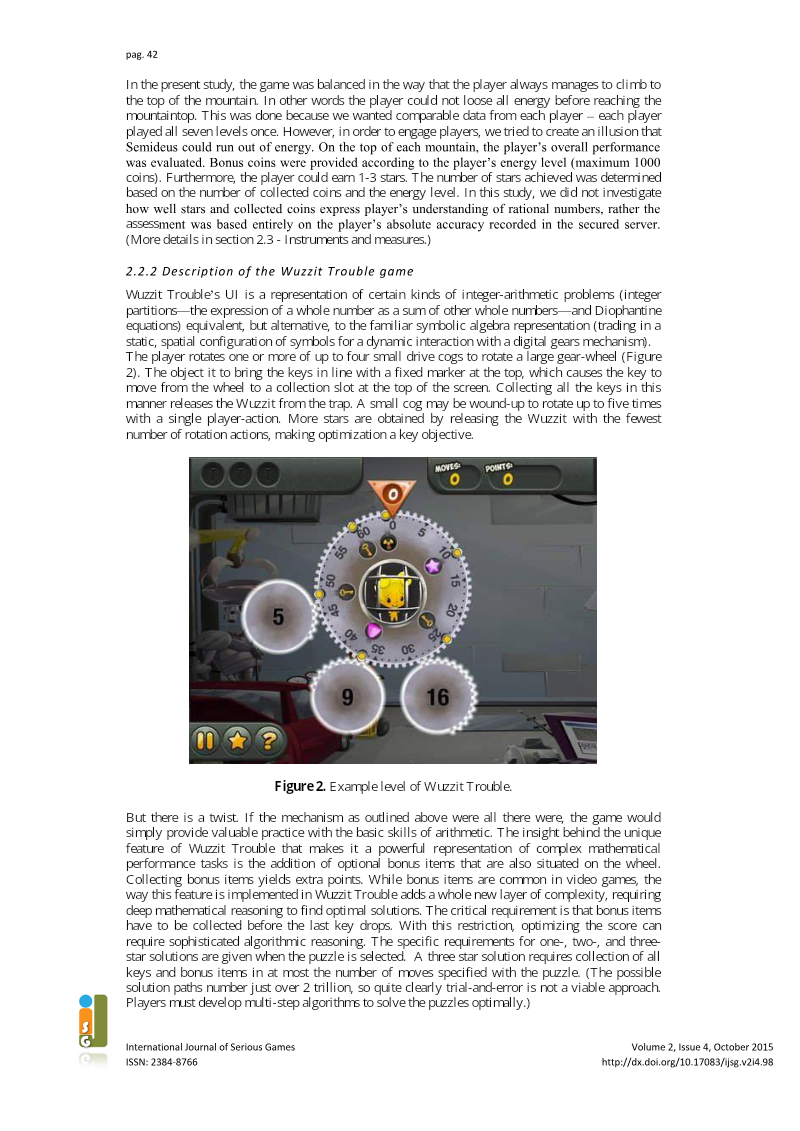
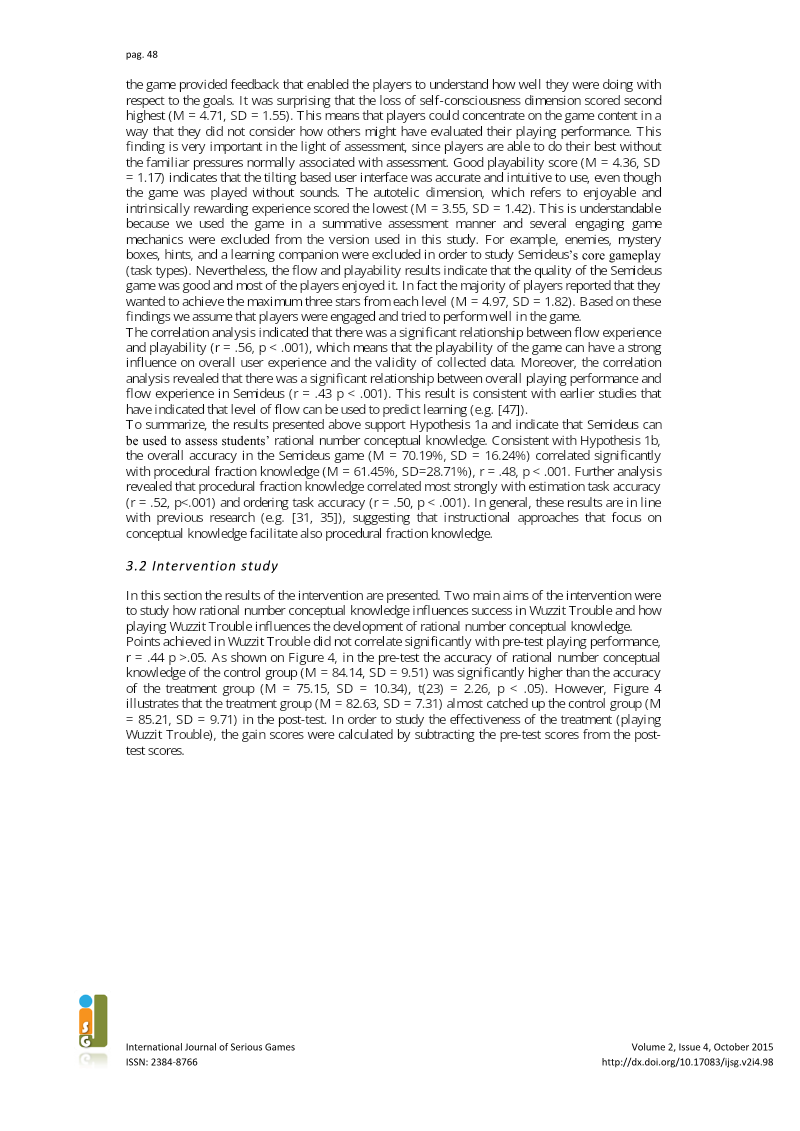
- Digital games like Semideus and Wuzzit Trouble function as both pedagogical tools and valid, reliable assessment instruments that correlate strongly with traditional metrics like the Rational Number Test.
- Short-term game-based interventions in mathematics education have demonstrated significant performance improvements, achieving effect sizes as high as 1.61 in tasks involving density and ordering.
- Game-based assessment utilizes Evidence-Centered Design to capture granular data on complex competencies such as algorithmic reasoning, magnitude estimation, and rational number conceptualization.

Mathematics Learning Opportunities When Playing a Tower Defense Game
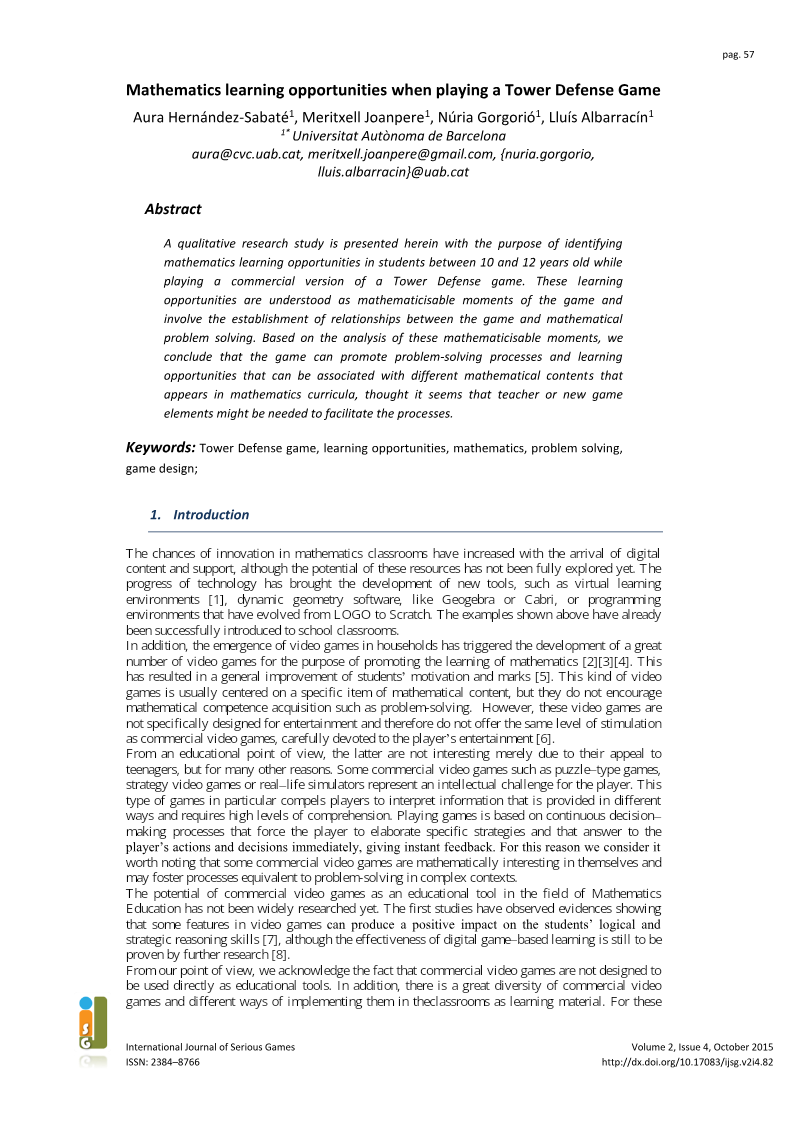
Commercial tower defense games offer a significant, underutilized platform for fostering mathematical problem-solving skills among students aged 10 to 12.
- Tower defense games like Vector Tower Defense 2 provide a natural environment for students aged 10 to 12 to practice geometric spatial reasoning, functional relationships, arithmetic, and percentages.
- Gameplay mechanics in the tower defense genre inherently require continuous cycles of observation, planning, and decision-making that align with core mathematical curricular objectives.
- Students do not spontaneously bridge the gap between intuitive gameplay and formal mathematical analysis, meaning the educational potential remains implicit without external intervention.

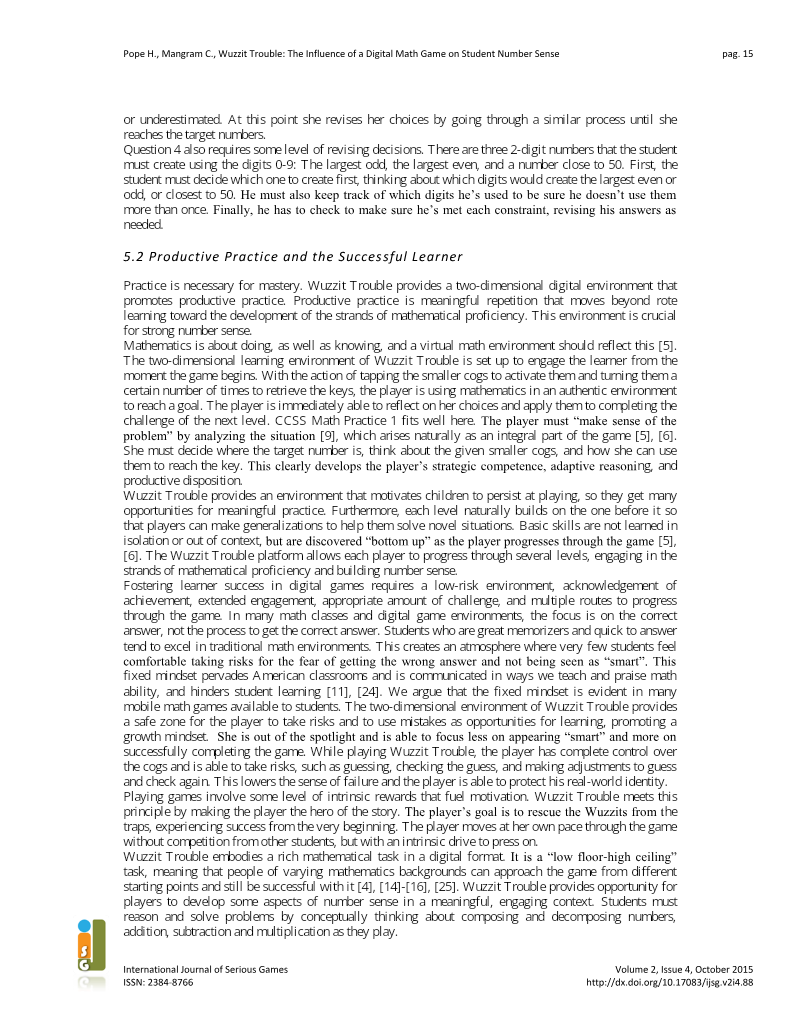
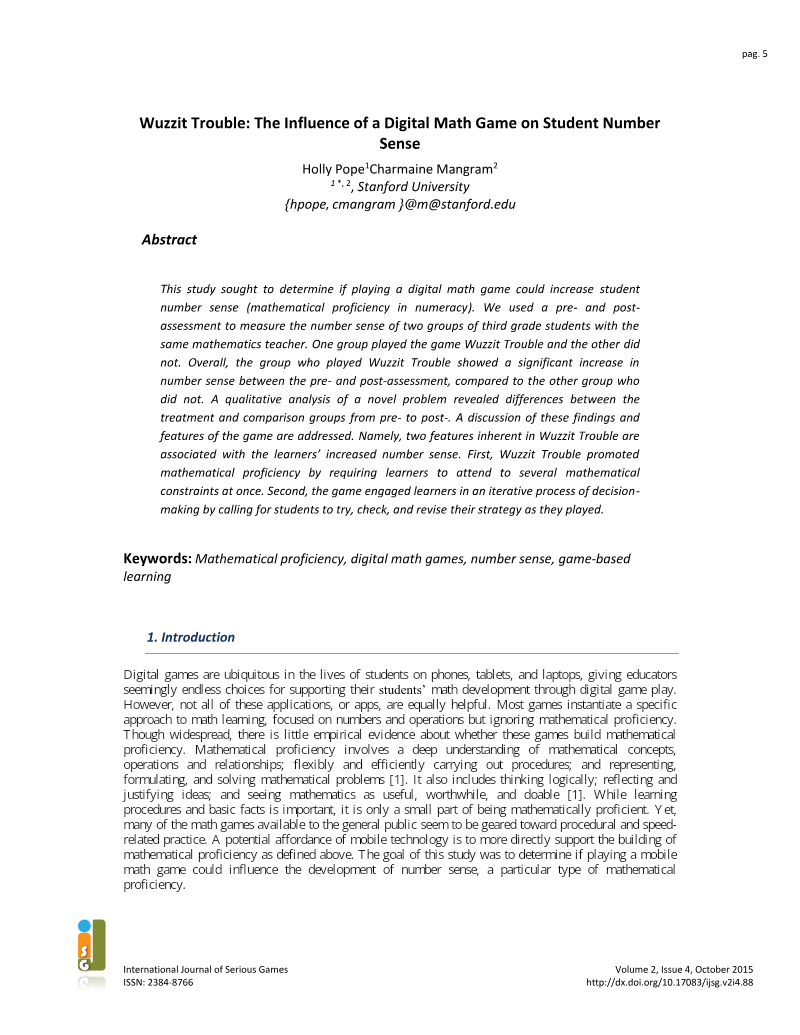
Wuzzit Trouble: The Influence of a Digital Math Game on Student Number Sense
Digital games designed with intentional mathematical constraints significantly enhance number sense among third-grade students.
- Digital games featuring intentional mathematical constraints, such as Wuzzit Trouble, improve third-grade number sense more effectively than traditional procedural memorization.
- The game’s iterative cycle of trial, verification, and revision helps students master number composition and decomposition, allowing them to solve unconventional problems.
- By providing a low-risk environment for experimentation, the game fosters a growth mindset and helps students develop cognitive strategies for managing multiple constraints.

Fold, Flip, Stick: Paper Mario, 2.5-Dimensionality and the Media Mix
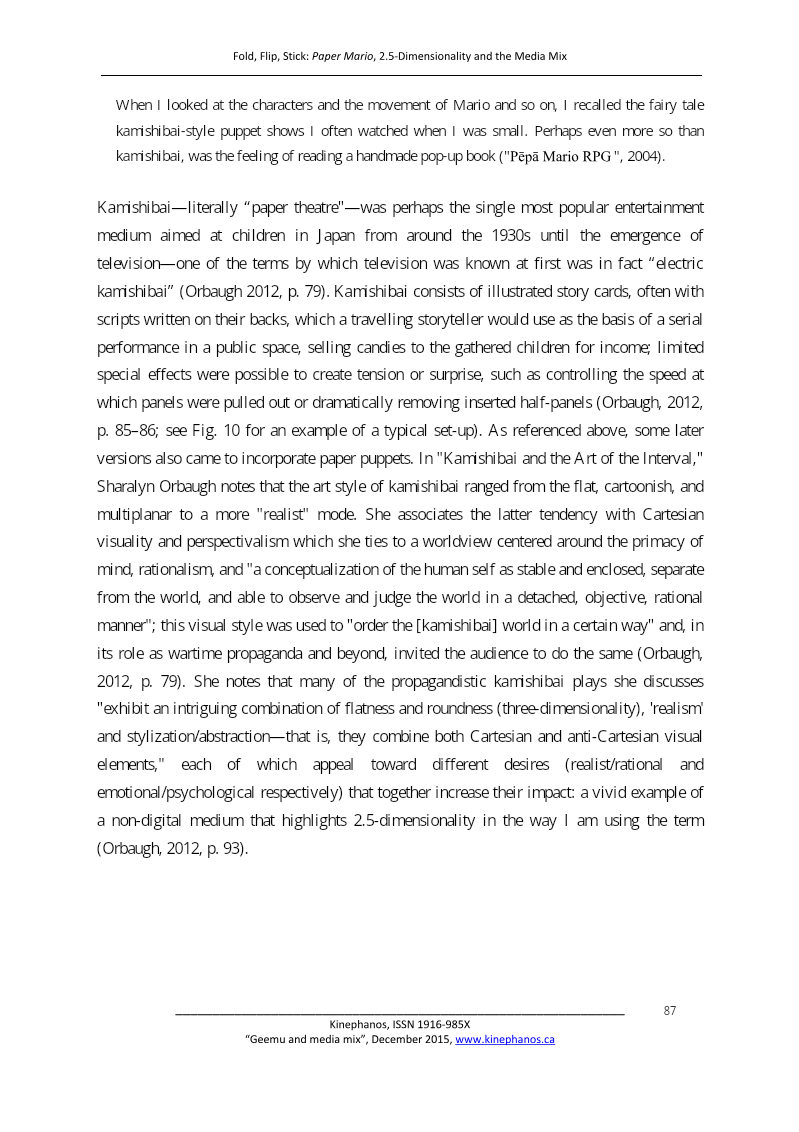
The Paper Mario franchise serves as a definitive case study for the concept of 2.5-dimensionality, an aesthetic and mechanical framework that intentionally collapses the distinction between two-dimensional planes and three-dimensional environments.
- The Paper Mario franchise utilizes '2.5-dimensionality' to integrate flat, 2D character designs into 3D volumetric environments, creating a core mechanical framework.
- Gameplay mechanics in later titles, such as folding, flipping, and sticking, require players to actively manipulate spatial depth rather than treating it as a purely visual aesthetic.
- The series draws design inspiration from traditional media forms, specifically Japanese kamishibai theater and pop-up books, to inform its digital spatial construction.
Kawaii Japan: Defining JRPGs through the Cultural Media Mix
Japanese role-playing games function as primary instruments of soft power, operating as essential components of a broader cultural media mix that projects a curated national identity to international audiences.
- JRPGs function as instruments of soft power that project a curated national identity to international audiences as part of a government-backed creative ecology.
- The industry utilizes a media mix model to align game design with national initiatives like the Cool Japan campaign, commodifying cultural tropes into a marketable brand.
- Developers embed visual markers such as kawaii to maintain a distinct Japanese lens, leveraging semiotic connections to other media properties to reinforce cultural branding.
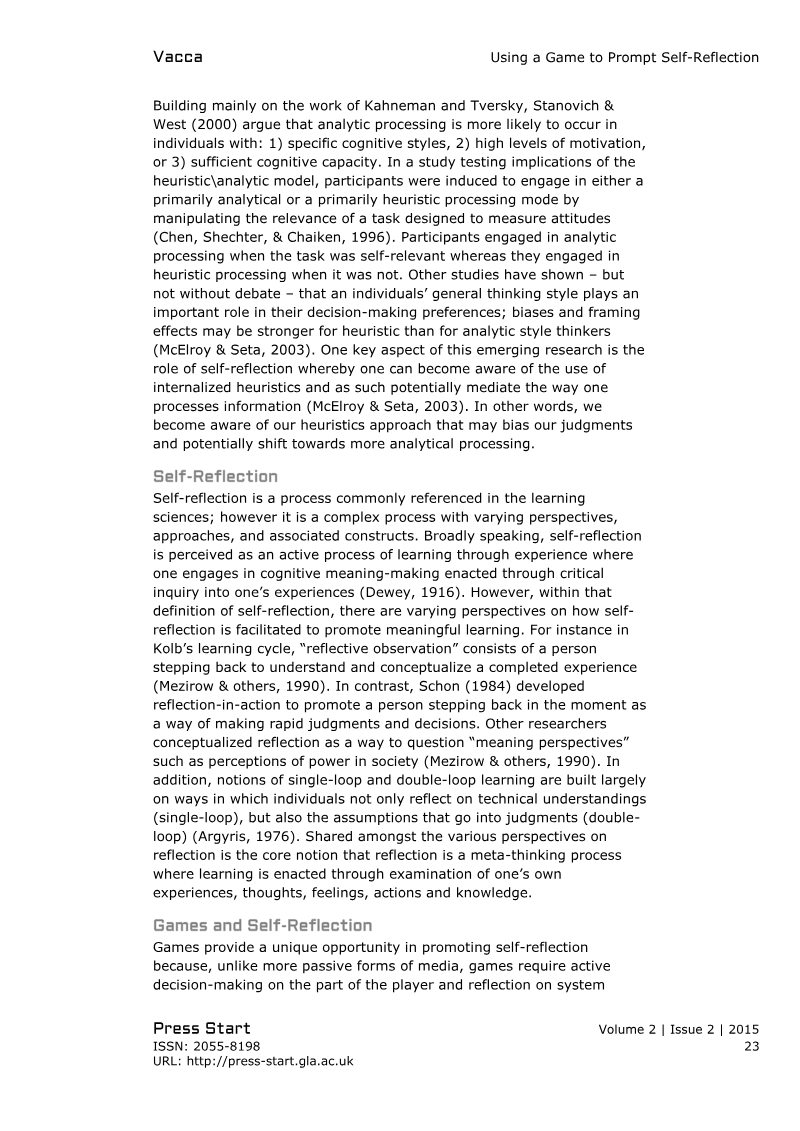

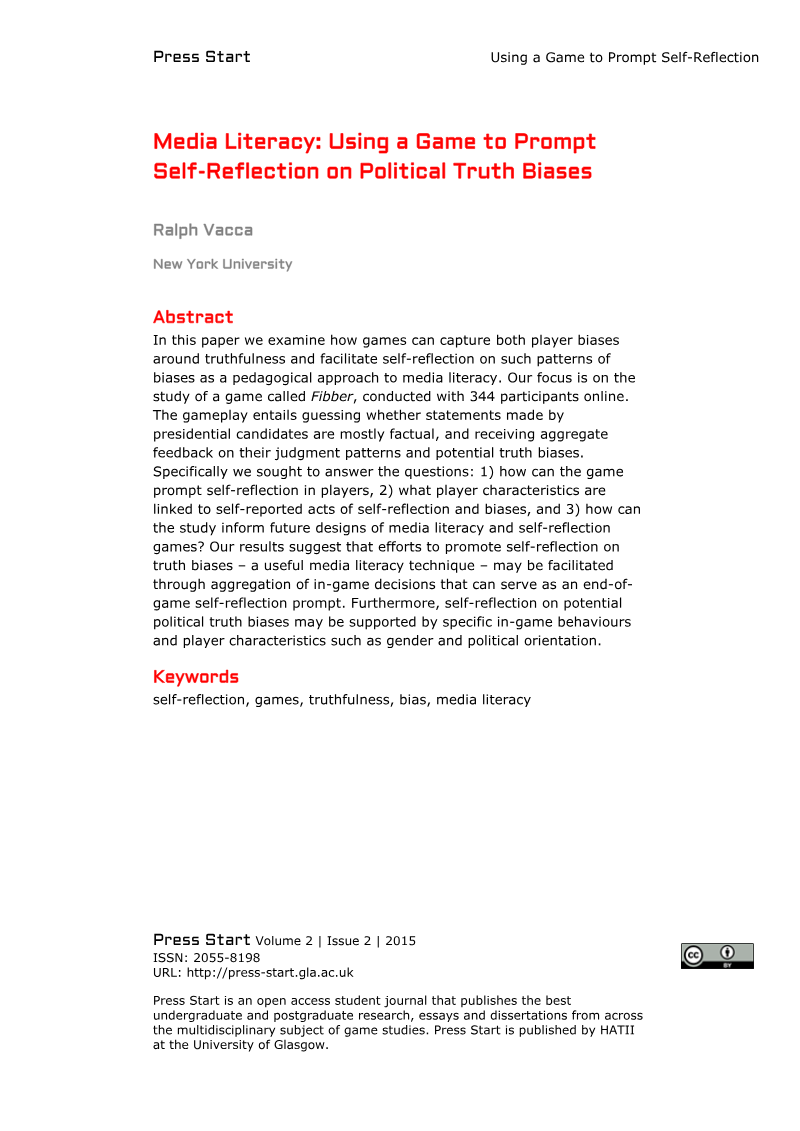
Media Literacy: Using a Game to Prompt Self-Reflection on Political Truth Biases
The game Fibber serves as a functional media literacy tool designed to help individuals identify and analyze their internal cognitive heuristics regarding political truth biases.
- The game Fibber effectively functions as a media literacy tool by focusing on personal cognitive heuristics and decision-making patterns rather than traditional content-based education.
- Research involving 391 participants demonstrates that providing aggregate performance feedback within a gaming environment successfully triggers self-reflection regarding political truth biases.
- Data indicates that a majority of players exhibit a consistent fact bias, yet the game's non-didactic framework maintains engagement across diverse demographic groups.
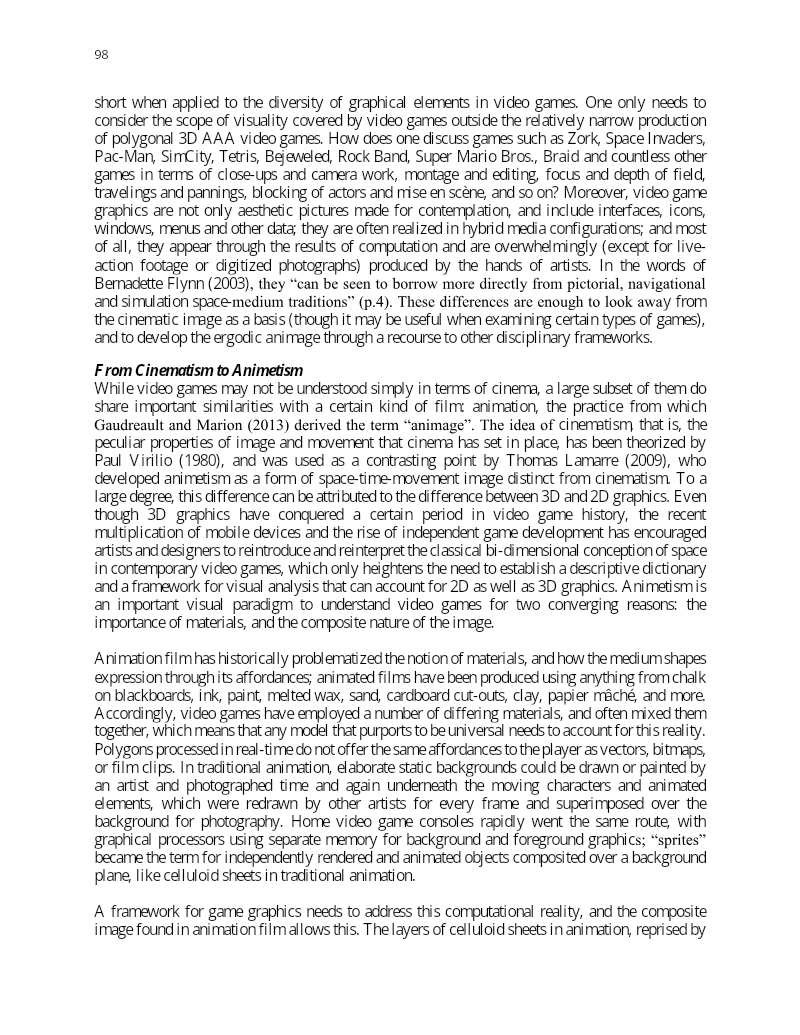

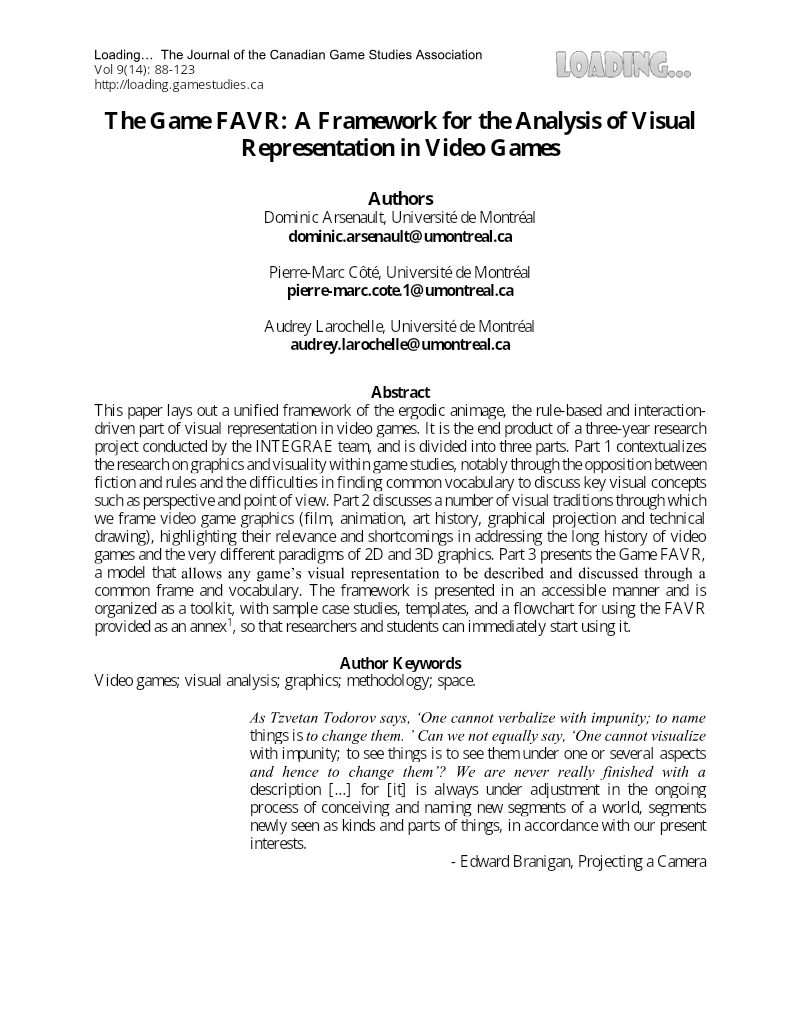
The Game FAVR: A Framework for the Analysis of Visual Representation in Video Games
The Game FAVR framework establishes a comprehensive, formalistic methodology for analyzing video game visuals by prioritizing the ergodic animage—the intersection of interactive gameplay and graphical representation.
- The Game FAVR framework shifts visual analysis away from traditional filmic and cinematic conventions to focus on the 'ergodic animage,' which prioritizes the intersection of interactive gameplay and graphical representation.
- The methodology utilizes four primary analytical parameters—composition, ocularization, framing mechanisms, and plane analysis—to evaluate how visual structures directly facilitate player agency.
- The framework categorizes the game world into three distinct planes—agents, in-game environments, and off-game environments—to account for 'impossible' tri-planar configurations and mixed projection methods.
Renegade Sex: Compulsory Sexuality and Charmed Magic Circles in the Mass Effect Series
Video games frequently enforce compulsory heterosexuality by restricting player agency to narratives that prioritize heteronormative structures.
- Triple-A game design frequently enforces compulsory heterosexuality by restricting player agency to heteronormative structures and rendering non-normative sexualities invisible.
- In the Mass Effect series, BioWare’s romantic mechanics remain tethered to a sex hierarchy that privileges monogamous, heteronormative relationships.
- Romantic options in Mass Effect are often gated by the player’s chosen gender, reinforcing a binary framework that fails to accommodate fluid expressions of identity.
Going Beyond the Game: Development of Gamer Identities Within Societal Discourse and Virtual Spaces
The gamer identity has evolved from a functional descriptor of play into a multifaceted social and personal construct that defies traditional, narrow categorization.
- The 'gamer' label has transitioned from a functional descriptor of play frequency or genre preference into a fluid, multifaceted social identity.
- Traditional stereotypes of gamers as socially isolated males are increasingly obsolete and fail to reflect the diverse, interconnected reality of modern gaming culture.
- Gamer identity is primarily constructed through individual self-perception, community participation, and shared virtual experiences rather than static demographic metrics.
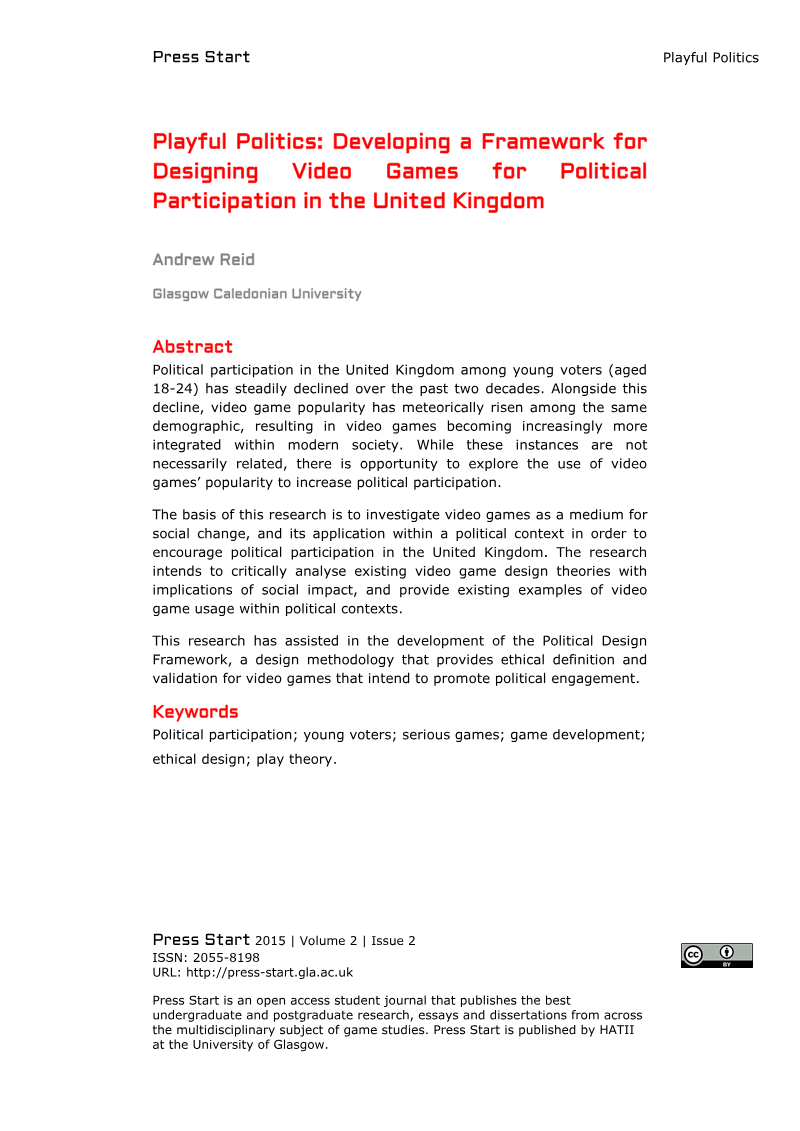
Playful Politics: Designing Video Games for Political Participation in the UK
Video games represent a potent, underutilized medium for reversing the decline in political participation among young adults in the United Kingdom.
- Video games are an underutilized medium for increasing political participation among the 18–24 demographic in the UK, offering a more engaging alternative to traditional, static political education.
- Existing simulations like the Democracy franchise successfully model complex governance but often alienate disenfranchised users by requiring high levels of pre-existing political knowledge.
- A structured Political Design Framework is required to ensure games serve as accessible entry points for civic engagement rather than exclusionary tools for the already informed.