Game Studies reports and market data
Documents
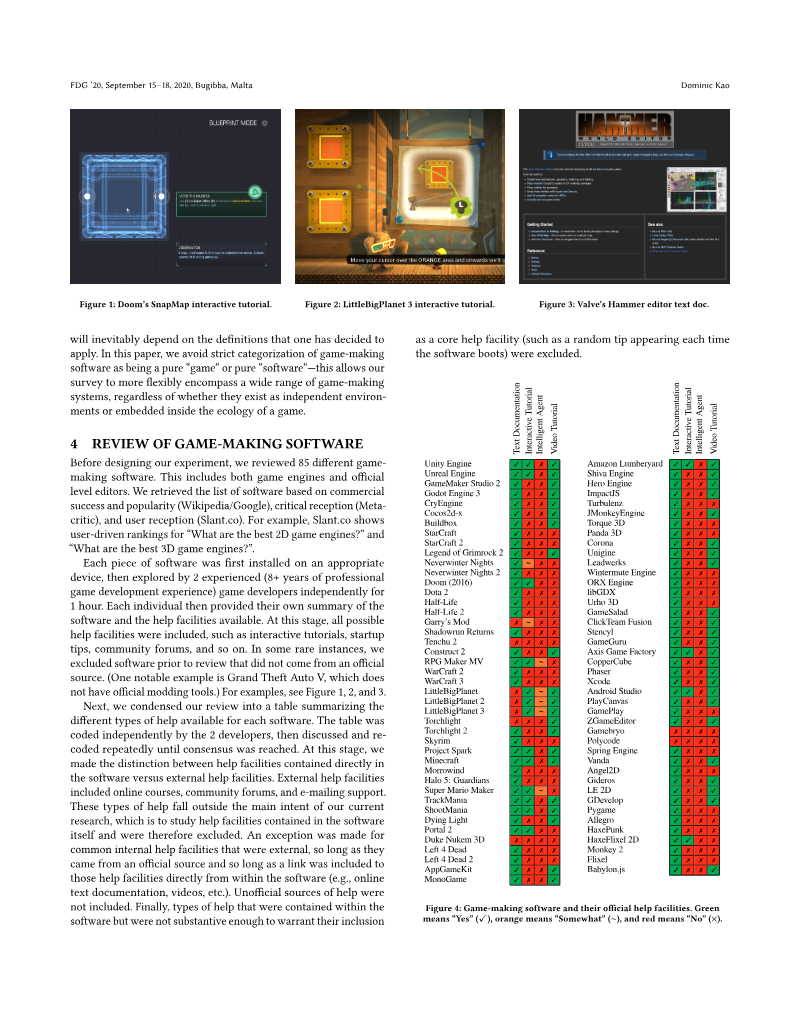
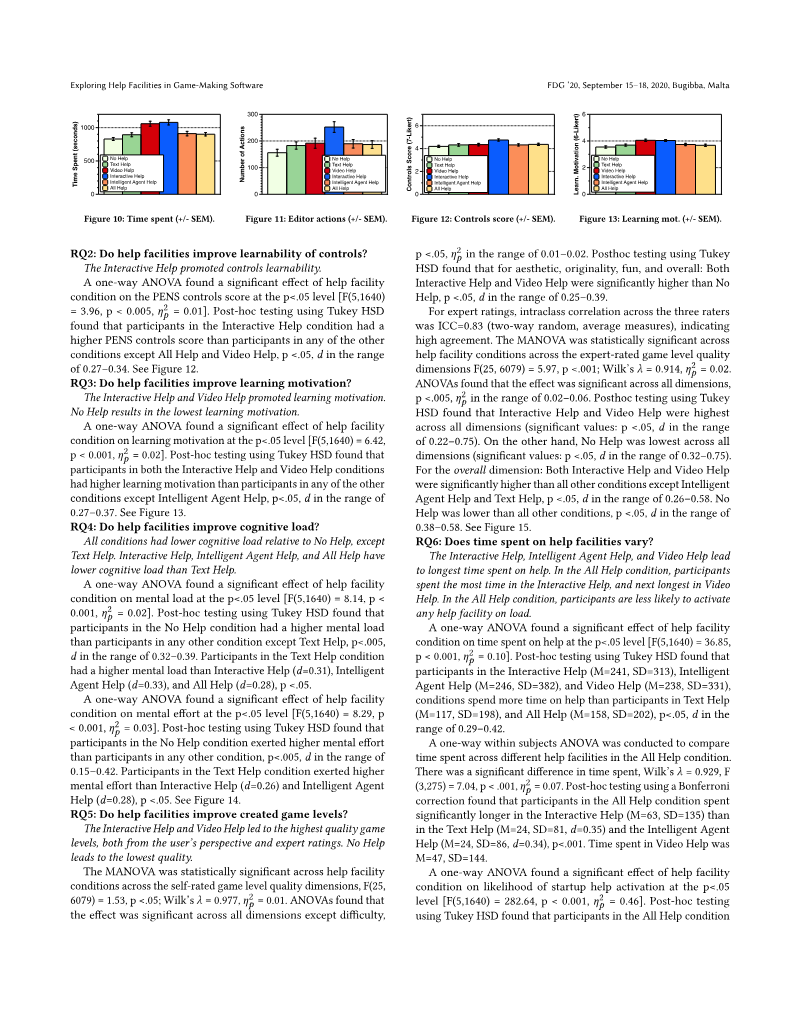
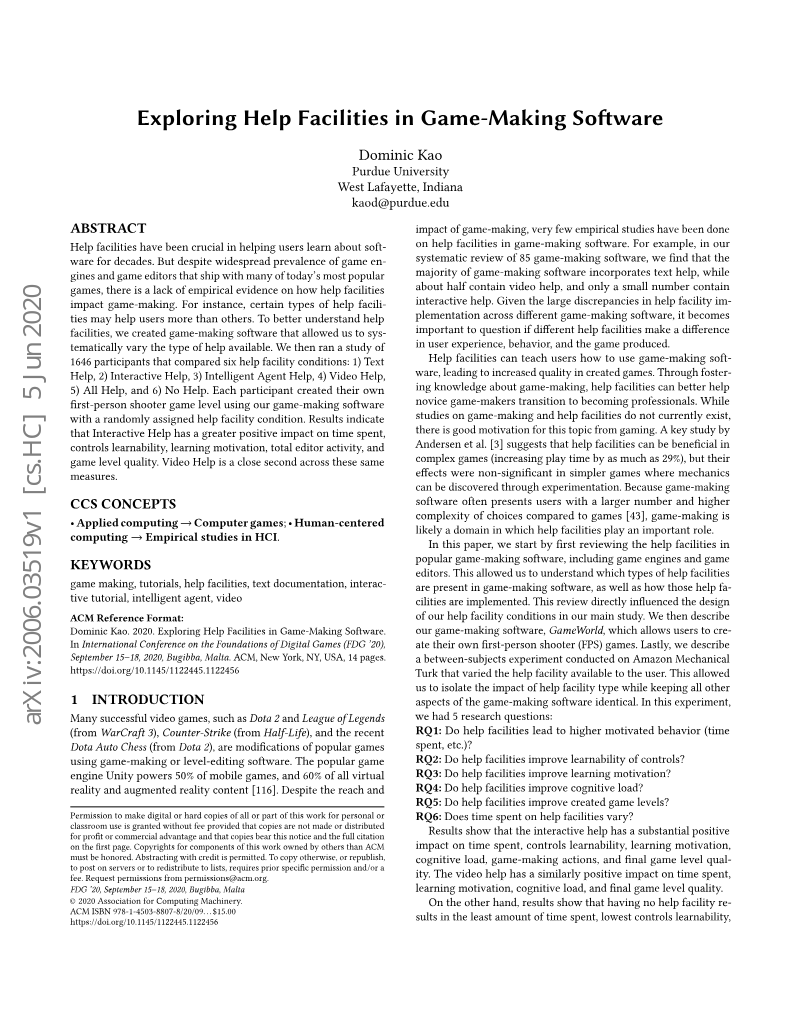
Exploring Help Facilities in Game-Making Software
Effective help facilities are essential for enhancing user experience and creative output in game-making software.
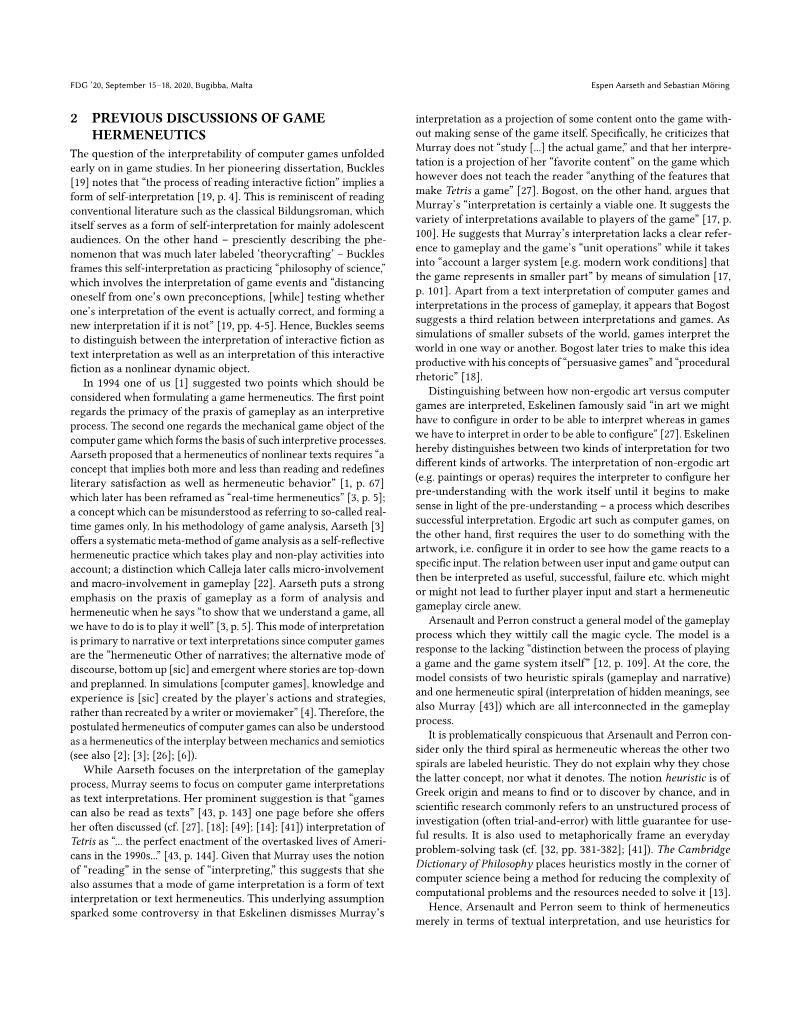
The Game Itself?: Towards a Hermeneutics of Computer Games
The field of game studies currently suffers from a lack of a viable ludo-hermeneutic theory, primarily because the discipline lacks a stable ontological foundation.
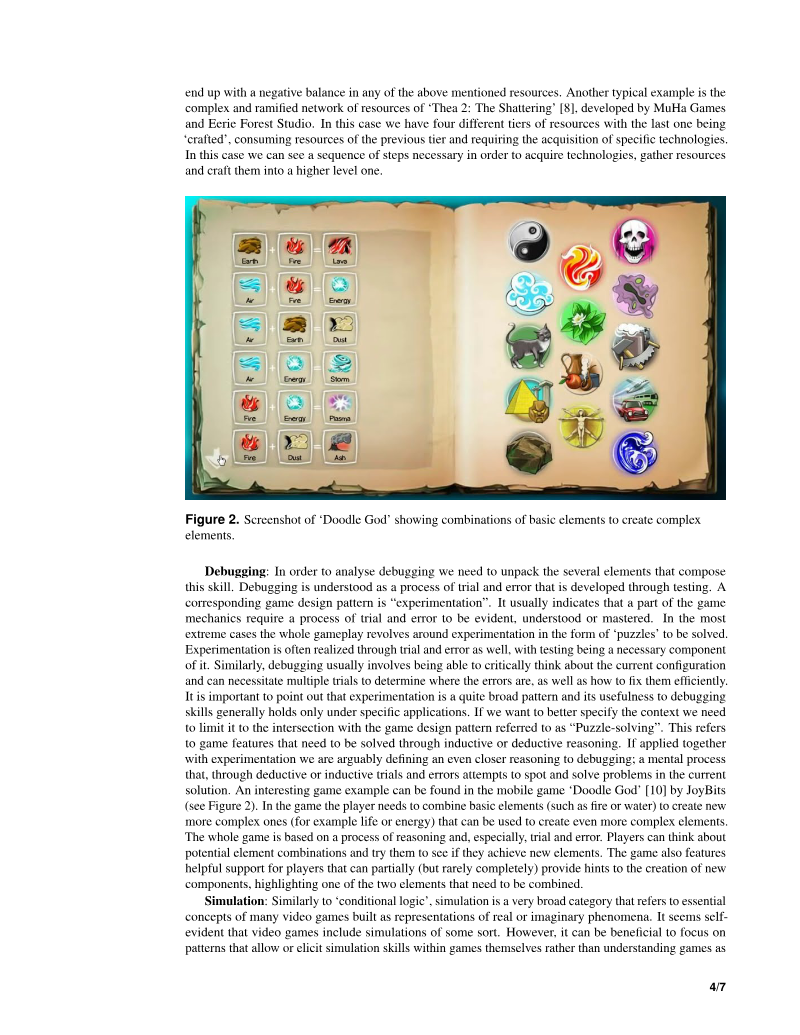
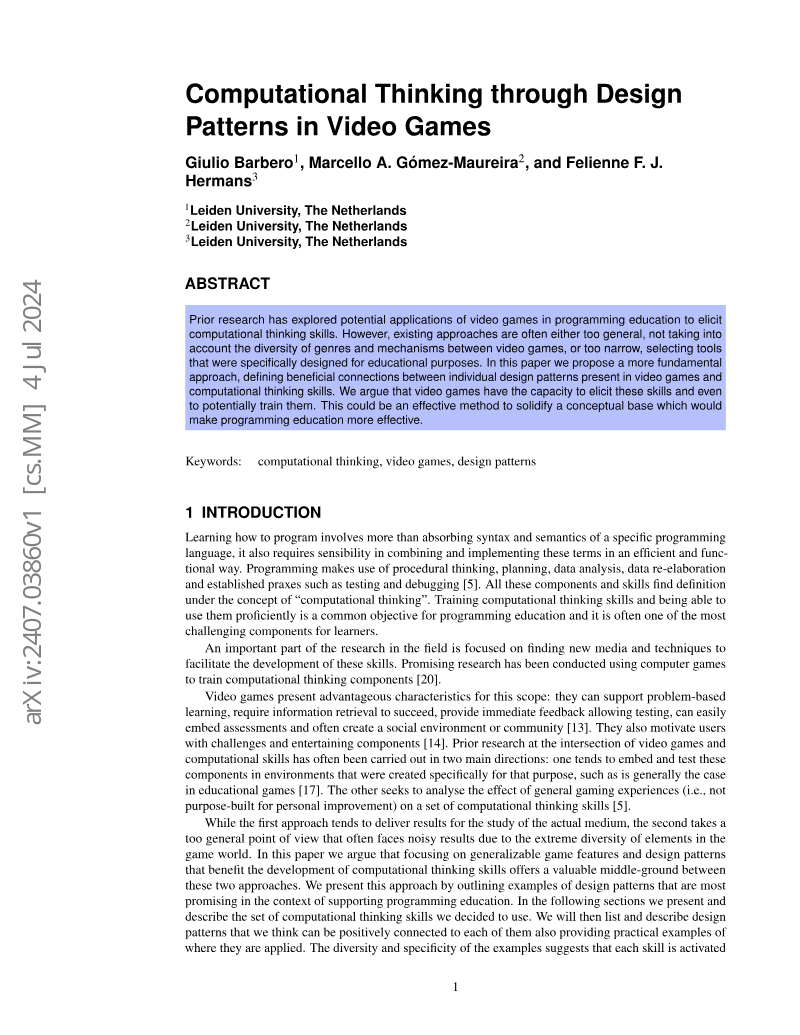
Computational Thinking through Design Patterns in Video Games
This analysis proposes a framework for utilizing video game design patterns as a pedagogical tool to foster computational thinking skills.
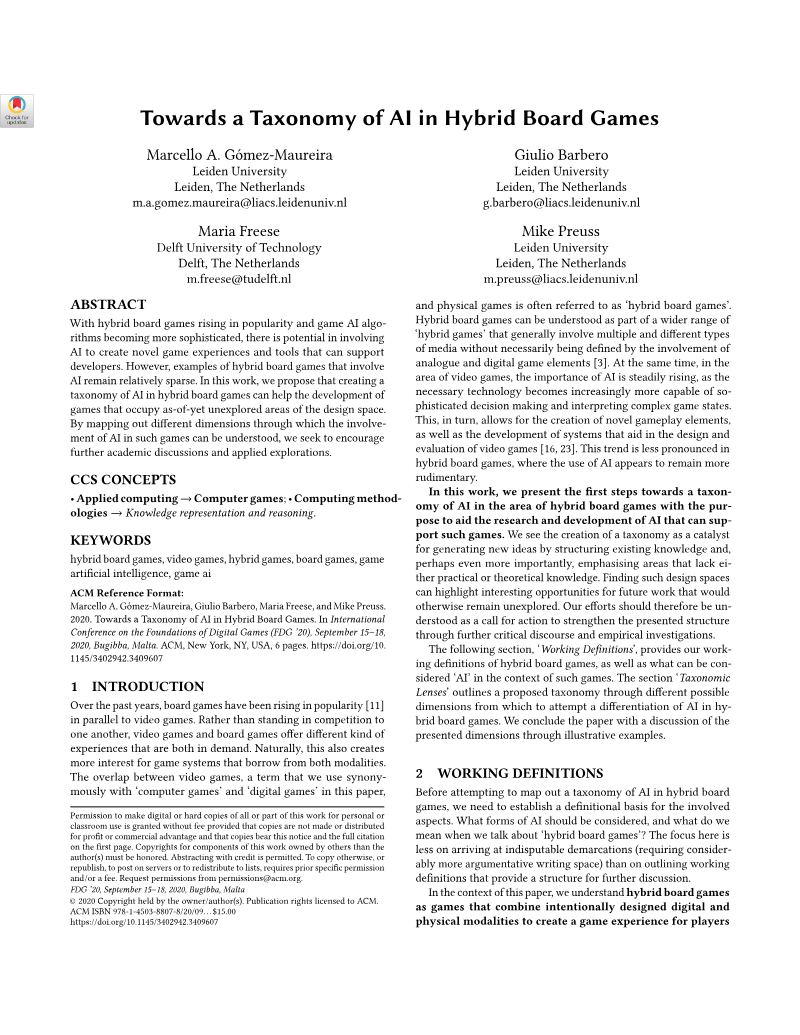
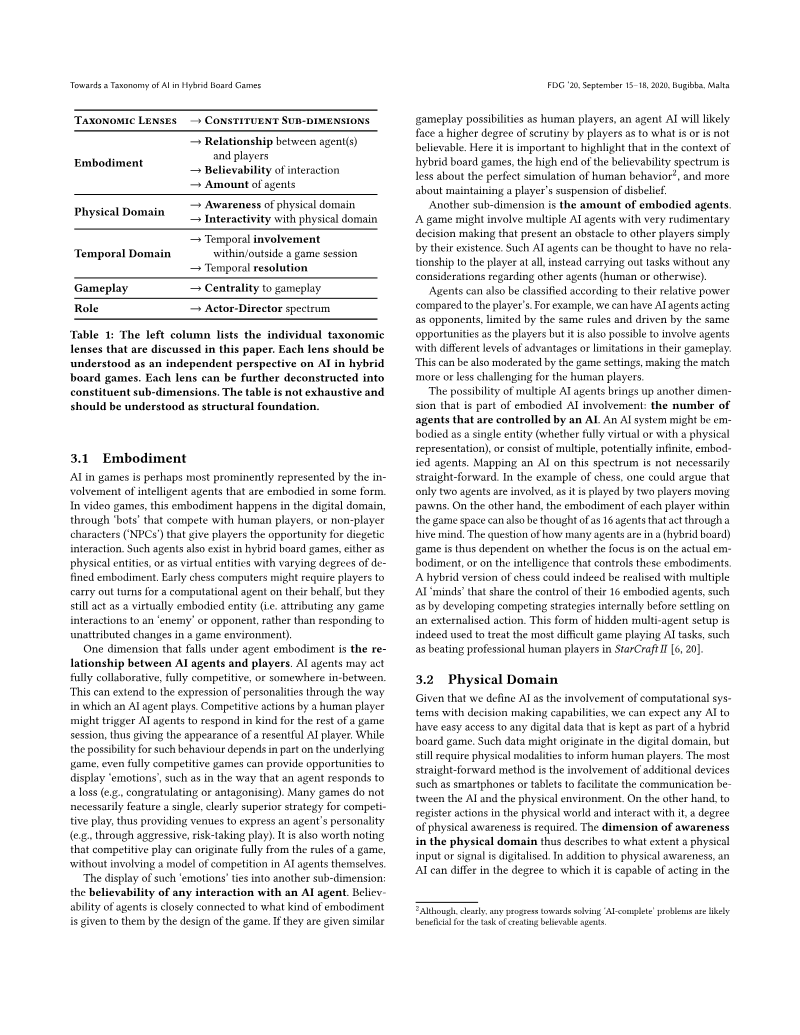
Towards a Taxonomy of AI in Hybrid Board Games
Hybrid board games, which integrate digital and physical modalities, represent an evolving intersection of technology and traditional tabletop play.
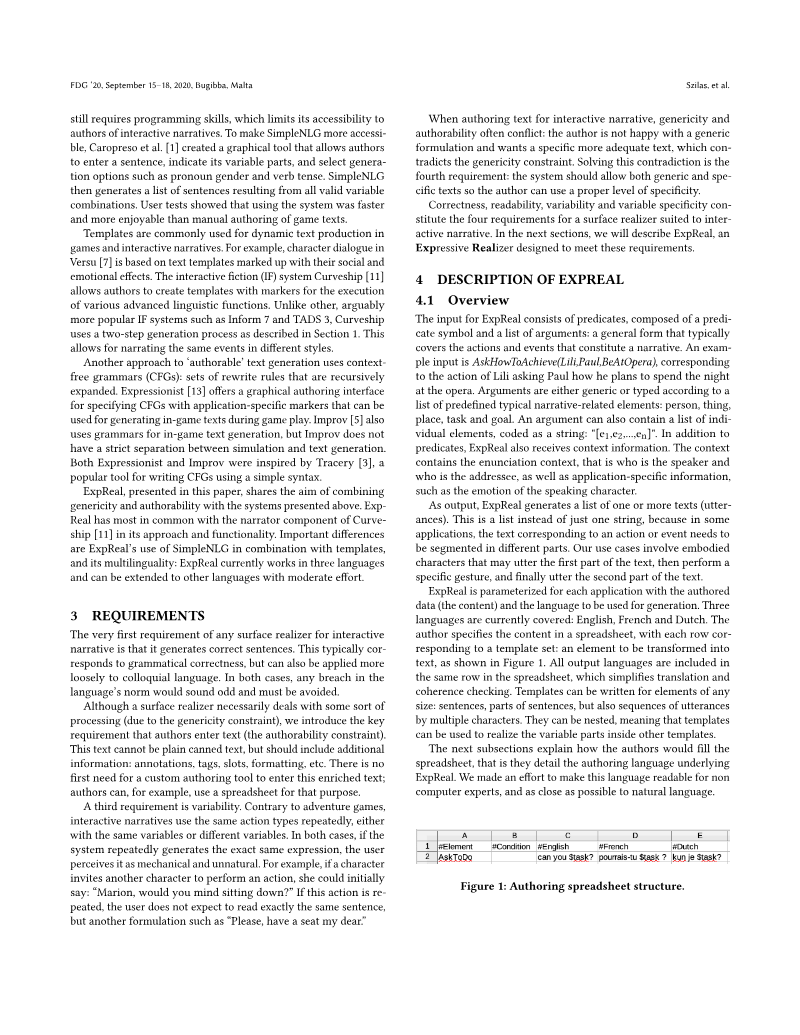
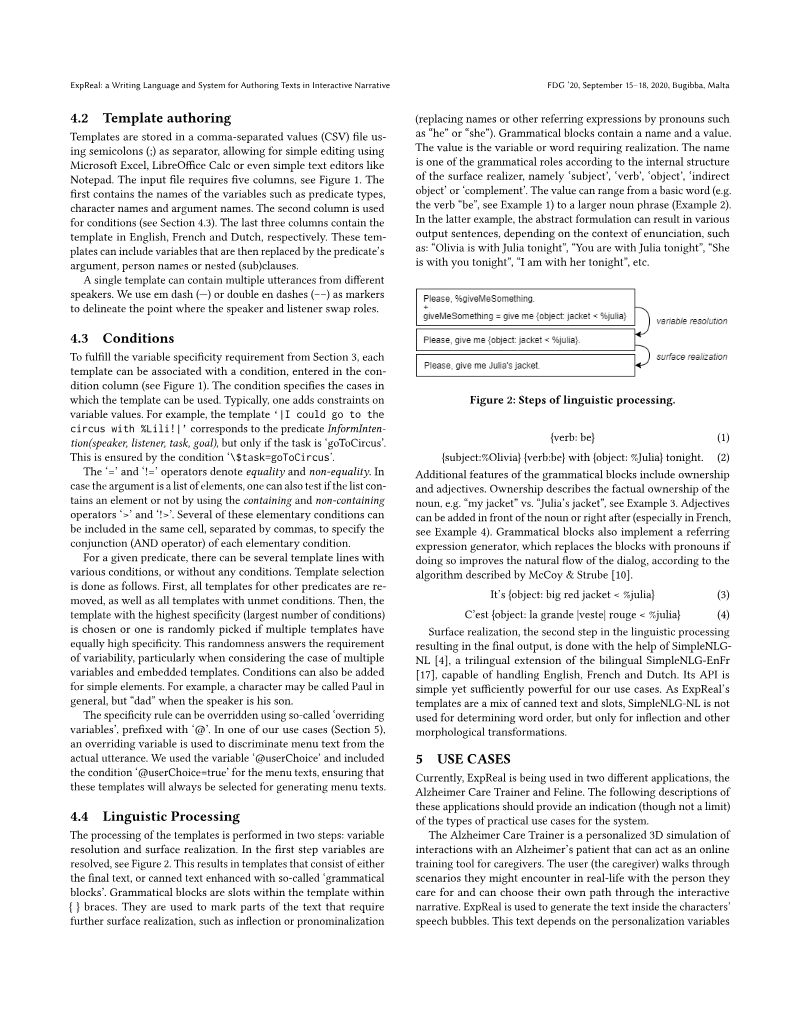
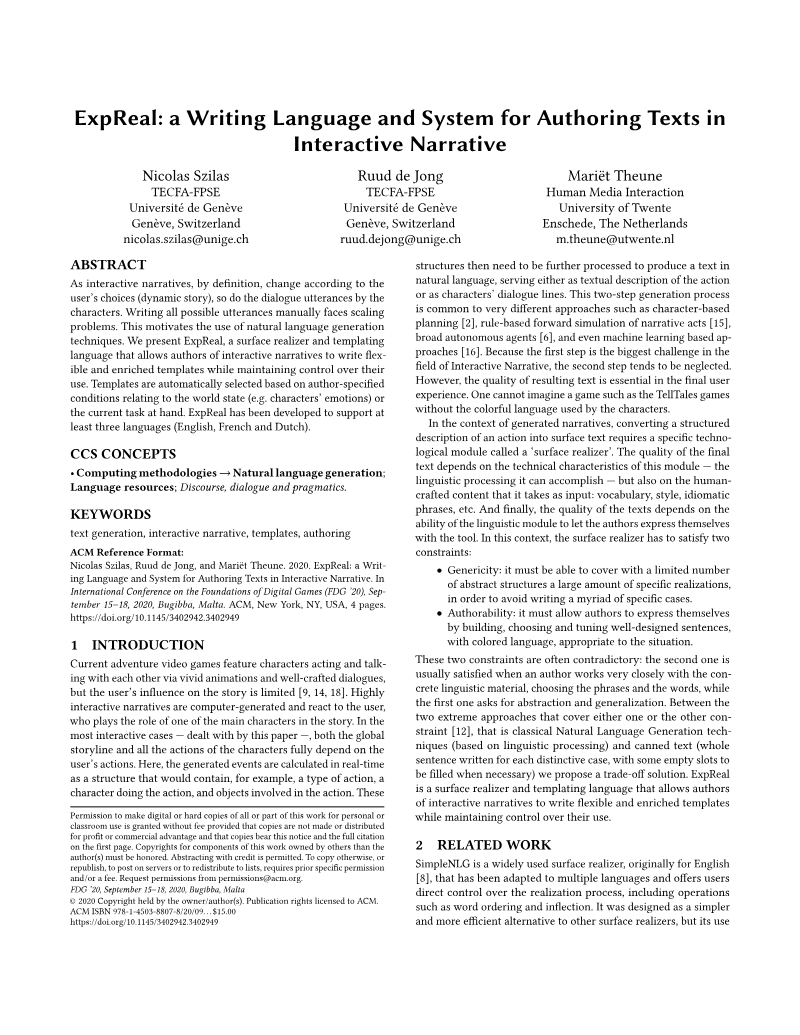
ExpReal: A Writing Language and System for Authoring Texts in Interactive Narrative
ExpReal functions as a surface realizer and templating language designed to bridge the gap between generic natural language generation and manual, canned text authoring in interactive narratives.
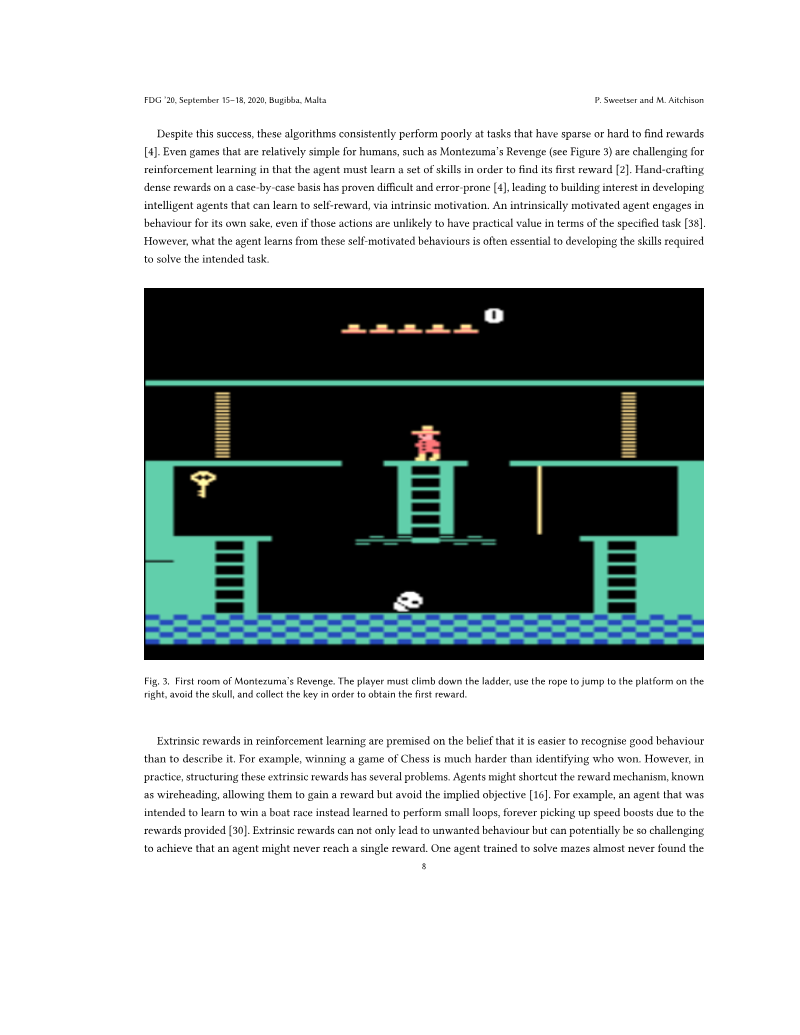
Do Game Bots Dream of Electric Rewards?: The Universality of Intrinsic Motivation
Extrinsic reward-based systems, frequently utilized in both gamification and machine reinforcement learning, suffer from fundamental limitations that undermine long-term engagement and system robustness.
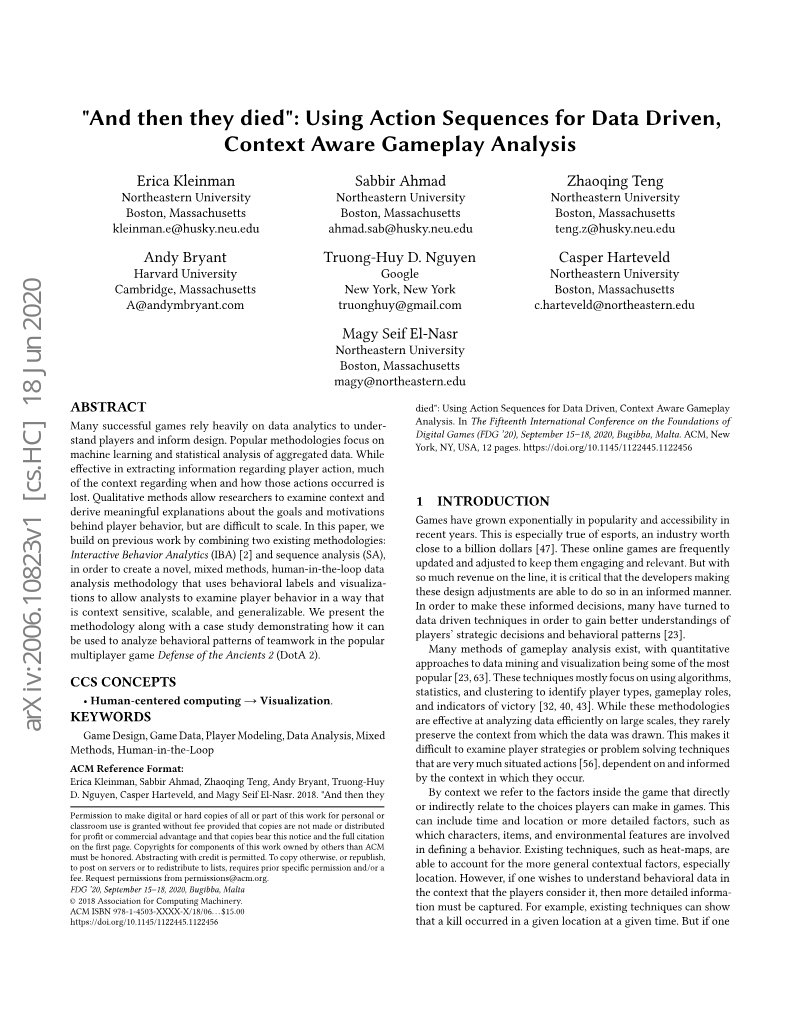
And then they died: Using Action Sequences for Data Driven, Context Aware Gameplay Analysis
A novel mixed-methods framework integrates sequence analysis with interactive behavior analytics to provide a scalable, context-aware approach to gameplay evaluation.
- The proposed mixed-methods framework bridges the gap between high-level quantitative telemetry and qualitative observation by abstracting raw player data into actionable, context-aware behavioral sequences.
- The methodology utilizes a human-in-the-loop approach to improve inter-rater reliability, significantly reducing the subjectivity inherent in traditional manual annotation processes.
- Analysis of Defense of the Ancients 2 (Dota 2) demonstrates that the framework successfully identifies distinct strategic shifts, such as early-game focus on neutralizing carry heroes versus late-game prioritization of objective control.
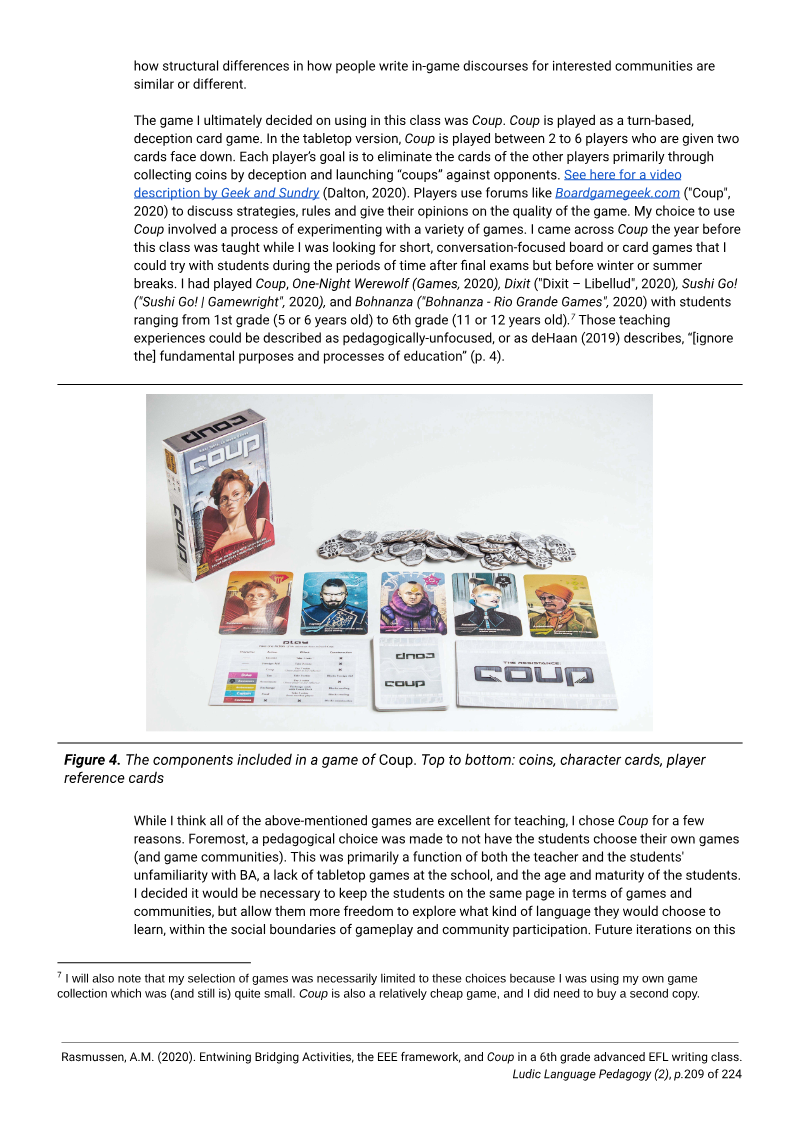
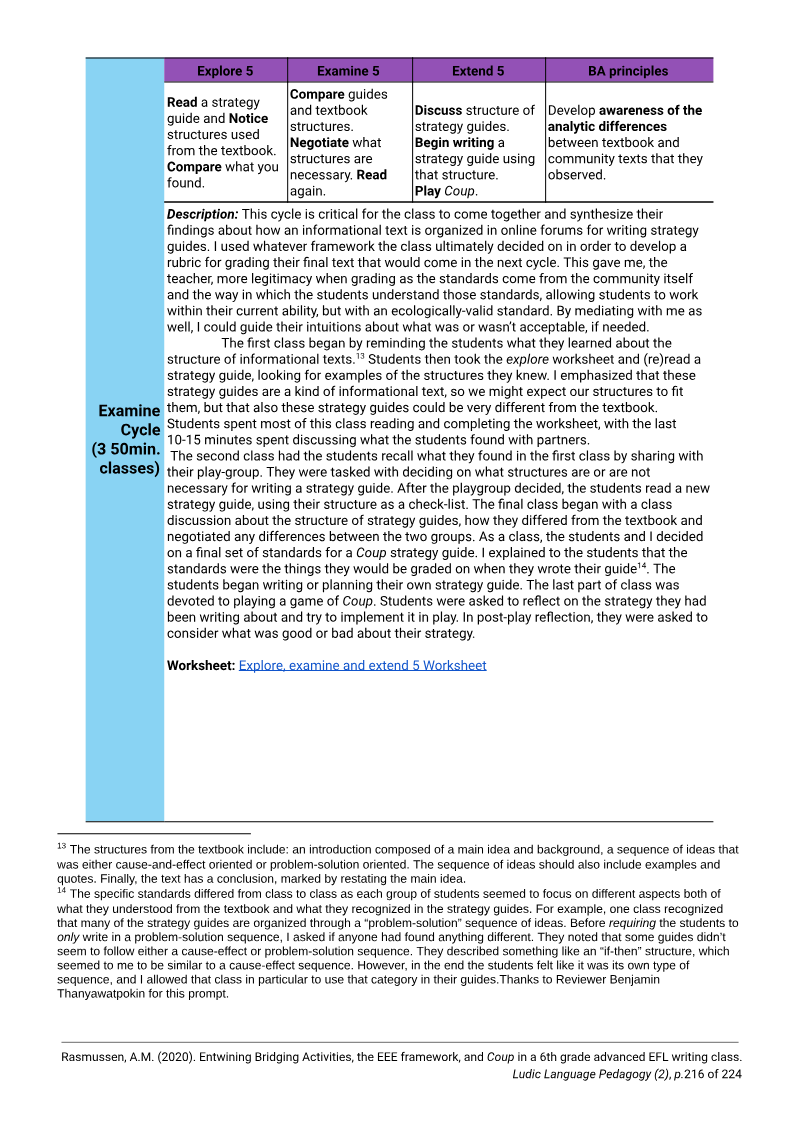
Entwining Bridging Activities, the EEE Framework, and Coup in a 6th Grade EFL Writing Class
Integrating the tabletop game Coup into a 6th-grade English as a Foreign Language (EFL) curriculum in South Korea offers a transformative pedagogical model for moving beyond traditional, textbook-bound instruction.
- Integrating the tabletop game Coup into 6th-grade EFL classrooms in South Korea creates a pedagogical model that moves beyond traditional, textbook-bound instruction.
- The Explore, Examine, Extend (EEE) framework facilitates a transition from initial gameplay to the production of formal, strategy-based informational texts.
- Students develop metalinguistic skills by analyzing game mechanics and external strategy guides, which they then synthesize into structured writing.
Visuospatial Abilities Training with Digital Games in a Primary School
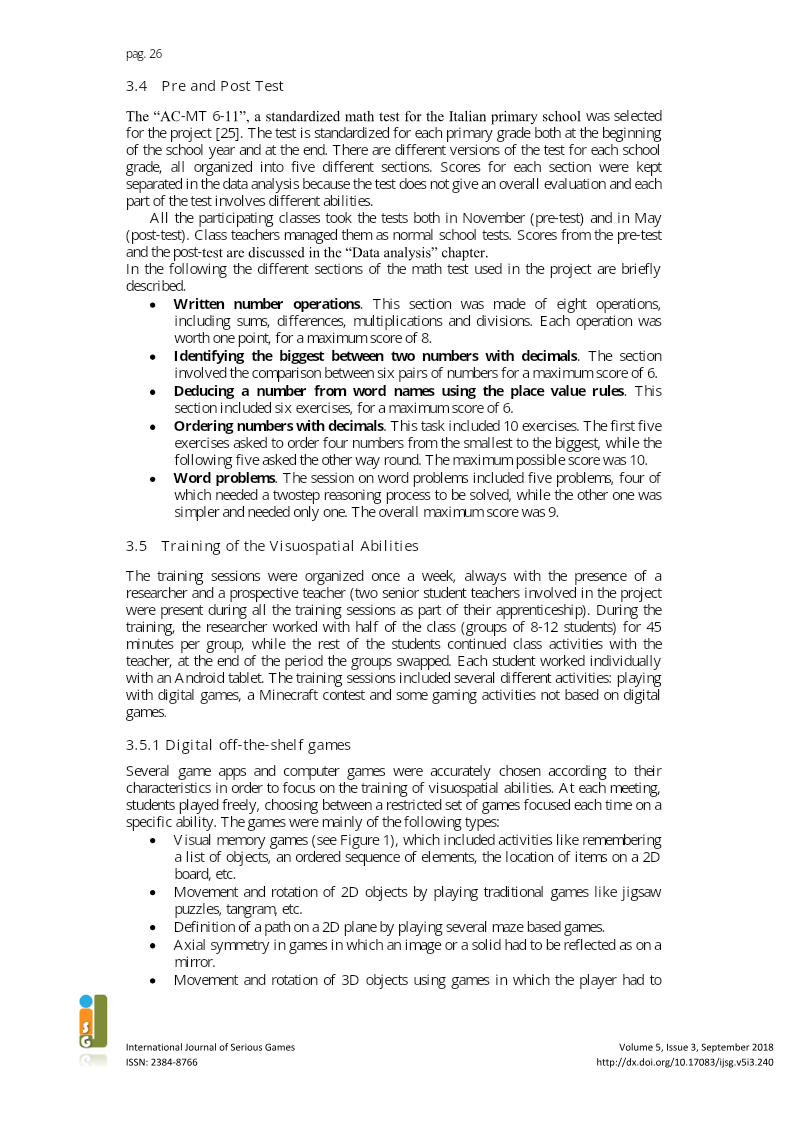
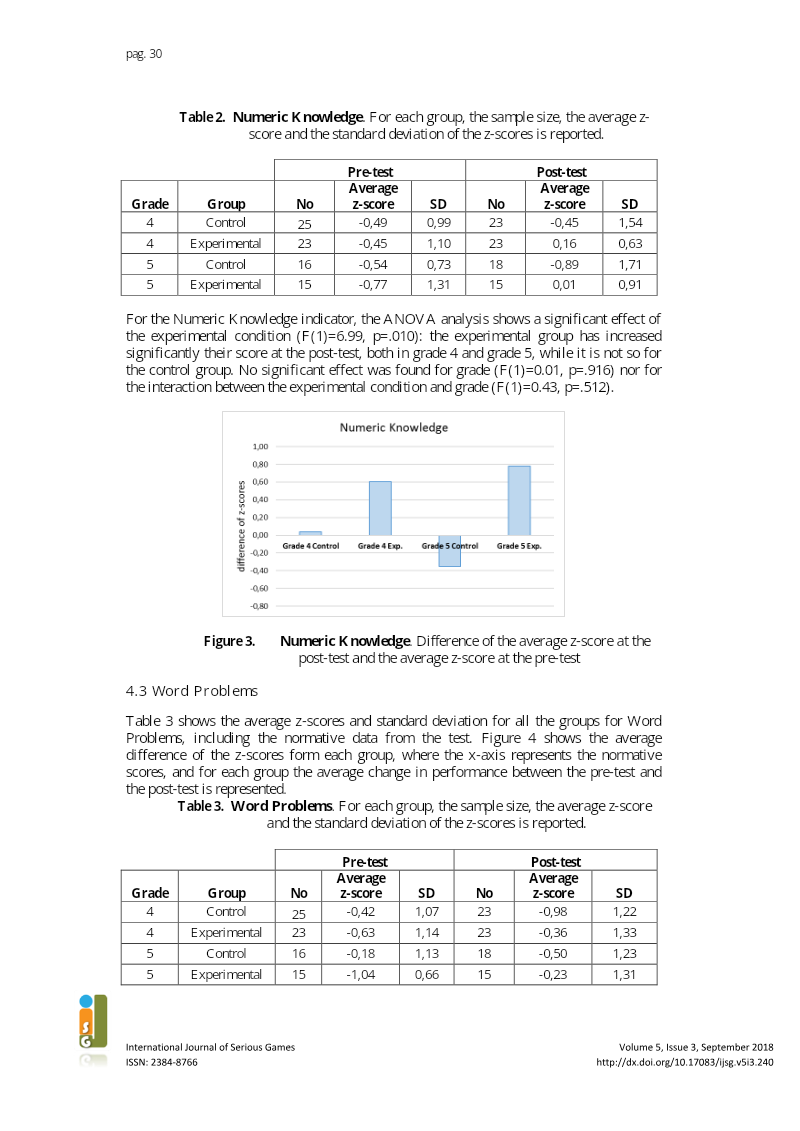
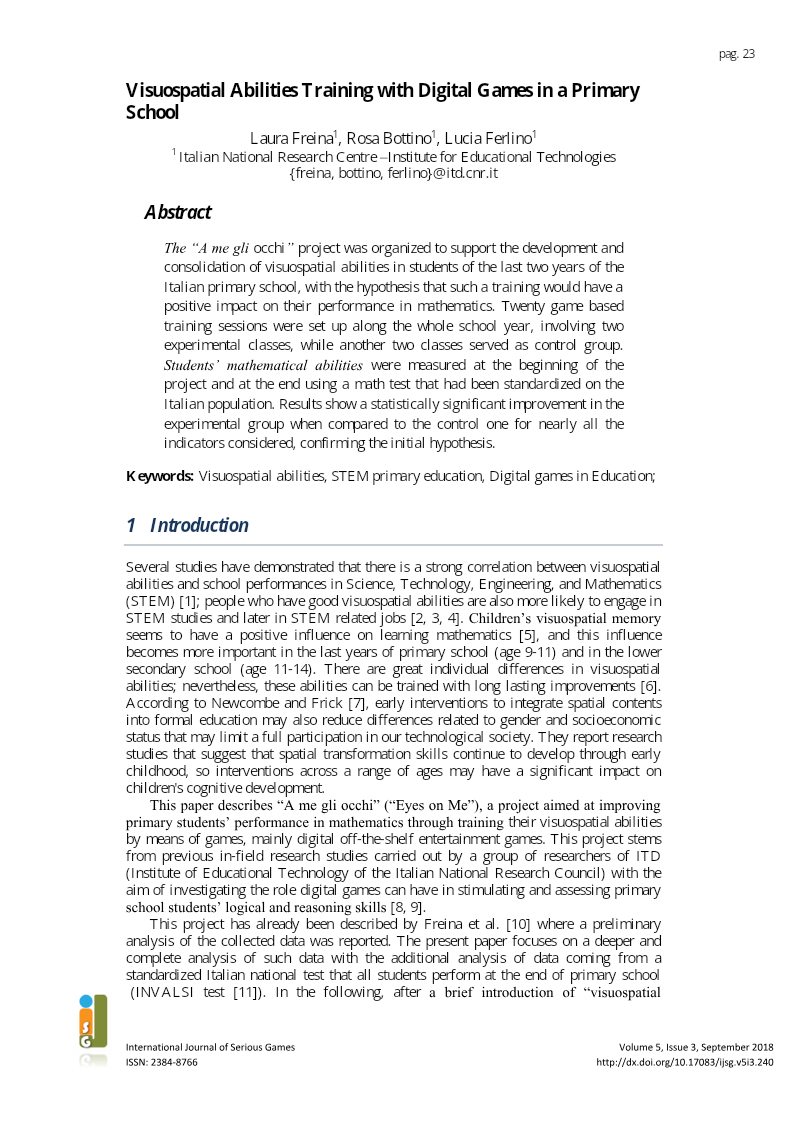
The A me gli occhi project establishes a clear link between targeted visuospatial training via digital games and enhanced mathematical performance among primary school students.
- Targeted visuospatial training through digital games significantly improves mathematical performance in primary school students aged nine to eleven.
- Students participating in the 'A me gli occhi' project outperformed traditional curriculum methods in standardized assessments, showing gains in numeric knowledge, word problems, and written operations.
- Fifth-grade students demonstrated the most notable progress, particularly in the execution of complex written operations.
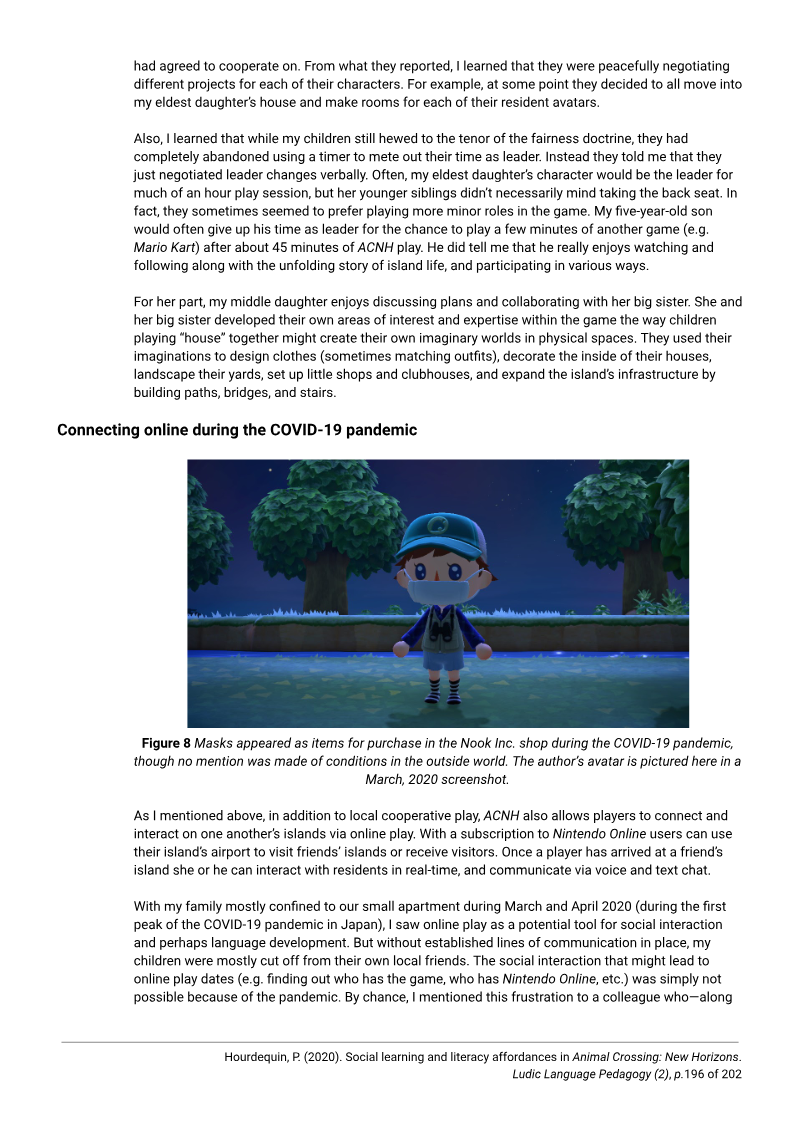

Social Learning and Literacy Affordances in Animal Crossing: New Horizons
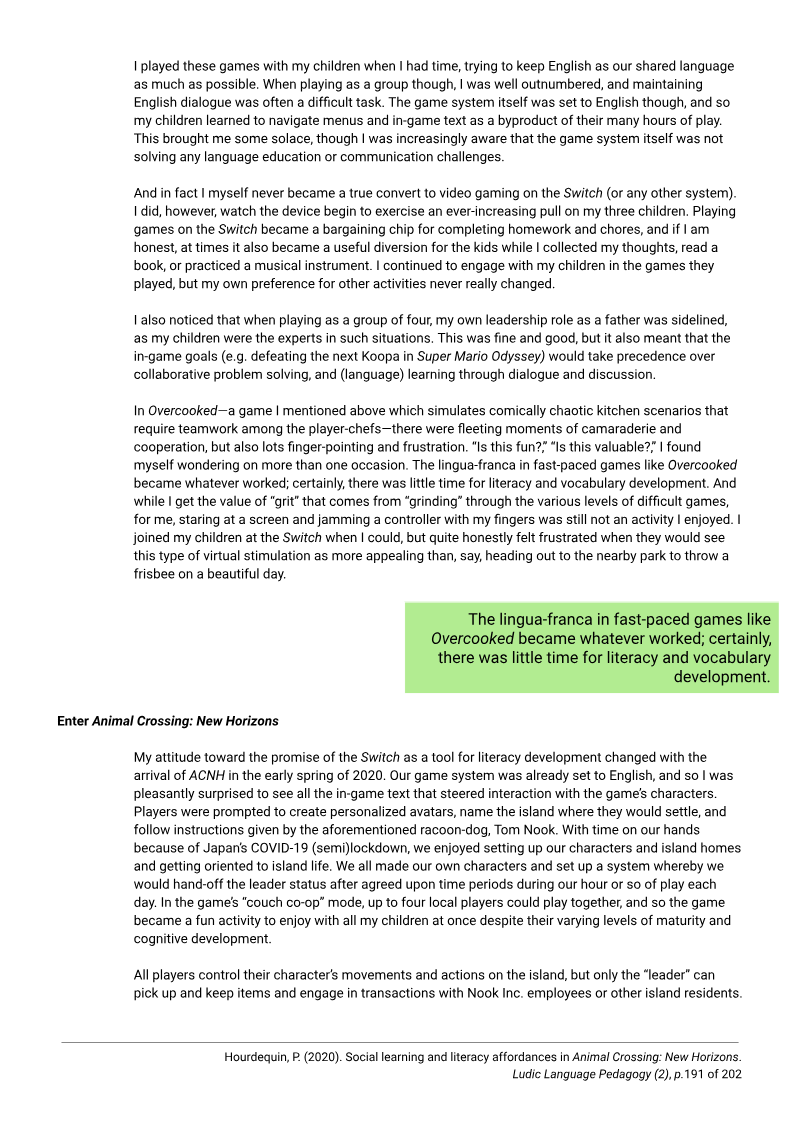
Animal Crossing: New Horizons functions as a sophisticated sandbox for social learning and bilingual literacy development, particularly within family-oriented, collaborative environments.
- Animal Crossing: New Horizons functions as a sandbox for social learning and bilingual literacy by prioritizing text-heavy, collaborative gameplay over high-speed competition.
- The game facilitates complex social governance, with players creating formal constitutions and bylaws to manage shared virtual resources and negotiate community standards.
- Long-term engagement in the game fosters social capital and linguistic proficiency through dialogic learning and the creation of literary projects like illustrated zines.
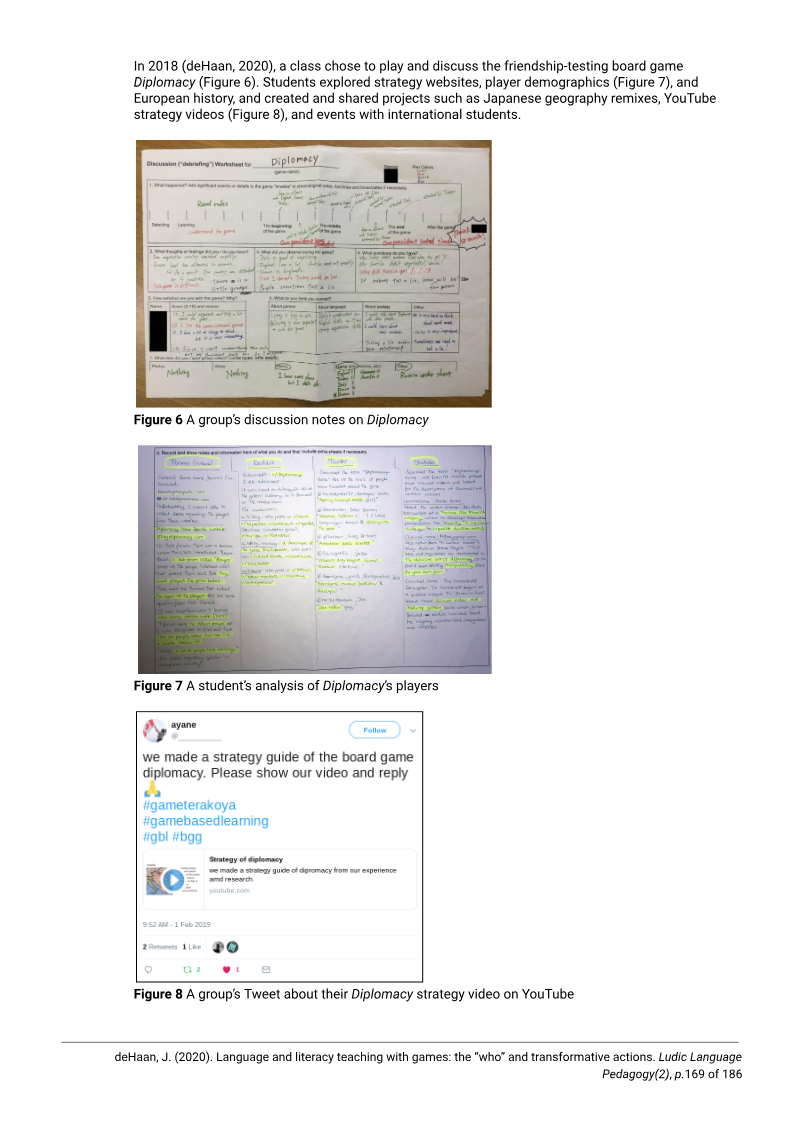
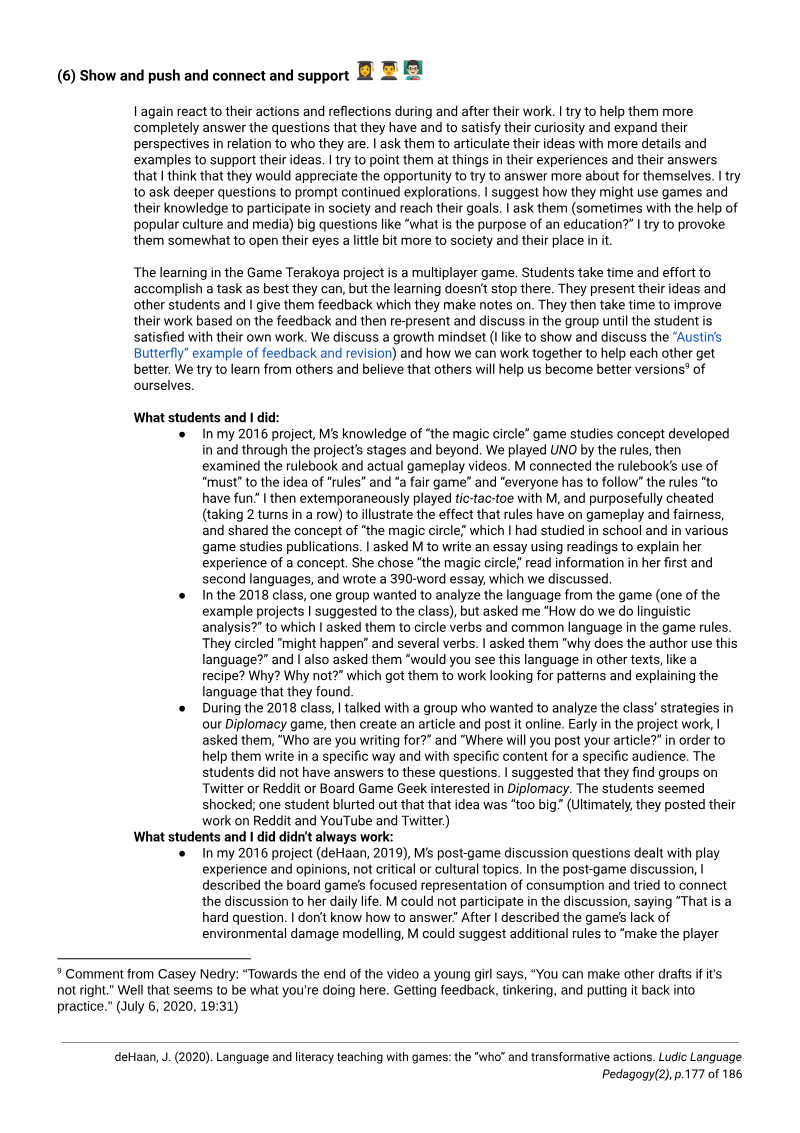
Language and Literacy Teaching with Games: The “Who” and Transformative Actions
The Game Terakoya project establishes a transformative pedagogical framework that prioritizes student identity and personal development over the technical mechanics of game-based instruction.
- The Game Terakoya pedagogical framework prioritizes student identity and personal development over technical game mechanics to improve language and literacy outcomes.
- Effective game-based instruction requires slowing the learning cycle to facilitate deep reflection, allowing students to connect classroom activities with real-world professional aspirations.
- The methodology replaces standardized testing with a model of continuous self-assessment, utilizing game analysis, remixing, and creation as primary diagnostic tools.
Portraying Mental Illness in Video Games: Exploratory Case Studies for Improving Interactive Depictions
Video games possess a unique capacity to simulate psychological states through interactive mechanics, control schemes, and procedural design.
- Video games possess unique medium-specific traits—such as interactivity, control systems, and procedurality—that offer opportunities to move beyond harmful tropes and improve public understanding of mental illness.
- Mass media, including video games, have historically relied on negative tropes that portray individuals with mental illness as violent social pariahs, which can reduce self-esteem and hinder help-seeking behaviors.
- What Remains of Edith Finch uses procedural gameplay to simulate the escapism associated with depression, while Hellblade: Senua's Sacrifice leverages 3D binaural audio and visual effects to represent the experience of psychosis.